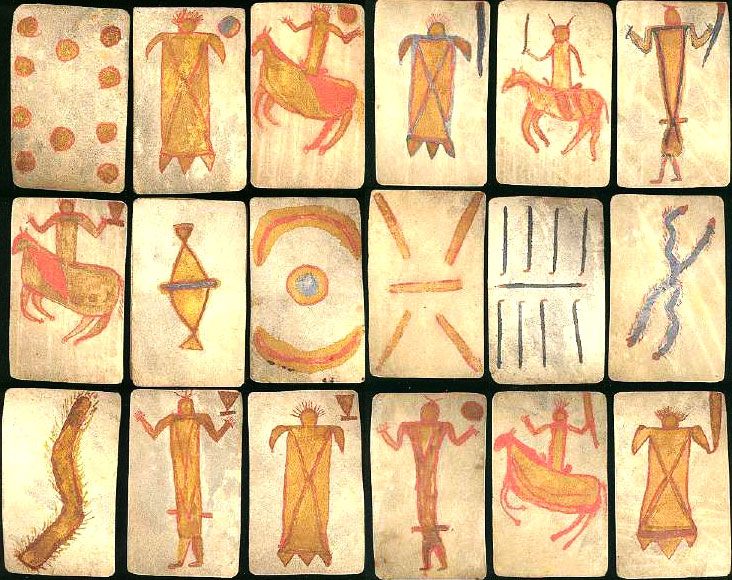
Native Indian Hand-made Cards made on rawhide
Native Indian hand-made cards made on rawhide.
When supplies from Mexico or elsewhere were not available, Indian decks were manufactured on rawhide or horse skin in imitation of Spanish-suited ones. Usually they had 40 cards for playing the game ‘monte’ which was popular amongst the Indians, including the Araucanians of South America. Packs were probably also produced as tourist bait and sold to anthropologists and collectors.
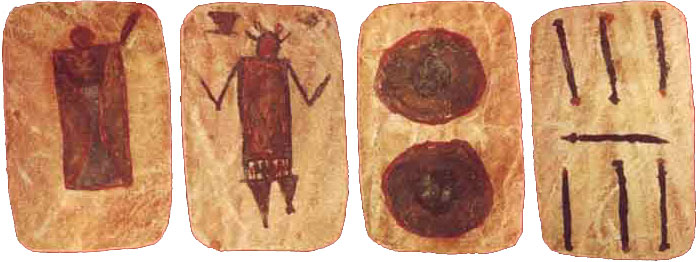
Above: cards from an Apache Indian pack painted on rawhide and obtained from an officer in the United States army in 1869. [Cards reproduced in Tilley, 1973, page 72].
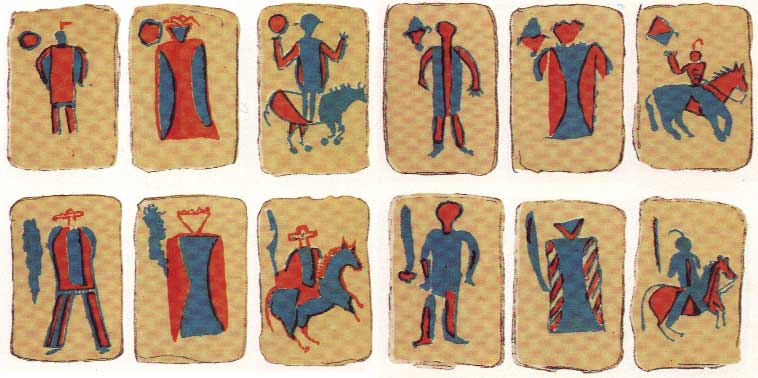
Above: North American Indian cards, cut out of hide and painted by themselves. [Cards in the National Museum, Washington, D.C., U.S.A. reproduced in Morley, 1989].
Native Indian Cards
painted by themselves
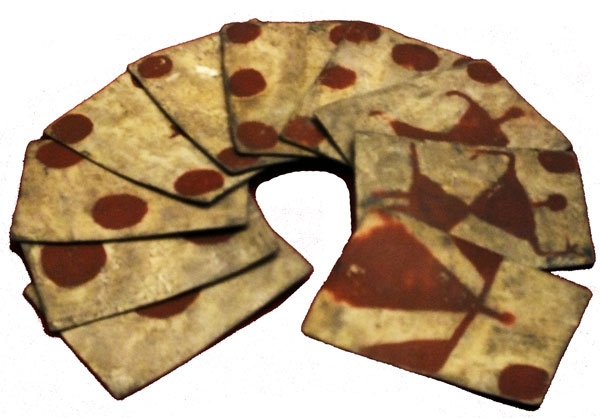
Above: cards painted on rawhide, believed to have been made by Mapuche Indians of Patagonia. [Cards in the collection of Museo de América, Madrid].
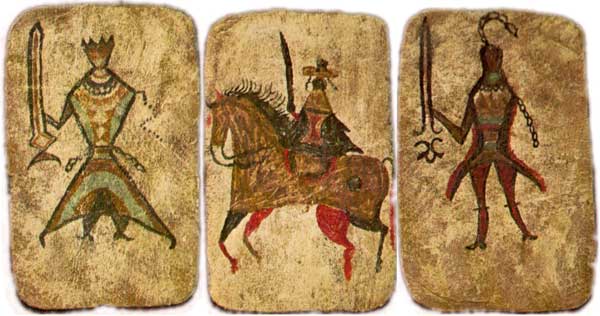
Above: cards painted on rawhide by Apache Indians.
I am indebted to Prof. Harold Wayland for his kind advice regarding the contents of this page. Click here to see more Apache cards.
See also: Las Cartas de Tacuabé→
3 sets of Apache playing cards from the British Museum
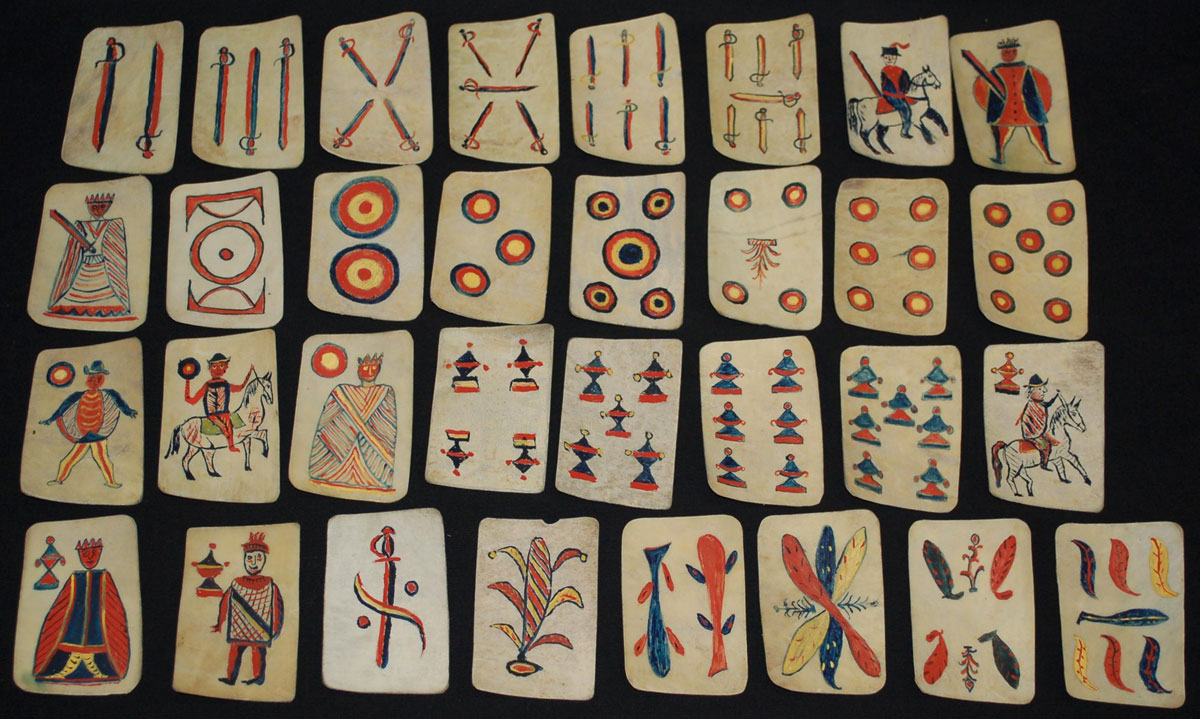
Above: a group of 39 playing cards made of rawhide (cow skin), each with a different design painted onto one side. © The Trustees of the British Museum • number Am1984,Q.11►
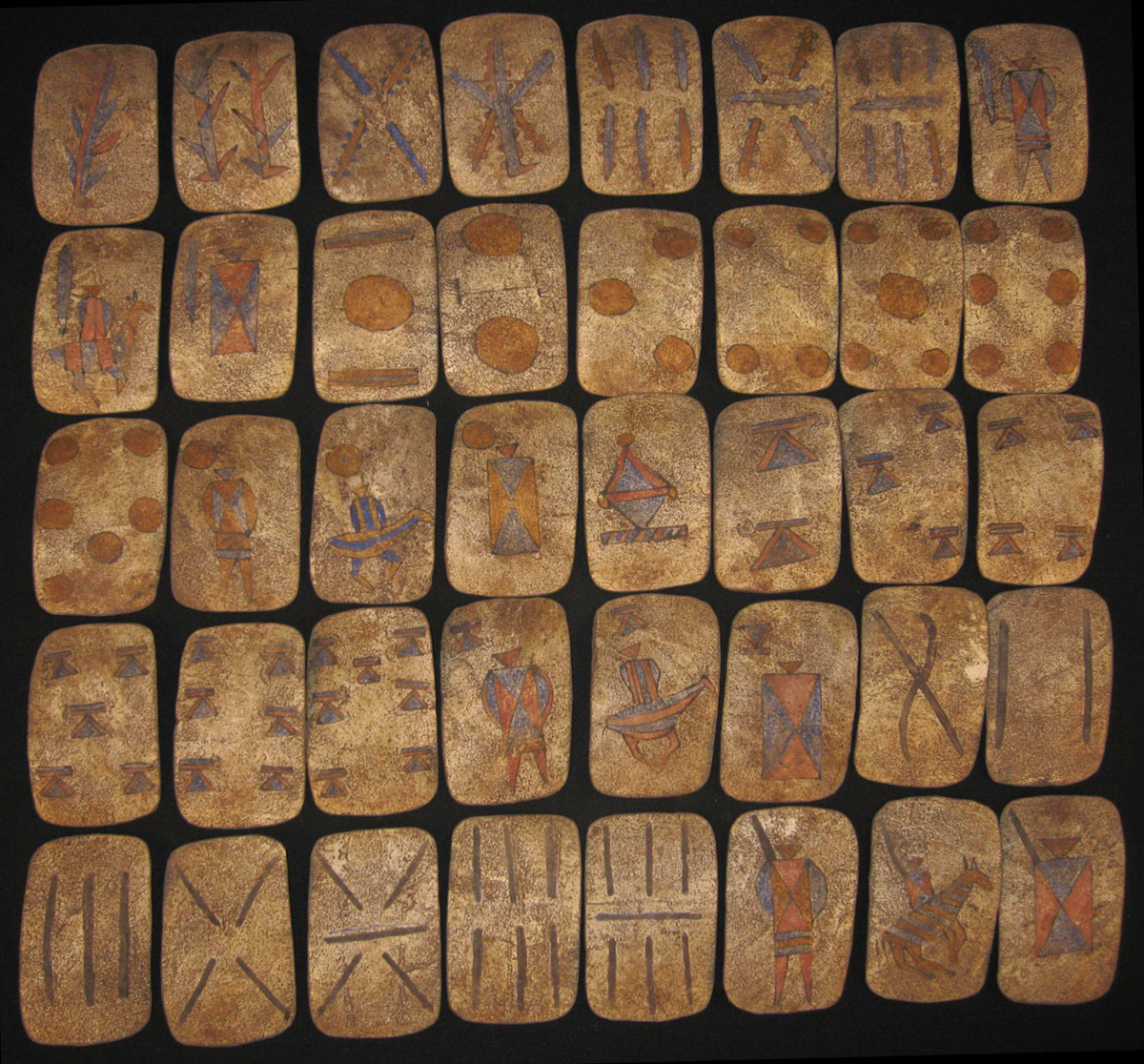
Above: pack of 40 Apache playing-cards made of skin (deer). © The Trustees of the British Museum • number Am,+.5988►
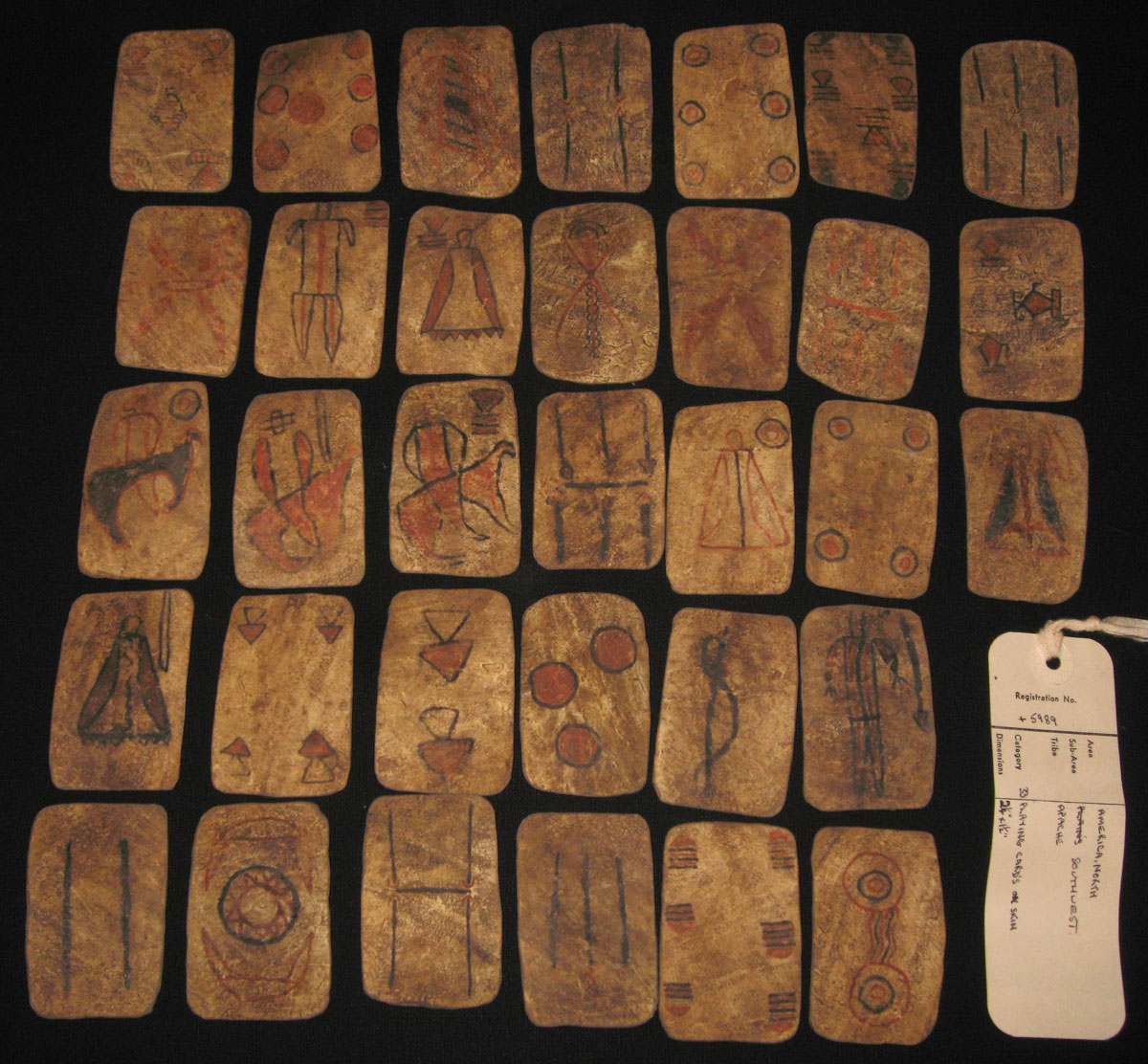
Above: pack of 33 Apache playing-cards made of skin (deer). © The Trustees of the British Museum • number Am,+.5989►

By Simon Wintle
Spain • Member since February 01, 1996
I am the founder of The World of Playing Cards (est. 1996), a website dedicated to the history, artistry and cultural significance of playing cards and tarot. Over the years I have researched various areas of the subject, acquired and traded collections and contributed as a committee member of the IPCS and graphics editor of The Playing-Card journal. Having lived in Chile, England, Wales, and now Spain, these experiences have shaped my work and passion for playing cards. Amongst my achievements is producing a limited-edition replica of a 17th-century English pack using woodblocks and stencils—a labour of love. Today, the World of Playing Cards is a global collaborative project, with my son Adam serving as the technical driving force behind its development. His innovative efforts have helped shape the site into the thriving hub it is today. You are warmly invited to become a contributor and share your enthusiasm.

Activity for Native Indian Hand-made Cards made on rawhide
Sign in to comment or save this article.

Related Articles
Baraja Mexicana Calendárica
Scholarly Mexican playing cards with Aztec and Maya calendar motifs.
Ute Mountain Casino Hotel & Resort
Casino playing cards featuring Native American courts.
Arrowhead Playing Cards from San Felipe’s Casino Hollywood
A gorgeous and well-researched celebration of Native American culture.
Meskwaki Casino
A deck reflecting Native American culture where every hand could be a jackpot.
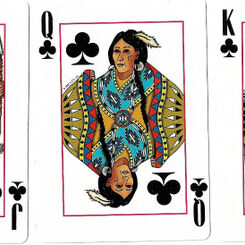
Authentic American Indian Playing Cards (Northern Plains Collection I)
Honouring the Great Plains: carefully chosen symbols on familiar playing cards.
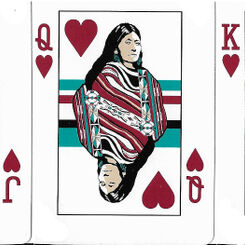
San Manuel Casino
Native American-themed playing cards used by tribal casinos.
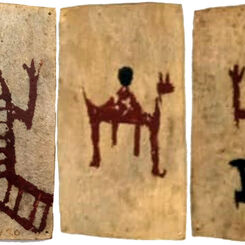
Aónikenk playing cards
Ethnographic playing cards made by members of the Aónikenk culture from Patagonia.
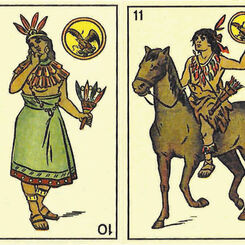
Mexican ethnic playing cards
Mexican ethnic groups depicted on playing cards by Fábrica de Naipes Cuauhtemoc.
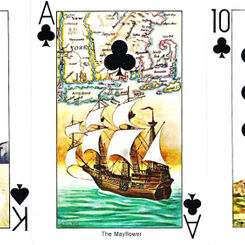
Colonial Art
A collection of 53 pieces of art showcasing detailed scenes from early American colonial life.
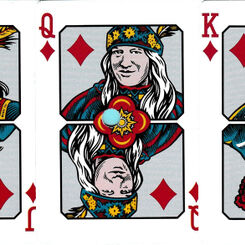
Mohegan Sun playing cards
Mohegan Sun playing cards published by Gemaco for Mohegan Sun casino.
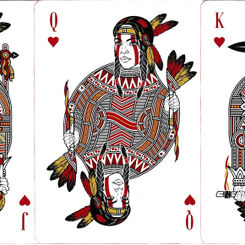
Malam playing cards
Malam playing cards created by Michael Muldoon, USA, 2015.
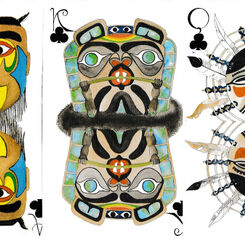
Pacific Northwest native Indian masks
Pacific Northwest native Indian masks with artwork by Margaret Parrott, USA, 1992.
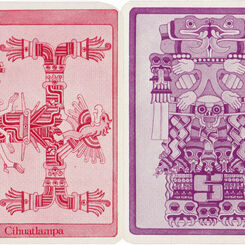
Tonalamatl
Baraja Tonalamatl Mexican Aztec playing cards based on the prehispanic Codex Borgia manuscript.
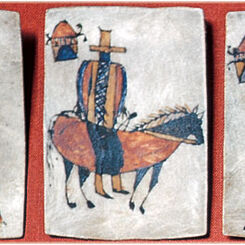
Apache cards by Tonto Naipero
Apache rawhide playing cards by ‘Tonto Naipero’, c.1871.
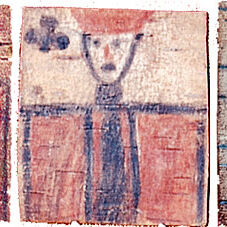
Ojibwa Native Indian Cards
Ojibwa Native Indian playing cards hand manufactured on birch bark in imitation of standard French /...
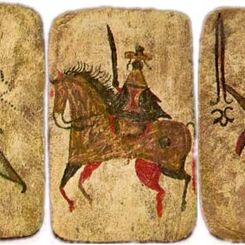
Apache Playing Cards
Apache Indian Playing Cards made on rawhide, first recorded 1875.
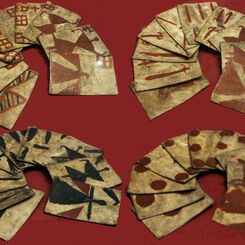
Mapuche Indian Playing Cards
Spanish-suited playing cards made on rawhide and said to have been used by Chilean Mapuche Indians, ...
Aeronaves de Mexico
Special pack for Aeronaves de Mexico S.A., designed by Ramón Valdiosera Berman, mid-1960s.
Naipes Nacionales
Naipes Nacionales designed by Manuel Bayardi and published by Clemente Jacques y Cia, Mexico c.1940....
Las Cartas de Tacuabe by Manos del Uruguay
Tacuabé was a Charrúa native from Uruguay, an indigenous tribe that became extinct following Europea...
Most Popular
Our top articles from the past 60 days