


Master PW Circular Cards
Master PW Circular Playing Cards: roses, columbines, carnations, parrots and hares... everyday objects evoking life and fertility.
Master PW Circular Playing Cards, c.1500
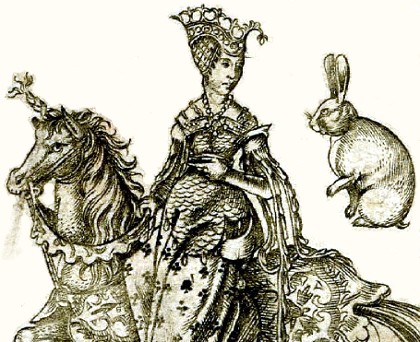
A pack of playing cards with five suits: roses, columbines, carnations, parrots and hares... everyday objects suggesting the natural world of life and fertility.
This pack of seventy-two round playing cards shows the artist in top creative form. The imagery depicts plants and animals based on the study of nature, rather than copied from artists' model books as previous engravers of cards had done (e.g. Master of the Playing Cards). Flowers are shown in various stages of bloom. The name of the engraver is unknown but he is known today as the Master P.W. due to his monogram.

The inscription “Salve Felix Colonia” (Hail, happy Cologne) accompanied by three crowns of the Cologne coat of arms on the title card confirms that the cards were made in Cologne. There are fourteen cards per suit: King, Queen, Upper and Lower Valet (or Squire and Man-at-Arms) and ten numerals, with Latin inscriptions on the Ace in each suit. The Kings and Queens are lavishly dressed figures on horseback (or a donkey). The detail includes embroidered brocade material and elaborate jewel adornments on the headgear and edges of the gowns. Even the horses have decorative livery and are depicted in anatomical detail. There are no references to religion but only to social class, costumes and nature.
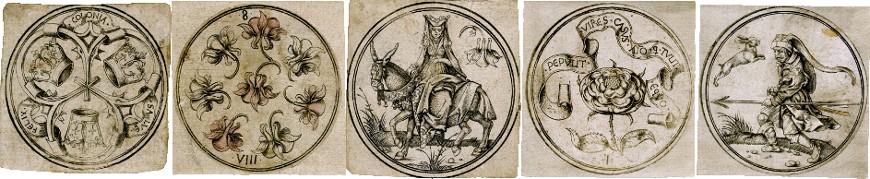
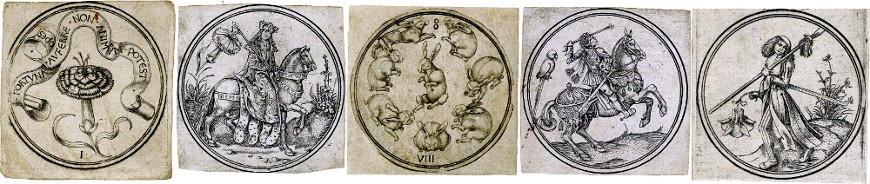
Above: Master PW Circular Playing Cards (1499-1515 approx. dates of activity). The five suits, rather than the customary four, are: Hares, Parrots, Carnations (or Pinks), Columbines (or Aquilegias) and Roses. The total number of cards is 72; diameter = 70 mms (outer borderline). All seventy-two of Master PW's designs have survived in from one to six impressions, but no single repository owns a complete deck. Copies are preserved at: Bologna (sixty-nine cards) and Dresden (fifty-two); the British Museum, London; Vienna; Cologne, Rothchild Collection, Paris; Amsterdam and Boston. The British Museum makes its collection database available to be used by scholars across the world.
These playing cards were copied by Teleman de Wesel, the Lower Rhenish engraver (in reverse) although the suit of roses as well as all of the tens from Master PW's series were eliminated and substituted by four new under-knaves. The cards were also copied by the Cologne engraver, Johann Bussemacher (Cologne 1591) and Jacob Binck.
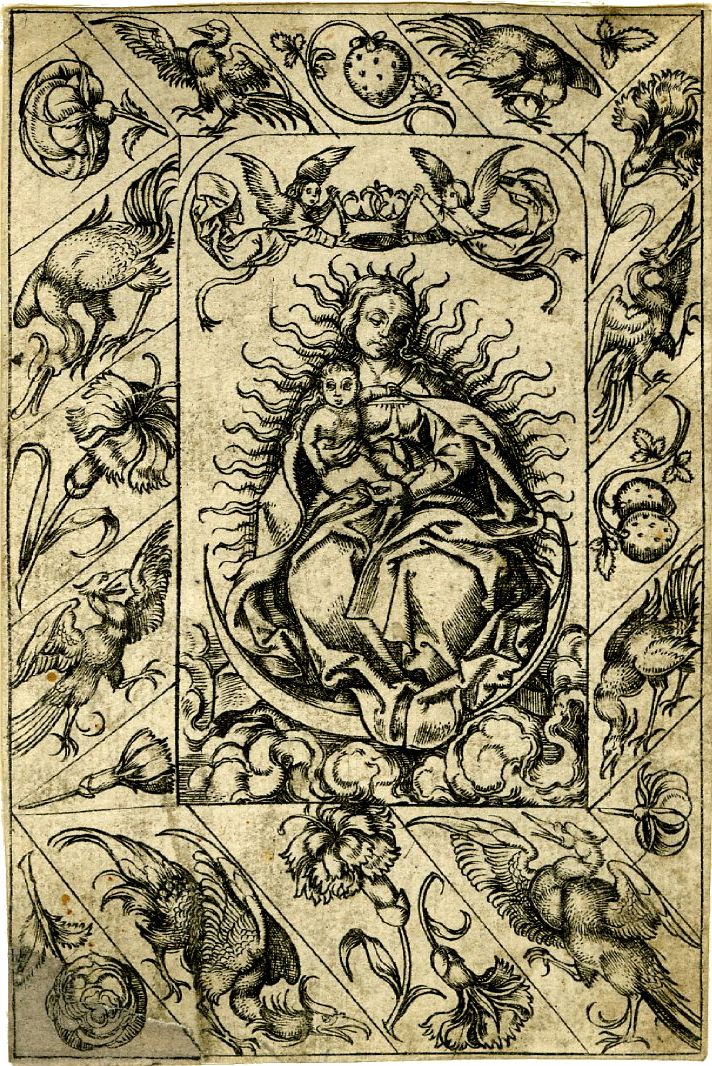
The engraving of lines in metal in order to print on paper developed from the goldsmith's long-established practice of decorating metal with engraved patterns. The technique was first used for printing on paper in the second quarter of the fifteenth century. It was considered the most noble and appropriate technique in which to render the work of great masters. Since none of Master PW's surviving cards are mounted on stiff card, the question arises whether they were actually intended for play. Although it is known that circular cards were used in India, the circular format was not the norm in the West. Of course, circular illustrations were known in the 15th & 16th centuries depicting occupations of the months and calendar illustrations. Likewise, naturalistic flowers, birds and animals occur in the borders of books of hours. We see here how the profane world of the medieval playing card had close connections with religious artwork.
“The extra card in which Death is clutching at a nude woman give these round cards the character of a series which was only intended for looking at. Having found pleasure in the sequence of roses, columbines, parrots, hares and pinks, having admired the ingenious arrangement of the flowers and animals and the quality of the draughtmanship, having smiled at the sometimes cranky kings, queens and knaves and having reflected on the slogans on the ace cards, one is reminded by the final card of the transitory nature of mortal beauty” [quoted from Detlef Hoffmann, 1973].
People are still superstitious today, but in the past they were more so. Cards would play a part in how they made sense of the world in an era when there were so many unexplained mysteries. They are more than just a pack of cards, people could read into the symbols and inscriptions, draw analogies, make decisions or find meaning in everyday life. The inscriptions on the five Aces are as follows:
Ace of Roses: “Pepulit Vires Casus Animo Qui Tulit Aequo” which translates as: “He defeats the power of chance who endures with equanimity”. • Ace of Aquilegias (Pinks): “Par Ille Superis cui Pariter Dies Et Fortuna Fuit”, which translates as: “He is equal to the gods who equally received time and fortune”. • Ace of Carnations: “Fortuna Opes Auferre Non Animum Potest”, which translates as: “Fortune can take away wealth but not fortitude”. • Ace of Hares: “Felix Media Quisquis Turbae Parte Quietus”, which translates as: “He is happy who is quiet in the middle of turmoil”. • Ace of Parrots: “Quicquid Facimus Venit Ex Alto”, which translates as: “Whatever we do comes from aloft”.
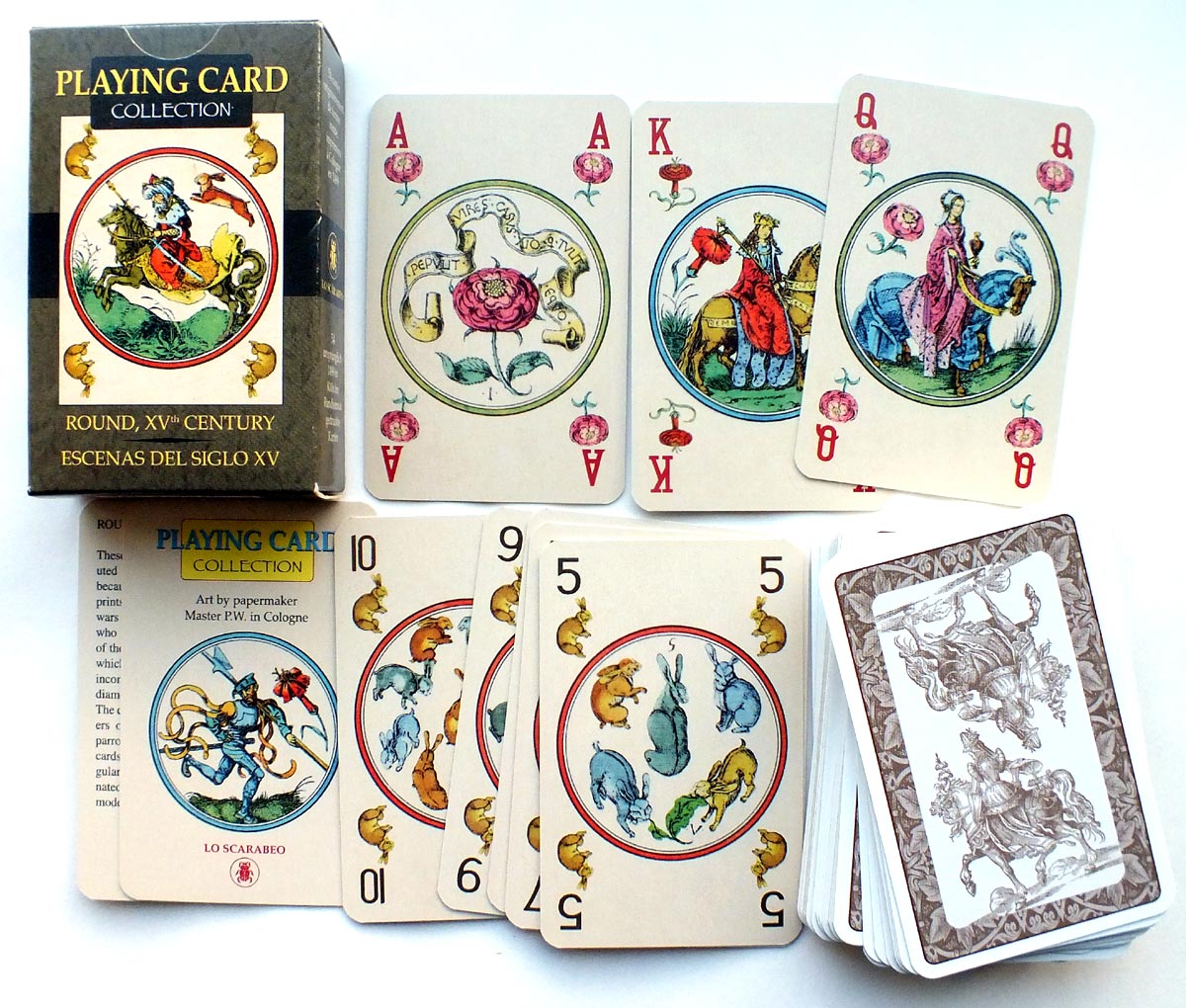
Above: in the rectangular version published by Lo Scarabeo, Turin, Italy (2004), the Aquilegia suit was omitted, the four Squires removed and two jokers added, so that modern games can be played.
A style of manuscript illumination during the high Gothic period, around the late 15th / early 16th century, involved decorating the margins with a luxurious array of strewn flowers, fruits, small animals and insects, painted in a naturalistic style on a gold background. In the example of a Missal shown below, the roundels in the borders also contain miniature illustrations of saints of the month, each accompanied by an appropriate symbol by which he may be recognised.
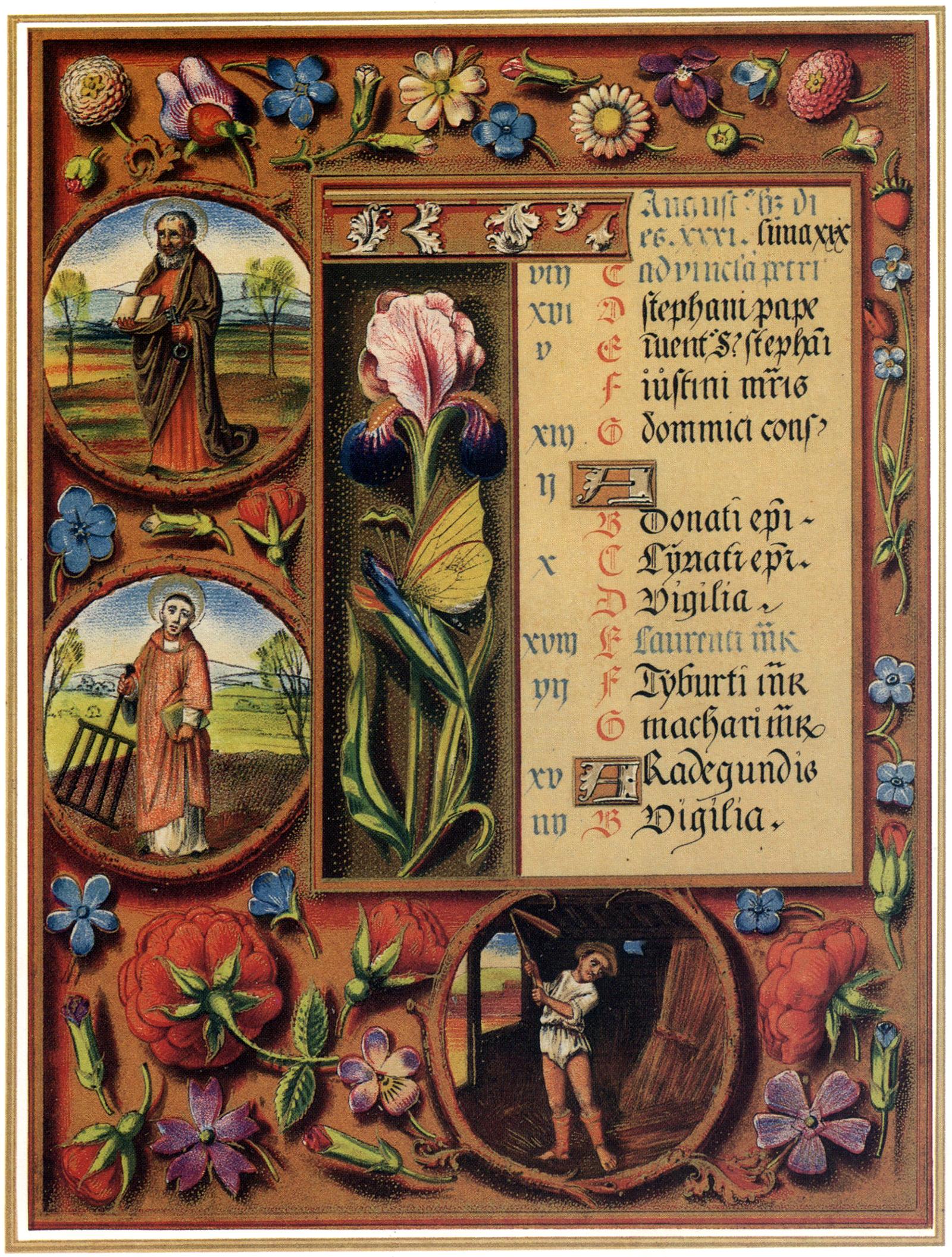
Above: Calendar page from an early sixteenth century missal, corresponding to the month of August, in the zodiac sign of Virgo, showing naturalistic strewn flowers in the borders, not unlike those used as suit symbols by the Master PW in his playing cards.
References:
Hoffmann, Detlef: The Playing Card, an illustrated history, Edition Leipzig, 1973
Humphreys, Henry Noel: The Illuminated Books of the Middle Ages, illustrated by Owen Jones, originally published in 1849, re-published by Bracken Books, London, 1989
V&A Museum, London

By Simon Wintle
Spain • Member since February 01, 1996
I am the founder of The World of Playing Cards (est. 1996), a website dedicated to the history, artistry and cultural significance of playing cards and tarot. Over the years I have researched various areas of the subject, acquired and traded collections and contributed as a committee member of the IPCS and graphics editor of The Playing-Card journal. Having lived in Chile, England, Wales, and now Spain, these experiences have shaped my work and passion for playing cards. Amongst my achievements is producing a limited-edition replica of a 17th-century English pack using woodblocks and stencils—a labour of love. Today, the World of Playing Cards is a global collaborative project, with my son Adam serving as the technical driving force behind its development. His innovative efforts have helped shape the site into the thriving hub it is today. You are warmly invited to become a contributor and share your enthusiasm.

Activity for Master PW Circular Cards
Sign in to comment or save this article.

Related Articles
The Comedy of Courtship
Courtship, class and convention in a Biedermeier satirical card deck from Germany.
Tarot de las Coscojas
Historical playing card design, tarot symbolism and an almost psychedelic medieval surrealism.
Virgil Solis
Remarkable pack of 52 animal-suited playing-cards designed and etched by Virgil Solis.
Historical playing cards by Joseph Fetscher
Historical playing cards by Joseph Fetscher, Munich, c.1820.
Early German playing cards
Some early examples of popular German playing cards from the XV and XVI centuries.
Animal Tarot by Johann M Backofen
French-suited ‘Bavarian Animal Tarot’ by Johann Matheus Backofen, Nürnberg, late 18th C.
Gambling and Vice in the Middle Ages
Gambling and Vice in the Hours of Charles V: card-playing in the local tavern
Master of the Playing Cards
Animal suited playing cards engraved by the Master of the Playing Cards, Germany, c.1455
Unknown Maker
Early German deck by unknown maker, c.1825
Stuttgart pack, c.1430
The luxury, hand-painted Stuttgart Cards (Stuttgarter Kartenspiel) dated c.1430, with suits of ducks...
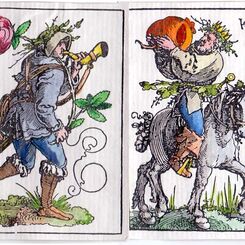
Hans Sebald Beham
Playing cards designed by Hans Sebald Beham (1500–1550).
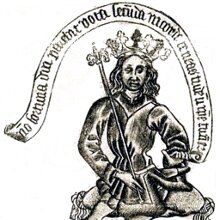
Master of the Banderoles
Playing Cards by the Master of the Banderoles, one of the earliest professional printmakers.
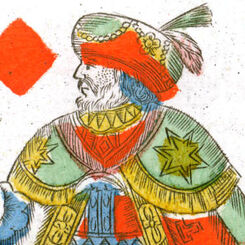
Johann Matheus Backofen
French-suited deck manufactured by Johann Matheus Backofen, Nürnberg c.1800.
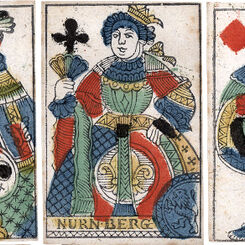
German playing cards
Card-playing rapidly became popular in medieval Bavaria and German printers were quick to supply the...
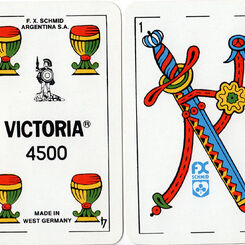
VICTORIA 4500 by F. X. Schmid (Argentina) S.A.
Naipe Español VICTORIA 4500 by F. X. Schmid (Argentina) S.A.
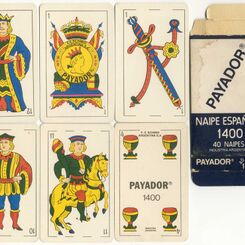
Naipe PAYADOR by F.X. Schmid (Argentina) S.A.
Naipe Español "PAYADOR ®"
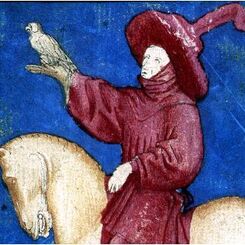
The Princely Hunting pack, c.1440
The Princely Hunting Pack, c.1440/45, is attributed to Konrad Witz and his workshop in Basle.
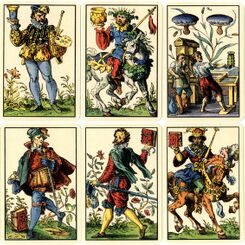
The Book of Trades by Jost Amman, 1588
The Book of Trades by the prolific German Renaissance artist Jost Amman (1539-91). Suits are books, ...
South German Engraver
A pack of 52 cards with banner 10s, female 'Sotas', horsemen and kings, the pack was engraved in the...
The History of Playing Cards
Playing cards appear in European records in the late 14th century, but their earlier history lies fu...
Most Popular
Our top articles from the past 60 days


Alannyë Daeris
19 November 2025, 09:47SavedSaved this article to Decks Históricos