


Jeu Gothique
‘Jeu Gothique’ illustrating the Gothic period in France, published by Editions Dusserre.
Published by Editions Dusserre, Paris, c. 1987, this colourful deck celebrates the Gothic period in France. The court cards and two Jokers portray the great kings and queens of France based on paintings from the French Schools of the 14th through the 16th centuries. The Aces portray famous locations, including the Palais du Louvre and the Château de Saumur. Each of these pictorial cards gives the name of the person or place, and indicates the source of the image used along the side The pip cards provide information about Gothic artists, engravers, authors, architecture (civil and military) and painters. See the box►
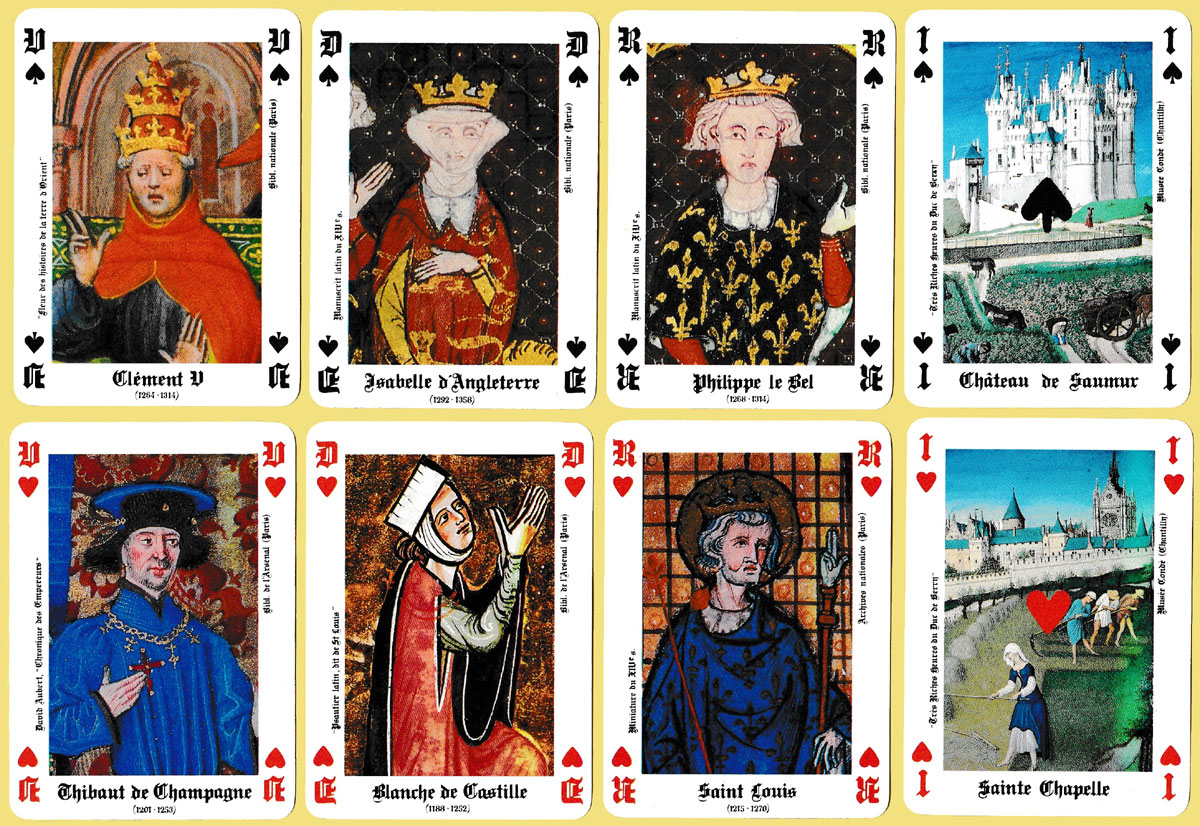
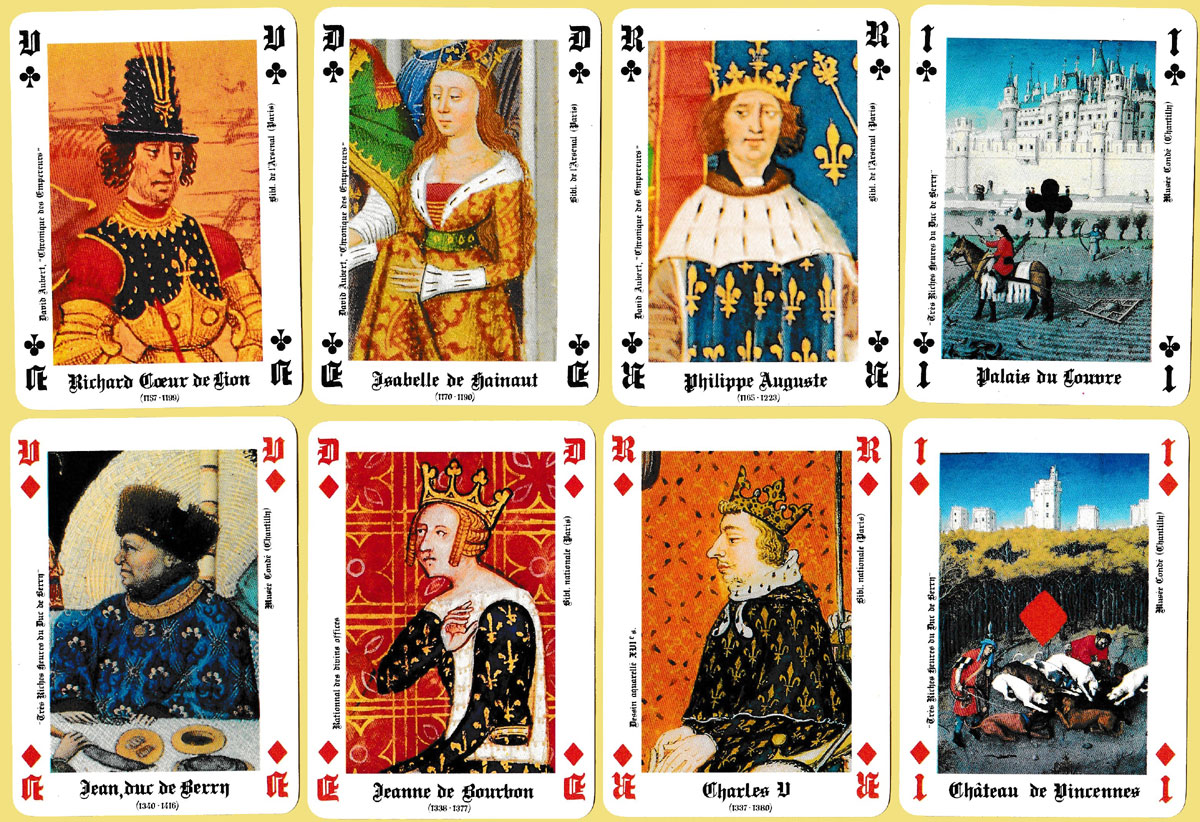
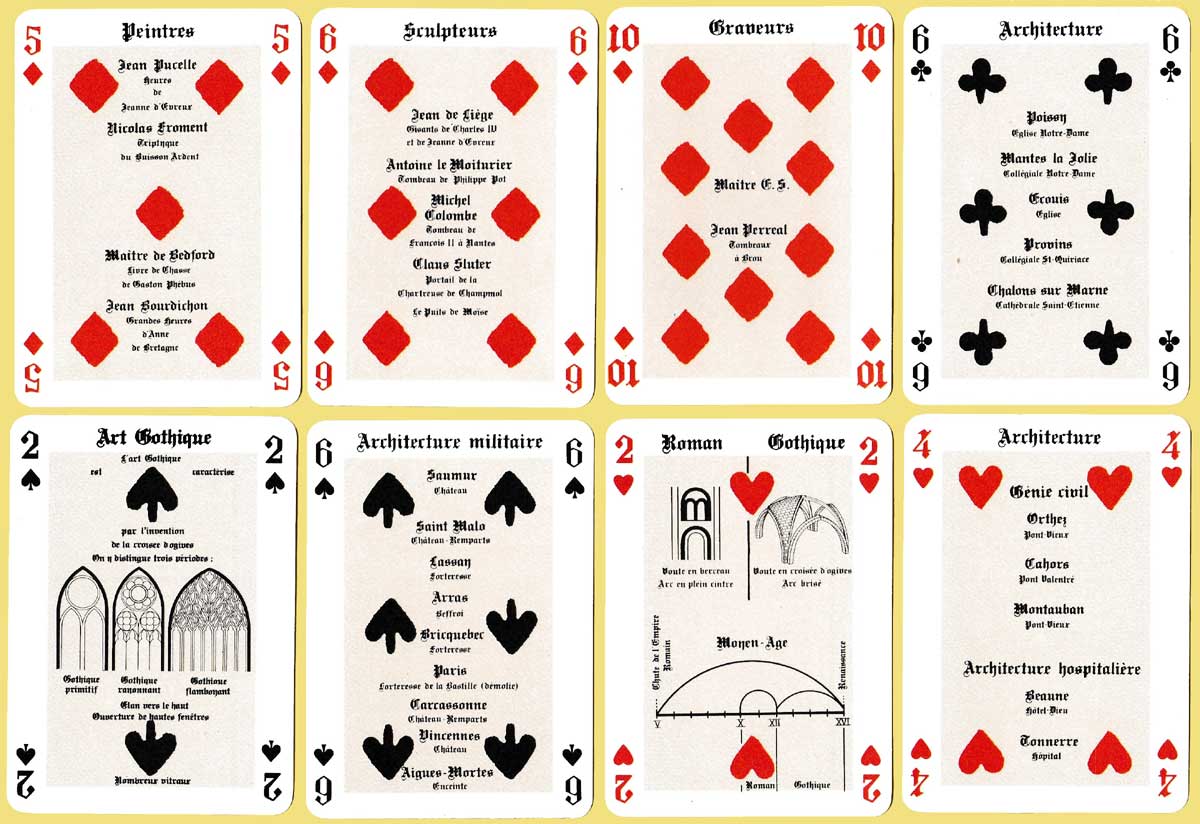
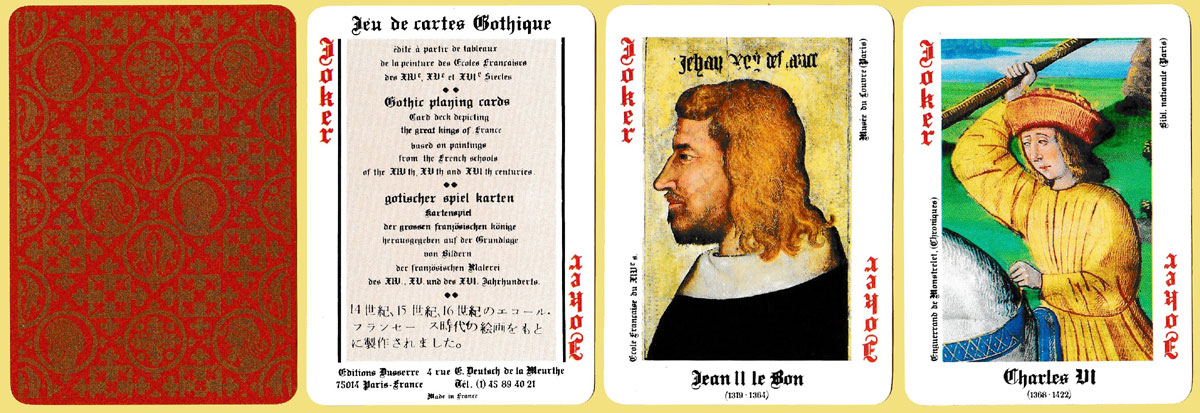
Above: Jeu Gothique published by Editions Dusserre, Paris, France, c.1987.

By Peter Burnett
United Kingdom • Member since July 27, 2022
I graduated in Russian and East European Studies from Birmingham University in 1969. It was as an undergraduate in Moscow in 1968 that I stumbled upon my first 3 packs of “unusual” playing cards which fired my curiosity and thence my life-long interest. I began researching and collecting cards in the early 1970s, since when I’ve acquired over 3,330 packs of non-standard cards, mainly from North America, UK and Western Europe, and of course from Russia and the former communist countries.
Following my retirement from the Bodleian Library in Dec. 2007 I took up a new role as Head of Library Development at the International Network for the Availability of Scientific Publications (INASP) to support library development in low-income countries. This work necessitated regular training visits to many sub-Saharan African countries and also further afield, to Vietnam, Nepal and Bangladesh – all of which provided rich opportunities to further expand my playing card collection.
Since 2019 I’ve been working part-time in the Bodleian Library where I’ve been cataloguing the bequest of the late Donald Welsh, founder of the English Playing Card Society.

Activity for Jeu Gothique
Sign in to comment or save this article.

Related Articles
Oxygène
Armenian miniatures were Stepan Kiourktchian’s inspiration for this pack for a Franco-Armenian assoc...
Jeu Roman
The splendour of early medieval France, courtesy of Éditions Dusserre.
Jeu des Blasons
Heraldry meets playing cards.
Les Chevaliers de la Toison d’Or
Medieval manuscript art at its finest.

Les Jeux de Pastor
Striking designs by Edouard Pastor focusing on the heads of figures from the medieval period.
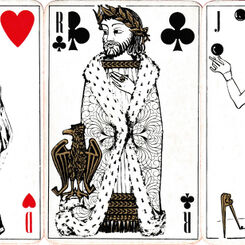
Le Jeu des Personnages de l’Antiquité et du Moyen-Age
Edouard Pastor’s designs in black and gold inspired by Antiquity and the Middle Ages.
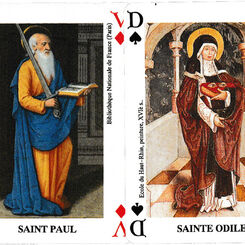
Les Saints Guérisseurs et Protecteurs
Healing and patron saints portrayed in paintings, manuscripts, altarpieces and statuary.
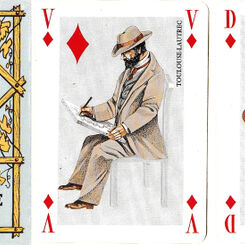
Jeu de la Belle Epoque
Jeu de la Belle Epoque, remembering a golden age of optimism, progress and elegance.
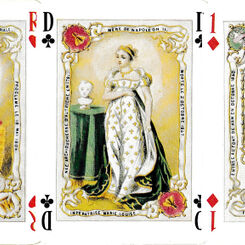
Jeu Bonaparte
Jeu Bonaparte depicting the extended family of Napoleon Bonaparte, France, 1978
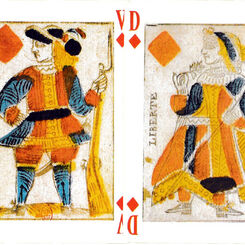
Jeu des Bonnets Phrygiens
Reproduction of Jeu des Bonnets Phrygiens relating to the Phrygian cap (or liberty cap), France, 198...
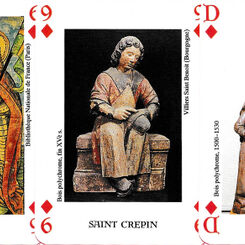
Les métiers et leurs protecteurs
“Les métiers et leurs protecteurs” playing cards published by Editions Dusserre, c. 1995.
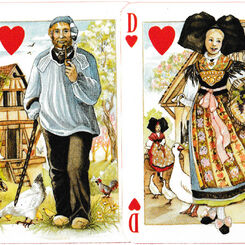
Costumes Alsaciens
Typical costumes and views of Alsace together with lists of the principal sights.
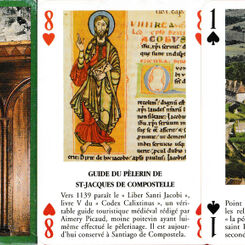
Les Chemins de Saint-Jacques
Paintings, statues, monuments and maps associated with different routes to Compostela.
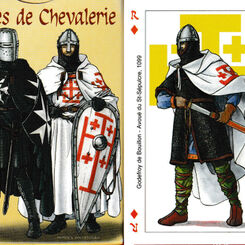
Les Ordres de Chevalerie
Six orders of chivalry represented pictorially by the artist Patrick Dallanégra.
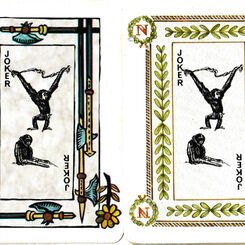
The story behind some special Jokers
How the “Gibbons” Jokers came into being.
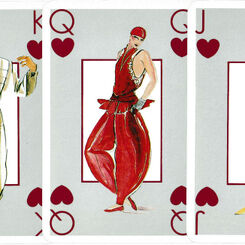
Parfums Gianni Versace
Advertising pack for Gianni Versace perfumes.
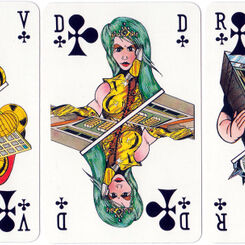
Alcatel
Alcatel playing cards published by Éditions Dusserre, c.1970s
Éditions Dusserre, Paris
Éditions Dusserre, Paris: games with a history.

Tarot des Sapeurs-Pompiers de Paris
Tarot des Sapeurs-Pompiers de Paris, a French Fire Brigade tarot deck published by Éditions Dusserre...
The History of Playing Cards
Playing cards appear in European records in the late 14th century, but their earlier history lies fu...
Most Popular
Our top articles from the past 60 days


