


Game Over
‘Game Over’ political playing cards from Israel, 2006.
This offering from Israel presents two packs of identical cards. The first is titled “Most Wanted” and the second “Eliminated”. Both packs display the same photos of individuals deemed by Israel to be leaders of terrorist organisations in the Middle East. Those whose photo is not publicly available are represented by sample illustration pictures. However, the second pack displays the same photos with one major difference: those that have been killed are stamped with the word “Eliminated”. The two jokers are Saddam Hussein and Yasser Arafat. Somewhat ironically, the extra card informs users that the cards are “intended for gaming purposes only and do not in any way reflect a political opinion or stand”. See the boxes►
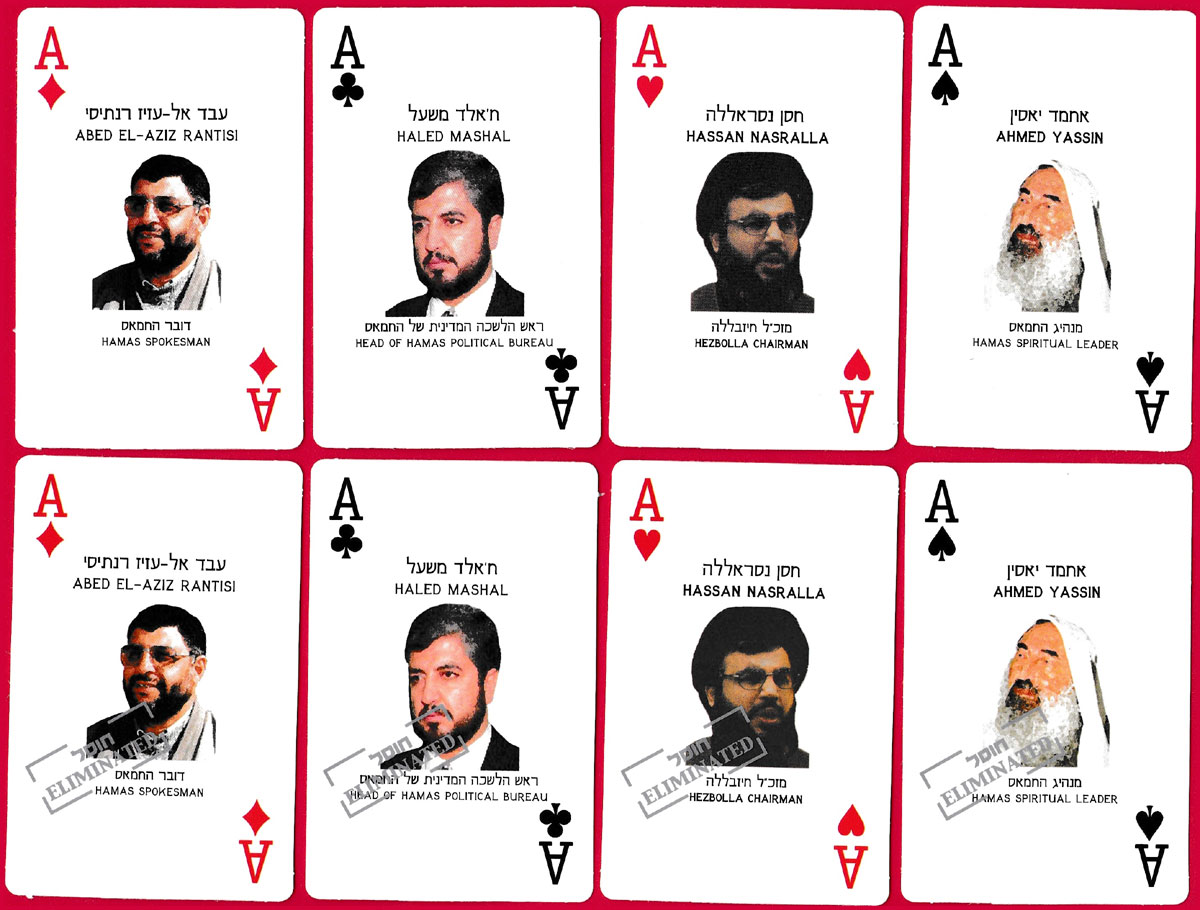
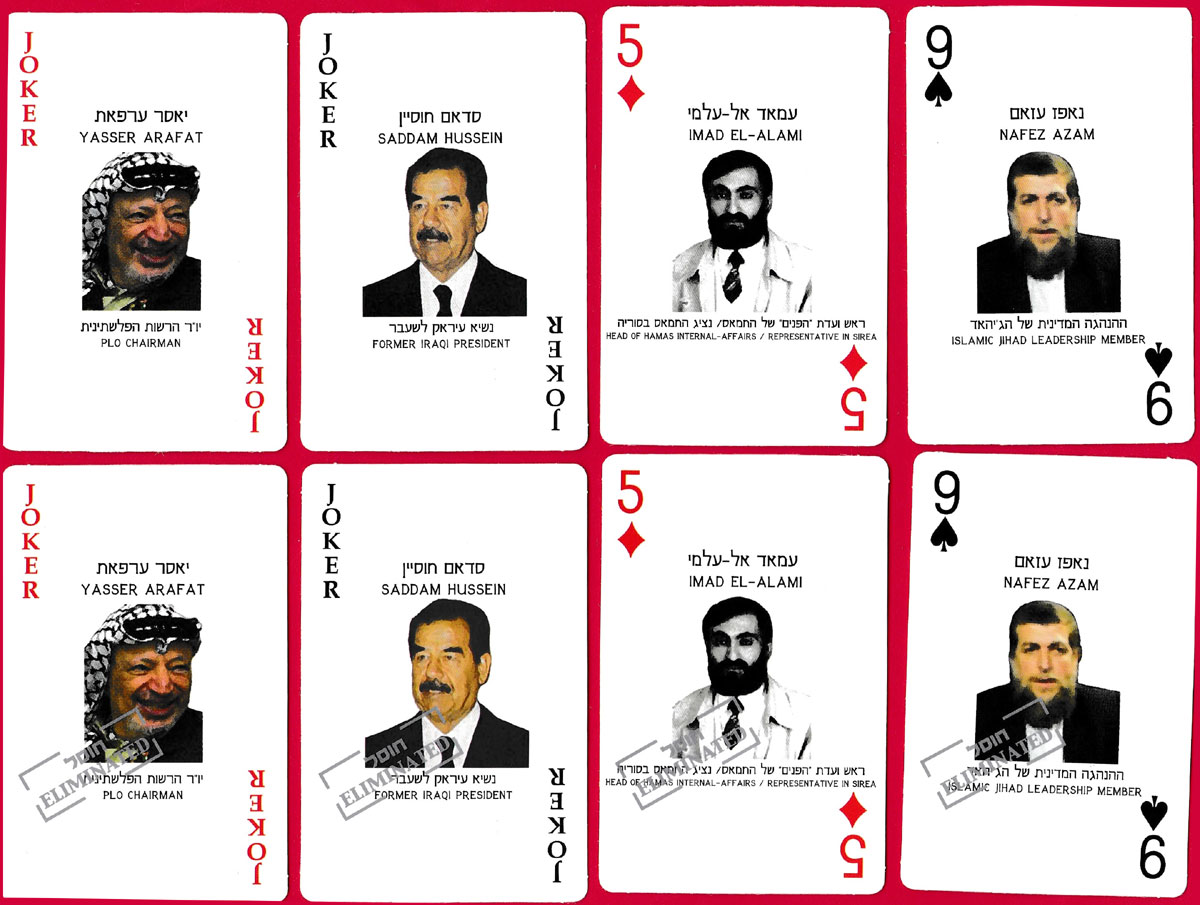
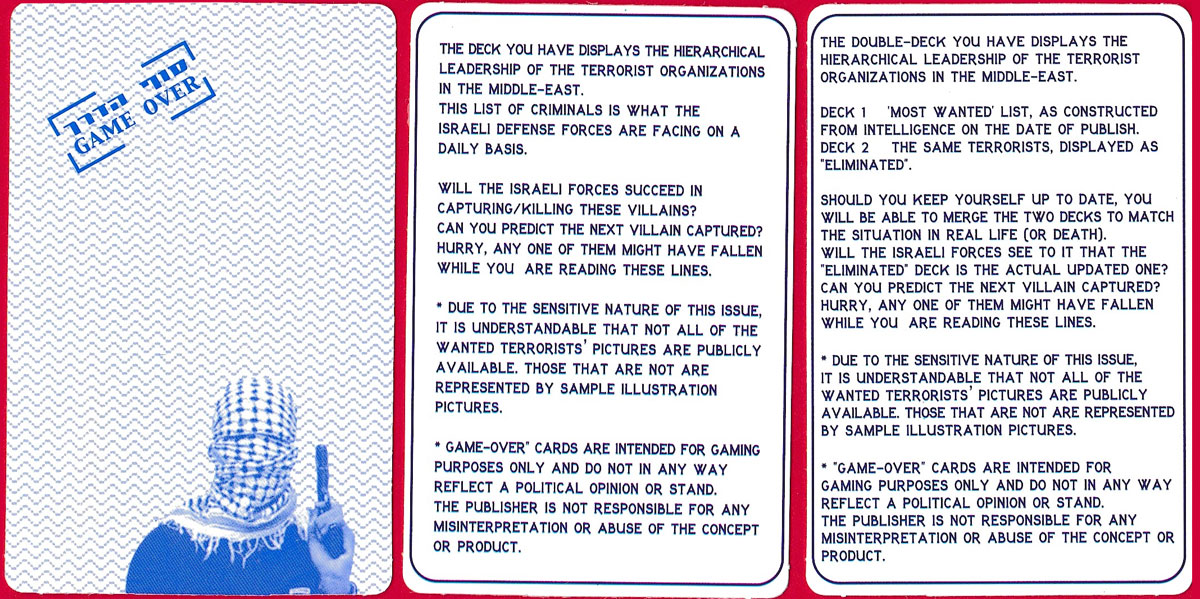
Above: ‘Game Over’ playing cards from Israel, 2006.

By Peter Burnett
United Kingdom • Member since July 27, 2022
I graduated in Russian and East European Studies from Birmingham University in 1969. It was as an undergraduate in Moscow in 1968 that I stumbled upon my first 3 packs of “unusual” playing cards which fired my curiosity and thence my life-long interest. I began researching and collecting cards in the early 1970s, since when I’ve acquired over 3,330 packs of non-standard cards, mainly from North America, UK and Western Europe, and of course from Russia and the former communist countries.
Following my retirement from the Bodleian Library in Dec. 2007 I took up a new role as Head of Library Development at the International Network for the Availability of Scientific Publications (INASP) to support library development in low-income countries. This work necessitated regular training visits to many sub-Saharan African countries and also further afield, to Vietnam, Nepal and Bangladesh – all of which provided rich opportunities to further expand my playing card collection.
Since 2019 I’ve been working part-time in the Bodleian Library where I’ve been cataloguing the bequest of the late Donald Welsh, founder of the English Playing Card Society.

Activity for Game Over
Sign in to comment or save this article.

Related Articles
US Army Aircraft Recognition Cards
Air defense combined with gameplay.
Heritage Preservation Cards : Afghanistan and Iraq
Twin decks with a noble purpose.
Antikriegsspielkarte
Hand- and stencilcolored anti-war playing cards by Siegfried Heilmeier, 1983
American Civil War playing cards
American Civil War playing cards with suits of stars, US flags, US shields and eagles.
Not the Iraqi Most Wanted playing cards
Fifty-five Irish heroes and villains, some ancient but mostly modern.
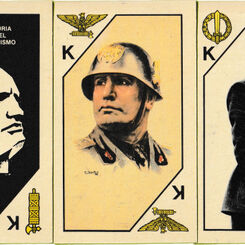
Storia del Fascismo
Published by Il Meneghello, this pack provides a visual history of Fascism in Italy between 1919 and...
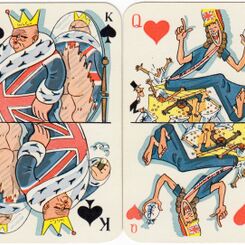
WW2 German Propaganda Playing Cards
showing satirical portraits of Allied leaders and politicians
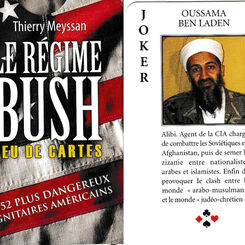
Le Régime Bush
“Le Régime Bush” anti-war playing cards designed by Thierry Meyssan, France, 2003.
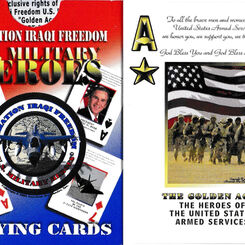
Operation Iraqi Freedom playing cards
Operation Iraqi Freedom: U.S. Military heroes playing cards, 2003.
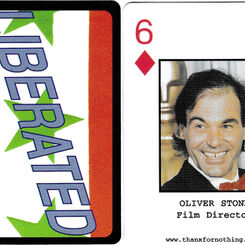
Liberated: America's Most Unwanted
“Liberated: America's Most Unwanted” playing cards published in support of the Iraqi War, c.2003.
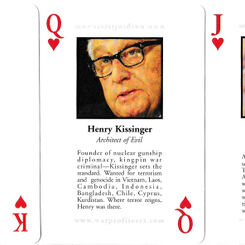
War Profiteers playing cards
“War Profiteers” playing cards, USA, c. 2004.
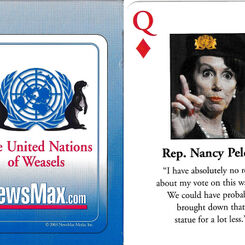
United Nations of Weasels
“United Nations of Weasels” anti-war political playing cards, USA, 2003.
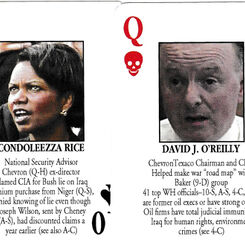
Try’em playing cards
Try’em: the U.S. Regime Change, or “52 Most Wanted Criminals” c. 2003.
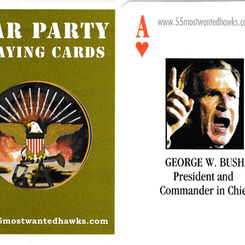
War Party playing cards
War Party playing cards, in opposition to the Iraq War, USA, 2003.
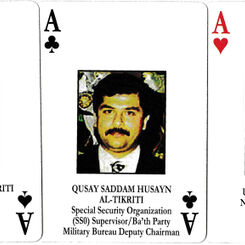
Iraqi Most Wanted Playing Cards
Playing cards used to help troops identify the most-wanted members of Saddam Hussein's government. 2...
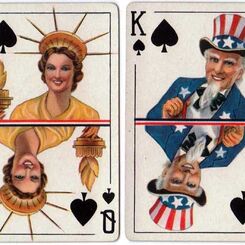
Victory
“Victory" cards celebrating U.S. participation in the Allied victory, c.1945.
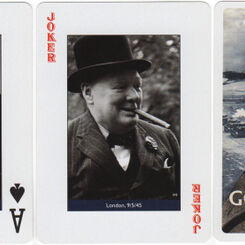
Churchill in WW2
Churchill ‘Walking with Destiny’ playing cards published by the Imperial War Museum.
Le Jeu des Alliés
“Le Jeu des Alliés” manufactured by Mesmaekers N.V., Turnhout, 1945.
L’union fait la force
“L’Union Fait la Force”, sometimes known as “the Allied pack”, has the four suits dedicated to the v...
Anti-Napoleon
Deck from the liberation war against Napoleon, c.1815.
Most Popular
Our top articles from the past 60 days


