


68: Playing cards in glass
My wife and I have recently commissioned a unique pair of stained glass windows for our home.
My wife and I live in a quirky house, parts of which were a pub. Although it ceased to be an alehouse in 1914 (the outbreak of World War I plus the loss of the river-based wherry trade to the railways), the old drinking room is our kitchen with hatches to serve beer through. Originally these would have been hinged and had, according to those who knew it before we did, pink glass panels in them. These were allegedly broken by a missile hurled by one of the previous owners, so when we bought the property they were just openings in the wooden screen between the hallway and the kitchen. For many years we wondered whether we could put at least something in them, preferably glass again.
We have recently been lucky enough to get to know a glass artist, Neil Harvey, who also lives in Bungay and was really taken with the old playing cards I showed him. He could see lots of potential from his particular artistic perspective. In the end we agreed that it would be a great idea to put glass panels in two of the three openings with a playing card theme. We chose the king and queen of spades from De La Rue’s redrawn single-figure courts of the 1840s (D3) and, since there was plenty of room, some appropriate Owen Jones back designs as a lower panel on each. One of these is the design for Prince Albert of 1851 (under the king) and the other that for Queen Victoria. These are the windows as seen from the kitchen.
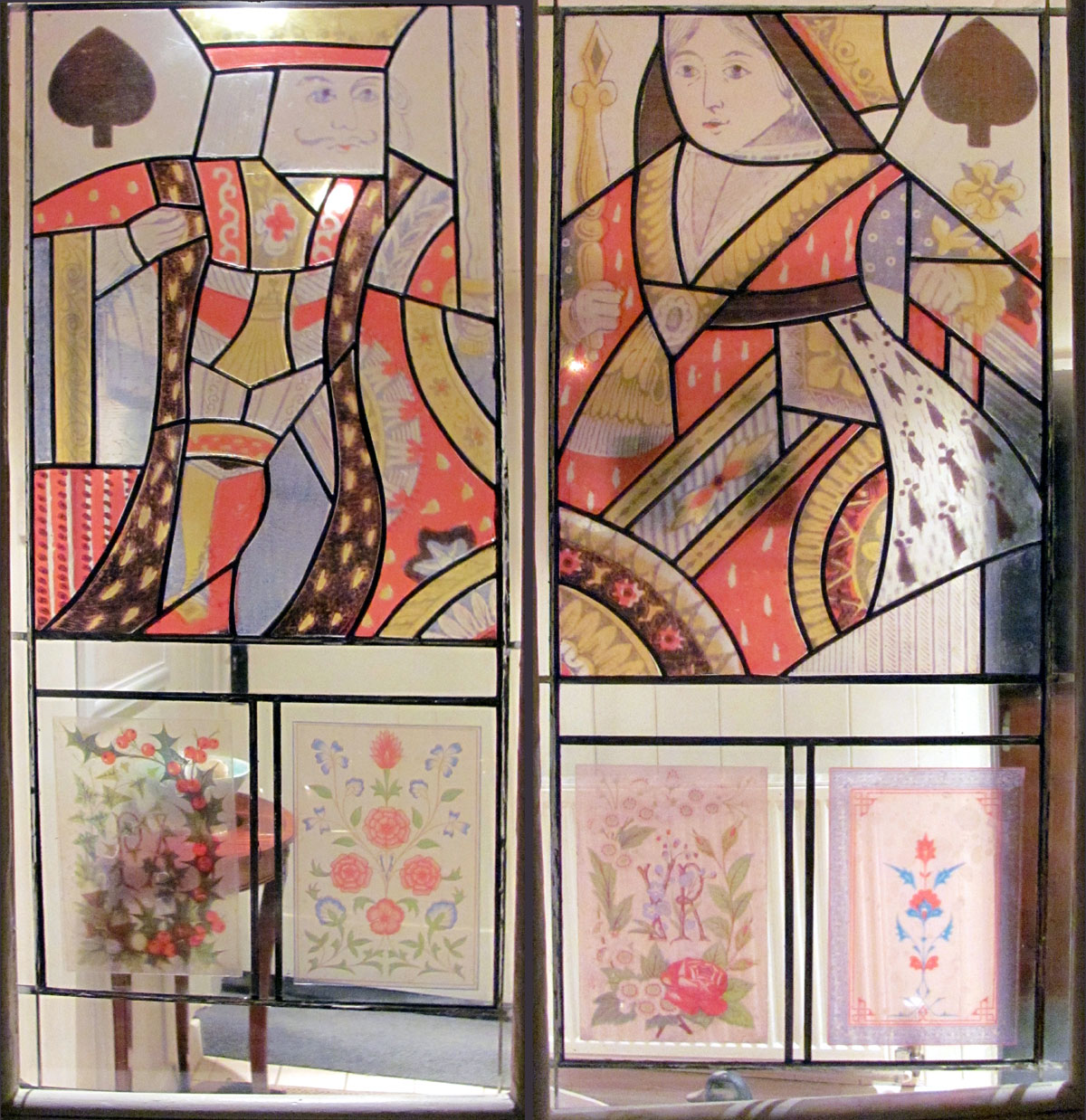
Above: stained glass by Neil Harvey.
The picture below is the view from the hall into the kitchen.
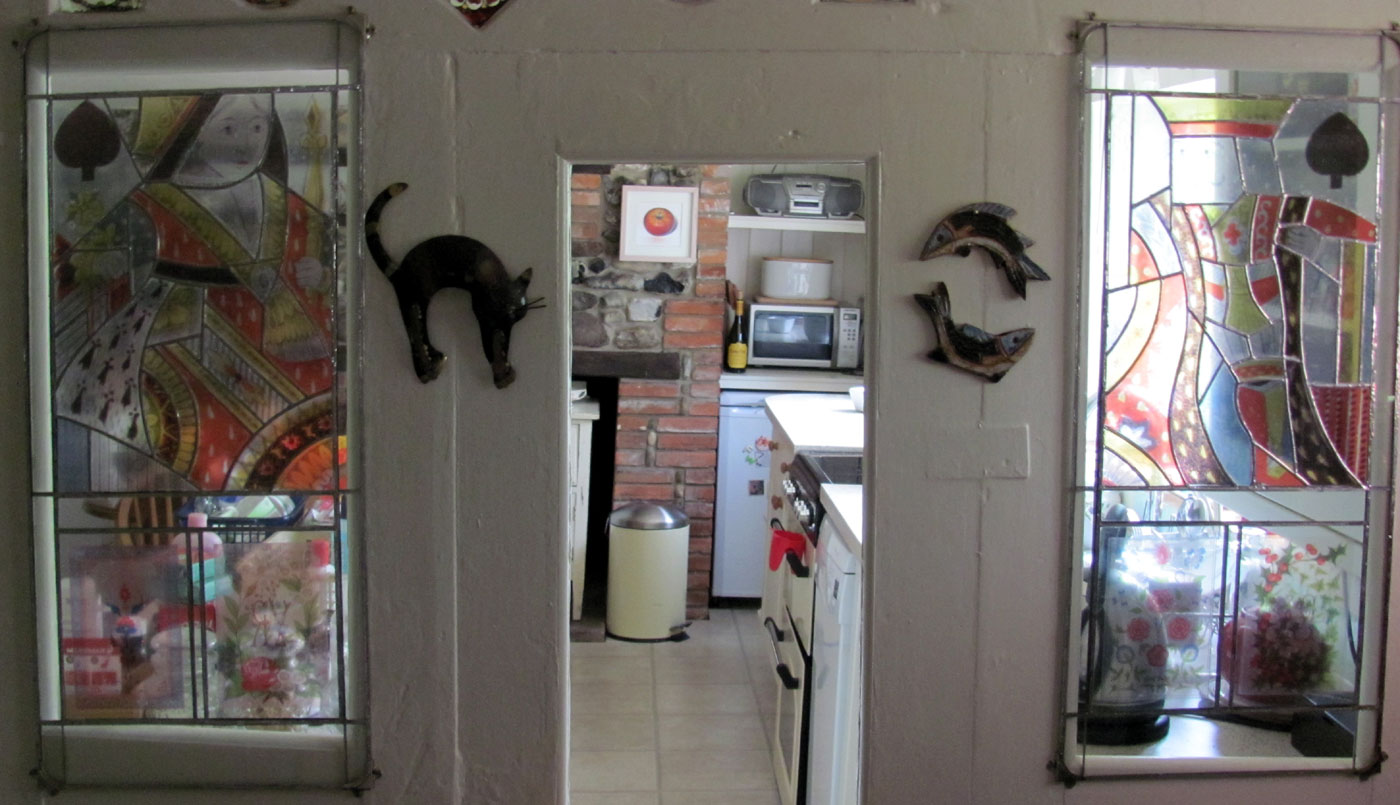
They complement the hand painted small glass panes from the 19th century above them, the very bottom of which can be seen at the top of the picture.
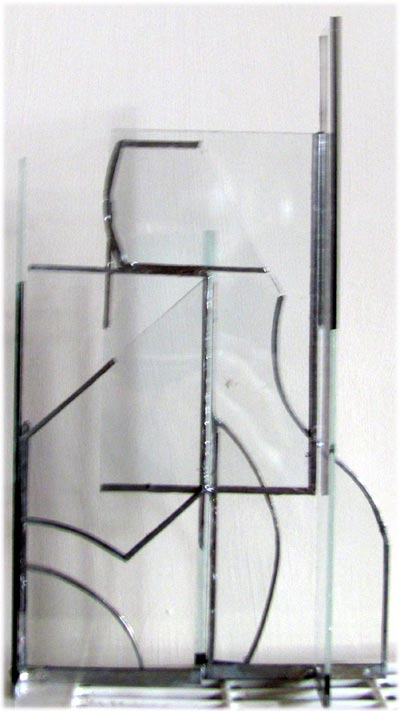
He also produced a small three-dimensional model as a test piece, which could be produced as a glass ornament. Since the picture was taken, I've added a coloured print of the queen to the back of the glass.
Right: the three-dimensional model.
There is a tenuous link between Bungay, where we live, and the Queen of Spades. Judging by some of the details in the Queen of Hearts as drawn by Tenniel for Lewis Carroll's Alice in Wonderland, he used the De La Rue Queen of spades as a model. The equivalent Queen of Hearts from the same court set is rather too delicate-looking for the Carroll character. After the first print of the book by Oxford University Press was rejected by both Tenniel and Carroll, all further copies of the original version of the book were printed by Clays. Although they were based in London at the time, they transferred their business operation to Bungay in Suffolk and so many thousands of copies of Alice were printed here.

By Ken Lodge
United Kingdom • Member since May 14, 2012
I'm Ken Lodge and have been collecting playing cards since I was about eighteen months old (1945). I am also a trained academic, so I can observe and analyze reasonably well. I've applied these analytical techniques over a long period of time to the study of playing cards and have managed to assemble a large amount of information about them, especially those of the standard English pattern. About Ken Lodge →

Activity for 68: Playing cards in glass
Sign in to comment or save this article.

Related Articles
Mystery Objects
I have finally identified the purpose of this puzzling piece of card-playing kit.
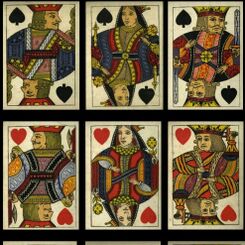
78: The Standard English pattern - Part 2, the tricky bits
There are many less straightforward aspects to the designs of the English pattern, which need carefu...
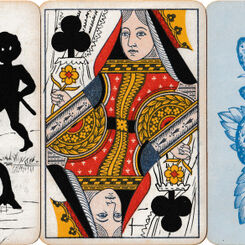
Hand-drawn transformation cards, c1875
A complete set of hand-drawn transformation cards from c1875, using a standard De La Rue pack.
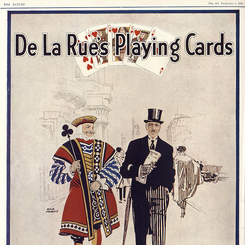
67: Adverts and related material after 1900
The final page of material relating to playing cards from British periodicals.
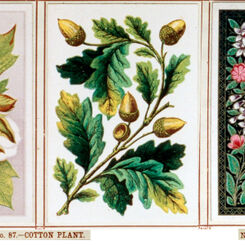
59: Owen Jones (1809-74) and De La Rue
A selection of examples of Owen Jones's artwork printed by De La Rue.
49: De La Rue in detail
A detailed presentation of the variants of De La Rue's standard cards.
De la Rue for export
Non-standard playing cards produced by De la Rue & Co. (London), c.1930s
Suicide King
The King of Hearts, holding a sword behind his head, is sometimes nicknamed the “Suicide King”. He c...
33: Functional Changes to Playing Cards
The emphasis throughout my collecting has been on the design of the courts cards, and it should be p...
Draughts League Medals
Arthur Charles Prince worked for De la Rue as a playing card cutter and later was promoted to superv...
![28: How to Analyze and Differentiate Playing Card Plates (De La Rue, Waddington and the Berlin pattern [Französisches Bild])](/core/cache-wopc-thumbs/var/www/wopc/production/www/images/contributors/kenlodge/4889-analyzing-playing-card-plates/JS_D1-D2-D3.b26b0503.jpg "28: How to Analyze and Differentiate Playing Card Plates (De La Rue, Waddington and the Berlin pattern [Französisches Bild])")
28: How to Analyze and Differentiate Playing Card Plates (De La Rue, Waddington and the Berlin pattern [Französisches Bild])
My interest in postage stamp variants led me to apply the same principles to playing cards.
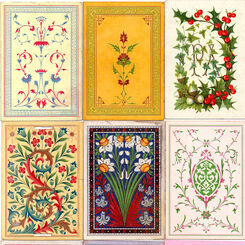
14: Back Designs
A few examples of the many interesting back designs.
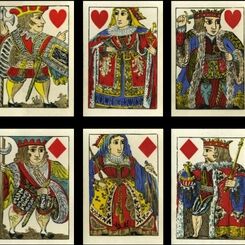
5: De La Rue
In December 1831 Thomas de la Rue was granted his patent for printing playing cards by letterpress.
Games Leaflets
Thos De la Rue & Co. & Gibson's Games Leaflets.
Jean Picart le Doux
Jean Picart le Doux playing cards, issued in 1957 to celebrate the company's 125th anniversary, feat...
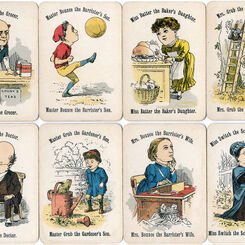
Cheery Families, c.1893
Cheery Families card game designed by Richard Doyle and printed by De La Rue & Co., Ltd, c.1893

De La Rue Continental
During the latter part of the nineteenth century De La Rue produced two special packs of cards for t...
De La Rue
De La Rue introduced letter-press printing into playing card production and his patent was granted i...
Owen Jones (1809-1874)
Owen Jones (1809-1874) was a Welsh architect and interior designer who designed the backs of playing...
The History of Playing Cards
Playing cards appear in European records in the late 14th century, but their earlier history lies fu...
Most Popular
Our top articles from the past 60 days


