New Style ‘Jugendstil’
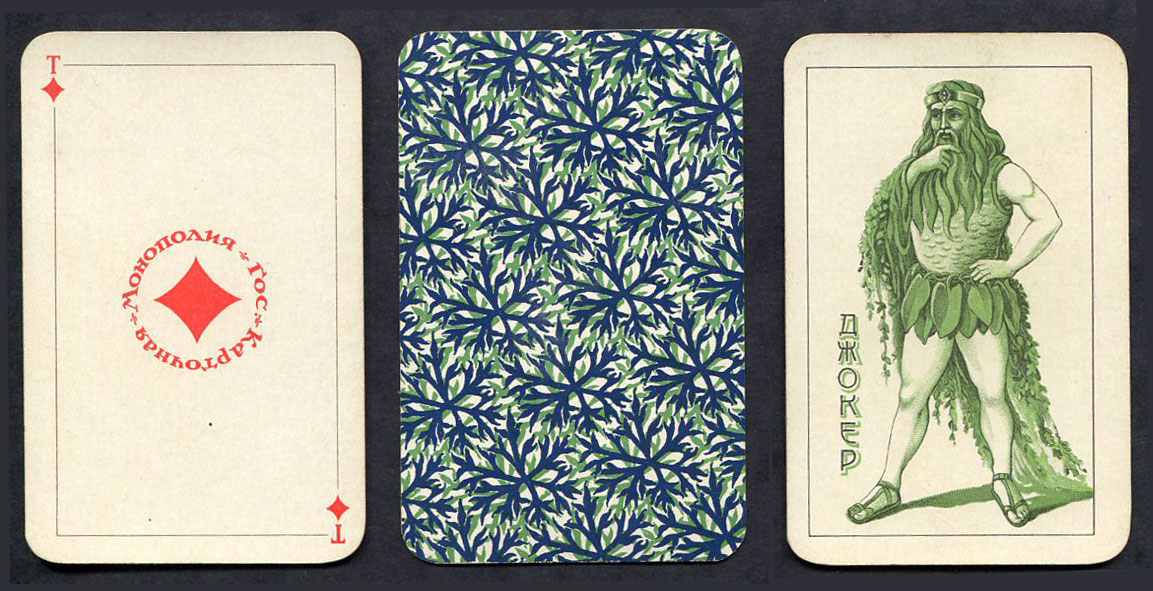
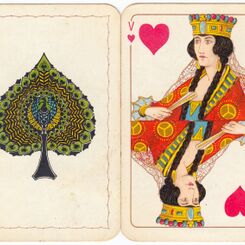
Playing cards showing the influence of ‘Jugendstil’ manufactured by the Soviet Playing Card Monopoly (U.S.S.R.).
“New Style”
playing cards from Russia based on Literature & Theatre
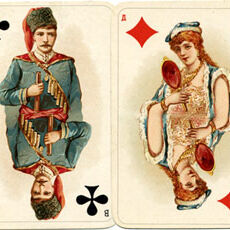
Playing cards showing the influence of ‘Jugendstil’ first manufactured by the Soviet Playing Card Monopoly (U.S.S.R.) in 1911 and then again in c.1930. The well-designed court figures are colour coordinated, and represent characters taken from literary works, pantomimes and comedy (Queen of Diamonds as Scheherazade, Queen of Clubs as a mermaid, Knave of Hearts as Pierrot). Some editions are known with English indices suggesting that the cards were also intended for export.
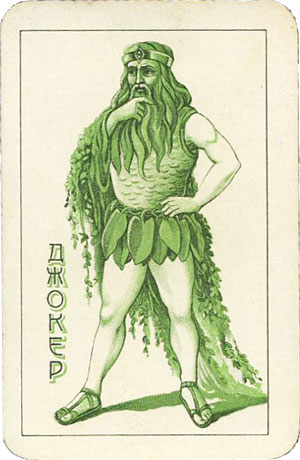
Above: the original Joker from the first edition.
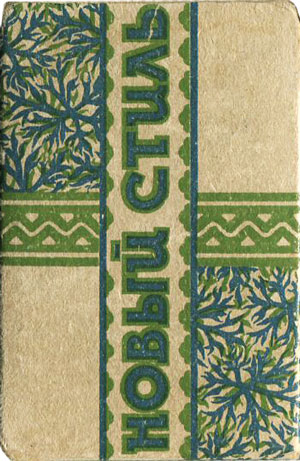
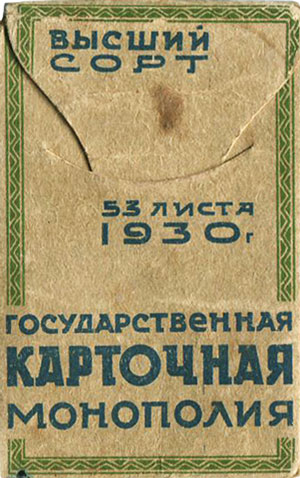
Above: the box (front & back) from 1930s edition.
Click here to see the original back design.
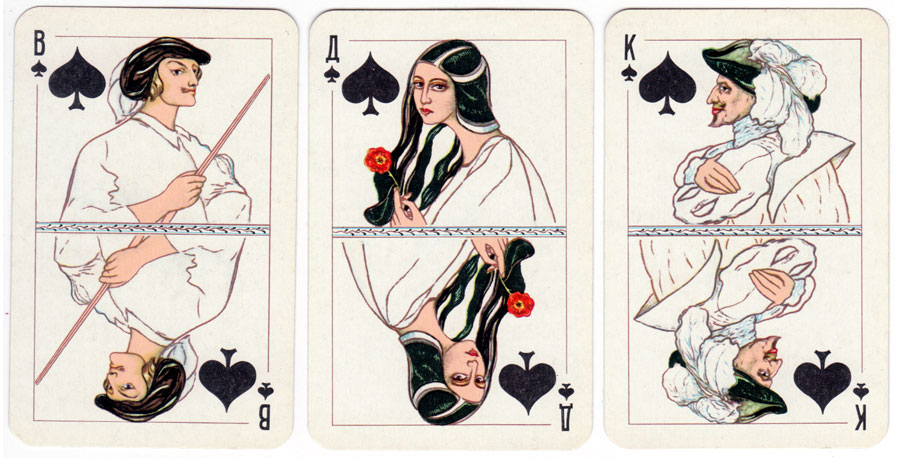
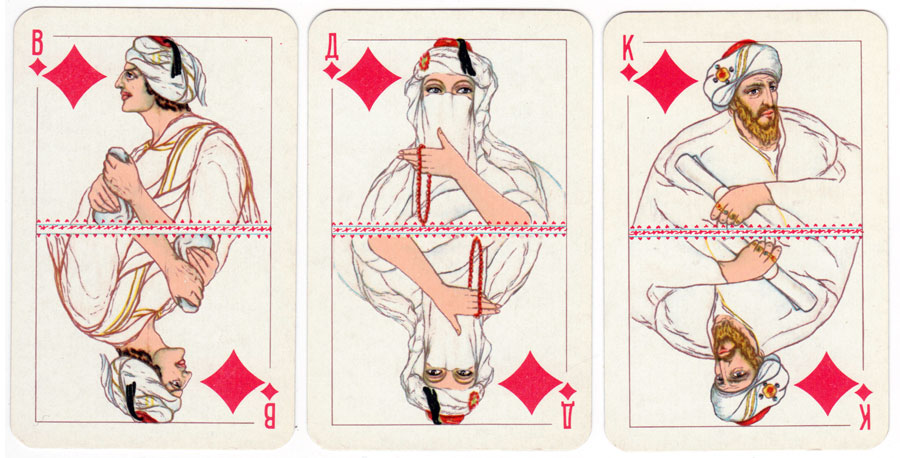
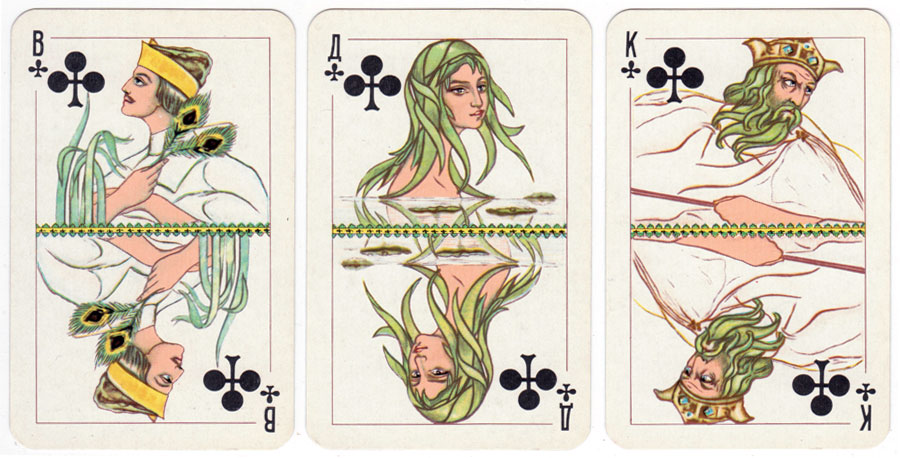
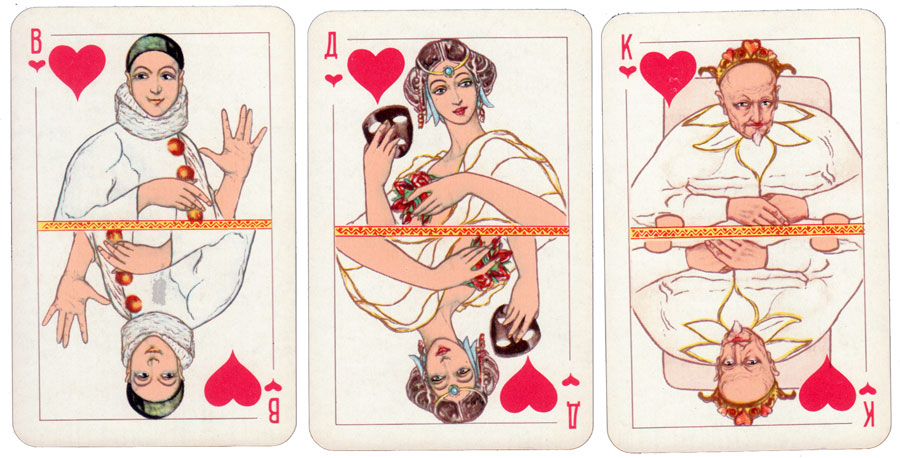
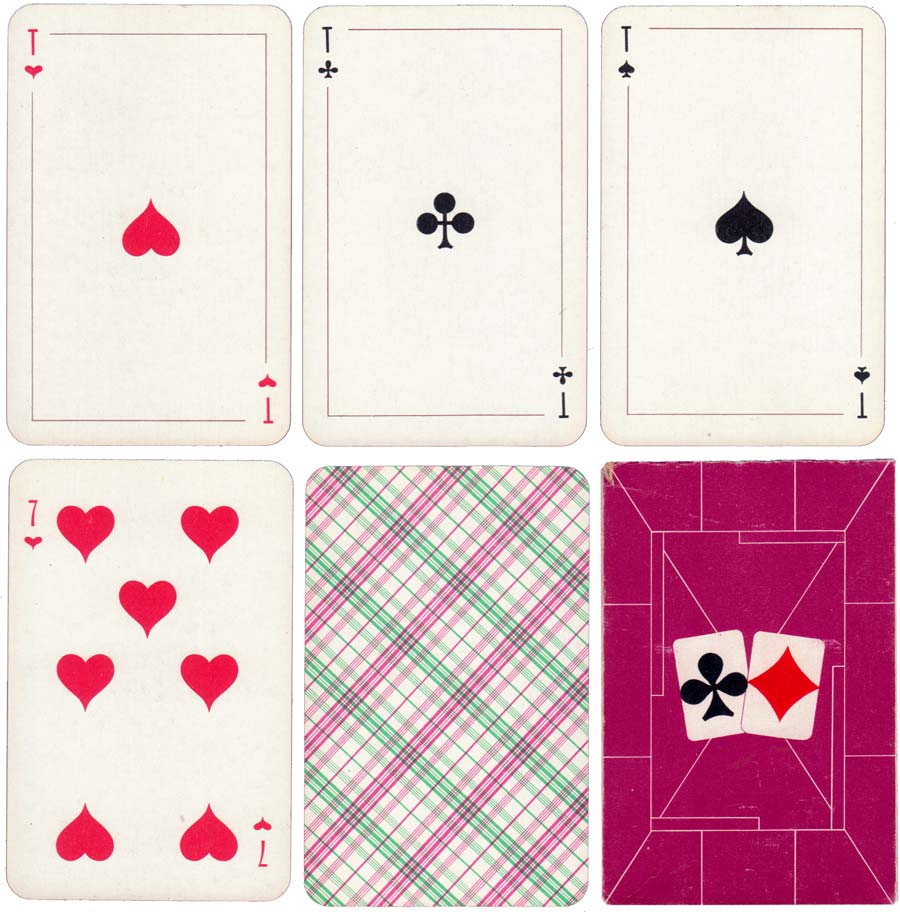
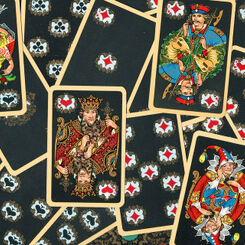
Above: cards from a modern re-print, c.1980, with a new back design and box. Images courtesy Rex Pitts.

By Rex Pitts (1940-2021)
United Kingdom • Member since January 30, 2009
Rex's main interest was in card games, because, he said, they were cheap and easy to get hold of in his early days of collecting. He is well known for his extensive knowledge of Pepys games and his book is on the bookshelves of many. His other interest was non-standard playing cards. He also had collections of sheet music, music CDs, models of London buses, London Transport timetables and maps and other objects that intrigued him.
Rex had a chequered career at school. He was expelled twice, on one occasion for smoking! Despite this he trained as a radio engineer and worked for the BBC in the World Service. Later he moved into sales and worked for a firm that made all kinds of packaging, a job he enjoyed until his retirement. He became an expert on boxes and would always investigate those that held his cards. He could always recognize a box made for Pepys, which were the same as those of Alf Cooke’s Universal Playing Card Company, who printed the card games. This interest changed into an ability to make and mend boxes, which he did with great dexterity. He loved this kind of handicraft work.
His dexterity of hand and eye soon led to his making card games of his own design. He spent hours and hours carefully cutting them out and colouring them by hand.

Activity for New Style ‘Jugendstil’
Sign in to comment or save this article.

Related Articles
Romeo & Juliet
A Shakespearean-themed pack, with Spanish-suited and standard editions.
Playing Card Books - References
A guide to reference books for playing-card collectors, focusing on museum catalogues, collection su...
Russian Circus deck
The Russian Circus deck published by the Imperial Playing Card Factory, St Petersburg.
Victor Hugo “L’homme qui rit”
Two different packs with costume designs for Victor Hugo plays, issued on the centenary of his deat...
Wedding of Krechinsky • Свадьба Кречинского
A pack of cards depicting characters from the famous play "The Wedding of Krechinsky" by Sukhovo-Kob...
Art Nouveau playing cards from Italy
from the Armanino factory in Genoa
Shakespeare Playing Cards
Kickstarter-funded modern remake of the 1902 classic pack, perfect for Shakespeare
Art Nouveau Whist playing cards from a small Dutch factory
The factory probably only produced playing cards for a few years in the 1920's
Russian Playing Card History - From the Beginnings to 1917
An in-depth review of the history of card-playing, gambling, legislation, manufacture and taxation o...
Russian Playing Card Monopoly
The Russian Playing Card Monopoly was established in March 1798 with all revenue going to support th...
Russian Playing Cards
Playing cards were known in Muscovy as early as the last quarter of the sixteenth century.
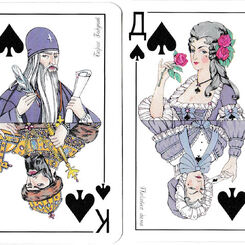
Pushkin
Pack designed by M. Rydaeva celebrating the 200th anniversary of Alexander Pushkin’s birth.
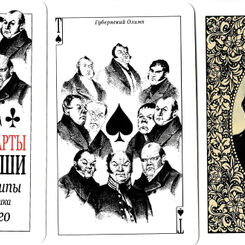
Dead Souls
Dead Souls, or “Mertvye dushi igral’nye karty” produced in 2006 by Aleksei Orleanskii.
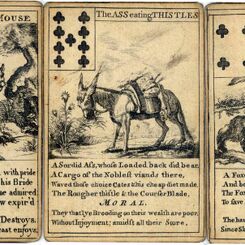
Aesop’s Fables
Aesop’s Fables playing cards by I. Kirk, c.1759.
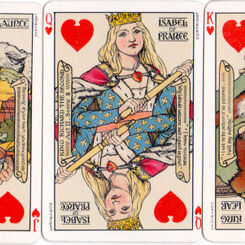
Shakespearean
Shakespearean Playing Cards designed by Frederick Colin Tilney, made by John Waddington Limited, 193...
Historical playing cards, 1897
Russian “Historical” playing cards with designs by Nikolay Karazin, 1897
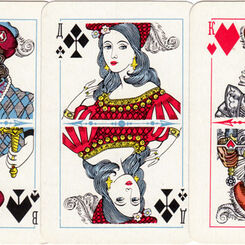
Russian Opera Scenes
Russian Opera & Theatre Scenes playing cards first published by the Colour Printing Plant (USSR, Rus...
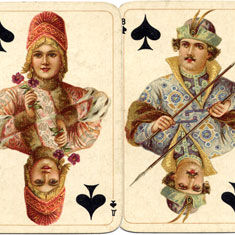
Russian Style
Russian style playing cards first published in 1911.

Anti-Religions
Clubs represent the Russian Orthodox church, Hearts Roman Catholicism, Spades Confucianism and Diamo...

Early History of Playing Cards & Timeline
Out of an apparent void, a constellation of references in early literature emerge pointing to the su...
Most Popular
Our top articles from the past 60 days