


Hoyle v Foster: whose name should we remember?
Hoyle’s name is associated with the rules by which many games are played, particularly card games But If anyone deserves to be regarded as the source of standard rules for most card games today it is not Hoyle but Robert Frederick Foster (1853-1945).
Unable to preview PDF directly.
Download PDF to View
By Tony Hall
United Kingdom • Member since January 30, 2015
I started my interest in card games about 70 years ago, playing cribbage with my grandfather. Collecting card game materials started 50 years or so later, when time permitted. One cribbage board was a memory; two became the start of a collection currently exceeding 150!
Once interest in the social history of card games was sparked, I bought a wooden whist marker from the 1880s which was ingenious in design and unbelievably tactile. One lead to two and there was no stopping.
What happened thereafter is reflected in my articles and downloads on this site, for which I will be eternally grateful.

Activity for Hoyle v Foster: whose name should we remember?
Sign in to comment or save this article.

Related Articles
Learning to play Cribbage
I learned to pay cribbage when I was very young, aged around six or seven.
Scientific Whist
“Scientific Whist” : standard cards with instructions for play on the faces by Chas Goodall & Son, 1...
Hoyle and his Legacy
Edmond Hoyle (1672-1769) was an English writer who made his name by writing on whist and a selection...
Pinochle
I have always been intrigued by the game Pinochle.
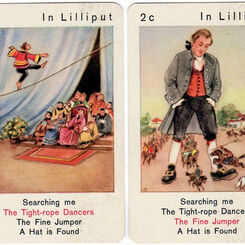
Gulliver’s Travels
Gulliver’s Travels card game no.293 published by Piatnik, c.1950.
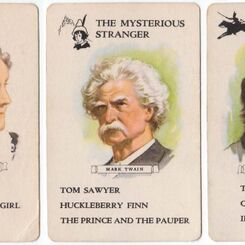
Authors
Authors quartet game published by Whitman Publishing Co., 1951.
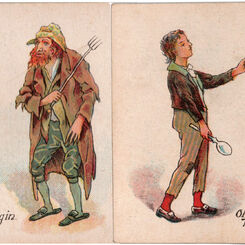
Dickens Snap
Dickens Snap, c.1890.
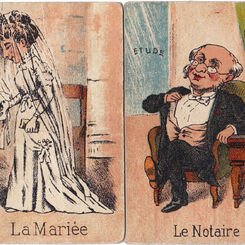
La Mariée du Mardi-Gras
La Mariée du Mardi-Gras, published by Jeux et Jouets Français. Paris, early 1900s.
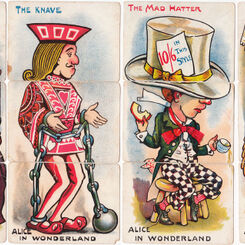
Wonderland Misfitz
Wonderland Misfitz by C.W. Faulkner & Co. Ltd, c.1908.
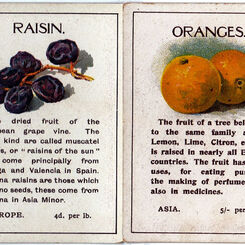
Domestic Economy
Domestic Economy published by Faulkner & Co, c.1899.
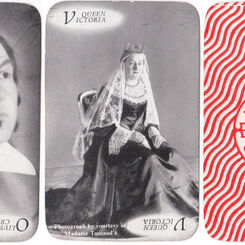
Have A Go
Have A Go card game published by Photo-Briton Ltd featuring photographs of waxwork figures from Mada...
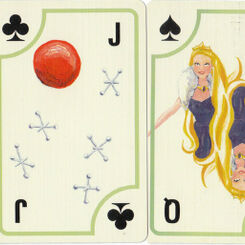
Holiday Games
IE Design Holiday Games, c.1990s.
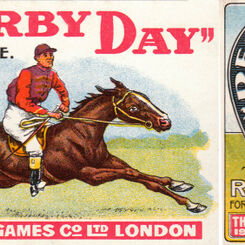
Derby Day
Derby Day race game published by Parker Games’ English subsidiary at Ivy Lane, London, from 1908 to ...
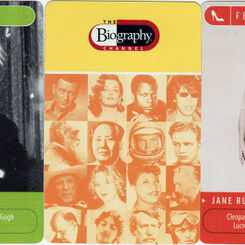
Biography Channel
The ‘Biography Channel Card Game’, 2002
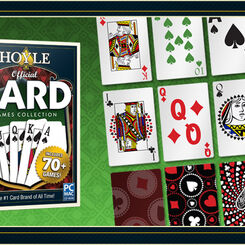
Hoyle® Official Card Games Collection
The Hoyle® Official Card Games Collection 2015 includes plenty of favourites, and also includes the ...
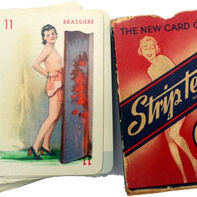
Strip Tease
‘Strip Tease’ card game featuring characters involved in the performance and subsequent prosecution ...
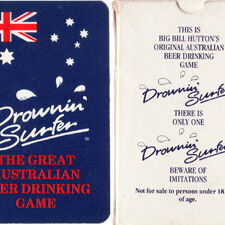
Drownin’ Surfer
Drownin’ Surfer card game
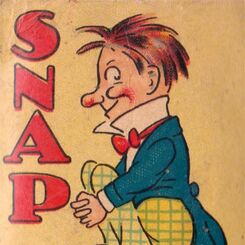
Alice in Wonderland Snap
Alice in Wonderland “Snap” 1 penny game from 1920s or 30s, made in Germany, anonymous manufacturer. ...
Brown & Bigelow
Brown & Bigelow of St Paul, Minnesota, was a leading producer of playing cards in the U.S. from the ...
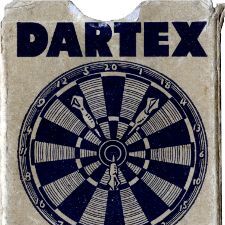
Dartex
Dartex, the Thrilling New Card Game of Skill (1938) based on the traditional pub game where darts ar...
Most Popular
Our top articles from the past 60 days


