


Baraja Canaria
‘La Auténtica Baraja Canaria’ was published in 1995 by Justo Pérez as an expression of the history and character of the Canary Islands.
La Auténtica Baraja Canaria
‘La Auténtica Baraja Canaria’ was published in 1995 by Justo Pérez (Tenerife) as an expression of the history and character of the Canary Islands, one of Spain's 17 autonomous communities. When Europeans began to explore the islands they encountered indigenous populations living at a Neolithic level of technology, who may have shared a common origin with the Berbers of northern Africa. The Sotas and Kings in this pack are depicted as Neolithic men and women wearing animal skins and cloaks. The Cavaliers are represented as bloodhounds. The suit symbols are prehistoric versions of the standard Spanish suits of Coins, Batons, Swords & Cups. The box has a poem alluding to a land of history, wine, fun, laughter and beautiful women.
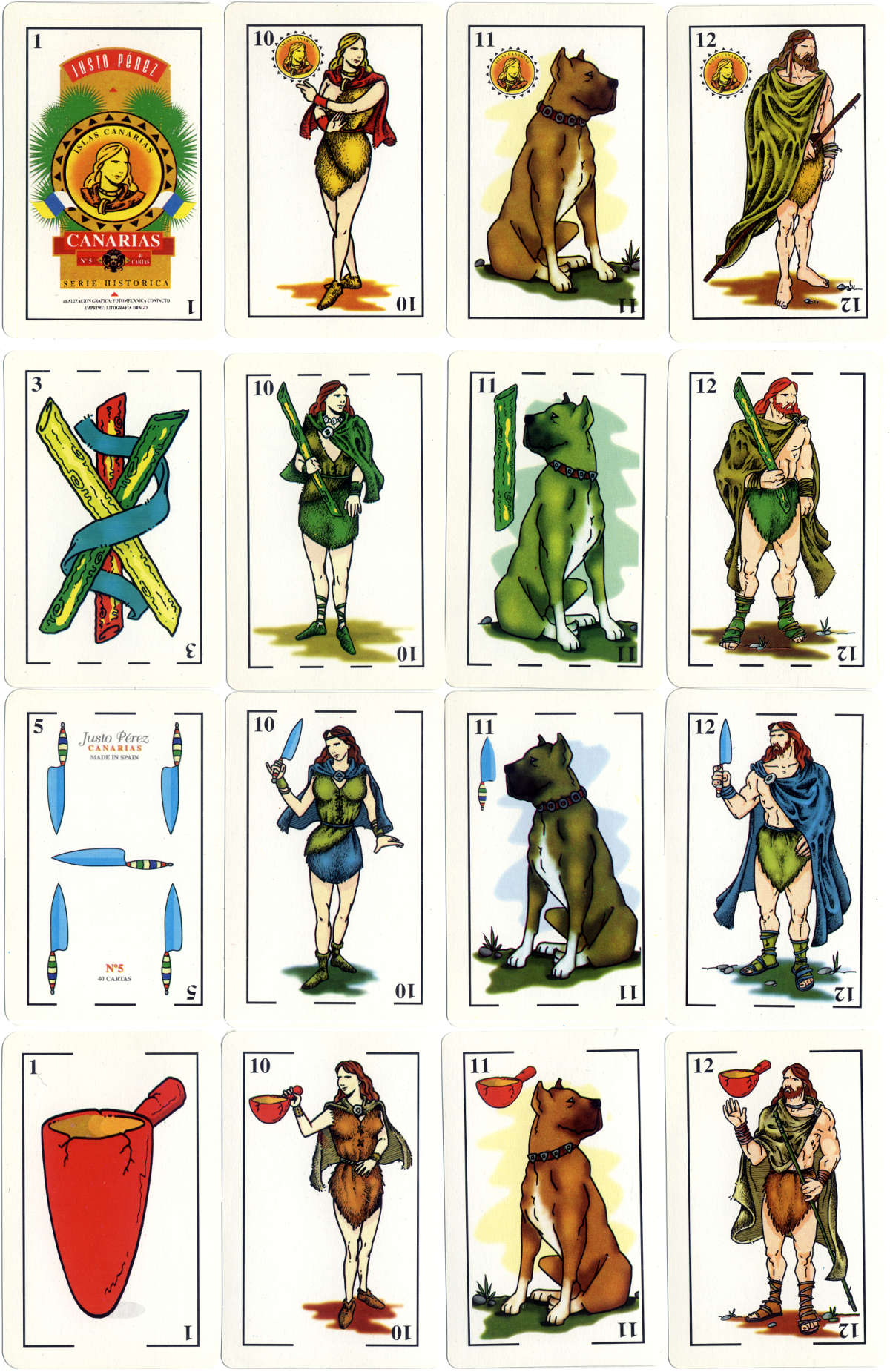
Above: ‘La Auténtica Baraja Canaria’ Nº5 Serie Histórica, published by Justo Pérez, Tenerife, 1995. 40 cards in special tuckbox. Found with formal or advertising backs, also a double-ended version with French suit symbols.

By Simon Wintle
Spain • Member since February 01, 1996
I am the founder of The World of Playing Cards (est. 1996), a website dedicated to the history, artistry and cultural significance of playing cards and tarot. Over the years I have researched various areas of the subject, acquired and traded collections and contributed as a committee member of the IPCS and graphics editor of The Playing-Card journal. Having lived in Chile, England, Wales, and now Spain, these experiences have shaped my work and passion for playing cards. Amongst my achievements is producing a limited-edition replica of a 17th-century English pack using woodblocks and stencils—a labour of love. Today, the World of Playing Cards is a global collaborative project, with my son Adam serving as the technical driving force behind its development. His innovative efforts have helped shape the site into the thriving hub it is today. You are warmly invited to become a contributor and share your enthusiasm.

Activity for Baraja Canaria
Sign in to comment or save this article.

Related Articles
Ubo cards
Traditional Ubo cards from the Philippines made from tree bark.
Baraja Canaria
Comic courts and non-standard suits representing the Canary Islands, with designs by Eduardo Millare...
Traditional Nomadic Life of Mongolia
Playing cards depicting paintings of Traditional Nomadic Life of Mongolia.
Habesha playing cards
Habesha playing cards published by “Ethiopian Reflection”
Juego de Naipes Andalusí
Andalusian playing cards designed by Marifé Montoya Carrillo with booklet by Jorge Lirola Delgado, 2...
Happy Playing Cards
Cheerful, colourful designs on handmade paper from Nepal.
Tonalamatl
Baraja Tonalamatl Mexican Aztec playing cards based on the prehispanic Codex Borgia manuscript.
Banana Leaf Cards
English Standard pack hand drawn & coloured on banana leaf, c.1820.
Far East
Far East playing cards with designs by Isabel Ibáñez de Sendadiano, c.1980.
America
“America” playing cards designed by Teodoro N Miciano, 1960.
East African Playing Cards
East African Playing Cards by Heraclio Fournier S.A., 1957.
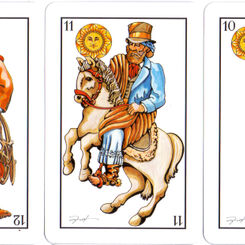
Baraja Gaucha
“Baraja Gaucha” fantasy deck designed by Mateo Tikas Plechas for Argentina, 1998.
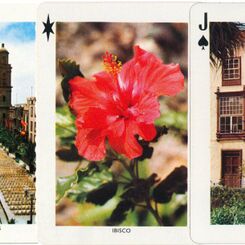
Canary Islands Souvenir
Canary Islands Souvenir by Heraclio Fournier, c.1970.
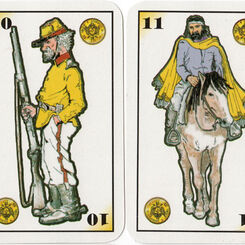
Naipes Argentinos Patagonia
“Naipes Argentinos Patagonia” with court cards depicting gauchos and native Indians, c.2000.
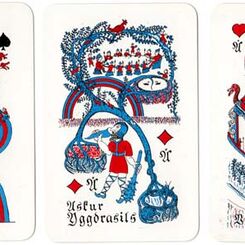
Iceland Mythological Playing Cards
Iceland Mythological Playing Cards designed by Sigurlinna Pétursson, 1958
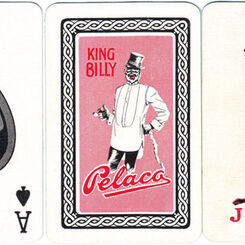
Pelaco
‘Pelaco’ playing cards with Aboriginal characters by Sands & McDougall, Australia, c.1930.
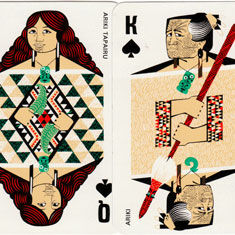
Maori
Maori themed playing cards from New Zealand depicting Maori Kings, Queens and Chiefs
Baralla Galega
'Baralla Galega' designed by X. Cobas and published by Imprenta Comercial Imprent S.A., La Coruña (S...
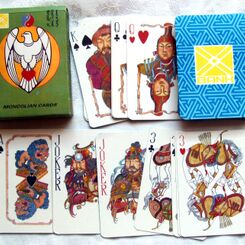
Mongolian Playing Cards
Mongolian Playing Cards.
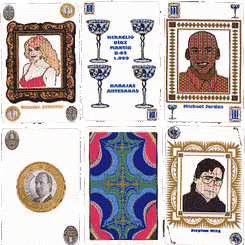
About Heraclio Díaz
Heraclio Díaz lives in the Canary Islands (Spain).
Most Popular
Our top articles from the past 60 days


