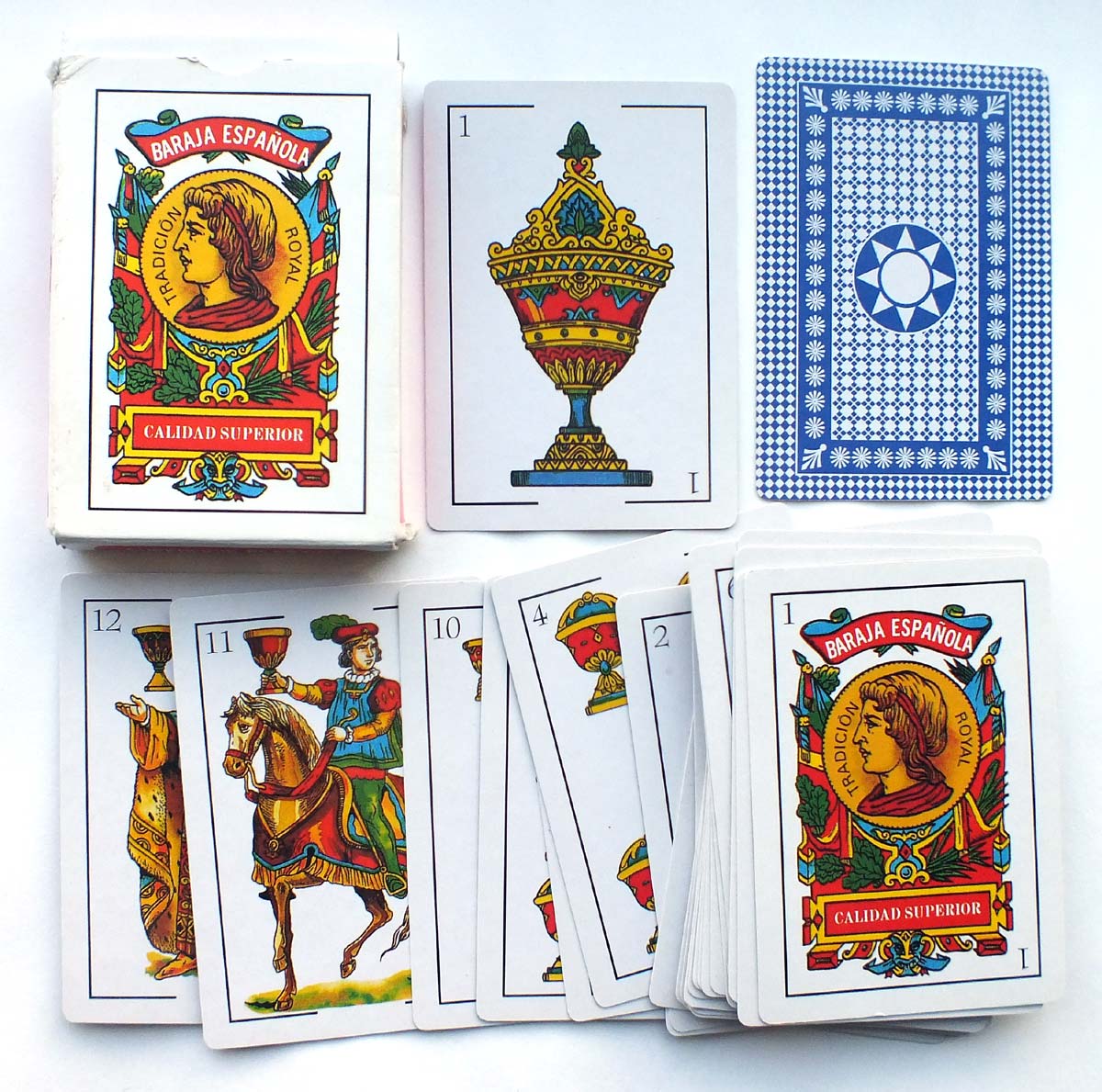
QAIPES – cartas españolas
Spanish-suited cards made in China inscribed “QAIPES” and “BAIPES”!
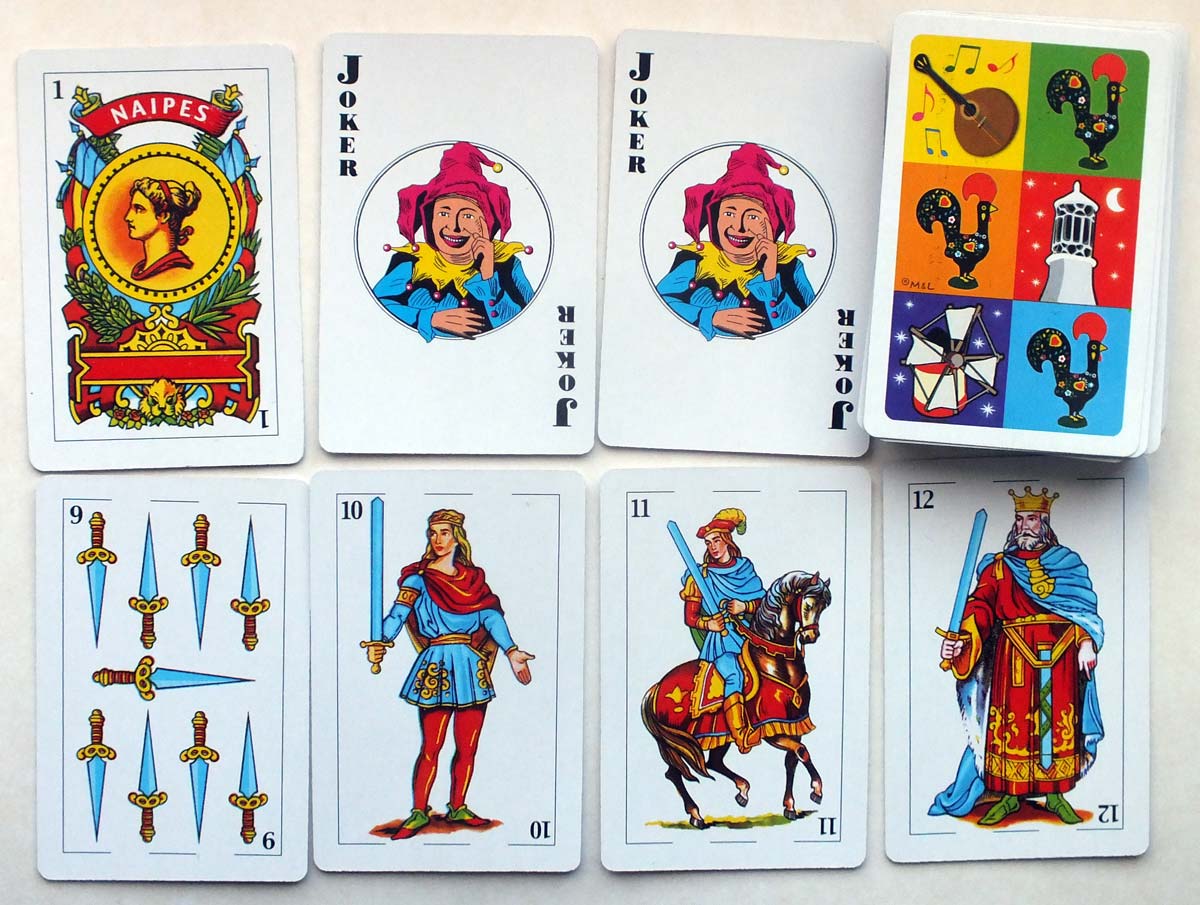
Sometimes when I see something totally ridiculous on a playing-card box I just have to buy the pack in order to find out what’s going on! Such was the case with this pack purchased recently which proudly states on the tuck flap “MADE IN CHINA”. The place of manufacture must account for the completely baffling use of the word “QAIPES” on the box and on the banner on the Ace of Coins. Not only that but the word has been transmogrified to become “BAIPES” on one of the extra cards (or comodines). Presumably the manufacturer in China had no idea what “NAIPES” meant or why it was significant or thought that it meant nothing at all and so invented a couple of new words. Maybe he thought it was a brand name which he could not copy. What must card players in Spain make of this?! See the box
The cards themselves are a rather poor version of the Castilian pattern. The courts have white faces. None of the minor cards have any further marks or text. The box looks the same front and back.
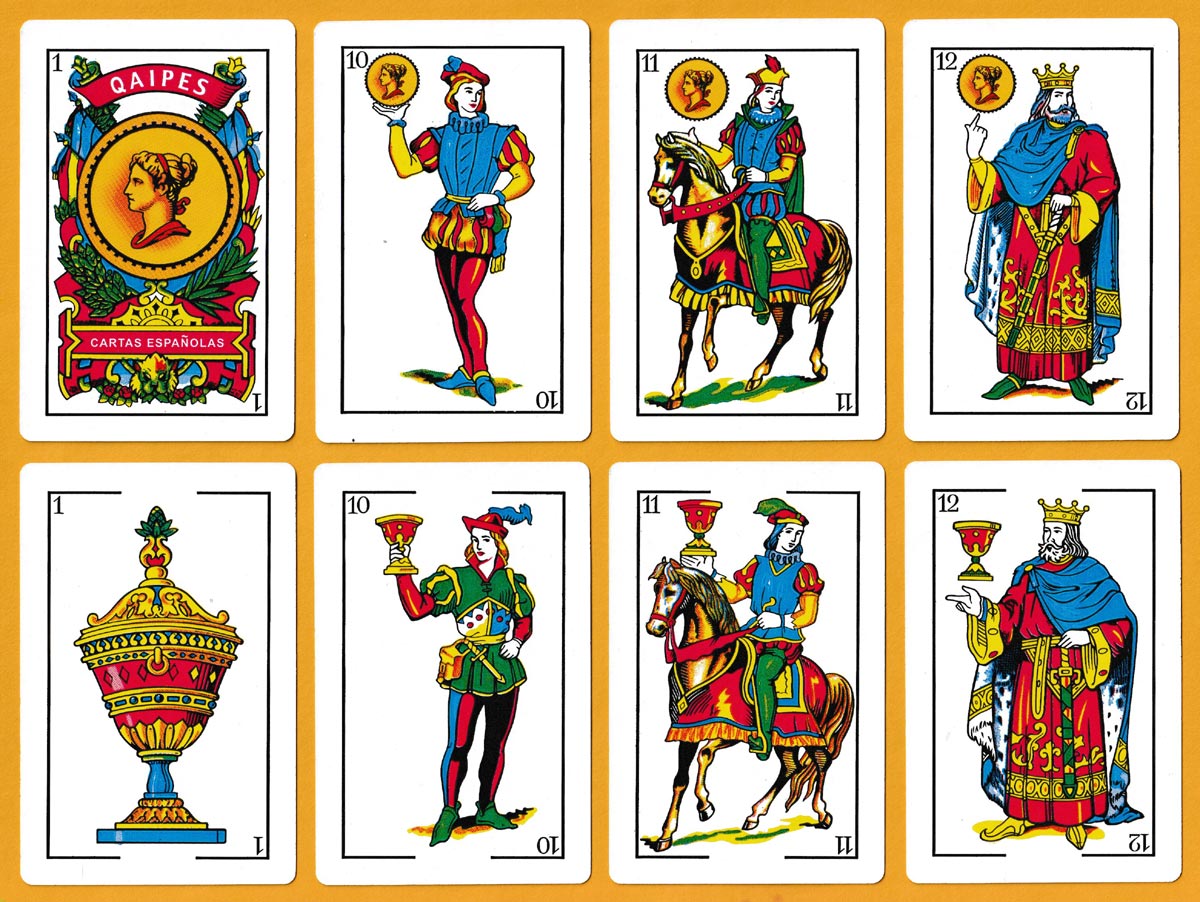
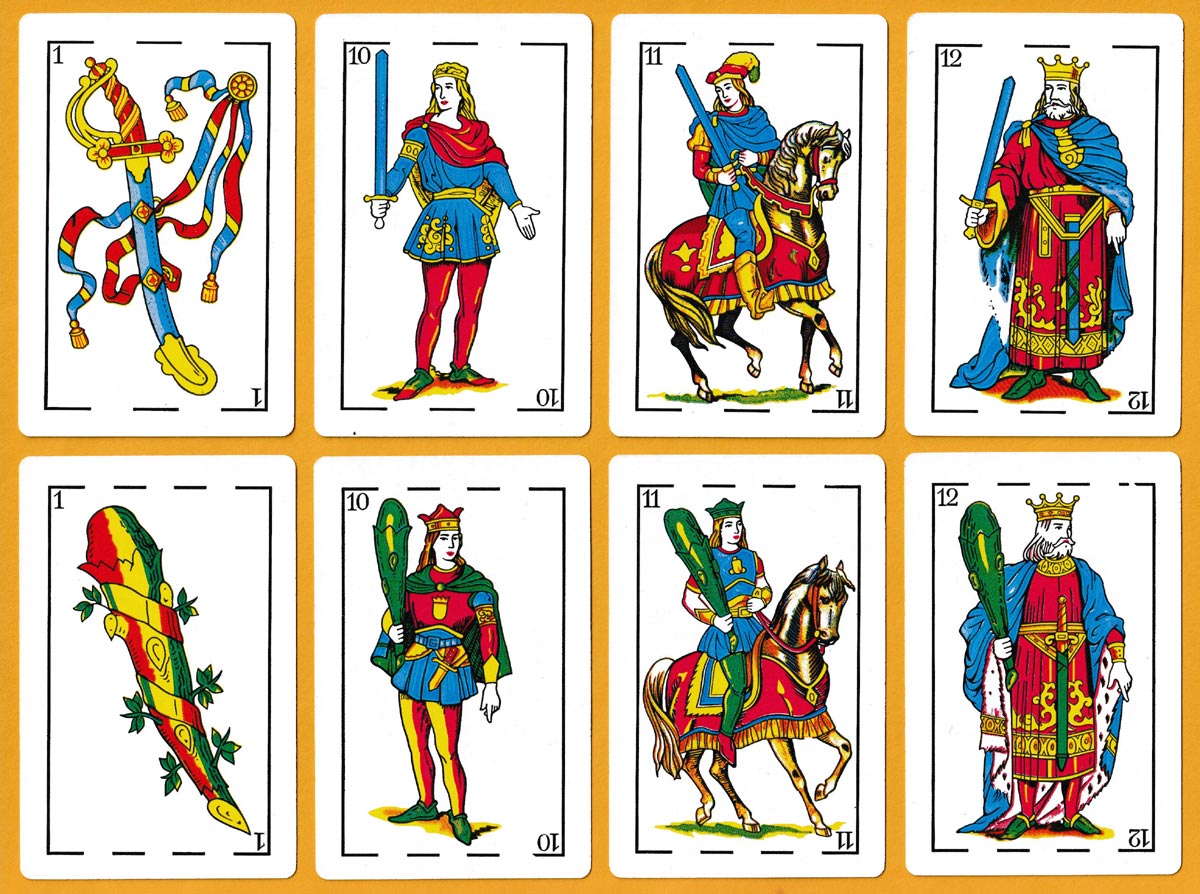
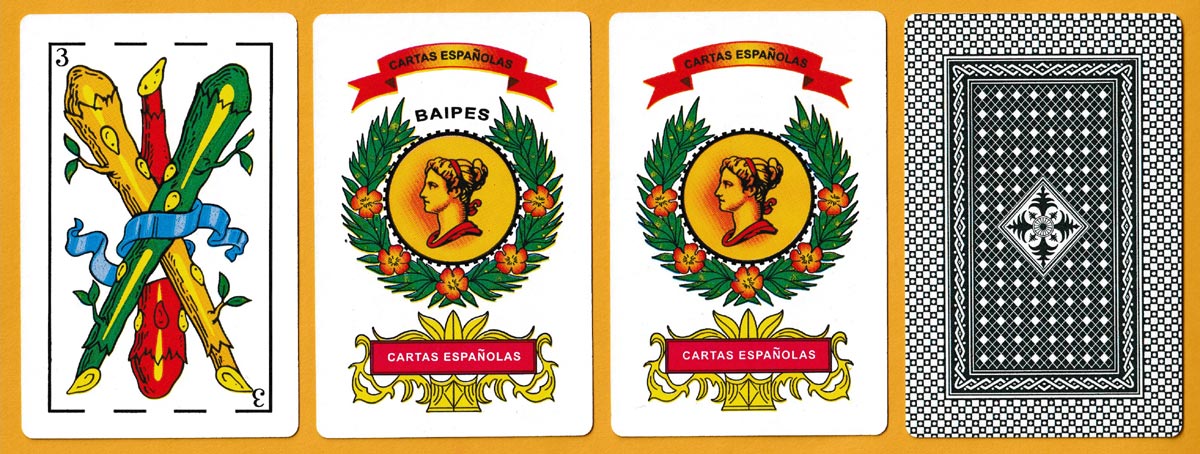
Above: QAIPES – cartas españolas cards made in China. Date unknown. 48 cards + 2 extra cards in tuck box. Size: 62 x 95 mm. Purchased in Vitoria, Spain, May 2024.
Note from the Editor
At trade fairs in China, you typically engage with a sales representative who will ask, “What product do you want to create, and in what quantity?” They offer customization for both the cards and the packaging, allowing for any text, such as “Made in North Korea,” if desired.
However, it’s important to note that these manufacturers provide no guidance; the responsibility is entirely on the buyer to possess the necessary design skills and technical knowledge for preparing files for print, including converting files to CMYK, setting proper resolutions, and ensuring the artwork is print-ready. The manufacturer will produce your requirements exactly as specified, regardless of whether they are technically correct.
The term QAIPES lacks any recognized meaning in Chinese, suggesting it is a meaningless error. Typically, the identities of the actual manufacturer remains undisclosed.
• See also Baraja Española • Portuguese souvenir • QAIPES►

By Roddy Somerville
France • Member since May 31, 2022
Roddy started collecting stamps on his 8th birthday. In 1977 he joined the newly formed playing-card department at Stanley Gibbons in London before setting up his own business in Edinburgh four years later. His collecting interests include playing cards, postcards, stamps (especially playing cards on stamps) and sugar wrappers. He is a Past President of the Scottish Philatelic Society, a former Chairman of the IPCS, a Past Master of the Worshipful Company of Makers of Playing Cards and Curator of the WCMPC’s collection of playing cards. He lives near Toulouse in France.

Activity for QAIPES – cartas españolas
Sign in to comment or save this article.

Related Articles
TikTok Tarot
TikTok Tarot is a unique tarot deck that puts a modern spin on the Rider-Waite format; with TikTok-i...
Chinese Costumes
Chinese Costumes from the Winterthur Collection, published by Fournier, 1984.
Far East
Far East playing cards with designs by Isabel Ibáñez de Sendadiano, c.1980.
Most Popular
Our top articles from the past 60 days