


Archaic Spanish proof sheets
2 x uncoloured proof sheets of archaic Spanish-suited playing cards produced for “New Spain”, possibly clandestinely.
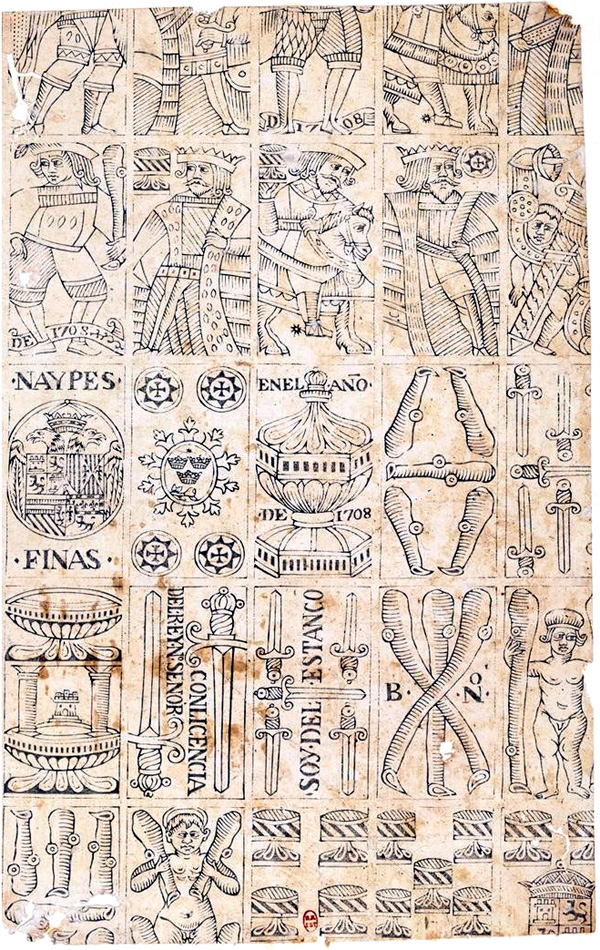
These 2 uncoloured proof sheets from the Bibliothèque nationale de France, attributed by Guibert [1934] to French master cardmakers Jean Dreveton (active 1668 à 1683) and François Dreveton (active 1696-1737), both registered at Aix-en-Provence, depict an archaic, early Spanish pattern with Spanish coats-of-arms and inscriptions on several cards. Closer examination suggests that they may have been produced clandestinely for Spanish depenencies in “New Spain”, such as Guatemala, Mexico or Peru, where the Spanish crown controlled and administered their monopolies via ‘Estancos’, the first of which was established in 1552.
The first sheet has the inscription “Por el Adm. Bartolome Baranano” on the sixes of coins, whilst the second one has "Soy del Estanco" on the five of swords. Thus Bartolome Barañano (c.1615-1684) may have been the administrator of the Estanco de Naipes in the first example, as the BnF mentions that he was the administrator of the card monopoly in Lima, Peru, in 1684, but without giving any source for this information. The second sheet may have been for a similar destination, or else counterfeit or pirate cards. It is not clear which is the case as these cards were possibly produced in France whilst exploitation of the Spanish monopoly was reserved for a specific person or institution in exchange for a tax to the State.
Another type of case related to the piracy of playing cards was the existence of clandestine gambling houses during the colonial period. These places would buy pirated decks to carry out their illicit business, which not only included card games but also dice, balls, and bar games [AGN, 2022].
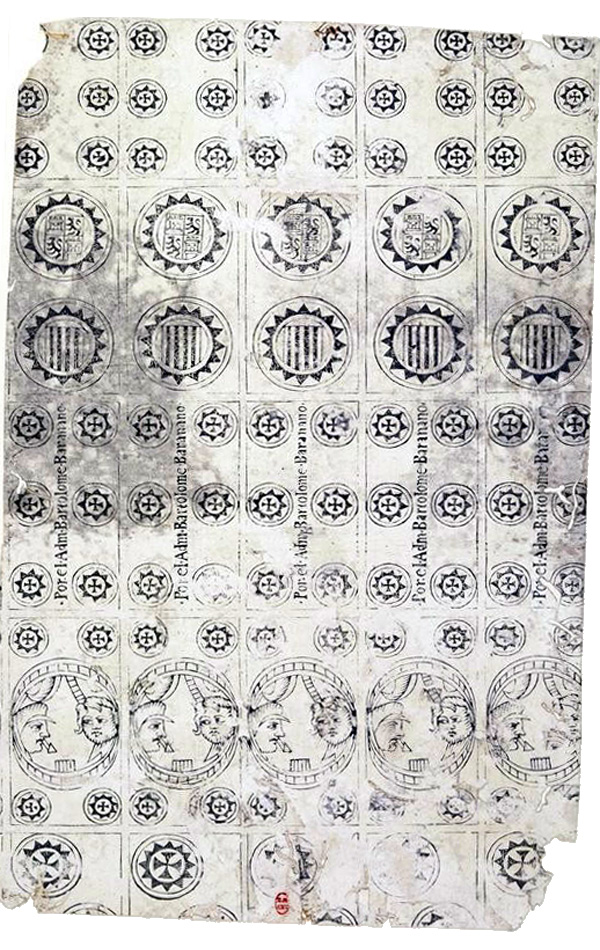
Sheet 1 (left): this sheet includes 5 strips of the eight, two, six, five and three of coins. Inscription “Por el Adm. Bartolome Baranano” on the sixes of coins. Woodcut; 30 x 19,5 cm. 1660-1680.
Sheet 2 (right): inscription "Naypes Finas" and arms of Spain on the ace of coins. The date is on the ace of cups and two jacks, in the form “En el año 1708” or “De 1708”. Also mentions “Con licencia del Rey N° Senor” on the two of swords and "Soy del Estanco" on the five of swords, initials “B. N°” on the three of clubs. Woodcut; 30.2 x 19.6 cm. Publication date 1708.
References
Archivo General de la Nación, Mexico, February 08, 2022: La administración y dificultades del estanco de naipes de la Nueva España►
Bibliothèque nationale de France: Feuille de moulage de cartes à jouer éditées pour le Pérou►
Bibliothèque nationale de France: Feuille de moulage de cartes à jouer éditées pour l'Espagne ou pour le Pérou►
Guibert, J: Collection Georges Marteau, léguée en 1916. Cartes à jouer. Etat sommaire, Paris, 1934, items 55a & 55b. BnF: Collection Georges Marteau, 1934►

By Simon Wintle
Spain • Member since February 01, 1996
I am the founder of The World of Playing Cards (est. 1996), a website dedicated to the history, artistry and cultural significance of playing cards and tarot. Over the years I have researched various areas of the subject, acquired and traded collections and contributed as a committee member of the IPCS and graphics editor of The Playing-Card journal. Having lived in Chile, England, Wales, and now Spain, these experiences have shaped my work and passion for playing cards. Amongst my achievements is producing a limited-edition replica of a 17th-century English pack using woodblocks and stencils—a labour of love. Today, the World of Playing Cards is a global collaborative project, with my son Adam serving as the technical driving force behind its development. His innovative efforts have helped shape the site into the thriving hub it is today. You are warmly invited to become a contributor and share your enthusiasm.

Activity for Archaic Spanish proof sheets
Sign in to comment or save this article.

Related Articles
Naipes en Chile
Noticias y crónicas de la época del virreinato.
Archaic Spanish-suited pattern from Bayonne
Archaic Franco-Spanish pattern from Bayonne by a manufacturer with the initals M.V.
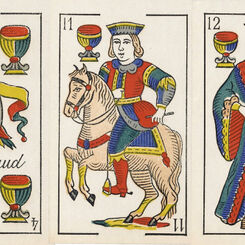
Catalan pattern by B.P Grimaud
Standard Spanish Catalan pattern deck made in Paris by B.P Grimaud.
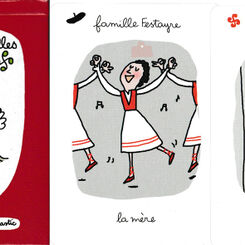
Jeu des 7 familles basques
A Happy Families-type game from the Basque country, with designs by Soledad Bravi and Agathe de Las...
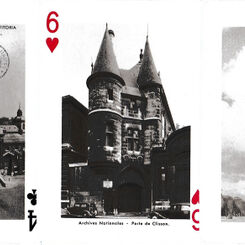
Monuments de Paris
‘Monuments de Paris’ souvenir playing cards produced by Heraclio Fournier, c.1964.
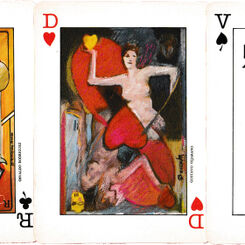
Peintres Latino Americains
Original artwork by 18 different Latin American artists.
Dreveton - Provence pattern
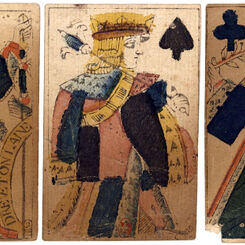
French cardmakers Jean and François Dreveton lived in Aix-en-Provence.
Aluette by Dieudonné Jeune, Orléans, c.1850
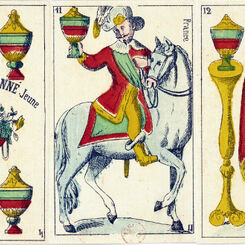
Aluette game by Fabrique Dieudonné Jeune, Orléans, c.1850.
The New Game of Tarot (or Tarock)
Regional costumes and alpine flora on a French Tarot game pack marking 600 years of playing cards in...
Histoire de France
“Histoire de France” facsimile of French historical deck of 1820.
J. Deluy c.1490s
Archaic Spanish-suited cards produced by J. Deluy c.1490s.
El Gato con Botas
Puss in Boots card game manufactured by H. Fournier, 1981.
Christopher Columbus 5th Centenary playing cards
Fifth Centenary of the Discovery of America playing cards by published by Heraclio Fournier.
Parisian style Spanish deck by Grimaud
Parisian style Spanish deck by Grimaud for export to Uruguay.
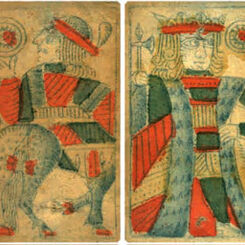
Pedro Varangot, 1786
Archaic Navarra pattern produced for the Pamplona General Hospital Monopoly by Pedro Varangot in 178...
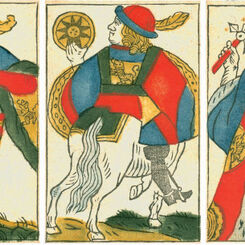
Anonymous Spanish Suited pack, c.1760
Anonymous archaic Spanish suited pack, c.1760.
Fournier No. 55
Naipes Intransparentes de Una Hoja No.55 made by Hijos de Heraclio Fournier (Vitoria) for exportatio...
Paraguayan Playing Cards
Playing Cards in Paraguay
Grimaud Spanish pattern
Grimaud Spanish pattern, c.1880
The ‘Parisian’ Spanish pattern
A version of the old Spanish National pattern which was manufactured by Parisian card makers in the ...
Most Popular
Our top articles from the past 60 days


