


Jeu des 7 familles basques
A Happy Families-type game from the Basque country, with designs by Soledad Bravi and Agathe de Lastic.
Here is a jeu des 7 familles with a difference. This one has seven cards in each family instead of the normal six, the seventh card being an animal. All the families have Basque names and the cards contain many references to Basque traditions, food and culture – surfing, fishing, dancing, singing, playing golf, pelota, piment d’Espelette, etc. Soledad Bravi’s simple, childlike designs are aimed at children and adults alike. The back design uses the three main colours of the Basque flag – (Basque) red, green, and white. This pack can be considered truly Basque as it was printed in the Spanish Basque region of Álava by Heraclio Fournier on good-quality playing-card board. See the box
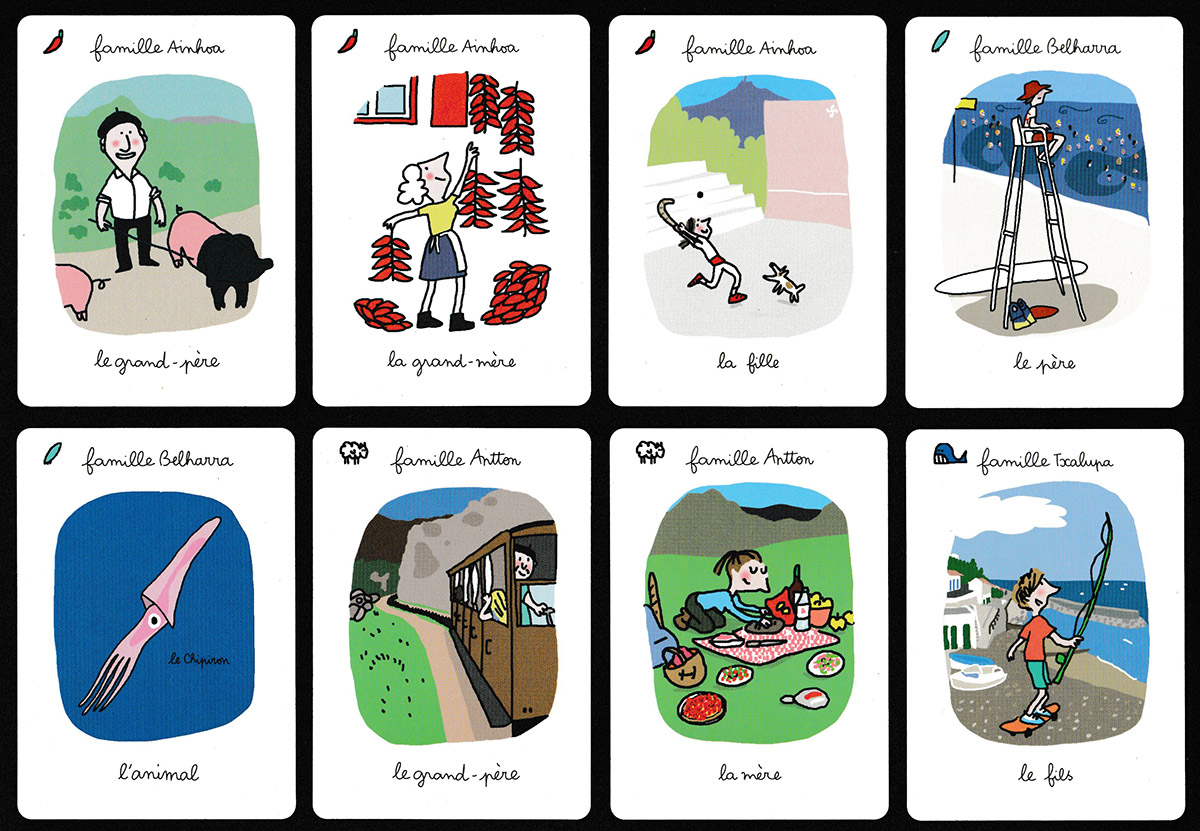
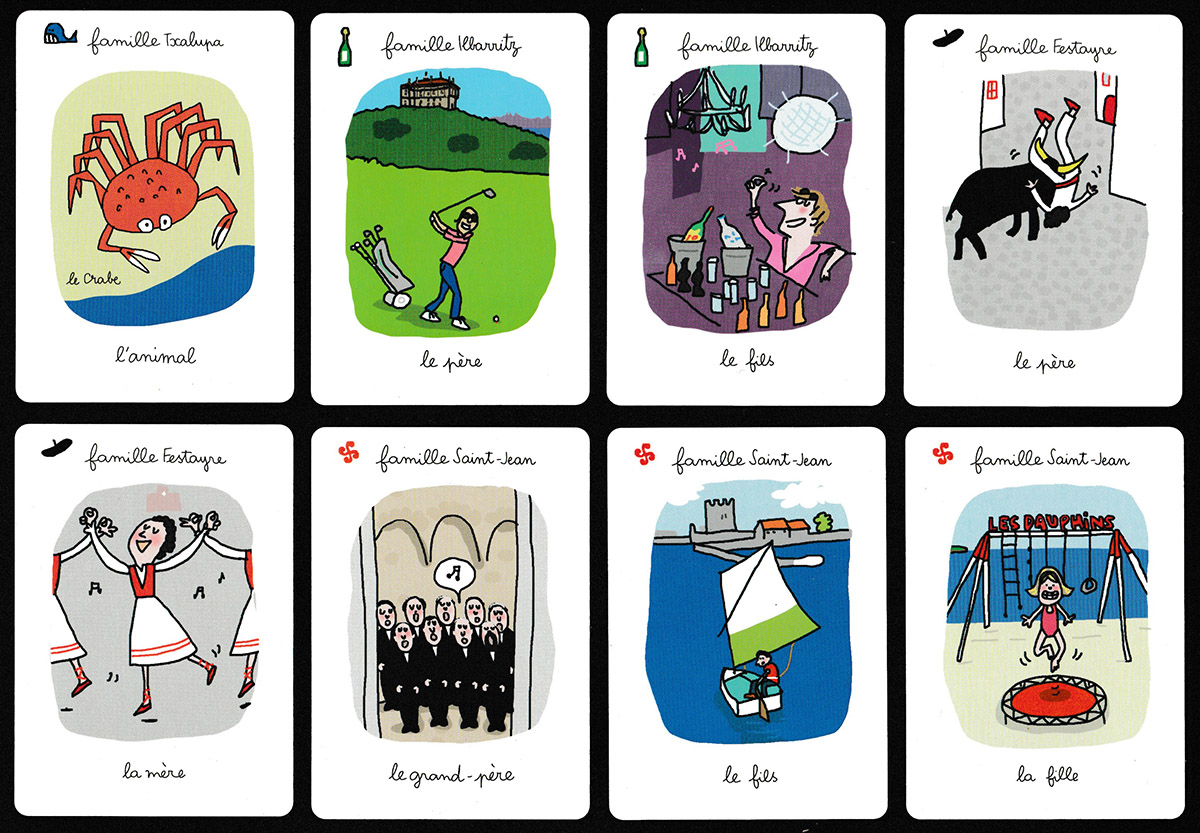
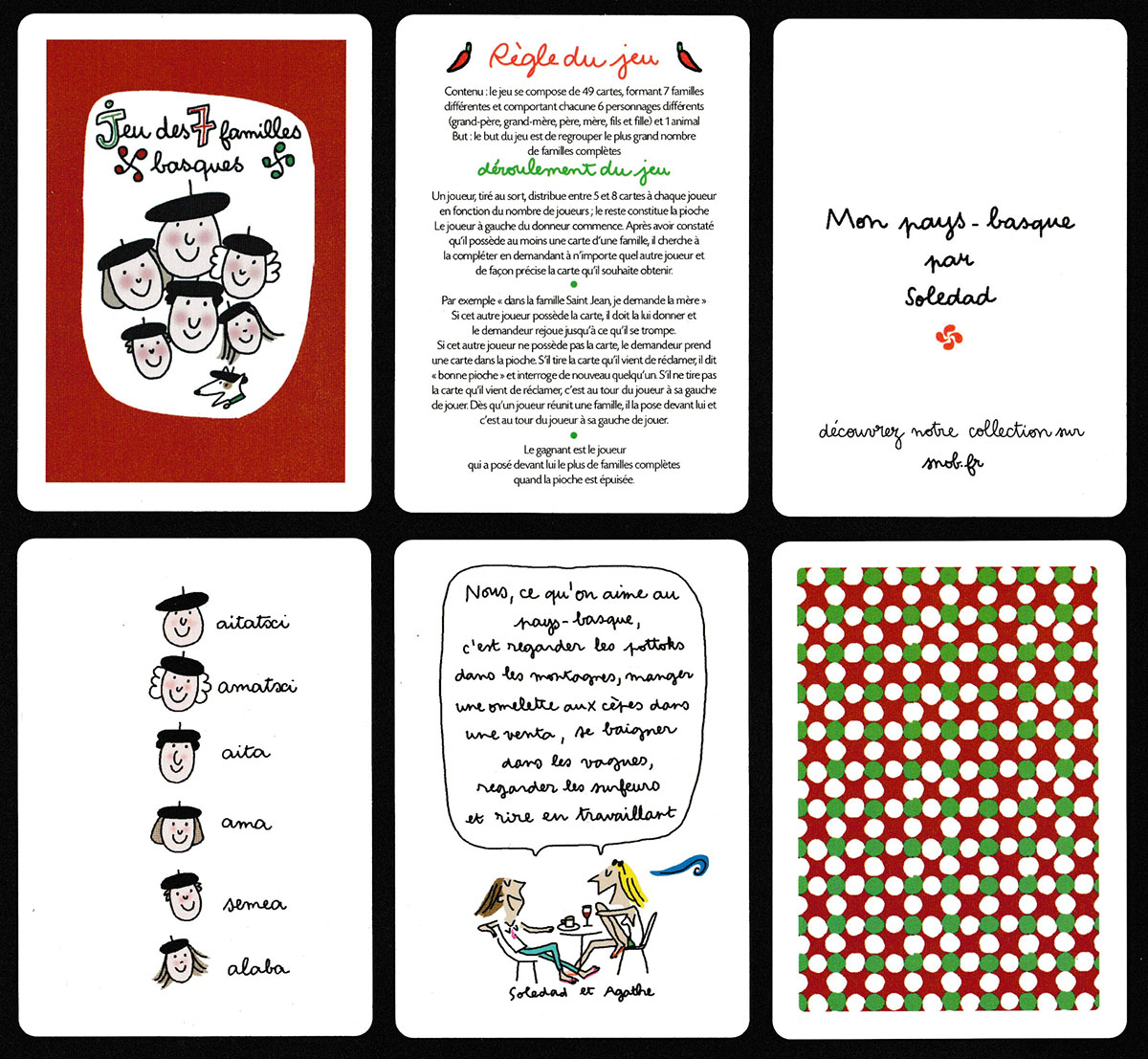
Above: Jeu des 7 familles basques published by SNOB, Paris, France. Printed by Heraclio Fournier, S.A., Legutiano, Spain. 49 cards + 5 extra cards (including instructions in French) in tuck box. Size: 63 x 88 mm.
Purchased in Saint-Jean-de-Luz, May 2024. See www.snob.fr/boutique/jeu-des-7-familles-basques-simple for further details and how to order.
The two female creators have also written a book, "Dans la tête de mon ado", about how adolescents think: available here→

By Roddy Somerville
France • Member since May 31, 2022
Roddy started collecting stamps on his 8th birthday. In 1977 he joined the newly formed playing-card department at Stanley Gibbons in London before setting up his own business in Edinburgh four years later. His collecting interests include playing cards, postcards, stamps (especially playing cards on stamps) and sugar wrappers. He is a Past President of the Scottish Philatelic Society, a former Chairman of the IPCS, a Past Master of the Worshipful Company of Makers of Playing Cards and Curator of the WCMPC’s collection of playing cards. He lives near Toulouse in France.

Activity for Jeu des 7 familles basques
Sign in to comment or save this article.

Related Articles
Pirritx eta Porrotx
Happy Families card game from the Spanish Basque Country.
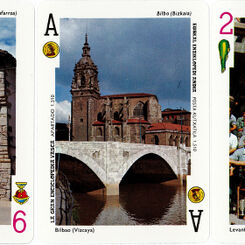
Baraja Turística del País Vasco
Basque poker deck of 55 cards published by Fournier with scenic views of the Basque Country.
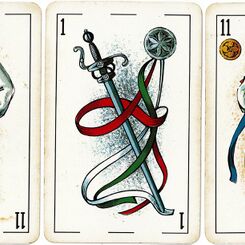
Baraja Vasca
Spanish Basque Country deck with original drawings by María Isabel Ibañez de Sendadiano.
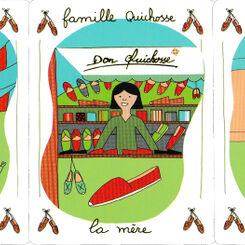
Jeu de 7 familles Les Dynasties d’Artisans Basques
Long-standing Basque businesses represented in a traditional card game with illustrations by Odile A...
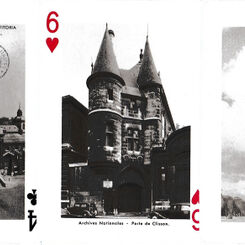
Monuments de Paris
‘Monuments de Paris’ souvenir playing cards produced by Heraclio Fournier, c.1964.
Baraja de Alava
55 different paintings by Emilio Lope depicting the history and culture of Vitoria and the province ...
Postak – Las Postas
‘Postak - Las Postas’ playing cards commemorating the history of the Basque postal service, Spain, 1...
Naipes de Personajes Granadinos
Forty famous men and women with links to Granada, on a pack designed by Rubén Garrido.
El Desnudo en el Arte
The Nude in Art / El Desnudo en el Arte, Spain, 1977 (reprint 1990)
Multicard
A Spanish-suited pack with multiple uses including roulette and dice.
The New Game of Tarot (or Tarock)
Regional costumes and alpine flora on a French Tarot game pack marking 600 years of playing cards in...
Histoire de France
“Histoire de France” facsimile of French historical deck of 1820.
El Gato con Botas
Puss in Boots card game manufactured by H. Fournier, 1981.
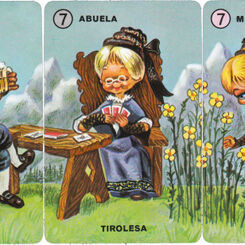
Familias de 7 Paises
“Familias de 7 Paises” card game published by Naipes H. Fournier S.A, Vitoria, 1979.
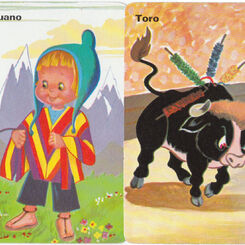
Parejas del Mundo
“Parejas del Mundo” matching pairs card game by Naipes H. Fournier, 1972.
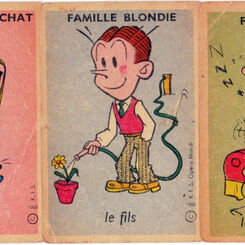
Jeu des 7 Familles
Jeu des 7 Familles © K.F.S. Opera Mundi c.1960.
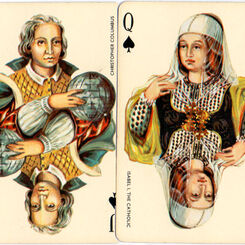
European Naval Powers
“XVI Century European Naval Powers” deck illustrated by Isabel Ibáñez de Sendadiano and produced by ...
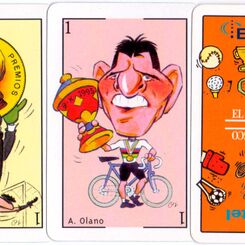
Deportistas Guipuzcoanos
Guipuzcoa’s best athletes of the twentieth century, playing cards sponsored by El Diario Vasco and E...
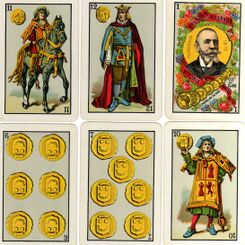
Fournier “El Fundador”
The cards shown here were originally printed in 12-colour lithography and published by Heraclio Four...
Heraclio Fournier S.A.
Founded in 1868, today it is part of Cartamundi.
Most Popular
Our top articles from the past 60 days


