


Zoo Comics
ZOO COMICS animated playing cards made by Litografía Ferri, Valencia (Spain), first published in 1968.
Zoo Comics by Litografía Ferri, 1968

Collectible playing cards inserted into products such as tea, chocolate or tobacco had their hey-day from the end of the 19th century until the second world war, with superb chromolithography printing. These children’s playing cards produced in Spain in the late 1960s follow the same spirit with the traditional suit symbols and figures replaced by fruits and cartoon characters, commendable for promoting healthy eating!
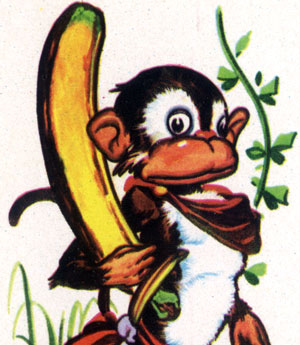
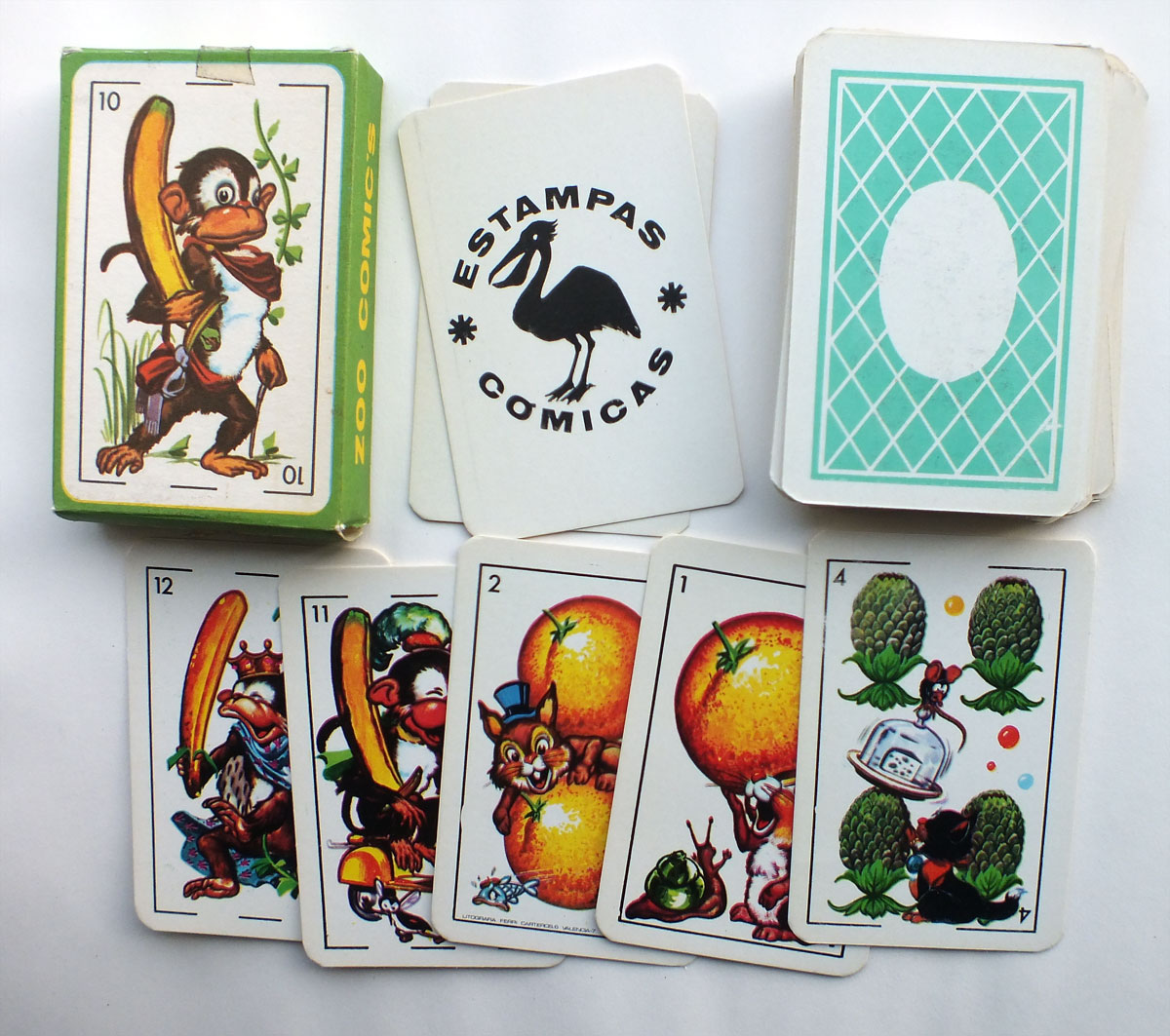
Above: "ZOO COMICS" animated playing cards made by Litografía Ferri, Valencia (Spain), first published in 1968 and reprinted in 1986. The traditional Spanish suit symbols have been replaced with oranges, hop blossoms, bananas and aubergines whilst small animals such as chipmunks, cats, monkeys and mice cavort around. The 'Sotas' ride scooters. There has been more than one edition of this superbly designed pack, with different jokers, and also with advertising on the reverse (e.g. Productos Chirruca).

By Simon Wintle
Spain • Member since February 01, 1996
I am the founder of The World of Playing Cards (est. 1996), a website dedicated to the history, artistry and cultural significance of playing cards and tarot. Over the years I have researched various areas of the subject, acquired and traded collections and contributed as a committee member of the IPCS and graphics editor of The Playing-Card journal. Having lived in Chile, England, Wales, and now Spain, these experiences have shaped my work and passion for playing cards. Amongst my achievements is producing a limited-edition replica of a 17th-century English pack using woodblocks and stencils—a labour of love. Today, the World of Playing Cards is a global collaborative project, with my son Adam serving as the technical driving force behind its development. His innovative efforts have helped shape the site into the thriving hub it is today. You are warmly invited to become a contributor and share your enthusiasm.

Activity for Zoo Comics
Sign in to comment or save this article.

Related Articles
Learning to play Cribbage
I learned to pay cribbage when I was very young, aged around six or seven.
Pirritx eta Porrotx
Happy Families card game from the Spanish Basque Country.
Laughing Made Easy
a Victorian card game published by D. Ogilvy.
Corrida de Toros
Bull fighting card game publshed by Naipes Comas, 1969.
El Gato con Botas
Puss in Boots card game manufactured by H. Fournier, 1981.
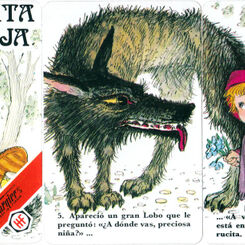
Caperucita Roja
Caperucita Roja card game published by H. Fournier, 1981.
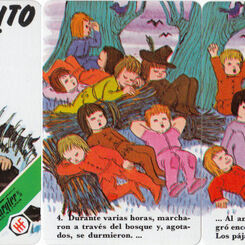
Pulgarcito
Pulgarcito (Tom Thumb) card game published by H Fournier, 1981.
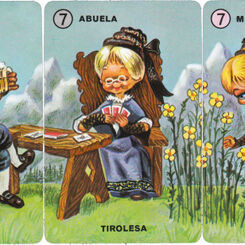
Familias de 7 Paises
“Familias de 7 Paises” card game published by Naipes H. Fournier S.A, Vitoria, 1979.
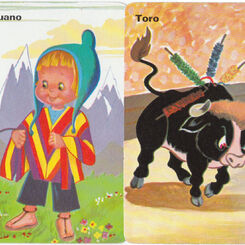
Parejas del Mundo
“Parejas del Mundo” matching pairs card game by Naipes H. Fournier, 1972.
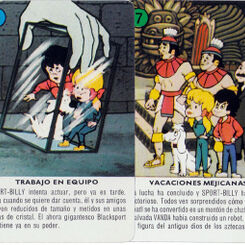
Aventuras de Sport-Billy
The Adventures of Sport-Billy by H. Fournier, 1981.
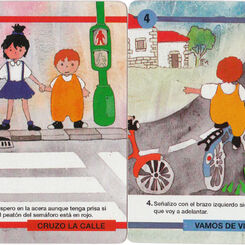
Educación Vial
Educación Vial (Road Safety) card game published by H. Fournier, 1995.
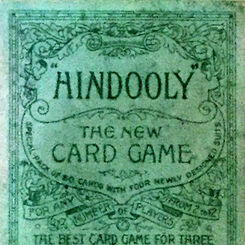
Hindooly
Hindooly published by Chas Goodall & Son Ltd with four newly designed suits, c.1904.
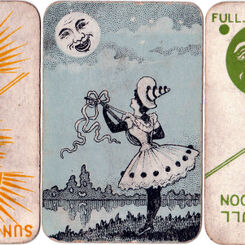
Sky
Sky card game published by Geo. Wright & Co, London, c.1905.
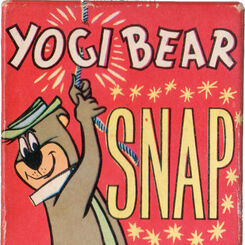
Yogi Bear Snap
Yogi Bear Snap No.6647 “Smarter than the average bear” c 1962.
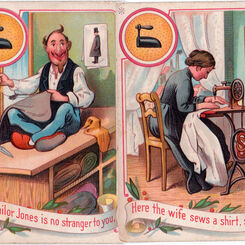
Humouristic Quartett
“Humouristic Quartett” families game produced by Adolf Sala of Berlin.
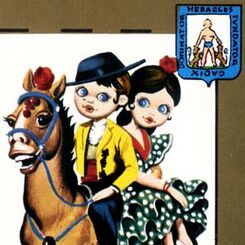
Regional Costumes
Spanish regional costumes and coats-of-arms; cute illustrations on each card, 1986.
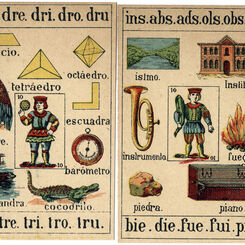
Jaime Margarit - Recreo Infantil
'Recreo Infantil' children's educational cards published by Jaime Margarit, Palamós (Gerona) c.1888....
Crowquill Transformation
Transformation playing cards designed by the illustrator, comic artist and stage designer ‘Alfred Cr...
Patoruzito
Patoruzito children’s playing cards, Argentina, 2004.
The History of Playing Cards
Playing cards appear in European records in the late 14th century, but their earlier history lies fu...
Most Popular
Our top articles from the past 60 days


