


La Traviata
“La Traviata” playing cards designed by Erté, c.1985.
“La Traviata” by Erté, c.1985
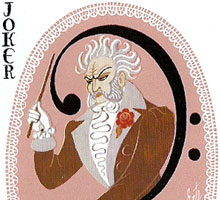
This outstanding and elaborate deck designed by Erté (Romain de Tirtoff), the Russian-born Art Deco designer, was commissioned by Dunhill of London based on the theme of “La Traviata”. The court cards with French indices are reversible. That is to say that when turned end for end, a different picture is seen. Sometimes the difference is very obvious, other times it is more subtle. Erté’s real name was Romain De Tirtoff and he lived from 1892 to 1990. A major turning point in his career came in 1965, when he met Eric and Salome Estorick, the founders of Seven Arts Ltd of New York and London. Seven Arts produced this pack, and remained the exclusive agent for Erte's work until his death.
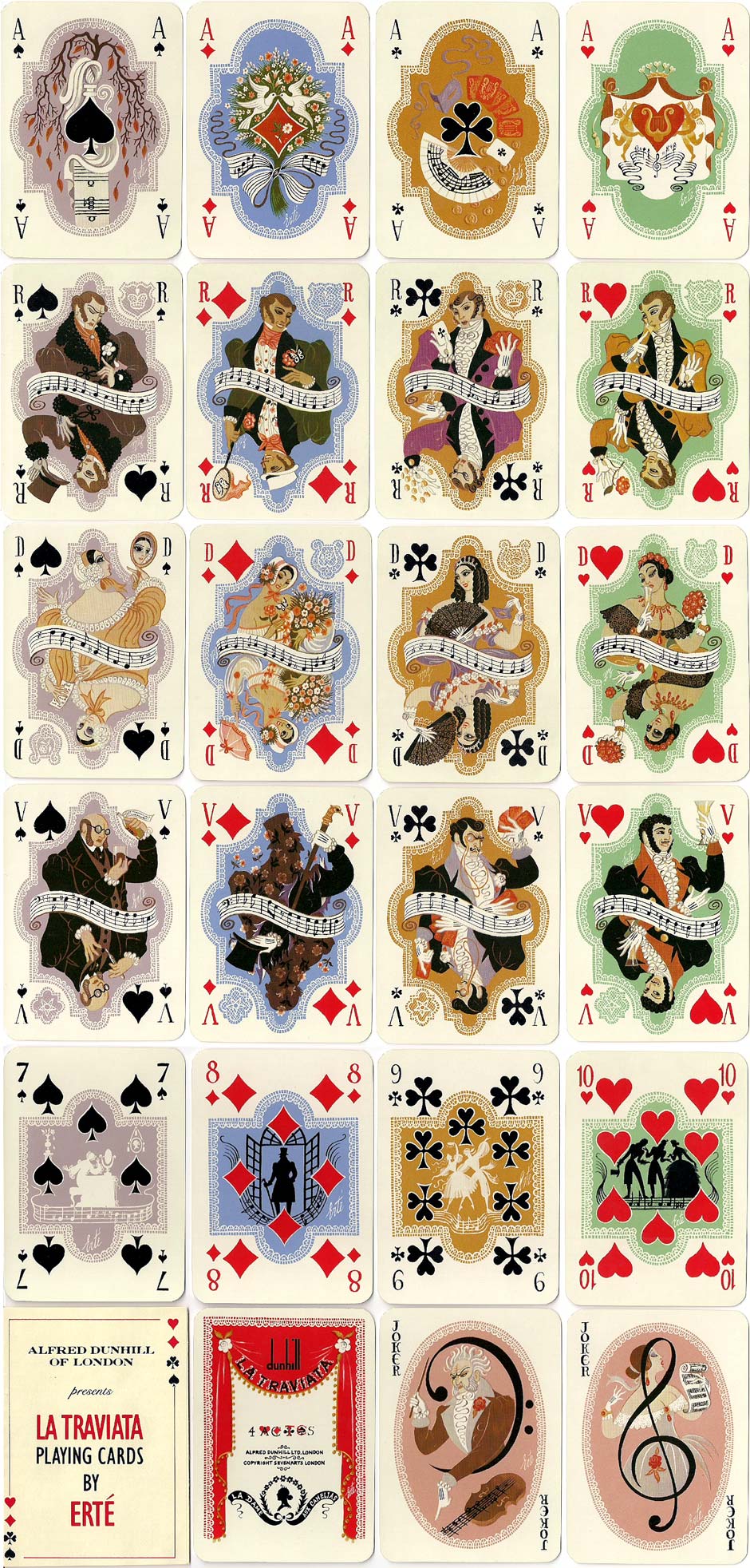
Above: “La Traviata” playing cards designed by Erté, manufactured by Carta Mundi, c.1985. The title card gives a copyright notice by Seven Arts, London. There is a pamphlet that opens up to 14 pages describing not only every card in the deck but also that the suits cover various Acts and Scenes from the opera. The pamphlet also explains that “When the 54 cards (four suits and two Jokers) are arranged numerically and by suit, highlights from the opera unfold chronologically”. Double set in elaborate luxury box with gold decorations, 2x52+2J, gold-edged, leaflet. Images courtesy Rod Starling.
NOTE: I have always had doubts about the attribution of this pack to Carta Mundi. A.S.S. offered me some overruns without gilt edges at a time when they had no links with Carta Mundi so I always assumed that A.S.S. had printed the cards. Unfortunately, I have no further documentary proof - Roddy Somerville.

By Rod Starling (1936-2023)
United States • Member since January 09, 2013
Rod Starling was one of the founding members of the 52 Plus Joker card collectors club. He authored many articles for the club's quarterly newsletter, Clear the Decks. His collection encompasses both foreign and American decks. Rod also authored a book titled The Art and Pleasures of Playing Cards.

Activity for La Traviata
Sign in to comment or save this article.

Related Articles
Songs with Flute accompaniment
Eighteenth century English engraved cards with music for voice and flute.
Leadmill playing cards
Promotional pack for an arts centre in Sheffield with designs by Martin F. Bedford.
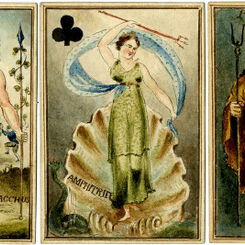
Heathen Divinities
Handmade playing cards from the British Museum depicting classical Greek and Roman gods and goddesse...
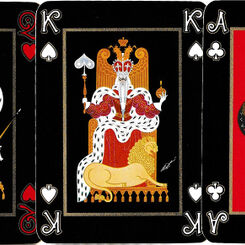
The Art of Erté
Luxury playing cards displaying artwork by Erté, published in 1983 by Sobranie of London.
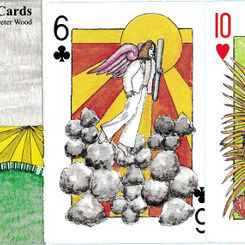
The Chamber of 52 Cards
Playing cards published by Peter Wood as a tribute to the rock band Genesis.
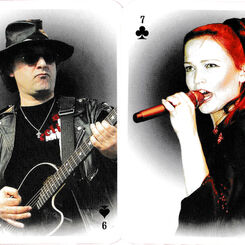
Castle Rock Club
Castle Rock Club playing cards featuring Russian rock stars and musicians, c. 2000.
Ken McCarthy
An unknown deck by Ken McCarthy, c.2018.
Waddington’s 1940 Trade Brochure
Waddington’s 1940 Trade Brochure.
Lock, Stock & Two Smoking Barrels
“Lock, Stock & Two Smoking Barrels” playing cards based on the cult film, 1999.
Rococo No. 2130
Piatnik: Rococo No. 2130 playing cards designed by Prof. Kuno Hock, c.1975
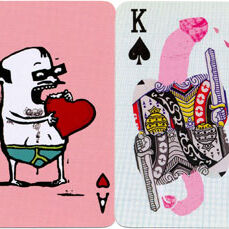
Monsters
A collective of artists known as Monster Illustration produced a deck entitled “Monsters” in 2004.
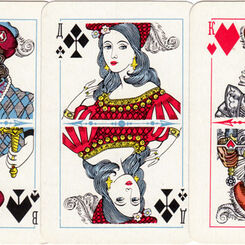
Russian Opera Scenes
Russian Opera & Theatre Scenes playing cards first published by the Colour Printing Plant (USSR, Rus...
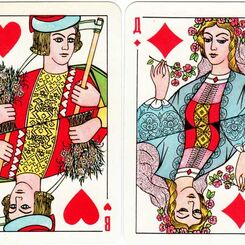
Russian Four Seasons
“Seasons” playing cards designed by U. P. Ivanov and published by The Colour Printing Plant in St Pe...
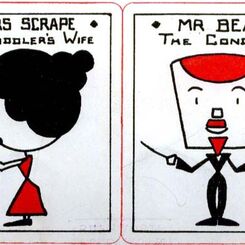
Music Manuscripts
Artwork featuring playing cards in Music Manuscripts
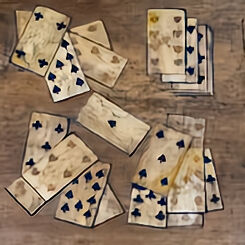
Eglantine Table
The Eglantine Table, Hardwick Hall, Derbyshire, elaborately inlaid with marquetry depicting musical ...
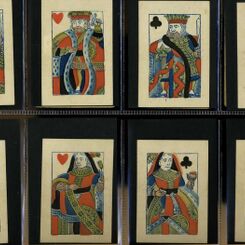
19: 19th Century Breaks with Tradition - Unusual versions of the Standard English Pattern
The centuries-long tradition of English court cards was subject to misinterpretation and in some cas...
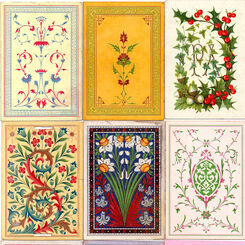
14: Back Designs
A few examples of the many interesting back designs.
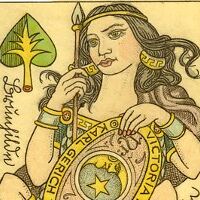
Karl Gerich No.27
The courts are characters from Wagner's opera “The Ring of the Nibelungs”, beautifully etched and ha...
Cosi Fan Tutte
Cosi Fan Tutte was published in 1994 and is based on Mozart's opera. The pips (heart-shaped locket, ...
The History of Playing Cards
Playing cards appear in European records in the late 14th century, but their earlier history lies fu...
Most Popular
Our top articles from the past 60 days


