


Typographic Playing Cards
Typographic Playing Cards designed by Jim Sutherland, c.2010.
Playing cards and typography share a deep connection through the history of printmaking, visual clarity and the creative use of graphic elements such as symbols and fonts*. Each card design in this ingenious pack is composed of letters and numbers in a specific font which is named at the bottom of the card. A different font, or typeface, was used for each card. The court cards, aces and jokers use letters and the rest are created using numbers.
The idea of making a deck of typographic playing cards arose during an idle moment while Jim was on holiday in Crete in 2007, where he produced his first sketches . The playing card designs involve repetitions and superimpositions of type. Curiously, the indices are placed at the top right-hand side, as though for left-handed players.
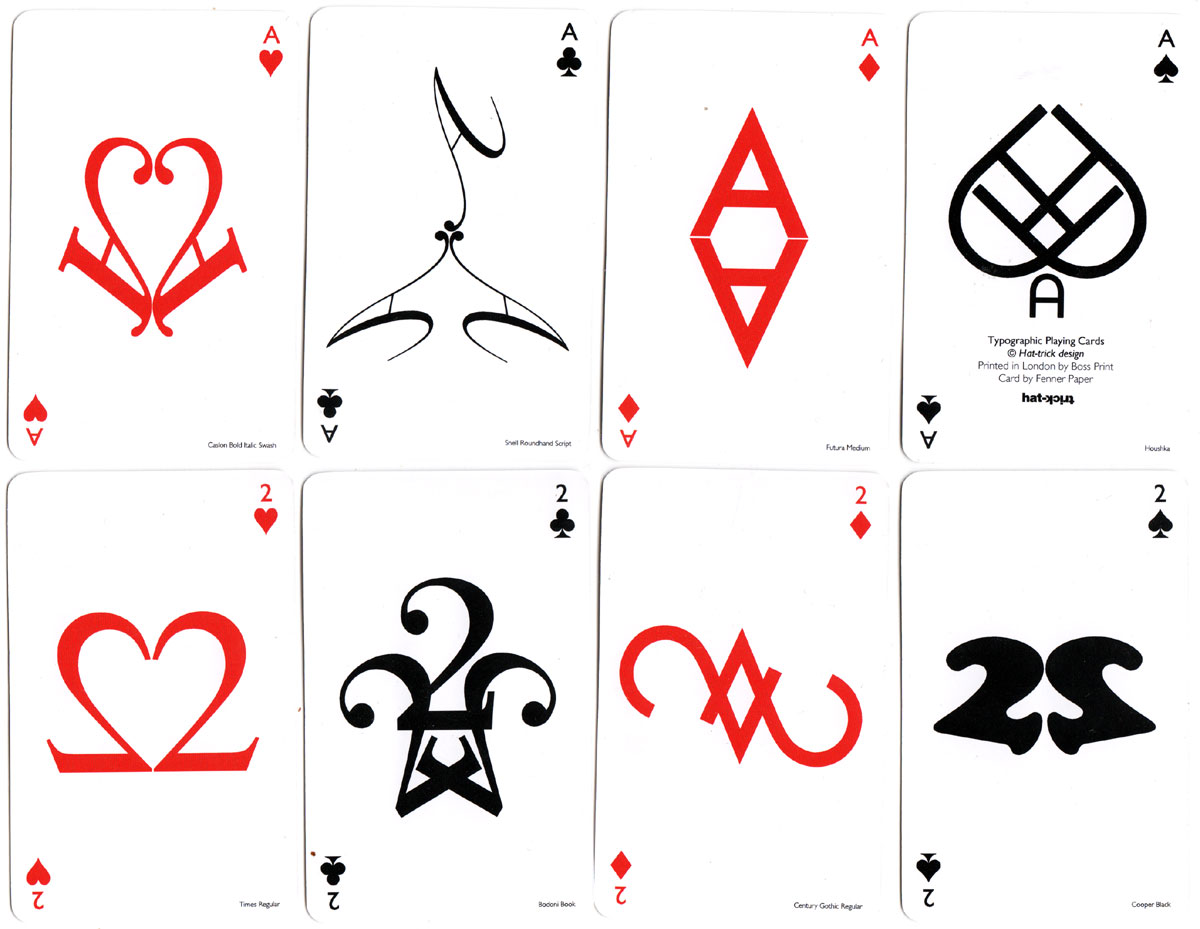
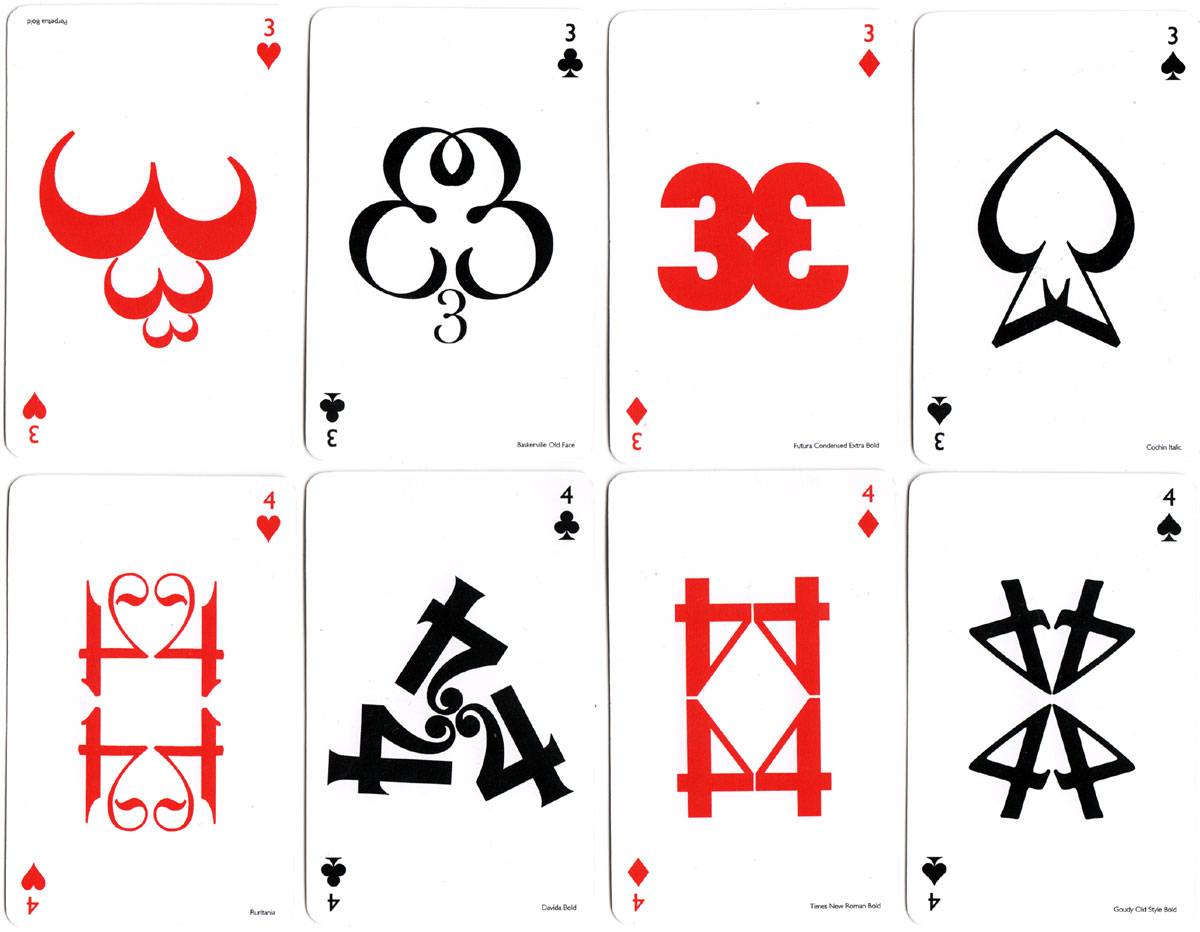
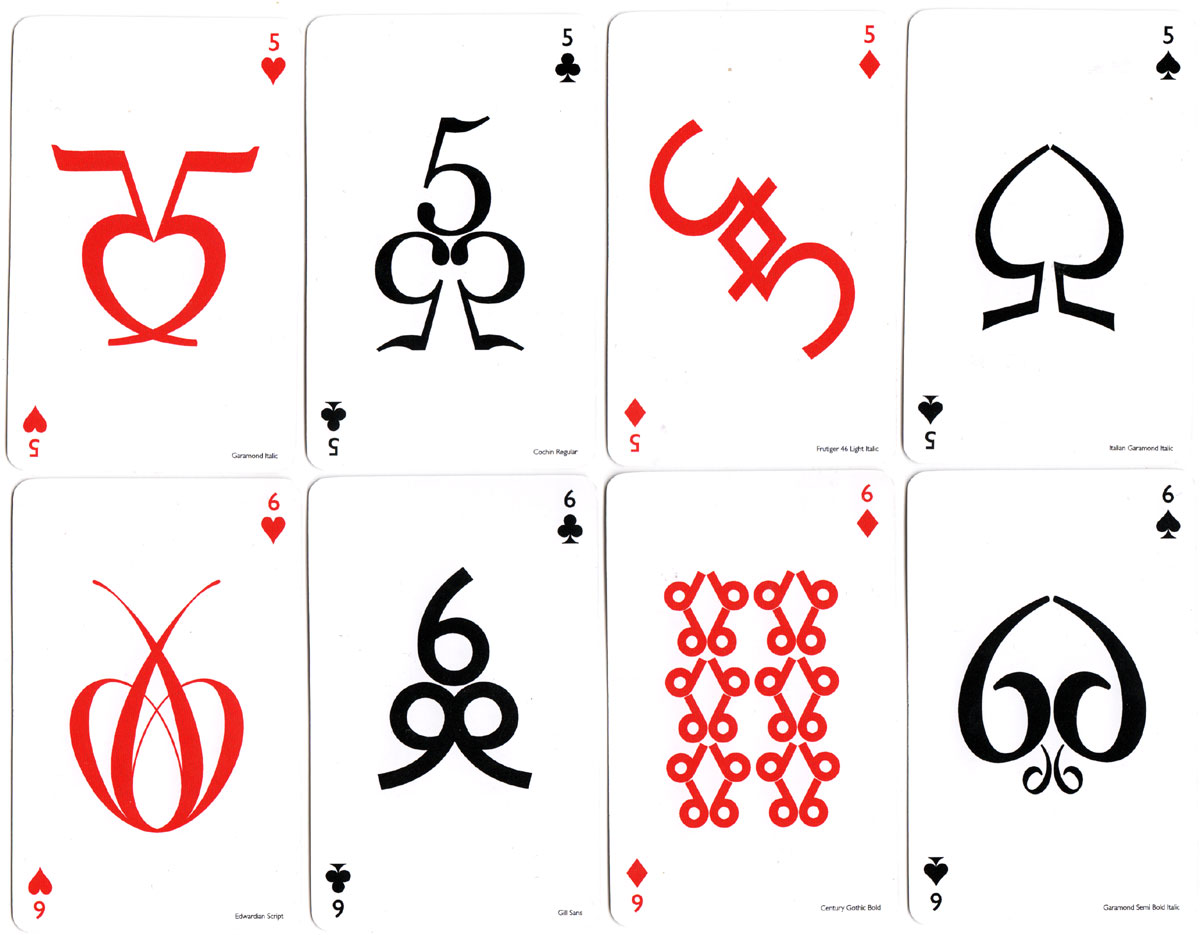
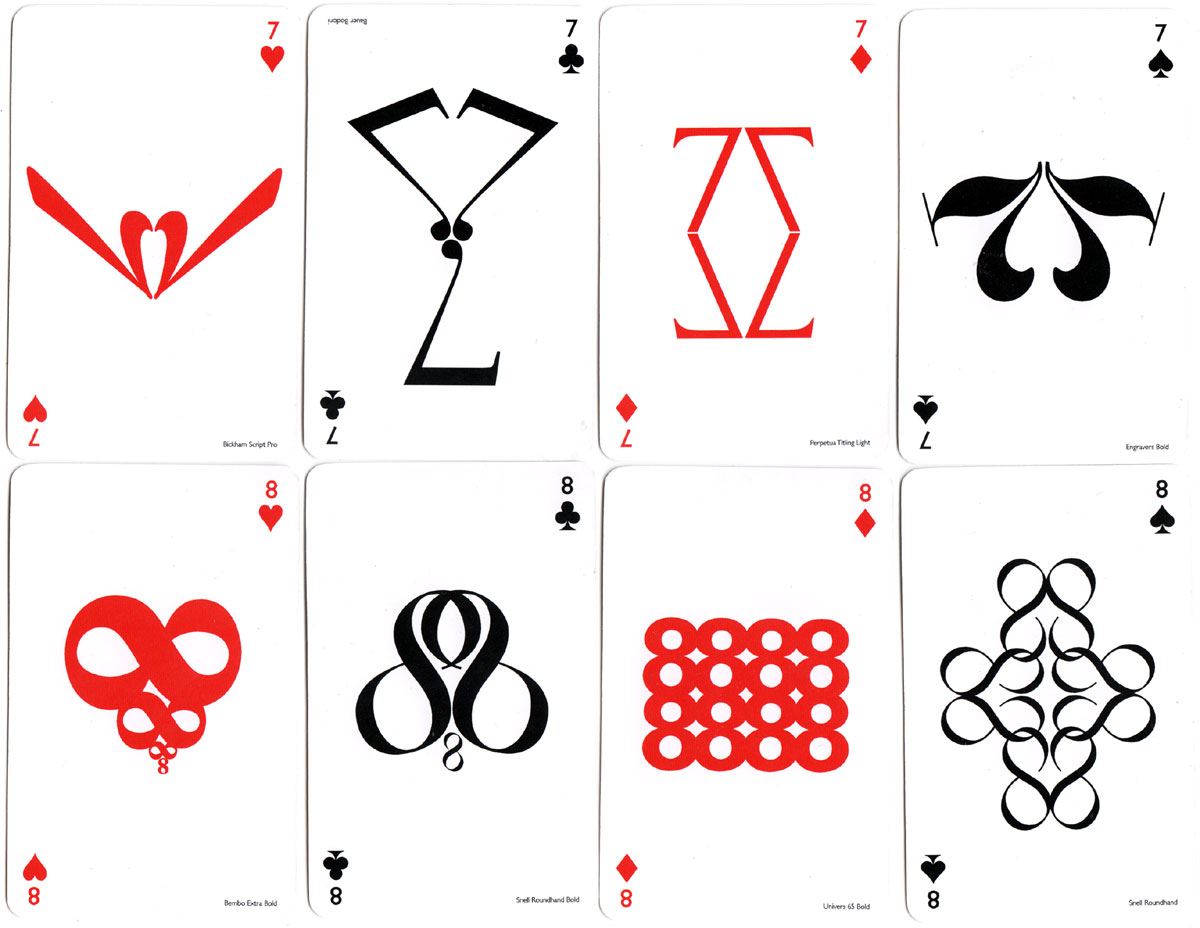
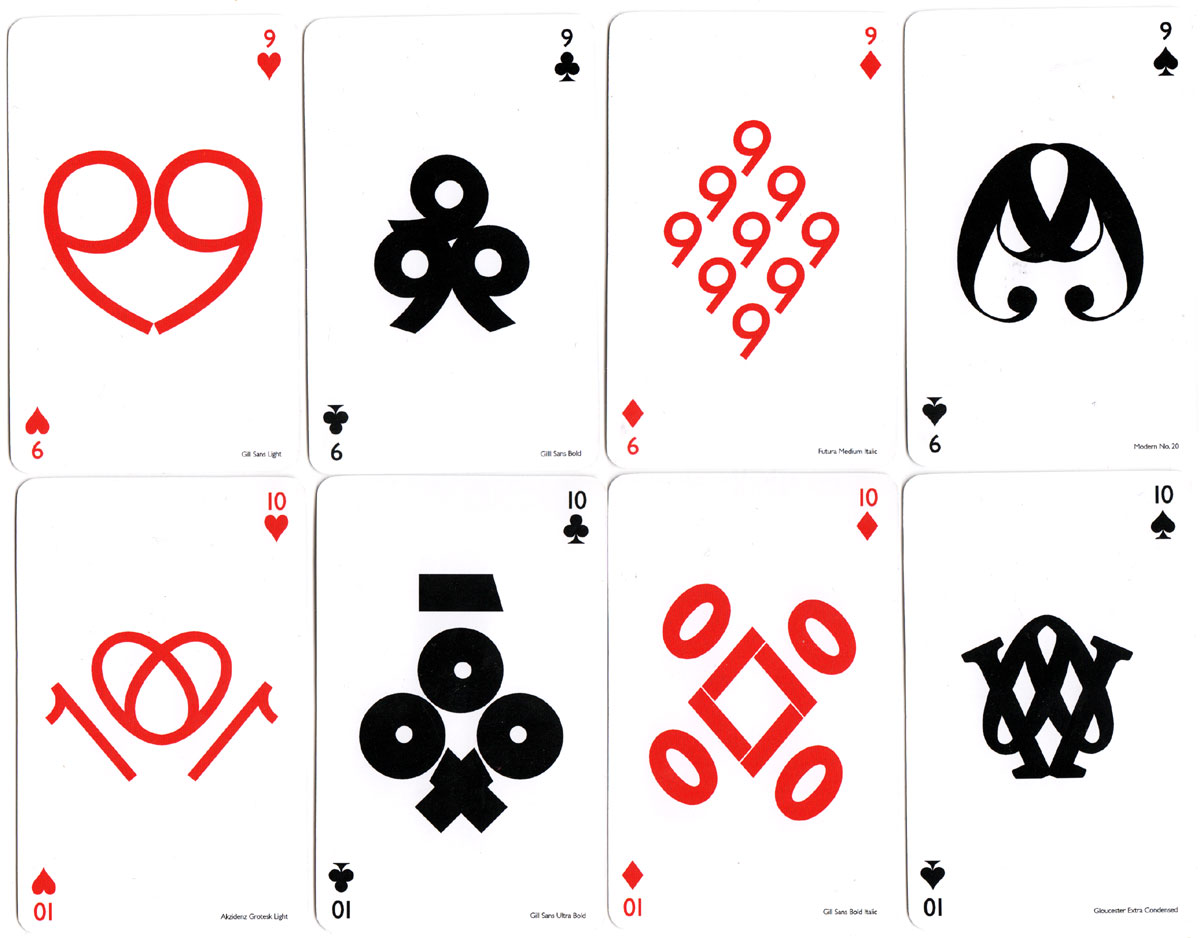
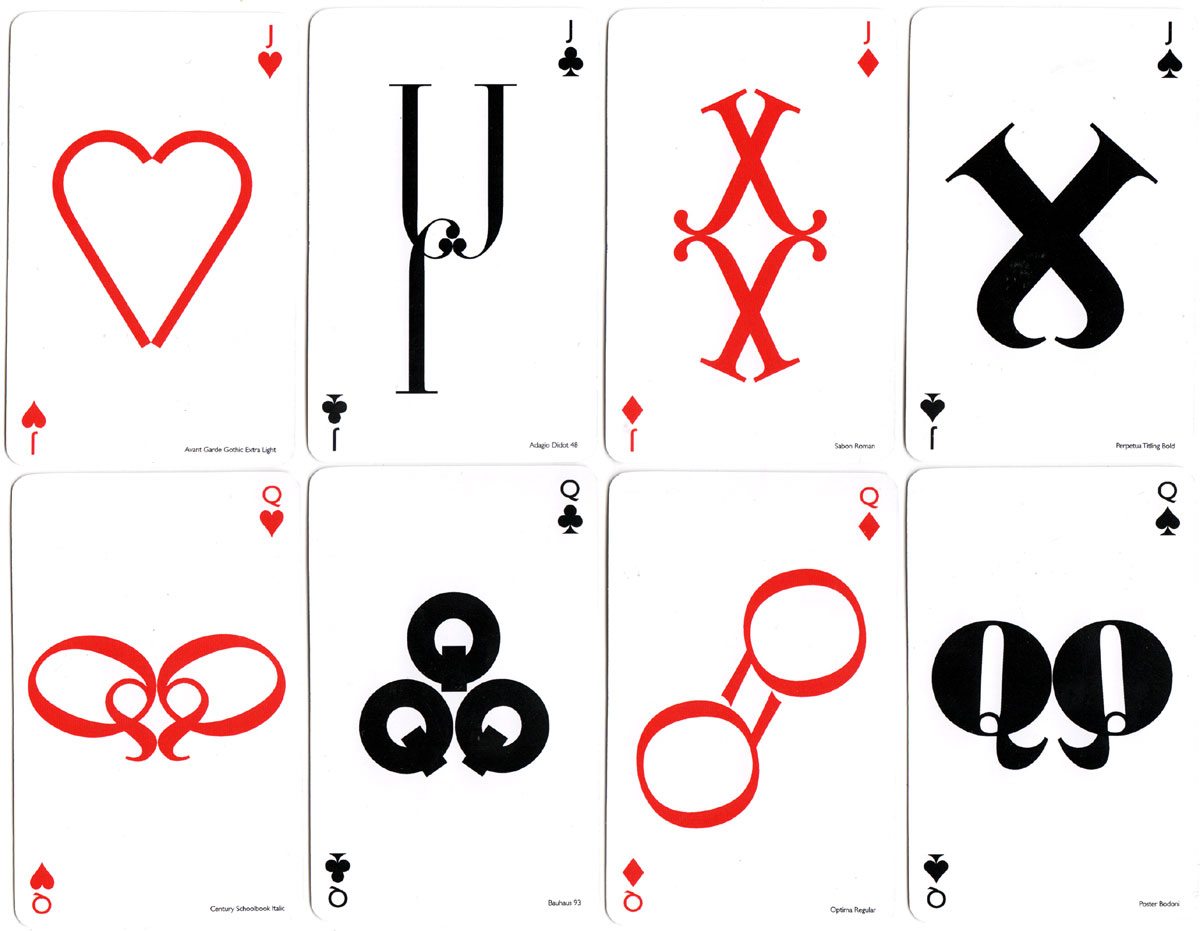
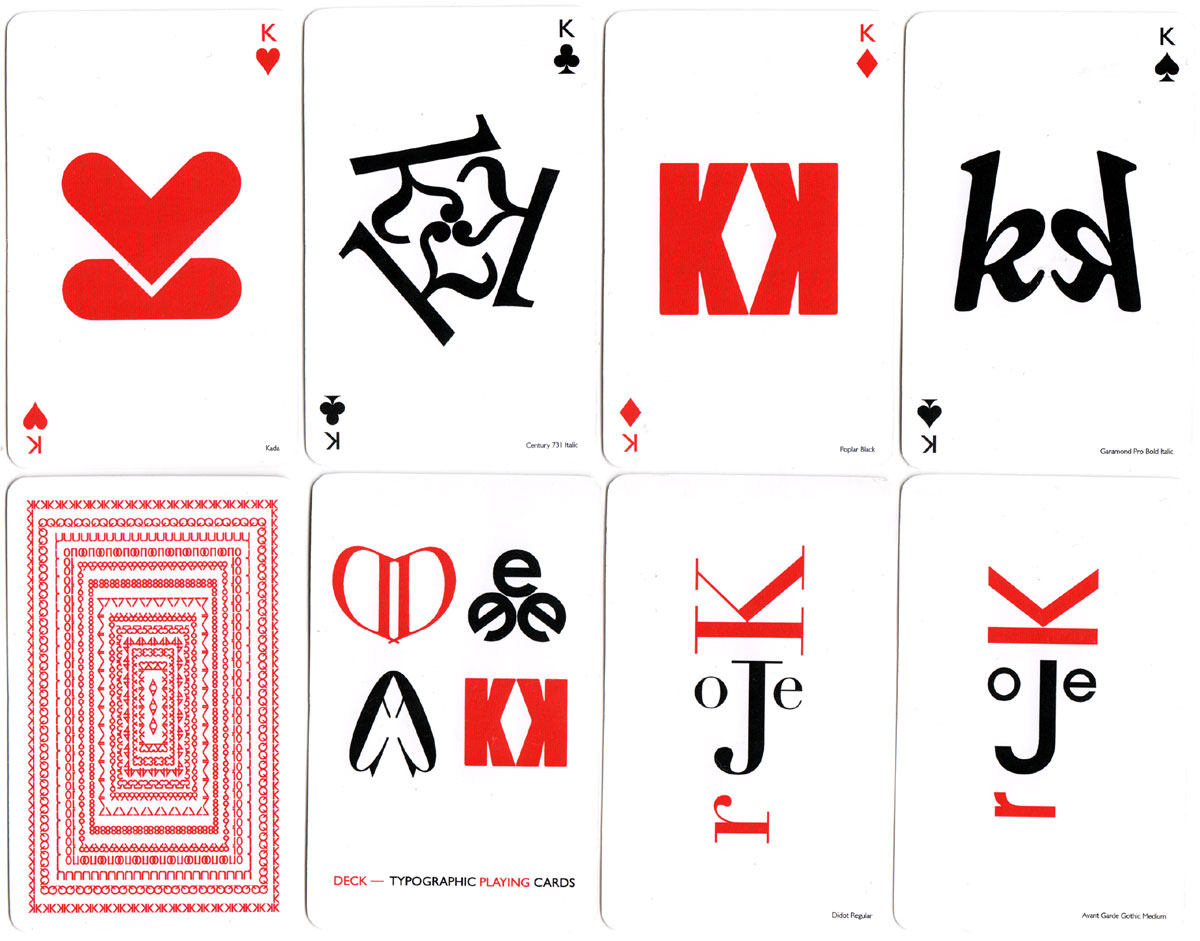
Above: Typographic Playing Cards designed by Jim Sutherland, Hat-Trick design (UK), printed by Boss Print, London c.2010. 2nd edition (limited to 1000 decks). 52 cards + 2 jokers + 2 extra cards in tuckbox.
* The rise of playing cards in Europe paralleled the development of woodblock printing, which paved the way for movable type and typography. Both playing cards and early printed books were among the first products of this technology. The numbers, letters and symbols on cards rely on clear, legible typography, often using bold sans-serif or simple serif fonts for easy recognition. The design of playing cards, especially court cards, incorporates graphic design principles like symmetry, repetition and negative space — key elements shared with typography, where balancing form and readability is crucial.
Further References
Pentagram: Just Type Playing Cards►
Thanks to Lisandro Gimenez Corte, designer and joint professor of Typography at the Faculty of Architecture, Design and Urbanism in the Universidad Nacional del Litoral, Santa Fe, Argentina, for sharing his ideas and thoughts about typographic playing cards.

By Simon Wintle
Spain • Member since February 01, 1996
I am the founder of The World of Playing Cards (est. 1996), a website dedicated to the history, artistry and cultural significance of playing cards and tarot. Over the years I have researched various areas of the subject, acquired and traded collections and contributed as a committee member of the IPCS and graphics editor of The Playing-Card journal. Having lived in Chile, England, Wales, and now Spain, these experiences have shaped my work and passion for playing cards. Amongst my achievements is producing a limited-edition replica of a 17th-century English pack using woodblocks and stencils—a labour of love. Today, the World of Playing Cards is a global collaborative project, with my son Adam serving as the technical driving force behind its development. His innovative efforts have helped shape the site into the thriving hub it is today. You are warmly invited to become a contributor and share your enthusiasm.

Activity for Typographic Playing Cards
Sign in to comment or save this article.

Related Articles
Leadmill playing cards
Promotional pack for an arts centre in Sheffield with designs by Martin F. Bedford.
Heathen Divinities
Handmade playing cards from the British Museum depicting classical Greek and Roman gods and goddesse...
Schweizer Trachten
Schweizer Trachten No.174 (Costumes Suisses) by Dondorf.
Ken McCarthy
An unknown deck by Ken McCarthy, c.2018.
Fashion Face Off
“Fashion Face Off” card game illustrated by Erin Petson for Laurence King Publishing, c.2011.
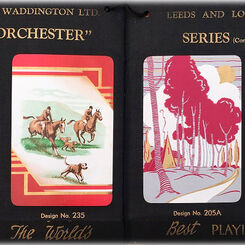
Waddington’s 1940 Trade Brochure
Waddington’s 1940 Trade Brochure.
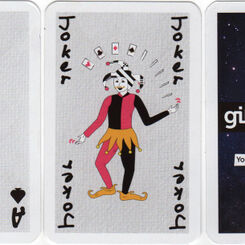
Giffgaff
Giffgaff mobile network playing cards, 2015.
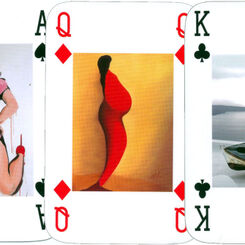
Prime Arts
Prime Arts Playing Cards were published in 2004 featuring the work of contemporary artists, illustra...
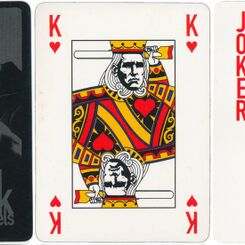
Lock, Stock & Two Smoking Barrels
“Lock, Stock & Two Smoking Barrels” playing cards based on the cult film, 1999.
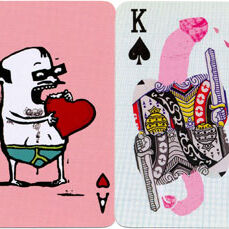
Monsters
A collective of artists known as Monster Illustration produced a deck entitled “Monsters” in 2004.
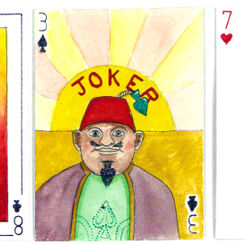
Jest Jokers
Peter Wood’s “Jest Jokers” comprising 54 different Joker designs made into a full pack of cards.
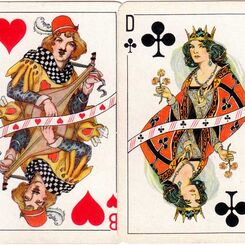
De la Rue for export
Non-standard playing cards produced by De la Rue & Co. (London), c.1930s
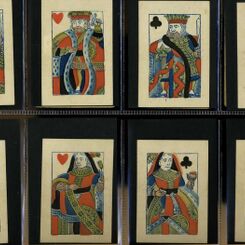
19: 19th Century Breaks with Tradition - Unusual versions of the Standard English Pattern
The centuries-long tradition of English court cards was subject to misinterpretation and in some cas...
14: Back Designs
A few examples of the many interesting back designs.
Karl Gerich No.1
The first entry in the catalogue, dating from c.1982, shows full-length figures with their symbols o...
2000Pips Transformation Pack
2000Pips Transformation Pack
Waddington’s Sporting Birds Series 1933
Waddington’s Sporting Birds Series 1933.
Romanian playing cards by Alf Cooke
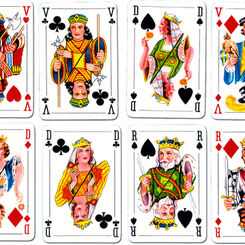
Romanian playing cards, manufactured and exported by the Universal Playing Card Co., Leeds, in the 1...
About Shelley Fowles
Shelley Fowles was born in South Africa but has lived in the United Kingdom since 1979. She trained ...

About Peter Wood
Peter Wood is a UK based artist.
Most Popular
Our top articles from the past 60 days


