


Mapuche Indian Playing Cards
Spanish-suited playing cards made on rawhide and said to have been used by Chilean Mapuche Indians, XVI-XVII century
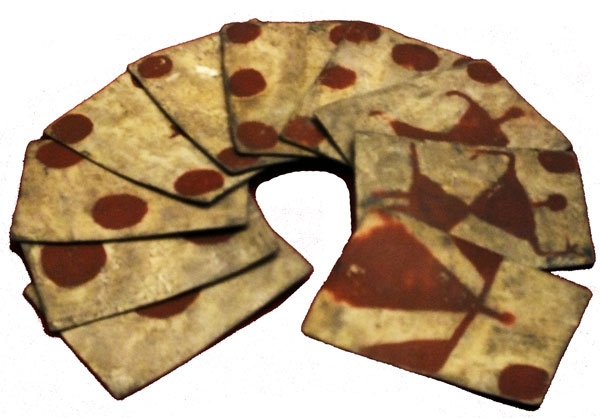
Spanish-suited playing cards made on rawhide and said to have been used by Chilean Mapuche Indian men, XVI-XVII century. We know that Spanish soldiers commenced colonising South American territories from the early 16th century and were also heavy gamblers. At the same time, the Indians captured firearms, horses and other items from the intruders which changed their way of life. These cards appear to have been copied from 40-card Spanish models by a draughtsman unfamiliar with finer details of Spanish playing card pictures but who somehow imitated their basic shape and layout so that they could be used for playing Monte.
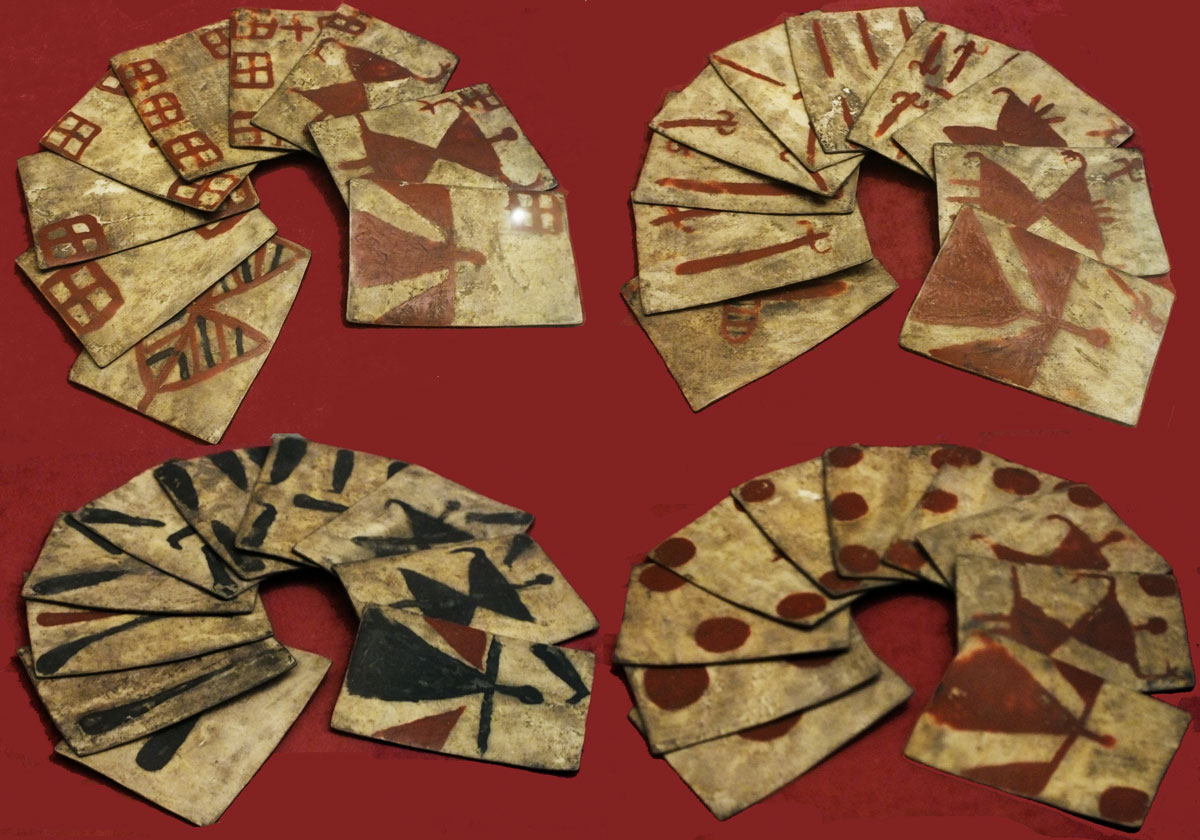
Above: Spanish-suited playing cards made on rawhide by the Mapuche Indians, Chile, XVI-XVII century. 39 cards. Image courtesy the Museo de América (Madrid) Inv. No. 13.638/676.
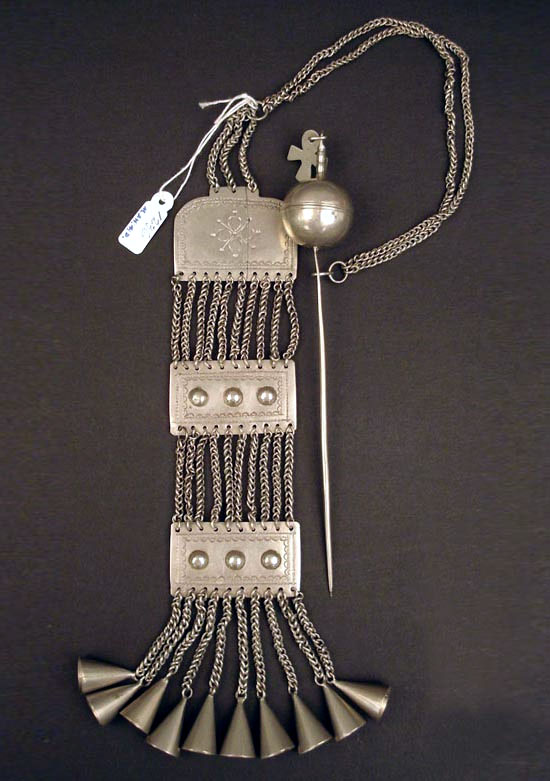
Above: Mapuche jewelry, 635mm x 50mm. Museo Chileno de Arte Precolombino.
Mapuche art also includes metal-work, jewelry, pottery, weaving, music and dance, with instruments such as the kultrún and truruka used to produce the unique sounds that characterize traditional rites celebrating the Mapuche cosmovision and cycle of life.
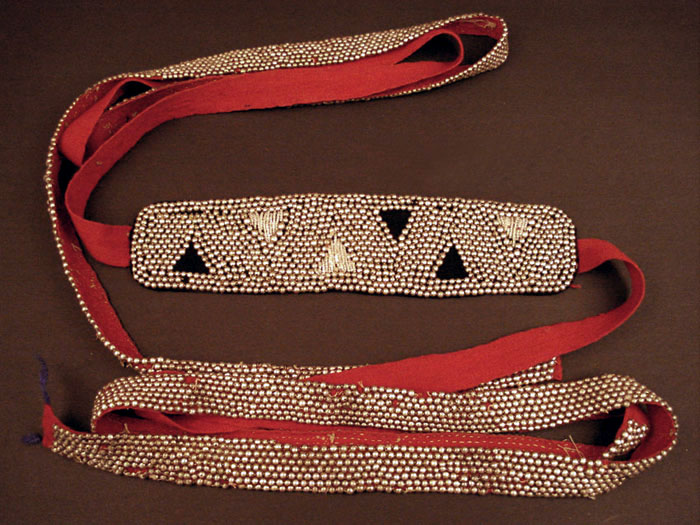
Above: Mapuche textile, 3920mm x 70mm. Museo Chileno de Arte Precolombino.

By Simon Wintle
Spain • Member since February 01, 1996
I am the founder of The World of Playing Cards (est. 1996), a website dedicated to the history, artistry and cultural significance of playing cards and tarot. Over the years I have researched various areas of the subject, acquired and traded collections and contributed as a committee member of the IPCS and graphics editor of The Playing-Card journal. Having lived in Chile, England, Wales, and now Spain, these experiences have shaped my work and passion for playing cards. Amongst my achievements is producing a limited-edition replica of a 17th-century English pack using woodblocks and stencils—a labour of love. Today, the World of Playing Cards is a global collaborative project, with my son Adam serving as the technical driving force behind its development. His innovative efforts have helped shape the site into the thriving hub it is today. You are warmly invited to become a contributor and share your enthusiasm.

Activity for Mapuche Indian Playing Cards
Sign in to comment or save this article.

Related Articles
La baraja de Almagro
De la chimenea al monumento nacional: la baraja de Almagro y el renacer del corral de comedias.
Naipes en Chile
Noticias y crónicas de la época del virreinato.
History of Tarot and Playing Cards: Timeline & Origins
An alternative history of tarot and playing cards – from Mamluk Egypt to the invention of tarot in R...
Aónikenk playing cards
Ethnographic playing cards made by members of the Aónikenk culture from Patagonia.
Ganjifa - Playing Cards from India
Indian playing cards, known as Ganjifa, feature intricate designs with twelve suits and are traditio...
73: Fakes, forgeries and Tax Evasion
When there are official taxes to pay, people will find a way to avoid paying them - often illegally....
History of Playing Cards explained in 5 Minutes
Video by Art of Impossible. In this video you will get a short overview of the most important histor...
70: Woodblock and stencil : the spade courts
This is a presentation in a more straight forward fashion of the work done by Paul Bostock and me in...
64: The descendants of the French regional patterns: 2
A continuation oF the development of the off-spring of the Paris patterns and a few examples of how ...
Trentine Pattern
Trentine Pattern
Apache cards by Tonto Naipero
Apache rawhide playing cards by ‘Tonto Naipero’, c.1871.
Suicide King
The King of Hearts, holding a sword behind his head, is sometimes nicknamed the “Suicide King”. He c...
19: 19th Century Breaks with Tradition - Unusual versions of the Standard English Pattern
The centuries-long tradition of English court cards was subject to misinterpretation and in some cas...
1: Playing Cards and their History: An Introduction and some links to other sites
What was considered the first mention of playing cards in England is in 1463 when Edward I banned th...
Paris Pattern
The Paris pattern was established as such around the middle of the seventeenth century (based, perha...
Mamluk Playing Cards
Nã'ib, the game of lieutenants... these cards are amongst the earliest Arabic playing cards ext...
Italian Playing Cards
The first reliable evidence that playing cards were being used in Italy is from 1376, when a game ca...
The History of Playing Cards
Playing cards appear in European records in the late 14th century, but their earlier history lies fu...
Native Indian Hand-made Cards made on rawhide
Native Indian hand-made cards made on rawhide.
Early English Playing Cards
Early examples of traditional, standard English playing cards of which the best known are those of H...
Most Popular
Our top articles from the past 60 days


