


Swastika designs
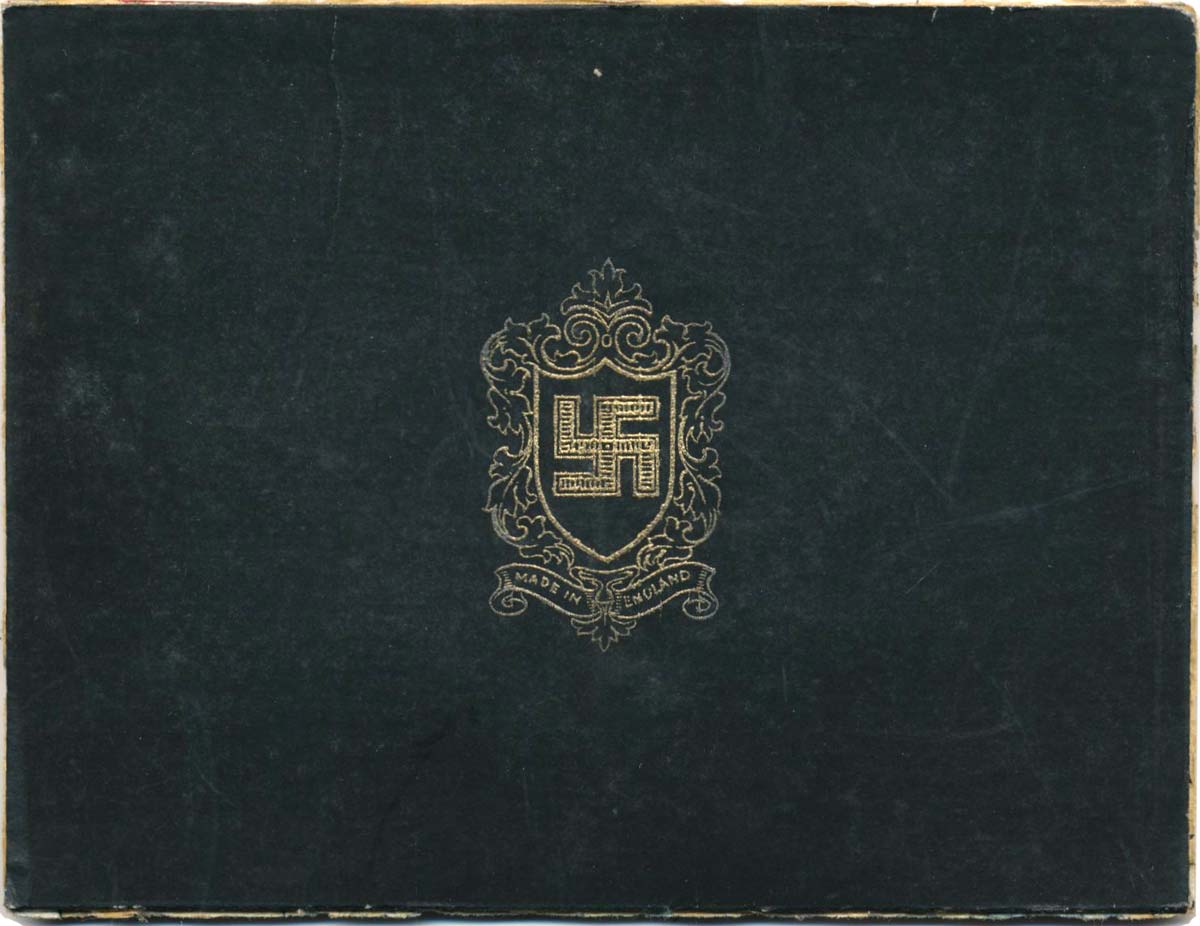
Swastika design playing cards by De La Rue, c.1925.
A swastika often appeared on greeting cards, birthday cards and even playing cards in the years before it became associated with the German Nazi party during the 1930s and acquired sinister connotations. Until then it was seen as symbolising good luck or anything auspicious. It has been found on artefacts since before Neolithic times.
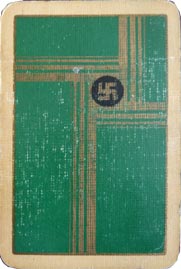
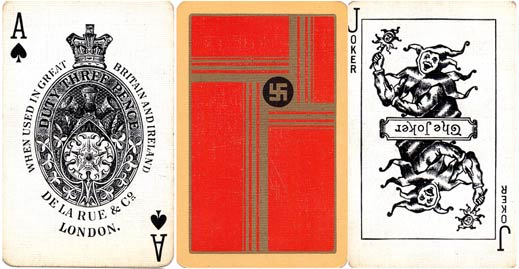
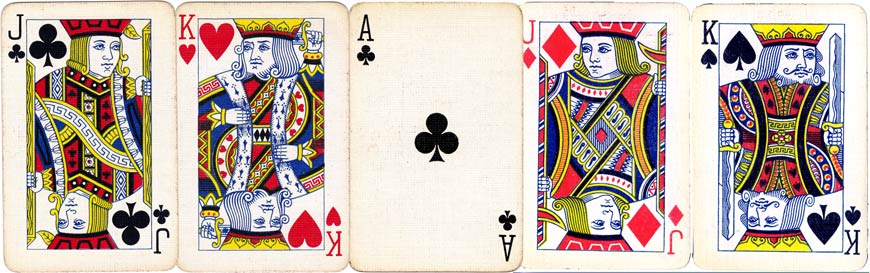
Above: Swastika design playing cards manufactured by De La Rue & Co., mid-to-late 1920s, featuring the earlier version of the De La Rue Joker as a double-ended jester with a bauble. The swastika is/was a good luck symbol and it appears facing either direction. Packs with swastikas are also known to have been made for Kendal Milne, an up-market department store in Manchester. Several fortune-telling packs have a swastika on them somewhere - including the Subject card of the Goodall Rameses pack. Thanks to Ken Lodge for comments. Images courtesy David Manners and Robert Cooper.
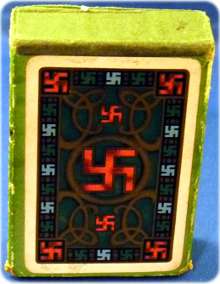
Right: boxed set of playing cards with swastika designs on the reverse manufactured by Chas Goodall & Sons around the same period. Image courtesy Sandra Ekelund.
Below: the inside of the lid of a dual-deck of cards produced by Thomas De La Rue (with extra Goodall ace of spades) with a swastika design, c.1934. The box is unbranded, gilt edged cards. Images courtesy Matt Probert.
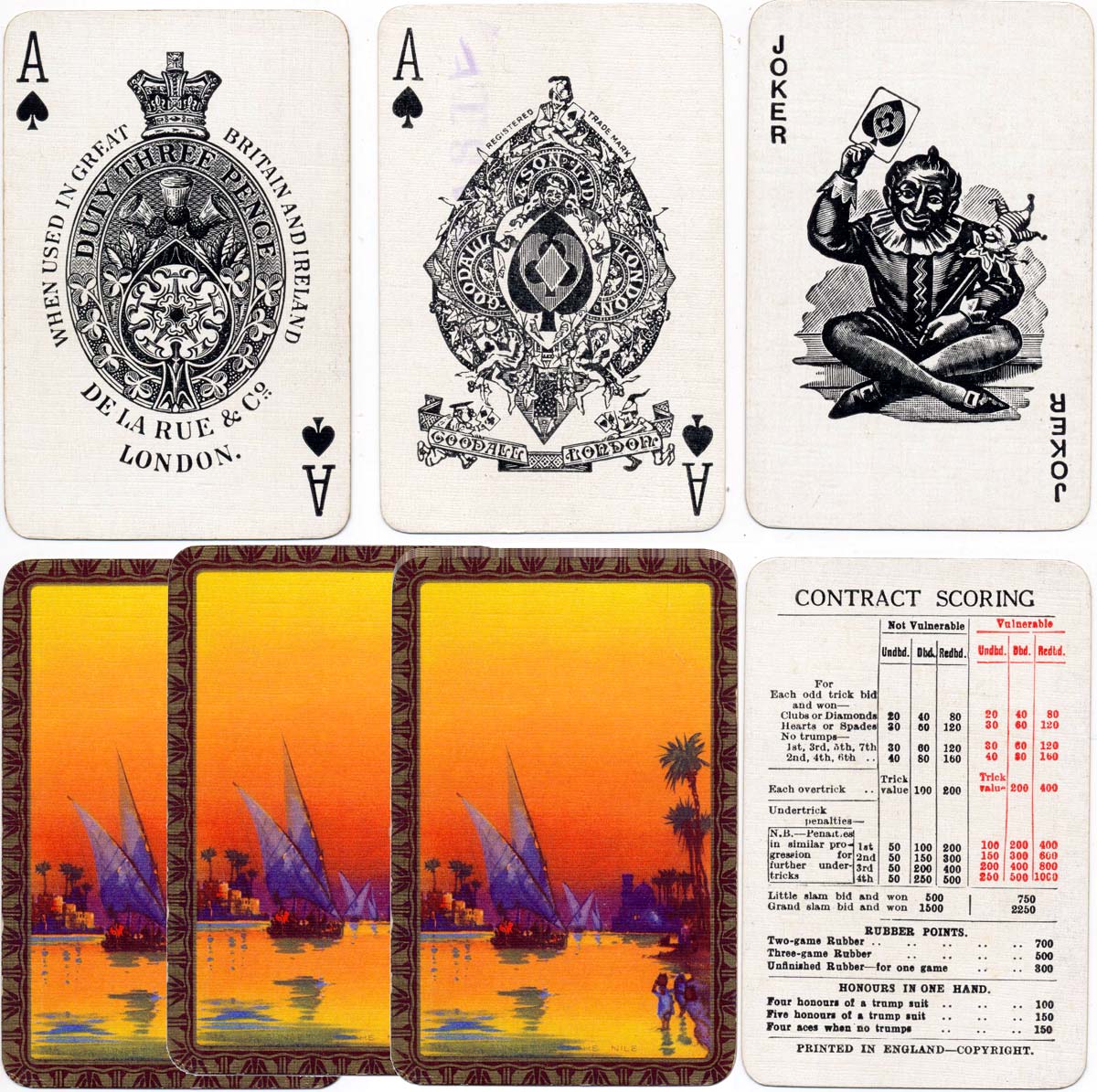
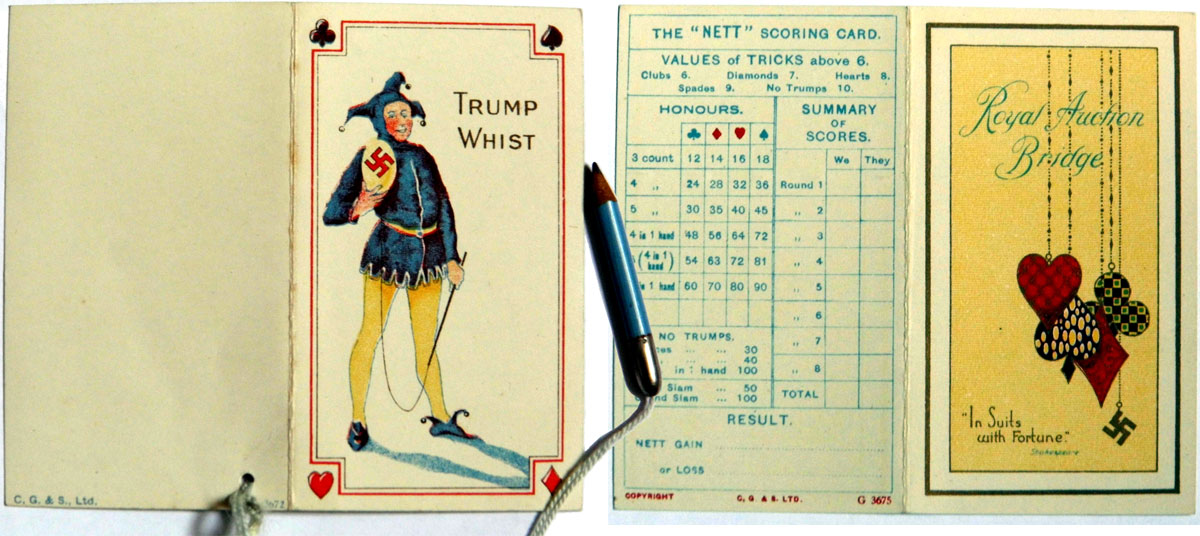
Above: from the collection of Tony Hall.
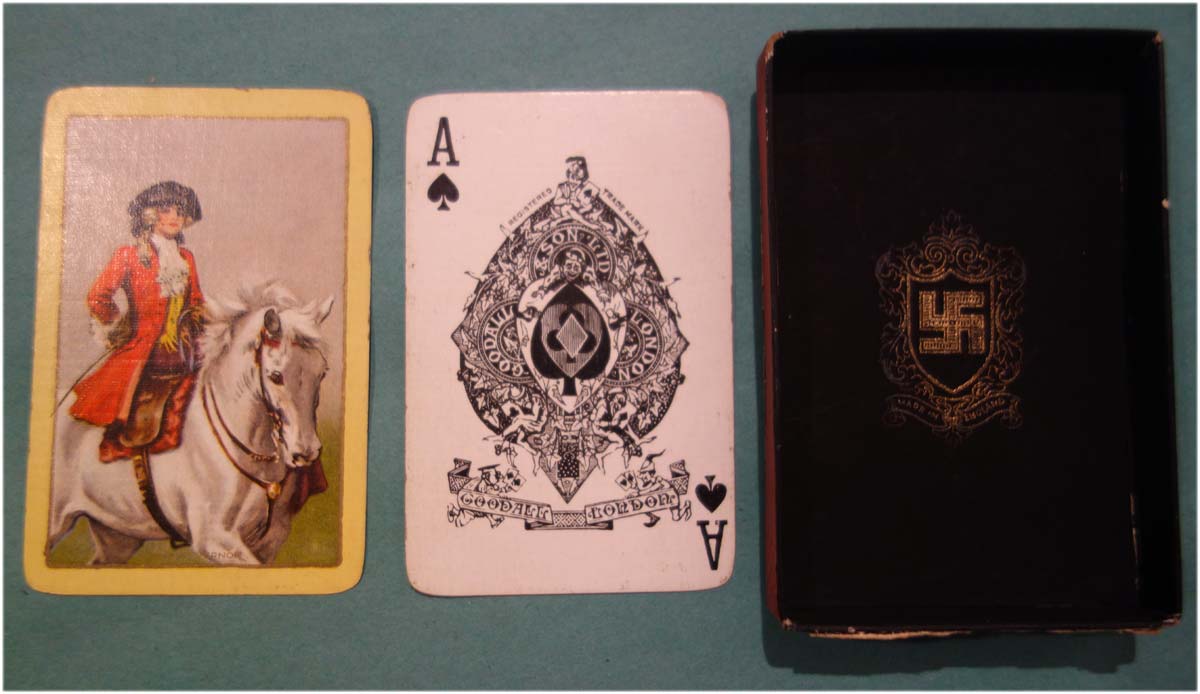
Above: Diana Vernon on a white horse, 1930s. Courtesy David Watson.
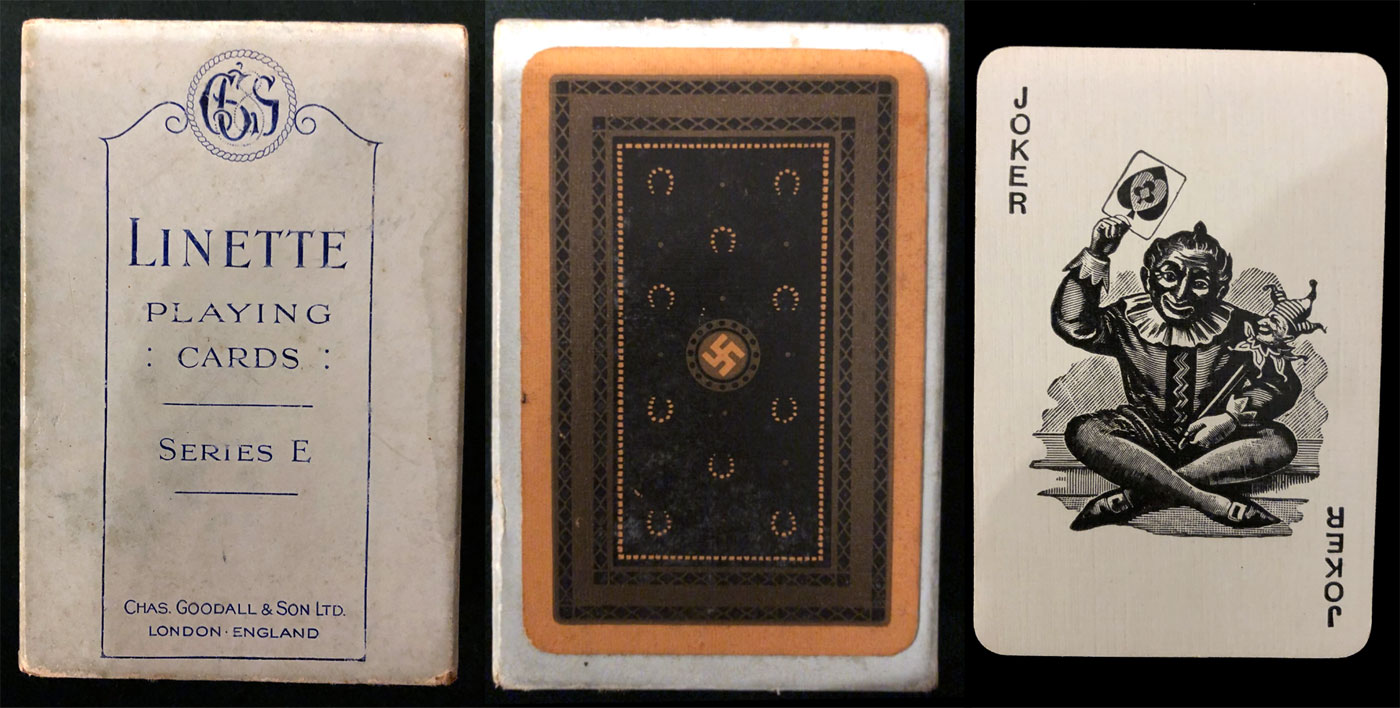
Above: Goodall's Linette playing cards with horseshoes and a small swastika on back, 1930s. Courtesy William Hammick.
NOTE: in 1921 Charles Goodall & Co. were absorbed by De La Rue. The Goodall plant in Camden Town became a subsidiary of De la Rue and their well-known brand names were maintained by De la Rue.

By Simon Wintle
Spain • Member since February 01, 1996
I am the founder of The World of Playing Cards (est. 1996), a website dedicated to the history, artistry and cultural significance of playing cards and tarot. Over the years I have researched various areas of the subject, acquired and traded collections and contributed as a committee member of the IPCS and graphics editor of The Playing-Card journal. Having lived in Chile, England, Wales, and now Spain, these experiences have shaped my work and passion for playing cards. Amongst my achievements is producing a limited-edition replica of a 17th-century English pack using woodblocks and stencils—a labour of love. Today, the World of Playing Cards is a global collaborative project, with my son Adam serving as the technical driving force behind its development. His innovative efforts have helped shape the site into the thriving hub it is today. You are warmly invited to become a contributor and share your enthusiasm.

Activity for Swastika designs
Sign in to comment or save this article.

Related Articles
Pastime Playing Cards for the Blind
The “Pastime” Playing Cards for the Blind manufactured by Goodall & Son Limd., c.1910.
Hand-drawn transformation cards, c1875
A complete set of hand-drawn transformation cards from c1875, using a standard De La Rue pack.
Goodall 1879-1880 Sample Book
Complete contents of a sample book by Goodall & Sons
De La Rue Pocket Guides
The 19th Century saw the production, by all of the major companies, of pocket guides or “mini-books”...
Kuhn Khan and Cooncan: an update
Kuhn Khan and Cooncan are pretty much exactly the same rummy-style game, but packaged and presented ...
Isle of Man playing cards by De La Rue & Goodall
Two different versions of Isle of Man playing cards from 1870 and 1914.
Pashas
“Pasha” is one of Charles Goodall’s brands which first appeared in c.1898 and was retained until aft...
A Pair of Transformation Packs
Two similar but fascinatingly different hand-drawn transformation decks by the same artist, c.1875
Arthur Lee & Sons Ltd
Advertising deck produced for Arthur Lee and Sons Ltd of Sheffield by Thomas De la Rue around 1958. ...
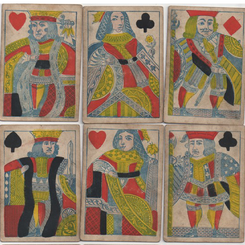
Goodall c.1845-60
Goodall’s earliest cards were traditional in appearance but in around 1845 ‘modernised’ courts were ...
Draughts League Medals
Arthur Charles Prince worked for De la Rue as a playing card cutter and later was promoted to superv...
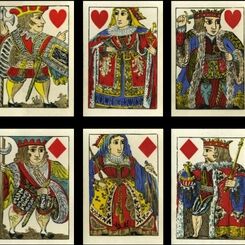
5: De La Rue
In December 1831 Thomas de la Rue was granted his patent for printing playing cards by letterpress.
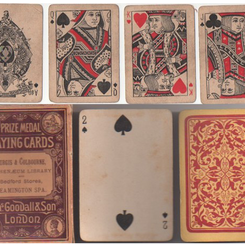
Boudoir
“Boudoir” playing cards were introduced by Chas Goodall & Son in 1906 in a new, slimmer size.
Rameses Fortune Telling
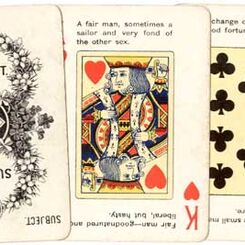
The Rameses Fortune Telling Cards were manufactured by Chas. Goodall & Son Ltd, London, c.1910, arou...

De La Rue Continental
During the latter part of the nineteenth century De La Rue produced two special packs of cards for t...
De La Rue
De La Rue introduced letter-press printing into playing card production and his patent was granted i...
Spanish suited pack for Nestlé
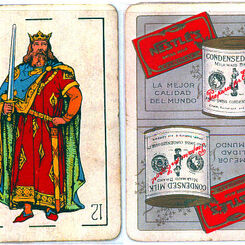
Spanish-suited pack produced by Chas Goodall & Son Ltd for South America
The History of Playing Cards
Playing cards appear in European records in the late 14th century, but their earlier history lies fu...
Most Popular
Our top articles from the past 60 days


