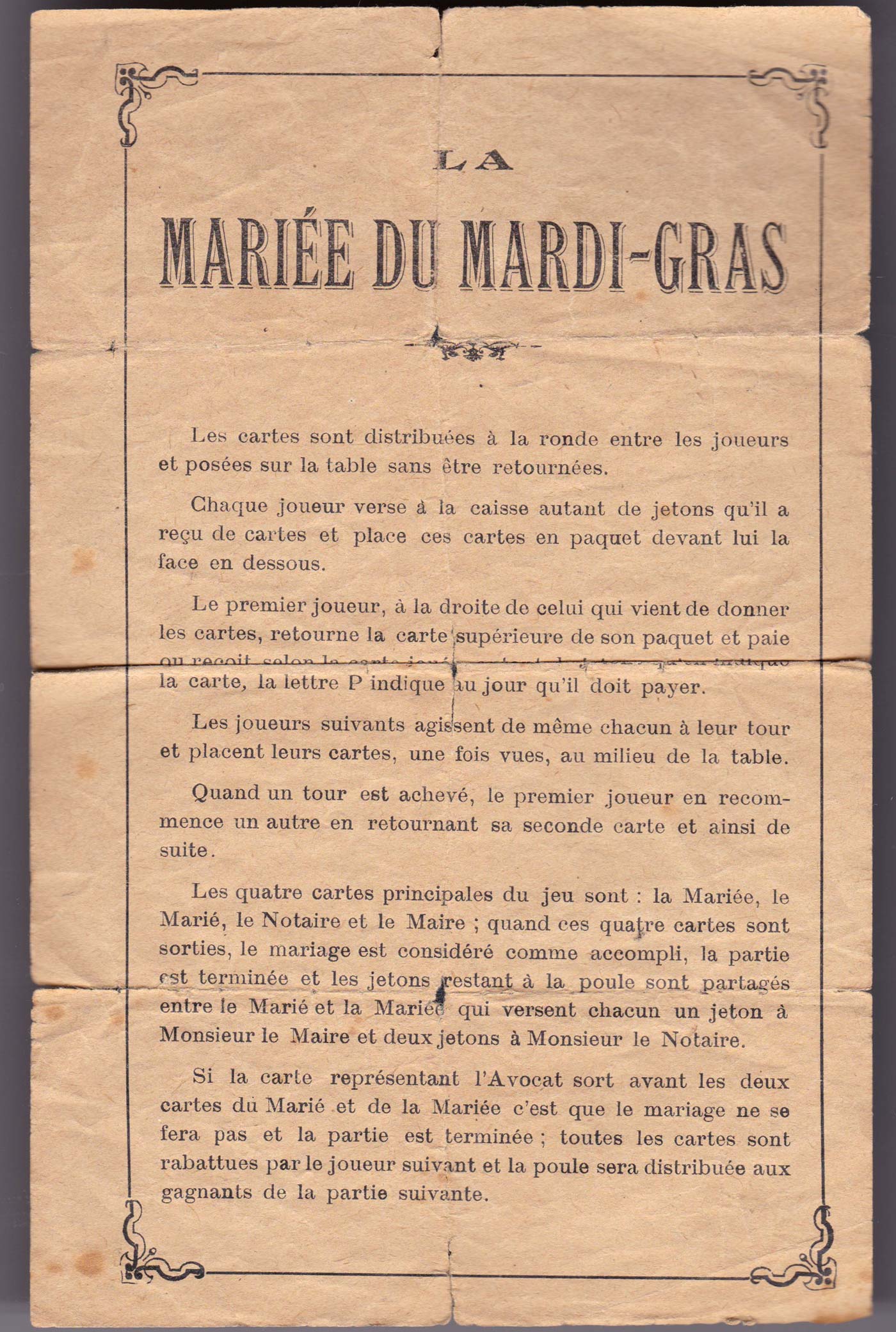
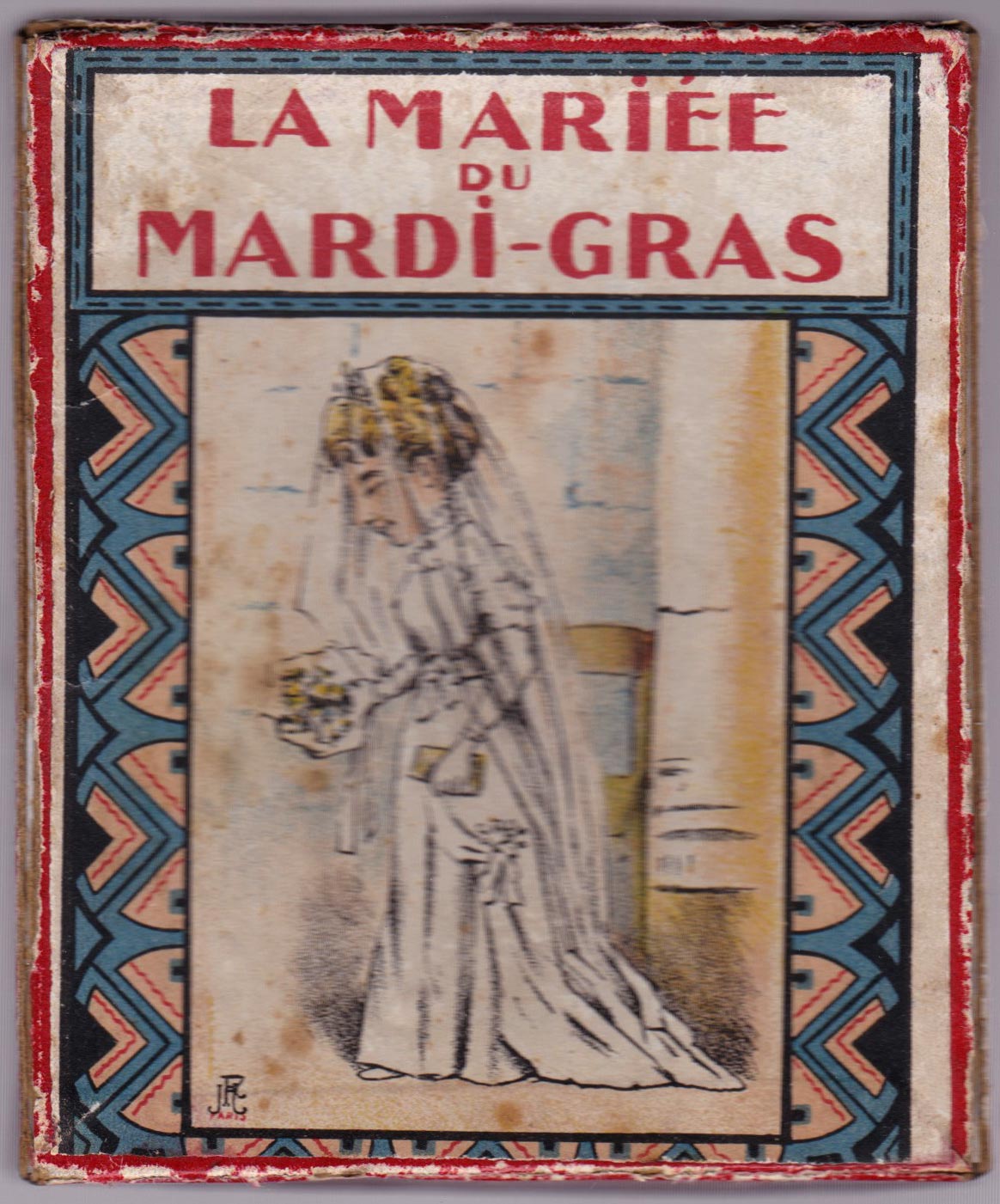
La Mariée du Mardi-Gras
La Mariée du Mardi-Gras, published by Jeux et Jouets Français. Paris, early 1900s.
La Mariée du Mardi-Gras card game published by J.J.F. (Jeux et Jouets Français, successors to Mauclair Dacier), Paris, early 1900s. Inspired by the comedy play by Eugéne Grangé & Lambert-Thiboust published in the 1860s, the main characters are the bride and groom, the notary and the mayor. The caricatures in the game give us a glimpse of life at the time.
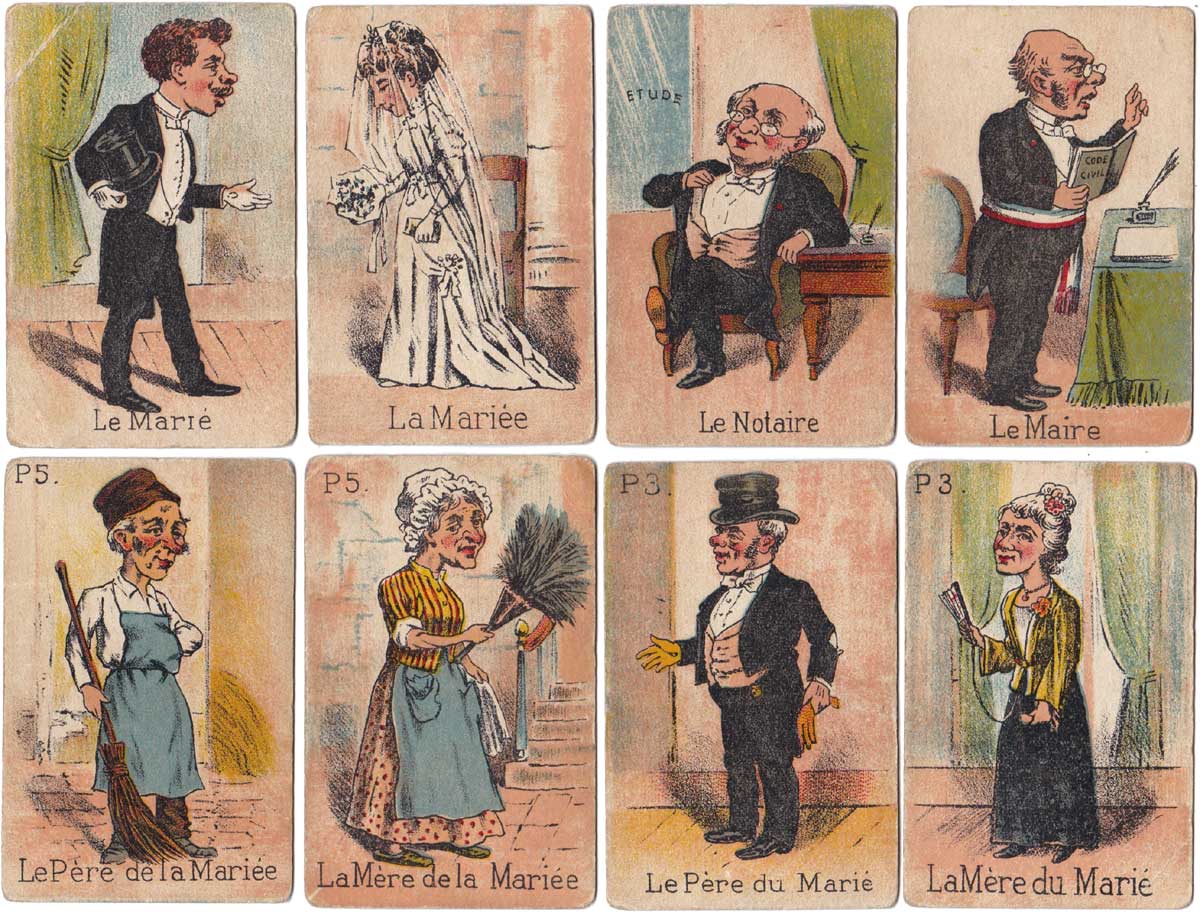
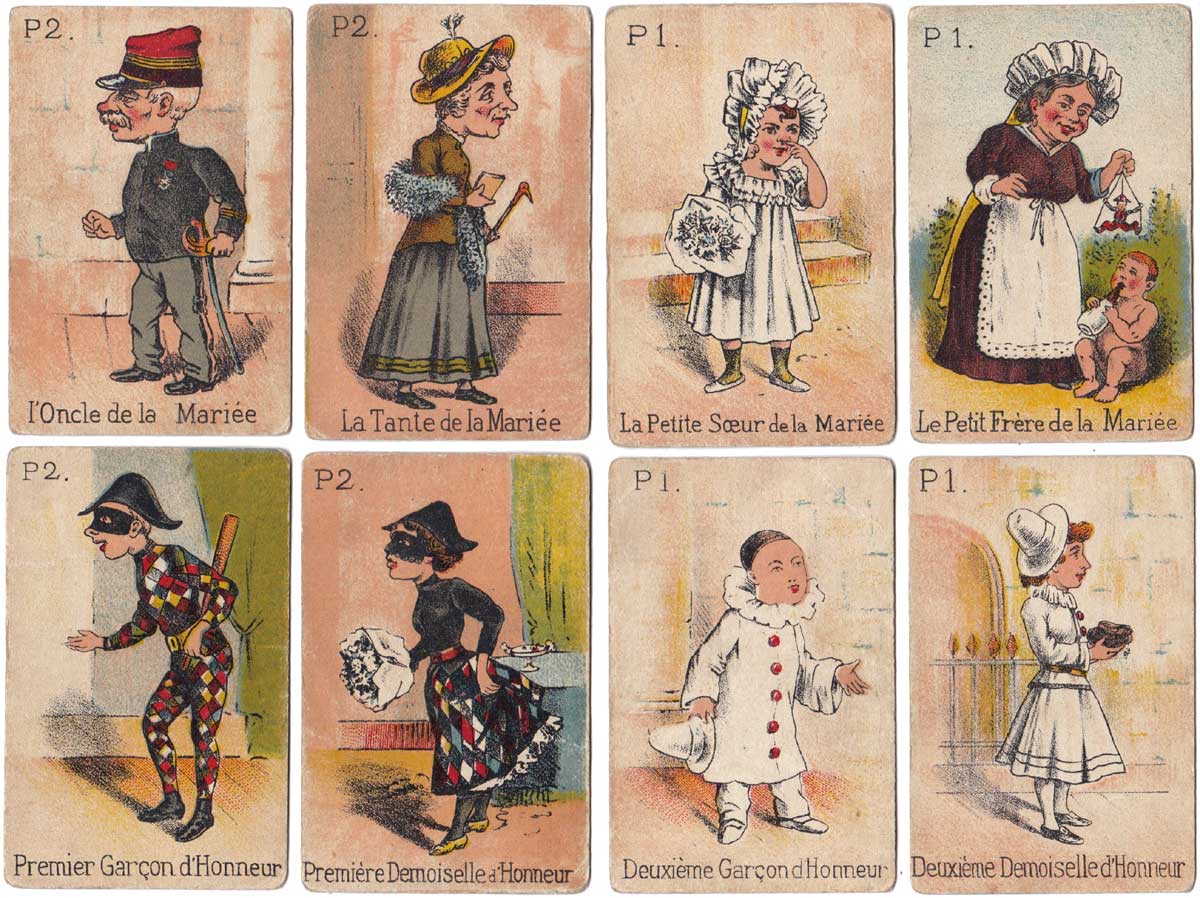
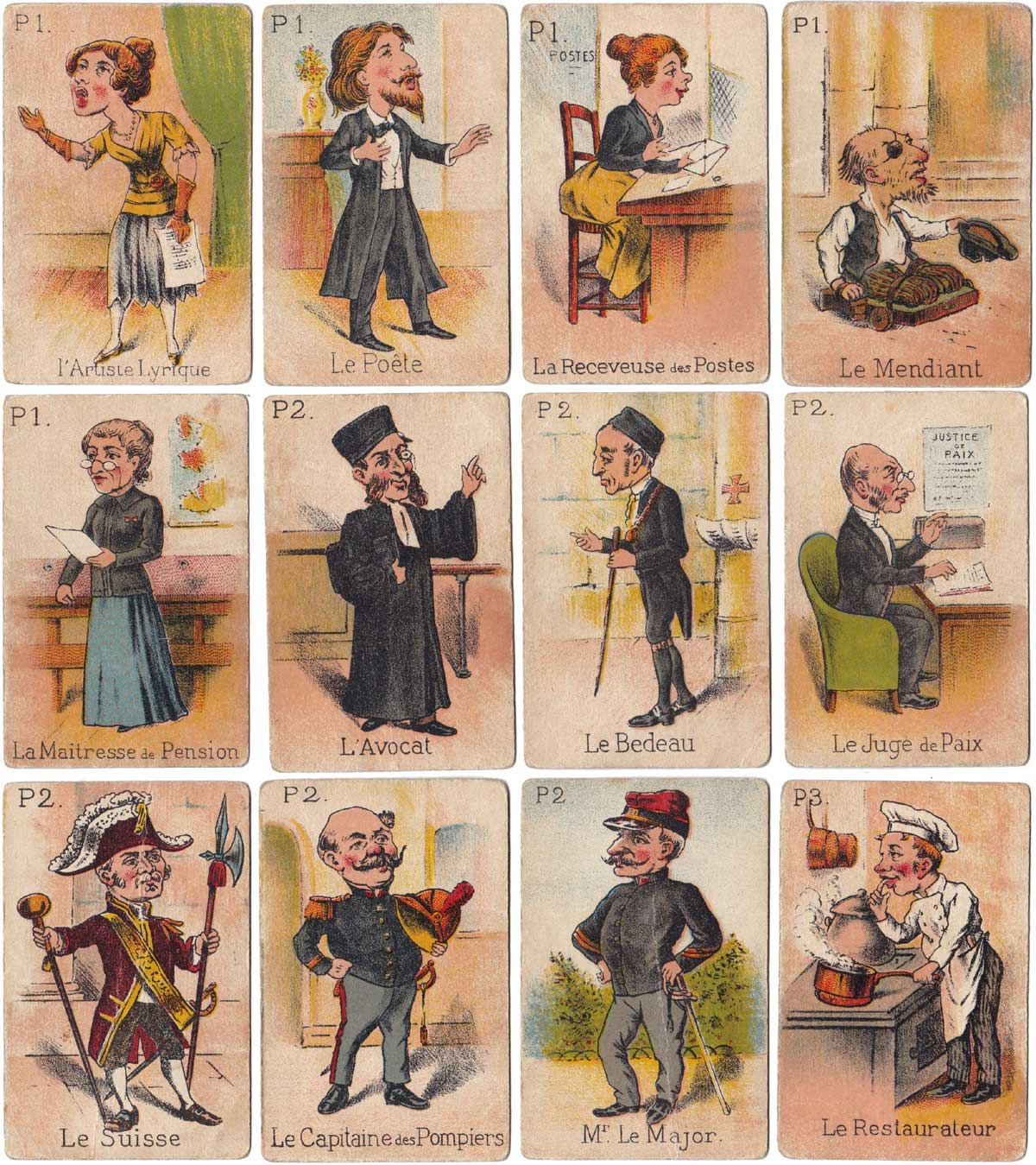
Above: La Mariée du Mardi-Gras card game published by Jeux et Jouets Français (successors to Mauclair Dacier), Paris, early 1900s.
The year 1904 saw the merger of game manufacturers Mauclair-Dacier, Simonin-Cuny, Wogue and Lévy and Perret Paul, with Delhaye Frères added in 1905. The new company "Jeux et Jouets Français" operated until 1931.

By Rex Pitts (1940-2021)
United Kingdom • Member since January 30, 2009
Rex's main interest was in card games, because, he said, they were cheap and easy to get hold of in his early days of collecting. He is well known for his extensive knowledge of Pepys games and his book is on the bookshelves of many.
His other interest was non-standard playing cards. He also had collections of sheet music, music CDs, models of London buses, London Transport timetables and maps and other objects that intrigued him.
Rex had a chequered career at school. He was expelled twice, on one occasion for smoking! Despite this he trained as a radio engineer and worked for the BBC in the World Service.
Later he moved into sales and worked for a firm that made all kinds of packaging, a job he enjoyed until his retirement. He became an expert on boxes and would always investigate those that held his cards. He could always recognize a box made for Pepys, which were the same as those of Alf Cooke’s Universal Playing Card Company, who printed the card games. This interest changed into an ability to make and mend boxes, which he did with great dexterity. He loved this kind of handicraft work.
His dexterity of hand and eye soon led to his making card games of his own design. He spent hours and hours carefully cutting them out and colouring them by hand.

Leave a Reply

Your Name
Just now Your comment here. Your comment here. Your comment here. Your comment here. Your comment here. Your comment here. Your comment here. Your comment here. Your comment here. Your comment here. Your comment here. Your comment here. Your comment here. Your comment here. Your comment here. Your comment here. Your comment here. Your comment here. Your comment here. Your comment here. Your comment here. Your comment here. Your comment here. Your comment here. Your comment here. Your comment here. Your comment here. Your comment here. Your comment here. Your comment here. Your comment here. Your comment here.
Related Articles
Tout Est Bien Qui Finit Bien
‘Tout Est Bien Qui Finit Bien’ family card game by Dondorf.

Gulliver im Land der Zwerge
Gulliver in the Land of Dwarfs quartet published by Verlag für Lehrmittel, Pößneck.
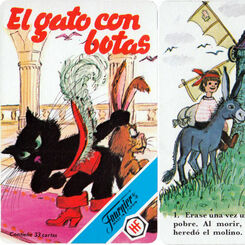
El Gato con Botas
Puss in Boots card game manufactured by H. Fournier, 1981.
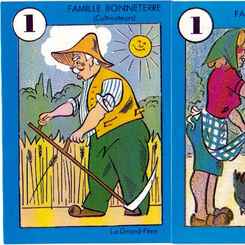
Bass & Bass Jeu des Familles
Bass & Bass ‘Jeu des Familles’ made by Franz-Josef Holler, Münich, 1989.

Jeu de Quaternes ‘Rizá’
Jeu de Quaternes ‘Rizá’

La Belle au bois dormant
Sleeping Beauty card game published in France, c.1980s.
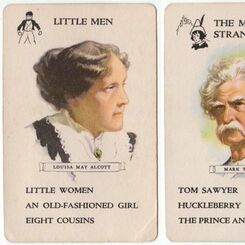
Authors
Authors quartet game published by Whitman Publishing Co., 1951.
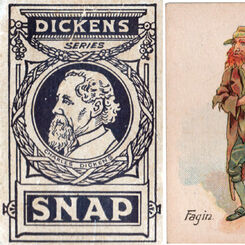
Dickens Snap
Dickens Snap, c.1890.
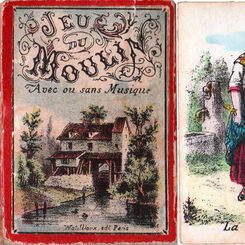
Jeu du Moulin
Jeu du Moulin by Watilliaux, Paris.
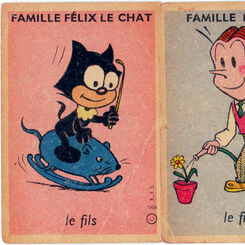
Jeu des 7 Familles
Jeu des 7 Familles © K.F.S. Opera Mundi c.1960.
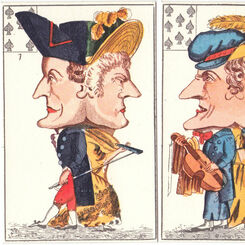
Jeu Grotesque
Jeu Grotesque was first published in France c.1800.
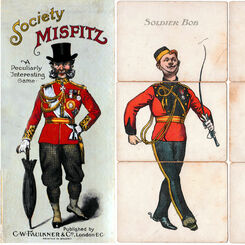
Society Misfitz
Society Misfitz published by C.W Faulkner & Co, c.1904.

Jeu de Mémory
Colourful Jeu de Mémory card game made in Taiwan, distributed in France by CMP Group.
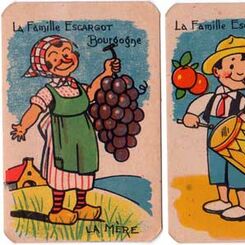
Familles Provinciales
Jeu des 7 Familles Provinciales printed by Nisse, Croix-Lille, c.1930
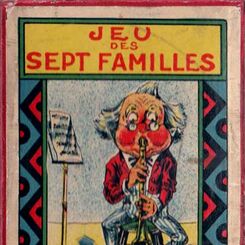
Jeu des 7 Familles by J.J.F
“Jeu des 7 Familles” by Jeux et Jouets Français of Paris, 1904.
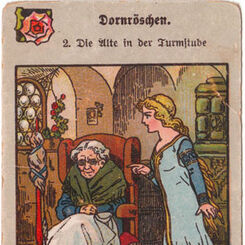
Fairy Tales
German Fairy Tales Card Game.
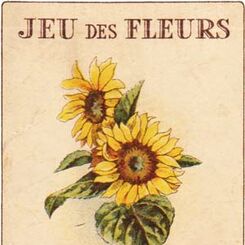
Jeu des Fleurs
Dondorf no.332: ‘Jeu des Fleurs’ French edition
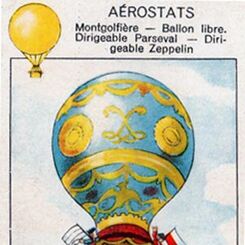
Le Progrès de la Circulation
The beautiful images in this quartet game published by Jeux Spear in 1933 depict the progress of tra...
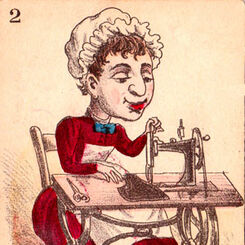
Mauclair Dacier Familles
This “Jeu de Sept Familles” was produced by Mauclair Dacier in the late 19th century.
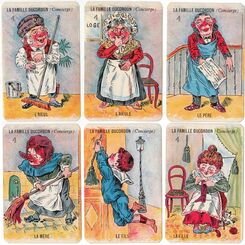
Jeu des 7 Familles by Miro Company
Jeu des 7 Familles by Miro Company, c.1960.
Most Popular
Our top articles from the past 60 days