Wüst Spanish pattern
Wüst Spanish pattern c.1910 advertising Cuban ‘Tropical’ beer.
Wüst Spanish Cadiz pattern deck for export to Cuba c.1910-1920, advertising ‘Tropical’ beer. The Wüst star can be found on the Ace of coins, but the maker’s name is otherwise only to be found on the box. None of the court figures wears a moustache. Earlier editions of this pattern were produced by Wüst since the late 19th century with legends on several cards and sometimes with the Wüst star on the Jack of swords.
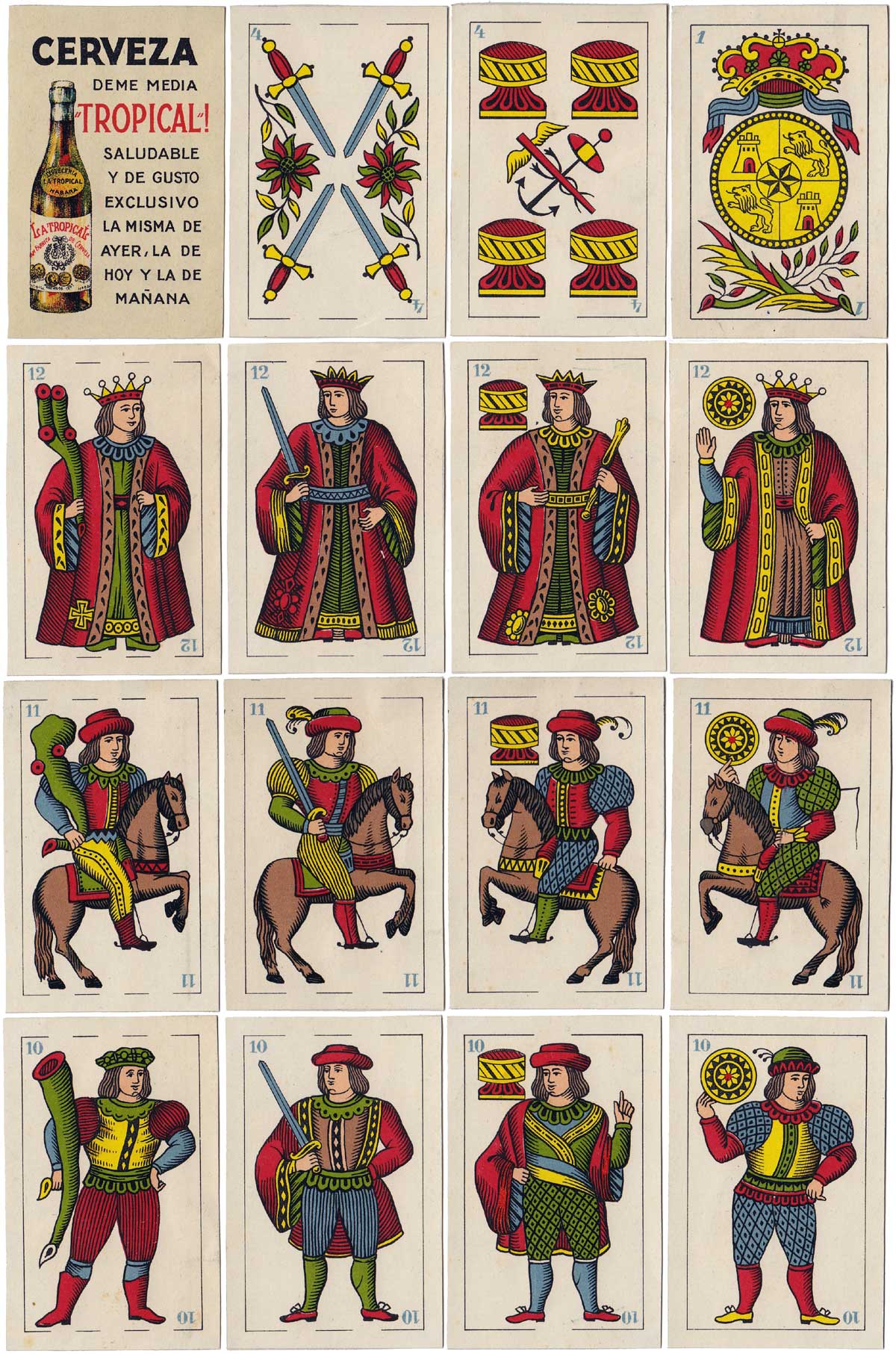
Above: Wüst Spanish Cadiz pattern deck for export to Cuba c.1910, advertising ‘Tropical’ beer. 40 cards.
Later Edition, c.1920
A later edition of the same deck but with rounded corners was printed from different lithographic stones. Some difference can be seen in the design on the coins and cups. These Spanish Cadiz pattern designs were also used in 1952 by Müller & Cie, Schaffhausen►
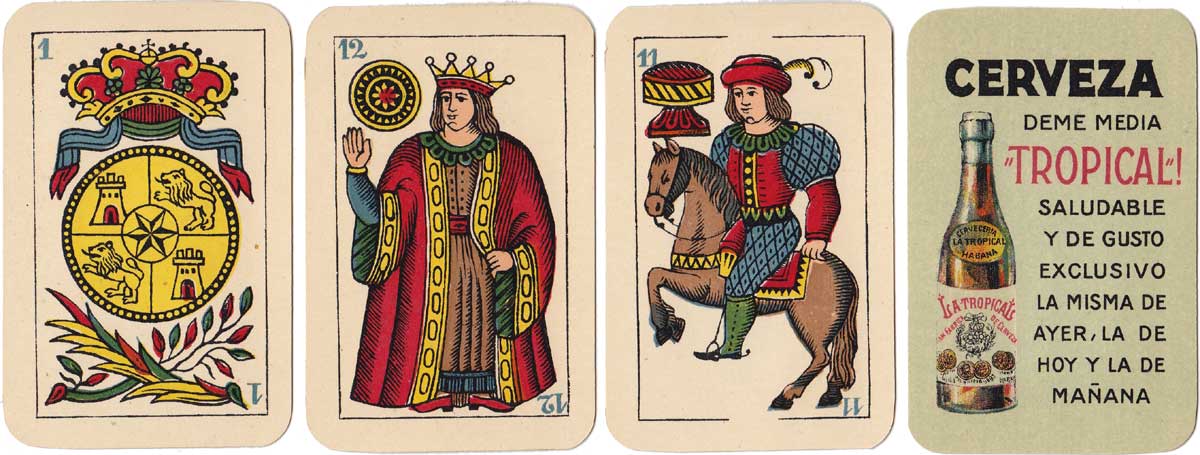
Above: later edition of the same Wüst Spanish pattern deck for export to Cuba, but with rounded corners and from different lithographic stones. c.1920. 48 cards. All above images courtesy Paul Symons.
Earlier Edition, c.1880
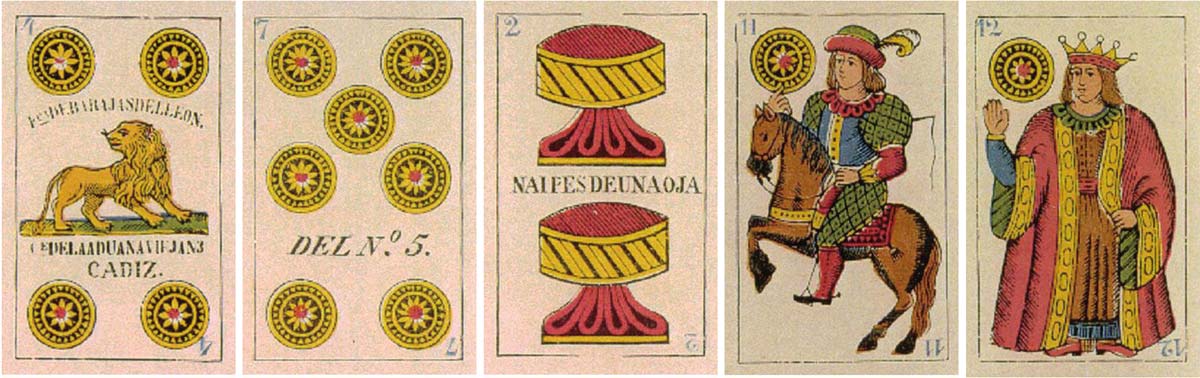
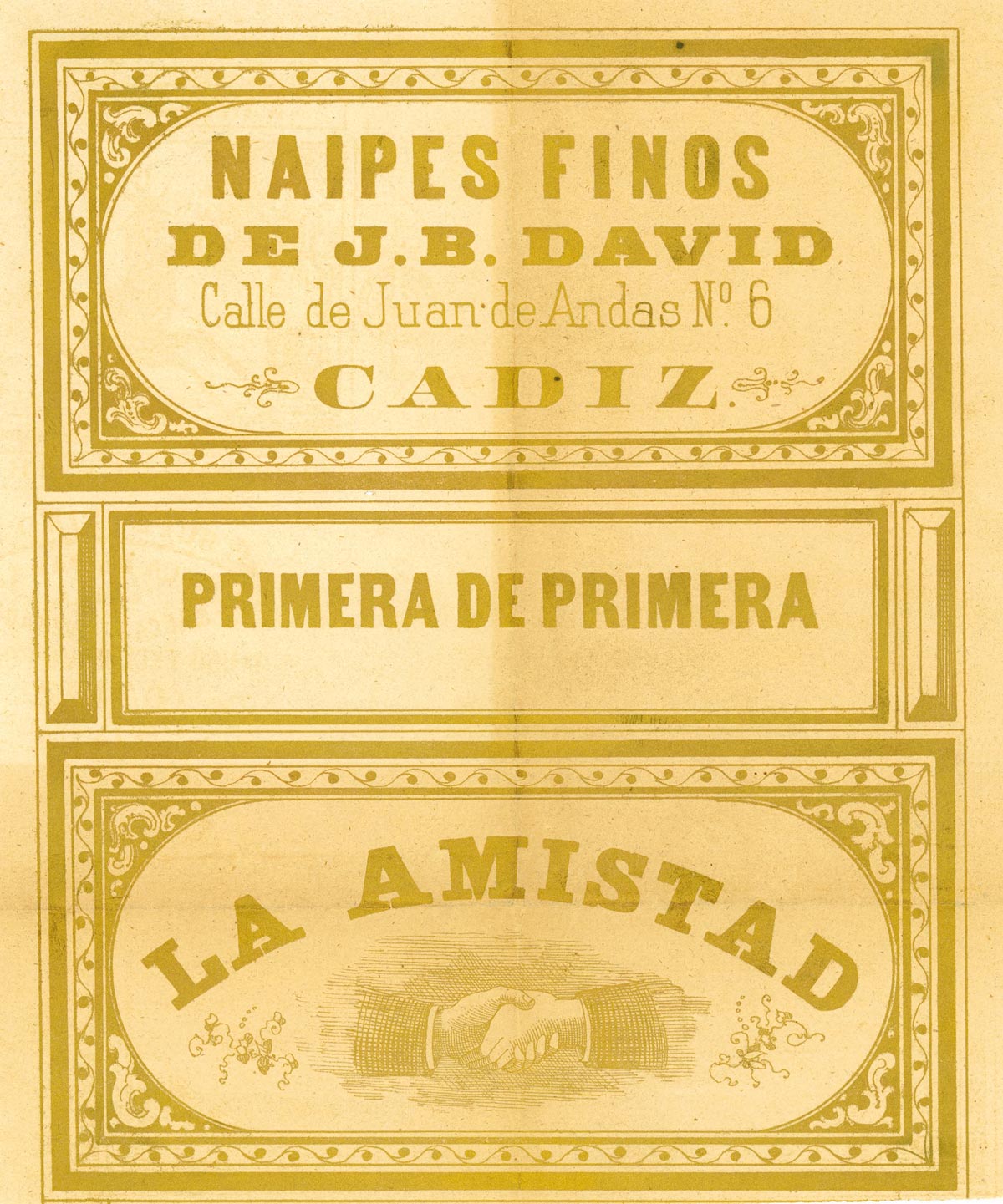
Above: cards from Spanish Cadiz pattern deck produced by Wüst for J. B. David in Cadiz, Spain, who owned the brand name “La Amistad”, c.1880. Image courtesy Alberto Pérez González. See the wrapper►
REFERENCES
Shaw, Martin & Symons, Paul: Playing cards from the factory C.L.Wüst, Frankfurt, Germany (1811-1927), Catalogue of the exhibition held at the Nationaal Museum van de Speelkaart, Turnhout, Belgium, 23 September-31 December 2005. See page 44.
Additional research by Alberto Pérez González.

By Paul Symons
Netherlands • Member since February 01, 2016
I'm British but I have now lived in the Netherlands for more than 50 years and am still enjoying every minute of it. I started collecting playing cards in the early 1980’s after speaking with my neighbour who was at that time a croupier in a casino. I started with just collecting jokers, but that soon led me to complete packs of cards and eventually to specialising in old and antique playing cards, particularly those of C.L. Wüst of Frankfurt, Germany. I am presently the Dutch representative of the I.P.C.S. and the auctioneer at the IPCS conventions.

Activity for Wüst Spanish pattern
Sign in to comment or save this article.

Related Articles
The Modern Württemberg Pattern
Early 2000s modernization based on designs from 1865 and 1926.
Battles in Mexico, 1847
Uncut proof sheet with Mexican Battle scenes on the aces and portraits of American generals on the c...
Crimean War Deck
1854 saw the declaration of the Crimean War and this deck was published by Wüst around, or shortly a...
South American Costumes
Costumes of people of Brazil, Peru and Mexico, with views of Rio de Janeiro on the aces.
Nordbräu Ingolstadt
Publicity pack for the German brewery Nordbräu with Bavarian pattern courts (adapted).
Wicküler Skat
Publicity pack for the German brewery Wicküler with courts merrily drinking beer.
Grimaud copy of Wüst playing cards
A copy of Wüst house pattern 3
Goodall’s modernised Wüst House pattern playing cards
A remodelled version of the first Wüst house pattern.
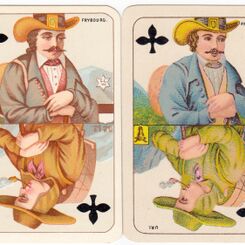
Wüst Costumes Suisses No.93
Two version of a Swiss souvenir pack by C.L.Wúst
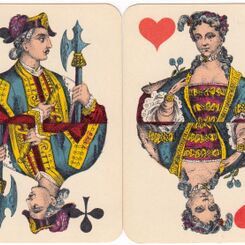
Renaissance Playing cards made by C.L.Wüst
Rococo style playing cards from Frankfurt.
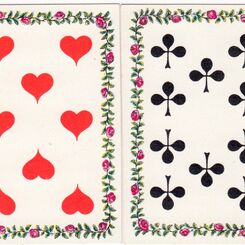
Decorated pip cards from C.L.Wüst
Several Wüst patience packs with special pip cards
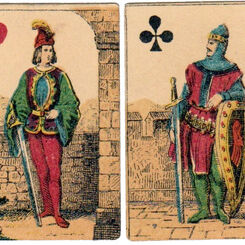
Miniature Theatre playing cards
Miniature playing cards, possibly for children, with a romantic theatrical theme. C.L. Wüst c.1890. ...
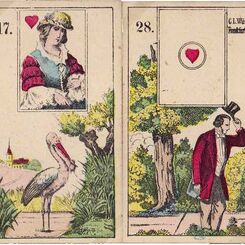
Wüst Lenormand deck, c.1860
Wüst Lenormand deck, c.1860
C.L. Wüst, 1811 - 1927
SPIELKARTENFABRIEK VON C.L. WÜST, 1811 - 1927. A short history of the Wüst factory by Martin Shaw & ...
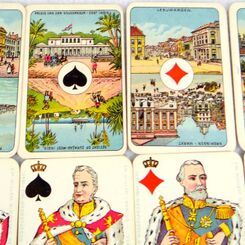
Nationaal Speelkaart Nº 165
Wüst: Nationaal Speelkaart Nº 165 issued for the Dutch market
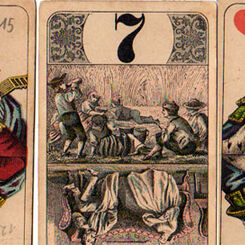
Wüst “Encyclopedic Tarot”
“Encyclopedic Tarot” by C. L. Wüst with “bourgeois” views of life on the Trumps.
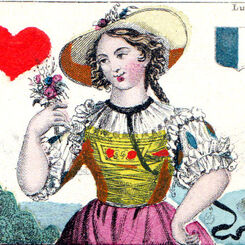
Swiss Costumes
Wüst's Swiss Cantons souvenir deck was published in Frankfurt in c.1875 for the emerging tourist mar...
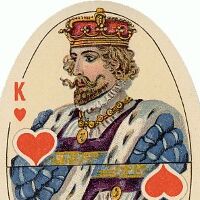
Wüst Oval Patience
C. L. Wüst Oval Patience Karten No. 240, beautifully printed by chromolithography, c.1910.

Schiller deck
Schiller deck made by Conrad Ludwig Wüst, Frankfurt/Main, ca. 1834.
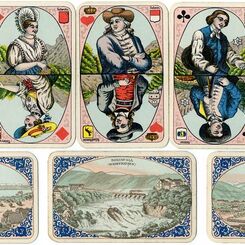
Swiss Album patience
Swiss Album patience cards by C. L. Wüst (Frankfurt), c.1900, with a different landscape on the reve...
Most Popular
Our top articles from the past 60 days