


The Invention of Bridge
“The Invention of Bridge” - a humorous story by Larry Lefkowitz.
a humorous story by Larry Lefkowitz
At the British Officers’ and Gentleman’s Club in Madras, India, the officers were sitting at ease in their easy chairs (the gentlemen were elsewhere playing a gentlemanly game of croquet). “How about a game of whist?” suggested Colonel Bogie. The others were so tired of whist that they were positively wistful for some other diversion – even tea time at four instead of five, but no one dared suggest such an innovation; they were, after all, products of the conservative Victorian Era. Their boredom, however, was so pronounced that they threw the caution of their era to the winds (easterly, as befitted India), and were immediately favorably disposed when the colonel made his radical suggestion. “What we need is a new card game. Something challenging, something to make a man think.” (Women were barred from the club).
Colonel Bogie explained that he wanted to build his new game on whist yet wasn’t quite sure how. Nor what to call his new game. “Any suggestions for a name for the new game?”
“I've got it!” exclaimed one of his companions, Boon by name. “We’ll call it ‘bridge.’”
“Why ‘bridge’” chorused the others, experienced from participating in the amateur Madras Chorus on alternative Tuesdays.
“Since it is a sort of bridge from whist to – ‘bridge’”, said Colonel Bogie, immediately seizing on Boon’s astuteness.
“Why not call it ‘Queen’” suggested Major Effort. “In honor of ours.”
“This is not a game for Victoria” cautioned Major Drum. “Far too complex. Albert, maybe.” He thought for a moment before concluding, “’Bridge’ it is. After all, bridges are very British: London Bridge, Tower Bridge –“
“The Bridge on the River Kwai,” exclaimed Captain courageous.
“Where’s that?” chorused the others, in the key of C major.
“Oh, I don’t know – somewhere around here. I never did well in military map reading, which is why I haven’t been promoted from captain.”
“On the road to Mandalay,” suggested Major Premise.
“Certainly East of Suez,” opined Captain Kidd.
“I think we’re getting off the subject,” thundered the colonel. “Get on with it.”
The others agreed after a quick vote: “‘Bridge’ it is.”
“But how does one play it?” asked Major Bono.
“Oh that. Well, let’s see,” said Colonel Bogie. “We have to make it as complex as possible – none of this calling a spade a spade.”
“Or a club a club,” commented Captain Courageous.
“Or a heart or a heart, or a diamond a diamond,” chimed in the rest, caught up in the excitement of invention.
“Complex bidding is the key,” explained the colonel. “None of this clear bidding as in other card games. Semaphores are for boy scouts. There will be all sorts of obfuscating bids that only your partner will be able to understand. No gin rummy this. A game worthy of this British mind honed against difficulty in defending the empire.”
“And in pushing bureaucracy to new heights,” murmured Captain Kidd.
“The harder the better,” “the chess of card playing” were representative superlatives. (Vying for superlatives was a favorite pastime among British in the East, where they could let go. Such things would have been anathema in the London Officers’ and Gentlemen’s Club.)
“That's the spirit,” beamed the colonel, who began knocking underneath the table with his boot.
“A bit of mud on your boot, Colonel?” Asked Major Drum.
“You could say that. Actually, just practicing alternative signaling. Strictly against the rules, of course, but a bloke's not a bloke if he doesn't try to win by any means. The reputation of the Empire is at stake.”
“Hear, hear,” agreed the others, who began tapping the underside of the table with their boots—to remove the mud.
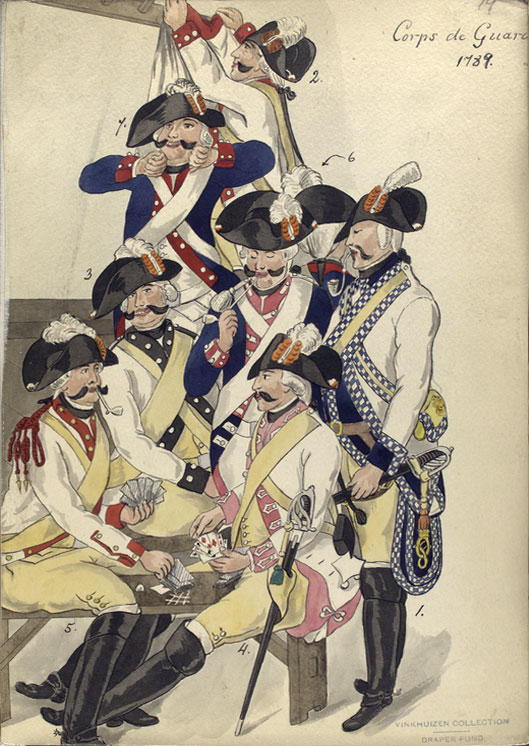
Above: Corps de Guard, 1789.
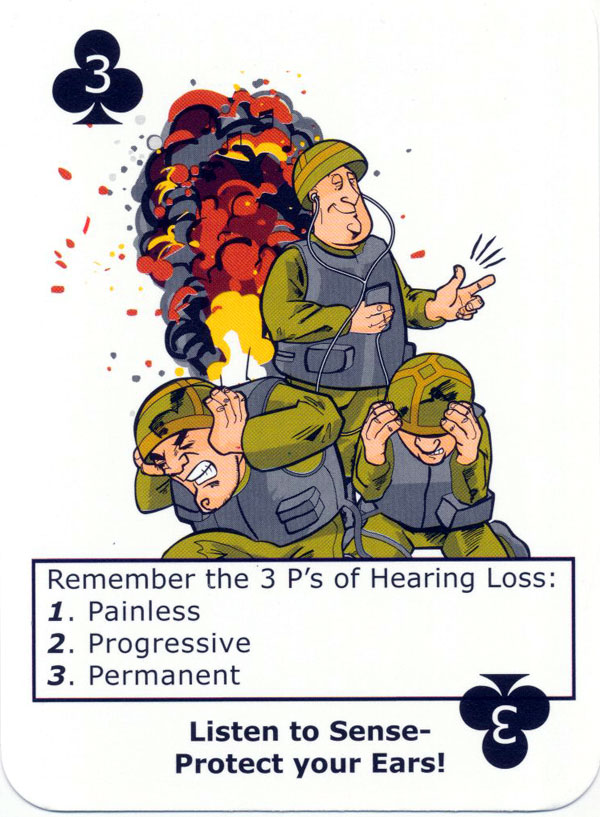
Above: Army Health Promotion.
Above: Russell, Morgan & Co: “Army No.303”, c.1881.
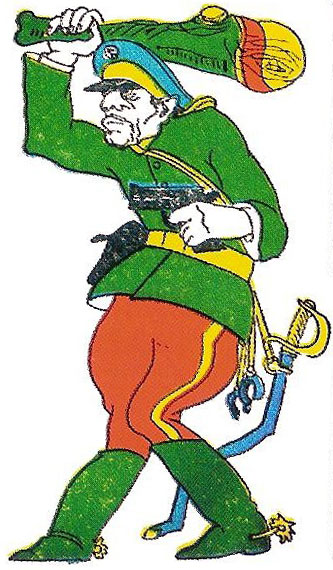
Above: Anti-Perón Satirical Pack.
Humor for Bridge Players - George S. Kaufman, the playwright, humorist and drama writer, was a prominent player of bridge. Among his humorous comments about or during bridge or told about him are the following: At the Regency Club one afternoon, Kaufman shuddered at the atrocious playing of a fellow member. When the hand was finished, the bungler sensed disapproval in Kaufman’s silence. ‘’Alright, George,” he protested, “how would you have played it?” Kaufman answered, “Under an assumed name.” After an exasperating session for George, his partner stood and announced he was going to the men’s room. “Fine,” Kaufman spat, “this is the first time this afternoon I’ll know what you have in your hand.” In a game which was played at three cents a point, Kaufman once said, “I’d like to have a review of the bidding – with the original intonations.” During a game where his luck had been running poorly for the entire evening, Kaufman finally turned his cards face up on the table. Mostly, the hand consisted of two’s and three’s. “I’m going,” Kaufman said as he stood up. “I’ve been treydeuced.” When Goren’s book, Better Bridge for Better Players was first published, it included an amusing forward by Kaufman: As for the choice of seats – how to select the winning chairs – that is a matter on which science is now working, and I may have some very interesting news for us in a future article. For the present, I can only say that some highly promising results have been obtained on rabbits, but as yet I can only hint at the possibilities. Eventually, I am sure, it will be possible to predict with complete accuracy which way the cards will be running on a given afternoon or evening, and when this happens no one will ever lose a ribbon. Oswald Jacoby reported a deal that Kaufman played marvelously in 1952, after which he cracked, “I’d rather sit South than be the president.” Kaufman suggested that bridge clubs should post notice whether the North-South or East-West pairs are holding good cards. From Larry Lefkowitz.

By Simon Wintle
Spain • Member since February 01, 1996
I am the founder of The World of Playing Cards (est. 1996), a website dedicated to the history, artistry and cultural significance of playing cards and tarot. Over the years I have researched various areas of the subject, acquired and traded collections and contributed as a committee member of the IPCS and graphics editor of The Playing-Card journal. Having lived in Chile, England, Wales, and now Spain, these experiences have shaped my work and passion for playing cards. Amongst my achievements is producing a limited-edition replica of a 17th-century English pack using woodblocks and stencils—a labour of love. Today, the World of Playing Cards is a global collaborative project, with my son Adam serving as the technical driving force behind its development. His innovative efforts have helped shape the site into the thriving hub it is today. You are warmly invited to become a contributor and share your enthusiasm.

Activity for The Invention of Bridge
Sign in to comment or save this article.

Related Articles
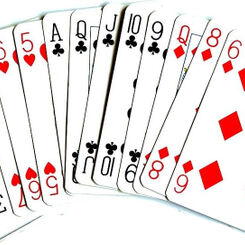
Two consecutive 7 No Trumps contracts!
What are the odds?
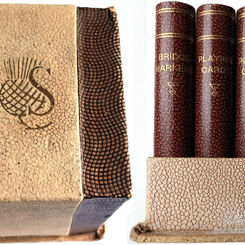
Waddington’s faux books
Waddington’s faux book set containing four packs of playing cards and bridge markers.
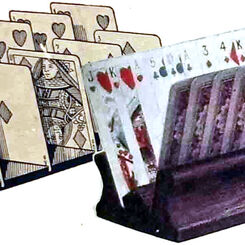
Double Dummy Bridge
In the early 20th century several firms began to promote whist or bridge as a game for two.
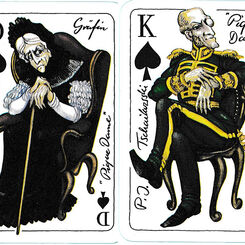
Opernkarte I
Humorous designs by Peter Becker on the theme of the Opera.
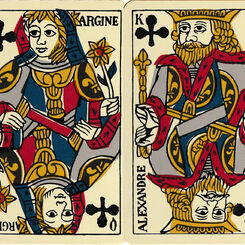
Bourbon Bridge
Attractive, woodcut-style courts adapted for modern play.
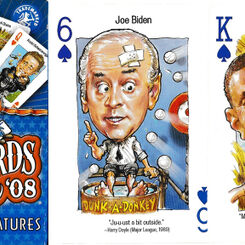
Politicards 2008
Politicards ’08 with caricatures cast as characters from classic movies, USA.
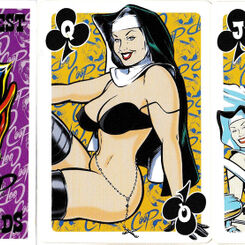
Keep-em honest playing cards
Keep-em honest playing cards designed by Chris Cooper and published by Dark Horse Deluxe.
The making of a Bridge or Bézique marker
This post-mortem was carried out on a Bezique marker which was already falling apart.
The Personalities and Books which shaped the game of Whist, 1860-1900
All the books described here are from Tony Hall's own collection, put together over years because of...
Hungarian Drinking Skat
Hungarian Drinking Skat, c.2004.
Klutz Card Deck
Klutz Card Deck with comic courts.
TDC Inc.
TDC Inc.: a 20th Century American Playing Card Maker.
Hand Drawn Joker Pack
Pack of 52 hand-drawn Jokers.
Dal Negro Bridge set
Dal Negro Bridge set featuring old Vienna pattern courts.
Bridge Challenger®
“Bridge Challenger®” by Fidelity Electronics, 1975 - better living through science.
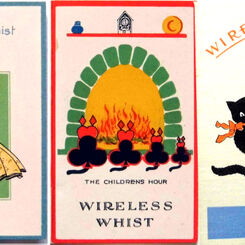
Progressive Whist Cards - page 2
Wireless Whist itself, in many forms...
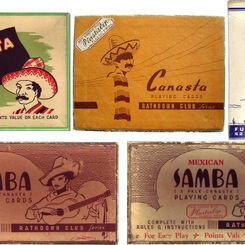
Canasta
Canasta is a card game of the Rummy family which originated in Uruguay probably about 1947.
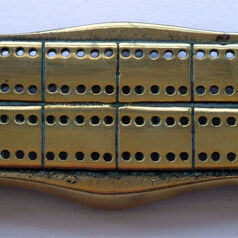
Cribbage Board Collection part 4
A collection of antique and vintage Cribbage Boards by Tony Hall, part 4.
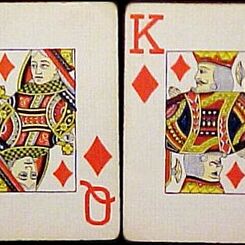
Jumbo Bridge 88
Cards with jumbo indices were introduced in 1895, and were given the subtitle '88'.
E.P.C.S. Competitions
Do you know any good playing card related cartoons or jokes?
Most Popular
Our top articles from the past 60 days


