


Baraja Mística
‘Baraja Mística’ satirical playing-cards featuring revelling clergy published by Litografía Fernández, Madrid.
This 40-card Spanish-suited pack features comical designs satirising the Spanish clergy. On the coins cards we see churchmen worshipping and gloating over gold coins and moneybags, and the suit of cups shows monks, nuns and church officials partying, enjoying plenty of alcohol, with a nun holding a guitar. The clubs and swords suits show further caricatures of religious people in unholy attitudes.
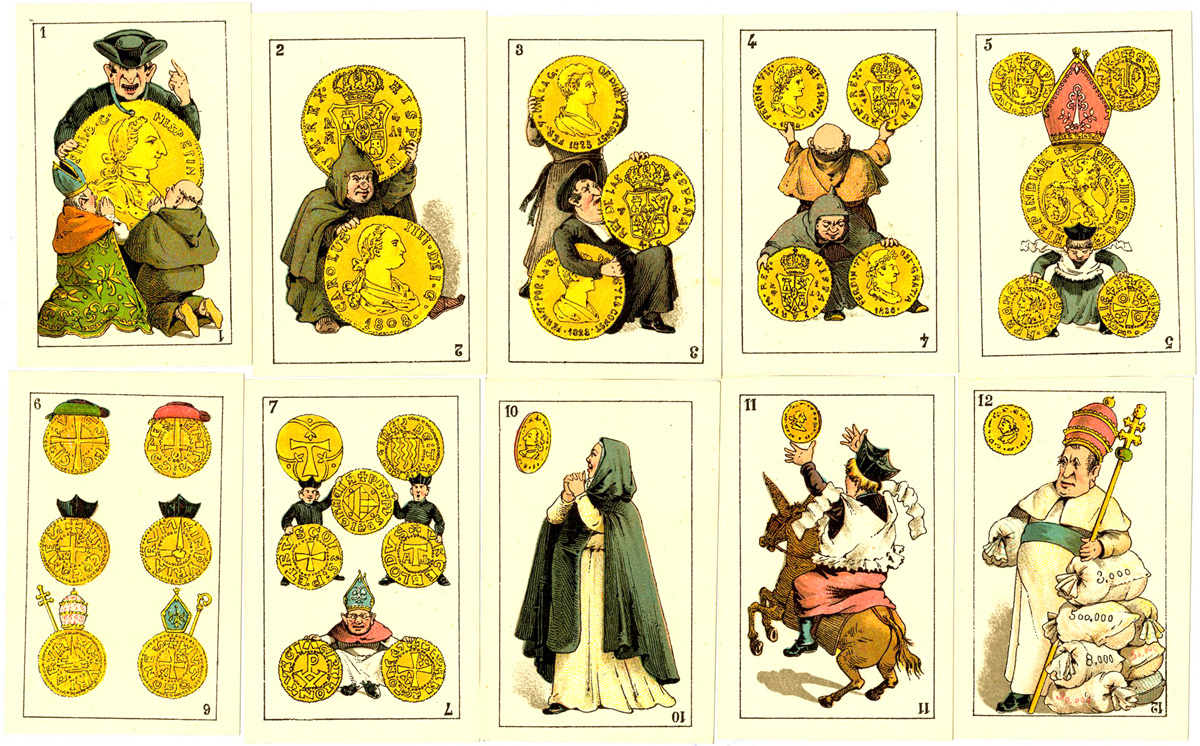
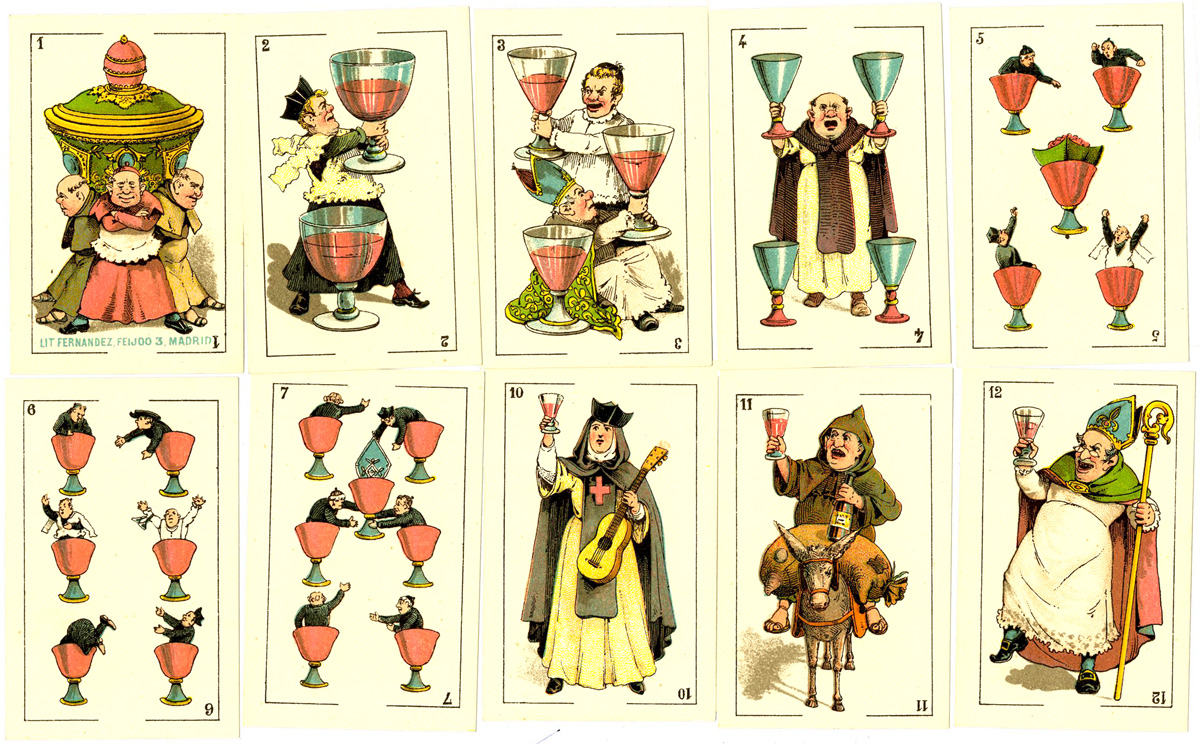
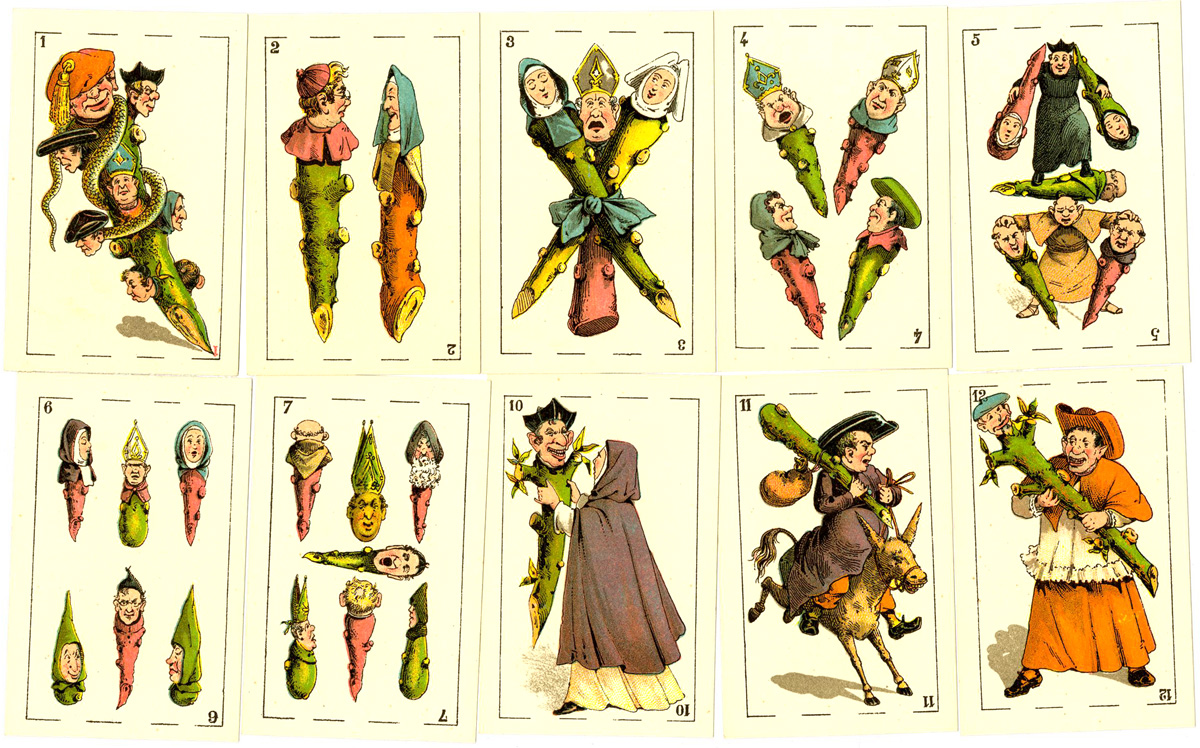
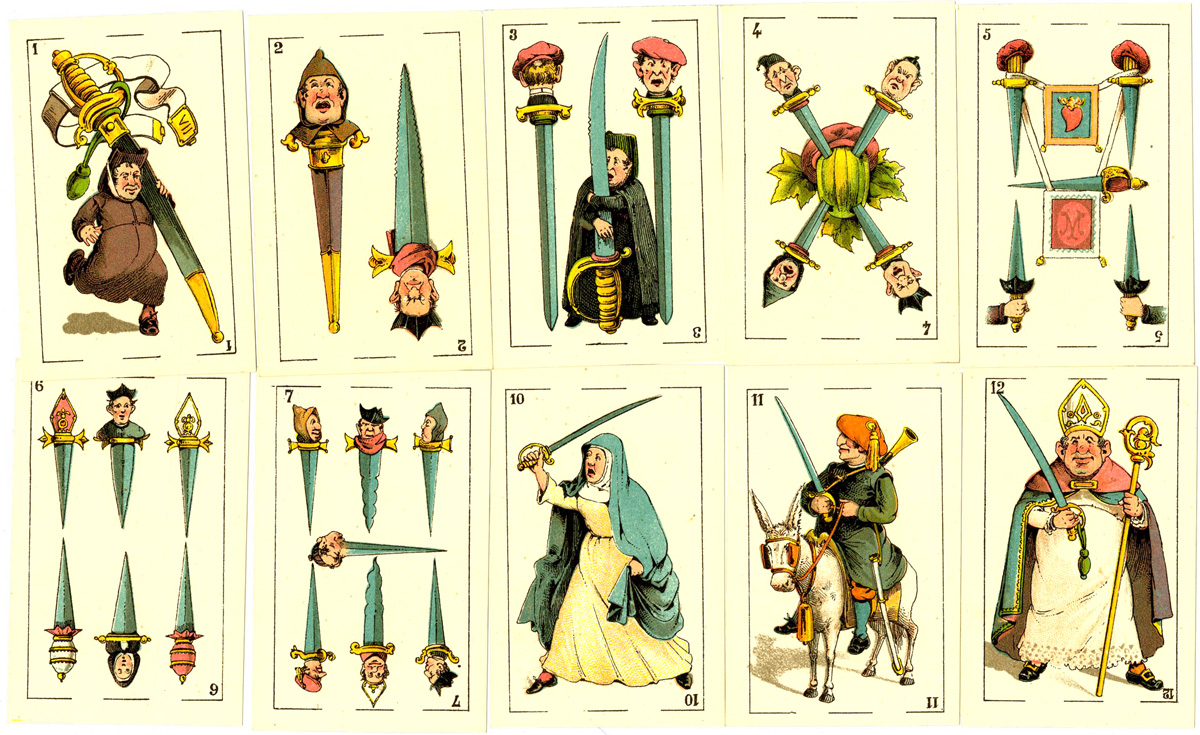
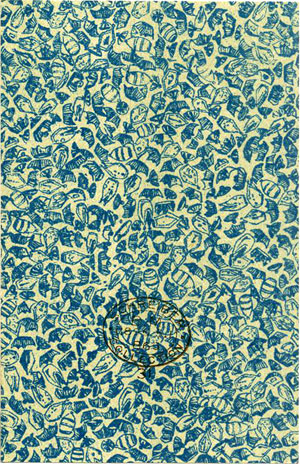
Above: ‘Baraja Mística’ satirical playing-cards published by Litografía Fernández, Feijóo 3, Madrid, c.1885-1890. Backs printed with a small blue pattern of mitres and birettas. © The Trustees of the British Museum • Baraja Mistica►
Along the bottom of the ace of cups is printed the legend “Lit Fernandez, Fiejóo 3 Madrid” and an extra ace of cups, possibly a title card, is printed “Baraja (misspelled Babaja) Mística. Precio. 2 Pesetas”. The wrapper is labelled “Baraja Mistica. Venta en todas las Librerias”.
Further References
O’Donoghue, Freeman M: Catalogue of the collection of playing cards bequeathed by Lady Charlotte Schreiber, Trustees of the British Museum, London, 1901 (Spanish 11) [digital version here]

By Simon Wintle
Spain • Member since February 01, 1996
I am the founder of The World of Playing Cards (est. 1996), a website dedicated to the history, artistry and cultural significance of playing cards and tarot. Over the years I have researched various areas of the subject, acquired and traded collections and contributed as a committee member of the IPCS and graphics editor of The Playing-Card journal. Having lived in Chile, England, Wales, and now Spain, these experiences have shaped my work and passion for playing cards. Amongst my achievements is producing a limited-edition replica of a 17th-century English pack using woodblocks and stencils—a labour of love. Today, the World of Playing Cards is a global collaborative project, with my son Adam serving as the technical driving force behind its development. His innovative efforts have helped shape the site into the thriving hub it is today. You are warmly invited to become a contributor and share your enthusiasm.

Activity for Baraja Mística
Sign in to comment or save this article.

Related Articles
The Comedy of Courtship
Courtship, class and convention in a Biedermeier satirical card deck from Germany.
Opernkarte I
Humorous designs by Peter Becker on the theme of the Opera.
Bibaraja
Amusing designs of boys as circus performers by Alberto Muñiz Sánchez.
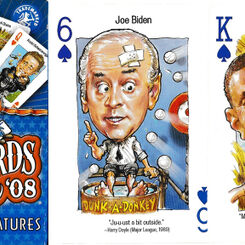
Politicards 2008
Politicards ’08 with caricatures cast as characters from classic movies, USA.
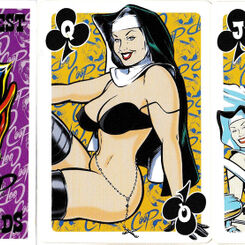
Keep-em honest playing cards
Keep-em honest playing cards designed by Chris Cooper and published by Dark Horse Deluxe.
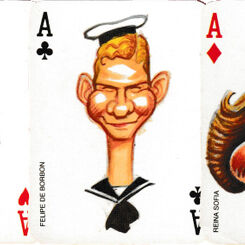
El Jueves playing cards
Caricatures of 52 famous Spaniards for the satirical magazine “El Jueves”.
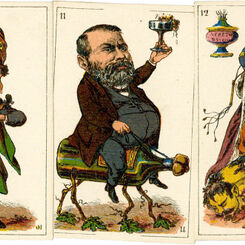
Spanish 19th century Political pack
Satirical playing cards manufactured by Francar y Cía depicting political situation.
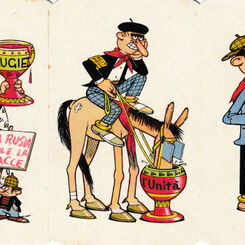
Carte da gioco anticomuniste del Comitato civico
Anti-Communist propaganda pack with satirical designs by Benito Jacovitti.
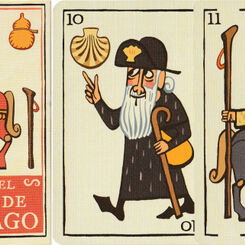
Baraja del Camino de Santiago
Designs by Guitián, published by Ideas Peregrinas, Santiago de Compostela, Spain, c2018.
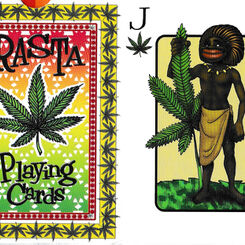
Rasta playing cards
Rasta playing cards celebrating the Rastafari religion.
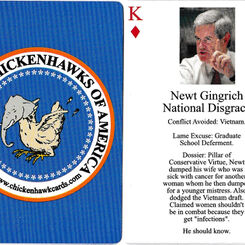
Republican Chickenhawks of America
“Republican Chickenhawks of America” playing cards by Jerry A. Vasilatos, USA, 2003.
Gambling and Vice in the Middle Ages
Gambling and Vice in the Hours of Charles V: card-playing in the local tavern
101 Dalmatas
101 Dalmatas by Naipes Fournier, 1995,
El Tripero
Hand-drawn semi-erotic, satirical playing cards by Lautaro Fiszman ‘El Tripero’, 2002.
Tarot de l’An 2000
“Tarot de l’An 2000” designed by Pino Zac, 1981, satirising 20th century life.
The Invention of Bridge
“The Invention of Bridge” - a humorous story by Larry Lefkowitz.
The Simpsons™
The official ‘Simpsons’ playing cards produced by Winning Moves Games, 2003.
Mr Punch’s Playing Cards
Mr Punch’s Playing Cards, 1896.
Playing Cards and Religion
Early engravers and print makers made devotional images for pilgrims and people who could not afford...
E.P.C.S. Competitions
Do you know any good playing card related cartoons or jokes?
Most Popular
Our top articles from the past 60 days


