


Russian “Historical”
Russian “Historical extra fine No.204” Playing Cards depicting Ancient Dynasties, 1920s.
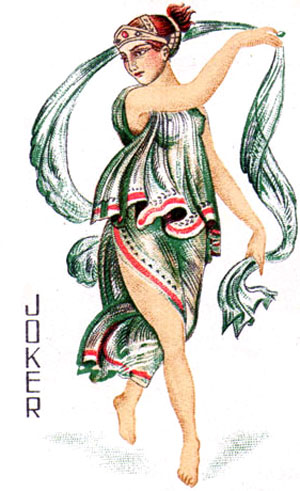
Russian “Historical extra fine No.204”
This very famous Russian deck depicting four ancient dynasties was published in several editions in the 1920s, all printed by chromolithography in St. Petersburg (Leningrad in USSR) by the Colour Printing Plant. This edition was produced for export and has non-Russian indices.
After the USSR ended several small firms started to print playing cards, including re-prints of this deck (see further below).
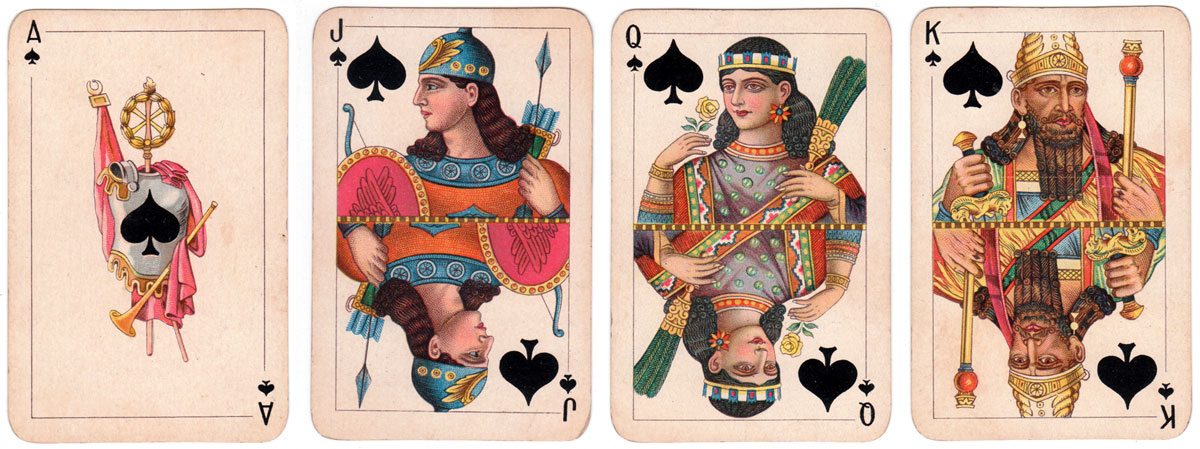
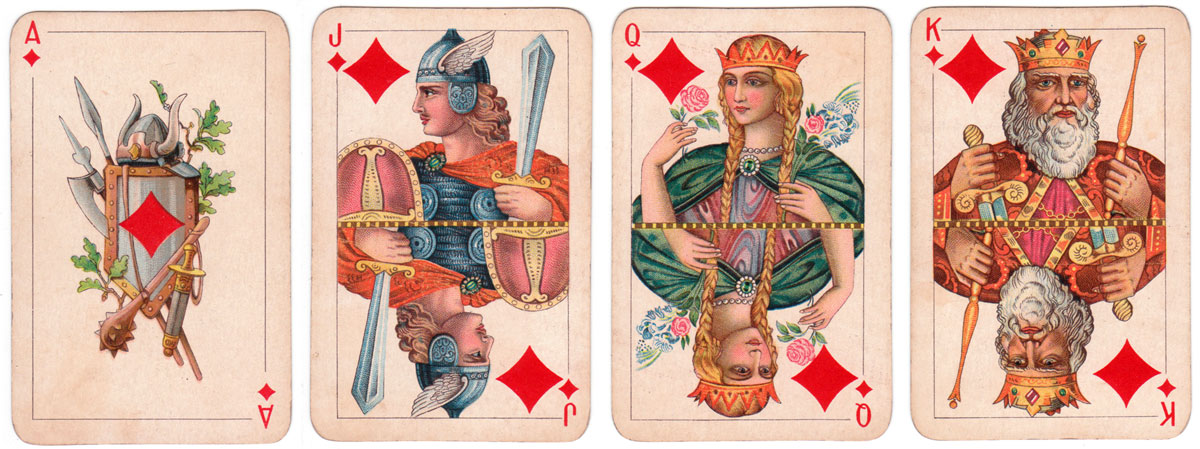
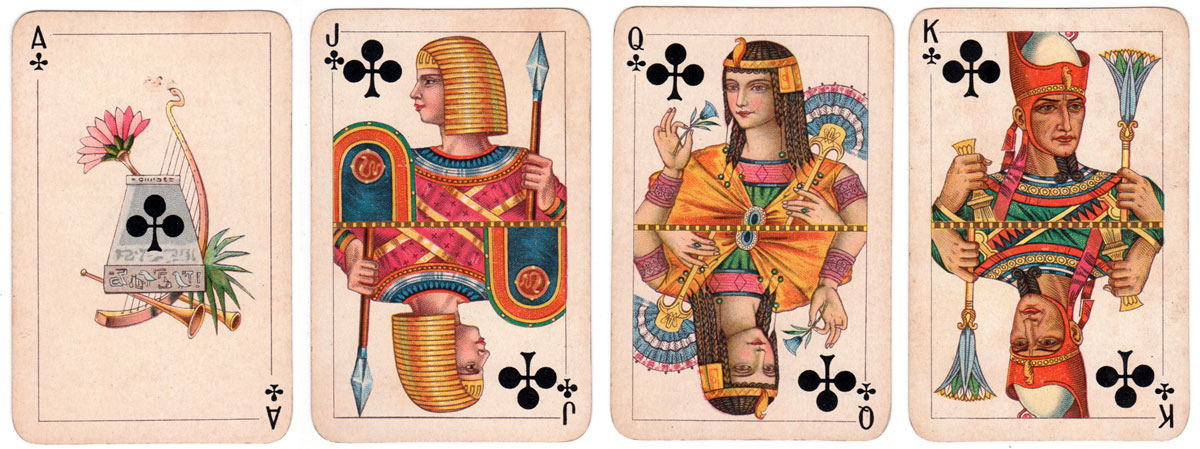
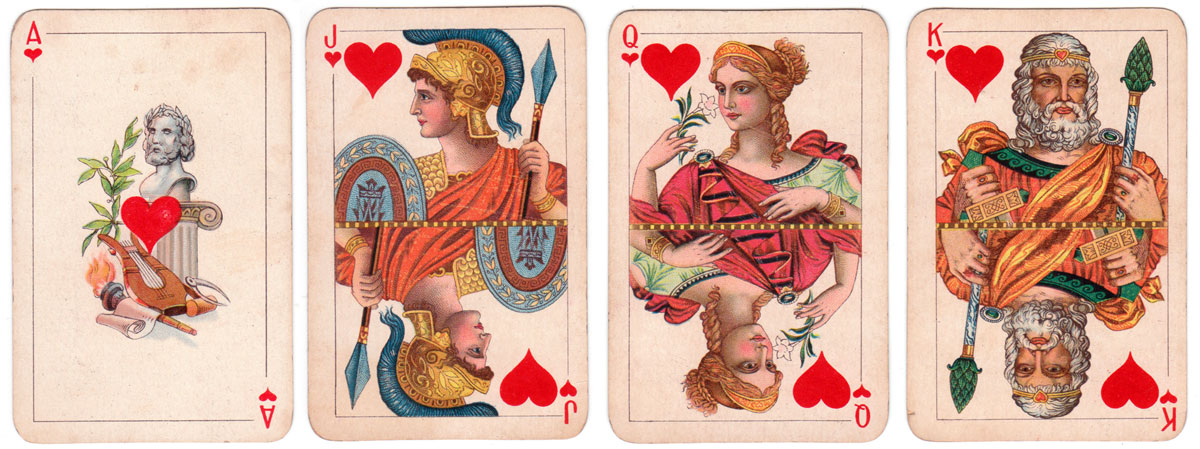
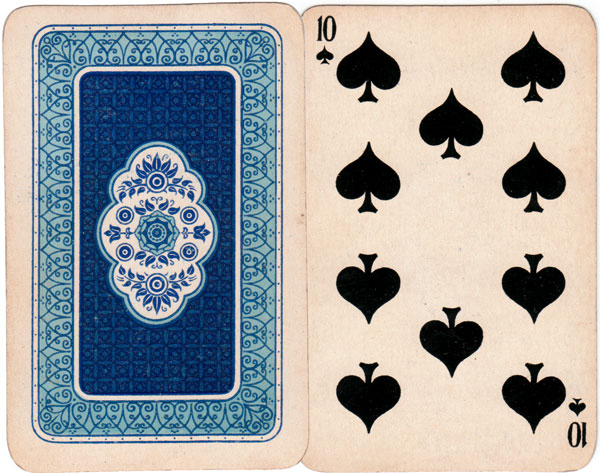
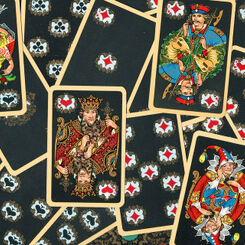
Right: the back design, red or blue. The complete pack contains 52 cards + Joker. The box has the title “Historical extra fine No.204”. A later edition was published without frames as “No.202”. The artist's name is not known. Information kindly provided by Alexander Arinushkina (Александр Аринушкин).
Supplement from Lev Golinkin
The original Soviet cards had plain pip cards. Illustrations were added some time between the 1920s and 1989. The cards shown below are from a cheap post-Soviet knock-off made by Ningbo Three A Group Co., Ltd. The pack is called AAA No.9933. However, it shows the amazing pip card illustrations that have become part of this deck.


Above: AAA No.9933 reprint by Ningbo Three A Group Co Ltd with pip card illustrations that have become part of this deck. Extra images and research courtesy Lev Golinkin.
These have been carefully researched – at least some of the artwork matches that from ancient civilizations. For example, the Two of Hearts is Triptolemus, the Greek demigod and patron of agriculture. The card illustration closely resembles Triptolemus images such as this one from 470 BC–460BC.
Or compare the sphinx from the Seven of Hearts to this kylix from c.460 BC. Lastly, see how the Four of Spades echoes the magnificent bas-relief of the Assyrian god Ninurta battling the monster Anzu, from the temple of Ninurta in Nimrud (ancient Kalhu), Iraq.


By Rex Pitts (1940-2021)
United Kingdom • Member since January 30, 2009
Rex's main interest was in card games, because, he said, they were cheap and easy to get hold of in his early days of collecting. He is well known for his extensive knowledge of Pepys games and his book is on the bookshelves of many. His other interest was non-standard playing cards. He also had collections of sheet music, music CDs, models of London buses, London Transport timetables and maps and other objects that intrigued him.
Rex had a chequered career at school. He was expelled twice, on one occasion for smoking! Despite this he trained as a radio engineer and worked for the BBC in the World Service. Later he moved into sales and worked for a firm that made all kinds of packaging, a job he enjoyed until his retirement. He became an expert on boxes and would always investigate those that held his cards. He could always recognize a box made for Pepys, which were the same as those of Alf Cooke’s Universal Playing Card Company, who printed the card games. This interest changed into an ability to make and mend boxes, which he did with great dexterity. He loved this kind of handicraft work.
His dexterity of hand and eye soon led to his making card games of his own design. He spent hours and hours carefully cutting them out and colouring them by hand.

Activity for Russian “Historical”
Sign in to comment or save this article.

Related Articles
Kazakh Tales
Bold designs by K.K. Karpun and S. Nukenov inspired by Kazakh folk tales.
Russian Playing Card Monopoly
The Russian Playing Card Monopoly was established in March 1798 with all revenue going to support th...
Russian Playing Cards
Playing cards were known in Muscovy as early as the last quarter of the sixteenth century.
Madam Luck
“Madam Luck” playing cards designed by B. Adziev, 1998.
Lubok playing cards
Lubok playing cards designed by Victor M. Sveshnikov. Russia, 1984.
![Komandirskie [Commanders]](/core/cache-wopc-thumbs/var/www/wopc/production/www/images/countries/russia/komandirskie-0.647b4aa4.jpg "Komandirskie [Commanders]")
Komandirskie [Commanders]
‘Komandirskie’ military-themed playing cards from Russia, 1997.
Pushkin
Pack designed by M. Rydaeva celebrating the 200th anniversary of Alexander Pushkin’s birth.
The Neva River
A deck designed by Victor M. Sveshnikov dedicated to the Neva river and the city of Saint Petersburg...
Peterhof
“Peterhof” deck manufactured at the St Petersburg Colour Printing Plant in 1999.
Vasa Dynasty
The House of Vasa was the royal house of Sweden 1523–1654 and subsequent rulers have emphasized thei...
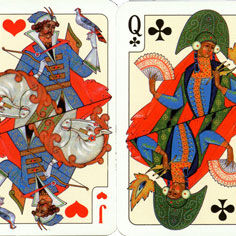
Palekh by Aleksey Orleansky
In the style of religious icon paintings, these court card figures wear costumes reminiscent of the ...
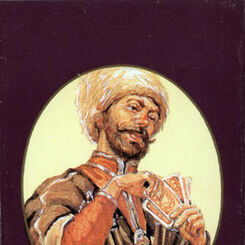
Cossack
“Cossack” playing cards, with artwork by O. Panchenko dedicated to the revival of the traditions of ...
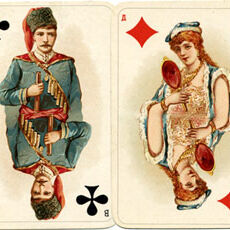
Historical playing cards, 1897
Russian “Historical” playing cards with designs by Nikolay Karazin, 1897
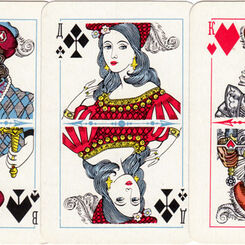
Russian Opera Scenes
Russian Opera & Theatre Scenes playing cards first published by the Colour Printing Plant (USSR, Rus...
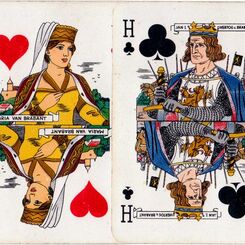
Noord Braband
“Historical Playing Cards” originally commissioned by Northern Brabant Insurance Society and manufac...
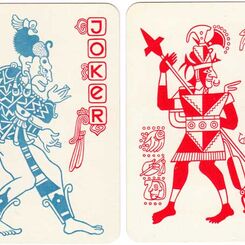
Maya
“Maya” playing cards designed by Russian artist V. M. Sveshnikov and first published by The Colour P...
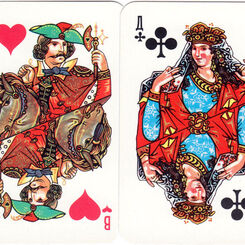
White Palekh
“White Palekh” was first published by the The Colour Printing Plant in St. Petersburg in 1982 with d...
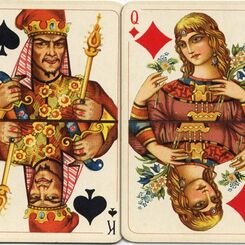
Slavonic
Originally published as “Slavonic Cards No.501” by The Colour Printing Plant, St. Petersburg in 1928...
Russian Four Seasons
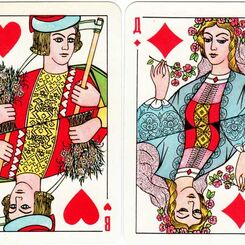
“Seasons” playing cards designed by U. P. Ivanov and published by The Colour Printing Plant in St Pe...
Rokoko
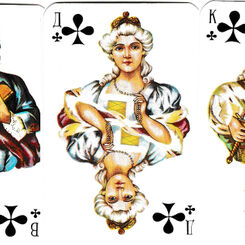
Rokoko (Rococo) reflecting the dress and culture of the first half of the 18th century.
Most Popular
Our top articles from the past 60 days


