


Lubok playing cards
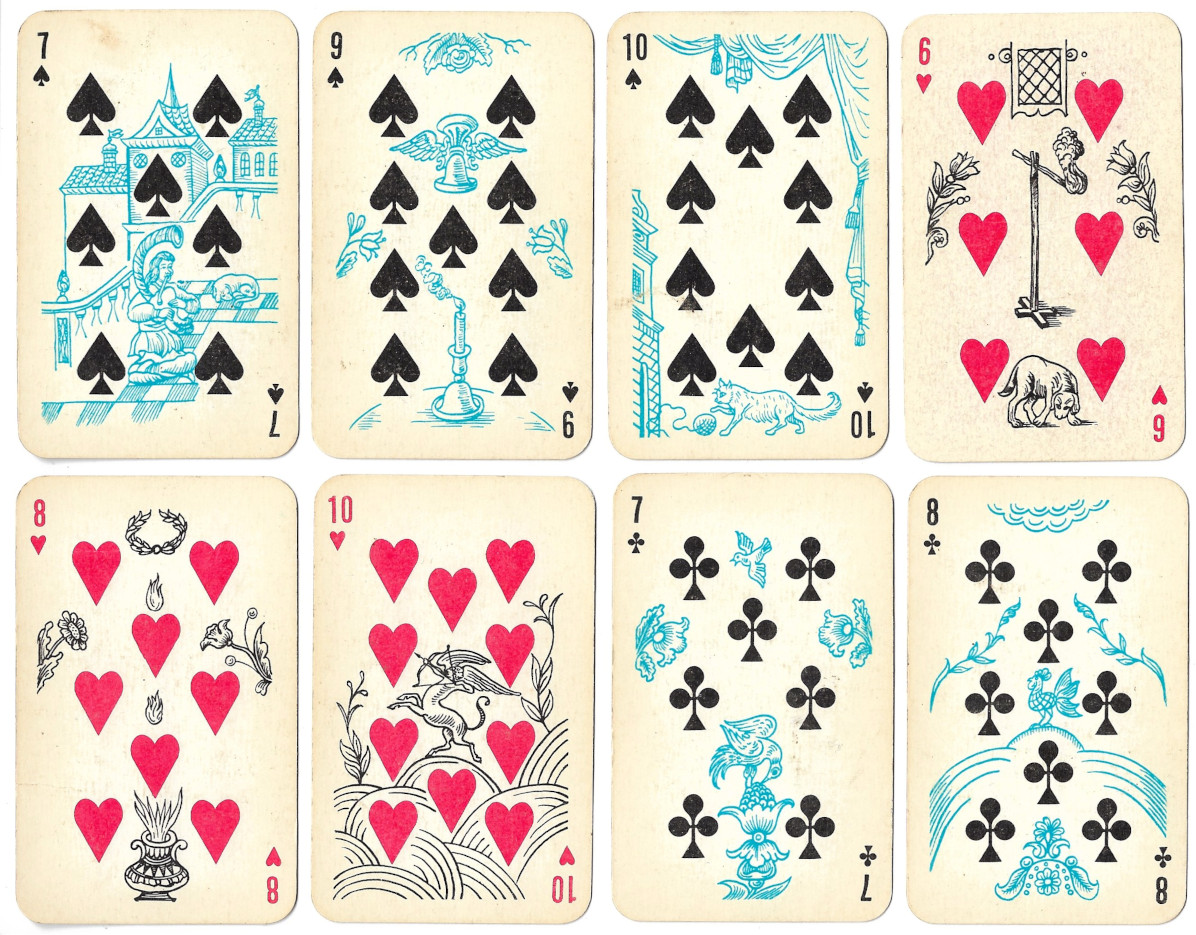
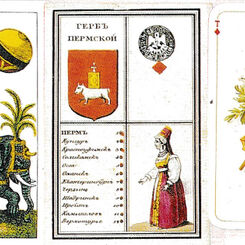
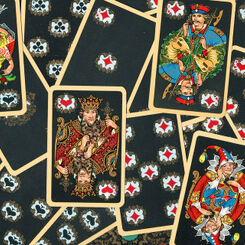
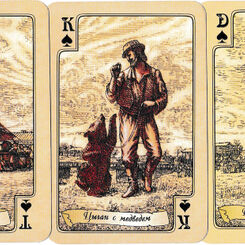
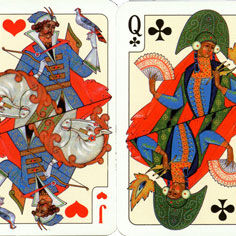
Lubok playing cards designed by Victor M. Sveshnikov. Russia, 1984.
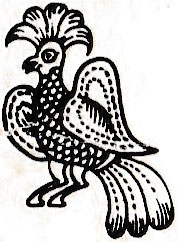
This 36-card pack of playing cards was designed by Victor M. Sveshnikov (1907-1988) and manufactured by the Colour Printing Plant, Saint Petersburg. The Russian title translates as “Playing cards in the style of Russian lubok images”.
The lubok can be described as an "illustrated broadside" or "popular print" characterized by simple graphics and narratives derived from literature, religious stories, and popular tales. It is a form of graphic art in which an artist creates a woodcut, makes prints from it, and then paints them by hand. The name comes from the word luba, meaning the inner part of linden bark, which was used to create the woodcut.
Originally plots for the pictures came mainly from the Bible but over time they depicted satires, folklore, soldiers, battle scenes, mythology, and images of such everyday 19th century Russian life as village scenes, traveling, hunting, domestic, and agrarian activities. Luboks were also used to ridicule the vanity and greed of the upper classes.
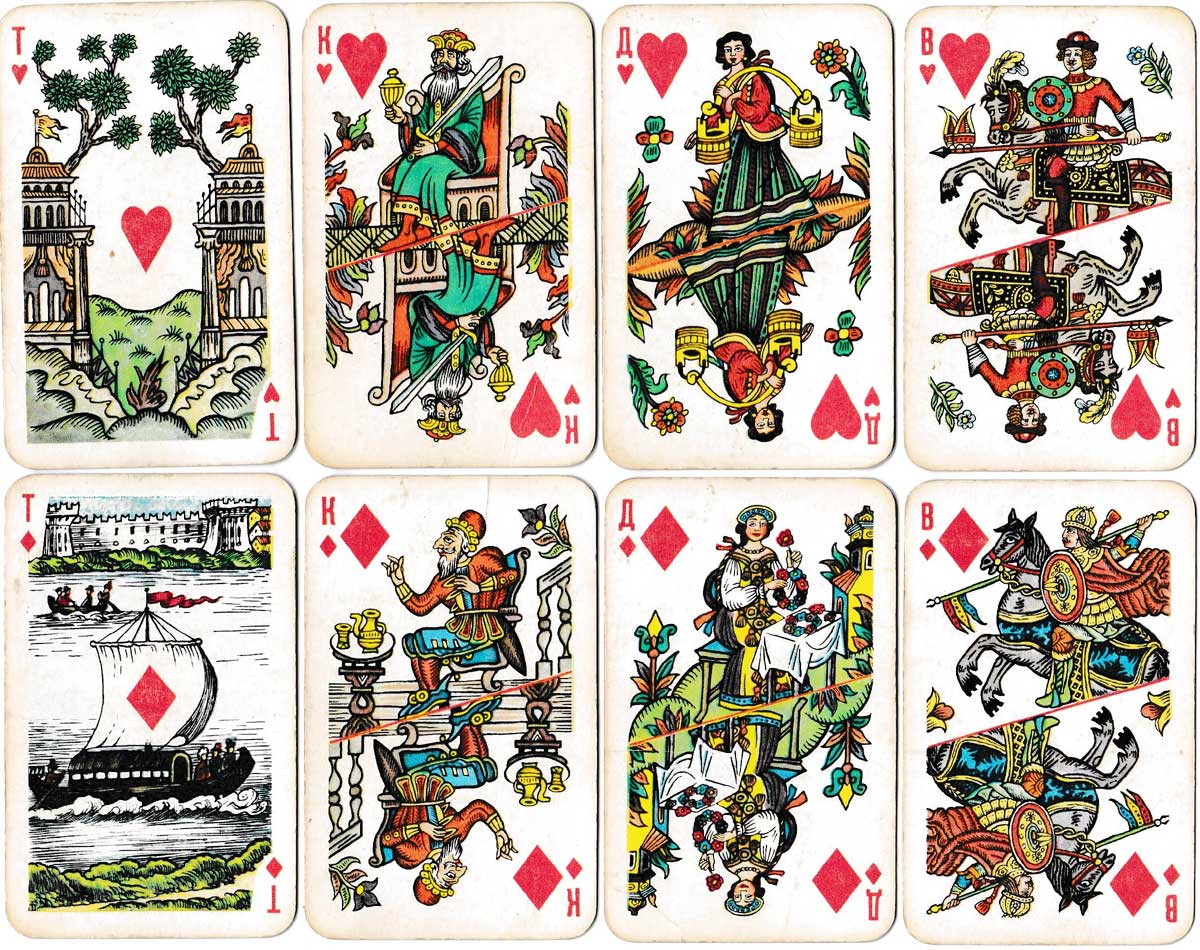
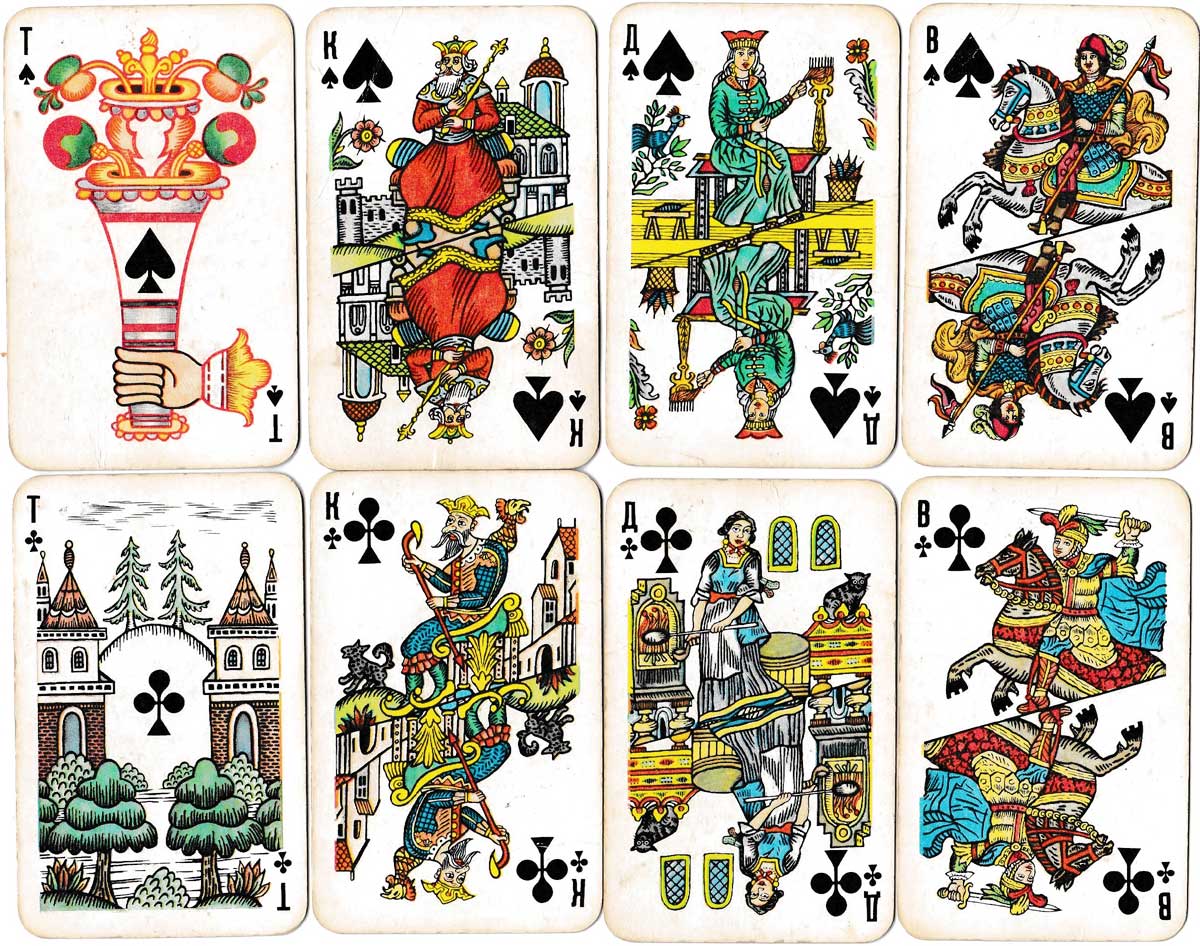
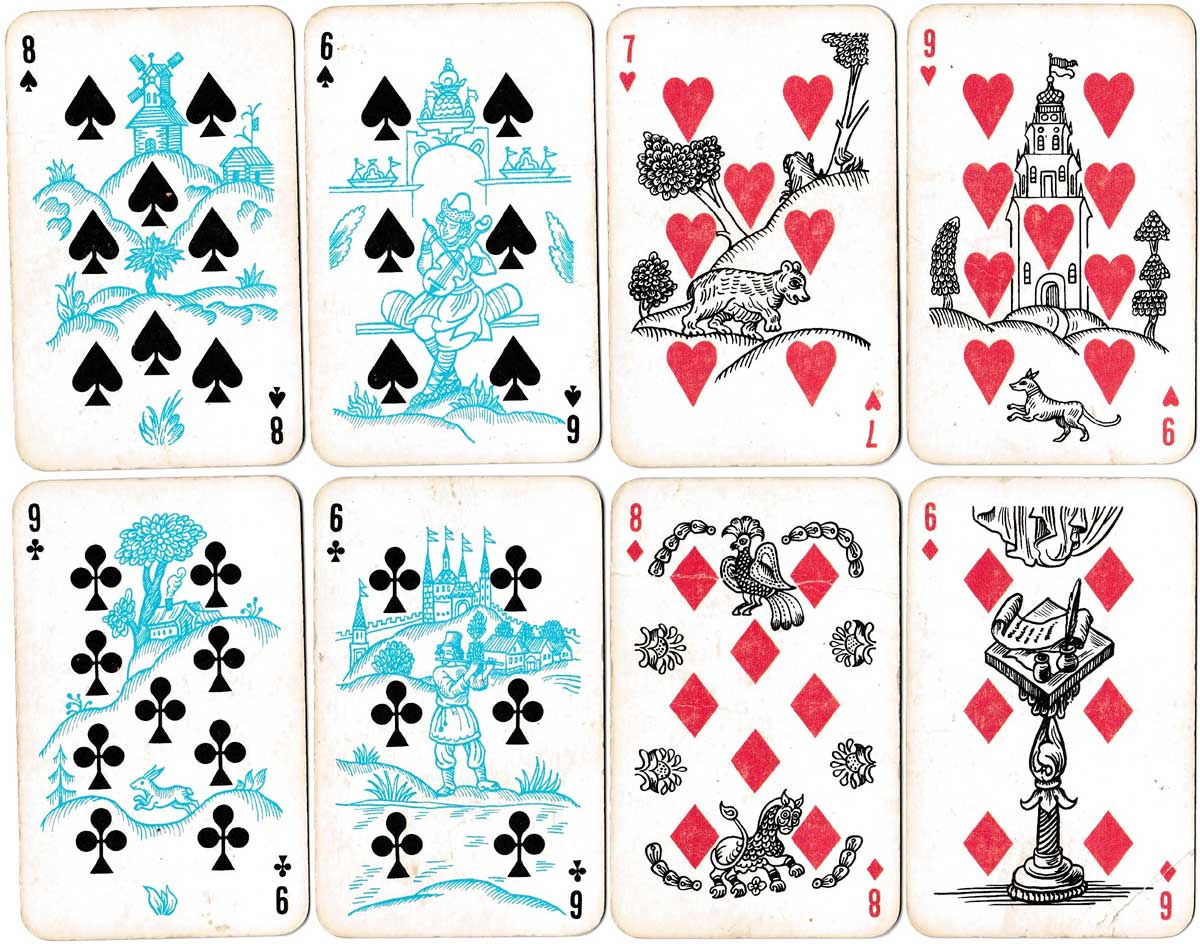
Above: Lubok playing cards designed by Victor M. Sveshnikov and manufactured by the Colour Printing Plant, Saint Petersburg, Russia, 1984.
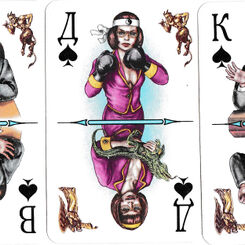
Extra scans from Lev Golinkin
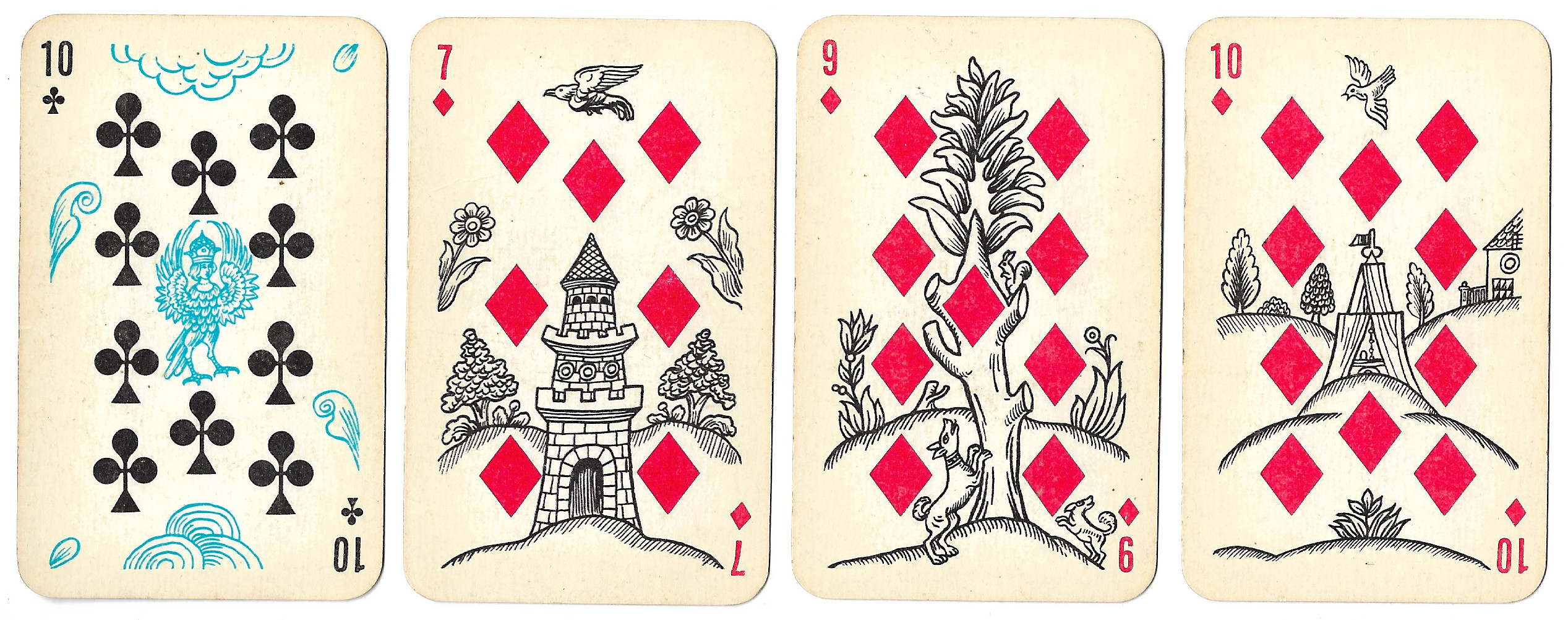
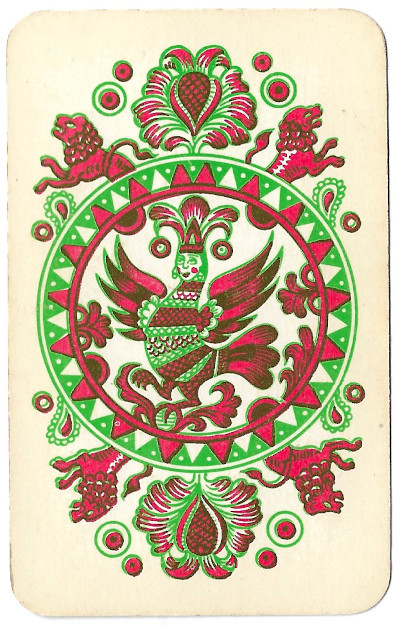
Above: extra scans courtesy Lev Golinkin. This deck came with me in my backpack when I was 9 years old and my family became refugees after fleeing USSR. I was allowed to bring a backpack and I had several decks stashed away :)

By Peter Burnett
United Kingdom • Member since July 27, 2022
I graduated in Russian and East European Studies from Birmingham University in 1969. It was as an undergraduate in Moscow in 1968 that I stumbled upon my first 3 packs of “unusual” playing cards which fired my curiosity and thence my life-long interest. I began researching and collecting cards in the early 1970s, since when I’ve acquired over 3,330 packs of non-standard cards, mainly from North America, UK and Western Europe, and of course from Russia and the former communist countries.
Following my retirement from the Bodleian Library in Dec. 2007 I took up a new role as Head of Library Development at the International Network for the Availability of Scientific Publications (INASP) to support library development in low-income countries. This work necessitated regular training visits to many sub-Saharan African countries and also further afield, to Vietnam, Nepal and Bangladesh – all of which provided rich opportunities to further expand my playing card collection.
Since 2019 I’ve been working part-time in the Bodleian Library where I’ve been cataloguing the bequest of the late Donald Welsh, founder of the English Playing Card Society.

Activity for Lubok playing cards
Sign in to comment or save this article.

Related Articles
Kazakh Tales
Bold designs by K.K. Karpun and S. Nukenov inspired by Kazakh folk tales.
Russian Playing Card Monopoly
The Russian Playing Card Monopoly was established in March 1798 with all revenue going to support th...
Russian Playing Cards
Playing cards were known in Muscovy as early as the last quarter of the sixteenth century.
Madam Luck
“Madam Luck” playing cards designed by B. Adziev, 1998.
Novosibirsk Fair
Novosibirsk Fair playing cards designed by Sergei A. Grebennikov, Russia, 1997.
![Komandirskie [Commanders]](/core/cache-wopc-thumbs/var/www/wopc/production/www/images/countries/russia/komandirskie-0.647b4aa4.jpg "Komandirskie [Commanders]")
Komandirskie [Commanders]
‘Komandirskie’ military-themed playing cards from Russia, 1997.
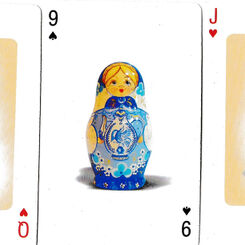
Matryoshka playing cards
The first nested doll set was carved in 1890.
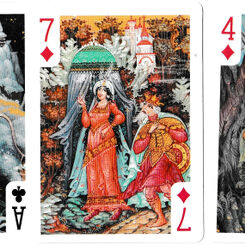
Palekh and Kholui lacquer miniatures
Palekh and Kholui lacquer miniatures.
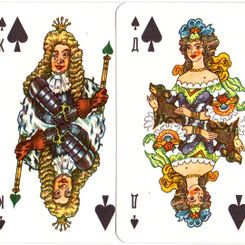
The Neva River
A deck designed by Victor M. Sveshnikov dedicated to the Neva river and the city of Saint Petersburg...
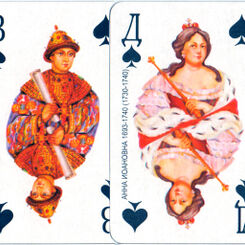
Peterhof
“Peterhof” deck manufactured at the St Petersburg Colour Printing Plant in 1999.
Palekh by Aleksey Orleansky
In the style of religious icon paintings, these court card figures wear costumes reminiscent of the ...
Cossack
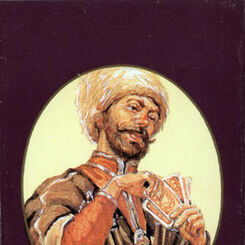
“Cossack” playing cards, with artwork by O. Panchenko dedicated to the revival of the traditions of ...
Russian Opera Scenes
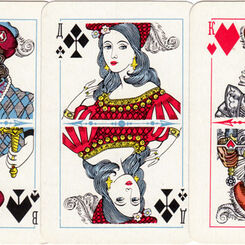
Russian Opera & Theatre Scenes playing cards first published by the Colour Printing Plant (USSR, Rus...
Maya
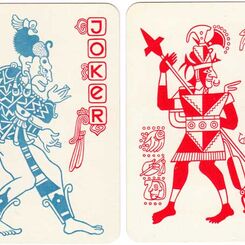
“Maya” playing cards designed by Russian artist V. M. Sveshnikov and first published by The Colour P...
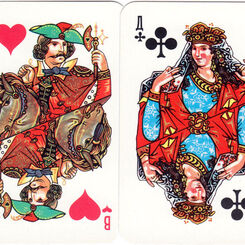
White Palekh
“White Palekh” was first published by the The Colour Printing Plant in St. Petersburg in 1982 with d...
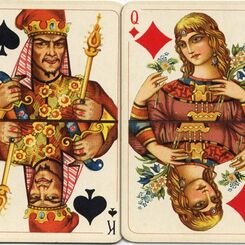
Slavonic
Originally published as “Slavonic Cards No.501” by The Colour Printing Plant, St. Petersburg in 1928...
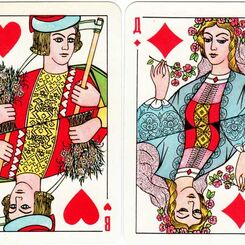
Russian Four Seasons
“Seasons” playing cards designed by U. P. Ivanov and published by The Colour Printing Plant in St Pe...
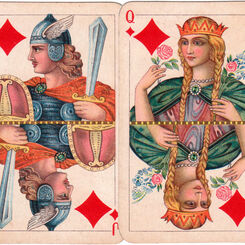
Russian “Historical”
Russian “Historical extra fine No.204” Playing Cards depicting Ancient Dynasties, 1920s.
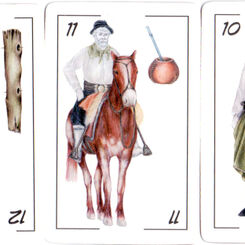
Recado de Bastos - Gaucho Scrapbook
Recado de Bastos (‘Gaucho Scrapbook’) Gaucho-themed deck from Argentina, 2006
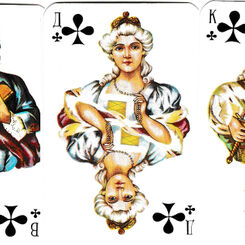
Rokoko
Rokoko (Rococo) reflecting the dress and culture of the first half of the 18th century.
Most Popular
Our top articles from the past 60 days


Ваня Козлов (Vanya Kozlov)
19 November 2025, 09:47SavedSaved this article to Ваня Козлов's Collection
jan merc
17 May 2026, 21:57SavedSaved this article to MOST WANTED