


Madam Luck
“Madam Luck” playing cards designed by B. Adziev, 1998.

Madam Luck playing cards were printed at the Colour Printing Plant in St. Petersburg in 1998. The artist is B. Adziev and the author S. Spirov. The intention is to show how good or bad fortune can influence our lives. The suits represent different aspects of life: hearts – love and passion; diamonds – business and career; spades – power and politics; clubs – law and order. The double-ended courts portray individuals: on one half they have been “lucky” and on the other they have been “tempted”. An angel or a devil appears in the corner of the appropriate half. So in the hearts suit, the King is either fit and healthy or a rake and philanderer; the Queen is either an innocent country girl or a prostitute; and the Jack is either a considerate lover or drunkard. The pip cards are slight variants of the standard: hearts have an arrow piercing them; diamonds have a wad of banknotes superimposed; spades have a crown inserted and clubs have a pair of pistols within.
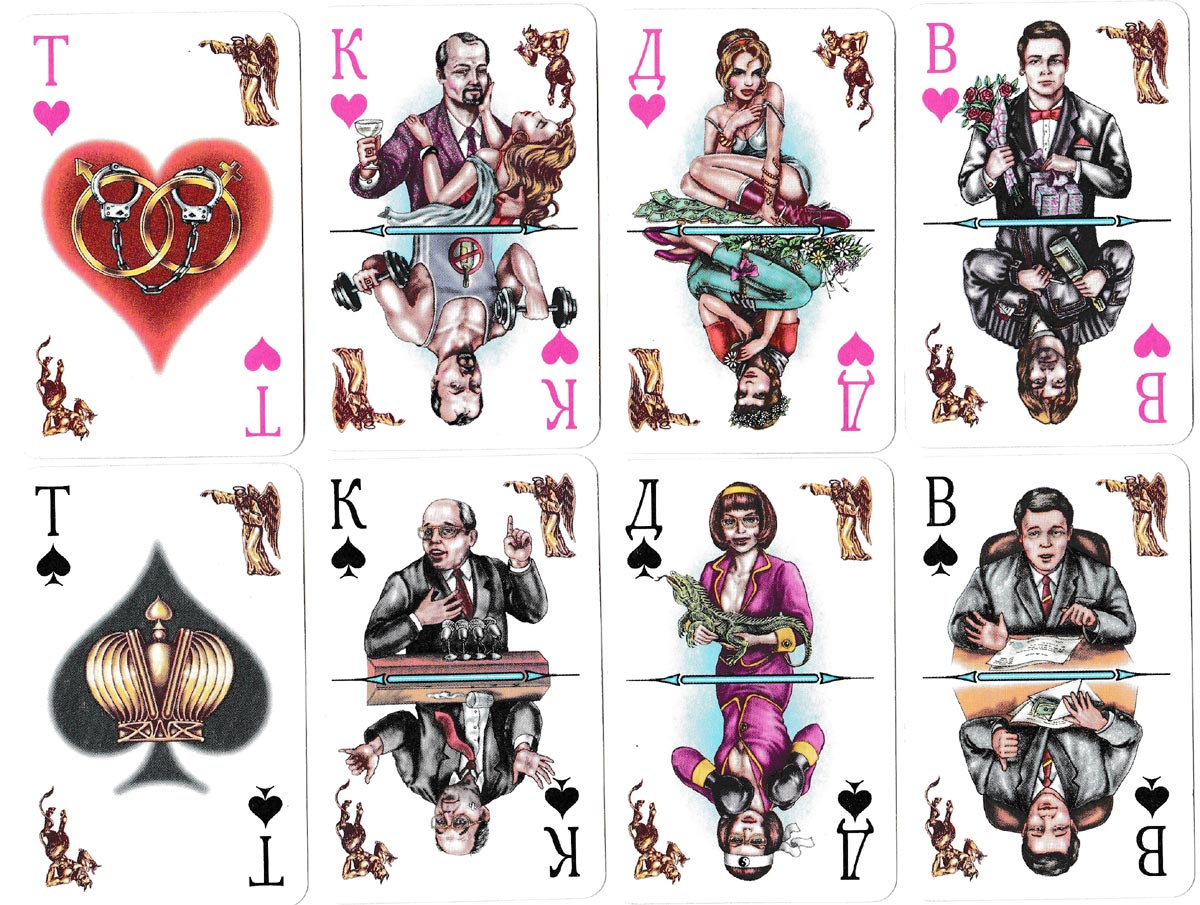
The court cards are double-ended: on one half they have been “lucky” and on the other they have been “tempted”...
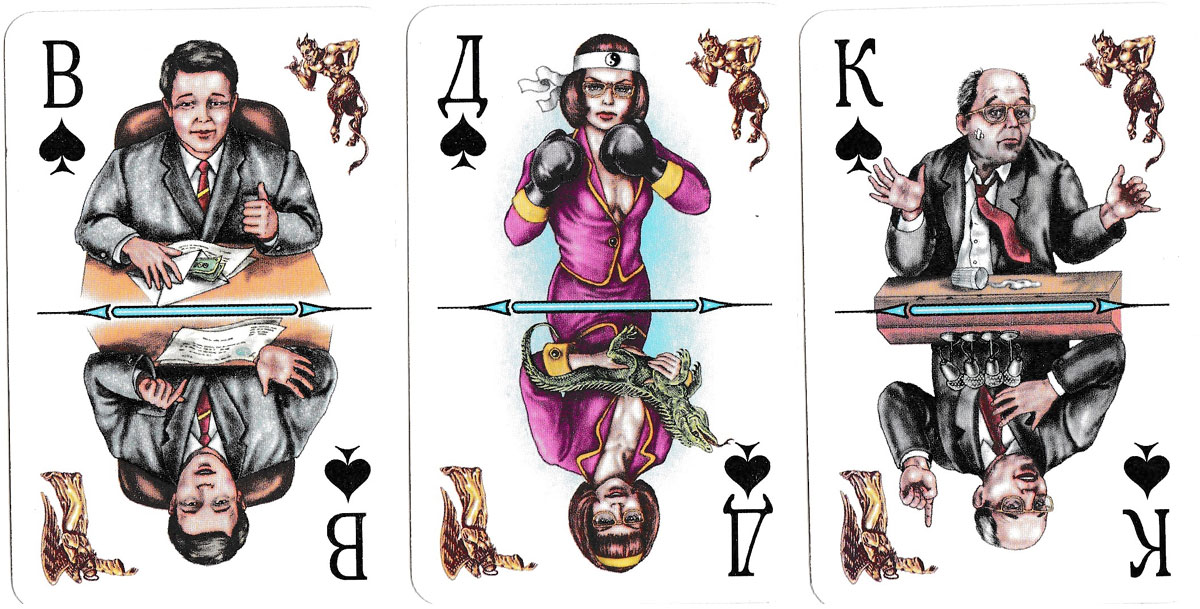
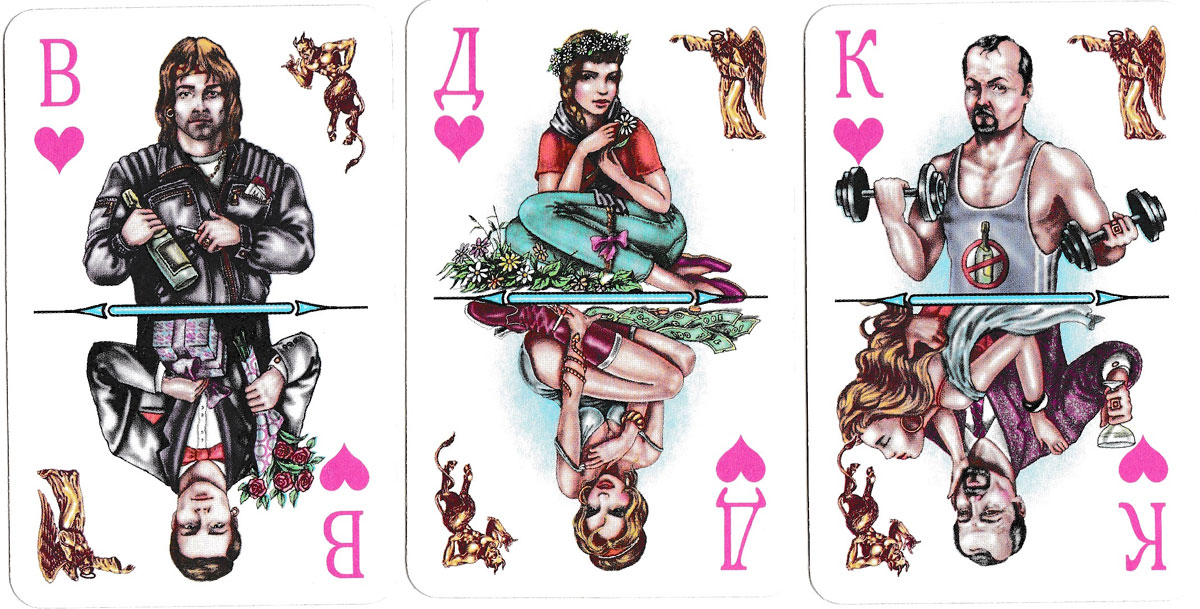
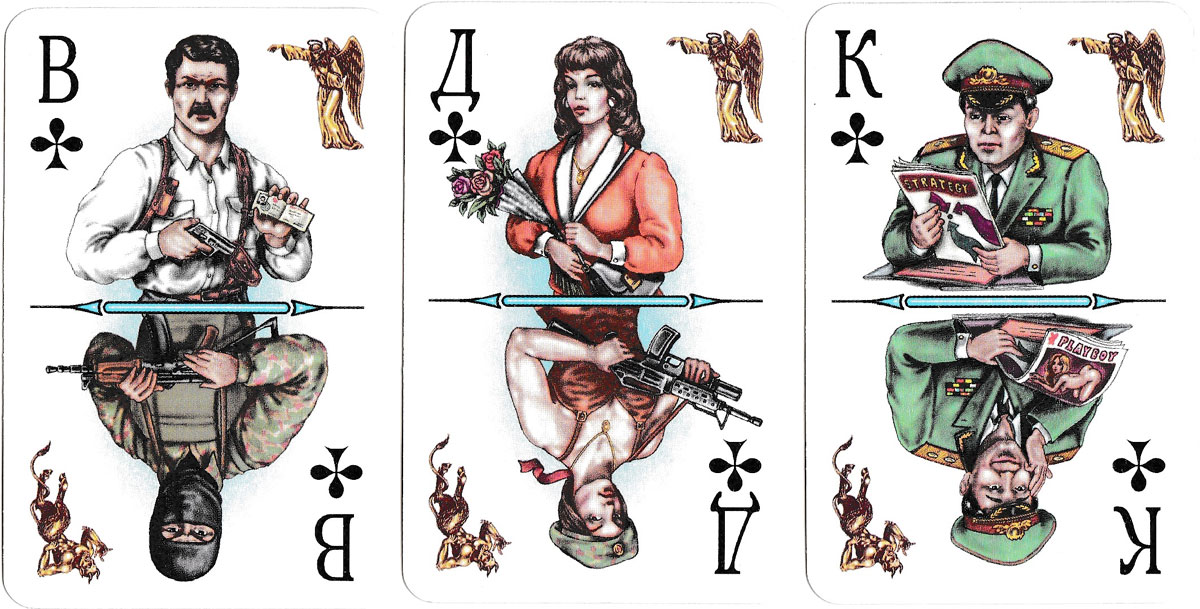
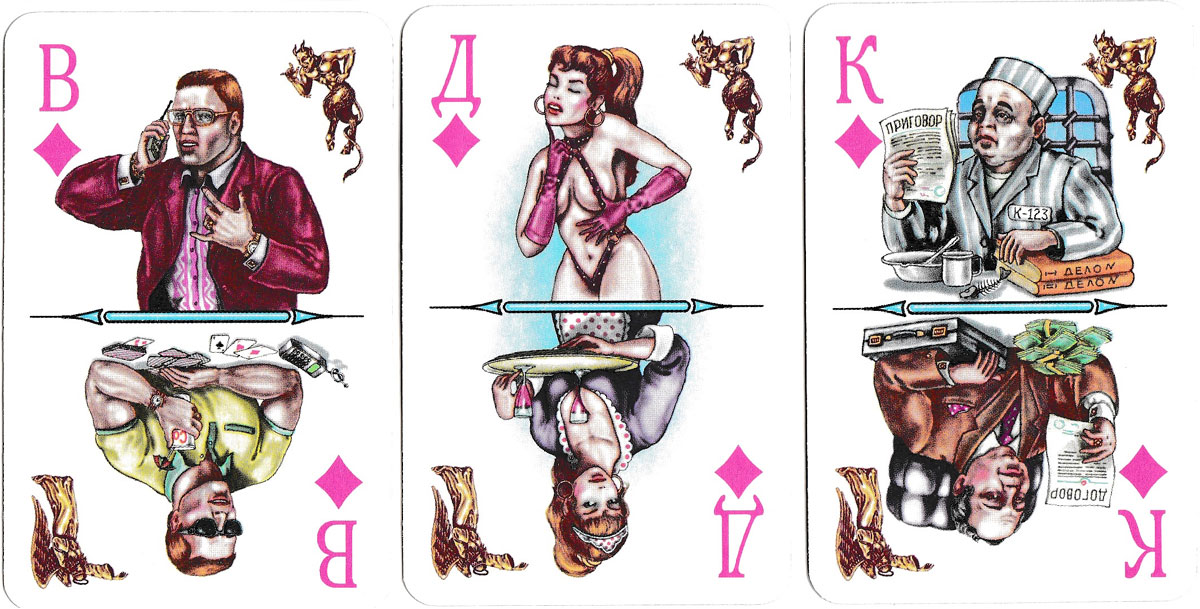
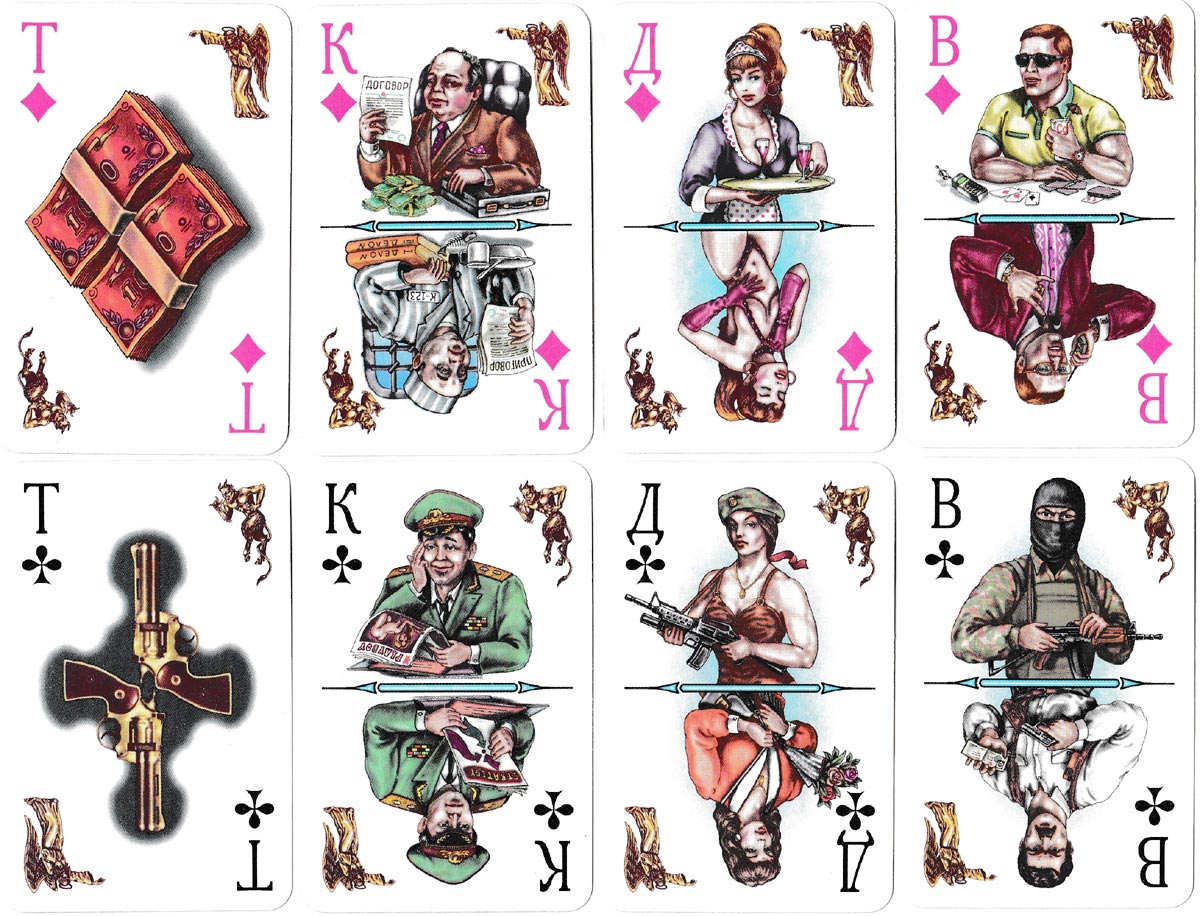
Above: “Madam Luck” playing cards designed by B. Adziev and printed at the Colour Printing Plant in St. Petersburg in 1998. 36 cards.

By Peter Burnett
United Kingdom • Member since July 27, 2022
I graduated in Russian and East European Studies from Birmingham University in 1969. It was as an undergraduate in Moscow in 1968 that I stumbled upon my first 3 packs of “unusual” playing cards which fired my curiosity and thence my life-long interest. I began researching and collecting cards in the early 1970s, since when I’ve acquired over 3,330 packs of non-standard cards, mainly from North America, UK and Western Europe, and of course from Russia and the former communist countries.
Following my retirement from the Bodleian Library in Dec. 2007 I took up a new role as Head of Library Development at the International Network for the Availability of Scientific Publications (INASP) to support library development in low-income countries. This work necessitated regular training visits to many sub-Saharan African countries and also further afield, to Vietnam, Nepal and Bangladesh – all of which provided rich opportunities to further expand my playing card collection.
Since 2019 I’ve been working part-time in the Bodleian Library where I’ve been cataloguing the bequest of the late Donald Welsh, founder of the English Playing Card Society.

Activity for Madam Luck
Sign in to comment or save this article.

Related Articles
Russian Playing Card Monopoly
The Russian Playing Card Monopoly was established in March 1798 with all revenue going to support th...
Russian Playing Cards
Playing cards were known in Muscovy as early as the last quarter of the sixteenth century.
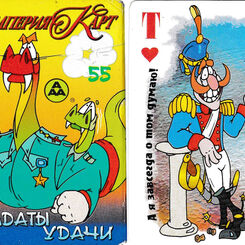
Soldaty Udachi
“Soldaty Udachi” (Soldiers of Fortune) Army and Police humour playing cards, Russia, 2001.
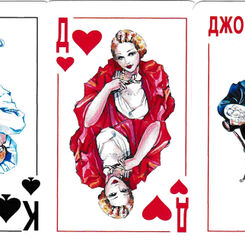
Russian Dumpling Club
Russkii Pel'mennyi Klub (Russian Dumpling Club) playing cards designed by Evgenia Alexandrovna Belya...
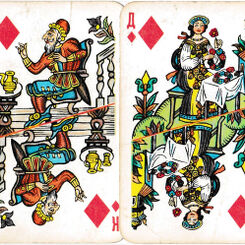
Lubok playing cards
Lubok playing cards designed by Victor M. Sveshnikov. Russia, 1984.
![Komandirskie [Commanders]](/core/cache-wopc-thumbs/var/www/wopc/production/www/images/countries/russia/komandirskie-0.647b4aa4.jpg "Komandirskie [Commanders]")
Komandirskie [Commanders]
‘Komandirskie’ military-themed playing cards from Russia, 1997.
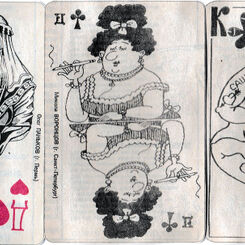
Spot the Difference
Spot the Difference playing cards published in "Razvlekatel’naia Gazetka" newspaper, 1998-1999.
The Neva River
A deck designed by Victor M. Sveshnikov dedicated to the Neva river and the city of Saint Petersburg...
Peterhof
“Peterhof” deck manufactured at the St Petersburg Colour Printing Plant in 1999.
The Invention of Bridge
“The Invention of Bridge” - a humorous story by Larry Lefkowitz.
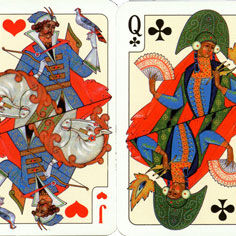
Palekh by Aleksey Orleansky
In the style of religious icon paintings, these court card figures wear costumes reminiscent of the ...
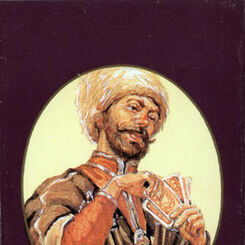
Cossack
“Cossack” playing cards, with artwork by O. Panchenko dedicated to the revival of the traditions of ...
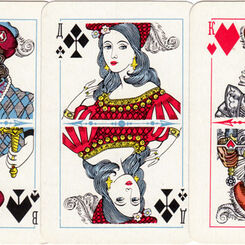
Russian Opera Scenes
Russian Opera & Theatre Scenes playing cards first published by the Colour Printing Plant (USSR, Rus...
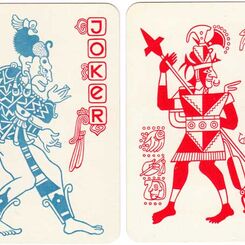
Maya
“Maya” playing cards designed by Russian artist V. M. Sveshnikov and first published by The Colour P...
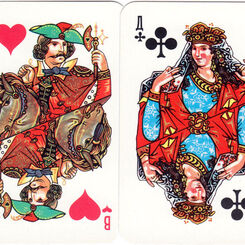
White Palekh
“White Palekh” was first published by the The Colour Printing Plant in St. Petersburg in 1982 with d...
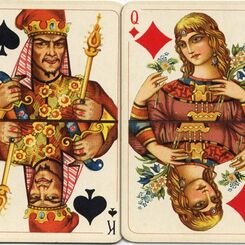
Slavonic
Originally published as “Slavonic Cards No.501” by The Colour Printing Plant, St. Petersburg in 1928...
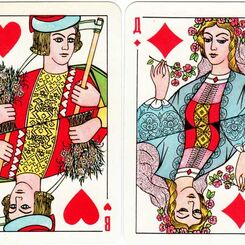
Russian Four Seasons
“Seasons” playing cards designed by U. P. Ivanov and published by The Colour Printing Plant in St Pe...
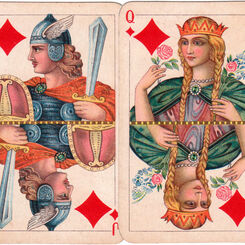
Russian “Historical”
Russian “Historical extra fine No.204” Playing Cards depicting Ancient Dynasties, 1920s.
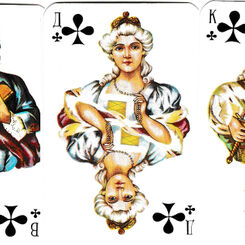
Rokoko
Rokoko (Rococo) reflecting the dress and culture of the first half of the 18th century.

E.P.C.S. Competitions
Do you know any good playing card related cartoons or jokes?
Most Popular
Our top articles from the past 60 days


