


Chinese Opera Masks Playing Cards 脸谱
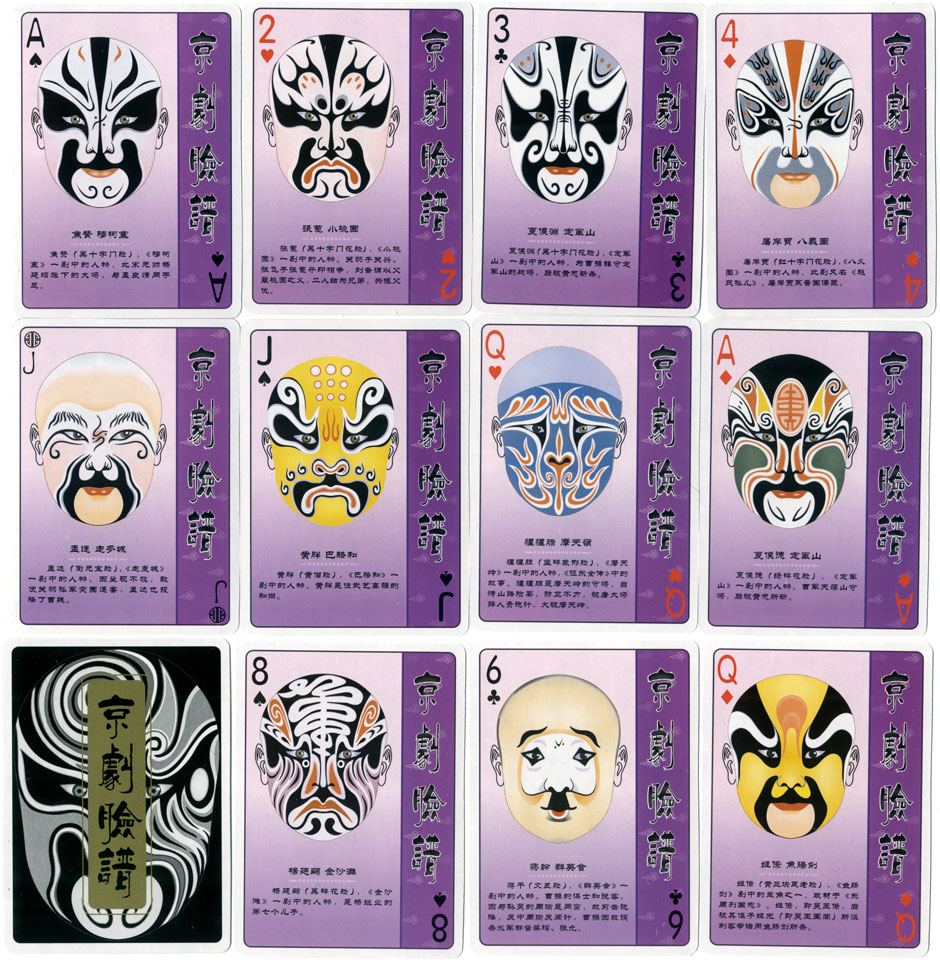
Three different packs of cards featuring traditional Chinese face painting and Chinese opera masks.
Chinese opera is one of the oldest dramatic art forms in the world. Different styles of facial make-up painted on each performer's face symbolize a character's personality, role, and fate. The technique may have originated from ancient religions and dance but facepainting including glitter dusts and henna art is very popular today at children's parties and street carnivals, without the permanence of a real tattoo.
Face-masks representing Chinese gods on Playing Cards
.jpg)
.jpg)
Chinese Opera Facial Make-up Art on Playing Cards
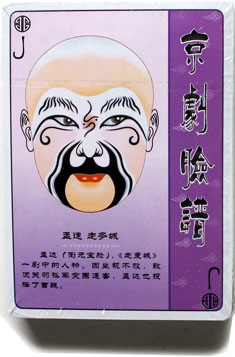
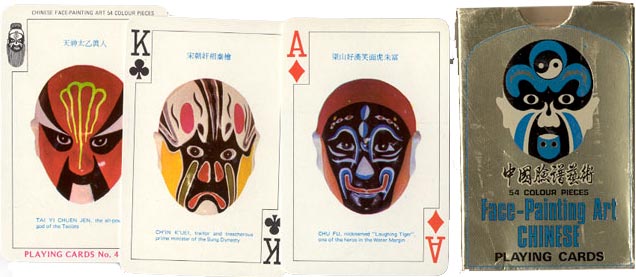
Another different examples of Chinese Face Mask playing cards

By Adam Wintle
Thailand • Member since March 15, 1997
Adam has been involved in developing the site as well as reviewing new decks and conducting research. He is particularly interested in innovation, Kickstarter and East Asian cards. He is a member of the IPCS, 52 Plus Joker, and webmaster of the EPCS.

Activity for Chinese Opera Masks Playing Cards 脸谱
Sign in to comment or save this article.

Related Articles
Zodiac No. 1182
Constellations captured on cards.
Allegories and Myths
Semi-transformation playing cards from artist Violeta Monreal.
Mythological Zoo
An extraordinary collection of fabulous beasts.
Vorarlberg Büschel Jasskarten
“Vorarlberg Büschel Jasskarten” designed by Austrian artist and typographer Konrad Hämmerle.
Danao Tiāngōng Puke
Children’s playing cards based on the 1961 Chinese animated feature film 大闹天宫 (Havoc in Heaven).
Carte Romantiche Italiane
Scenes of life and the theatre in Milan towards the second half of the 19th century.
Chinese Jokers
Chinese playing card makers have probably produced the widest variety of jokers of any single part o...
Pinocchio
Pinocchio fairy tale playing cards illustrated by Iassen Ghiuselev for Lo Scarabeo, 2003.
Classique
“Classique” by Draeger Frères, Paris, c.1949 with designs reminiscent of early French cards.
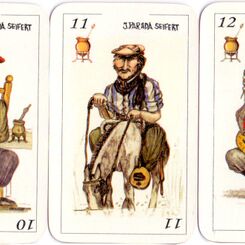
Naipe Criollo Caraí Pujol
‘Naipe Criollo Caraí Pujol’ with Gaucho designs by Julio F. Parada Seifert capturing the spirit of A...
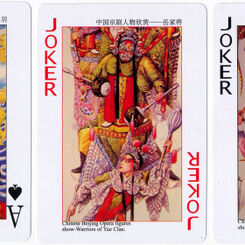
Chinese Roles of Beijing Opera
A very impressive deck of cards featuring 54 different images from “Chinese Roles of Beijing Opera” ...
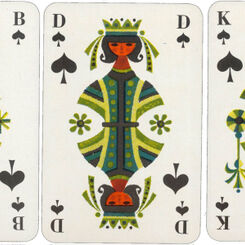
Folklore
“Folklore” by Altenburger Spielkarten Fabrik, c.1982
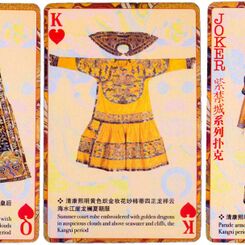
Chinese Dragon Robes
Deck featuring 54 different images of Chinese Dragon Robes that emperors, empresses and royal family...
Modern Aces of Spades
Many modern aces of spades are anonymous so that, in the absence of any other information, the colle...
Russian Opera Scenes
Russian Opera & Theatre Scenes playing cards first published by the Colour Printing Plant (USSR, Rus...
Matyó-Bridge No.50
The court cards in this delightful Art Deco pack represent persons in various colourfully embroidere...
Tales from the Stage
"Tales from the Stage" - an article about theatrical playing cards by Rod Starling

Schiller deck
Schiller deck made by Conrad Ludwig Wüst, Frankfurt/Main, ca. 1834.
The History of Playing Cards
Playing cards appear in European records in the late 14th century, but their earlier history lies fu...
Queen of Hearts
“Queen of Hearts” by Josie Callipari, winner of the Brian Tucker Accounting Desert Fantasia Award 20...
Most Popular
Our top articles from the past 60 days


