


Pere Pau Rotxotxo Puigdoura
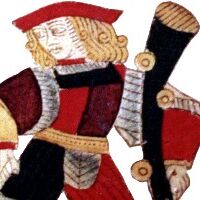
Spanish national pattern by Pere Pau Rotxotxo Puigdoura (1766–1797).
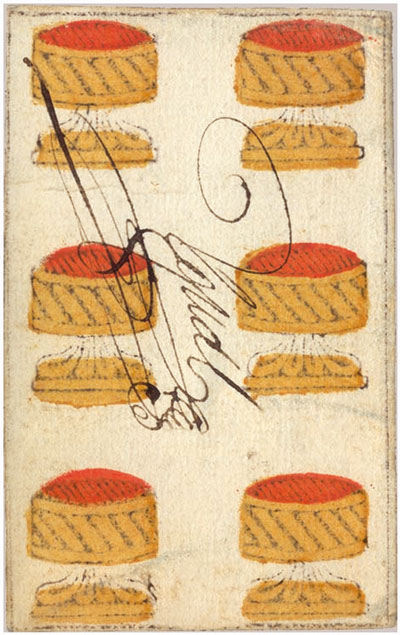
An antique Spanish National pattern deck produced by Pere Pau Rotxotxo Puigdoura (active 1766–1797). The Rotxotxo family of cardmakers is recorded at the start of the seventeenth century in Barcelona and successive heirs continued to manufacture cards in this traditional design until the early 19th century. The deck was signed by the tax inspector on the six of cups, as was customary in Catalonia before it became mandatory in the rest of Spain.
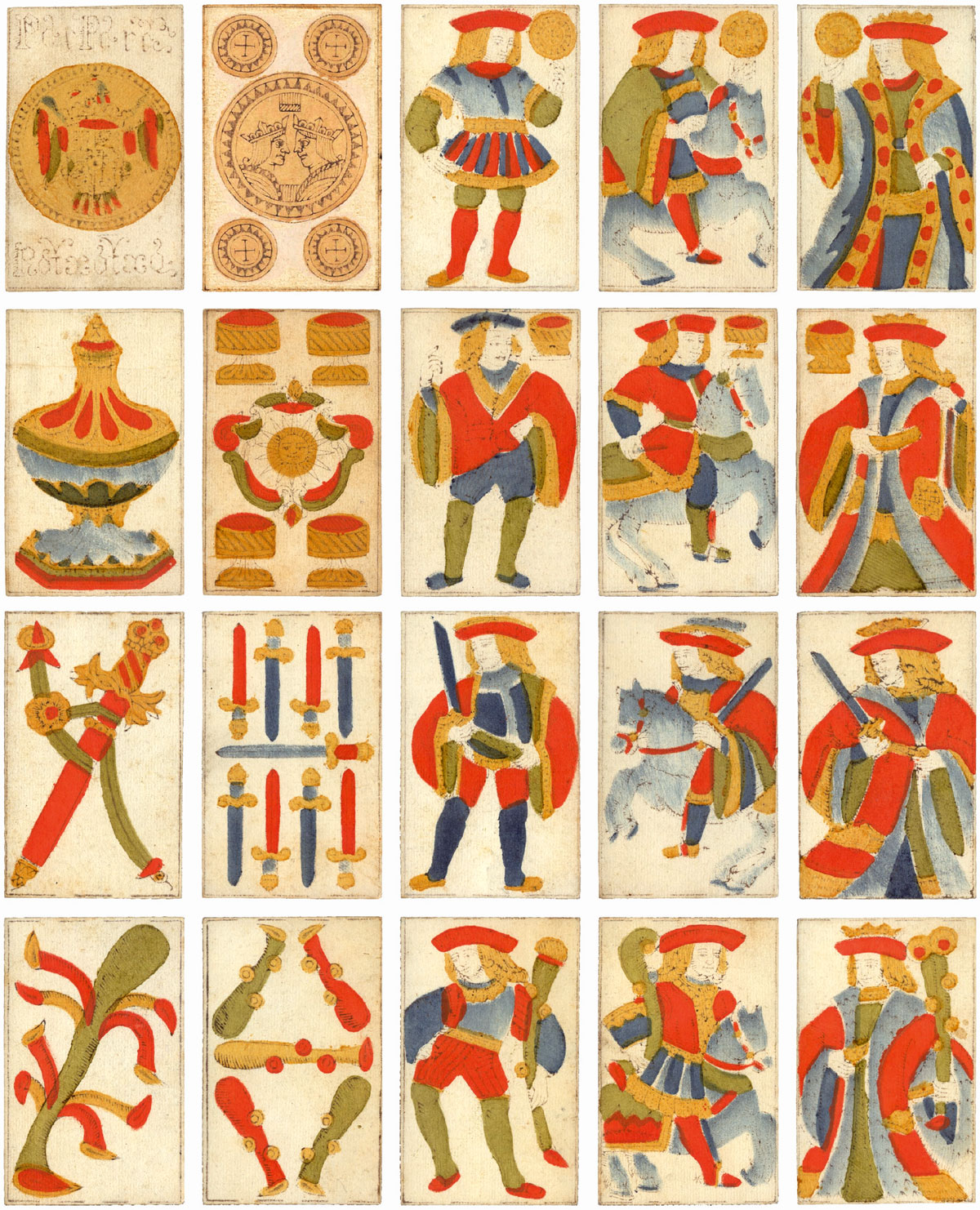
Above: cards in the old Spanish national pattern published by Pere Pau Rotxotxo Puigdoura, Barcelona, late 18th century. Stencil-coloured woodcuts.
The six of cups has the revenue officer's signature, which includes a lot of flourishes and underscoring.
By Alberto Pérez González
Spain • Member since December 21, 2016
I am a researcher and my primary interest lies in playing cards manufactured in Cádiz (not the 'Cádiz' type in general). I have authored several articles in the annual Asescoin magazine 'La Sota'. Among them are: “Madrid’s Playing Cards from the 17th to the 20th Century”; “New Contributions to the Study of Playing Cards in the Valencian Country”; “The Fouquets: 'Navarra pattern' in the Netherlands”; “Divided Playing Cards: Combining Ingenuity with Skill”; “Here Be Dragons: Speculations on the Evolution of the so-called 'Portuguese' Pattern”; “Playing Cards in Chile: News and Chronicles from the Viceroyalty Era”...
I have written and designed the book “Los Naipes de Cádiz” (296 pp). Additionally, I have contributed to the design, layout, and collaboration in Enrique García Martín’s book “Naipes, Arte y Fantasía” (444 pp).

Activity for Pere Pau Rotxotxo Puigdoura
Sign in to comment or save this article.

Related Articles
Pedro Rotxotxo
Standard Spanish National pattern by Pedro Rotxotxo, Barcelona, late 18th century.
Rotxotxo Workshop Inventories
Rotxotxo Workshop Inventories, Barcelona, 1660-1800.
Spanish National Pattern
Probably originating in Spain in the seventeenth century or even earlier, this pattern became strong...
Most Popular
Our top articles from the past 60 days


