


Goyesca
Baraja ‘Goyesca’ facsimile of original deck published in Madrid by Clemente de Roxas, 1814.
Baraja ‘Goyesca’ - a facsimile of an original engraved deck published in Madrid by Clemente de Roxas, 1814, with candid images of contemporary popular figures from different regions in Spain, inspired by the period of Francisco Goya (1746-1828). The 4s of each suit and the court cards, excluding the kings, have the name of the province relating to the various costumes illustrated on each card. The designs were also reprinted by Ferdinand Gumppenberg (1817), Luis de Pereda (1820) and Faustino Rodriguez (1833).
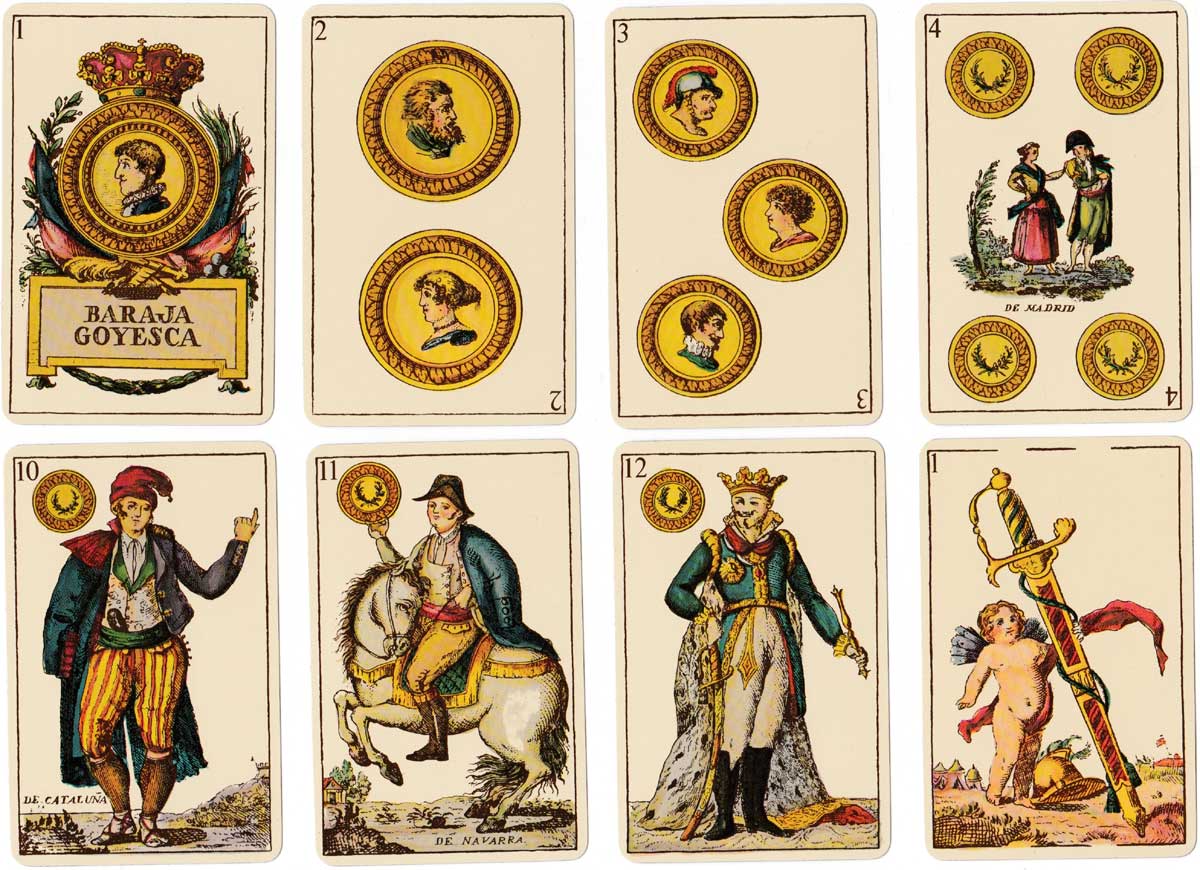
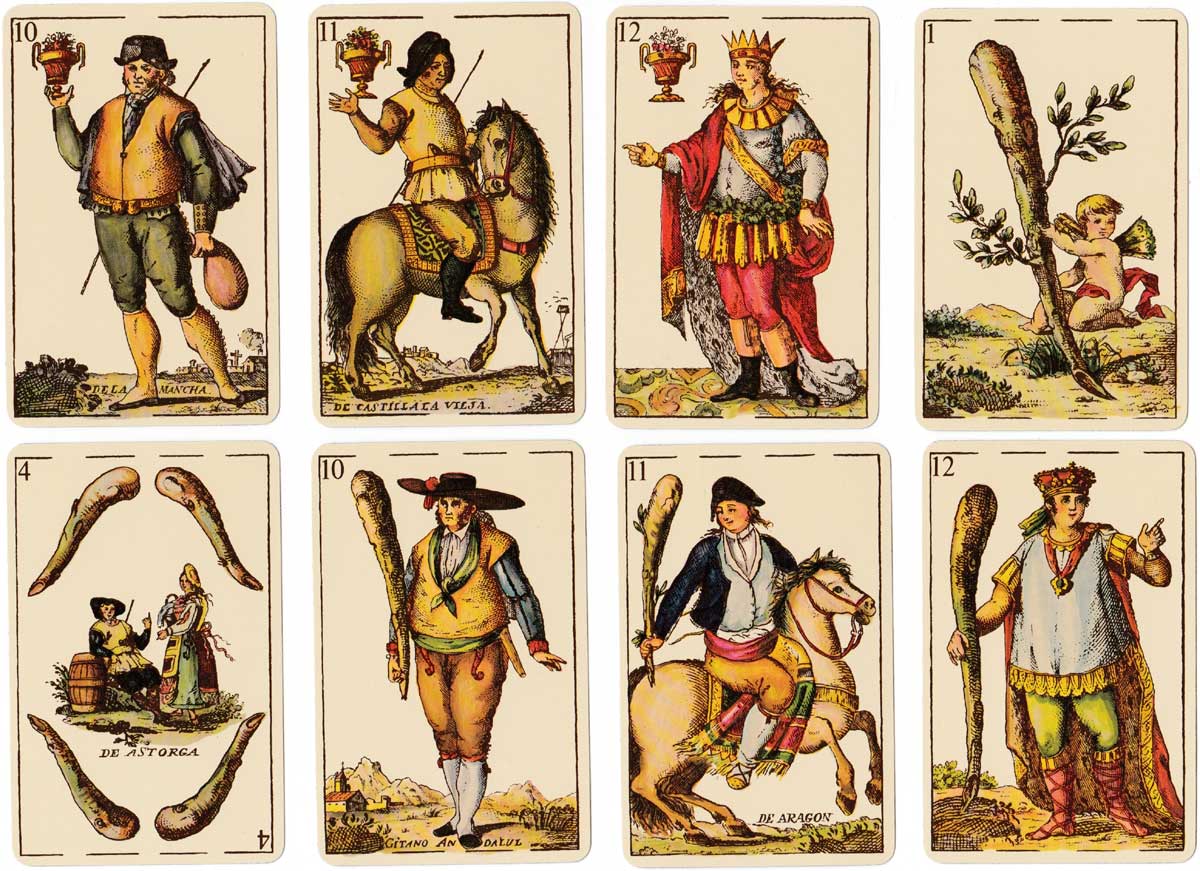
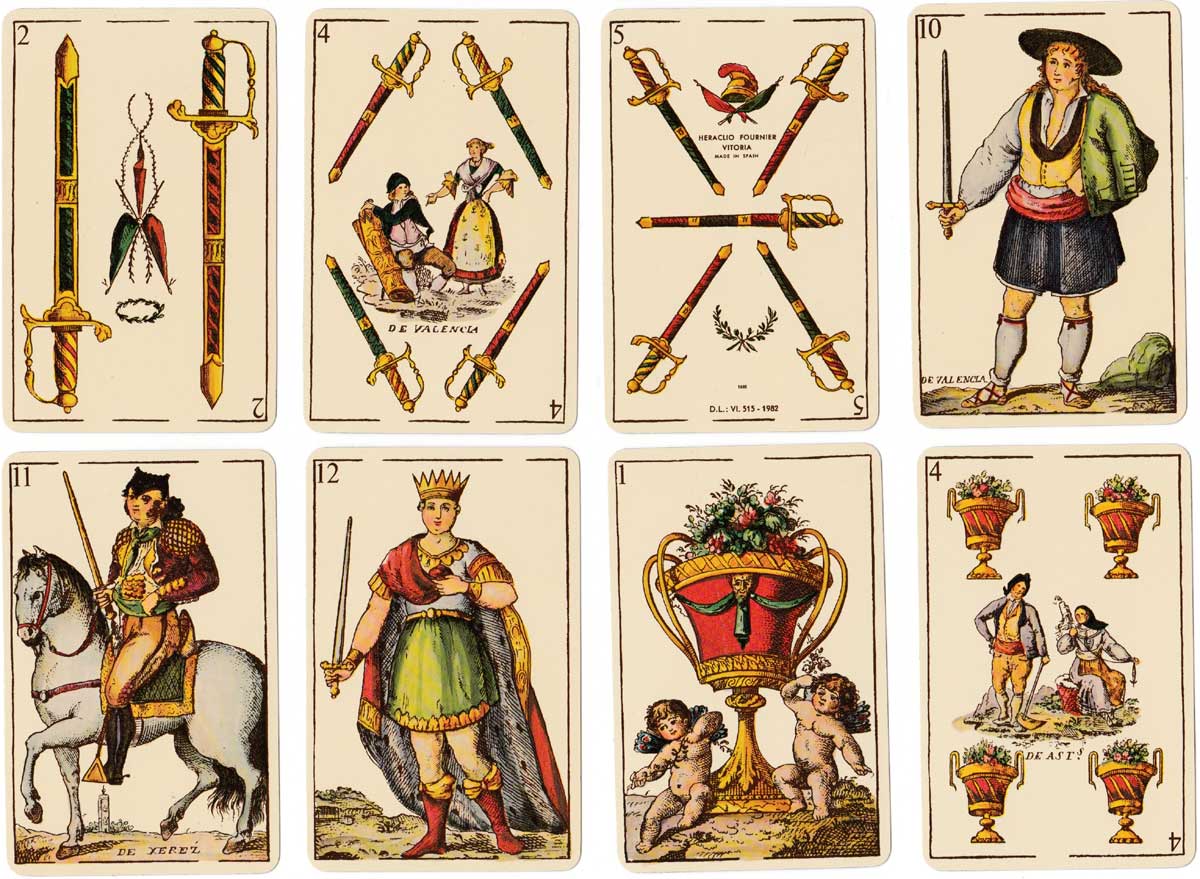
Above: Baraja ‘Goyesca’ facsimile of deck originally published in Madrid by Clemente de Roxas, reprinted by Heraclio Fournier S.A. in 1982. 48 cards + 2 extra cards.
An original copy of the pack can be seen at the British Museum website: Museum number 1896,0501.853►
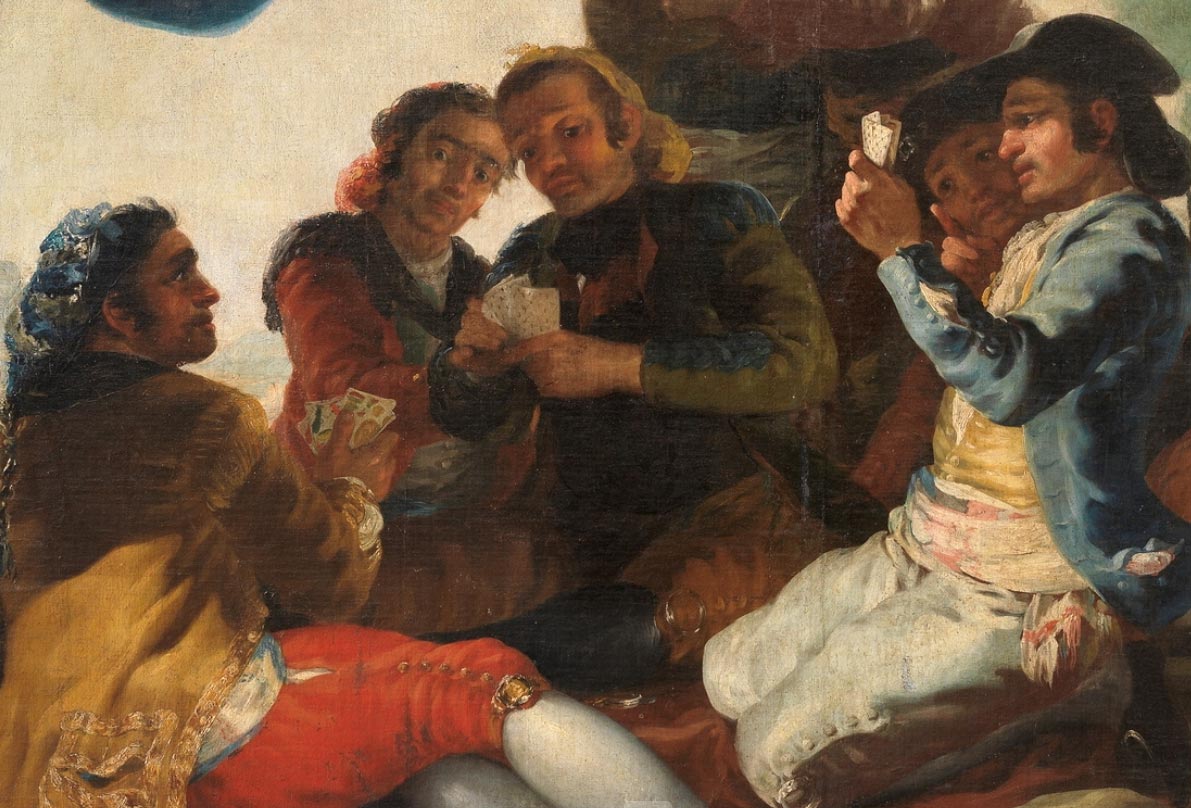
Above: detail from Jugadores de naipes by Francisco de Goya, 1777 - 1778. Museo del Prado, Madrid.

By Rex Pitts (1940-2021)
United Kingdom • Member since January 30, 2009
Rex's main interest was in card games, because, he said, they were cheap and easy to get hold of in his early days of collecting. He is well known for his extensive knowledge of Pepys games and his book is on the bookshelves of many. His other interest was non-standard playing cards. He also had collections of sheet music, music CDs, models of London buses, London Transport timetables and maps and other objects that intrigued him.
Rex had a chequered career at school. He was expelled twice, on one occasion for smoking! Despite this he trained as a radio engineer and worked for the BBC in the World Service. Later he moved into sales and worked for a firm that made all kinds of packaging, a job he enjoyed until his retirement. He became an expert on boxes and would always investigate those that held his cards. He could always recognize a box made for Pepys, which were the same as those of Alf Cooke’s Universal Playing Card Company, who printed the card games. This interest changed into an ability to make and mend boxes, which he did with great dexterity. He loved this kind of handicraft work.
His dexterity of hand and eye soon led to his making card games of his own design. He spent hours and hours carefully cutting them out and colouring them by hand.

Activity for Goyesca
Sign in to comment or save this article.

Related Articles
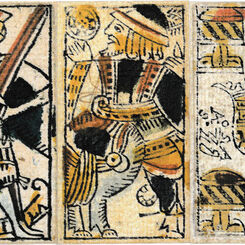
Sevilla 1647 reproduction
Facsimile of Spanish-suited pack produced in Sevilla, Spain, 1647.
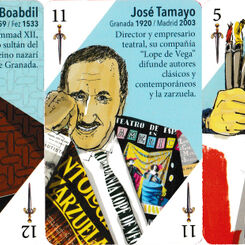
Naipes de Personajes Granadinos
Forty famous men and women with links to Granada, on a pack designed by Rubén Garrido.
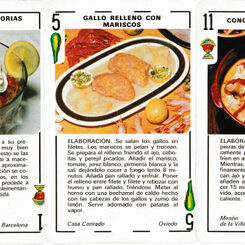
Bankunión playing cards
Ingredients and recipes for 24 dishes from different regions of Spain.
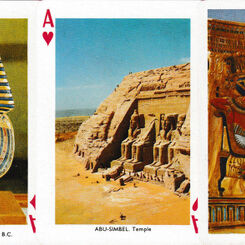
Souvenir Playing Cards of Egypt
55 different photographic views of Egypt in full colour.
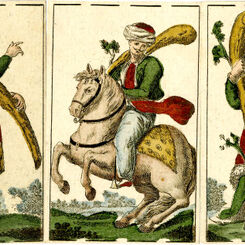
Four Empires - Clemente Roxas
‘Four Empires’ playing cards produced by Clemente Roxas, c.1805.
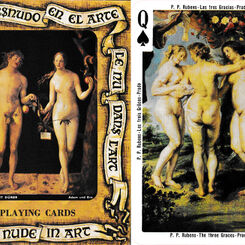
El Desnudo en el Arte
The Nude in Art / El Desnudo en el Arte, Spain, 1977 (reprint 1990)
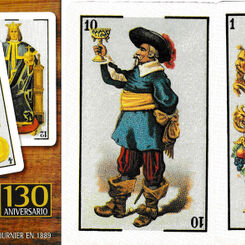
Naipes Heraclio Fournier 130th Anniversary
Baraja conmemorativa del 130 aniversario de naipes Heraclio Fournier (1868-1998) Spain, 1998.
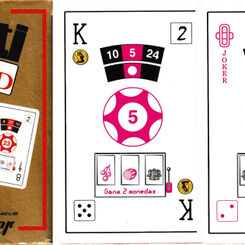
Multicard
A Spanish-suited pack with multiple uses including roulette and dice.
Rasta playing cards
Rasta playing cards celebrating the Rastafari religion.
Baraja El Quijote
Baraja El Quijote, facsimile of original deck designed by E. Pastor, reprinted by Naipes Heraclio Fo...
Histoire de France
“Histoire de France” facsimile of French historical deck of 1820.
Lithographic Stone
Historic lithographic stone from the Fournier playing card factory, c.1888.
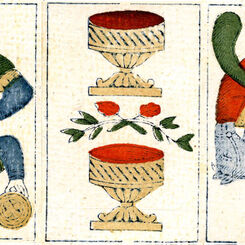
Clemente Roxas double-ended Spanish pack
Double-ended Spanish-suited playing cards published by Clemente de Roxas in Madrid, 1814.
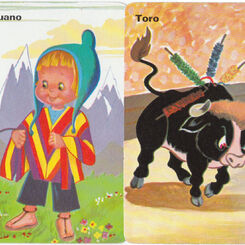
Parejas del Mundo
“Parejas del Mundo” matching pairs card game by Naipes H. Fournier, 1972.
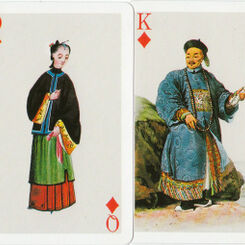
Chinese Costumes
Chinese Costumes from the Winterthur Collection, published by Fournier, 1984.
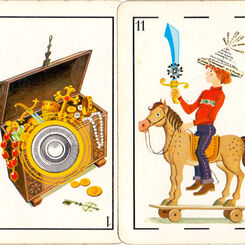
Philishave
Spanish-suited advertising deck for Philishave electric razors.
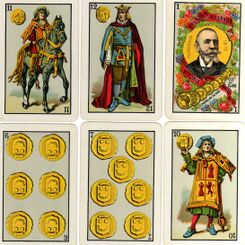
Fournier “El Fundador”
The cards shown here were originally printed in 12-colour lithography and published by Heraclio Four...
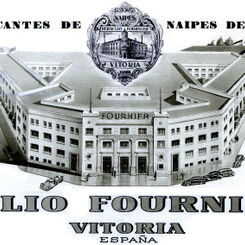
Heraclio Fournier S.A.
Founded in 1868, today it is part of Cartamundi.
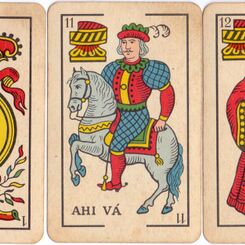
Cards for export to Peru by Heraclio Fournier
'El Caballo' brand (No.5P) playing-cards manufactured in Spain by Heraclio Fournier S.A. especially ...
Hand-made Spanish Suited Playing Cards
Decks are made on two-ply pasteboard which reproduces the tactile quality of antique cards.
Most Popular
Our top articles from the past 60 days


Peter Burnett
19 November 2025, 09:47SavedSaved this article to Peter's Collection