


Amorcillos
‘Amorcillos’ (Cupids), a masterpiece from the golden age of Spanish playing cards by Clemente Roxas, Madrid, 1790.
During the eighteenth century, and early nineteenth, there was a "golden age" of playing cards in Spain, characterized by significant development in the artistic production of non-standard and finely engraved packs. This period saw the creation of high-quality decks featuring exquisite and detailed designs. Many publishers in Madrid were now producing magnificent de luxe playing cards that were miniature works of art.
A notable masterpiece from this era is "Amorcillos" (Cupids), a 48-card pack published by Clemente Roxas, crafted in 1790. These cards showcase imaginative designs, with cupids introduced on each card in a popular neo-classical style of the time. The "golden age" of Spanish playing cards represents their finest hour, a significant milestone in their history and continues to inspire the production of Spanish decks today.
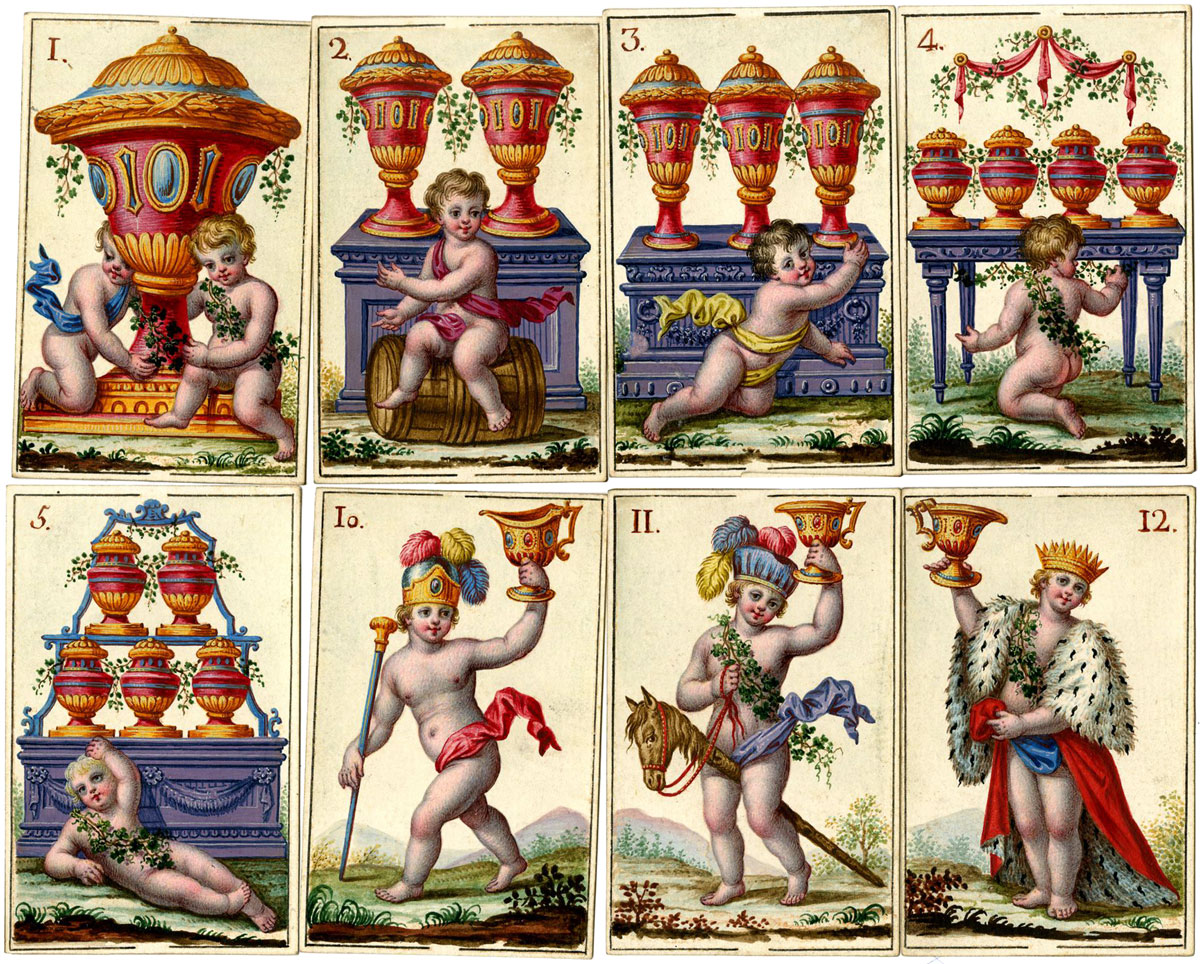
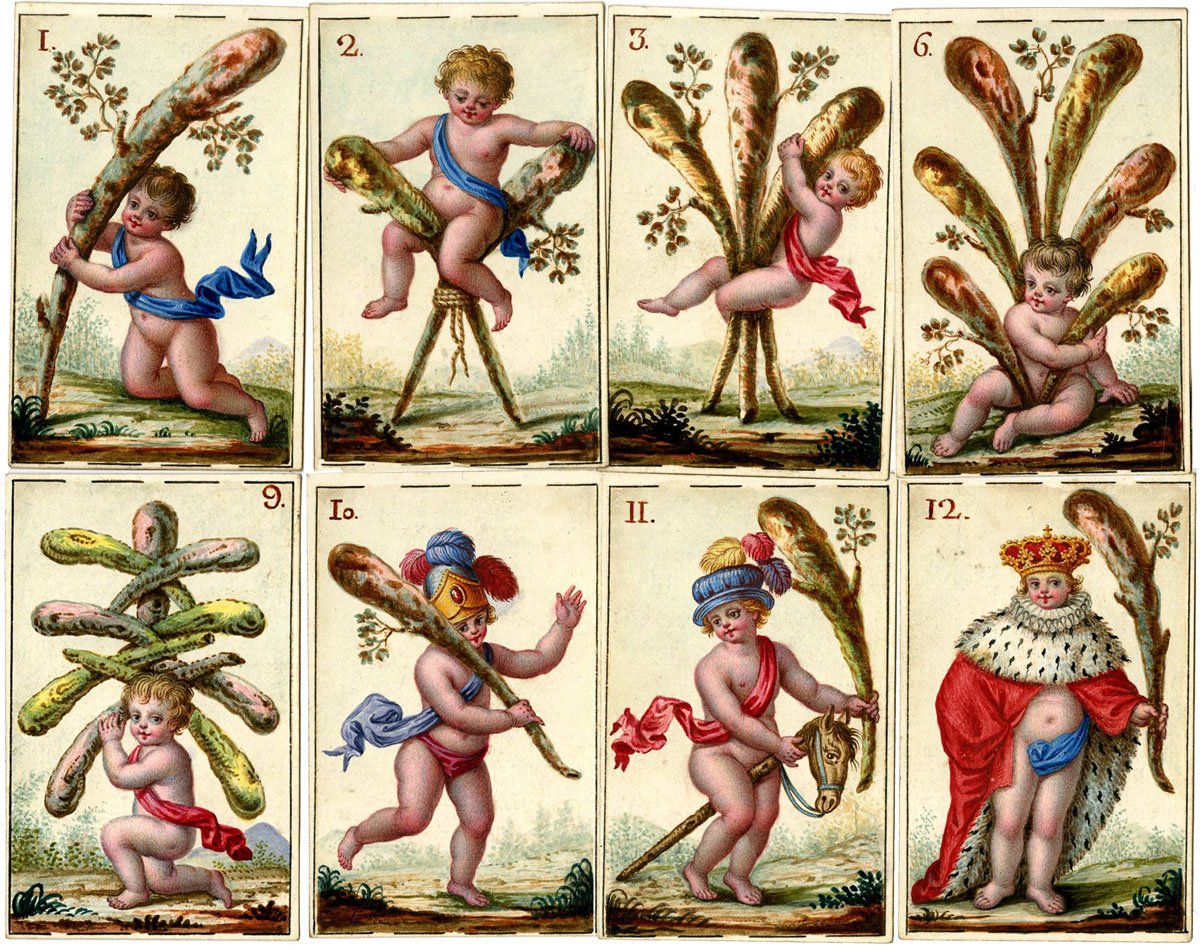
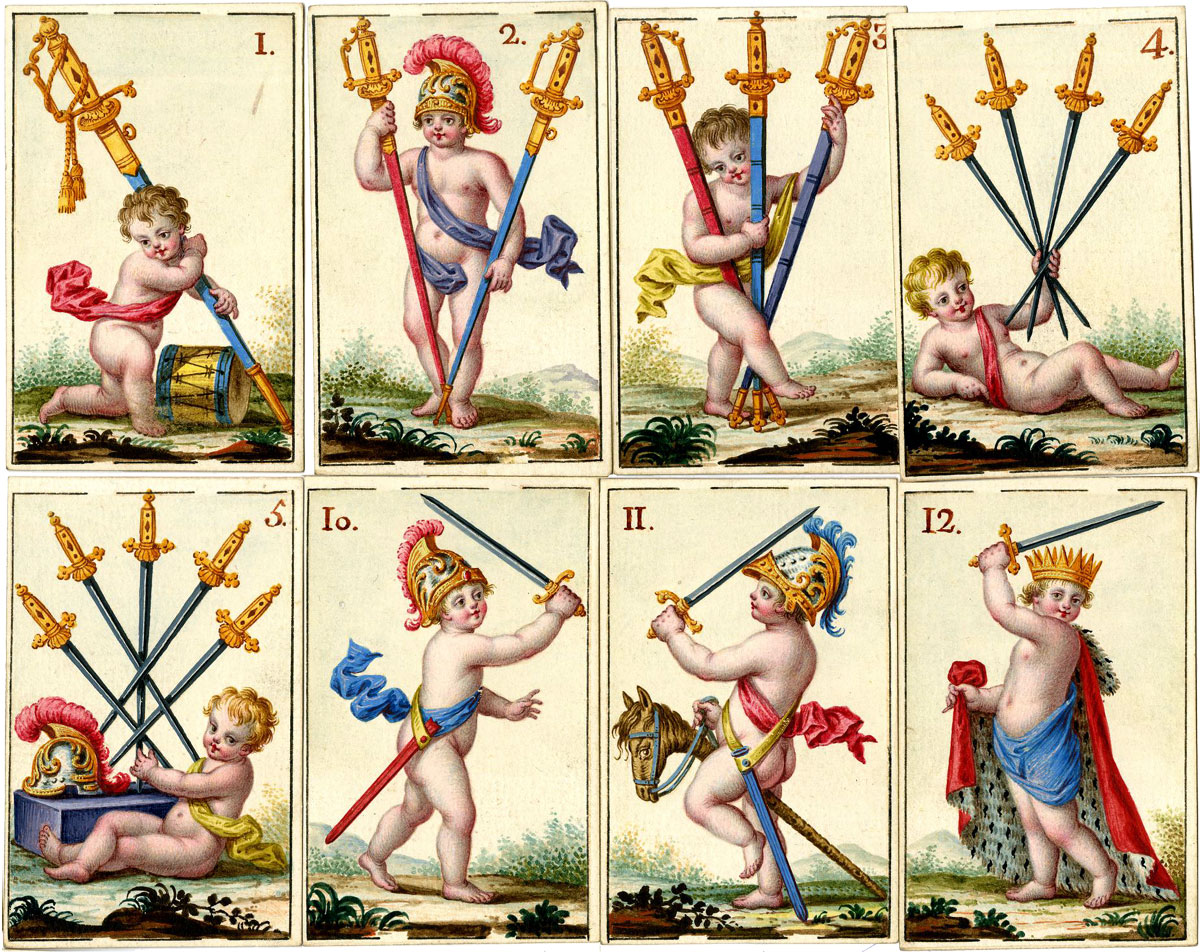
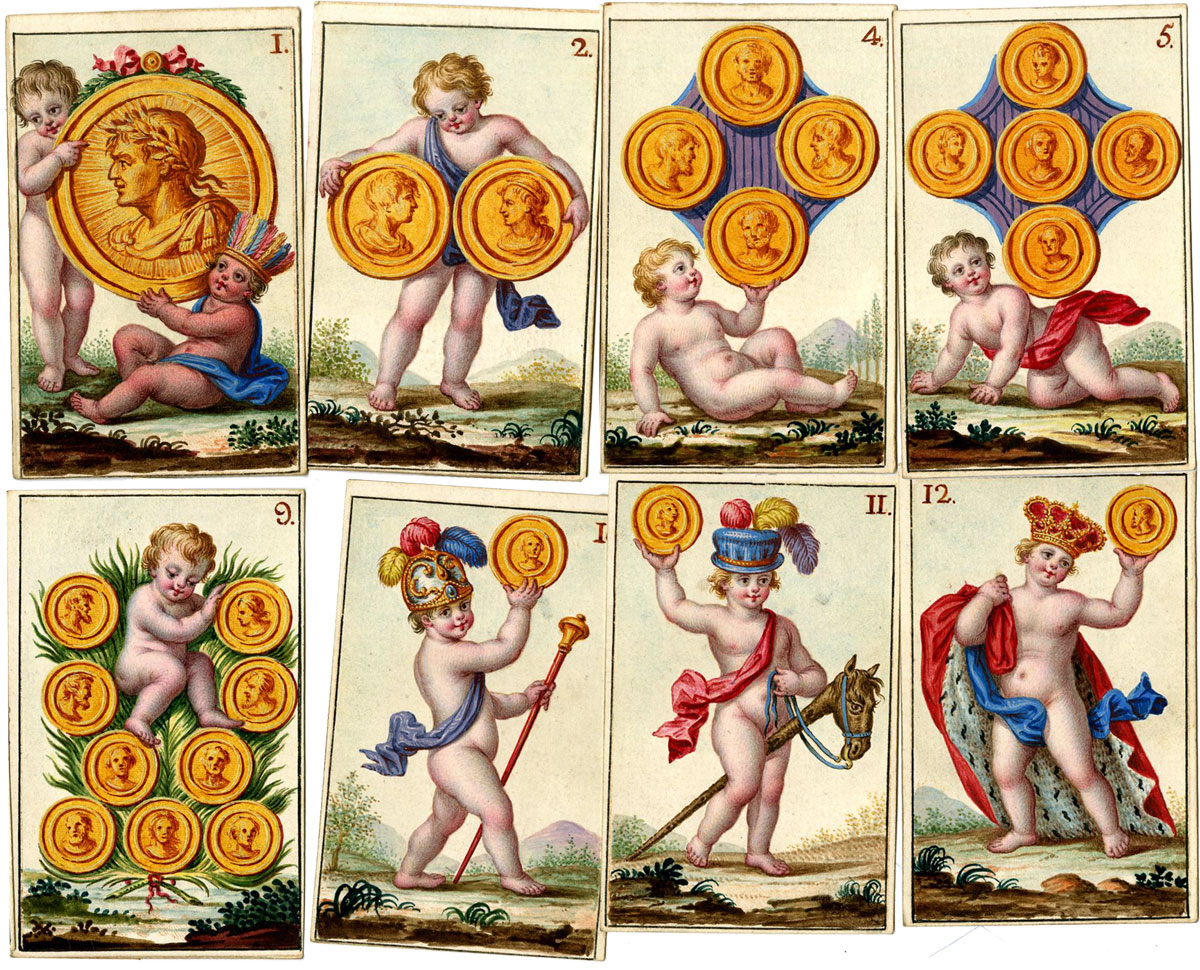
Above: ‘Amorcillos’ (Cupids) by Clemente Roxas, Madrid, 1790. 48 cards, copper plate etching, hand coloured. Backs marbled and edges gilt. © The Trustees of the British Museum • Museum number 1896,0501.146►
References
Denning, Trevor: The Playing-Cards of Spain, Cygnus Arts, London, 1996
O’Donoghue, Freeman M: Catalogue of the collection of playing cards bequeathed by Lady Charlotte Schreiber, Trustees of the British Museum, London, 1901 (Spanish 53). [digital version here]

By Simon Wintle
Spain • Member since February 01, 1996
I am the founder of The World of Playing Cards (est. 1996), a website dedicated to the history, artistry and cultural significance of playing cards and tarot. Over the years I have researched various areas of the subject, acquired and traded collections and contributed as a committee member of the IPCS and graphics editor of The Playing-Card journal. Having lived in Chile, England, Wales, and now Spain, these experiences have shaped my work and passion for playing cards. Amongst my achievements is producing a limited-edition replica of a 17th-century English pack using woodblocks and stencils—a labour of love. Today, the World of Playing Cards is a global collaborative project, with my son Adam serving as the technical driving force behind its development. His innovative efforts have helped shape the site into the thriving hub it is today. You are warmly invited to become a contributor and share your enthusiasm.

Activity for Amorcillos
Sign in to comment or save this article.

Related Articles
Finnish Chromolithographic Playing Cards
A fantasy interpretation of the French pattern in Renaissance and medieval costume.
Tarot del Toro
Tomás Hijo makes Tarot del Toro from hand-painted linocut prints of characters and settings from Gui...
Tarot Familiars
Lisa Parker’s Tarot Familiars gives the traditional 78-card tarot a distinctly gothic world of cats,...
Tarot for Baby
This board book simplifies tarot archetypes into accessible affirmations for young children.
Manara: baraja de poker
Exotic illustrations by Italian comic book artist and writer Milo Manara.
Alice in Wonderland
Alice in Wonderland collector’s edition with illustrations of characters from the film, published by...
Women by Royo
‘Women by Royo’ erotic playing cards published by Heraclio Fournier, Spain, 2001.
Loewe: Moda Europea Siglo XVII
Luxury pack for the Spanish fashion house Loewe, with 17th century costume designs by Margot Hamilto...
Four Empires - Clemente Roxas
‘Four Empires’ playing cards produced by Clemente Roxas, c.1805.
Gruppo Perotti playing cards
Stunningly beautiful designs by the Japanese artist Tiger Tateishi for Gruppo Perotti.
Dungeons and Dragons Tarot
This 78-card officially licensed Dungeons & Dragons (D&D) tarot deck offers a visually appealing var...
Bertschinger y Codina
Fantasy Spanish-suited playing cards by Bertschinger y Codina (Barcelona), c.1850.
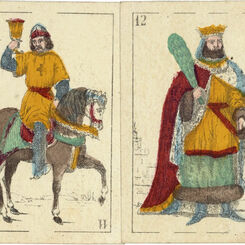
Vicente Gombau y Labad
Elegant fantasy designs by Vicente Gombau y Labad (Madrid), 1861.
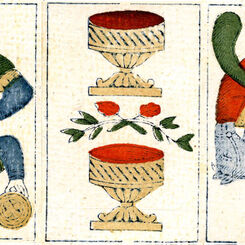
Clemente Roxas double-ended Spanish pack
Double-ended Spanish-suited playing cards published by Clemente de Roxas in Madrid, 1814.
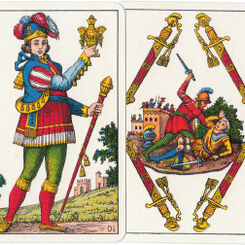
Sarde Pattern
Sarde pattern published by Modiano, c.1975, based on early XIX century Spanish model.
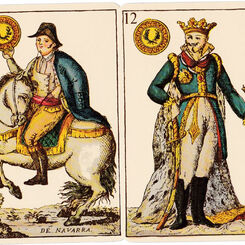
Goyesca
Baraja ‘Goyesca’ facsimile of original deck published in Madrid by Clemente de Roxas, 1814.
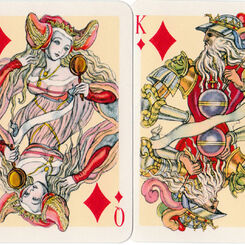
Romance Español
“Romance Español” designed by Carlos Sáenz de Tejada and published by Heraclio Fournier in various e...
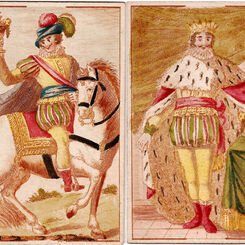
Baraja “Neoclásica”, Madrid, 1810
Baraja “Neoclásica” engraved by José Martínez de Castro, first published by Clemente Roxas, Madrid, ...
Regional Costumes
Spanish regional costumes and coats-of-arms; cute illustrations on each card, 1986.
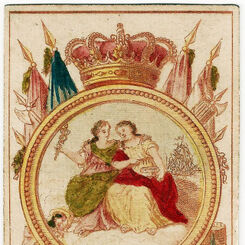
José Martínez de Castro, page 2
The most noteworthy feature of its history is that this design has since been adopted for use in Sar...
Most Popular
Our top articles from the past 60 days


