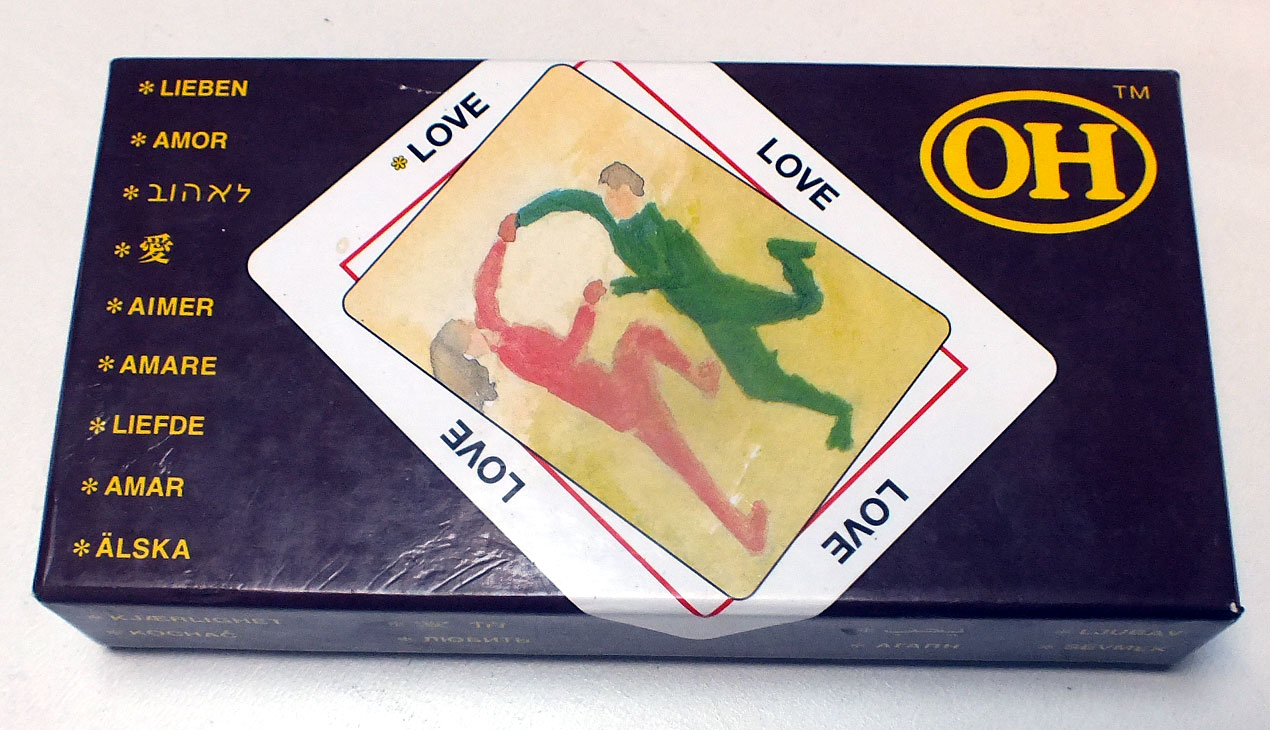
OH Cards
A Series of Metaphoric Cards to unlock your story, conceived and designed by Ely Raman
OH cards are a unique and versatile tool for self-discovery and creative expression. The set features 88 evocative picture cards painted by Ely Raman depicting everyday situations, paired with 88 larger title cards that act as interchangeable frames. This innovative design unlocks 7,744 combinations, fostering new associations, perspectives, and personal narratives around universal themes like love, joy, sorrow, fear, and humour. Unlike divination tools, OH cards¹ offer no predictions; instead, they engage your entire personality – from worldly experiences to introspective insights, analytical thought to intuitive understanding. They are ideal for individual reflection or group interaction, perfect for use with friends, family, in educational settings, therapy, or professional environments.
Players select cards at random. The rules aim to build trust and participation and to avoid competitive individualism:
- Never interrupt a player during their turn, there is no time limit
- It is not necessary to show the cards drawn, or to speak openly about them if you don’t want to.
- A player may change their cards or skip their turn if so wished.
- If other players wish to comment it should be only in order to clarify what has been said, not to re-interpret or explain anything. Respect other people’s integrity and never argue.
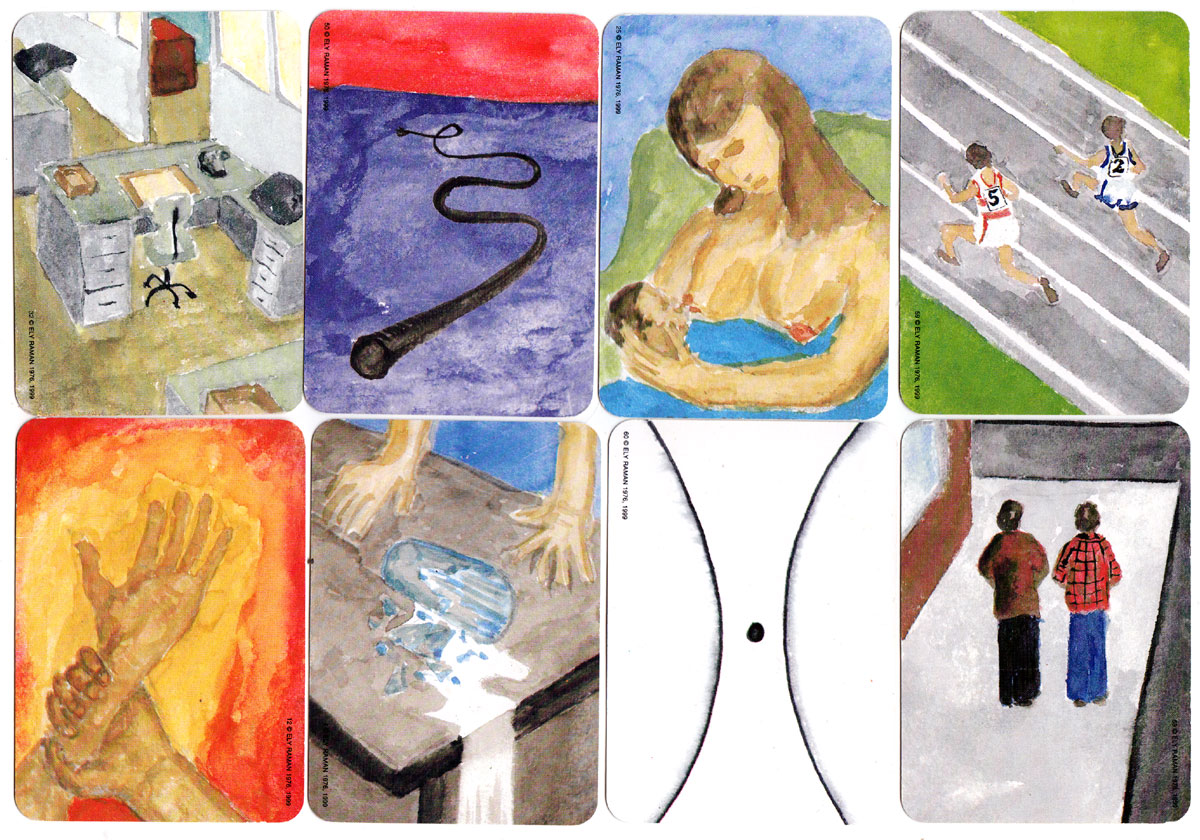
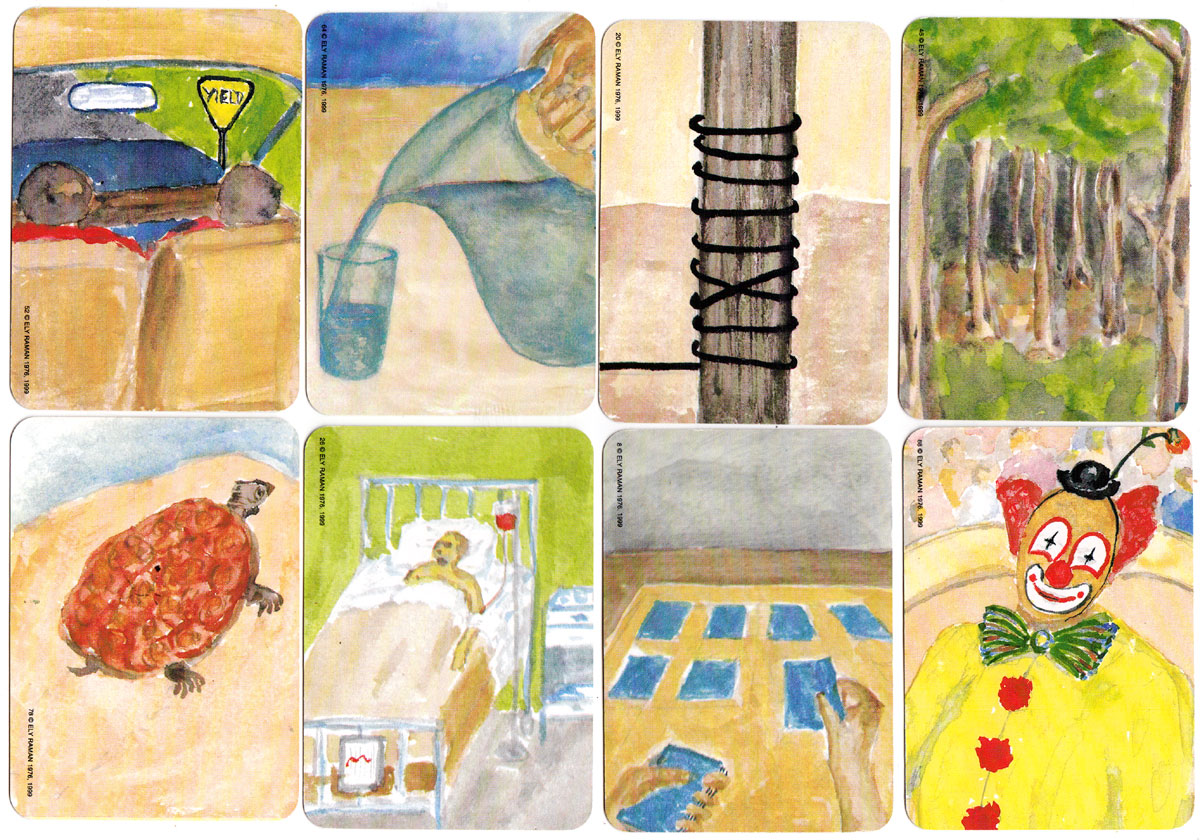
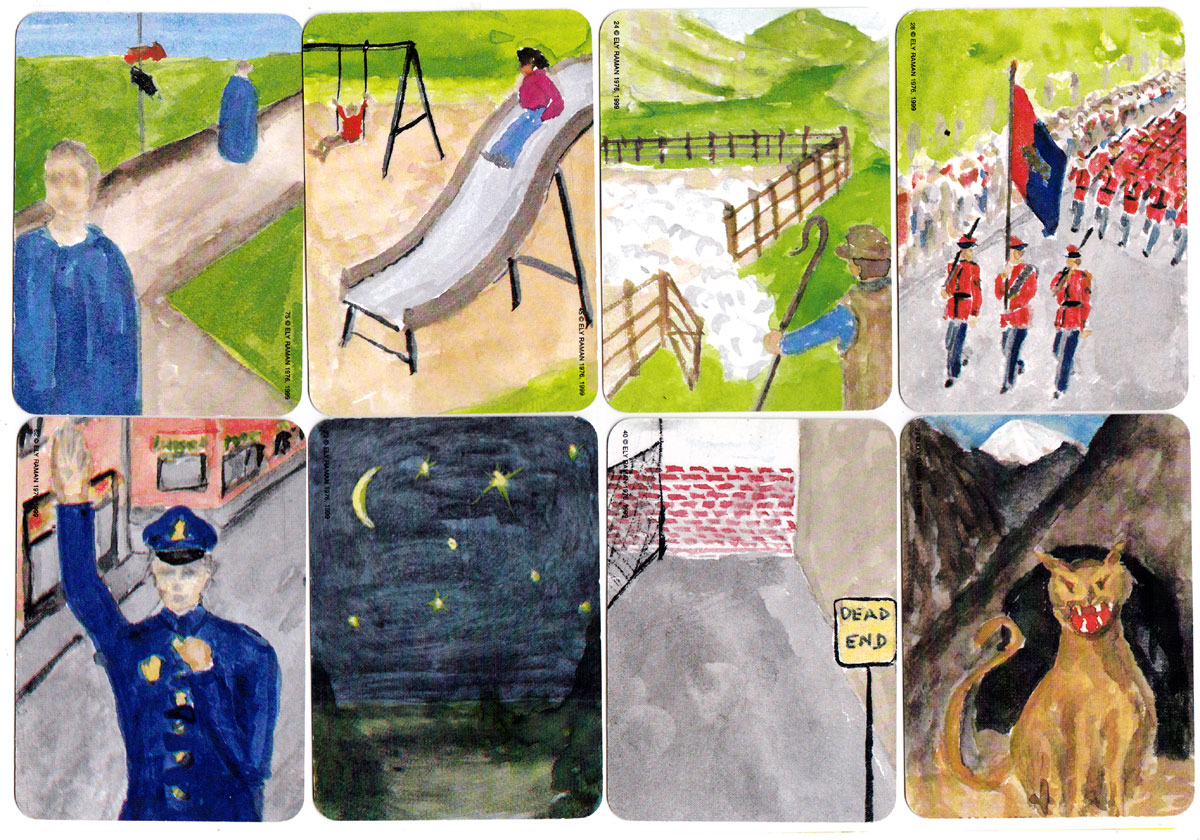
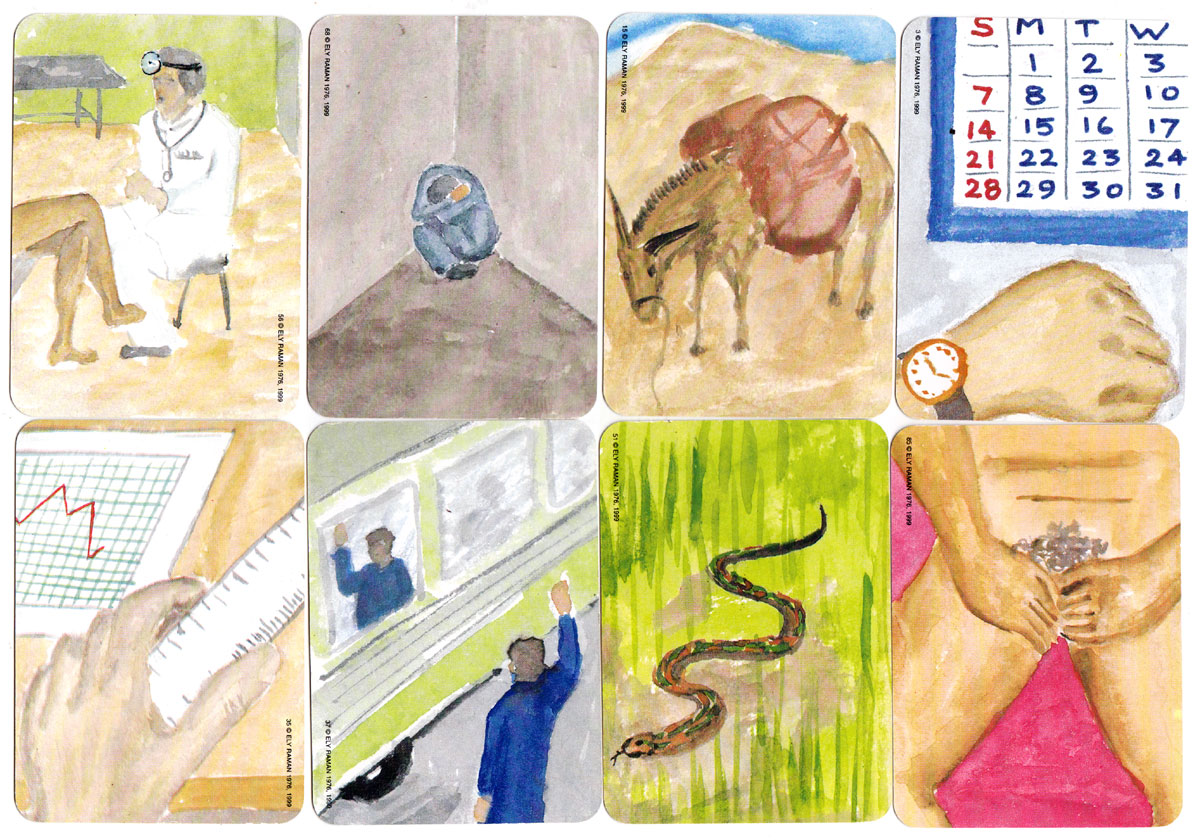
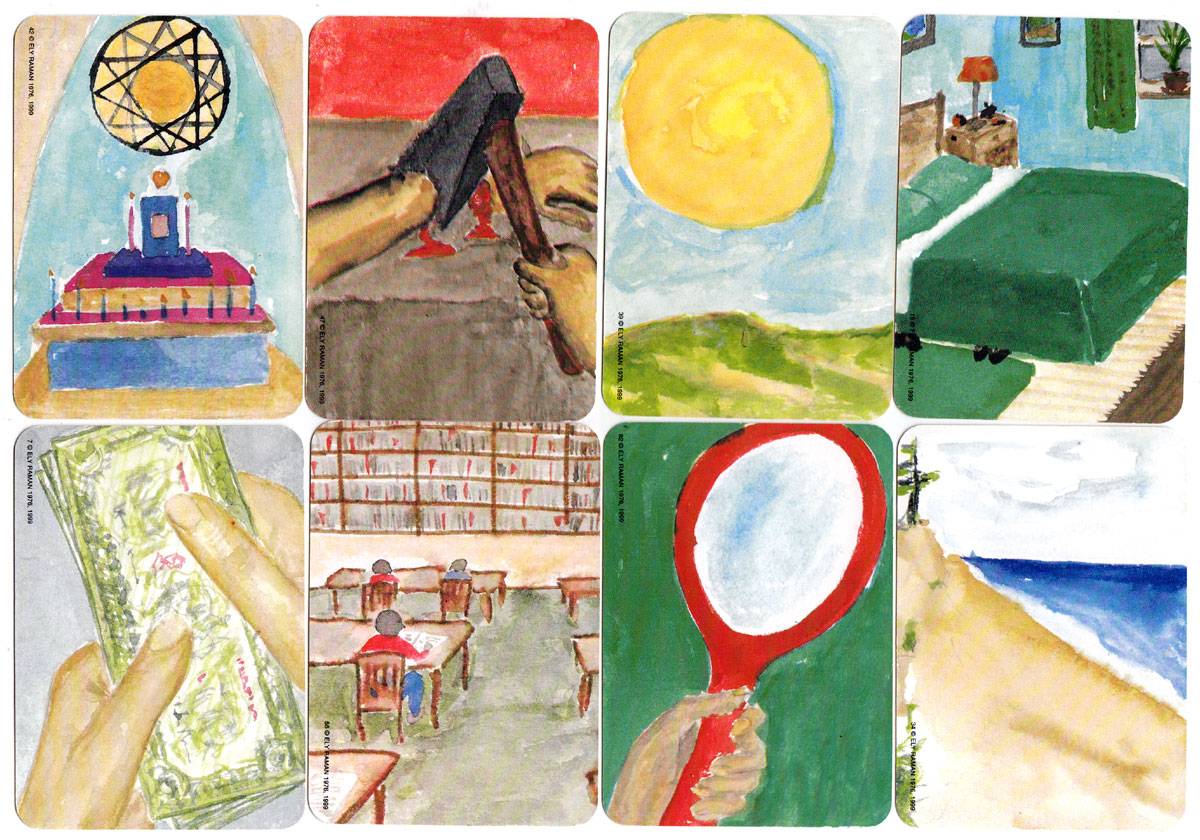
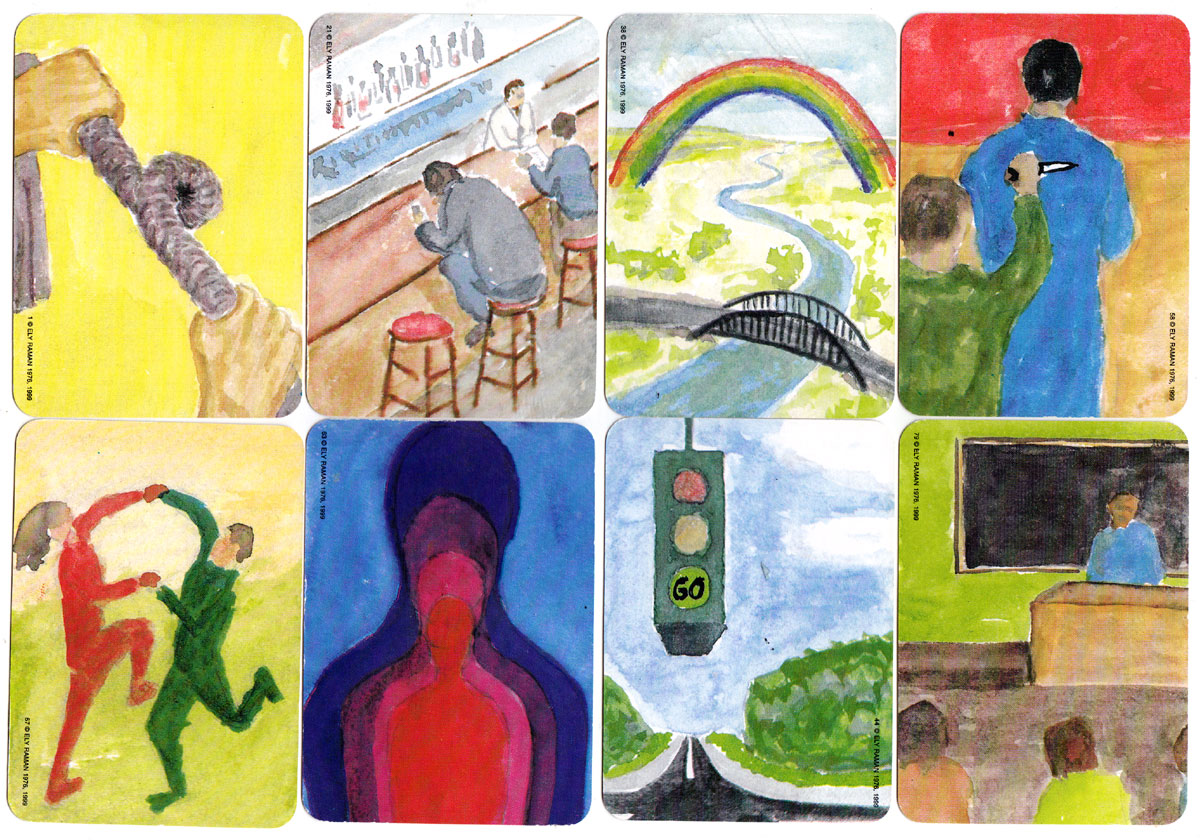
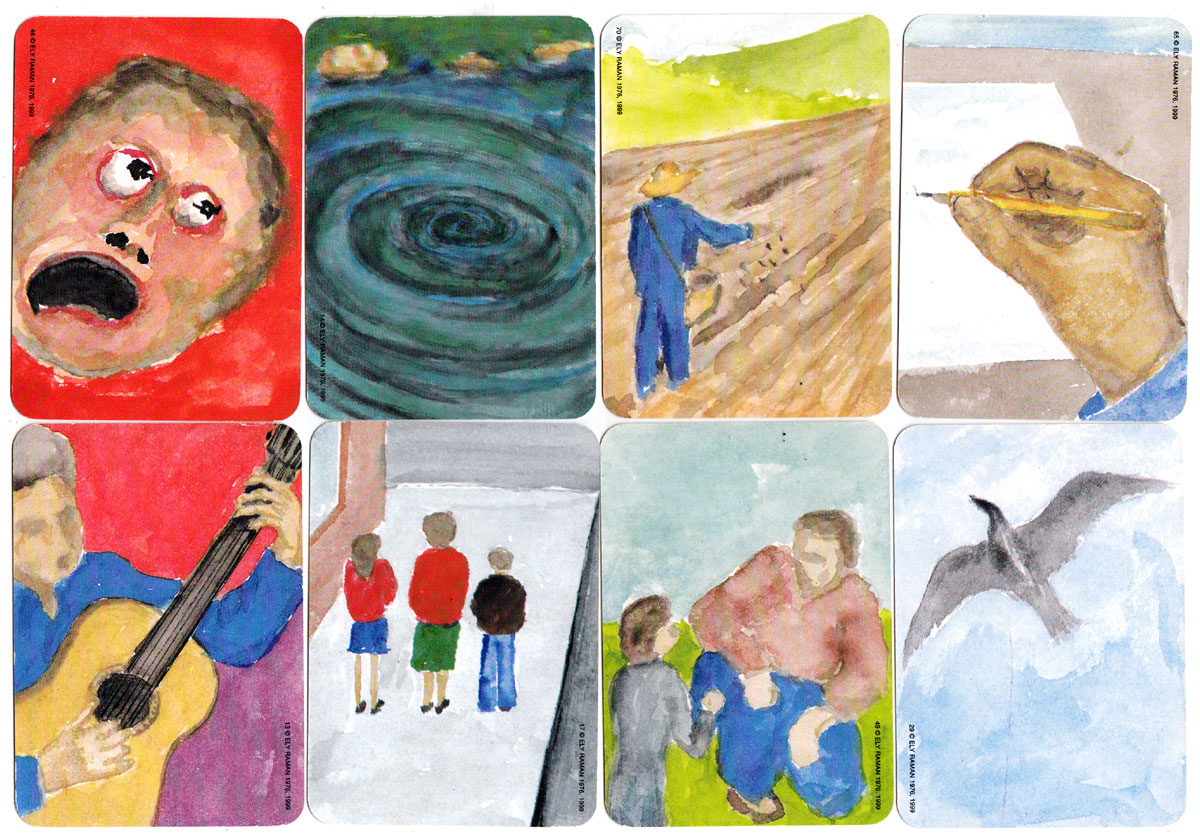
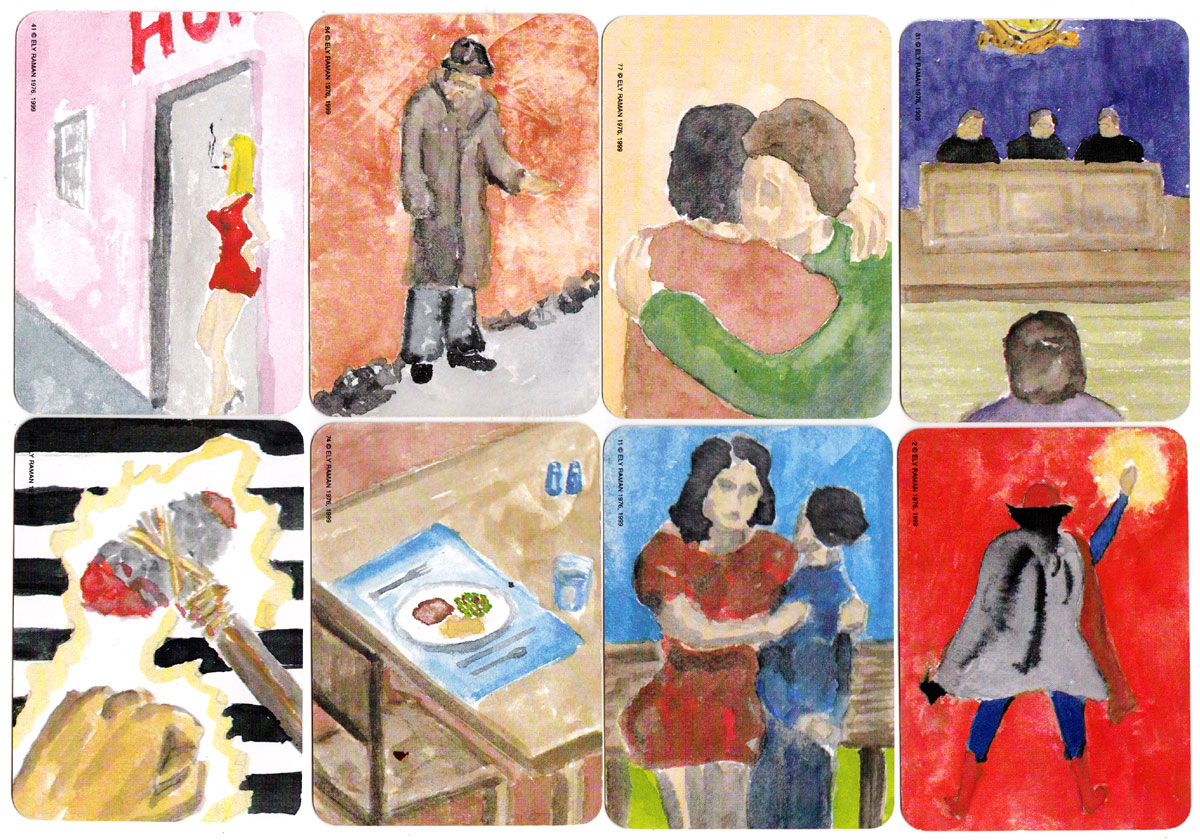
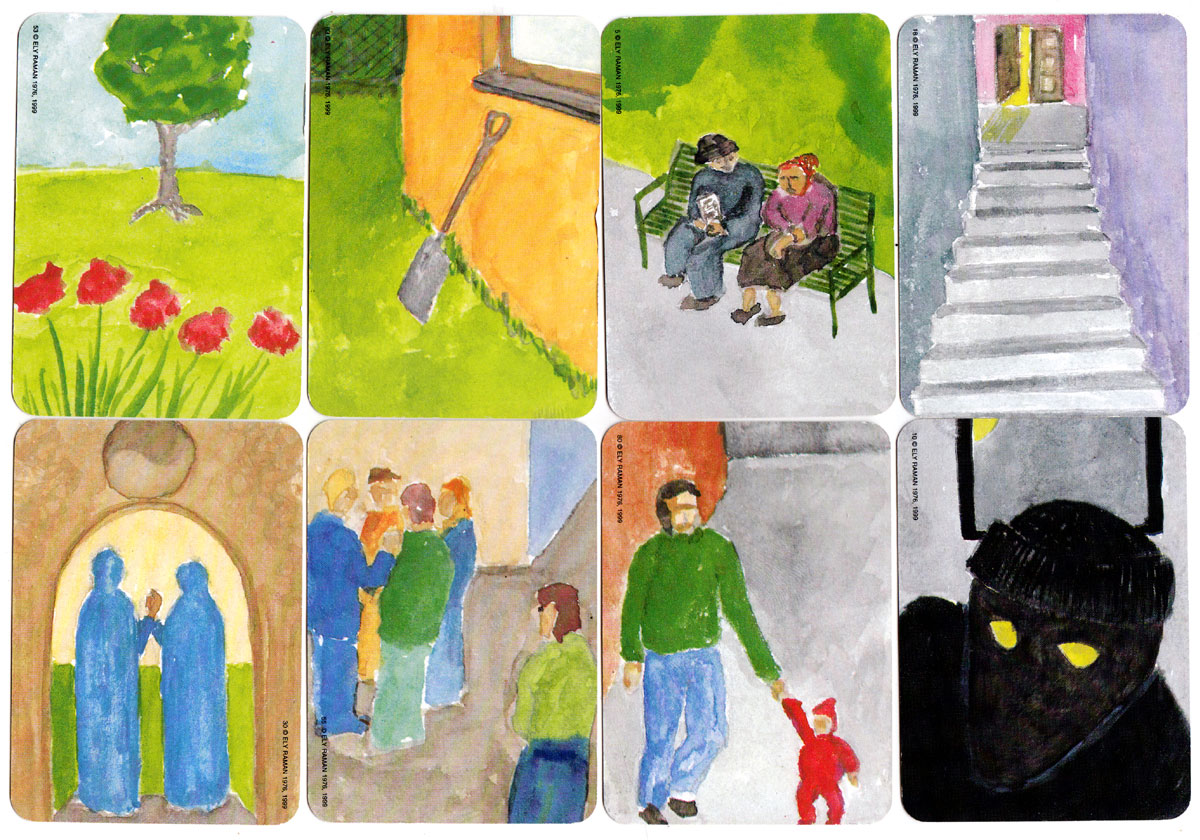
Infinite combinations and endless insights become available when a picture card is framed inside a (larger) title card.
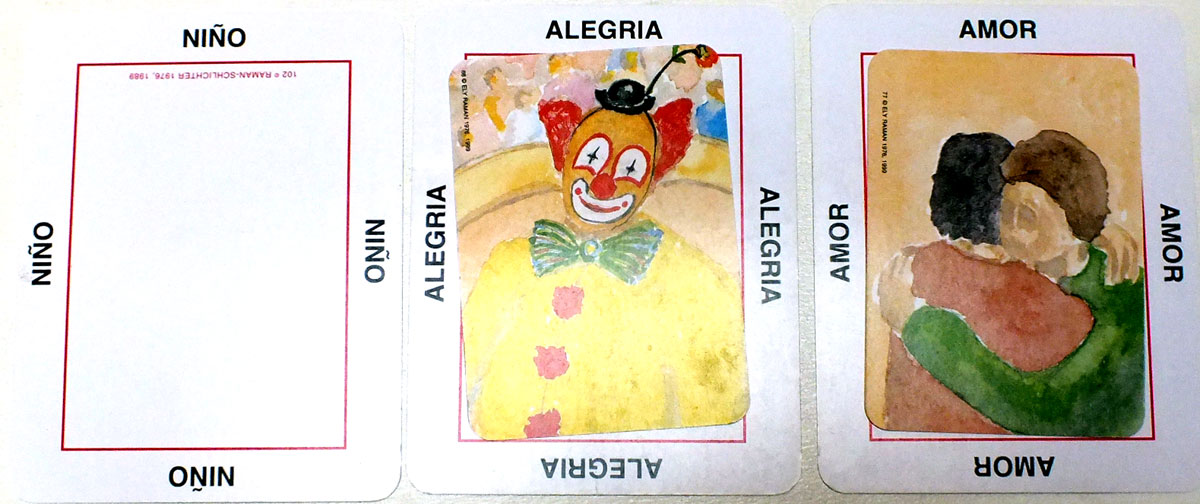
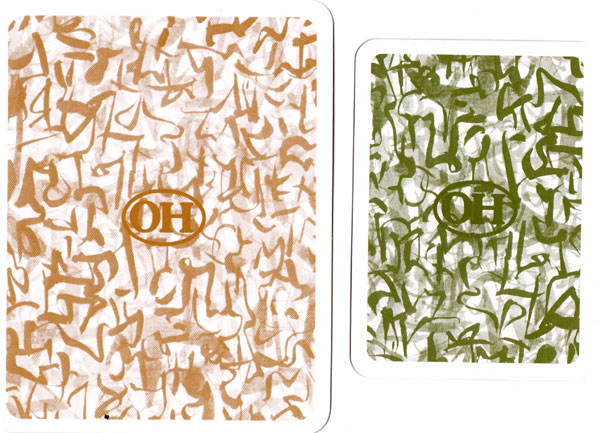
Above: cards from the Spanish edition of OH-Cards published by OH Publishing, Germany, 1976, 1999. 176 cards + rules + publicity leaflet in box. © Ely Raman. Printed in Belgium. Cards courtesy Nora Espinosa.
By 1975 Ely’s long-time passion for playing cards had laid the foundation for OH. A deck of card-sized pictures which Ely had painted, plus a stroke of genius led him to create the 88 word cards, exchangeable frames which turned his deck of images into the “variable structure” he had conceived of, so that every picture can tell a thousand stories.
Note 1. The name 'OH' brings to mind the sacred sound syllable Oṃ (ॐ) which in Hinduism represents the fundamental thought-form of all-pervading reality, and which resolves into the universe in all its manifestations. An appropriate analogy indeed.
Link
OH Publishing : OH Cards►

By Simon Wintle
Spain • Member since February 01, 1996
I am the founder of The World of Playing Cards (est. 1996), a website dedicated to the history, artistry and cultural significance of playing cards and tarot. Over the years I have researched various areas of the subject, acquired and traded collections and contributed as a committee member of the IPCS and graphics editor of The Playing-Card journal. Having lived in Chile, England, Wales, and now Spain, these experiences have shaped my work and passion for playing cards. Amongst my achievements is producing a limited-edition replica of a 17th-century English pack using woodblocks and stencils—a labour of love. Today, the World of Playing Cards is a global collaborative project, with my son Adam serving as the technical driving force behind its development. His innovative efforts have helped shape the site into the thriving hub it is today. You are warmly invited to become a contributor and share your enthusiasm.

Activity for OH Cards
Sign in to comment or save this article.

Related Articles
Learning to play Cribbage
I learned to pay cribbage when I was very young, aged around six or seven.
Musical playing cards
German song texts for domestic music-making on attractive early 19th-century playing cards.
German Travel Cards
A travel-themed educational deck helping American tourists visiting Germany.
Can You Believe Your Eyes?
“Can You Believe Your Eyes?” playing cards featuring visual illusions & other oddities.
Hispania Romana
Educational card game depicting the Roman period in Spanish history.
The Heart Deck™
Useful information about heart health on every card.
Merz Pharma Skat
Comic designs promoting Merz Pharma, a German drug company.
Postgeschichte
A celebration of different postal systems in Germany from 1630 to 1850, with designs by Volker Hartm...
52 Ways to talk about adoption
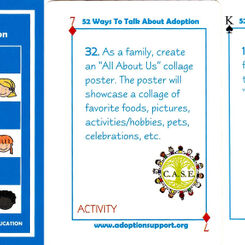
‘52 Ways to talk about adoption’ family-centred playing cards produced by the Center for Adoption Su...
Night & Day playing cards
‘Night & Day’ playing cards produced by London Underground, United Kingdom
Death on Drugs
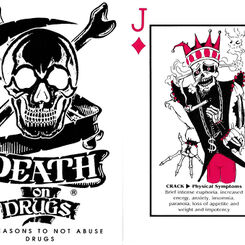
Death on Drugs playing cards, United States, 1985.
Youthscape playing cards
Two packs of playing cards offering emotional help and support to young people.
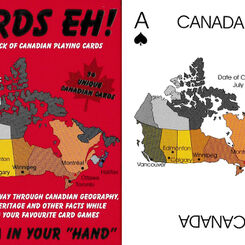
Cards Eh!
“Cards Eh!” playing cards with general information about Canada produced by JK Productions of Richmo...
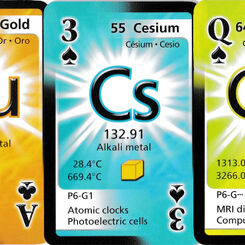
Periodic Table playing cards
Periodic Table playing cards produced by Synheme Inc., Canada, c. 2006-2007.
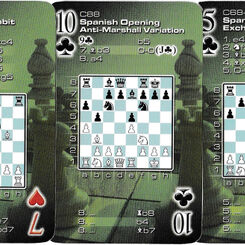
52 Chess Openings
52 chess openings published by SynHeme Inc., Canada.
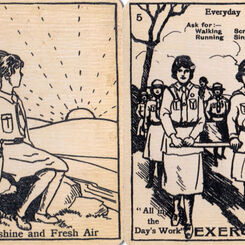
Happy Guides
Happy Guides by James Brown & Son (Glasgow) Ltd. around 1910/1915.
Deutsche Geschichte
German History Quartet published by Otto Maier Verlag Ravensburg, c.1930-35.
Klipp Klapp Karten
“Klipp Klapp Karten” printed by KZWP-Trefl (Poland) for Kindermuseum Oelde (Germany) in 2004
Logica Memorativa
Logica Memorativa playing cards by Thomas Murner, Brussels, 1507.
Cartas Blancas Self-improvement playing cards
Cartas Blancas Self-help playing cards
Most Popular
Our top articles from the past 60 days