


Juan Humanes y Cía
Raimundo García pattern published by Juan Humanes y Cía, Madrid, 1879.
Spanish-suited deck published by Juan Humanes y Cía, Madrid, 1879, in the more rudimentary Raimundo García pattern which suggests economic constraints or maybe a budget product available at low cost. The ace of coins has a lion with a sphere and the inscription “Fabrica de Madrid 1879” and the 4 of coins “J. Humanes y C_a” beneath two mermaids. See the wrapper►
Raimundo García initially created this modest and unassuming playing card design during the 1820s, possibly in response to the prevailing market dominance of high-quality, deluxe card packs. Rather than aiming to monopolize or copyright the design, he actively encouraged its production in other workshops. Juan Humanes succeeded Raimundo García, further popularizing the pattern across Spain as numerous manufacturers began crafting their own versions. See: José Cumplido (1860) • Viuda de Gombau e Hijos (1882)►
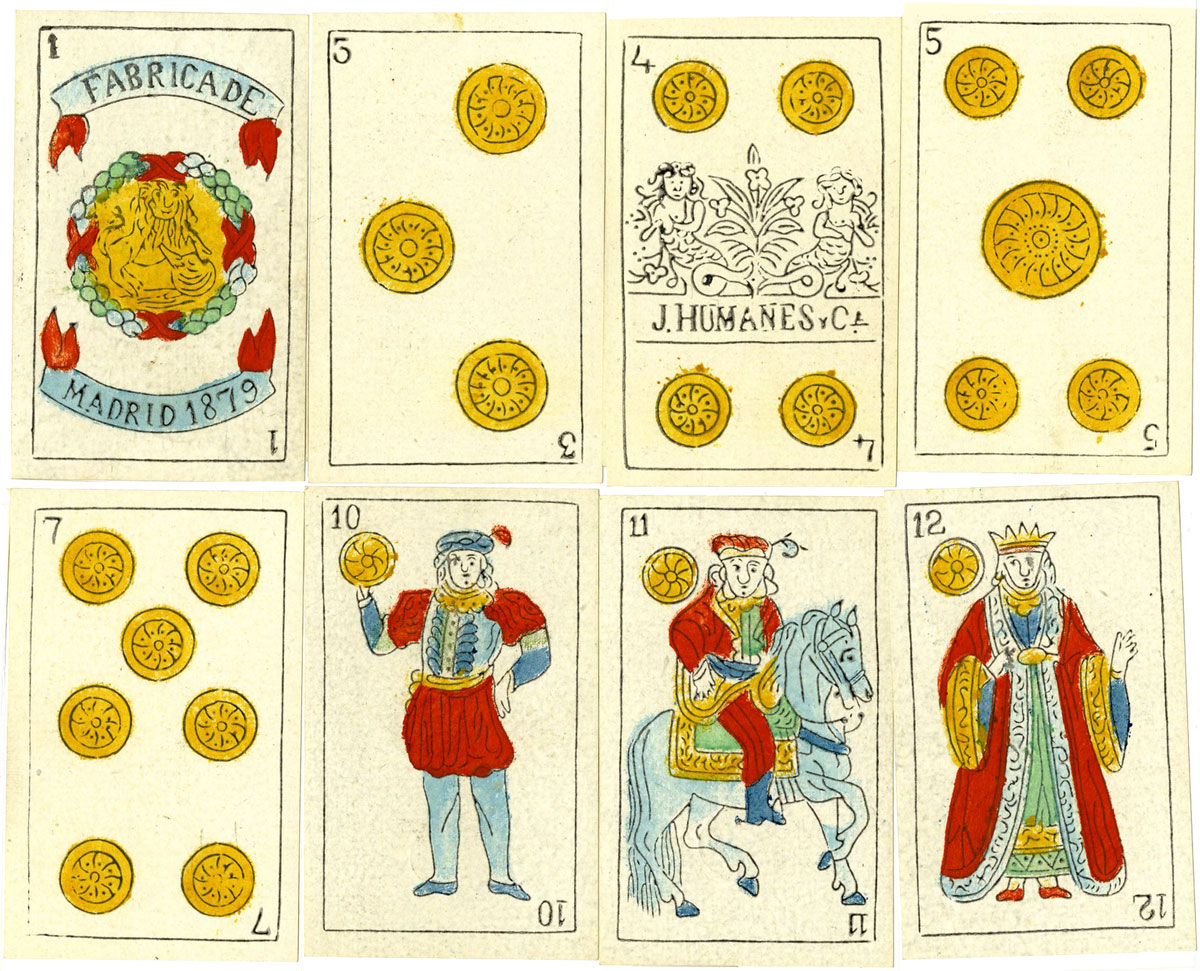
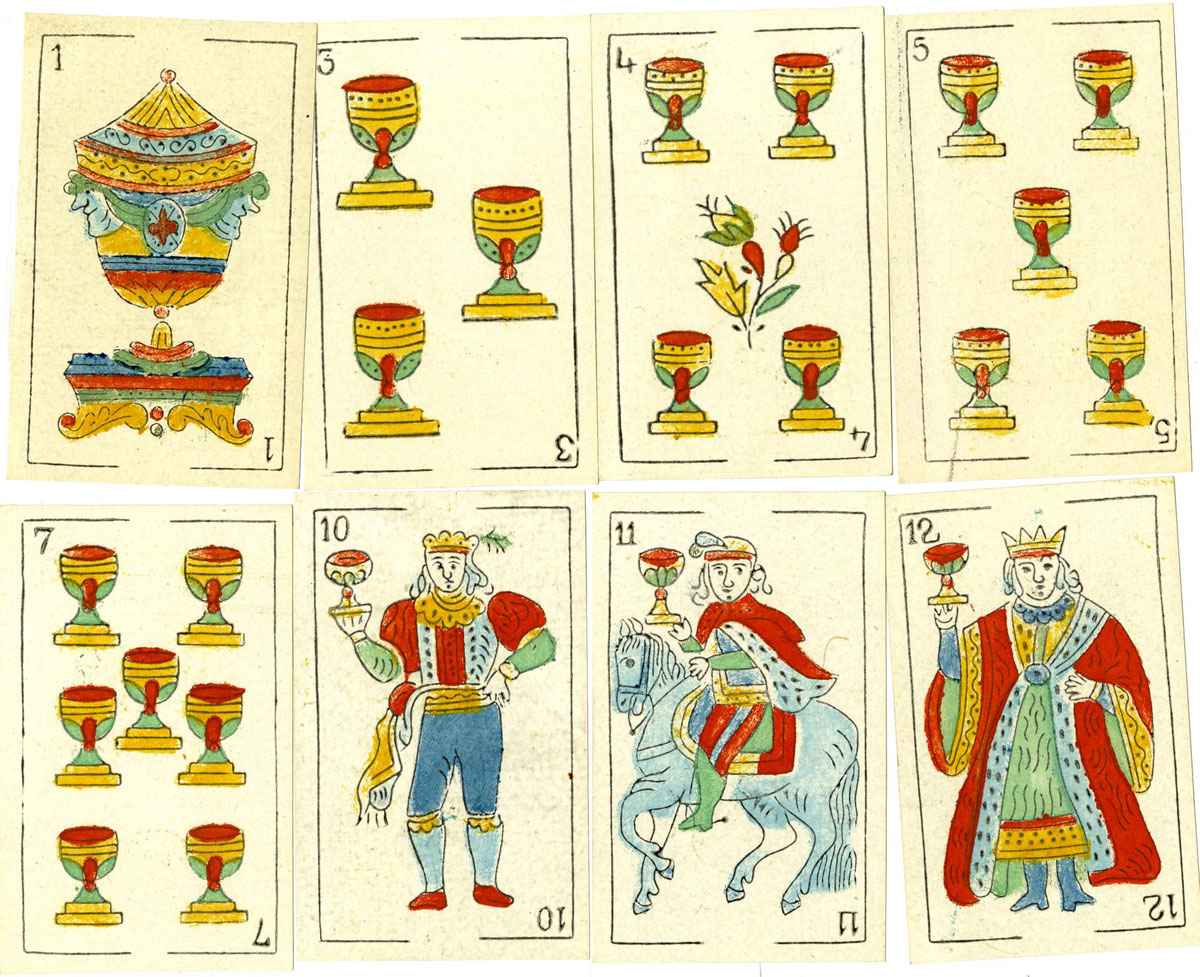
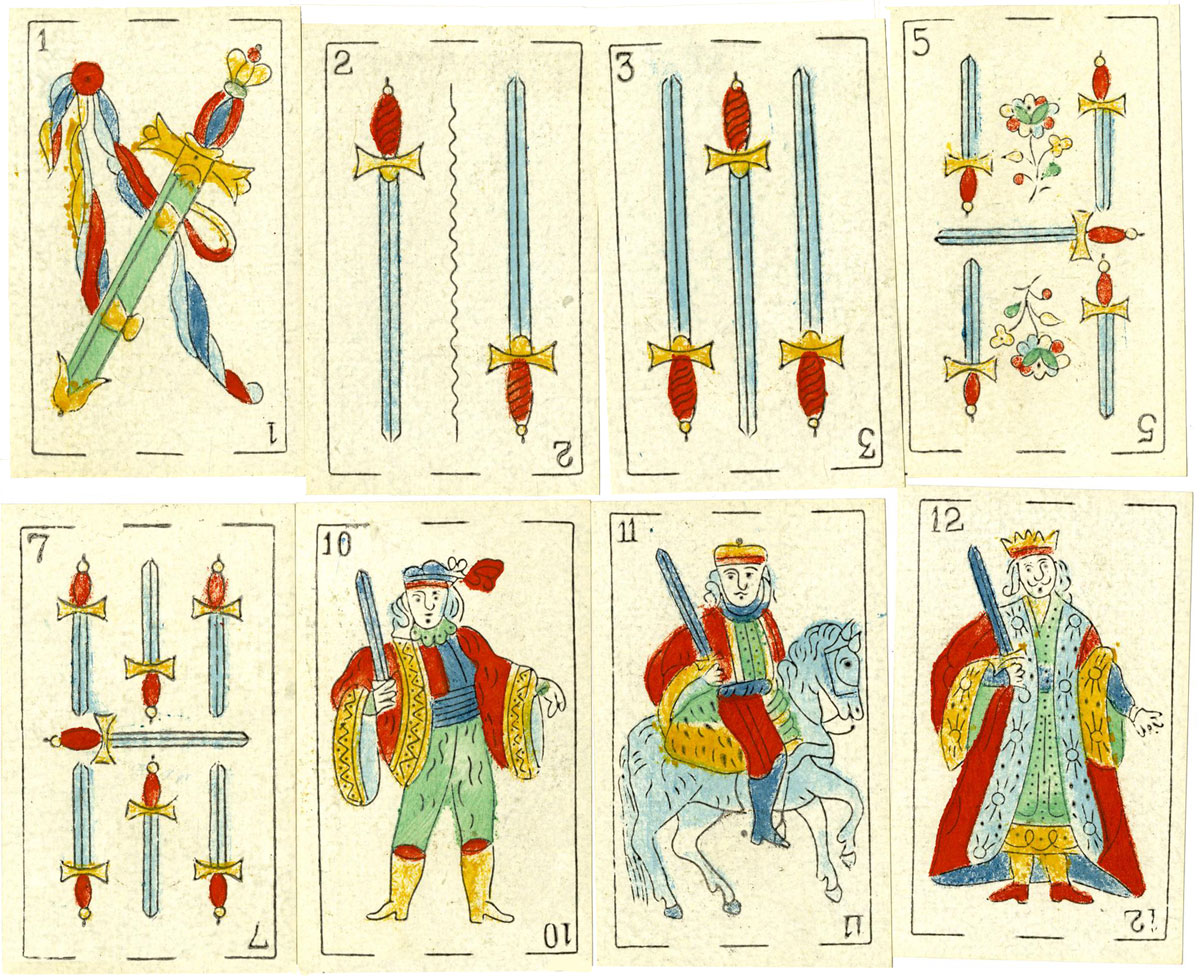
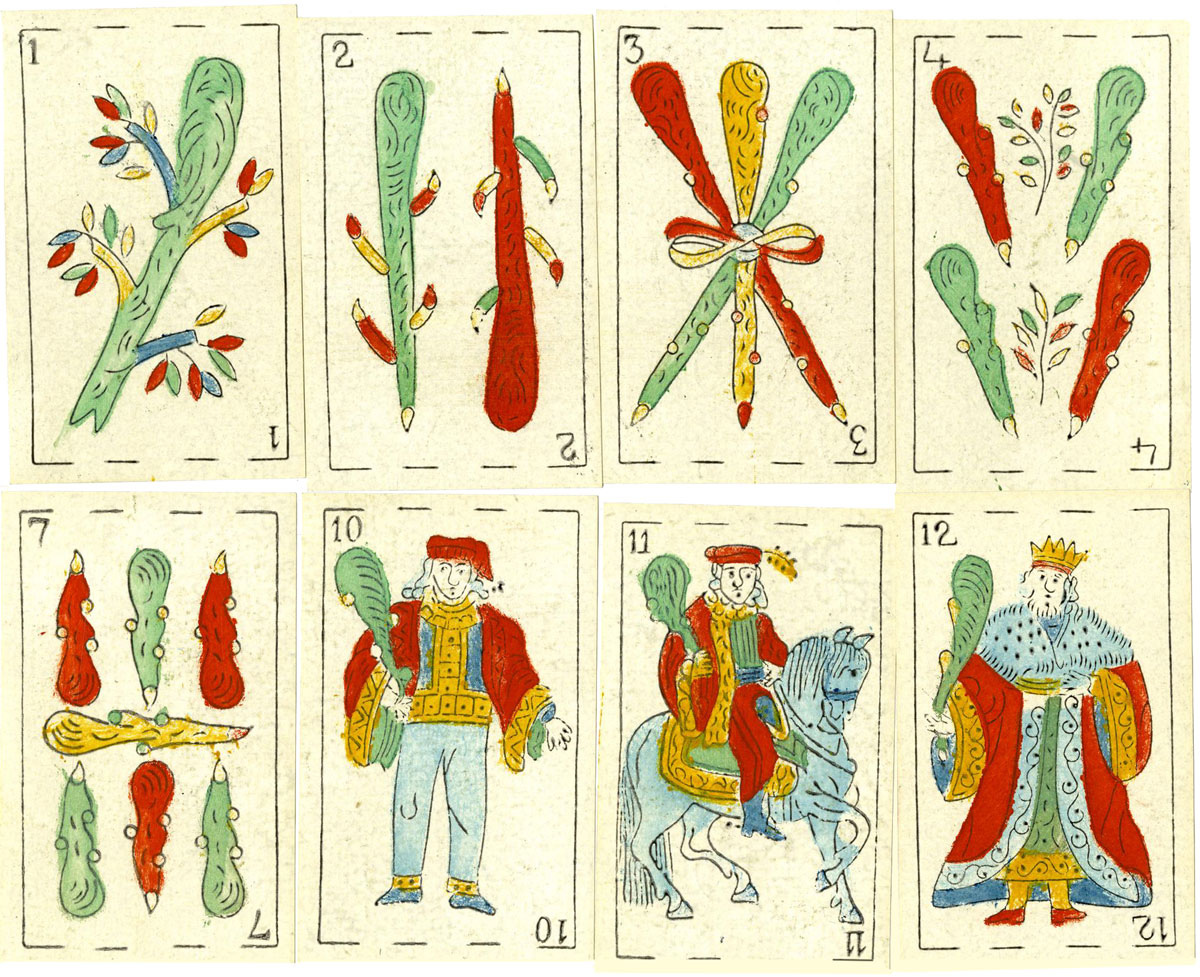
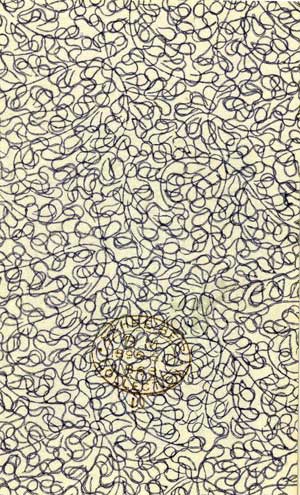
Above: Raimundo García pattern published by Juan Humanes y Cía, Madrid, 1879. 40 cards, hand-coloured woodcut or woodcut transferred and printed lithographically, backs printed in brown with a small pattern. © The Trustees of the British Museum • Museum number 1896,0501.868►

By Simon Wintle
Spain • Member since February 01, 1996
I am the founder of The World of Playing Cards (est. 1996), a website dedicated to the history, artistry and cultural significance of playing cards and tarot. Over the years I have researched various areas of the subject, acquired and traded collections and contributed as a committee member of the IPCS and graphics editor of The Playing-Card journal. Having lived in Chile, England, Wales, and now Spain, these experiences have shaped my work and passion for playing cards. Amongst my achievements is producing a limited-edition replica of a 17th-century English pack using woodblocks and stencils—a labour of love. Today, the World of Playing Cards is a global collaborative project, with my son Adam serving as the technical driving force behind its development. His innovative efforts have helped shape the site into the thriving hub it is today. You are warmly invited to become a contributor and share your enthusiasm.

Activity for Juan Humanes y Cía
Sign in to comment or save this article.

Related Articles
Most Popular
Our top articles from the past 60 days


