


Tô Tôm № 1204
Tô Tôm is played with a 120-card Chinese-style deck.
Tô Tôm № 1204 cards manufactured by A. Camoin & Cie, Marseille, for French colonies. Tô Tôm is played with a 120-card Chinese-style deck and is derived from the Chinese game of Khanhoo. The head and foot of each card gives the rank and suit in Chinese characters.
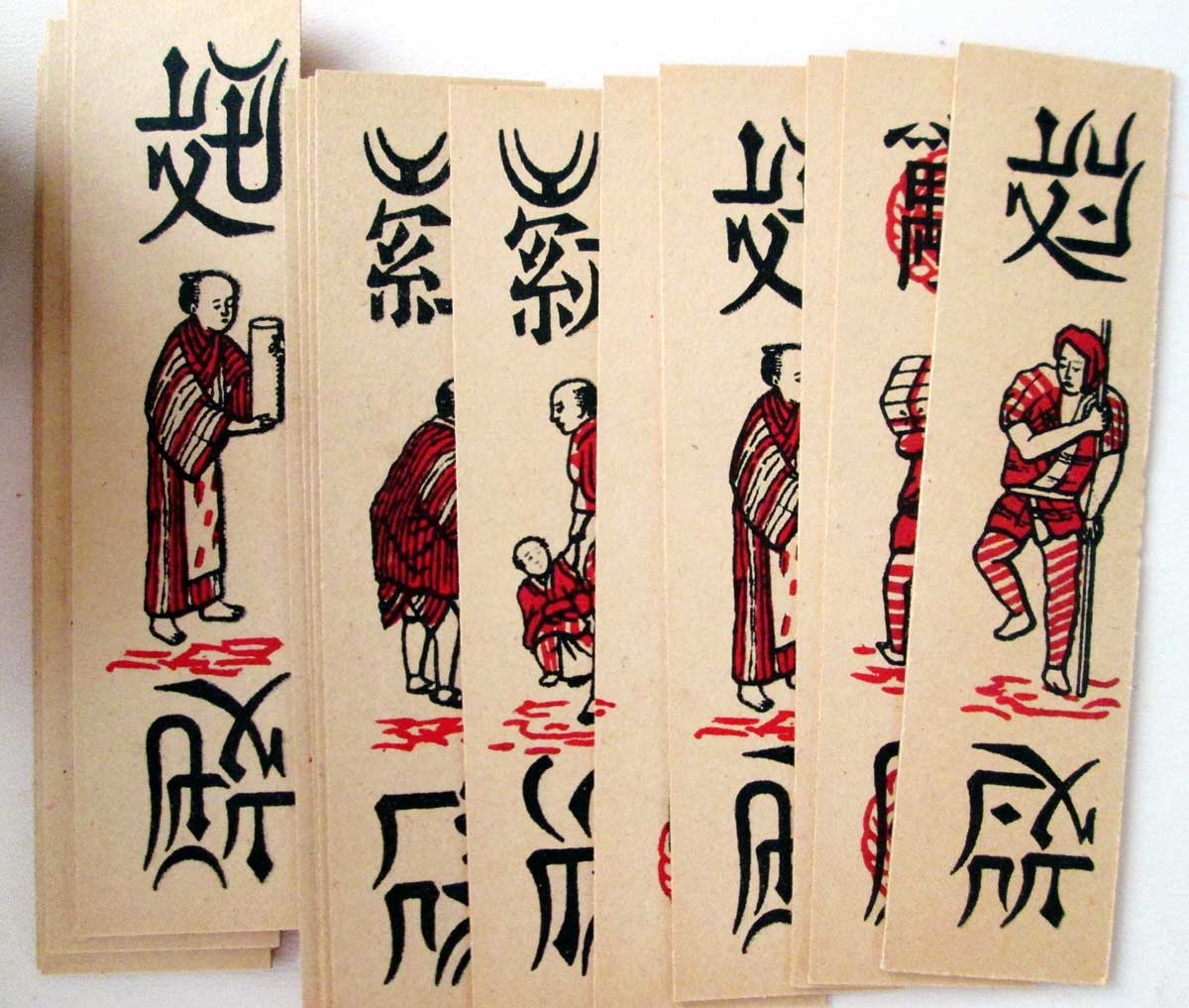

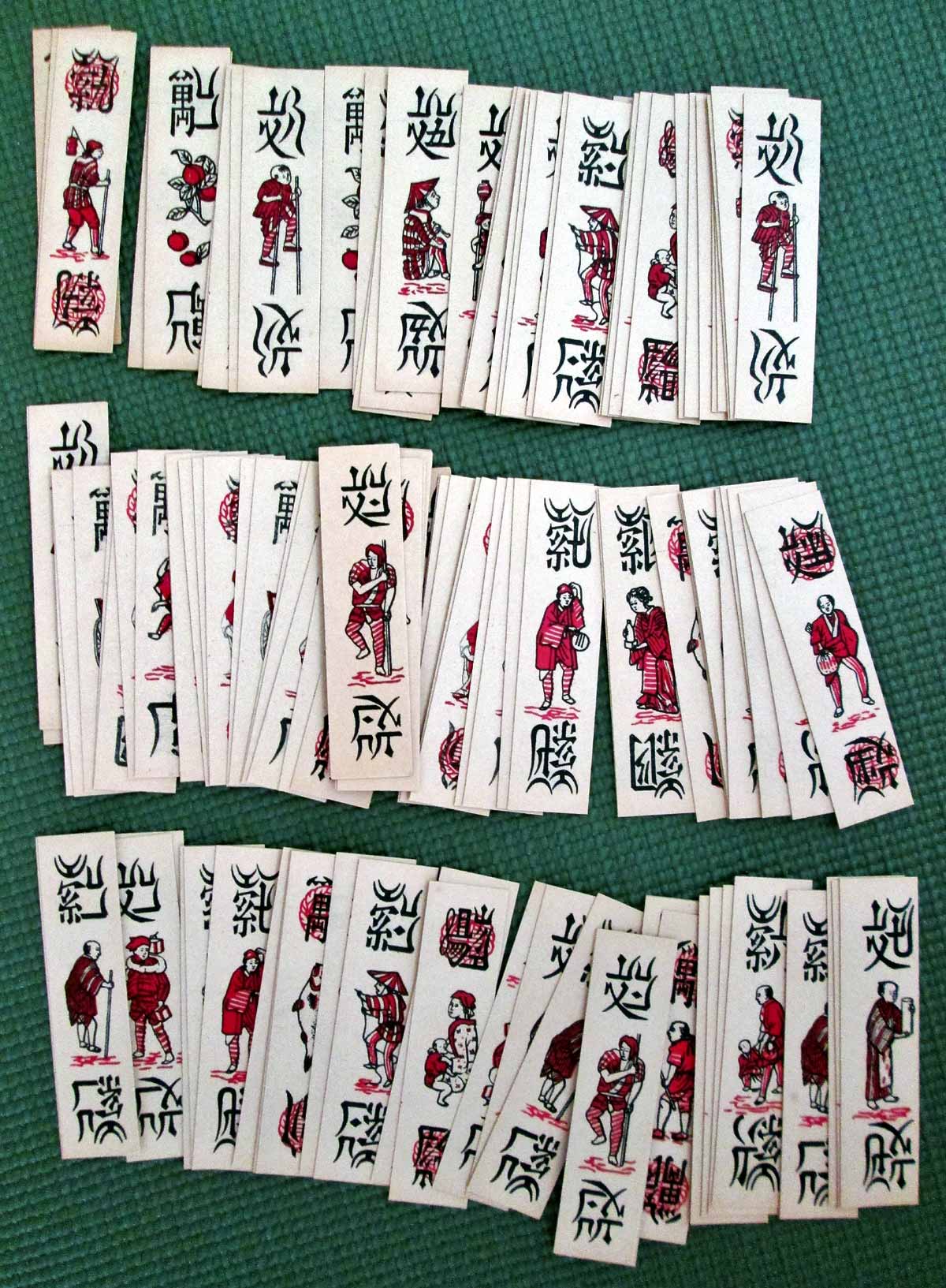
Above: Tô Tôm cards manufactured by A. Camoin & Cie, Marseille, c.1900. During French colonial rule, the Marseilles firm Camoin redesigned the deck to depict people wearing traditional Japanese costumes from the Edo period. Images courtesy Ruth Mancino.
One of the most intriguing aspects of Vietnamese Tô Tôm playing cards is their cultural heritage and unique design. These cards are part of Vietnam's traditional games and reflect a blend of Chinese and Japanese influences. Historically, Tô Tôm cards were popular among the upper class and were considered an elegant game requiring intelligence and strategy
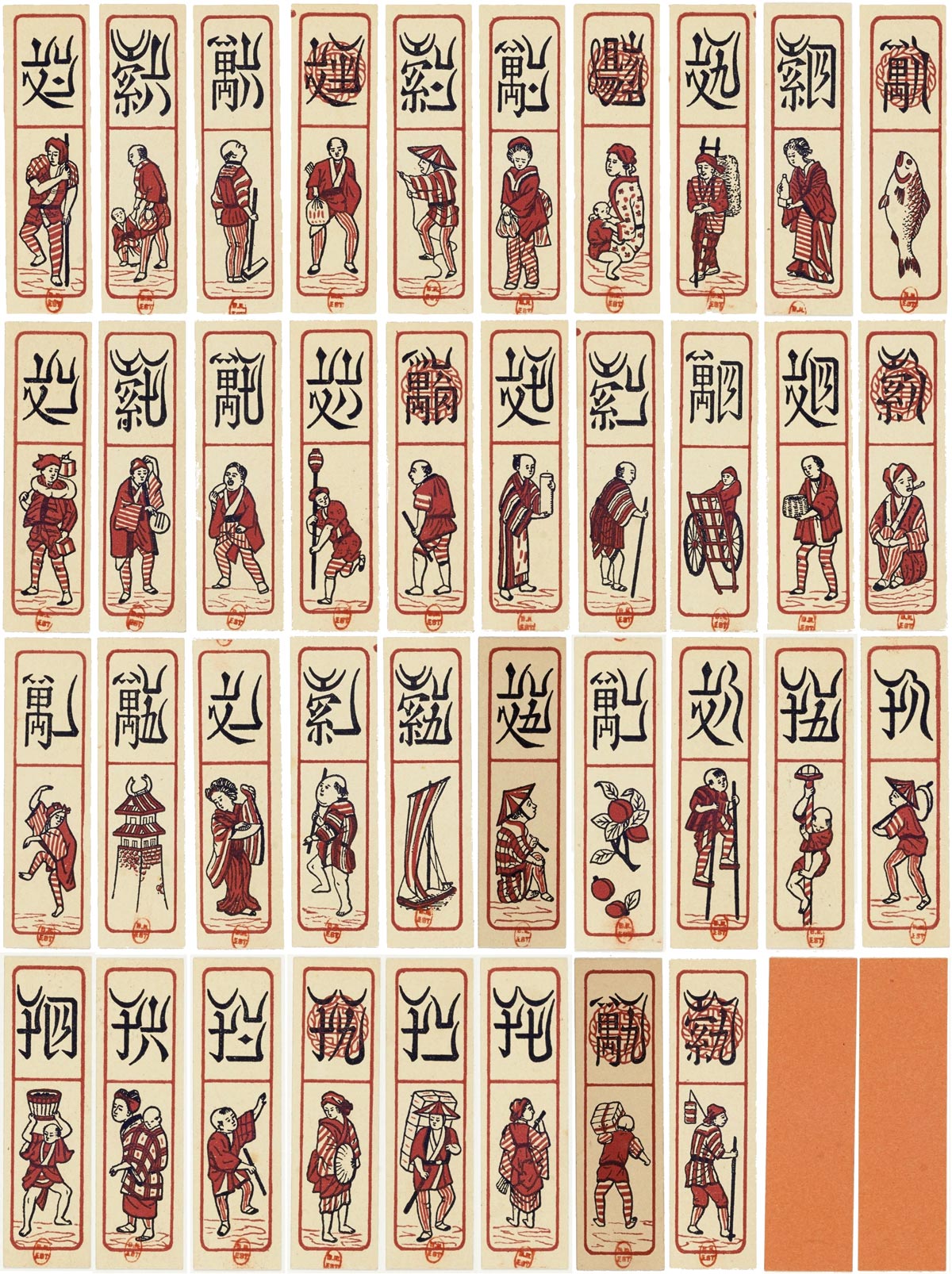
Above: Chinese card game used at Haï-Phong, manufactured by Camoin (Marseille) c.1870. Woodcut in red and black; 8.3 x 2.3 cm; orange backs. Source gallica.bnf.fr / Bibliothèque nationale de France • Jeu de cartes chinois employé à Haï-Phong►
Further References
Bibliothèque nationale de France: Jeu de cartes chinois employé à Haï-Phong►
Wikipedia: Tổ tôm►
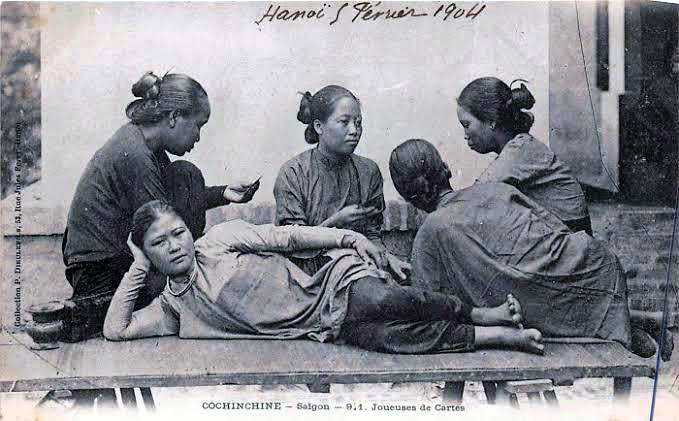
Above: Vietnamese card players, 1904.

Above: four youths playing cards, drawn by Nguyen Van Tru. © The Trustees of the British Museum

By Simon Wintle
Spain • Member since February 01, 1996
I am the founder of The World of Playing Cards (est. 1996), a website dedicated to the history, artistry and cultural significance of playing cards and tarot. Over the years I have researched various areas of the subject, acquired and traded collections and contributed as a committee member of the IPCS and graphics editor of The Playing-Card journal. Having lived in Chile, England, Wales, and now Spain, these experiences have shaped my work and passion for playing cards. Amongst my achievements is producing a limited-edition replica of a 17th-century English pack using woodblocks and stencils—a labour of love. Today, the World of Playing Cards is a global collaborative project, with my son Adam serving as the technical driving force behind its development. His innovative efforts have helped shape the site into the thriving hub it is today. You are warmly invited to become a contributor and share your enthusiasm.

Activity for Tô Tôm № 1204
Sign in to comment or save this article.

Related Articles
Hector de Trois
A 1963 facsimile of a seventeenth-century Portrait of Paris pack preserved by the Bibliothèque natio...

Quên Tarot
A mystical voyage of love and self-discovery created by Duy Khánh Võ.
Joseph Bardou & Fils cigarette papers
Delightful pack advertising Joseph Bardou & Fils cigarette papers for the Philippines.
A. Camoin & Cie
This deck was inherited from ancestors, it has has a family history surrounding it. Details of the l...
Far East
Far East playing cards with designs by Isabel Ibáñez de Sendadiano, c.1980.
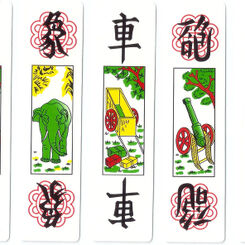
Tam Cúc 三菊
Tam Cúc playing cards from Vietnam (Việt Nam), based on Chinese chess, 2016
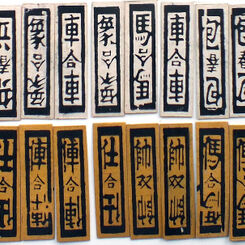
Four Colour Cards / 四色牌 / Si Sek Pai
Four Colour Cards made in Belgium for Far Eastern markets
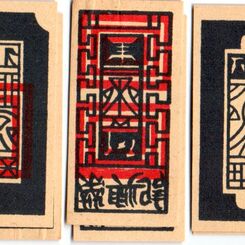
Chi Chi Pai
Chinese “Chi Chi Pai” Playing Cards by Mesmaekers Frères for Far East market.
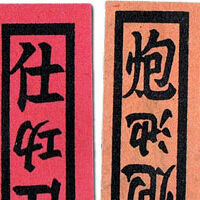
Hokkien Four Colour Cards
The characters on the cards are written one way for red and yellow, and another for green and white....
3: 20th/21st Century Variants including some from China
I expect most collectors ignore cards made in China for export. It's true that many are close copies...
Mahjongg
Mahjongg is usually played with tiles, which are Chinese playing cards made in solid form...
Double Elephant & Double Dragon
Double Elephant brand Four Colour cards
Playing Cards in Singapore
Playing Cards in Singapore, one of the Four Asian Tigers.
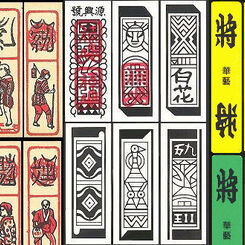
Regional Cards: South-Eastern Asia
Indonesia • Malaysia • Singapore • Thailand • Vietnam
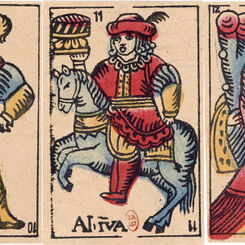
Moroccan pattern by Camoin & Cie.
Spanish Moroccan pattern by J.B. Camoin and A. Camoin & Cie, Casablanca & Marseille.
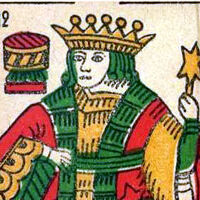
Algeria
Spanish suited playing cards produced by B. P. Grimaud (Paris) for Algeria.
Most Popular
Our top articles from the past 60 days


Simon Wintle
27 February 2026, 13:08Hello Zak, thanks for sharing these images. They look very similar to the ones documented on the following page:
https://www.wopc.co.uk/vietnam/t%C3%B4-t%C3%B4m