


History of Blackjack
Over the years the origin of Blackjack, like many other games, has eluded researchers for a long time and which continues to be hotly debated to this day.
 ver the years the origin of Blackjack, like many other games, has eluded researchers for a long time and which continues to be hotly debated to this day. Till date there has been no clear consensus, but most agree it probably originated in French casinos around 1700, where it was called Vingt-et-Un which, translated, means twenty-one. Most believe it was probably derived from the French card games, Chemin de Fer, and French Ferme, which were in vogue at that time.
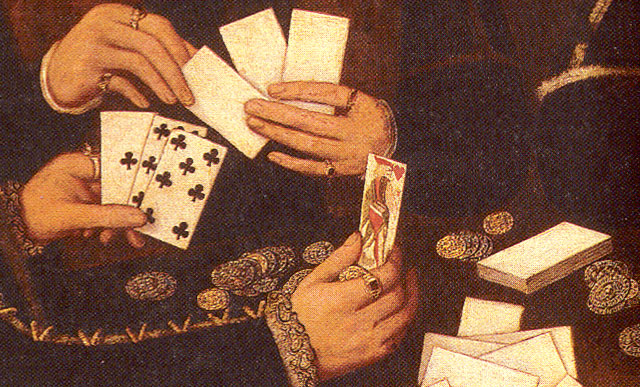
Another of its version was prevalent in Spain, which was called 'One and Thirty'. The basic rule of the Spanish version was to reach 31 with a minimum of three cards.
A theory that’s also doing the rounds is that Blackjack was an invention by the Romans. It is believed that Romans used to play this game with wooden blocks of different numerical values. This theory holds some weight as Romans loved gambling, but that by no means confirms the theory.
Among the various versions of the game, 'Vingt-et-Un’ or ‘21’ continued to grow in popularity and reach. It gradually spread to North America thanks to French colonists and soon after it was played throughout the continent. The rules of Blackjack were then different from those of modern or contemporary Blackjack. Just to elaborate, in this form of Blackjack, only the dealer was permitted to double. Also, a betting round was there between each of the playing cards dealt.
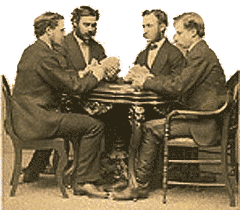 The game was still termed ‘21’ when it gained popularity in Nevada in 1931 as the State first chose to make gambling legal. To draw more people to the game, some casinos then offered a special bet: A hand featuring either of the black jacks (the Jack of Spades or that of Clubs) plus the Ace of Spades would pay 10-to-1 odds on the lucky player’s bet. Although casinos later discontinued this peculiar payout, the name ‘blackjack’ or ‘black jack’ remained, as the game is known today.
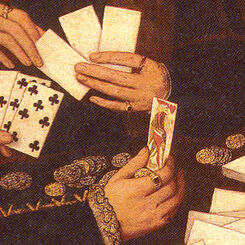
Five of Clubs: “Watson’s card”. The name has nothing to do with Sherlock Holmes but refers to a famous gambler who is supposed to have won £10,000 at Faro through his wager in connection with this card.
Blackjack was not conceived by any one person at one definite point of time. On the contrary, blackjack has evolved over centuries; it continues to evolve and grow even today, thanks to the Internet. Fuelling its popularity the online casino industry has developed various versions of the game which has truly revolutionized it.
Now a few reputed casino operators have started an innovative and far more enjoyable concept of this game: live blackjack game with real dealers. Live Blackjack is the most advanced way to play your favourite casino game right in the comfort of your home, without having to go a long way to a field-based casino.
Sources:

By Simon Wintle
Spain • Member since February 01, 1996
I am the founder of The World of Playing Cards (est. 1996), a website dedicated to the history, artistry and cultural significance of playing cards and tarot. Over the years I have researched various areas of the subject, acquired and traded collections and contributed as a committee member of the IPCS and graphics editor of The Playing-Card journal. Having lived in Chile, England, Wales, and now Spain, these experiences have shaped my work and passion for playing cards. Amongst my achievements is producing a limited-edition replica of a 17th-century English pack using woodblocks and stencils—a labour of love. Today, the World of Playing Cards is a global collaborative project, with my son Adam serving as the technical driving force behind its development. His innovative efforts have helped shape the site into the thriving hub it is today. You are warmly invited to become a contributor and share your enthusiasm.

Activity for History of Blackjack
Sign in to comment or save this article.

Related Articles
The archaic “Classic Madrid” Pattern
Centralisation, standardisation and consolidation of the Spanish card tradition.
La baraja de Almagro
De la chimenea al monumento nacional: la baraja de Almagro y el renacer del corral de comedias.
Ganjifa - Playing Cards from India
Indian playing cards, known as Ganjifa, feature intricate designs with twelve suits and are traditio...
Sevilla 1647 reproduction
Facsimile of Spanish-suited pack produced in Sevilla, Spain, 1647.
Early German playing cards
Some early examples of popular German playing cards from the XV and XVI centuries.
73: Fakes, forgeries and Tax Evasion
When there are official taxes to pay, people will find a way to avoid paying them - often illegally....
Playing Cards: A Secret History
Playing Cards: A Secret History
History of Playing Cards explained in 5 Minutes
Video by Art of Impossible. In this video you will get a short overview of the most important histor...
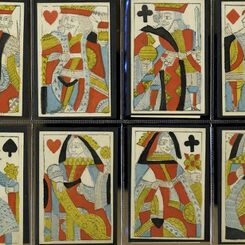
70: Woodblock and stencil : the spade courts
This is a presentation in a more straight forward fashion of the work done by Paul Bostock and me in...
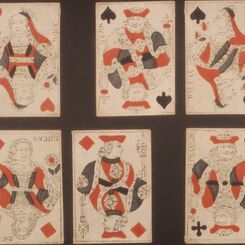
64: The descendants of the French regional patterns: 2
A continuation oF the development of the off-spring of the Paris patterns and a few examples of how ...
Trentine Pattern
Trentine Pattern
Cribbage Board Collection part 2
A collection of antique and vintage Cribbage Boards by Tony Hall, part 2
Malta
The so-called ‘Dragon Cards’, with winged monsters on the four Aces, are an enigmatic aspect of earl...
19: 19th Century Breaks with Tradition - Unusual versions of the Standard English Pattern
The centuries-long tradition of English court cards was subject to misinterpretation and in some cas...
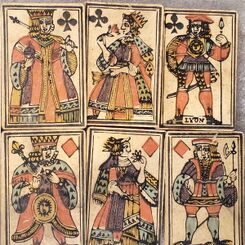
Lyon Pattern type iii
This pattern was used in various parts of eastern France but was ultimately replaced by the official...
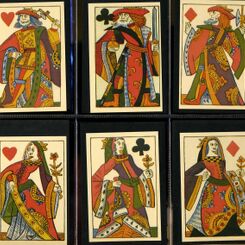
1: Playing Cards and their History: An Introduction and some links to other sites
What was considered the first mention of playing cards in England is in 1463 when Edward I banned th...
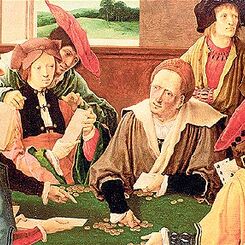
Netherlands
Playing cards have been known in the Low Countries since the 14th century
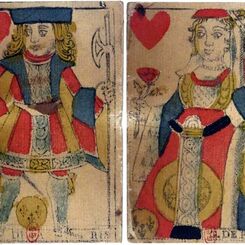
Paris Pattern
The Paris pattern was established as such around the middle of the seventeenth century (based, perha...
Italian Playing Cards
The first reliable evidence that playing cards were being used in Italy is from 1376, when a game ca...
History of English Playing Cards & Games
The History of English Playing Cards dates probably from the mid 15th century
Most Popular
Our top articles from the past 60 days


