


Playing cards from Finland
Playing cards from Finland: a tradition shaped by Swedish and Russian rule.

Above: fantasy double-ended cards printed by Weilin & Göös, Helsinki, late 19th/early 20th-century. Bibliothèque nationale de France.
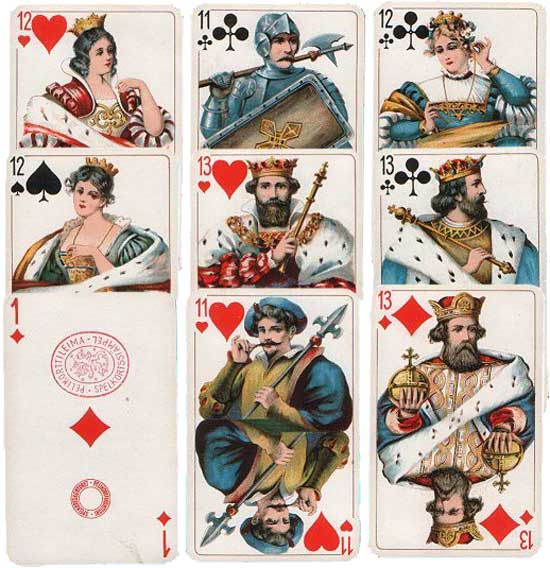
Above: non-standard Lyxspelkort playing cards for Finland, c.1930s, chromolithography by F. Tilgmann.
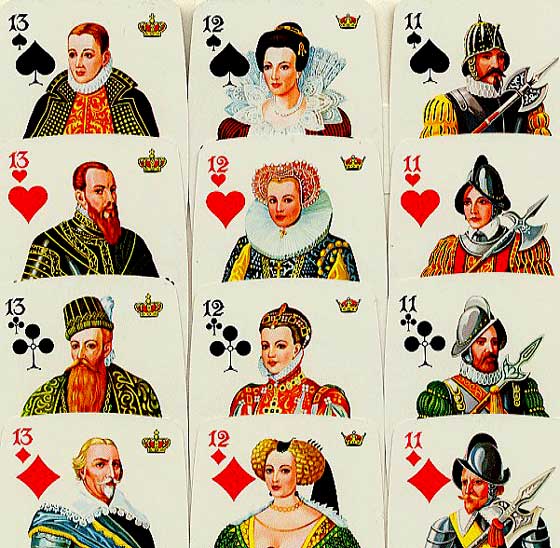
Above: Turun Linna Playing Cards, made in Finland, c.1960. The court cards feature people from Finnish history. Later editions were made by Piatnik for Finland. The cards are barrel-shaped, 52 cards + 2 jokers. The backs show Turku castle, one of the largest surviving medieval buildings in Finland.
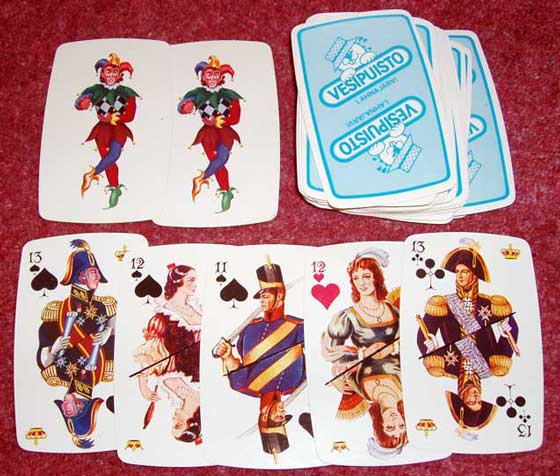
Above: deck depicting Napoleonic characters on the court cards. Reverse: blue/white advert for Vesipuisto Lahnajärvi. 52 barrel-shaped + 2 jokers + blank card.
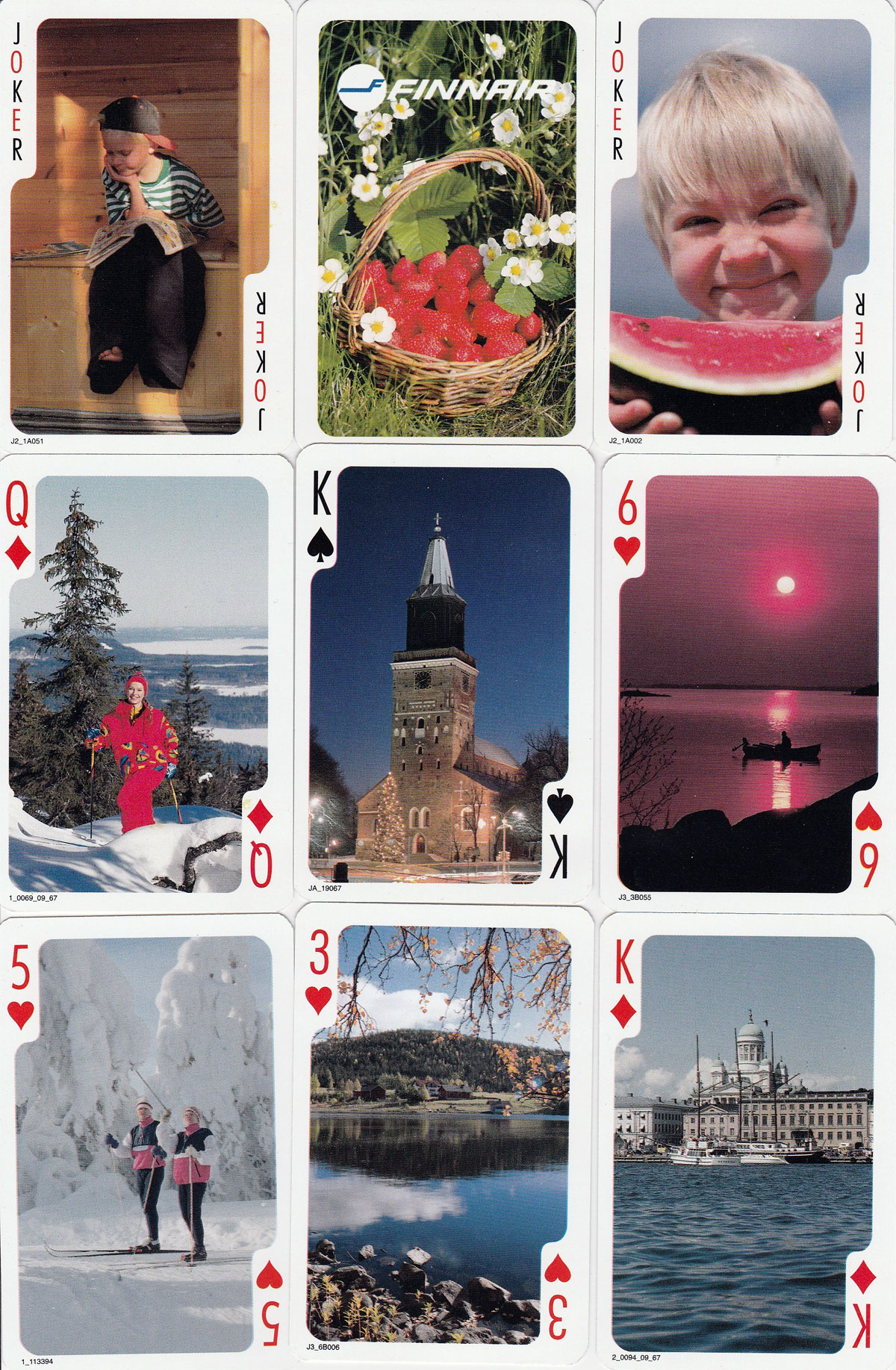
Above: Finnair souvenir playing cards made by Tactic.
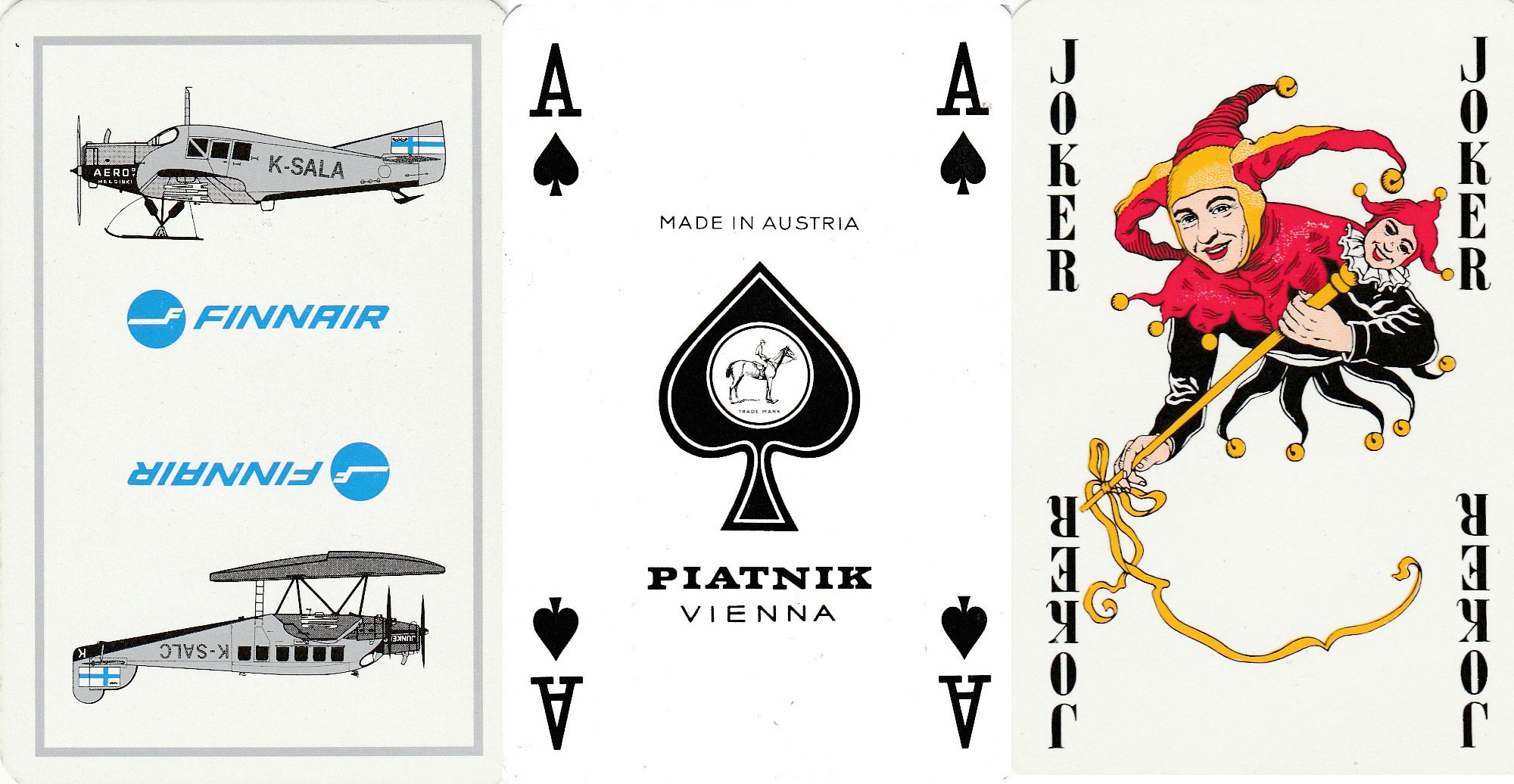
Above: Finnair playing cards by Piatnik.
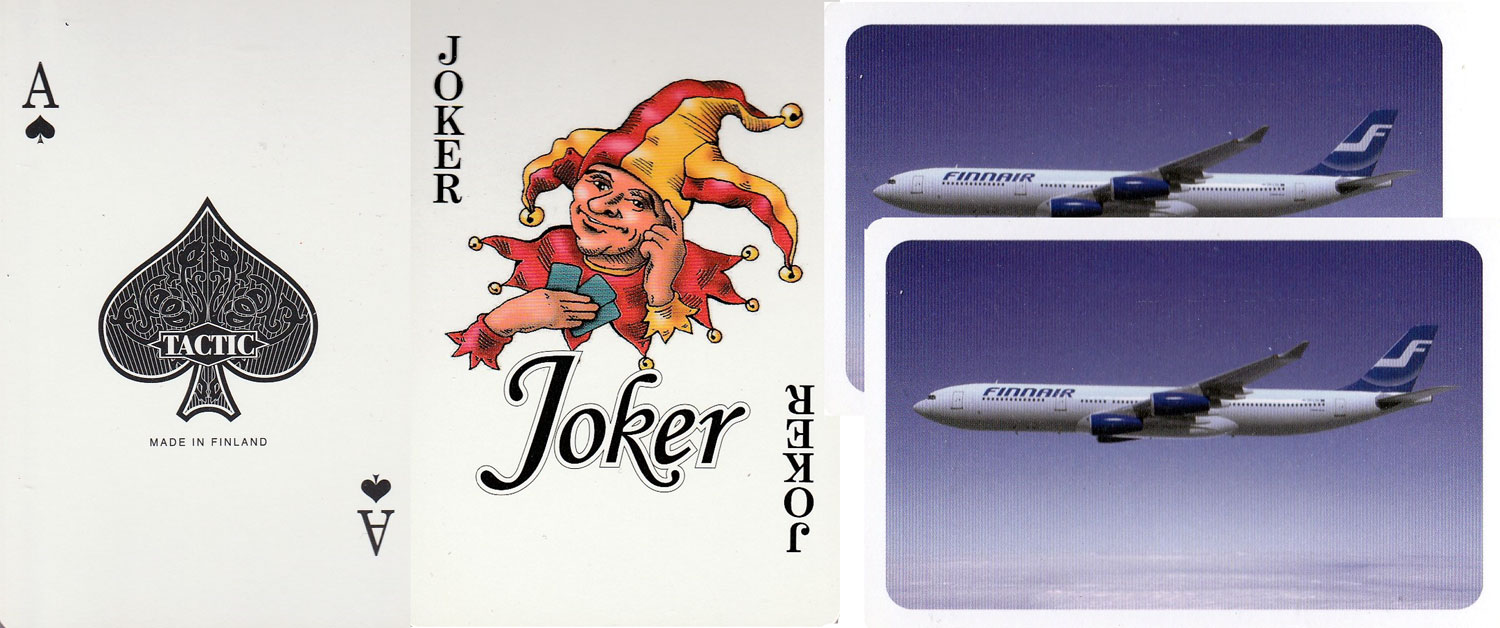
Above: Finnair playing cards by Tactic.
Playing cards arrived in Finland during the centuries when the country formed part of the Kingdom of Sweden, and early Finnish packs naturally followed Swedish traditions. After Finland became an autonomous Grand Duchy within the Russian Empire in 1809, Swedish remained an official administrative language alongside the growing use of Finnish. Consequently, many Finnish playing cards and their wrappers are bilingual, reflecting the country's dual linguistic heritage rather than foreign manufacture. Finland declared independence in 1917, but the influence of earlier Swedish and Russian administrations continued to be reflected in official terminology and taxation.
During the nineteenth century, Finnish players had access to both imported and locally produced cards. Packs arrived from Sweden, Germany and Russia, while Finnish printers gradually established their own production. Despite Finland's political union with Russia, Finnish playing cards generally followed Swedish and Central European rather than Russian artistic traditions.

Above: Pergament Spelkort wrapper by F. Tilgmann, Helsinki in Art Nouveau (Jugendstil) style. The image of a stylish modern woman reflects commercial graphic design around 1900–1915. The wrapper also reflects Finland's bilingual commercial culture at the time, when Swedish remained the dominant language of many established businesses despite the country's growing Finnish national identity. Bibliothèque nationale de France.
A pricelist by G. O. Wasenius of Helsinki from the 1850s includes ‘fine, engraved’ playing cards and ‘seconds’ for half the price, indicating that playing cards were already an established commercial product in mid-nineteenth-century Finland, almost certainly imported as well as available from local suppliers.
Finnish packs generally employ the international French-suited pattern. The most common court indices are the numerals 13, 12 and 11 for King, Queen and Jack respectively, although some packs use the initials K, R and D (Kuningas, Rouva, Poika/Dam depending on language), or K, D and S, reflecting Finnish and Swedish linguistic conventions.
Traditional ‘Happy Families’ card games like Pekka-Peli have been played by Finnish children for decades. A new culturally aware version of this traditional card game, called ‘Reshuffle’, has recently been created by Reetta Hiltunen.
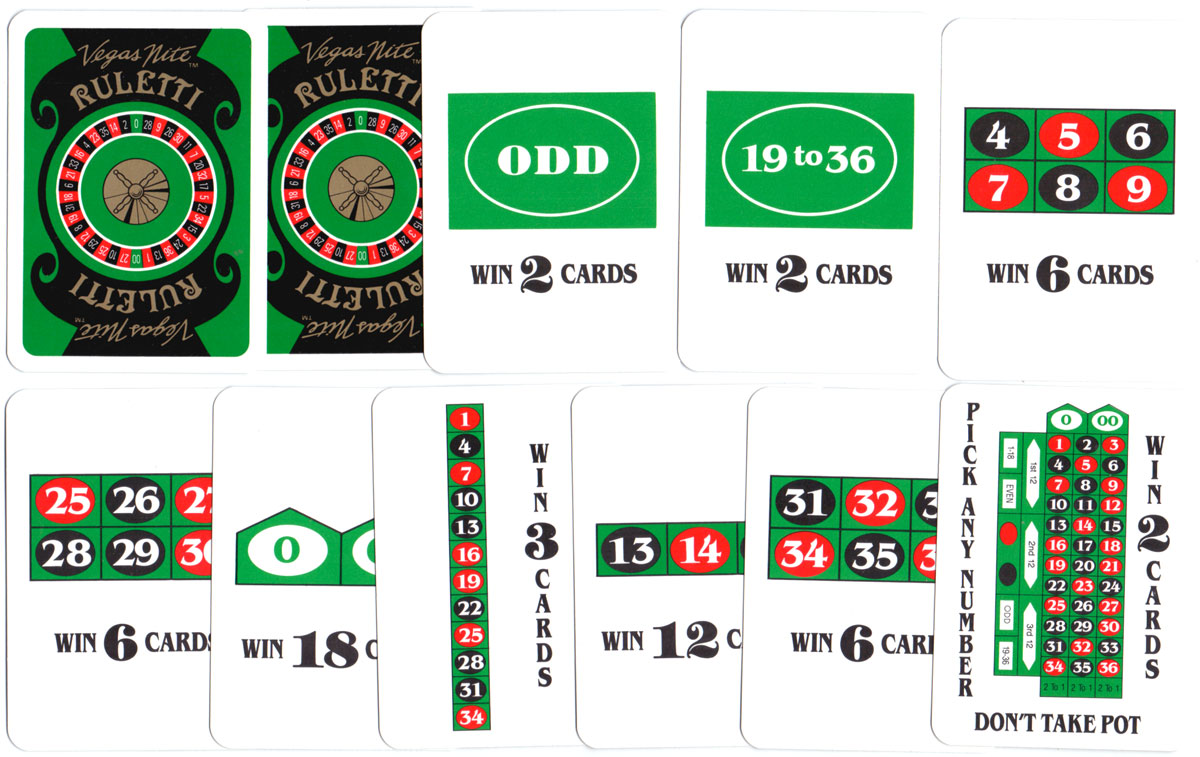
See also: Vegas Nite Roulette
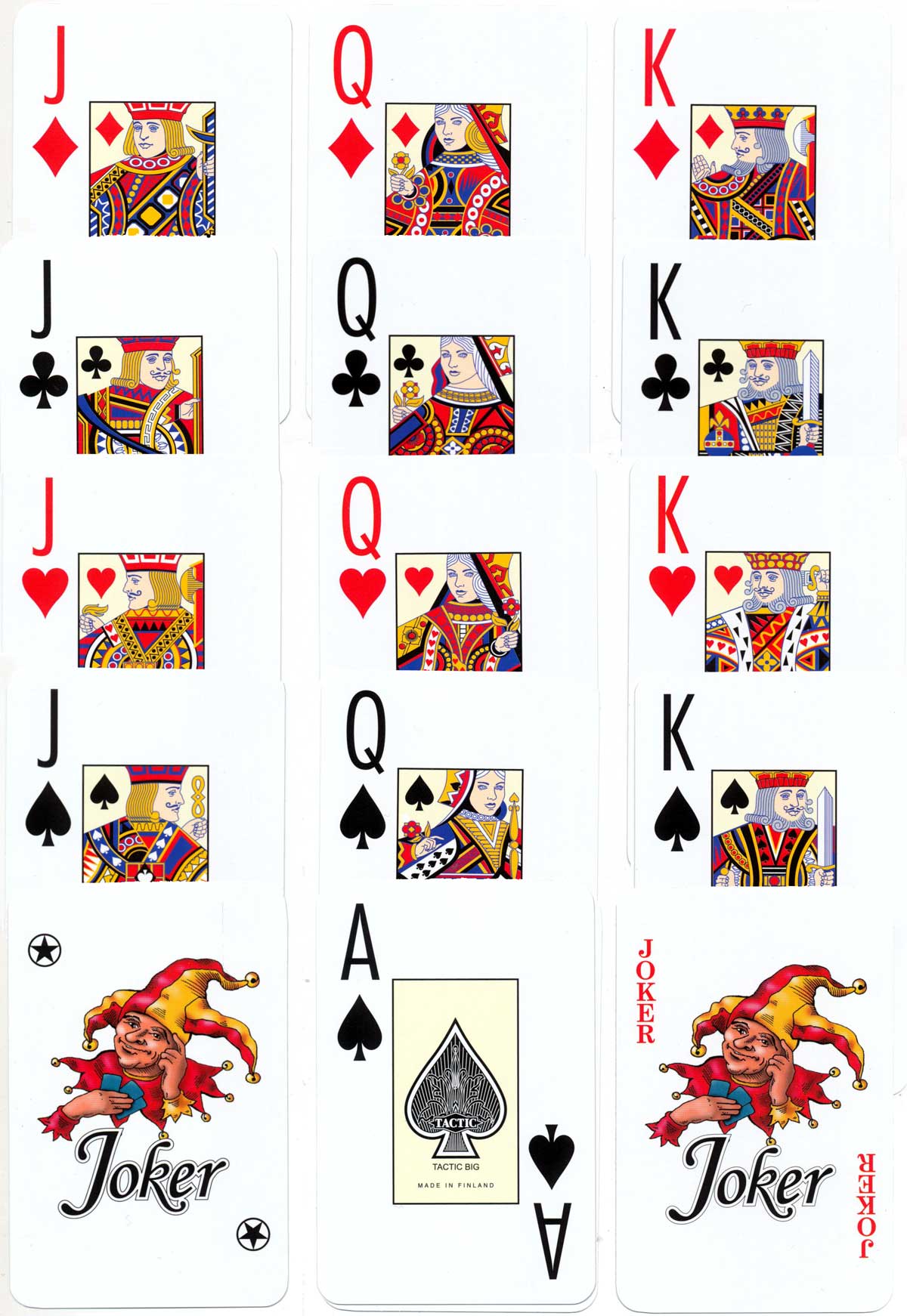
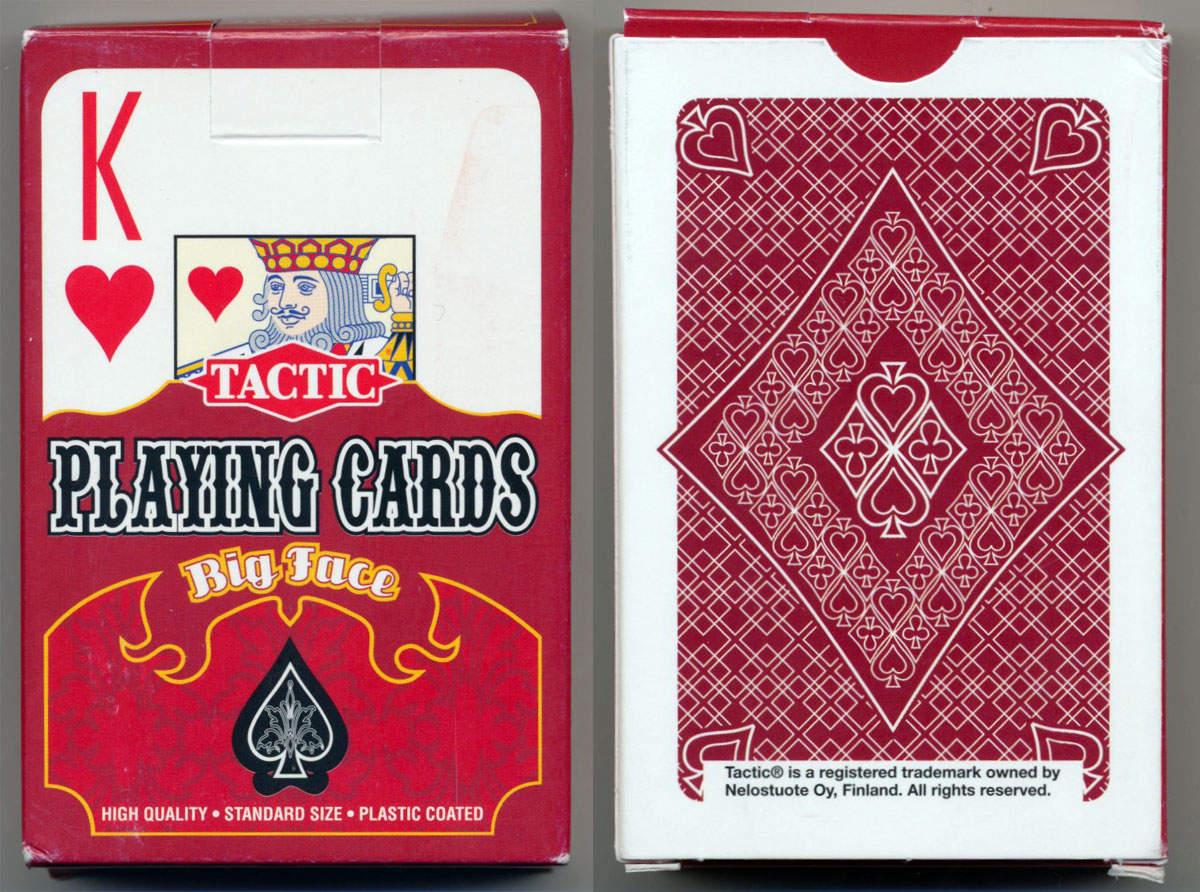
Above: “Big Face” playing cards by Tactic, Finland, 2015. The box text is all in English, as are the indices on the court cards (K,Q,J) and Aces (A). Images courtesy Matt Probert.
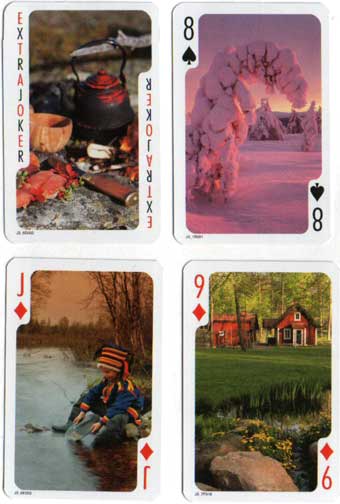
Above: Finland souvenir playing cards by Tactic.
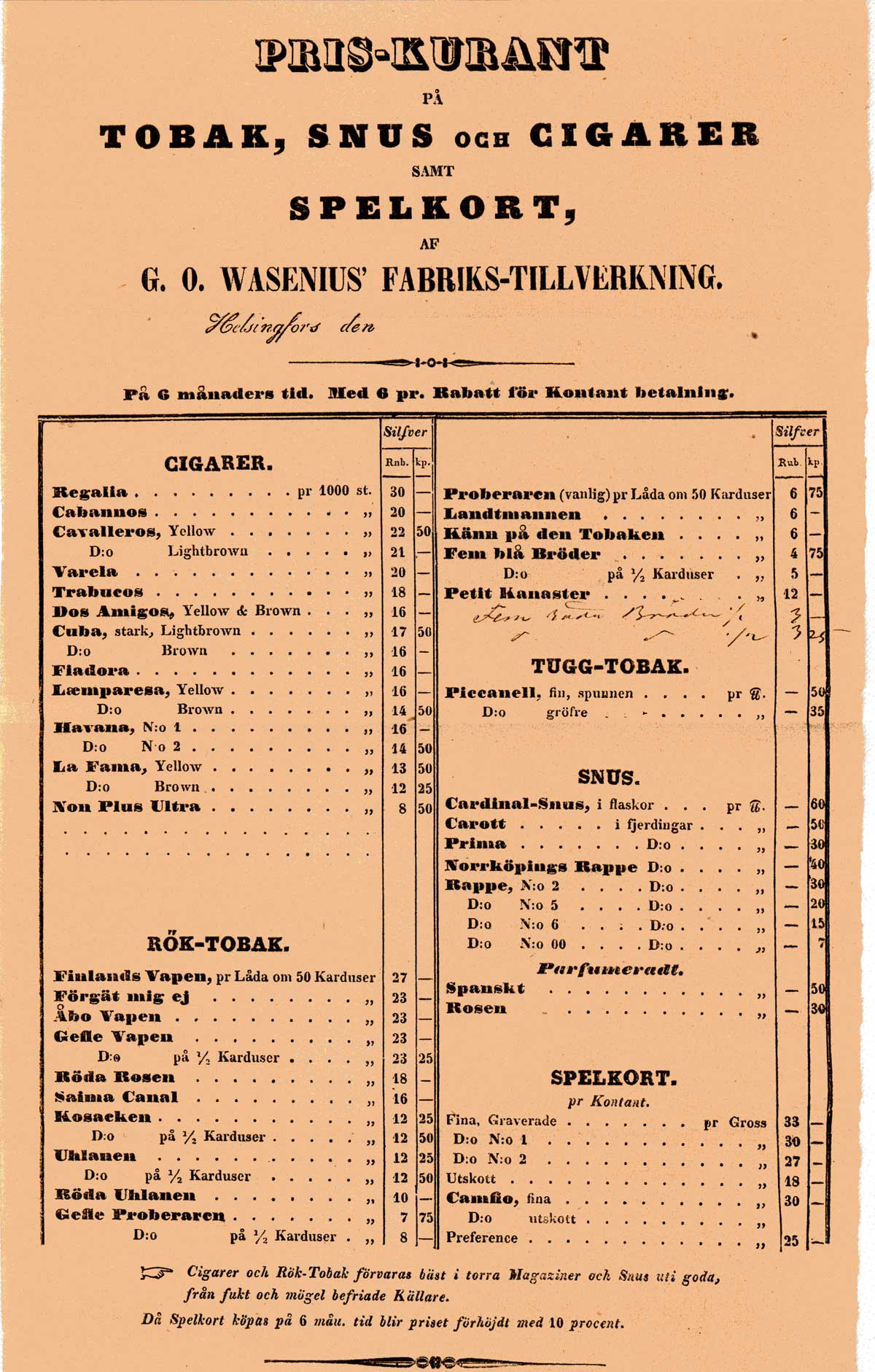
Above: pricelist by G. O. Wasenius of Helsinki, c.1850. Image courtesy Jukka Kettunen.
NOTE: thanks to Jukka Kettunen for contributing Wasenius pricelist and images of Finnair & Finland souvenir decks.

By Simon Wintle
Spain • Member since February 01, 1996
I am the founder of The World of Playing Cards (est. 1996), a website dedicated to the history, artistry and cultural significance of playing cards and tarot. Over the years I have researched various areas of the subject, acquired and traded collections and contributed as a committee member of the IPCS and graphics editor of The Playing-Card journal. Having lived in Chile, England, Wales, and now Spain, these experiences have shaped my work and passion for playing cards. Amongst my achievements is producing a limited-edition replica of a 17th-century English pack using woodblocks and stencils—a labour of love. Today, the World of Playing Cards is a global collaborative project, with my son Adam serving as the technical driving force behind its development. His innovative efforts have helped shape the site into the thriving hub it is today. You are warmly invited to become a contributor and share your enthusiasm.

Activity for Playing cards from Finland
Sign in to comment or save this article.

Related Articles
Kalevala
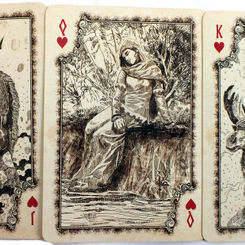
Kalevala playing cards by Sunish Chabba and Ishan Trivedi inspired by ancient Finnish mythology.
World Tour
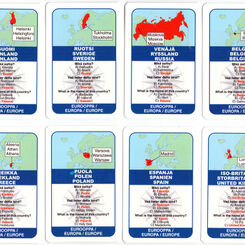
World Tour Quiz Game published by Tactic Group for Finnair involves recognising flags from different...
VR-VISA
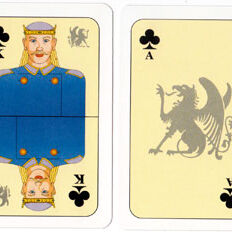
VR-VISA playing cards published by VR Group, the state-owned railway company in Finland.
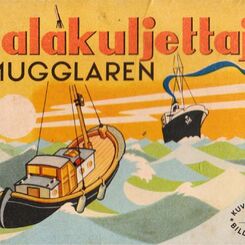
Salakuljettaja Smugglaren
Salakuljettaja Smugglaren is the Scandinavian version of Pepys’ “Contraband” published by Förlag Bil...
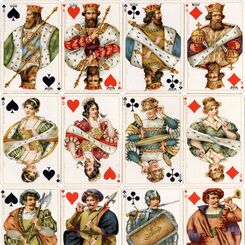
Luxuskarte No.75
Stylistically, the deck fits easily into the Dondorf “luxury card” group. The deck has been produced...
Most Popular
Our top articles from the past 60 days


Kari elkelä
21 September 2024, 18:26Finnish playing cards have quite long history. The first playing card factory was founded in the late 18th century. I have a collection of 400 packs which are mainly Finnish. I'm writing a book about our children cards.