


Jeu Révolutionnaire
Court cards and aces from a French Revolutionary pack by Pinaut, Paris, c.1794.
The political motivation behind the French Revolutionary playing cards was to break with the past regime and promote the ideals of the new republic: liberty, equality, and fraternity. The court cards were re-designed as a form of propaganda to show that henceforth society would be governed by natural laws and not by the whims of a monarchical hierarchy and aristocracy. In this pack, the four kings are replaced by elements and classical deities, queens by the seasons and classical deities, the jacks by gardeners or farmers and the aces show floral wreaths. An inscription "Pinau, to the Father" can be discerned on the jack of spades, who is depicted as a gardener with a watering can and spade. This type of Revolutionary deck is sometimes called "ESC" for Elements, Seasons, and Farmers (Cultivateurs) as opposed to other formats such as SVB III►
The cards have no corner indices and the backs were plain. In this instance they were re-used for a secondary purpose as hand-written library reference cards.
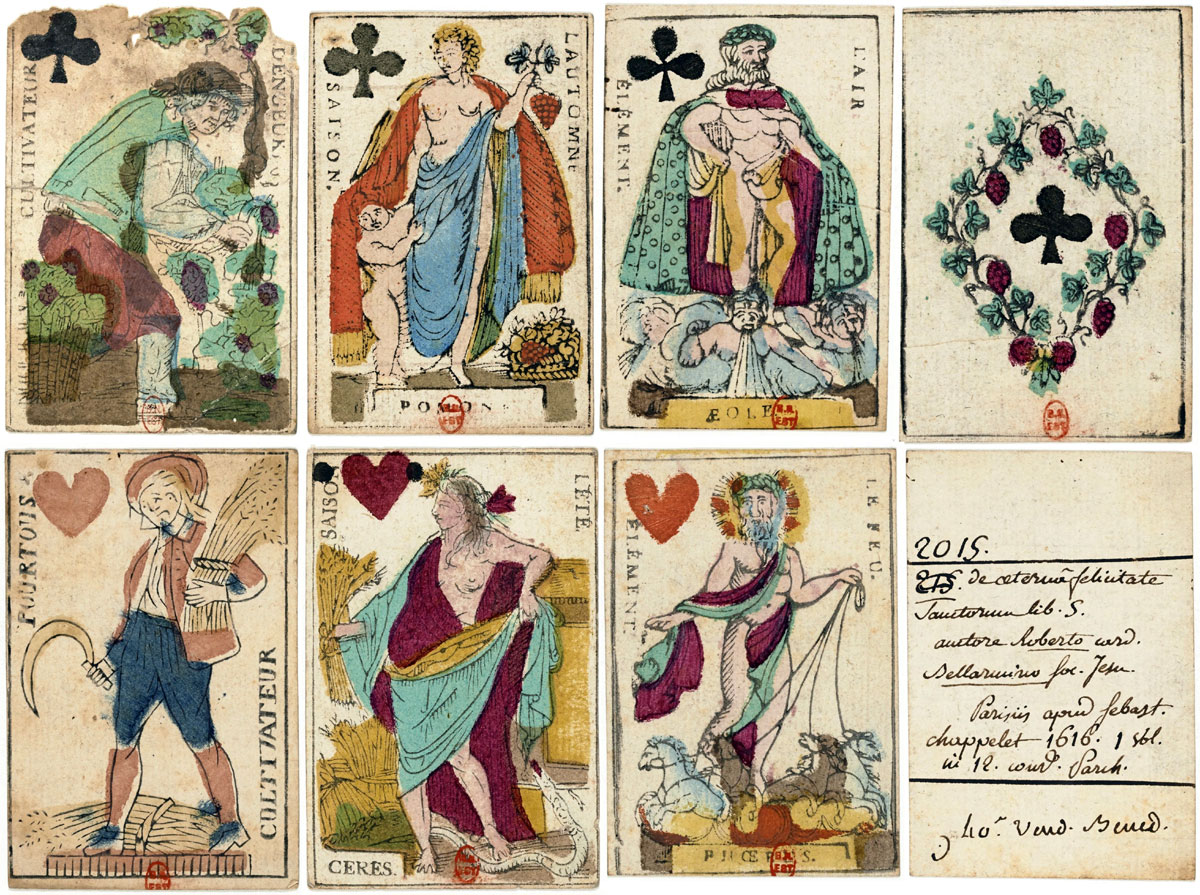
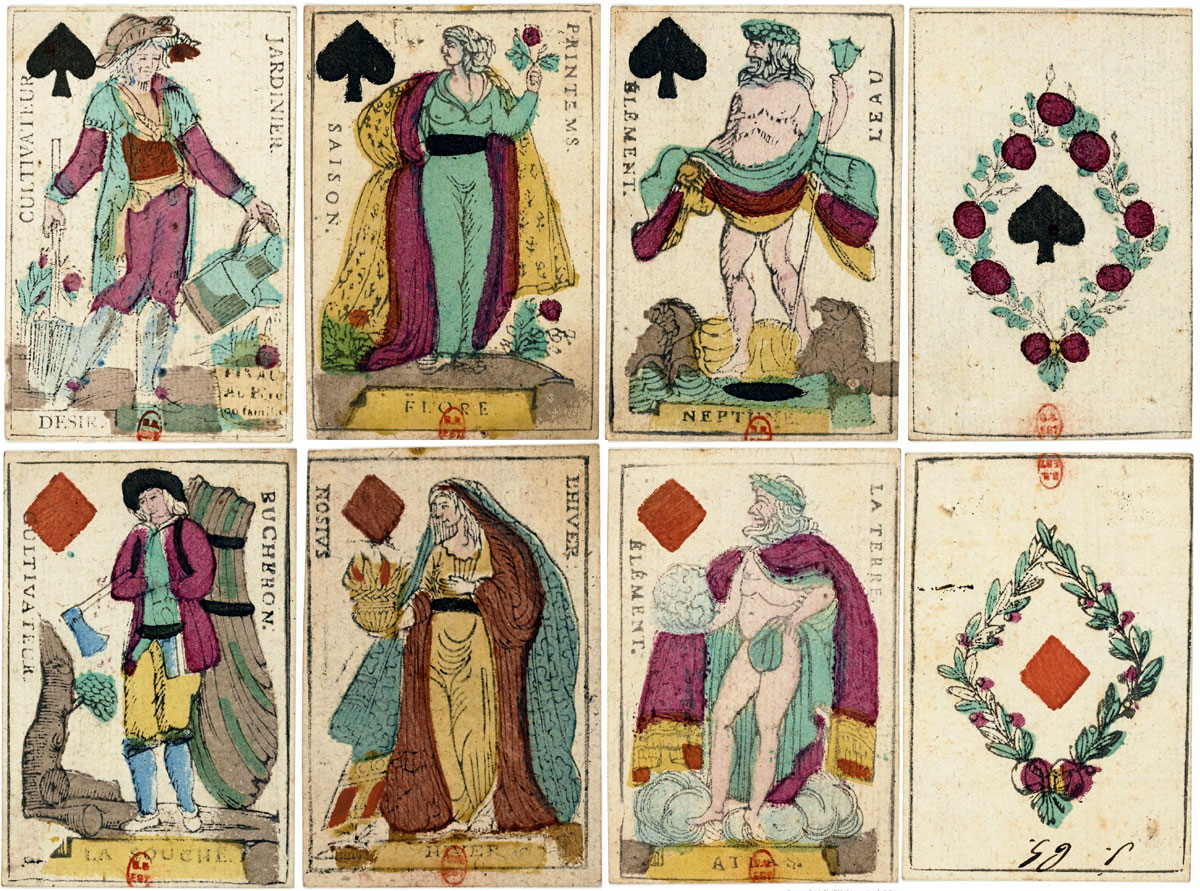
Above: 12 court cards and 3 aces from a French Revolutionary pack by Pinaut, Paris, c.1794. Stencil coloured woodcuts; 8.2 x 5.4 cm. Source gallica.bnf.fr / Bibliothèque nationale de France
Footnote
The Guillotine, adopted by the French government in 1792, became prominent during the French Revolution for public executions. Intended to be a deterrent, it ultimately became a symbol of revolutionary fervour and repression, especially as revolutionary leaders began executing each other. The guillotine remained France's standard method of execution for nearly 190 years, until it was abolished in 1981.
References
Bibliothèque nationale de France : Cartes de tête et d'as d'un jeu révolutionnaire►
Drawing Matter : Dugourc’s Playing Cards►

By Simon Wintle
Spain • Member since February 01, 1996
I am the founder of The World of Playing Cards (est. 1996), a website dedicated to the history, artistry and cultural significance of playing cards and tarot. Over the years I have researched various areas of the subject, acquired and traded collections and contributed as a committee member of the IPCS and graphics editor of The Playing-Card journal. Having lived in Chile, England, Wales, and now Spain, these experiences have shaped my work and passion for playing cards. Amongst my achievements is producing a limited-edition replica of a 17th-century English pack using woodblocks and stencils—a labour of love. Today, the World of Playing Cards is a global collaborative project, with my son Adam serving as the technical driving force behind its development. His innovative efforts have helped shape the site into the thriving hub it is today. You are warmly invited to become a contributor and share your enthusiasm.

Activity for Jeu Révolutionnaire
Sign in to comment or save this article.

Related Articles
Cartes à jouer républicaines
Political cards engraved by Gaillard in Lyon during the Franco-Prussian War and the birth of the Thi...
Portrait de Paris corrigé de Minot
Early French Revolutionary cards with certain elements removed from the old Paris pattern.
Assassin’s Creed Unity
Characters from the 2014 video game set during the French Revolution, published by Ubisoft.
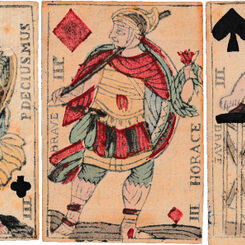
French Revolutionary cards by Pinaut
Seven cards from a French Revolutionary pack by Pinaut featuring characters from classical antiquity...
Cartes politiques : Jeu d'actualité
Political playing cards published by Grimaud et Chartier, Paris, 1872.
Jeu de la Vme
A political pack designed by Pino Zac and published in 1977 by Editions Arts et Lettres.
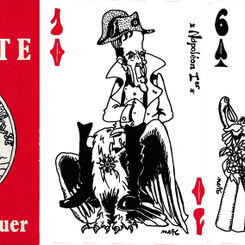
Le Giscarte
Le Giscarte political playing cards designed by Eddy Munerol, France, 1976.
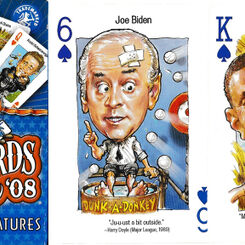
Politicards 2008
Politicards ’08 with caricatures cast as characters from classic movies, USA.
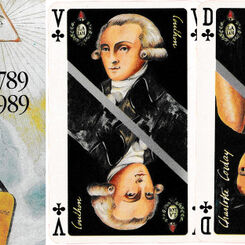
Révolution 1789-1989
Révolution 1789-1989, celebrating the bicentenary of the French revolution, France, 1989
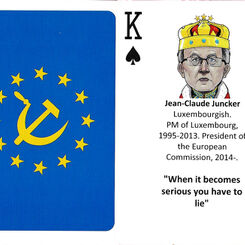
EU52 Deck of Cards
“EU52 Deck of Cards“ Eurosceptic political playing cards published by 52 Jokers Ltd, United Kingdom,...
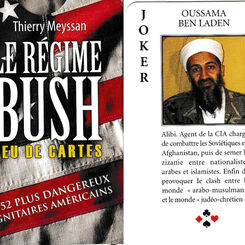
Le Régime Bush
“Le Régime Bush” anti-war playing cards designed by Thierry Meyssan, France, 2003.
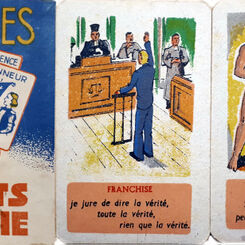
Atouts de la Vie
“Atouts de la Vie” wartime card game created by Madame Lucien Willemetz, c.1940.
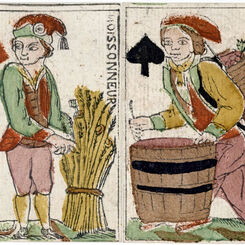
Jeu des Quatre Saisons de l’An II
“Jeu des Quatre Saisons de l’An II” facsimile of French Revolution deck originally published by J. B...
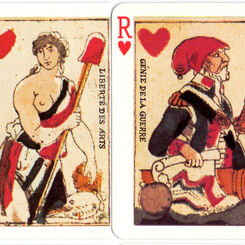
Jeu de l’an 2
“Jeu de l’an 2” by Grimaud is a facsimile of French Revolutionary cards first published by Veuve Mou...
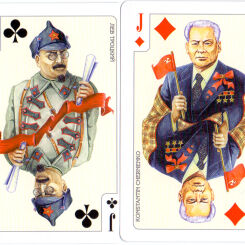
Back to the USSR
Back to the USSR deck featuring communist party leaders and politicians, c.1995
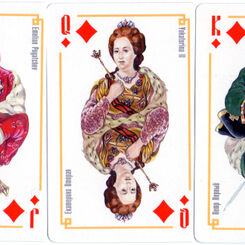
Glorious Russia
‘Glorious Russia’ playing cards made in France by Grimaud, c.1995
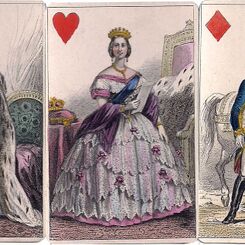
Cartes Imperiales et Royales
‘Cartes Imperiales et Royales’ published by B. P. Grimaud & Cie representing imperial rulers and con...
Gayant, 1793
French Revolution playing cards published by Gayant in Paris, 1793.
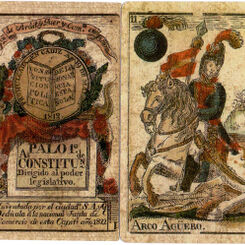
La Baraja Constitucional
The “Baraja Constitucional” commemorates the declaration in Cádiz of the Constitution of 1812 and wa...
The History of Playing Cards
Playing cards appear in European records in the late 14th century, but their earlier history lies fu...
Most Popular
Our top articles from the past 60 days


