Kingdom of Playing Cards
Francesco Faggiano has created a pack inspired by Neapolitan cards.
Francesco Faggiano has created a pack inspired by Neapolitan cards, illustrations and images can be viewed on Francesco's Behance portfolio►
Background Information & Inspiration
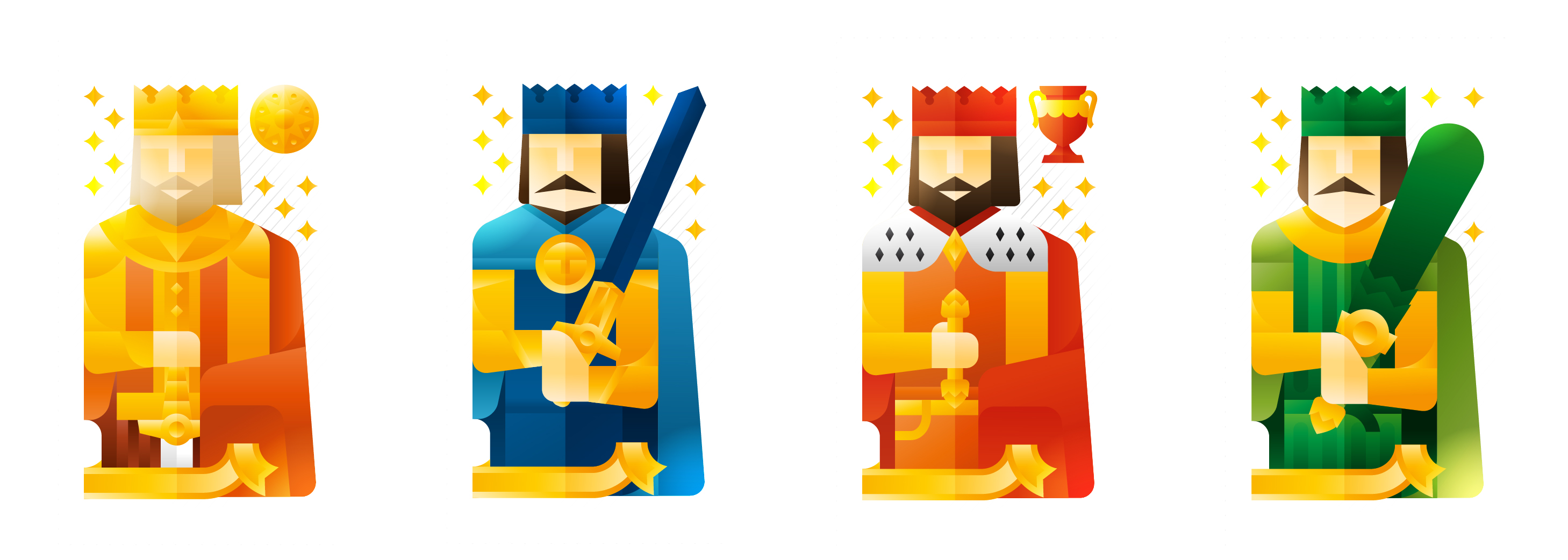
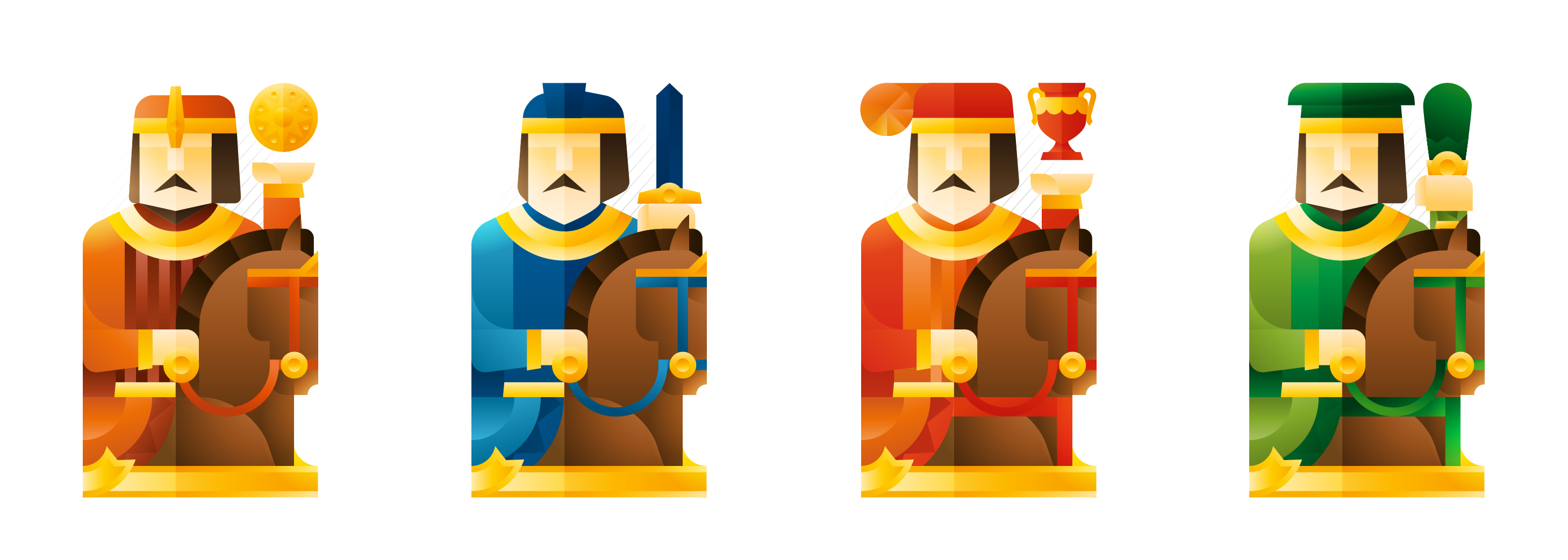
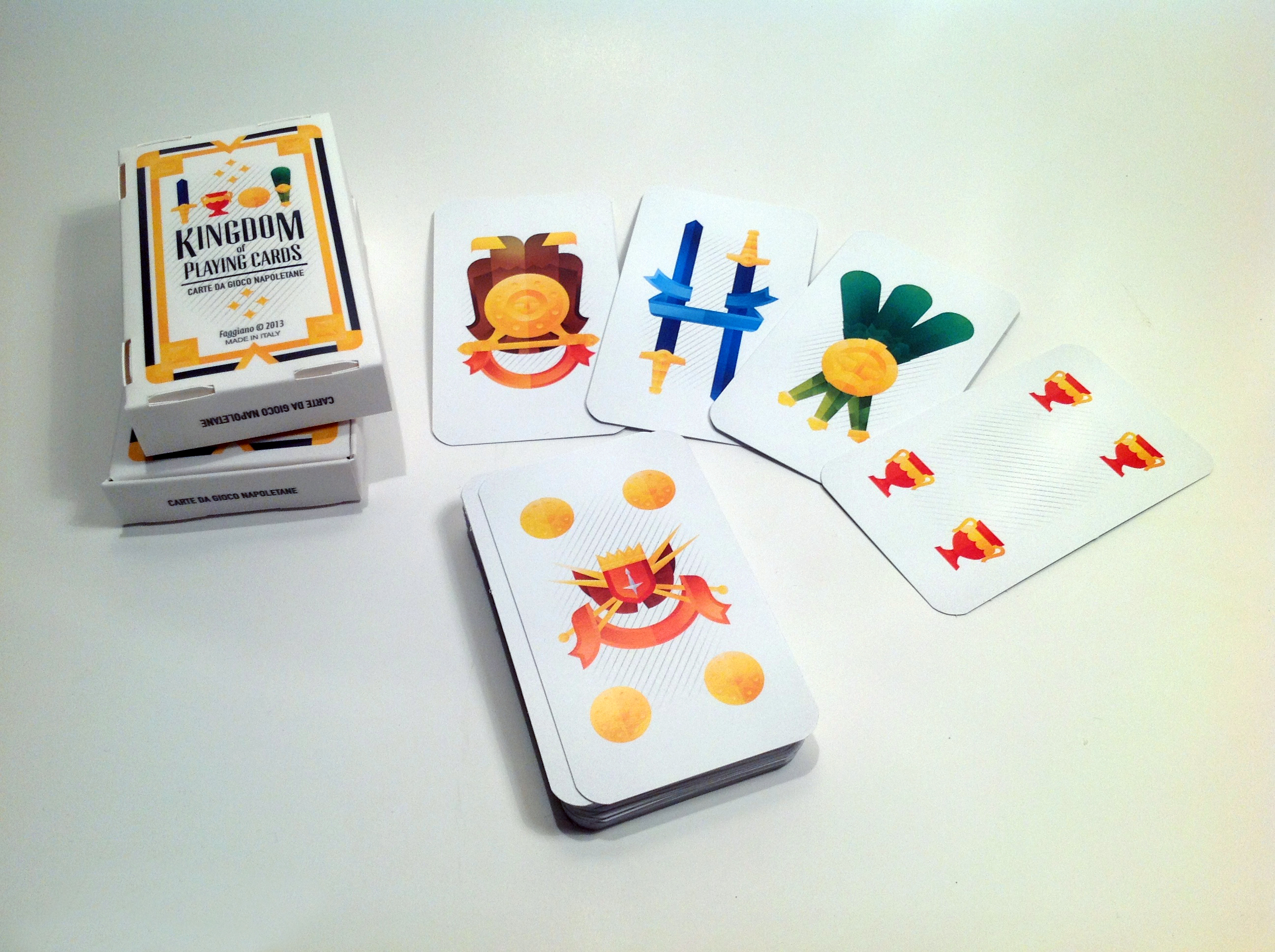
I have always been fascinated by the illustrations of Italian playing cards, in particular the "Neapolitan cards", for centuries spread in Bel Paese, commonly used especially in the South. Intrigued by the esoteric and aesthetic value of this particular artifact, I decided to rework these illustrations graphically, proposing a more simplified and modern version, seeking a graphic solution which refers to the original illustrations of the fifteenth century and simultaneously fostering new impressions.
These cards are pretty important to me because in south Italy are commonly used and since I was child I learned to play all kind of games. I started from this theme and developed a modern graphic look as you can see from my portfolio. Following the original style of Neapolitan cards I built some new esoteric meaning, since these cards are strictly related to tarots, to create new impressions.
So you can see a struggle between good and evil, represented by golds/trophies and swords/clubs. Golds and trophies are similar to shields, protecting from swords and clubs, clearly weapons. Golds represent spiritual victories while trophies material victories. On the contrary swords represent justice and punishment, while clubs rough punishment and violence. Three kings of trophies/swords/clubs are vassals of the main king of golds and as you can see, each suit has a bit of gold everywhere. So I named this project Kingdom of Playing Cards, because of four reigns under a single king.
By Adam Wintle
Thailand • Member since March 15, 1997 • Contact
Adam has been involved in developing the site as well as reviewing new decks and conducting research. He is particularly interested in innovation, Kickstarter and East Asian cards. He is a member of the IPCS and webmaster of the EPCS.
Related Articles
Le carte da gioco Arcimboldo
Courts and suit-signs inspired by the works of the Italian Renaissance painter, Giuseppe Arcimboldo....
Neapolitan pattern by Luigi Pignalosa, Naples
Two versions of the Neapolitan pattern from the British Museum by Luigi Pignalosa, Naples, 1875 & 18...
Jack-O’-Lantern Tarot
Giuliano Costa's Jack-O’-Lantern tarot blends Rider-Waite symbolism with the rich and atmospheric th...
Trentine Pattern
Trentine Pattern
Bergamasche Pattern
Bergamasche Pattern by Modiano, 1970s.
Sorrento Napoletane
Souvenir of Sorrento by Carte Da Gioco Muoio, Naples, c.2010.
Genovesi Pattern
Genoese pattern from Italy.
Omnia Playing Cards
Inspired by ancient symbology and traditional playing cards, Omnia is the third pack designed by Gio...
Fantasy Italian style
Fantasy latin-suited pack with court figures in pseudo-medieval style, Fratelli Armanino, Genova, c....
Gumppenberg of Milan
Fine playing cards made by Gumppenberg of Milan evoking the style of antiquity, c.1830
MEMENTO
Memento, a unique Playing Card Deck designed by Valerio Aversa and Antonios Fiala, inspired by the h...
Neapolitan Cards Italian Cards
A modern twist on a classic Italian style of playing cards, this pack created by Raffaele Iaccarino ...
Etruria Minchiate
The Cavaliers are man/beast creatures. The Valets (or Pages) are male for clubs and swords, and fema...
Minchiate Fiorentine
The Florentine game of Minchiate is played with a pack of 97 cards. The subjects and arrangements of...
Tarocco Milanesi by Lamperti (Milan) c.1850
Sardinian playing cards
Sardinian playing cards.
Hand-Painted Tarocchi Cards
Hand-painted Tarocchi cards sometimes known as ‘Charles VI tarot’, North Italy, 1475-1500.
Small Tuscan Pattern
Italian Playing Cards
The first reliable evidence that playing cards were being used in Italy is from 1376, when a game ca...
Neapolitan Pattern
Cartine da Gioco Vesuvio miniature Neapolitan pattern.
Most Popular
Our top articles from the past 60 days
I have always been fascinated by the illustrations of Italian playing cards, in particular the "Neapolitan cards", for centuries spread in Bel Paese, commonly used especially in the South. Intrigued by the esoteric and aesthetic value of this particular artifact, I decided to rework these illustrations graphically, proposing a more simplified and modern version, seeking a graphic solution which refers to the original illustrations of the fifteenth century and simultaneously fostering new impressions.