


San Paolo Shakespeare
San Paolo Shakespeare, Italy, 1978
Published in 1978 by Masenghini of Bergamo for San Paolo Instituto Bancario, the Italian bank headquartered in Turin, this pack features characters from the plays of William Shakespeare. Similar to other packs by this publisher for San Paolo the aces and court cards of each suit present characters from specific plays: clubs – King Lear; spades – Macbeth; diamonds – Richard III; and hearts – Othello and The Merchant of Venice. The jokers depict Puck (A Midsummer Night's Dream) and Ariel (The Tempest). The deck is designed by Paolo Fresu. There are two extra cards, one of which identifies the plays and the second details those involved in the production of the pack.
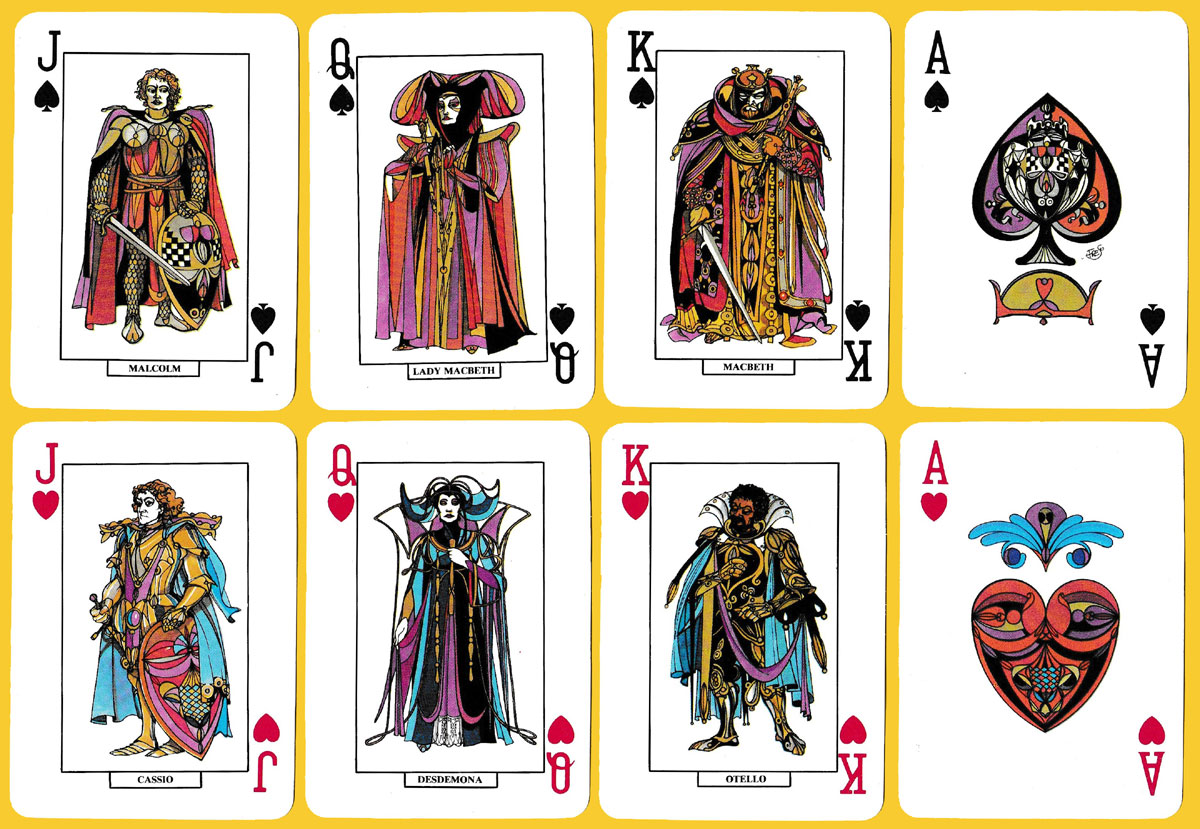
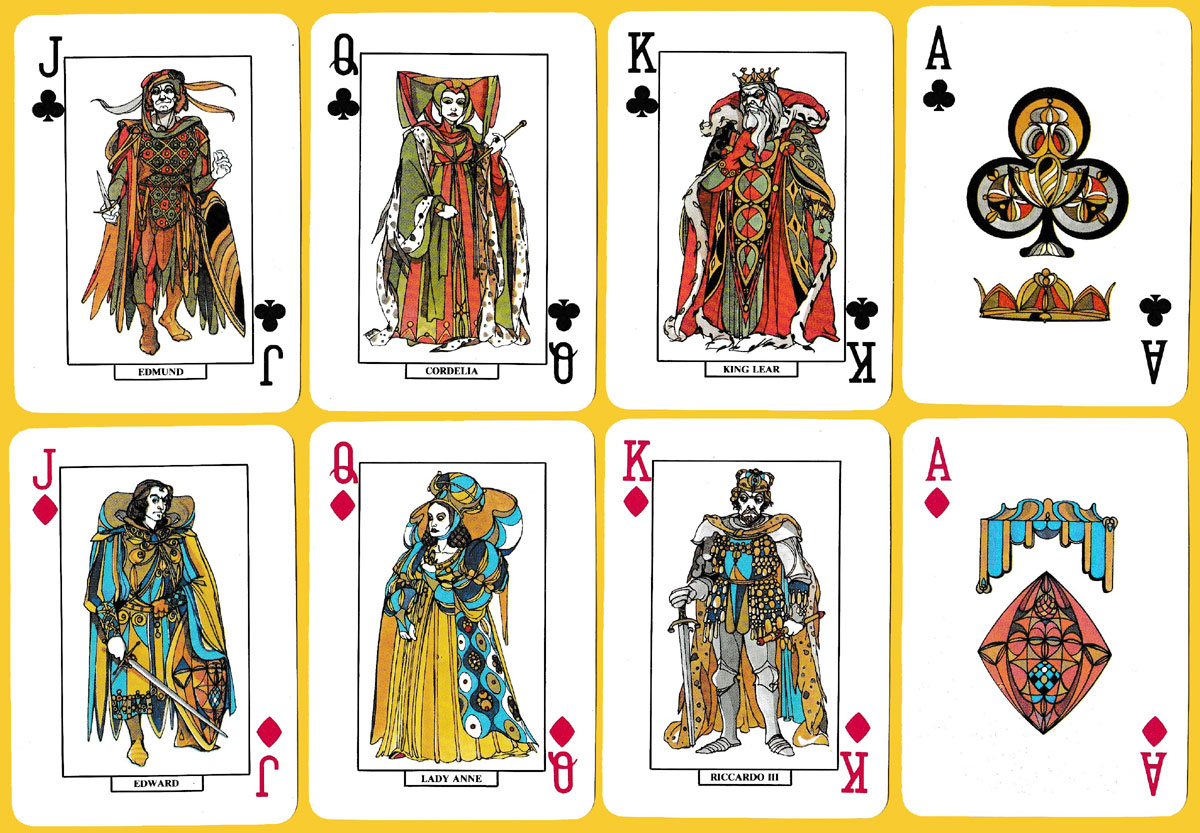
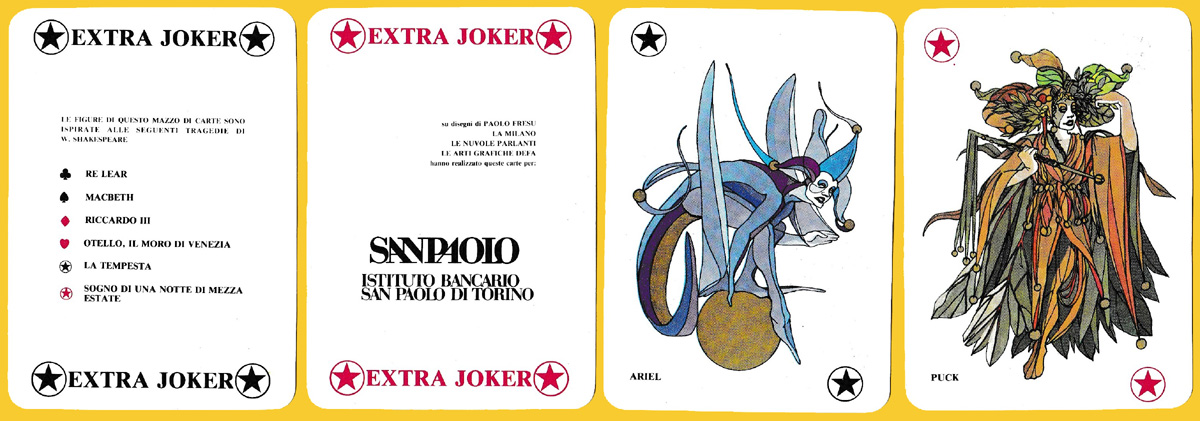

Above: San Paolo Shakespeare playing cards designed by Paolo Fresu and made by Masenghini of Bergamo for San Paolo Instituto Bancario, 1978.

By Peter Burnett
United Kingdom • Member since July 27, 2022
I graduated in Russian and East European Studies from Birmingham University in 1969. It was as an undergraduate in Moscow in 1968 that I stumbled upon my first 3 packs of “unusual” playing cards which fired my curiosity and thence my life-long interest. I began researching and collecting cards in the early 1970s, since when I’ve acquired over 3,330 packs of non-standard cards, mainly from North America, UK and Western Europe, and of course from Russia and the former communist countries.
Following my retirement from the Bodleian Library in Dec. 2007 I took up a new role as Head of Library Development at the International Network for the Availability of Scientific Publications (INASP) to support library development in low-income countries. This work necessitated regular training visits to many sub-Saharan African countries and also further afield, to Vietnam, Nepal and Bangladesh – all of which provided rich opportunities to further expand my playing card collection.
Since 2019 I’ve been working part-time in the Bodleian Library where I’ve been cataloguing the bequest of the late Donald Welsh, founder of the English Playing Card Society.

Activity for San Paolo Shakespeare
Sign in to comment or save this article.

Related Articles
Poker Lusso
Richly costumed courts on a luxury poker pack from Masenghini.
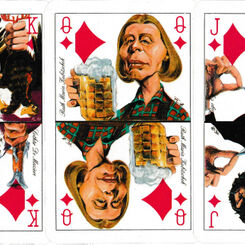
Postabank 3
Caricatures of German personalities on a promotional pack for a Hungarian commercial bank.
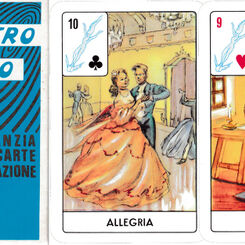
Il Vostro Destino
Italian fortune-telling pack produced by Viassone and later by Masenghini.
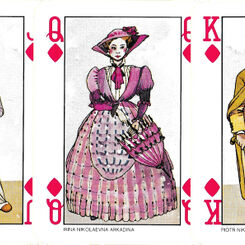
San Paolo Chekhov
Characters from Chekhov’s plays designed by Paolo Fresu for San Paolo Istituto Bancario, Italy, c.19...
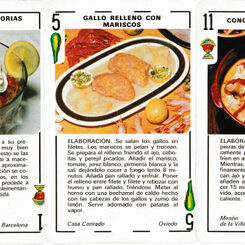
Bankunión playing cards
Ingredients and recipes for 24 dishes from different regions of Spain.
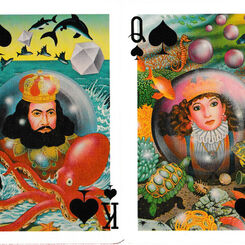
Gruppo Perotti playing cards
Stunningly beautiful designs by the Japanese artist Tiger Tateishi for Gruppo Perotti.
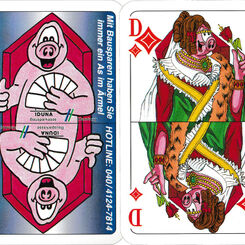
Iduna Skat
Advertising pack for a Hamburg building society featuring pigs in disguise.
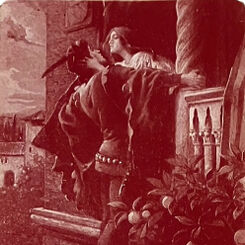
Romeo and Juliet
Unbranded ‘Romeo and Juliet’ backs by Russell Playing Card Company, c.1911.
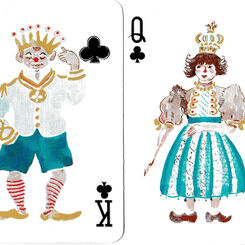
The Circus
“The Circus” playing cards with artwork by Max Dissar and Rita Rielle, published by Masenghini, Berg...
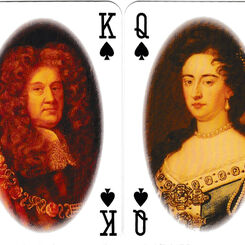
Bank of England playing cards
Bank of England playing cards, reflecting prominent characters and events from the Bank’s history.
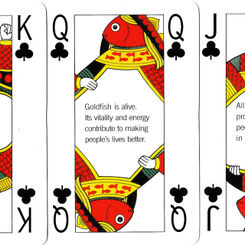
Goldfish
Playing cards advertising the Goldfish credit card brand, c.1996.
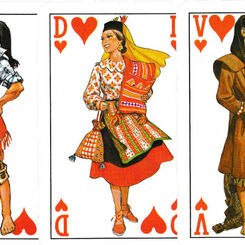
Trajes Regionais Portugueses
Portuguese regional costumes published by the French division of Banco Pinto & Sotto Mayor.
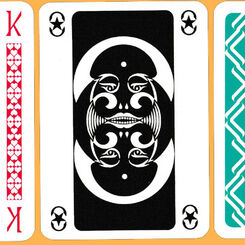
Bolzani e Spagnolo
Stylish monochrome designs by the Archinstudio of Guido Bolzani and Gian-Piero Spagnolo, printed by ...
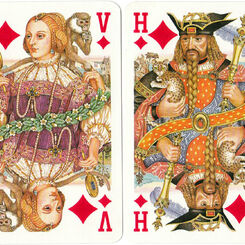
Nationale-Nederlanden
Playing cards produced for Nationale-Nederlanden insurance company, 1984.
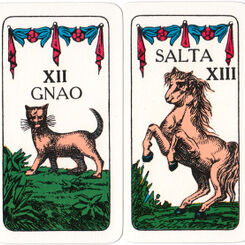
Cuccù
Cuccù or Cucco, an ancient Italian card game, published by Masenghini, 1979.
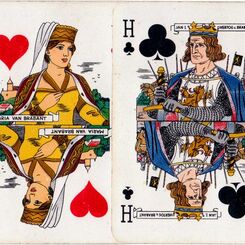
Noord Braband
“Historical Playing Cards” originally commissioned by Northern Brabant Insurance Society and manufac...
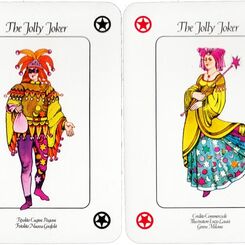
Credito Commerciale
Playing cards designed by Enzo Laurà for Credito Commerciale, 1978.
Sicilian Pattern
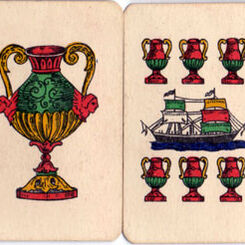
The Sicilian pack has a similar composition to the Neapolitan pack, and is small and squat in appear...
Florentine Pattern
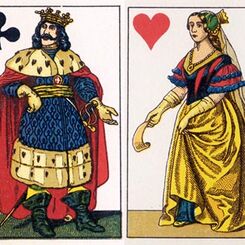
Originally one of several designs which emerged during the nineteenth century, the Florentine patter...
Most Popular
Our top articles from the past 60 days


