Le Nuove Minchiate di Firenze
Costante Costantini's second Minchiate deck, “Le Nuove Minchiate di Firenze”, was published by Solleone in 1981.
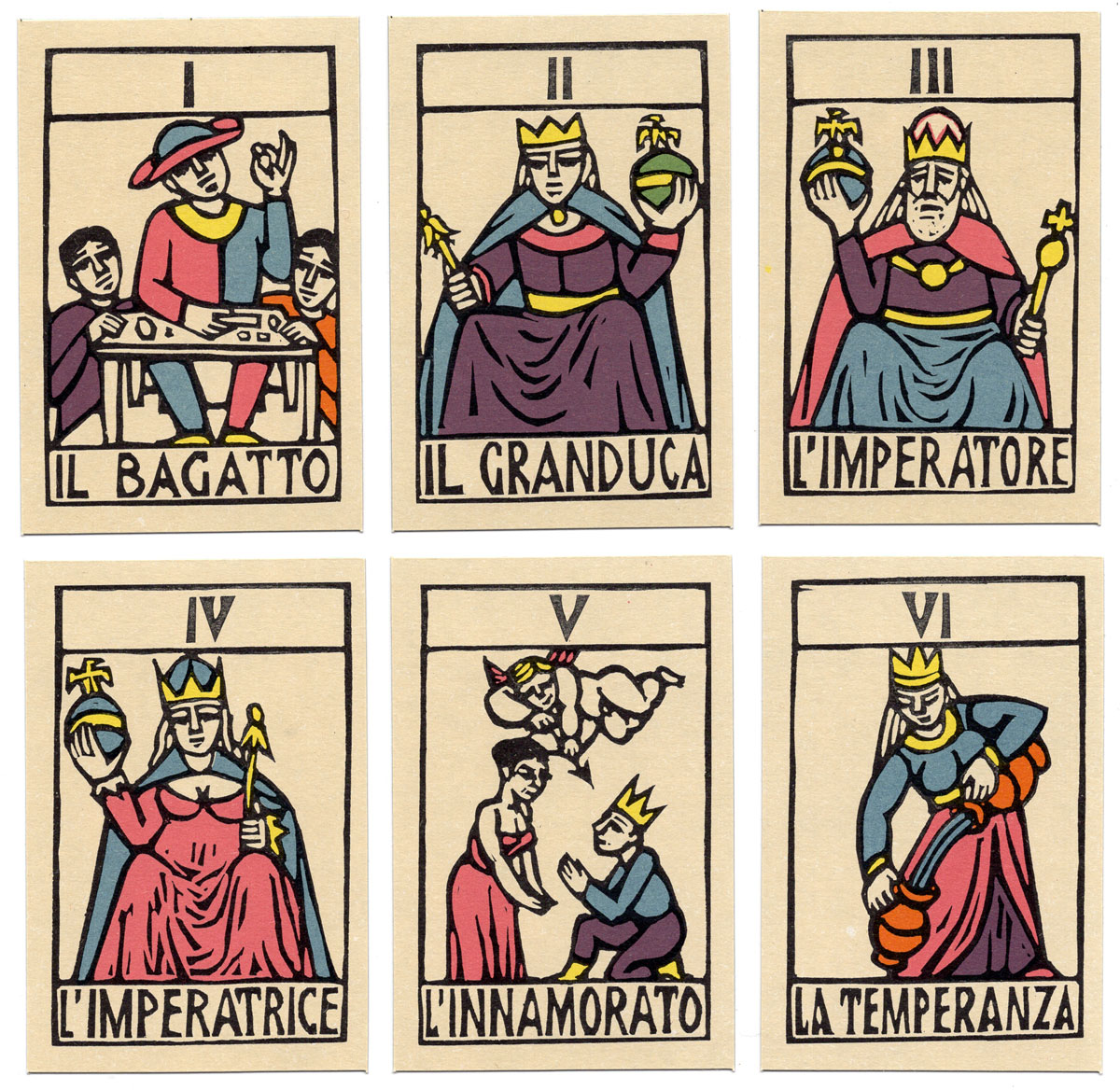
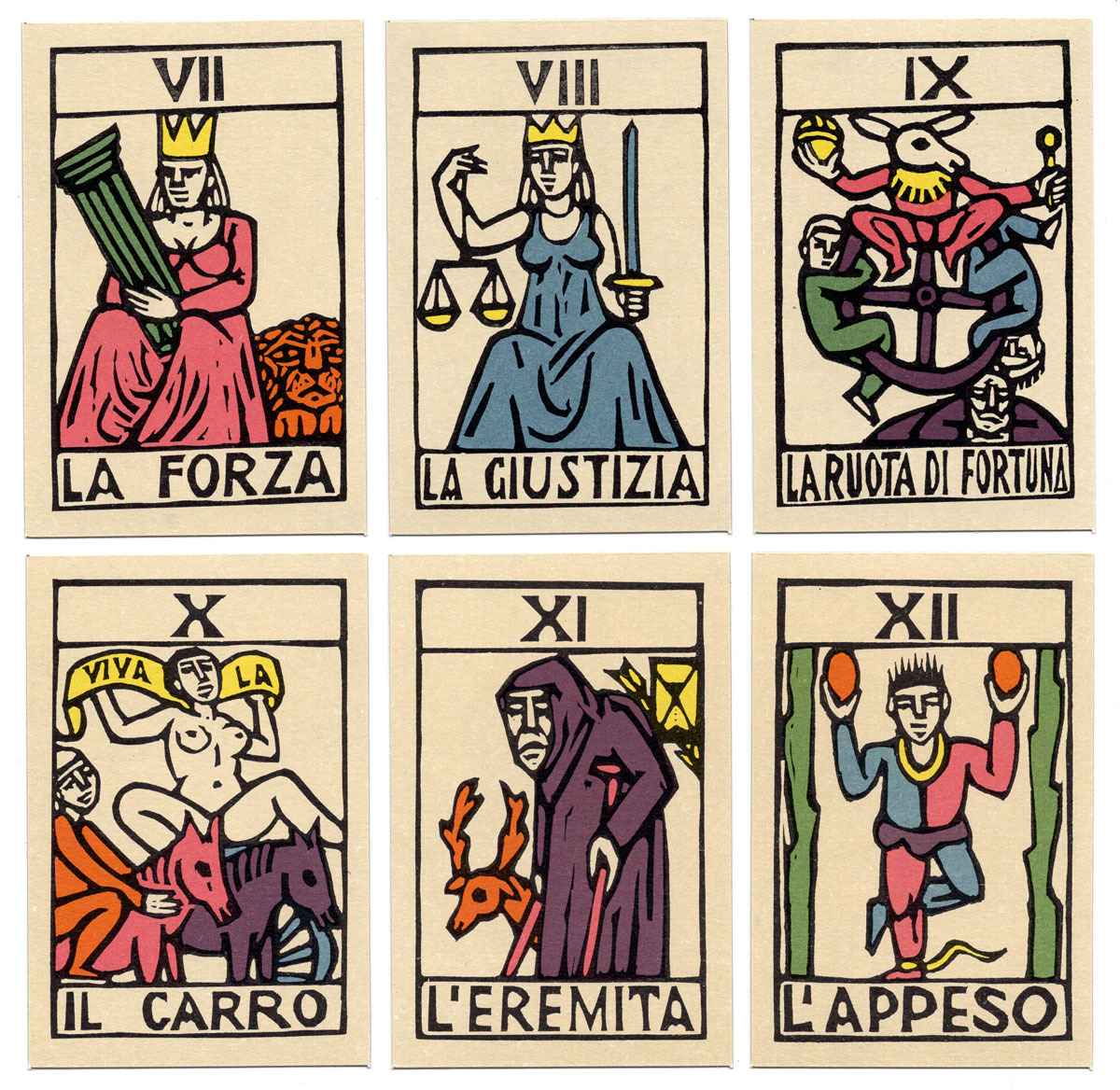
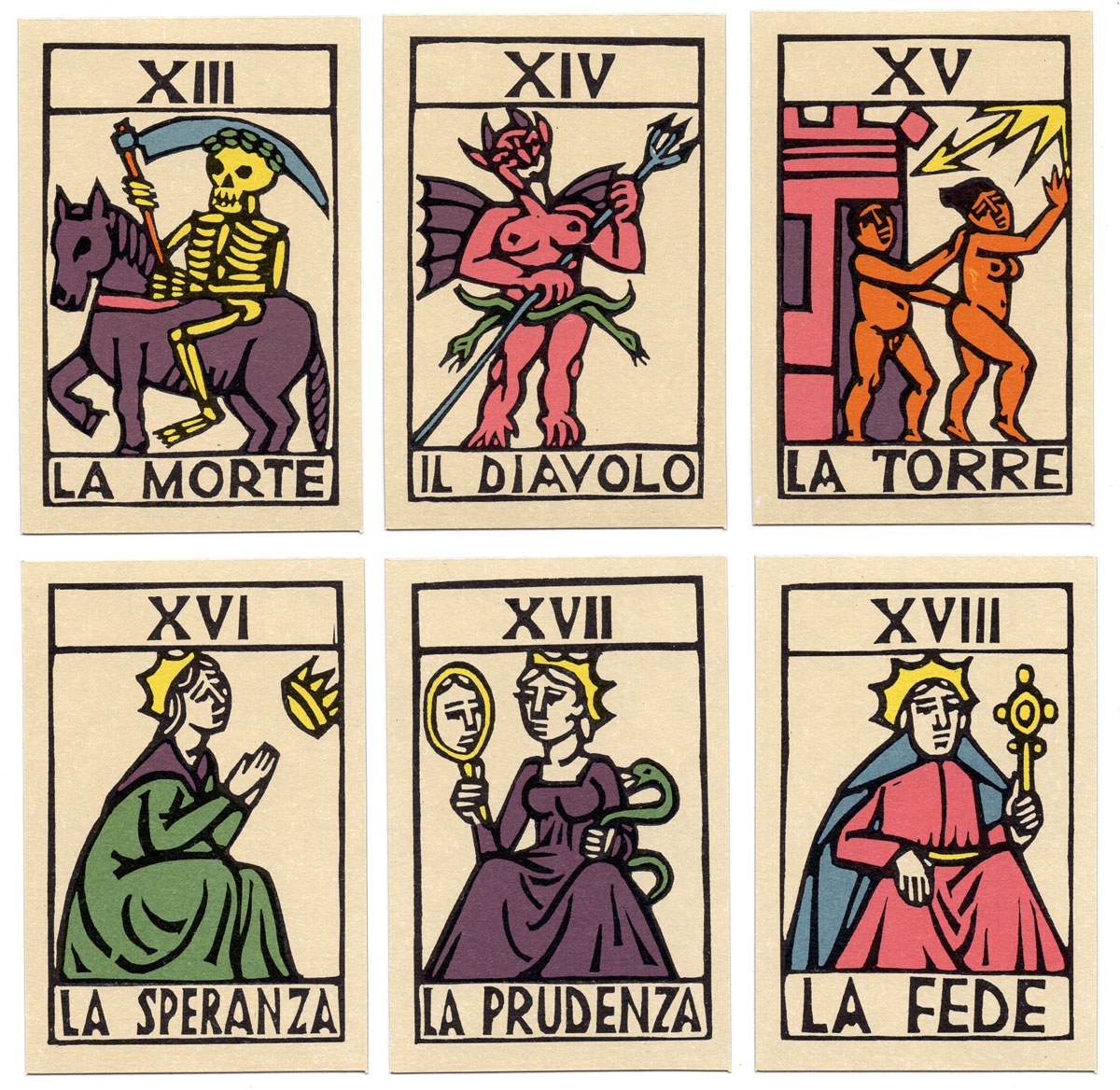
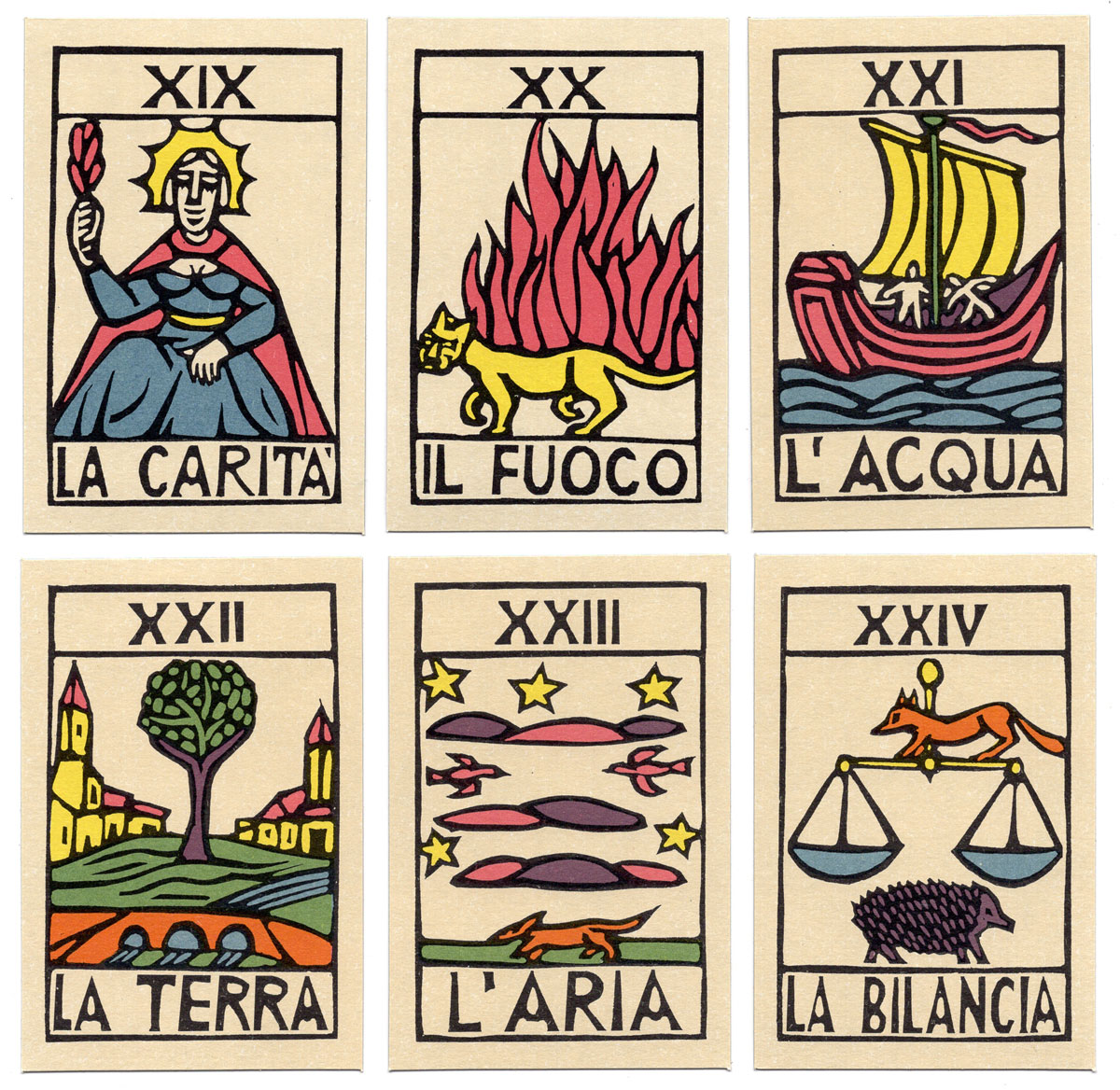
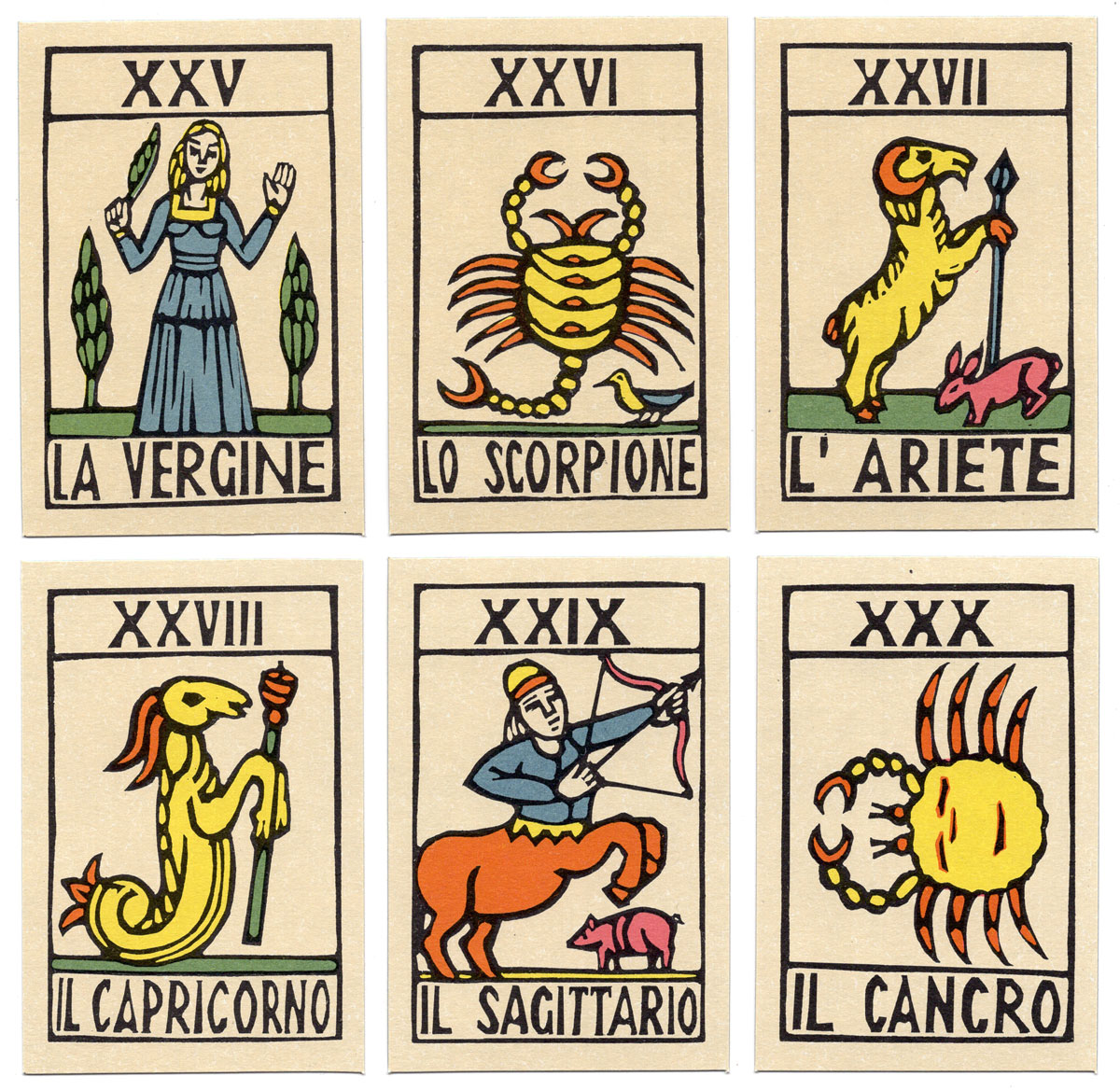
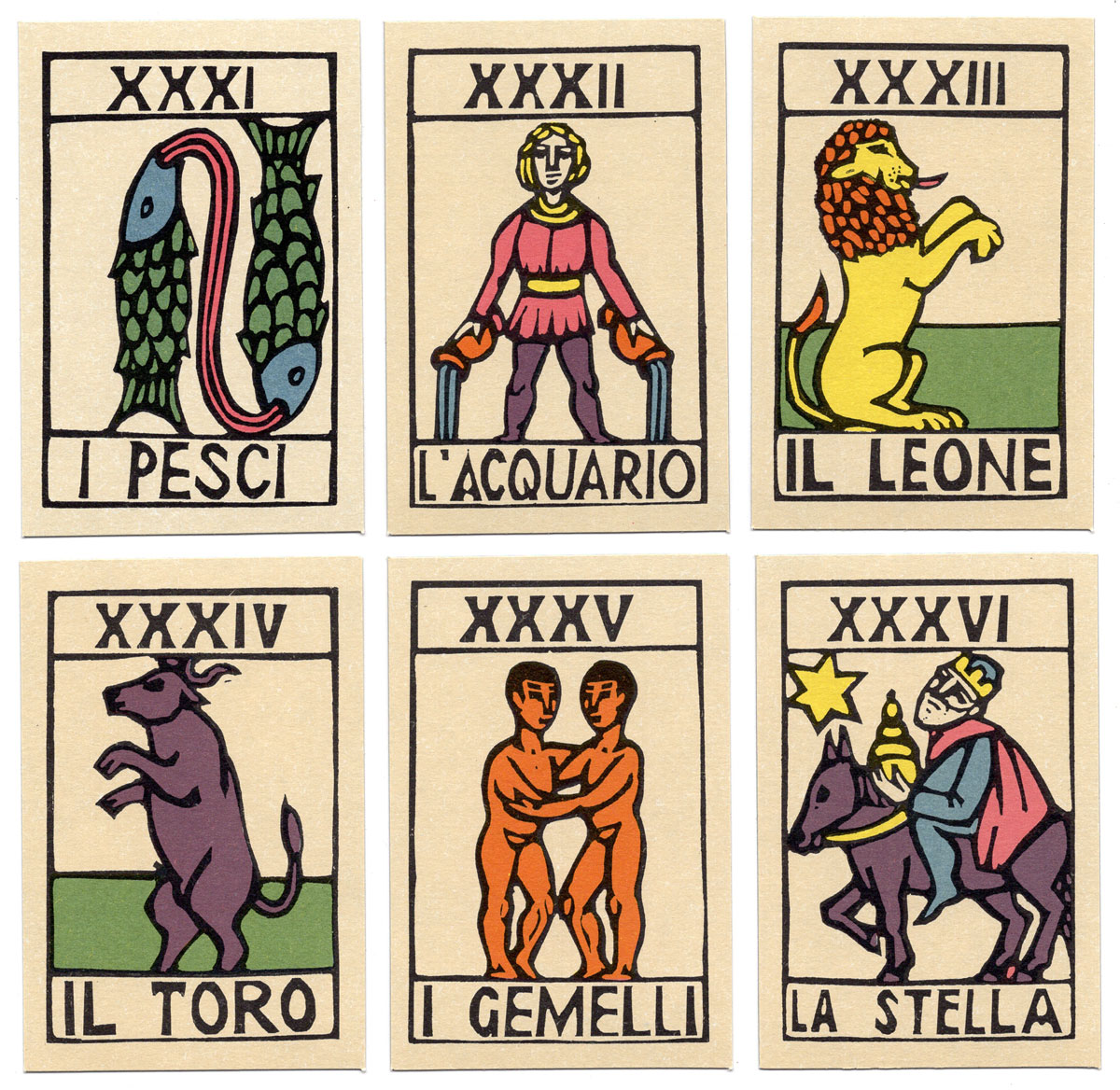
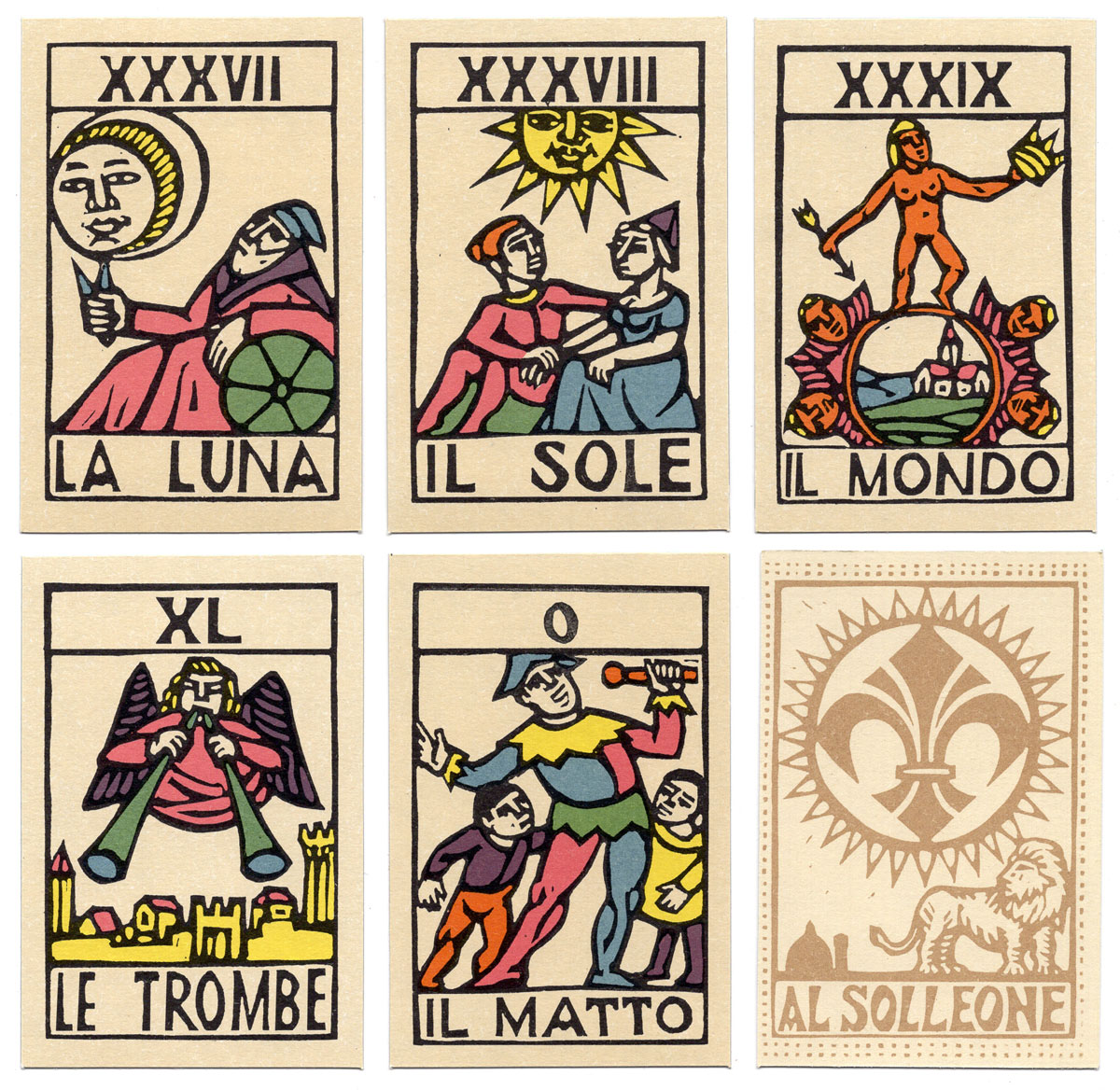
Costante Costantini's second Minchiate deck, “Le Nuove Minchiate di Firenze”, was published by Edizioni del Solleone in an edition of 1500 in 1981. The Minchiate pack is an enlarged form of the tarot pack in which the number of allegorical cards, or ‘trumps’ is extended from 22 to 41, thereby including the four elements, 12 zodiac signs and more virtues. The symbolism and allegory seen in the pack opens the door to artistic interpretation, depending on the reader's perspective. Minchiate was invented in Florence during the Renaissance, when such allegory and symbolism was common in art and culture.
The 41 Trumps
The Court Cards
The lowest court cards are maids in the ‘round’ suits of cups and coins, and are jacks in the ‘long’ suits of swords and batons. The four cavaliers, or knights, are strange mythological beasts with human heads.
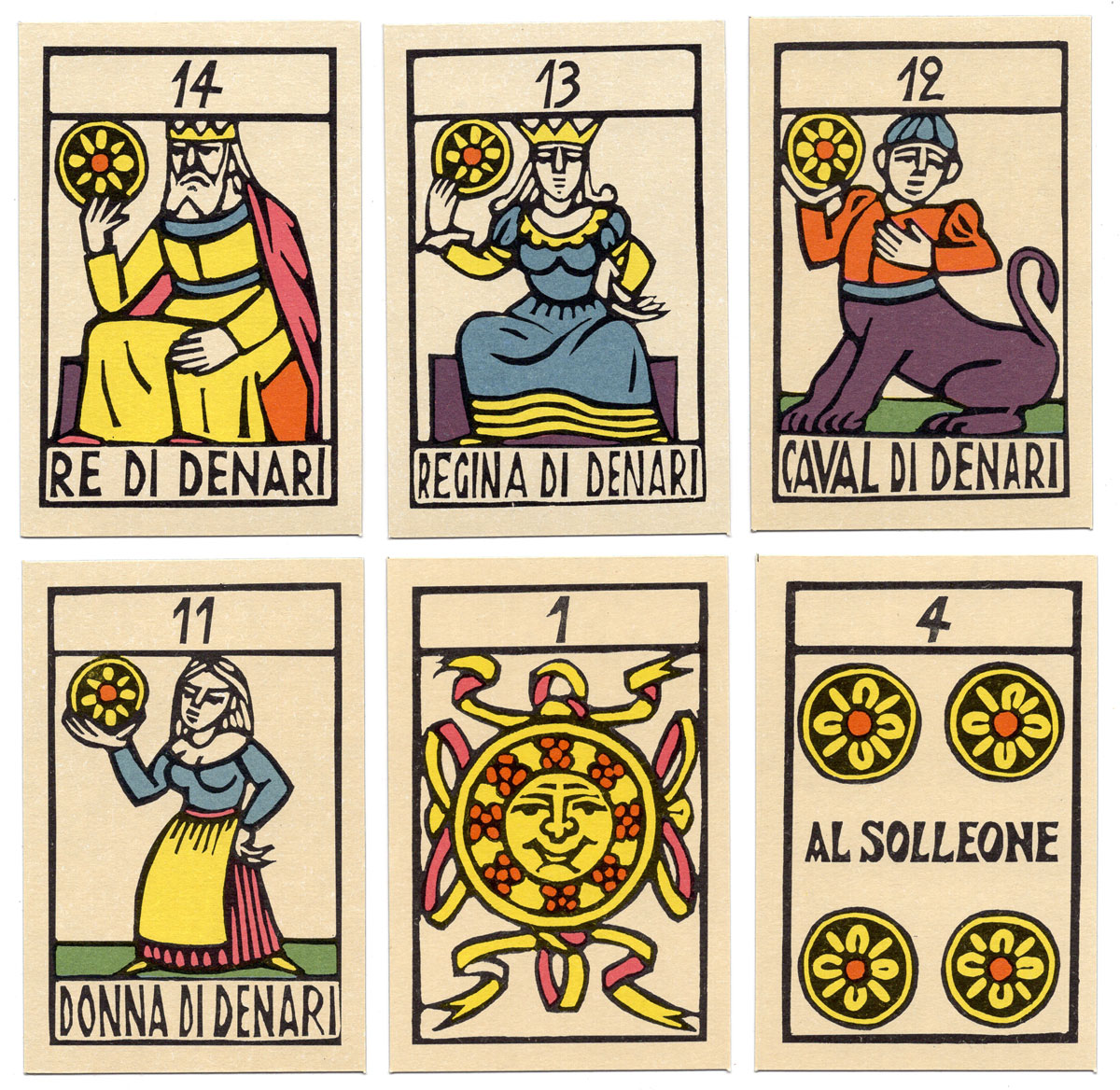
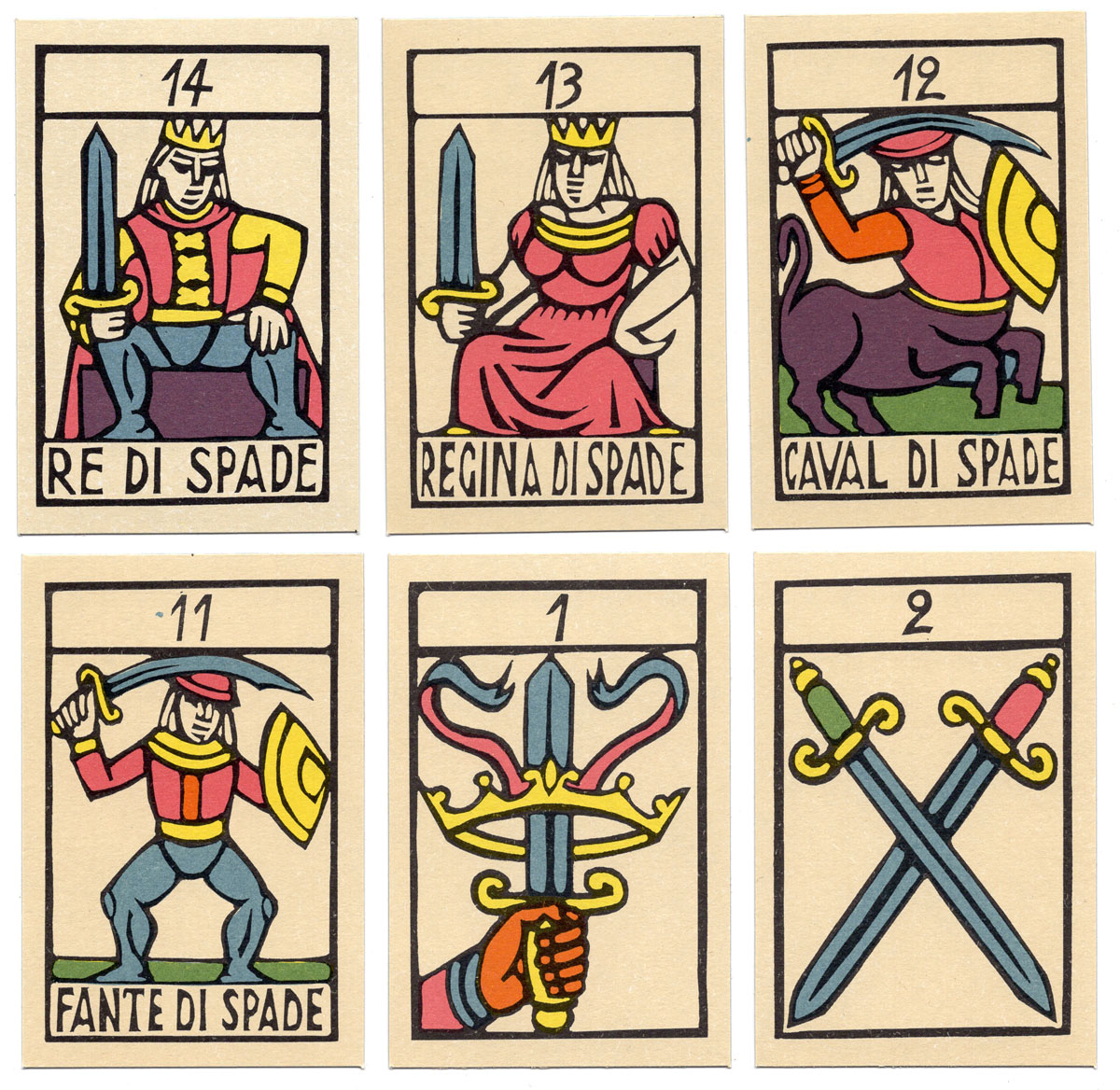
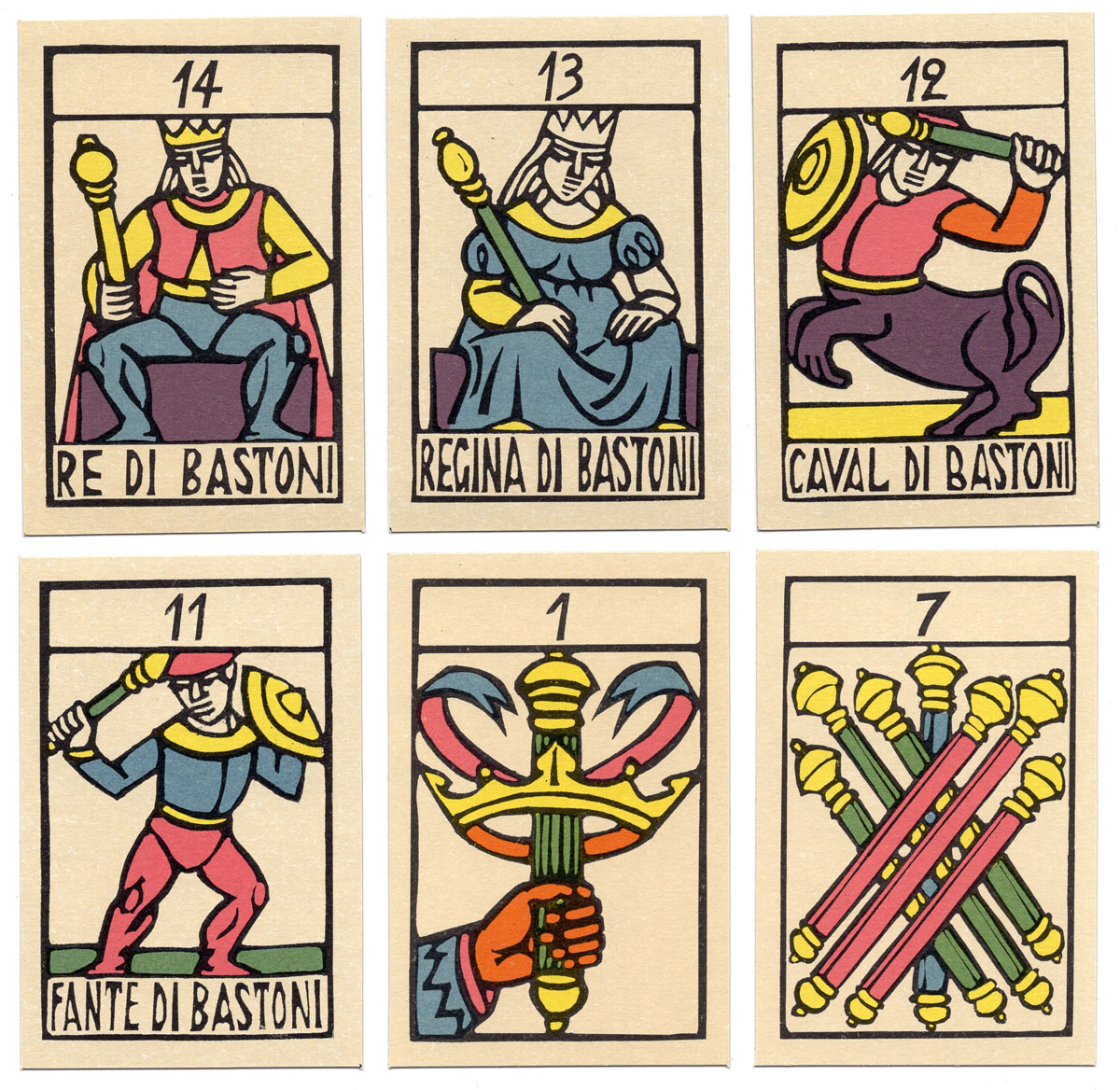
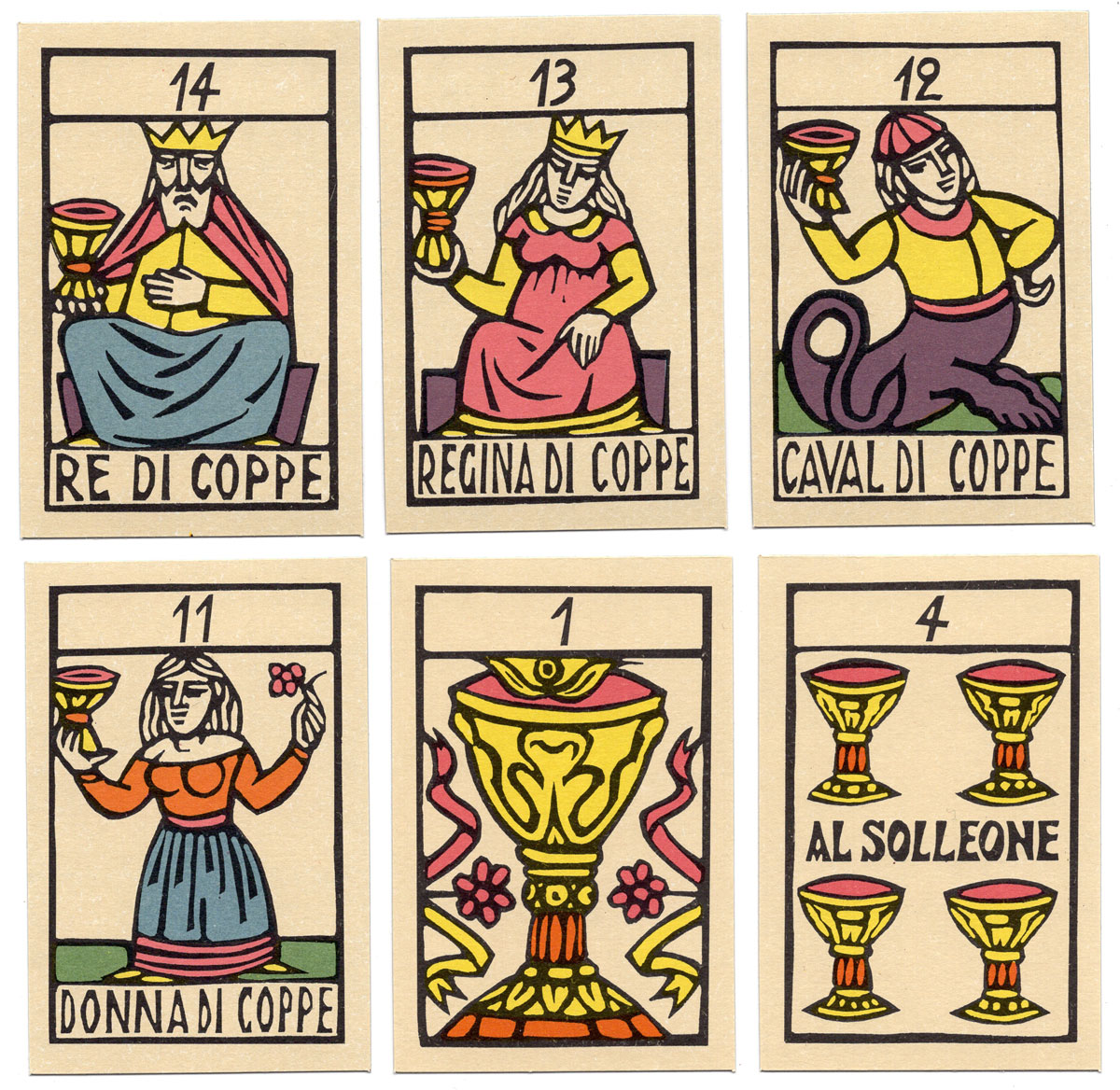
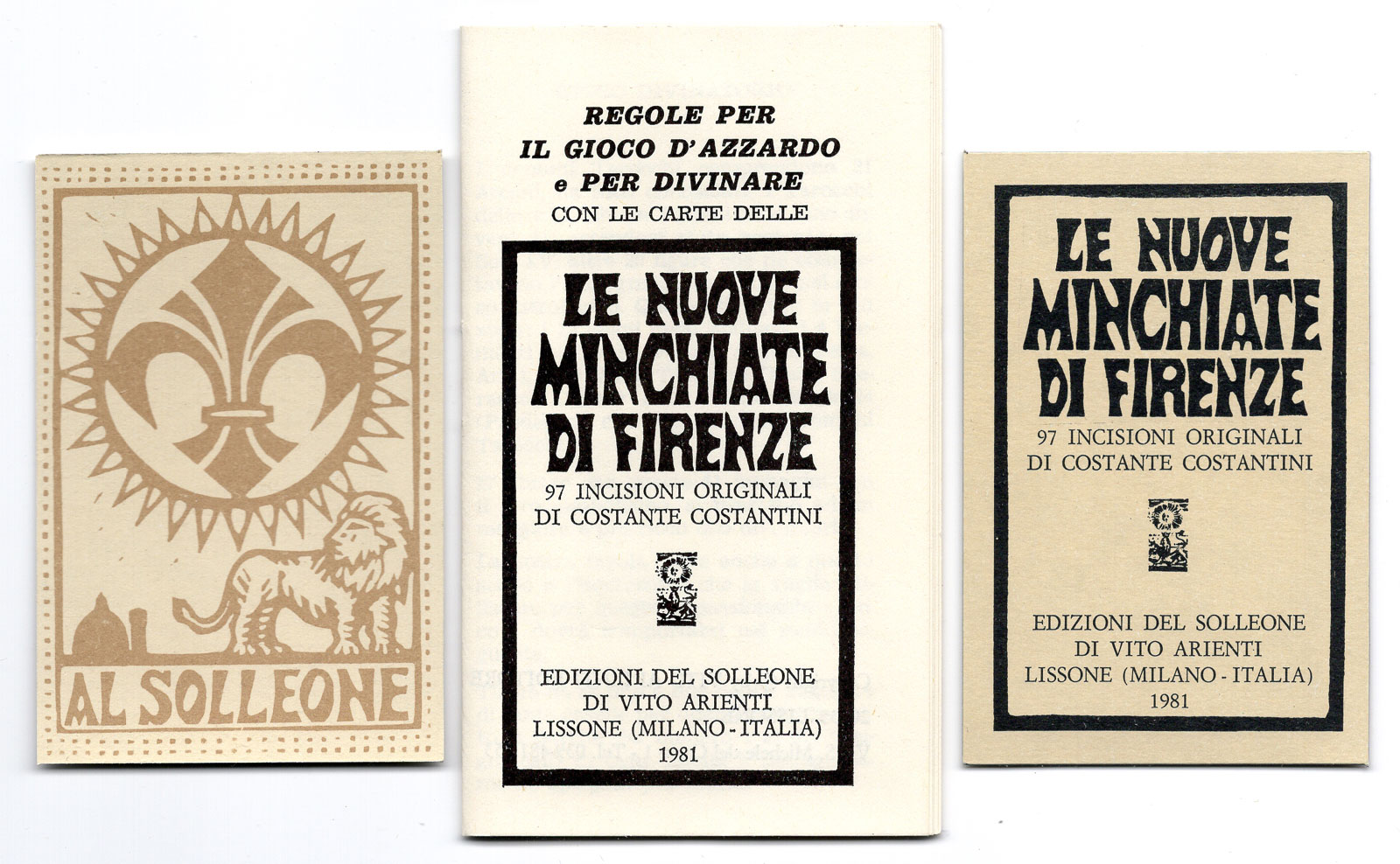
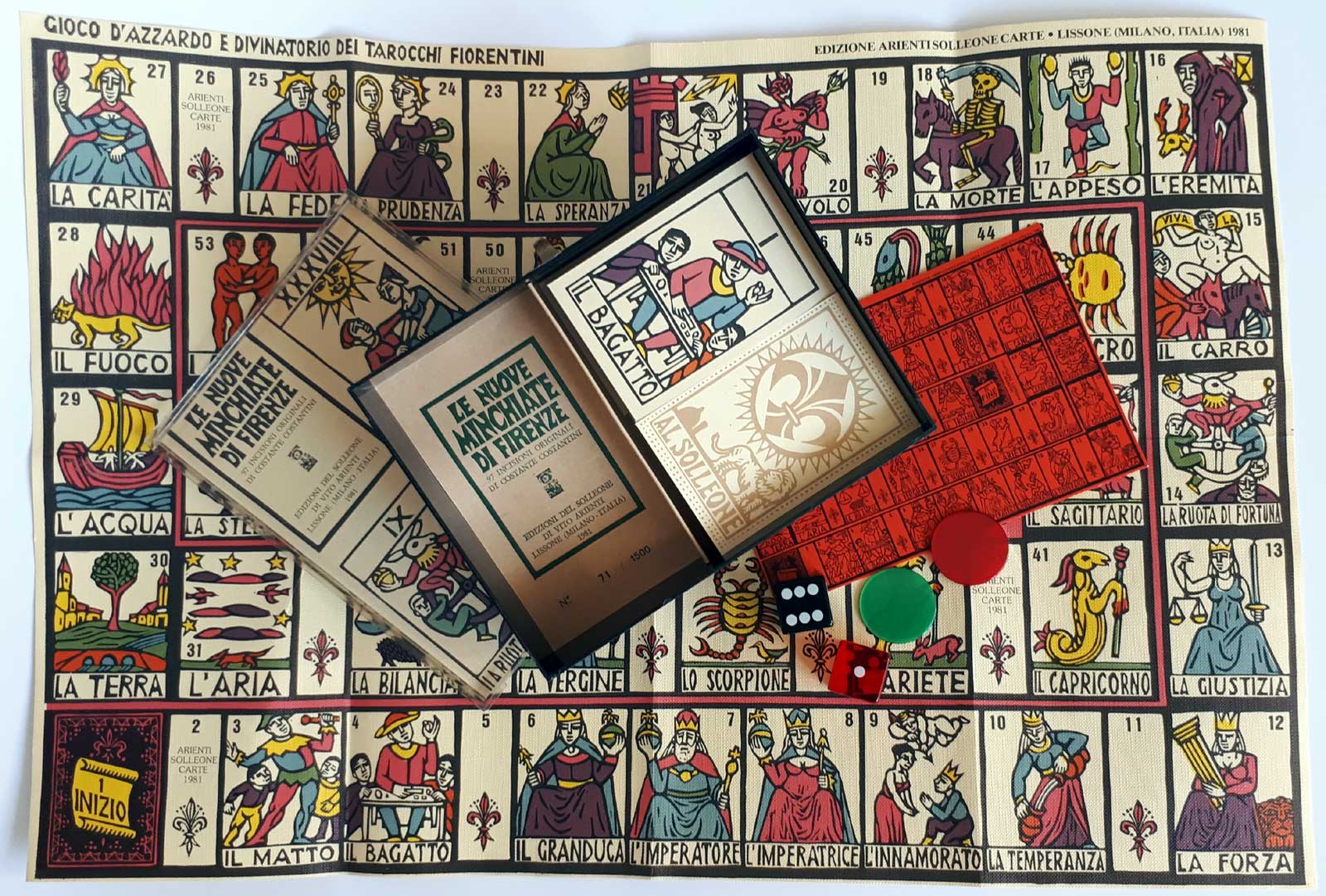
Above: “Le Nuove Minchiate di Firenze” created by Costante Costantini, published by Solleone in 1981, presented in a large hard plastic box, complete with 97 cards, dice, counters, play mat, booklet and postcard. Cards measure 90x60mm.
See the rules booklet► • See the play mat►
The rule booklet is titled “Regole per il gioco d'azzardo e par divinare” (Rules for games of chance and divination) and the play mat which accompanies the set is titled “Gioco d'Azzardo e Divinatorio del Tarocchi Fiorentini” in line with the popular trend for Tarot and Minchiate to be seen as mystical tools used for divination and fortune-telling. However, Michael Dummett (1980, p.165-166) was of the opinion that “it has seldom been suggested that the resulting sequence of forty triumph subjects has any special symbolic significance: it is obvious that those who devised the Minchiate pack simply looked around for a convenient method of adding new and memorable subjects to the existing ones. If this was true in the sixteenth century for the inventors of the Minchiate pack, there is little reason to suppose that it was not also true a hundred years earlier for the inventors of the Tarot pack itself. At any rate, if there was any special symbolism underlying the sequence of Tarot triumphs, as originally devised, this played no role in the games played with the cards, and hence disappeared from the consciousness of card players.”
Why are the four Cavalli mythological beasts with human heads?
Possibly the reason for this is rooted in the symbolic and allegorical nature of the Minchiate pack. The mythological or allegorical elements in the pack would have enhanced the narrative and symbolism within the game. The knights with human heads could be seen as representing a fusion between human intelligence and mythological and spiritual atttributes, linking the worldly and divine realms. Such symbolism was not uncommon in Renaissance art and culture, where classical mythology, astrology and allegory played significant roles.
Note from Roddy Somerville
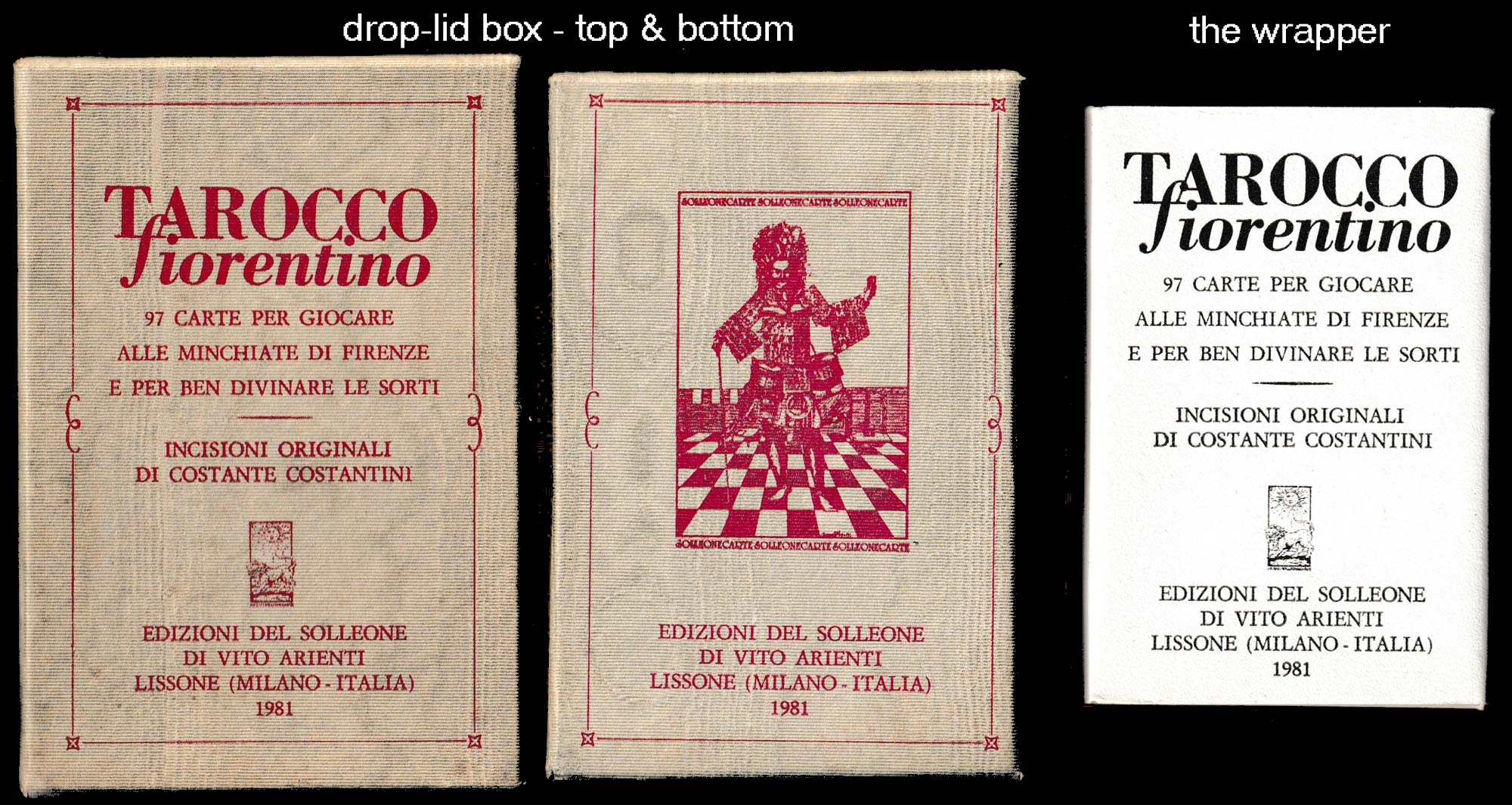
There was another edition of these cards called "Tarocco Fiorentino". The drop-lid box contained just the cards, a wrapper and a leaflet in Italian. This edition was not limited or numbered. See the leaflet
References
Dummett, Michael: The Game of Tarot: From Ferrara to Salt Lake City, Duckworth, 1980

By Adam West-Watson
Australia • Member since September 01, 2014
I have been fascinated by playing cards ever since I can remember, and still have several of the card games I had as a child. And although I had accumulated quite a number of packs of various sorts over the years, it wasn't until I was in my 50s that I began collecting in earnest. My tastes are quite varied, and my collection of 800 or so decks includes:- children's games, standard and non-standard playing cards, adult games, fortune telling and oracle cards, tarot cards, and even cigarette cards.

Activity for Le Nuove Minchiate di Firenze
Sign in to comment or save this article.

Related Articles
Luigi Del Pieve Minchiate
Luigi Del Pieve and the “Alli Sorte” Minchiate of Florence.
Carte Romantiche Italiane
Scenes of life and the theatre in Milan towards the second half of the 19th century.
Schwarze Katze (or Gioco del Gatto Nero)
Reproduction of a 40-card transformation pack with designs by “WS”, adapted for the game of Black Ca...
Minchiate Fiorentine
Minchiate Fiorentine created by Costante Costantini, published by Edizioni del Solleone.
Il Mercante in Fiera del Solleone
Traditional Italian card game with bold designs by Costante Costantini.
Venus et Cupidon
“Venus et Cupidon” from Costante Costantini in his distinctive woodcut style.
Italia playing cards
Small, narrow cards designed by Osvaldo Menegazzi, bearing a strong resemblance to a Swedish pattern...
Consorzio Vino Chianti Classico
Promotional pack for Chianti Classico wine, with designs by Costante Costantini.
La Cour Galante
‘La Cour Galante’ playing cards with erotic images by Costante Costantini, Italy, 1979.
Calcio Storico Fiorentino
‘Calcio Storico Fiorentino’ by Costante Costantini is based on an early form of football that origi...
Jeu Grotesque
Jeu Grotesque was first published in France c.1800.
Mitelli ‘Gioco di Passatempo’
Il Gioco di Passatempo contains 40 figurative playing cards depicting moral virtues and vices, dated...
Portuguese pattern
19th century Portuguese pattern, re-printed from original woodblocks.
Minchiate Fiorentine, 17th C.
17th century Minchiate cards reprinted from the original woodblocks.
Etruria Minchiate
The Cavaliers are man/beast creatures. The Valets (or Pages) are male for clubs and swords, and fema...
Stairs of Gold Tarot
Whilst the titles of the cards are in Italian, the Hebrew and Sanskrit letters on the Trump cards de...
Corona Ferrea
Trumps depict historical scenes primarily of the political period known as the Holy Roman Empire fro...
Neapolitan Pattern
Cartine da Gioco Vesuvio miniature Neapolitan pattern.
Minchiate Fiorentine
The Florentine game of Minchiate is played with a pack of 97 cards. The subjects and arrangements of...
Significado de los Naipes Españoles
Cartomantic meanings of Spanish playing cards by Benita the Witch (XVI century), published by Chocol...
Most Popular
Our top articles from the past 60 days