


Mitelli Tarocchini
The title refers to “a new form of Tarocchini”. Mitelli's designs are to a high standard of artistic quality and a complete departure from the old tradition, especially the 22 Trump cards which are unnamed and unnumbered.
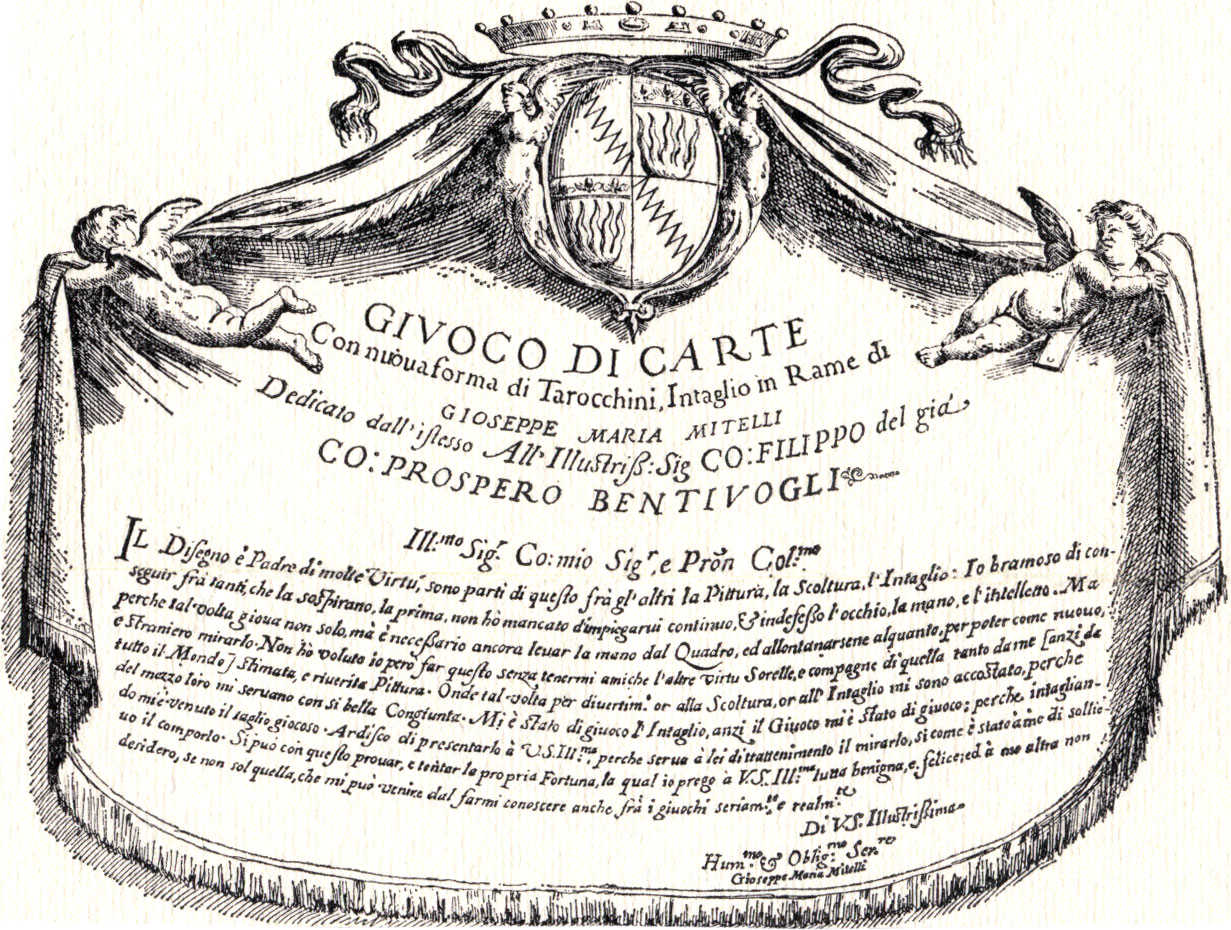
Mitelli’s “Tarocchini di Bologna” (1664)
Mitelli’s designs are to a high standard of artistic quality and a departure from the old tradition, especially the 22 Trumps. The title refers to “a new form of Tarocchini” so maybe Mitelli wanted to express his own interpretation of the Trump cards. There are four court cards, plus aces and numerals six to ten in each suit making a total of 62 cards, a number suited to the game the deck was intended for. The coins have little portraits inside them. The Ace of Cups has the arms of the Bentivoglio family for whom the cards were made. The Ace of Coins has a portrait medallion with the artist’s name.
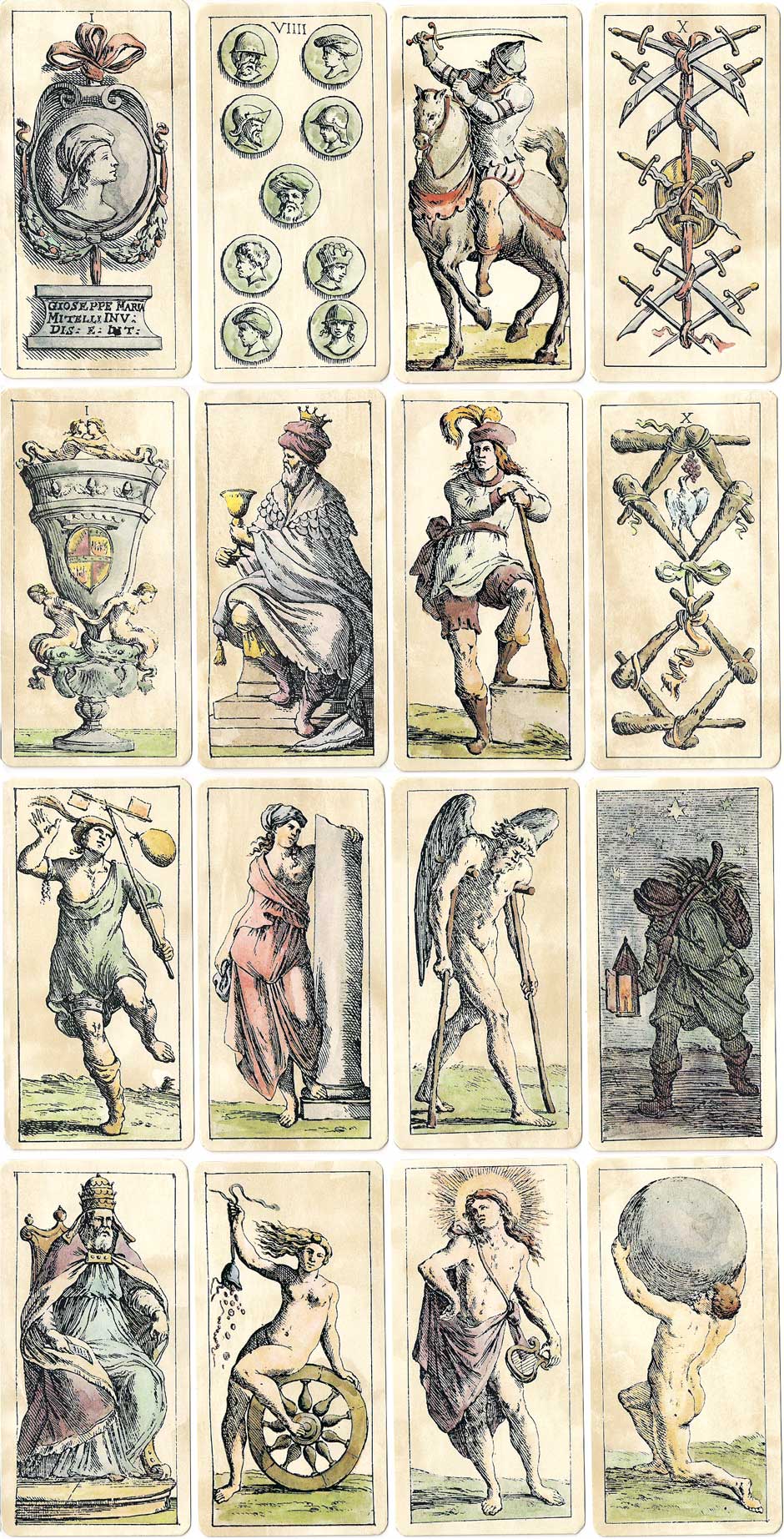
Above: Tarocchini di Bologna by Gioseppe Maria Mitelli, hand-coloured etchings, 1664. Facsimile edition by Graffica Gutenberg, 1978. Cards from the collection of Rod Starling.
Original Tarocchini cards by Gioseppe Maria Mitelli - from the Bibliothèque nationale de France
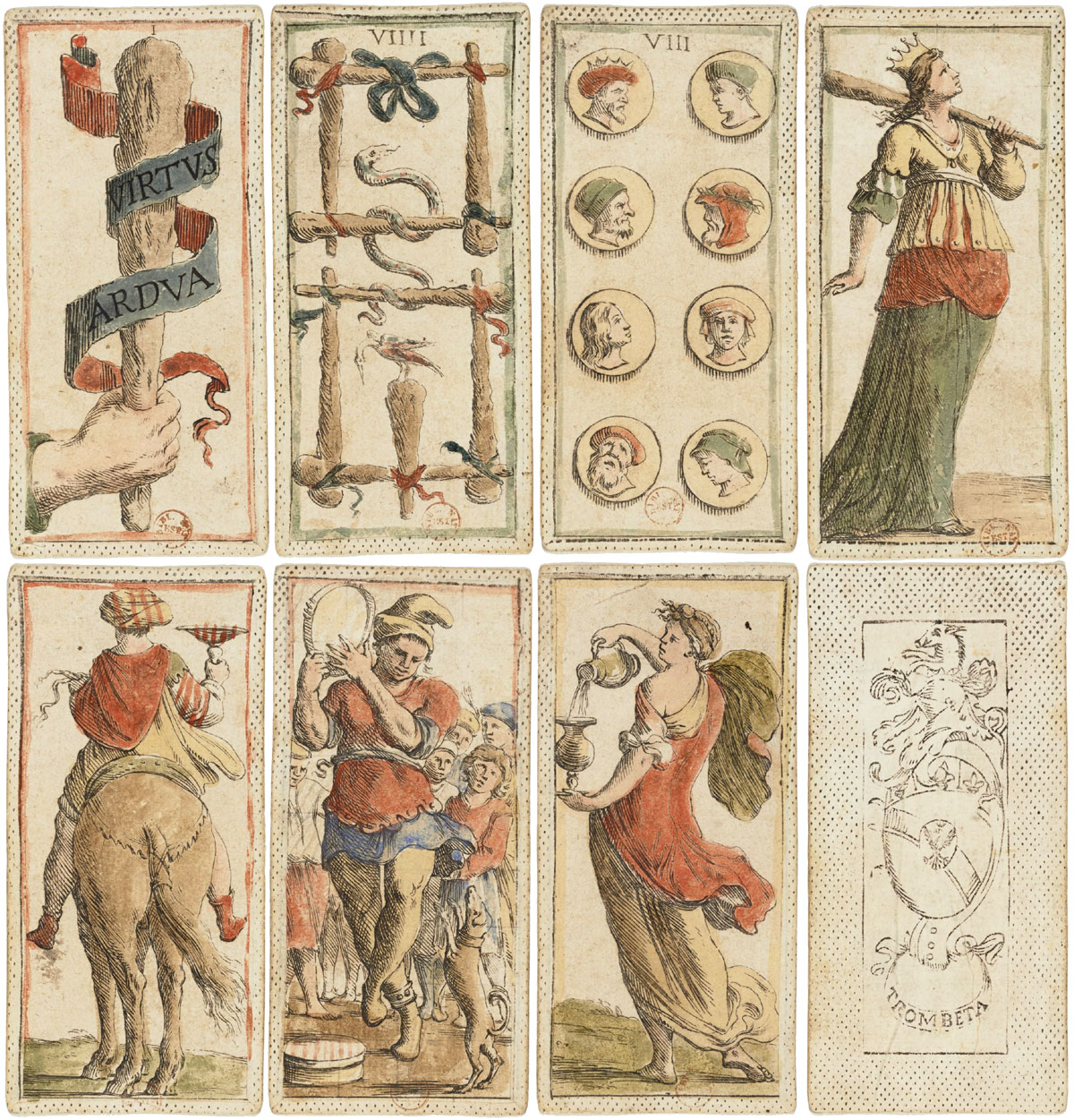
Above: original cards by Gioseppe Maria Mitelli. Source gallica.bnf.fr / Bibliothèque nationale de France: Gioco di carte, con nuova forma di tarrochini, intaglio in Roma►
Facsimile by Edizioni del Solleone, 1977
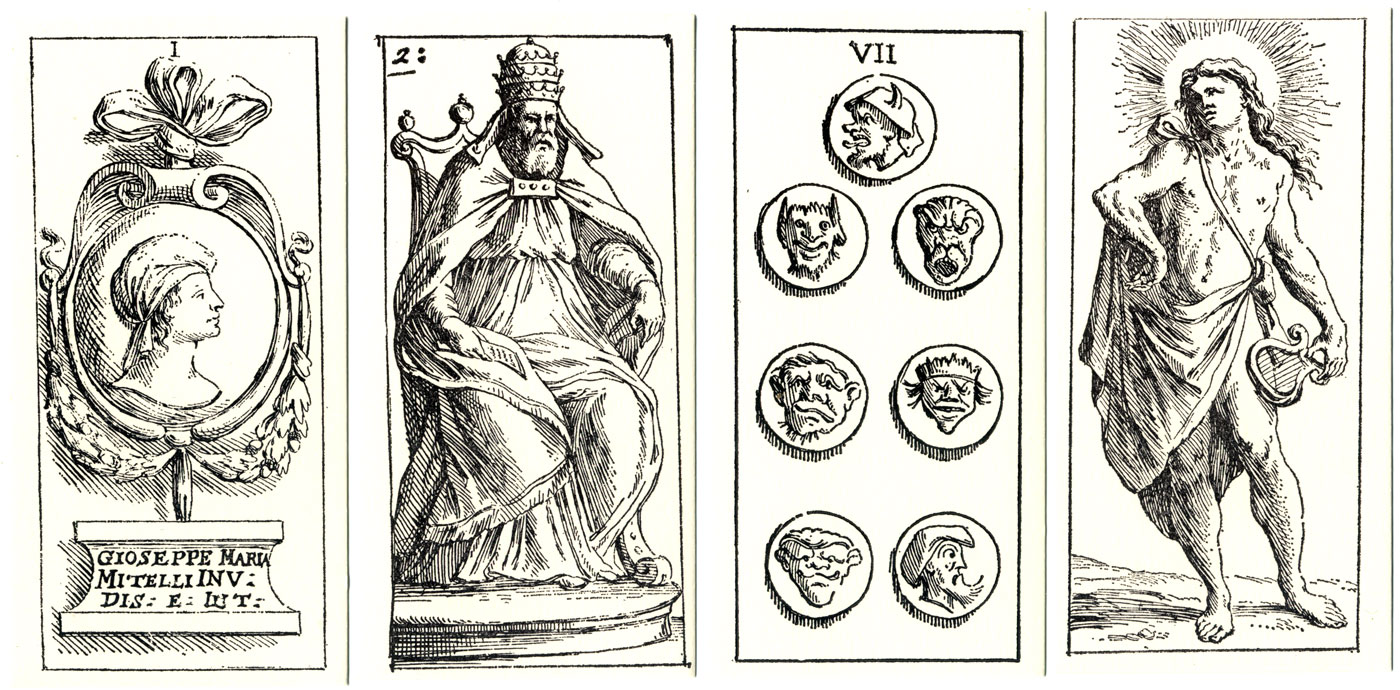
Above: the cards were also published as uncoloured prints in book form with the title “Giuoco di carte, con nuova forma di Tarocchini, intaglio in Roma di Guiseppe Maria Mitelli...”. The Ace of Coins has a portrait medallion with the artist’s name. Mitelli’s fanciful designs are a break from the earlier hand-painted tarocchi cards produced in Italy, but there are several instances where the decorative designs on the numeral cards and some of the Trumps remind us of other, earlier, packs of tarocchi or ordinary playing cards. The Trumps are unnamed and unnumbered. However, the four 'Popes' are numbered by hand: 1: 2: 3: 4: as part of the reproduction, so were presumably handwritten on the originals. Adam West-Watson wrote: "One can only assume the numbers were put on so as to determine who won the hand when two Popes were played to the same trick. And I guess, in true archivist style, Vito left the numbers on to make a very genuine facsimile of what must be an extraordinarily rare deck." Cards from the facsimile edition published by Vito Arienti, Edizioni del Solleone, in 1977.
REFERENCES
Hargrave, Catherine Perry: A History of Playing Cards and a Bibliography of Cards and Gaming, Dover Publications, New York, 1966
Mann, Sylvia: All Cards on the Table, Jonas Verlag/Deutsches Spielkarten-Museum, Leinfelden-Echterdingen, 1990

By Simon Wintle
Spain • Member since February 01, 1996
I am the founder of The World of Playing Cards (est. 1996), a website dedicated to the history, artistry and cultural significance of playing cards and tarot. Over the years I have researched various areas of the subject, acquired and traded collections and contributed as a committee member of the IPCS and graphics editor of The Playing-Card journal. Having lived in Chile, England, Wales, and now Spain, these experiences have shaped my work and passion for playing cards. Amongst my achievements is producing a limited-edition replica of a 17th-century English pack using woodblocks and stencils—a labour of love. Today, the World of Playing Cards is a global collaborative project, with my son Adam serving as the technical driving force behind its development. His innovative efforts have helped shape the site into the thriving hub it is today. You are warmly invited to become a contributor and share your enthusiasm.

Activity for Mitelli Tarocchini
Sign in to comment or save this article.

Related Articles
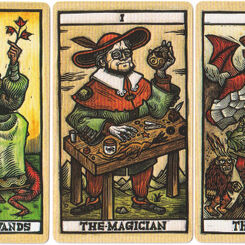
Tarot del Toro
Tomás Hijo makes Tarot del Toro from hand-painted linocut prints of characters and settings from Gui...
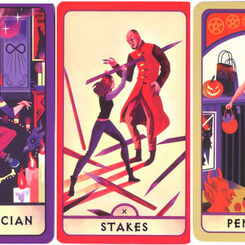
Buffy the Vampire Slayer Tarot
A Buffy the Vampire Slayer tarot pack that replaces Swords with scythes and Wands with stakes.
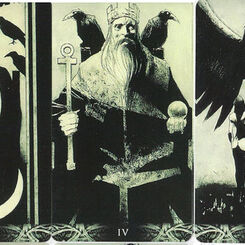
Murder of Crows Tarot
Corrado Roi’s 2020 tarot pack presents a dark, watchful world of crows and ritual figures.
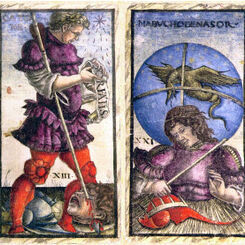
The Sola-Busca Tarot
Humanist Iconography, Alchemical Metaphor, and the Origins of the Illustrated Minor Arcana.
Le Monde Primitif Tarot
Facsimile edition produced by Morena Poltronieri & Ernesto Fazioli of Museo Internazionale dei Taroc...
Bolognese pattern
Standard Bolognese pattern pack by Murari of Bari.
Tarocco Indovino
Sergio Ruffolo’s “Tarocco Indovino” is an expanded version of his “Lo Zodiaco” cartomancy deck.
Dungeons and Dragons Tarot
This 78-card officially licensed Dungeons & Dragons (D&D) tarot deck offers a visually appealing var...
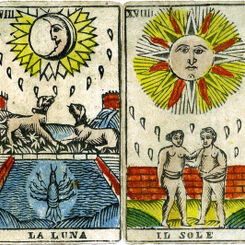
Tarocco Piemontese by Giovanni Rossi
18th c. Piedmont Tarocchi by Giovanni Rossi, Turin.
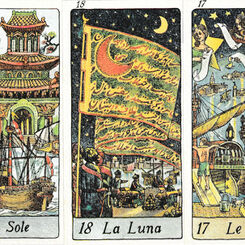
Venetian Tarot
Scenes from the history of Venice on a set of the major arcana.
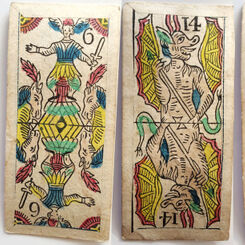
Tarocchini Bolognesi by Carlo Zanardi
Tarocchini Bolognesi by Carlo Zanardi, c.1850
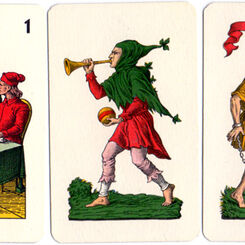
Tarocco Siciliano
The highly individual Sicilian Tarot has the Italo-Portuguese suit system with straight, interlockin...
Mitelli ‘Gioco di Passatempo’
Il Gioco di Passatempo contains 40 figurative playing cards depicting moral virtues and vices, dated...
Rider Waite Tarot early editions
Rider Waite Tarot early editions
Serravalle-Sesia Tarot
Serravalle-Sesia Tarot published by Fratelli Avondo, c.1880.
Etruria Minchiate
The Cavaliers are man/beast creatures. The Valets (or Pages) are male for clubs and swords, and fema...
Corona Ferrea
Trumps depict historical scenes primarily of the political period known as the Holy Roman Empire fro...

Tarocco Neoclassico
Gumppenberg published several new decks by artists or engravers of the day. The designs are clear an...
Tarocco Bolognese
Tarocco Bolognese
Hand-Painted Tarocchi Cards
Hand-painted Tarocchi cards sometimes known as ‘Charles VI tarot’, North Italy, 1475-1500.
Most Popular
Our top articles from the past 60 days


linda montanucci
19 November 2025, 09:47SavedSaved this article to linda montanucci's Collection
Maria Nick
04 March 2026, 22:39SavedSaved this article to Maria Nick's Collection