


Neapolitan pattern by Luigi Pignalosa, Naples
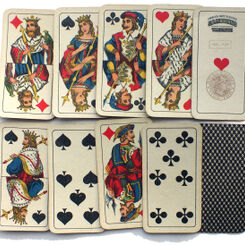
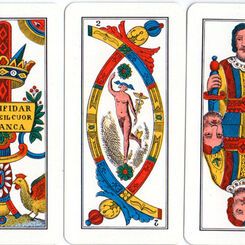
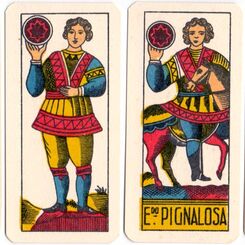
Two versions of the Neapolitan pattern from the British Museum by Luigi Pignalosa, Naples, 1875 & 1882.
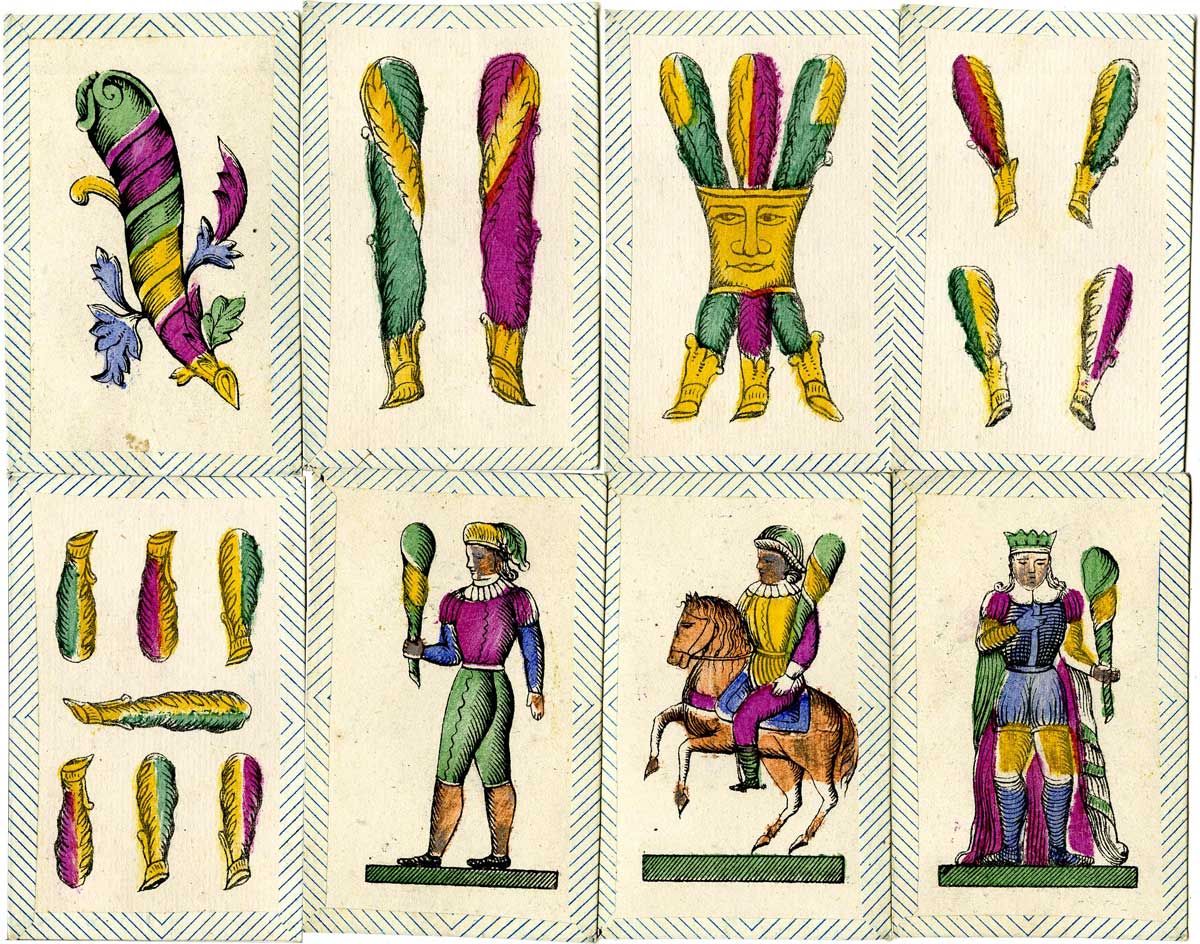
The brightly-coloured Neapolitan pattern (“Carte Napoletane”) has a rustic and traditional design with Latin (or Italo-Spanish) suit symbols. It has single-ended court cards, standing on different coloured platforms allocated to suits: yellow for coins, red for cups, blue for swords and green for clubs. The ace of coins has a double-headed eagle (uncrowned) which usually carries the maker’s name and address and the tax stamp(s). The four of coins shows the arms of Savoy. The backs of the cards are folded over the edges of the fronts forming a border. This gives the cards a sturdy feel.
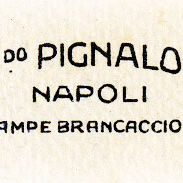
Luigi Pignalosa, whose name appears on the ace of coins along with a duty stamp and his address at Strada Cerriglio A Mercanti No. 7, Naples, commenced his business in c.1870. At some point his son Raffaele took control of the business during the early years of the 20th century. In the 1940s Raffaele’s son Edoardo succeeded as the new manager until his death in 1979 which marked the end of the Pignalosa firm.
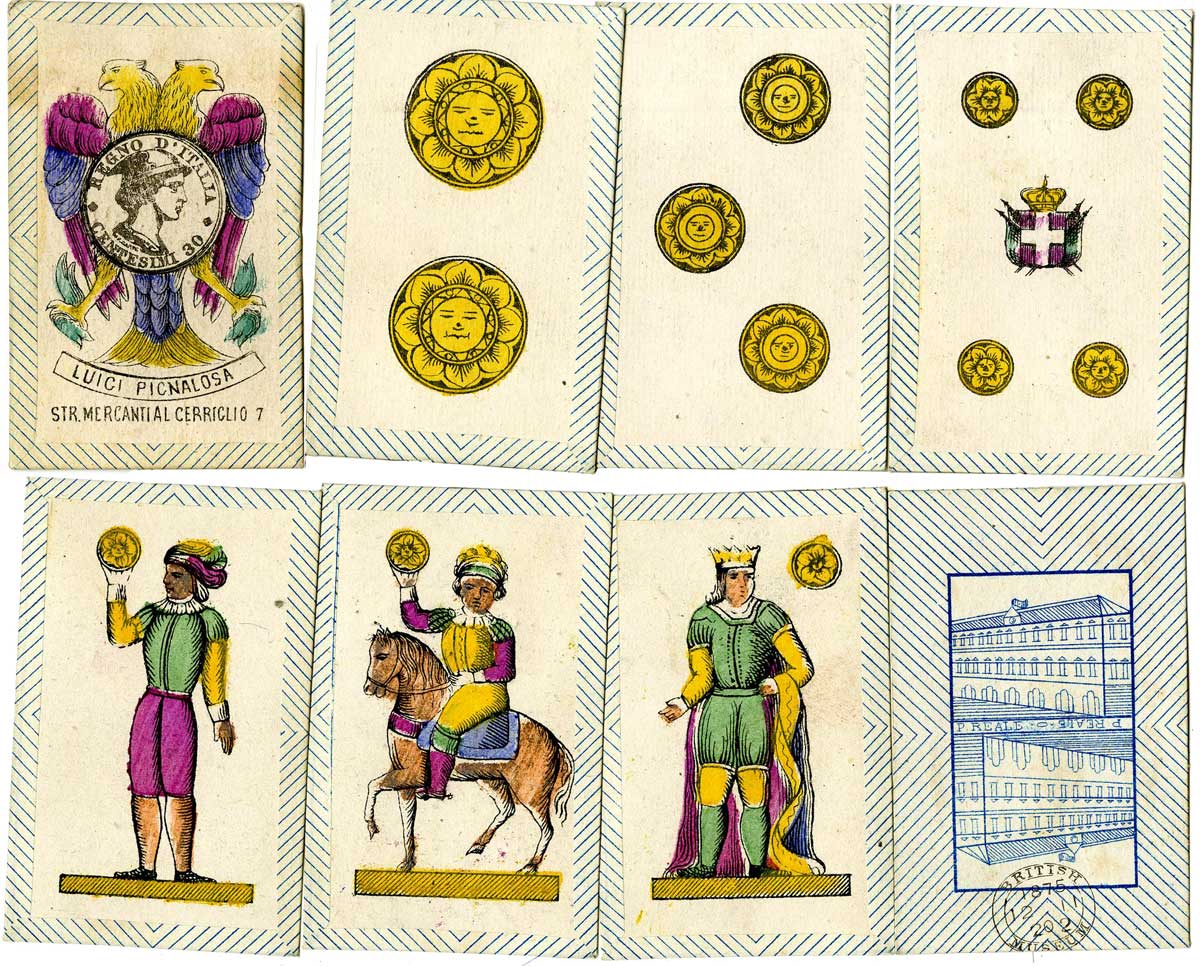
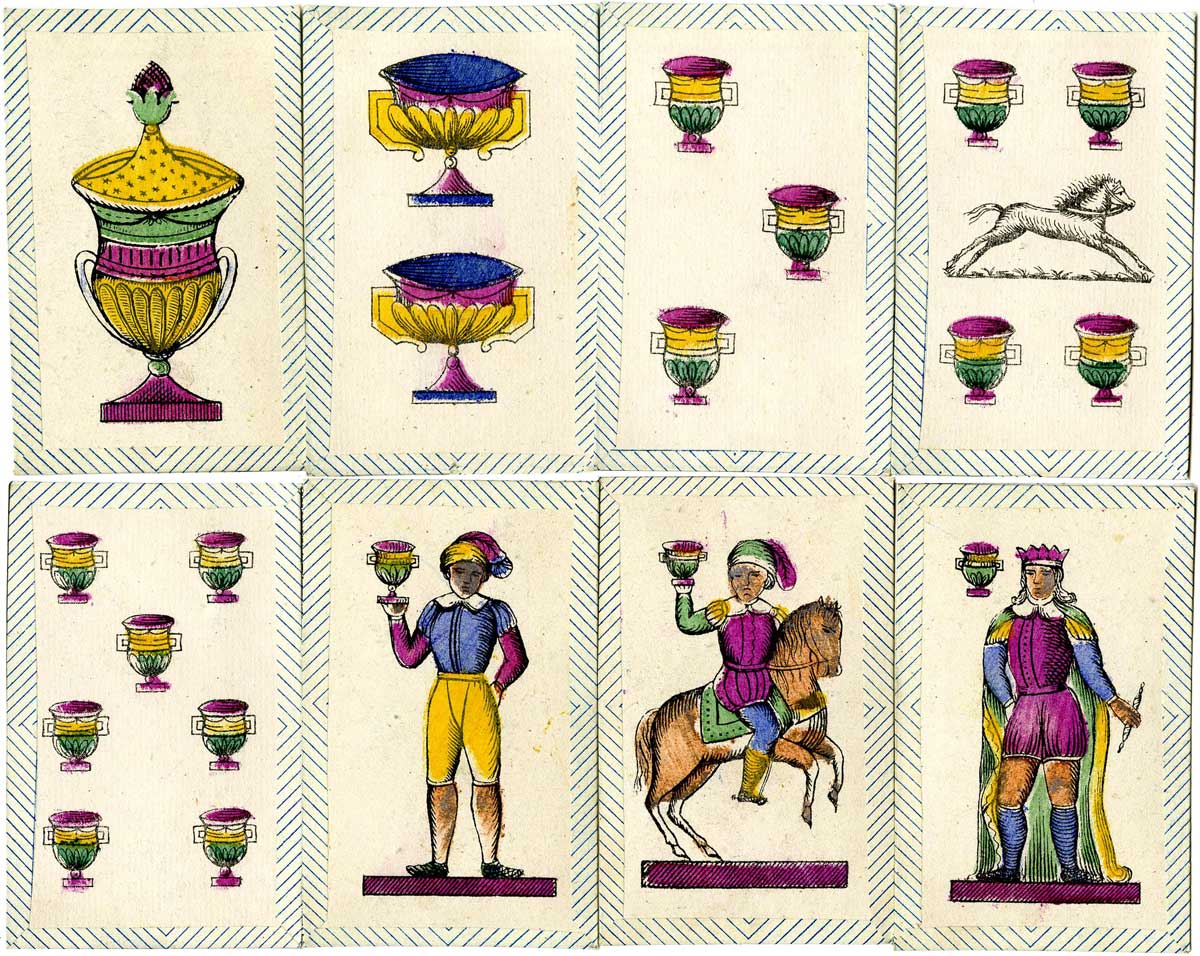
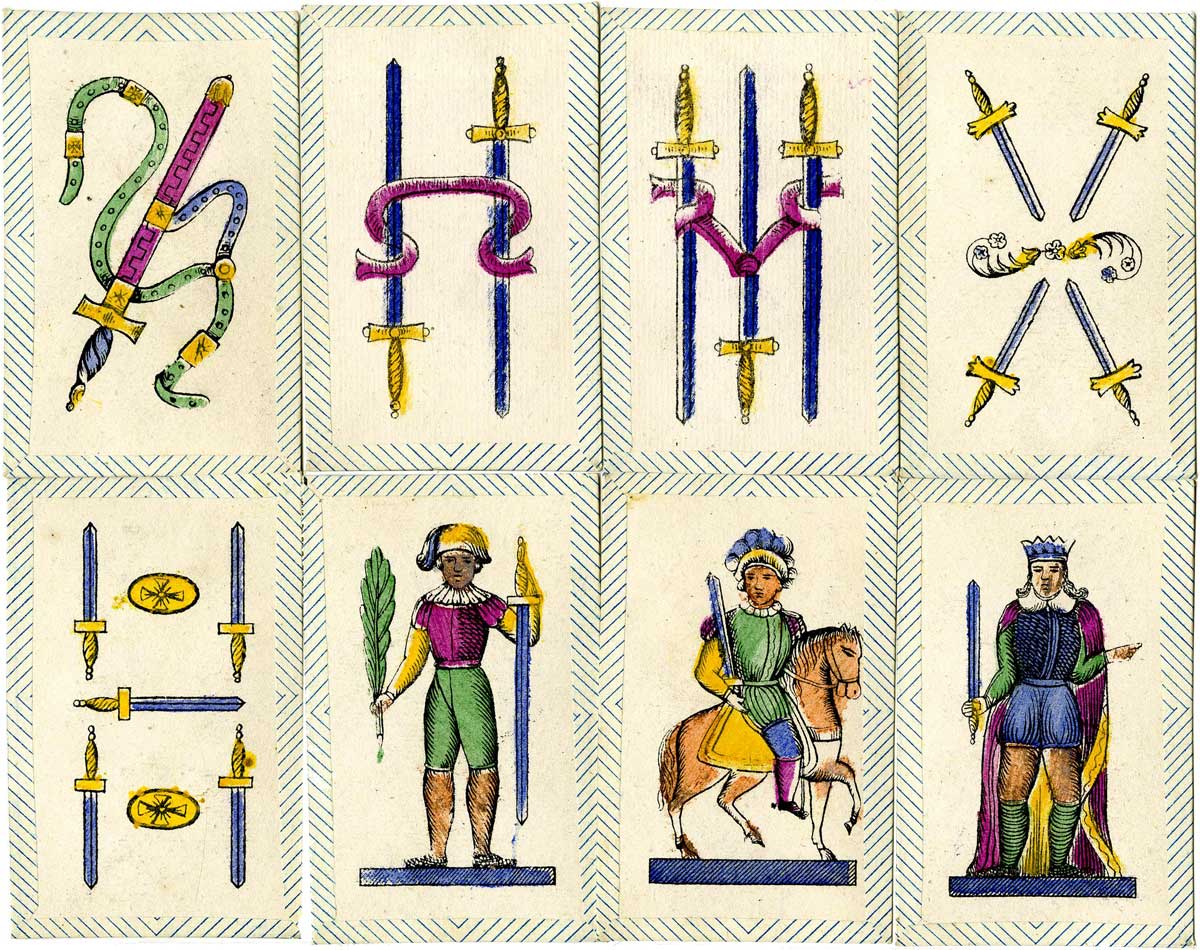
Above: Neapolitan pattern by Luigi Pignalosa, Naples, 1875. Stencil-coloured lithograph, 40 cards, 51x82 mm. The backs are printed with a double-ended representation of the Royal Palace, or "P. Reale ". © The Trustees of the British Museum
The cards are usually smaller and narrower than other standard cards, making them easier to handle. Each suit has ten cards, ace (1), numbers 2-7 with a jack, knight and king. There is no queen in the Neapolitan deck. The swords and clubs mostly do not intersect, as in Spanish-suited decks. The jack of swords holds his sword pointing downwards and a branch in his right hand. The three of clubs has a mask where the three clubs intersect. Other cards have decorative motifs which reflect local folk art traditions.
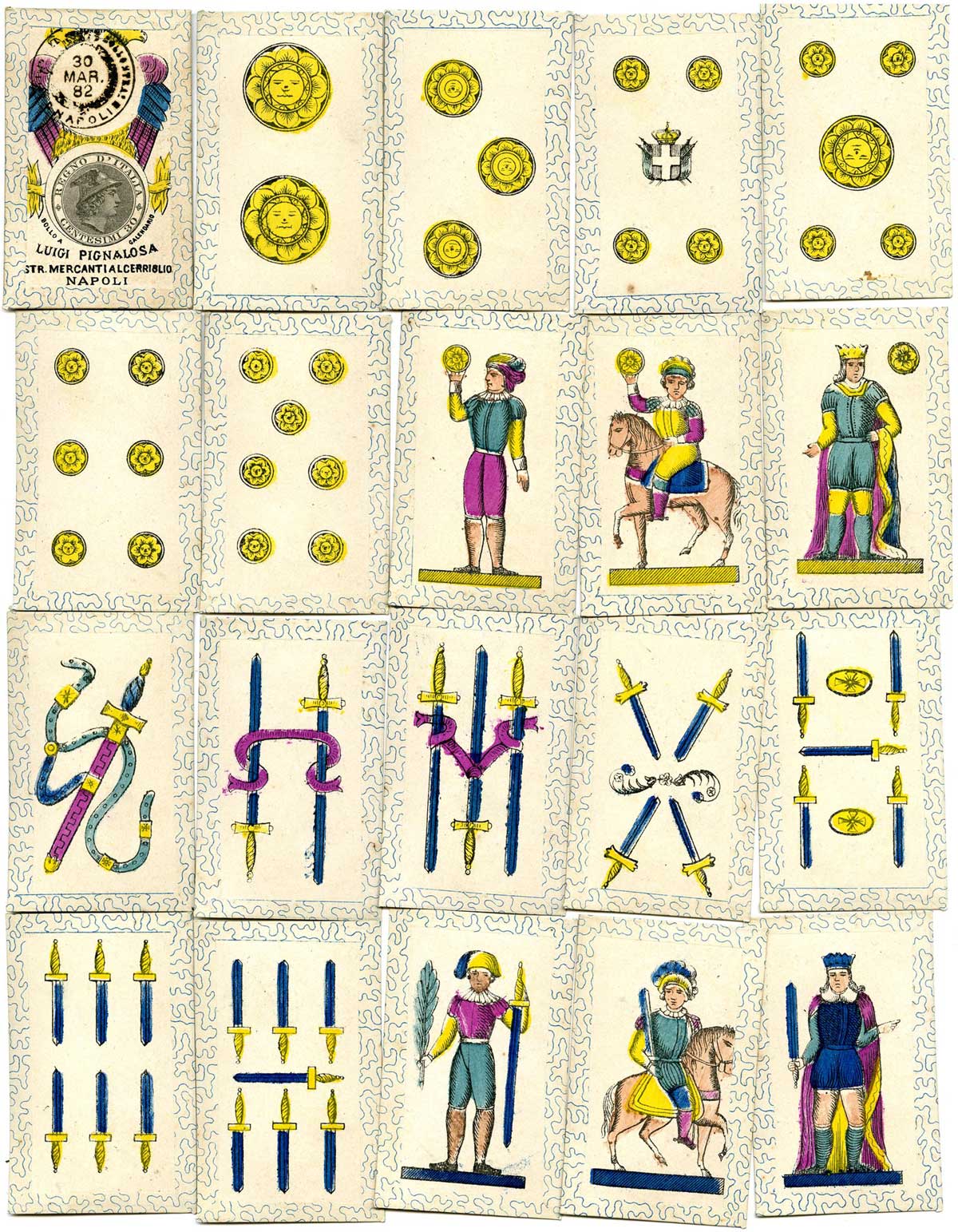
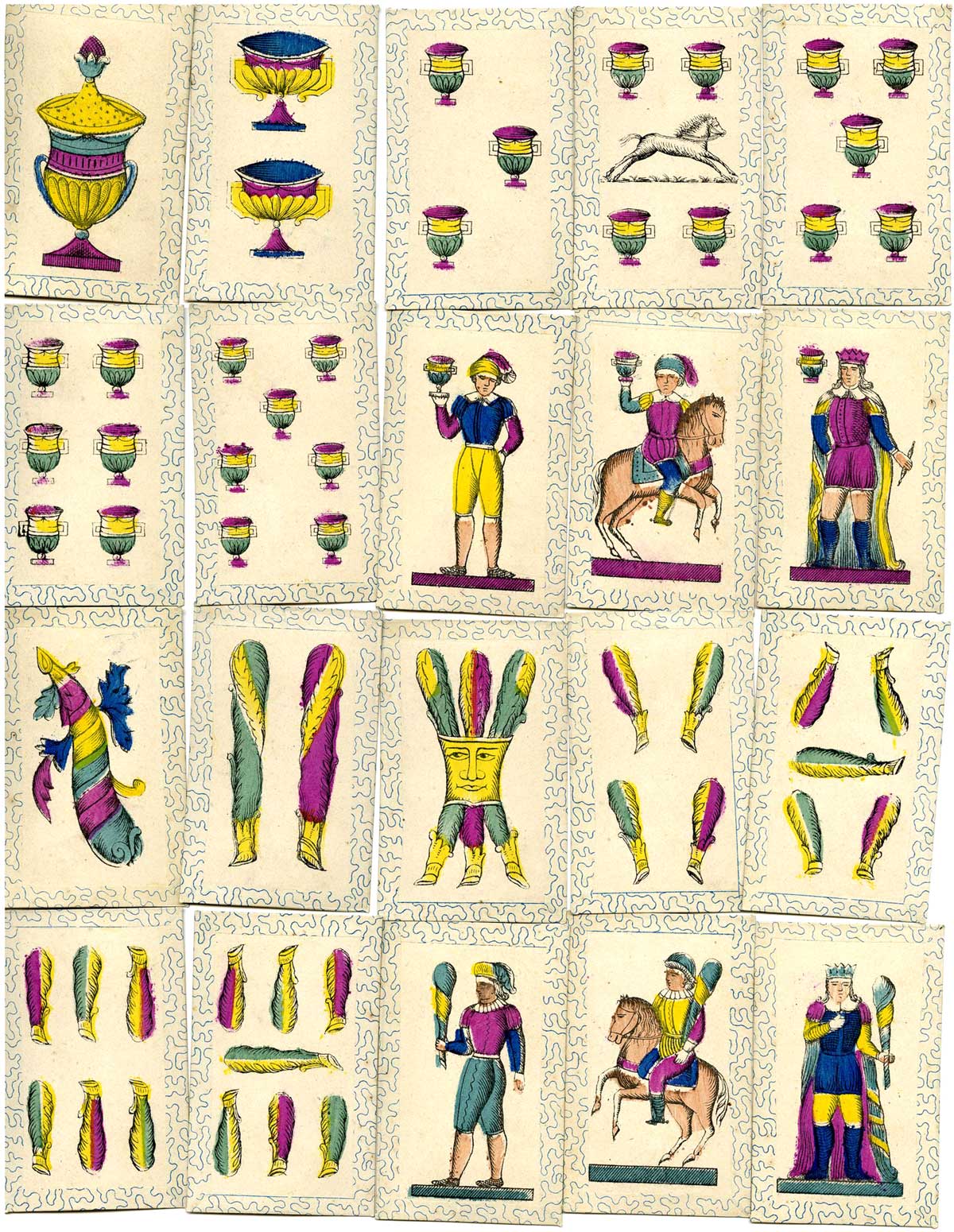
Above: Neapolitan pattern by Luigi Pignalosa, Naples, 1882. The ace of coins bears two duty stamps, below one of which is "Luigi Pignalosa, Str. Mercantial Cerriglio, Napoli". Hand-coloured woodcut, 40 cards. © The Trustees of the British Museum
References
British Museum:
- Museum number 1875,1211.172-211►
- Museum number 1882,0909.97-136►
O’Donoghue, Freeman M: Catalogue of the collection of playing cards bequeathed by Lady Charlotte Schreiber (Italy 74), Trustees of the British Museum, London, 1901 [digital version here]

By Simon Wintle
Spain • Member since February 01, 1996
I am the founder of The World of Playing Cards (est. 1996), a website dedicated to the history, artistry and cultural significance of playing cards and tarot. Over the years I have researched various areas of the subject, acquired and traded collections and contributed as a committee member of the IPCS and graphics editor of The Playing-Card journal. Having lived in Chile, England, Wales, and now Spain, these experiences have shaped my work and passion for playing cards. Amongst my achievements is producing a limited-edition replica of a 17th-century English pack using woodblocks and stencils—a labour of love. Today, the World of Playing Cards is a global collaborative project, with my son Adam serving as the technical driving force behind its development. His innovative efforts have helped shape the site into the thriving hub it is today. You are warmly invited to become a contributor and share your enthusiasm.

Activity for Neapolitan pattern by Luigi Pignalosa, Naples
Sign in to comment or save this article.

Related Articles
Piedmont Pattern
The Piedmont pattern is a very close relative to the French 'Paris' pattern. The courts are not name...
Lombardy (or Milanesi) pattern
The origins of the Lombardy pattern probably lie in the early 19th century when it was a full-length...
Trevisane pattern
The double-ended version of the ‘Trevisane’ pattern originated in the early 19th century.
Small Tuscan Pattern
Small Tuscan Pattern
Florentine Pattern
Originally one of several designs which emerged during the nineteenth century, the Florentine patter...
Brescia pattern
The Brescia pattern contains elements which come from a past age.
Most Popular
Our top articles from the past 60 days


Maria Nick
21 February 2026, 11:10SavedSaved this article to Maria Nick's Collection