


Sunday Night / Nichiyoubi no Yoru
An irreverent, avant-garde deck unofficially titled "Nichiyoubi no Yoru" (Sunday Night), designed by Teruhiko Yumura.
Cards are from an irreverent, avant-garde deck unofficially titled "Nichiyoubi no Yoru" (Sunday Night), designed by Teruhiko Yumura, who pioneered a distinctive art technique that intentionally looks poorly drawn. The cards feature grotesque erotic illustrations rendered in a cartoony black-and-white ink style. The Japanese texts on each card are dark, satirical fortune-telling poems related to the imagery.
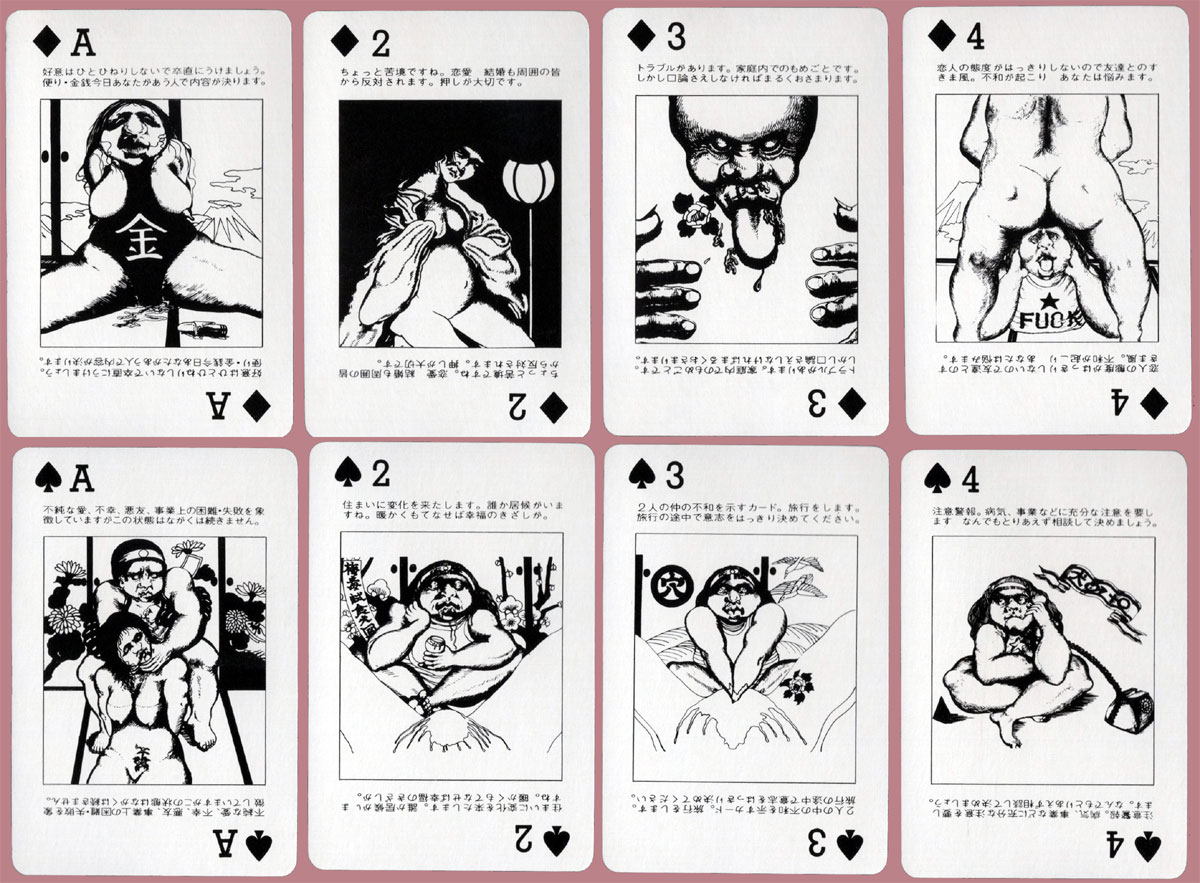
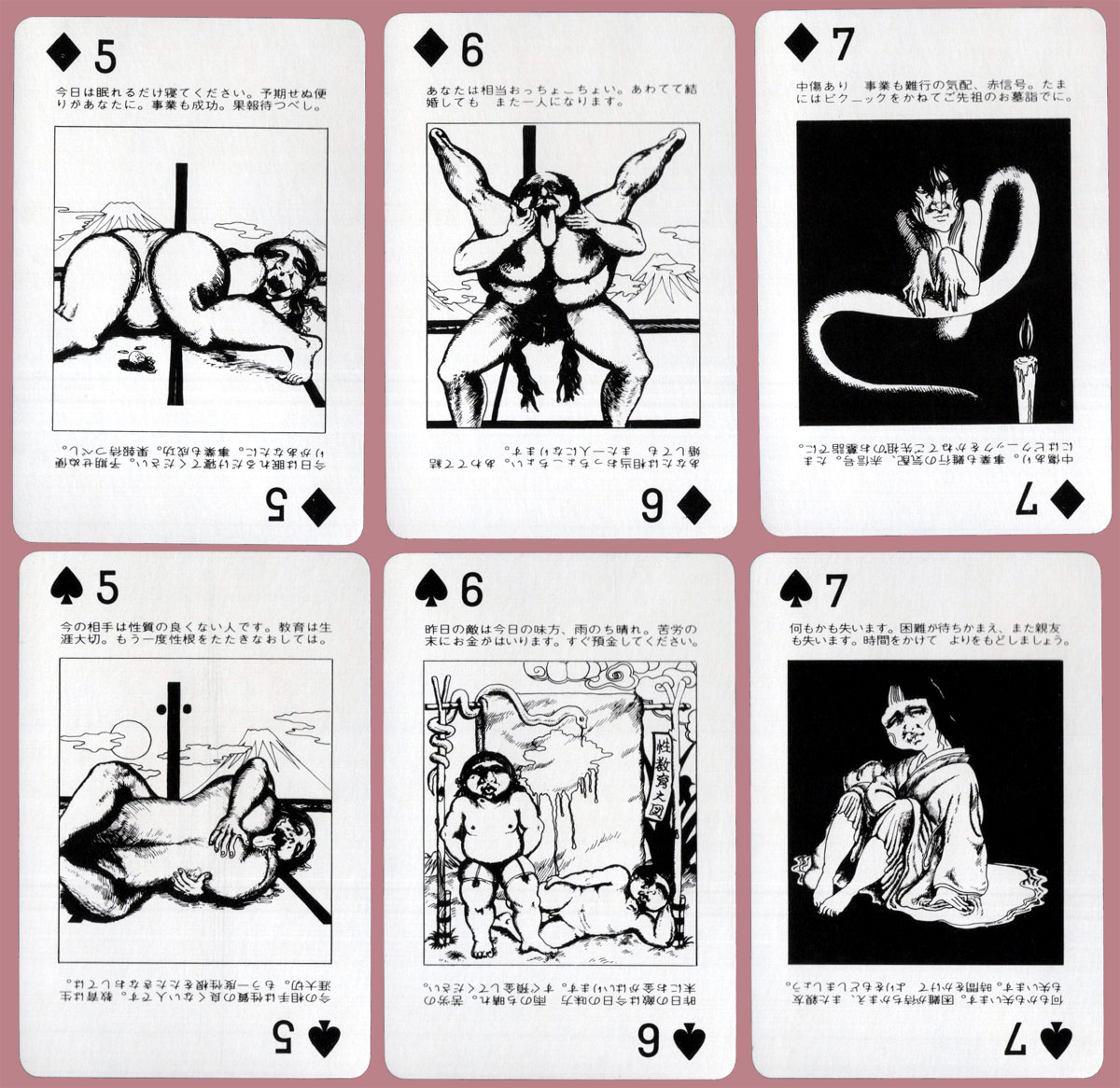
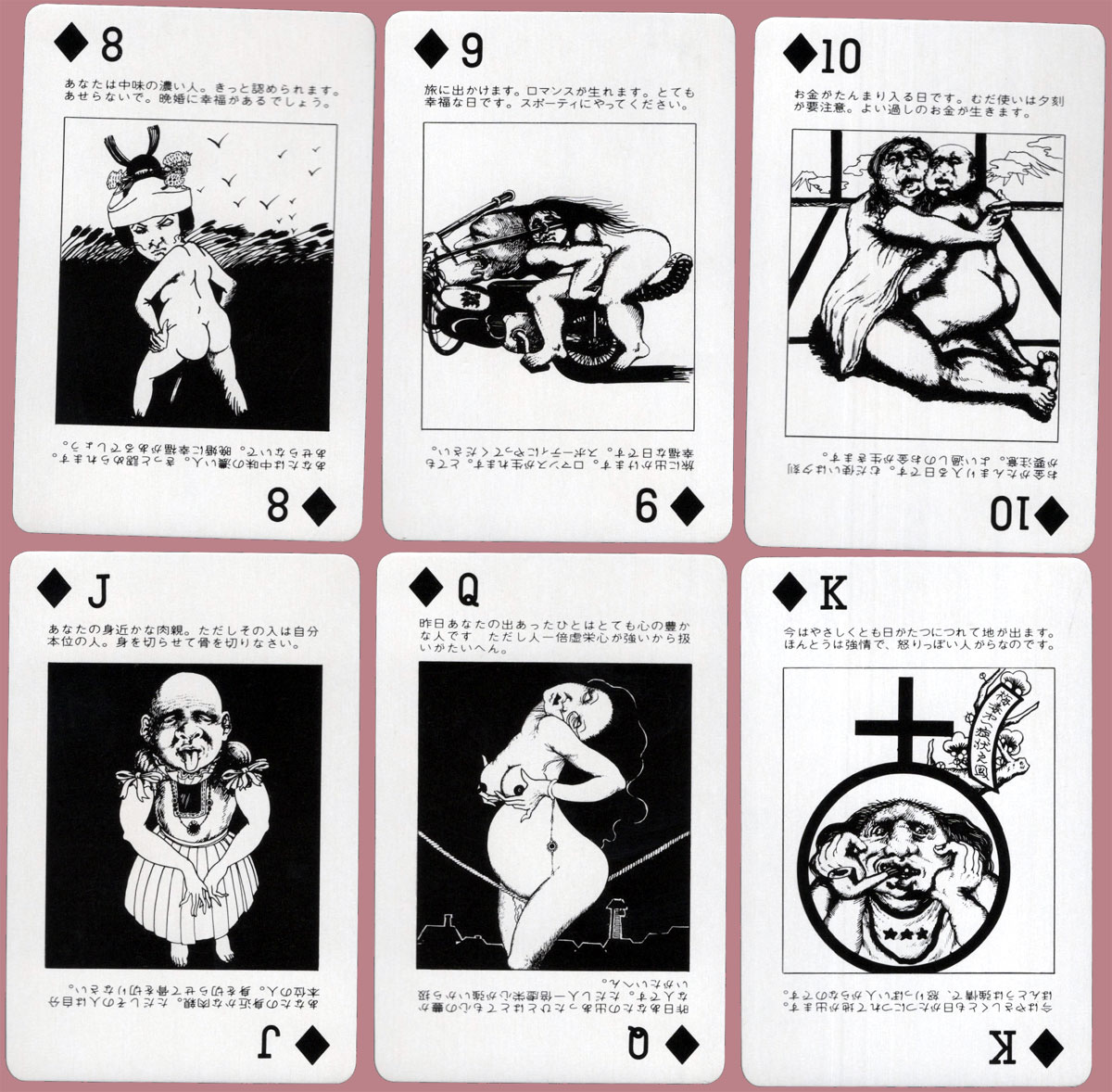
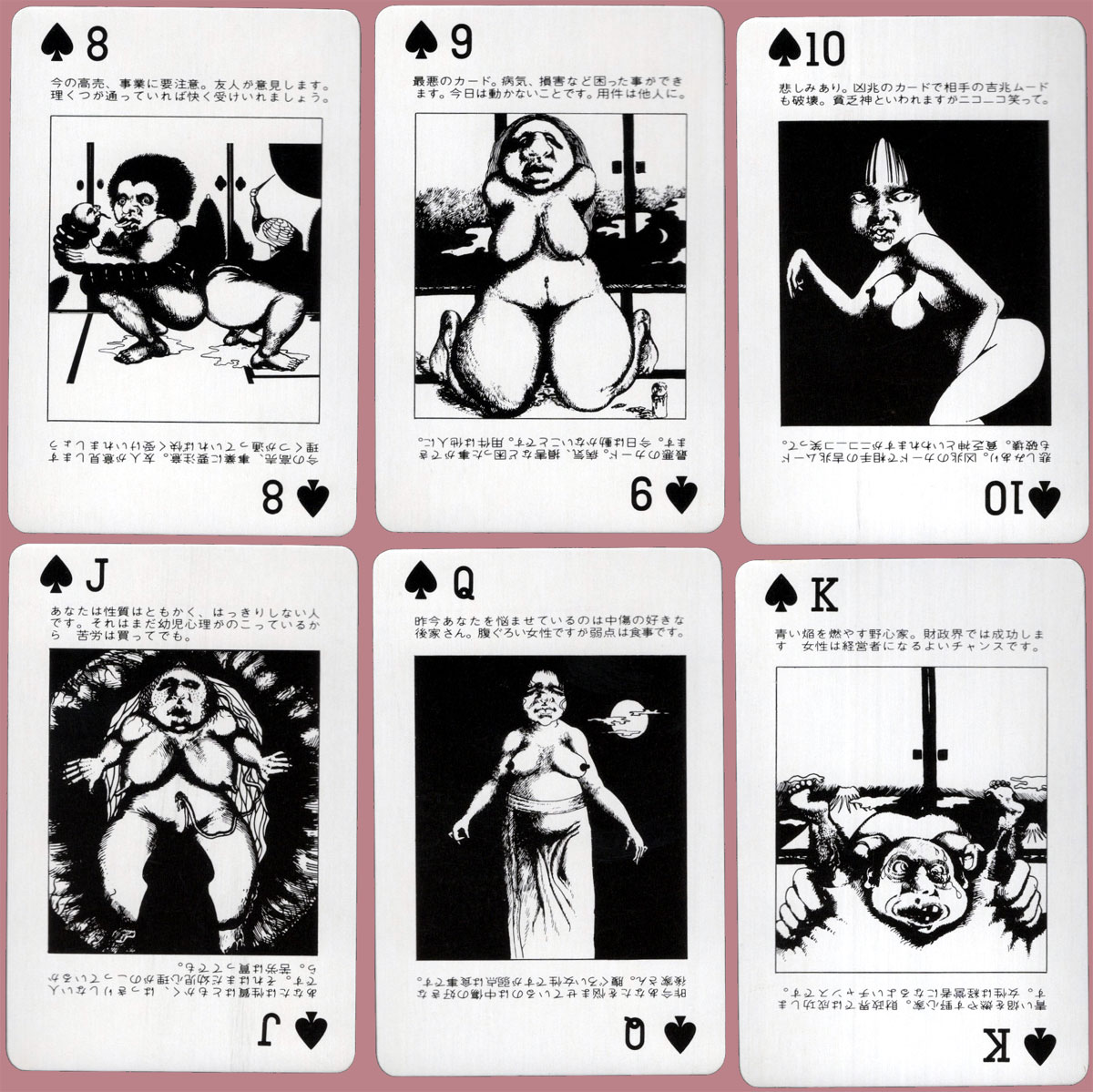
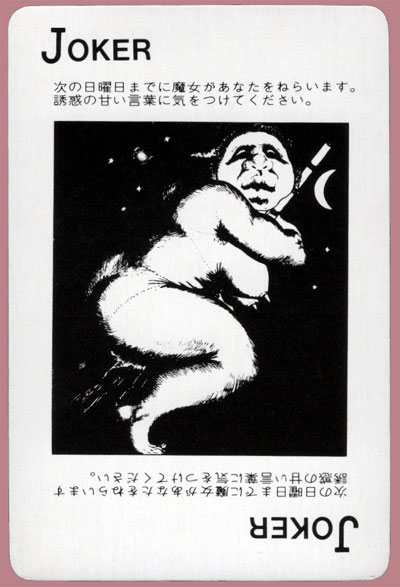
Above: Nichiyoubi no Yoru (Sunday Night) playing cards designed by Teruhiko Yumura, published by Dainippon Playing Cards, c.1970s.
Regarding the nickname “Sunday Night”, the Japanese text on the Joker card is:
次の日曜日までに魔女があなたをねらいます。
誘惑の甘い言葉に気をつけてください。
Which translates as "By next Sunday, a witch will target you. Beware of sweet words of temptation."
Like many underground or novelty decks from 1970s–80s Japan, it wasn’t always given a formal or widely publicized commercial title beyond being a limited or novelty release. It may simply have been issued as an art deck or collector’s deck under Dainippon’s umbrella.
References
Wikipedia : Teruhiko Yumura►
By Jon Randall
Australia • Member since May 28, 2020
From 6 or 7 years of age I enjoyed playing cards with my family, and still enjoy a variety of games today with various groups and individuals. I contribute my competitive nature to enjoying games … it’s not that I like to win, I dislike losing! I was barely 10 years old when my great Uncle left me a small collection of playing cards and that was the starting point of my collecting. The competitive streak in me helped develop me into a competitive swimmer that sent me to various places around the world, including a 6 year stint in the US, where for much of that time I was at university. I’ve always enjoyed car boots flea markets, yard sales, charity shops etc., and my eye would never miss a pack of playing cards. Even after my swimming career finished I coached at a high level for many years and continued enjoying the discovery of some great finds around the world. For decades my collection continued to grow, despite selling a portion of it via eBay over the years. It wasn’t until post 2010 that I realised, mostly due to correspondence with Australian friends, that there were so many single playing card collectors. This intrigued me. I had so many packs of cards at home that I made the bold decision to share a good number with singles collectors, and subsequently listed around 7000 for sale on eBay. That did make a dent in my collection, but there’s still around 30,000 packs taking up quite a bit of space at home. Crazy? Yes, but I’ve seen bigger hoards a few times! There’s so many I surprise myself finding packs I forgot I had when I look in a box I’d not seen in a while.
My eBay IDs if you’d like to look are “worldwide_playing_cards” & “playing_cards_world”►

Activity for Sunday Night / Nichiyoubi no Yoru
Sign in to comment or save this article.

Related Articles
Balearic Souvenir Cards
Mediterranean Souvenir deck by Rioba Studio, Pollença, Mallorca.
Japan
Piatnik’s tribute to Japanese history.
Les Amoureux de Peynet
An iconic cartoon veers from cute to sexual with no stops in between.
Tactics Design
Late modernist Japanese playing cards designed by Masayoshi Nakajo for Tactics Design.
The Decadent Deck
Studies in the eroticism of the female body by Inge Clayton.
Japanese Beauties
An elegant fusion of Western and Japanese traditions modelled after ukiyo-e.
Masuo Ikeda
Striking, colourful designs by the Japanese artist Masuo Ikeda.
The Art of Pin-Up decks
Feminine beauty has been appreciated since prehistory.
Sanyo Ukiyo-E
Ukiyo-E deck for Sanyo Enterprise Co.
Translucent Playing Cards
Translucent Playing Cards made by an unknown maker, c.1850
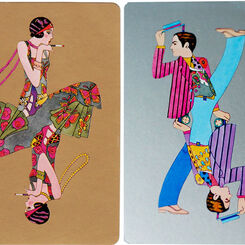
Roaring Twenties
Roaring Twenties playing cards by Angel Playing Cards Co Ltd, Japan. 1980.
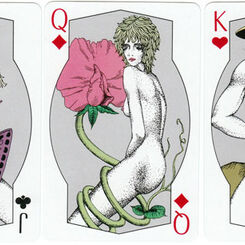
Shapely
“Shapely” non-standard adult playing cards manufactured by Angel Playing Cards Co., Japan, 1980
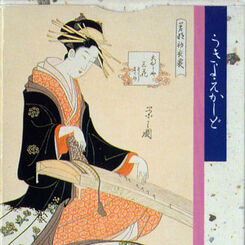
Utamaro “Ukiyo-e” playing cards
Utamaro Ukiyo-e playing cards showing woodblock prints of beautiful women.
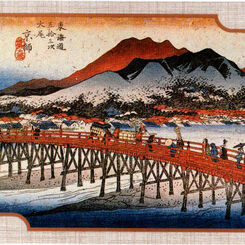
Hiroshige Ukiyo-e playing cards
“Hiroshige” playing cards drawn by Hiroshige Ando (1797-1858) at 53 stopoffs on the journey from Edo...
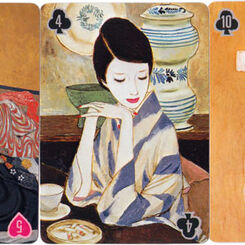
Japanese Women
Japanese Women playing cards in an idealised and erotic style by Keiichi Takasawa (1914-1984).
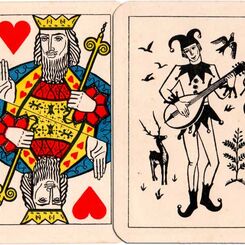
Anonymous Dutch deck, 1940s
Anonymous Dutch deck, 1940s
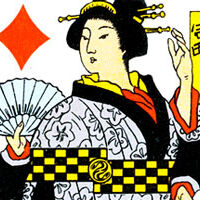
Japanesque
Goodall’s “Japanesque” brand was used for stationery products since around 1880 but these playing ca...
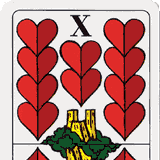
Balázs Pál Nagy's Playing Cards
Balázs Pál Nagy's Playing Cards
The History of Playing Cards
Playing cards appear in European records in the late 14th century, but their earlier history lies fu...
Queen of Hearts
“Queen of Hearts” by Josie Callipari, winner of the Brian Tucker Accounting Desert Fantasia Award 20...
Most Popular
Our top articles from the past 60 days


