


Hiroshige Ukiyo-e playing cards
“Hiroshige” playing cards drawn by Hiroshige Ando (1797-1858) at 53 stopoffs on the journey from Edo (Tokyo) to Kyoto.
Fine artwork on playing cards is often constrained or wasted by the small size of each card, so here we have brought these wonderful paintings back to life. The textured surface of the cards adds to the visual enjoyment of these remarkable paintings, whilst the slender corner indices are not excessively intrusive.
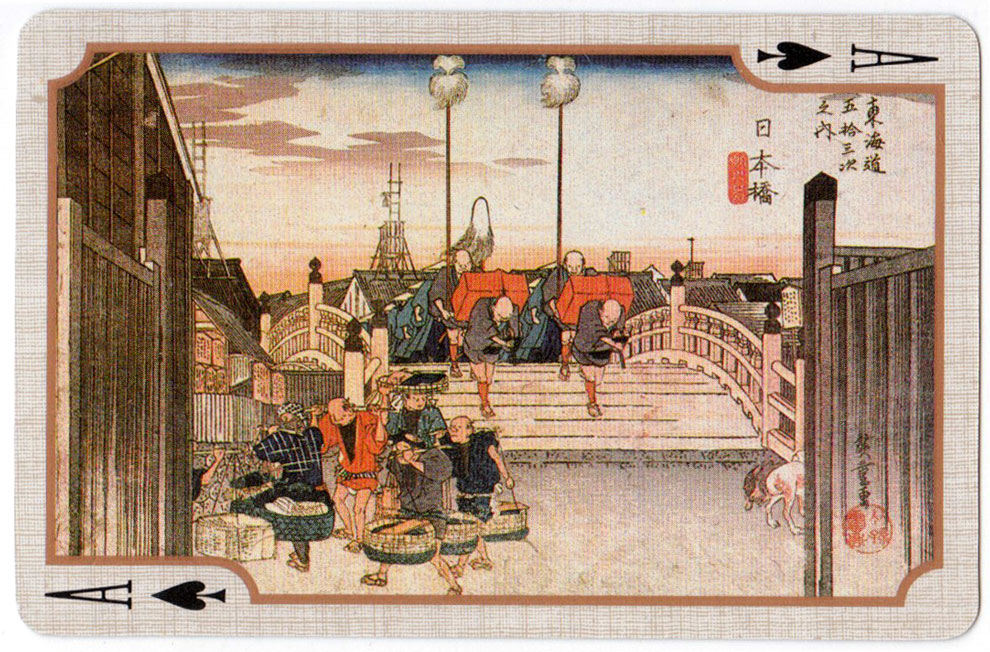
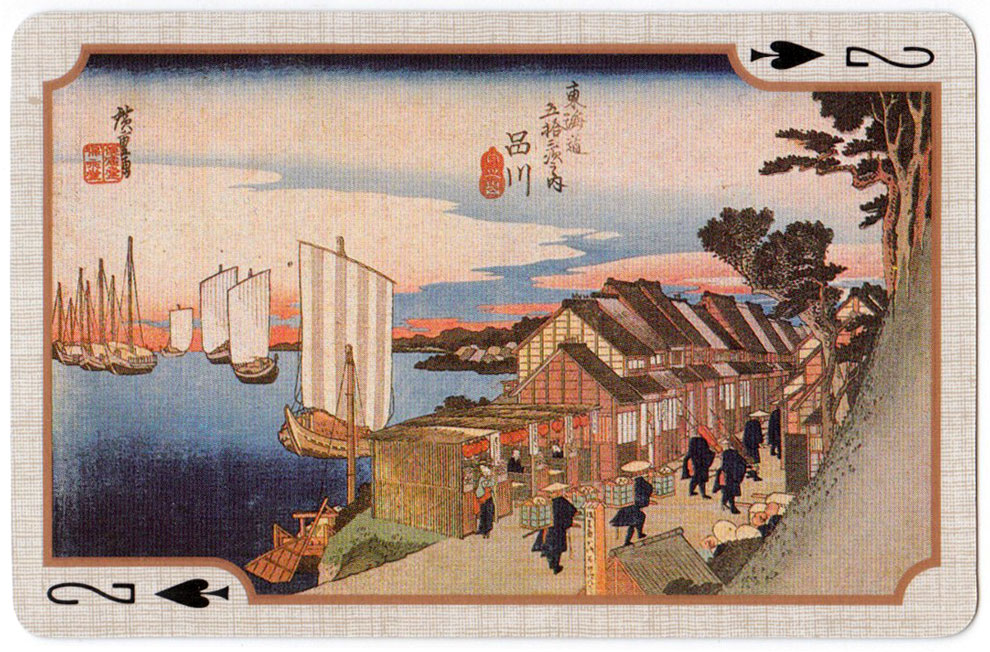
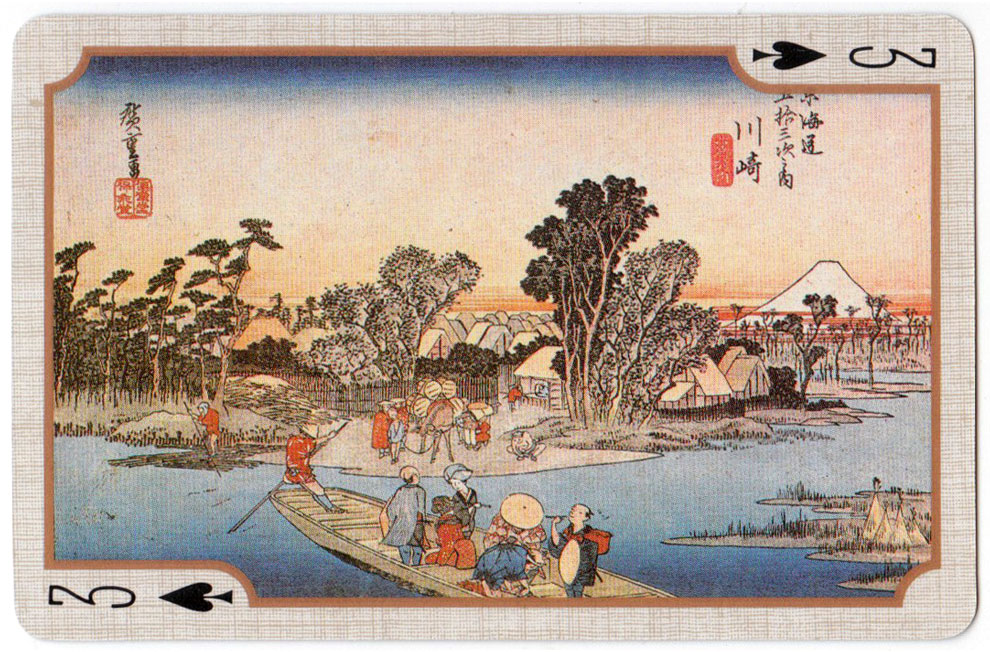
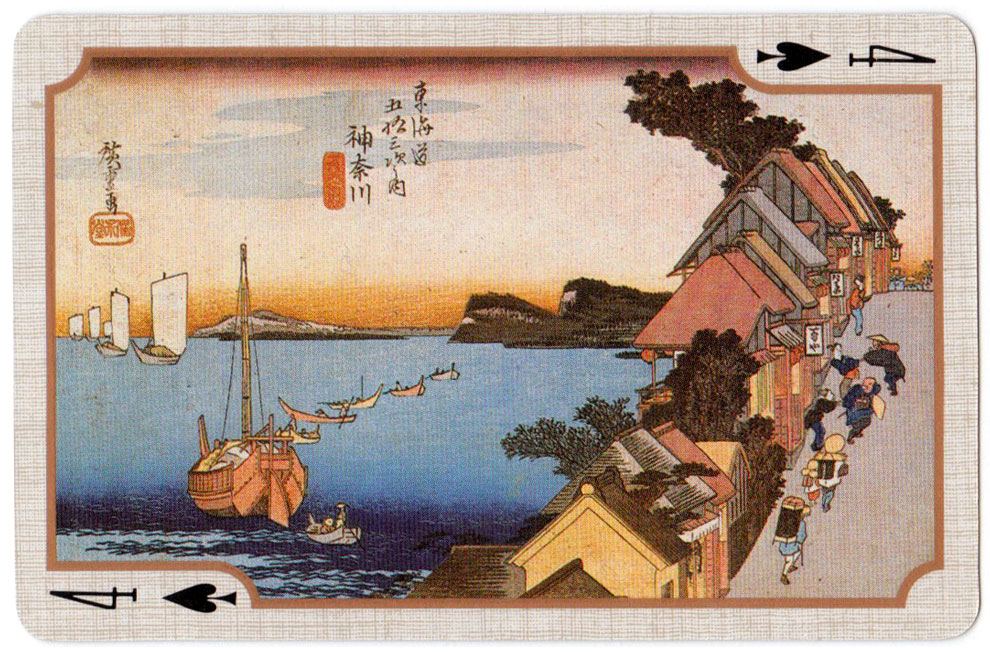
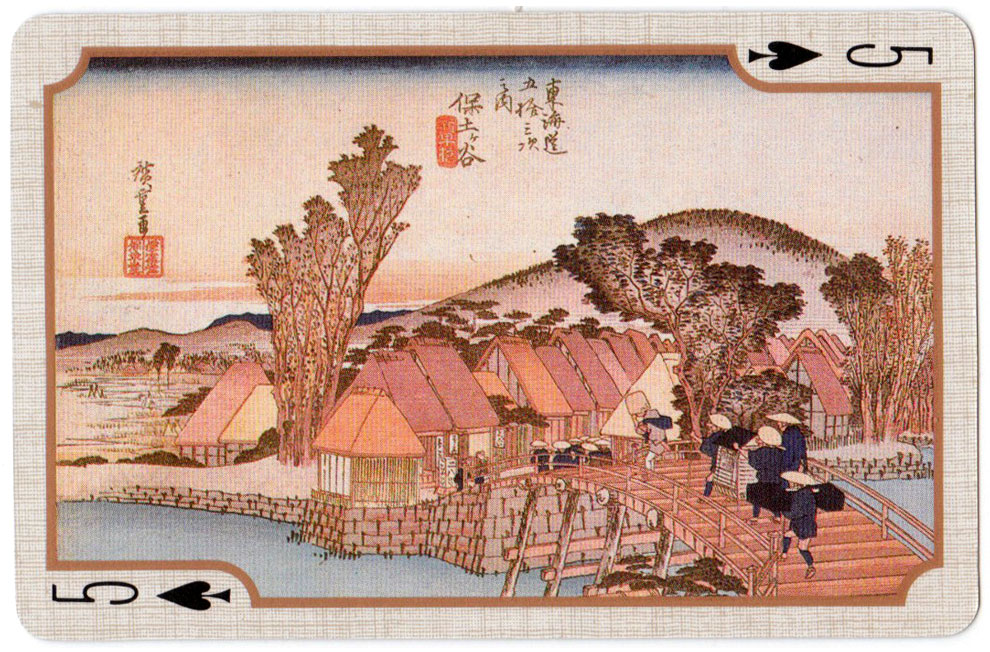
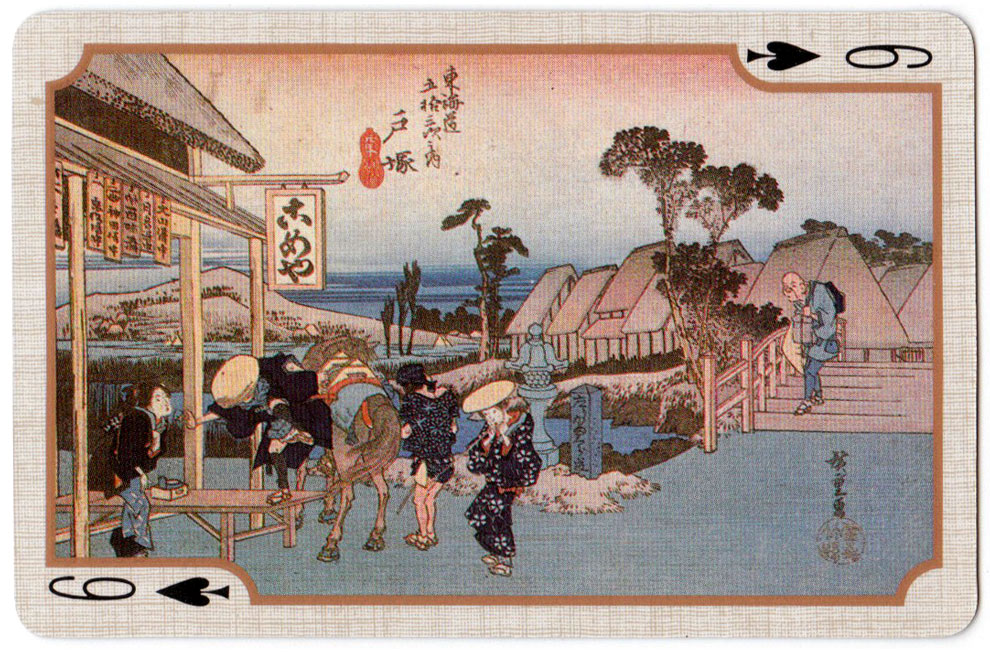
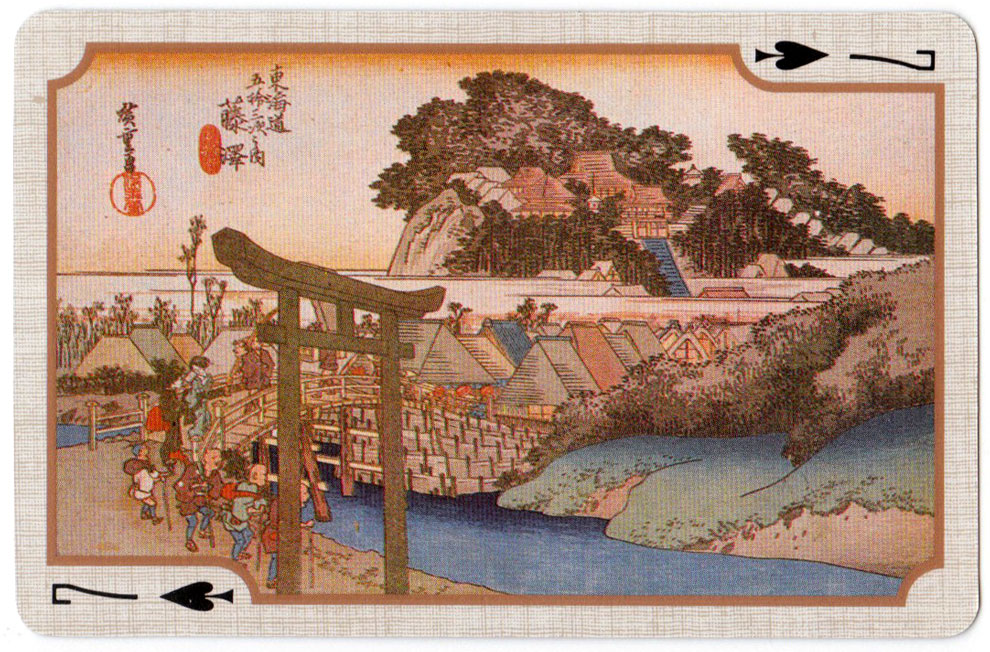
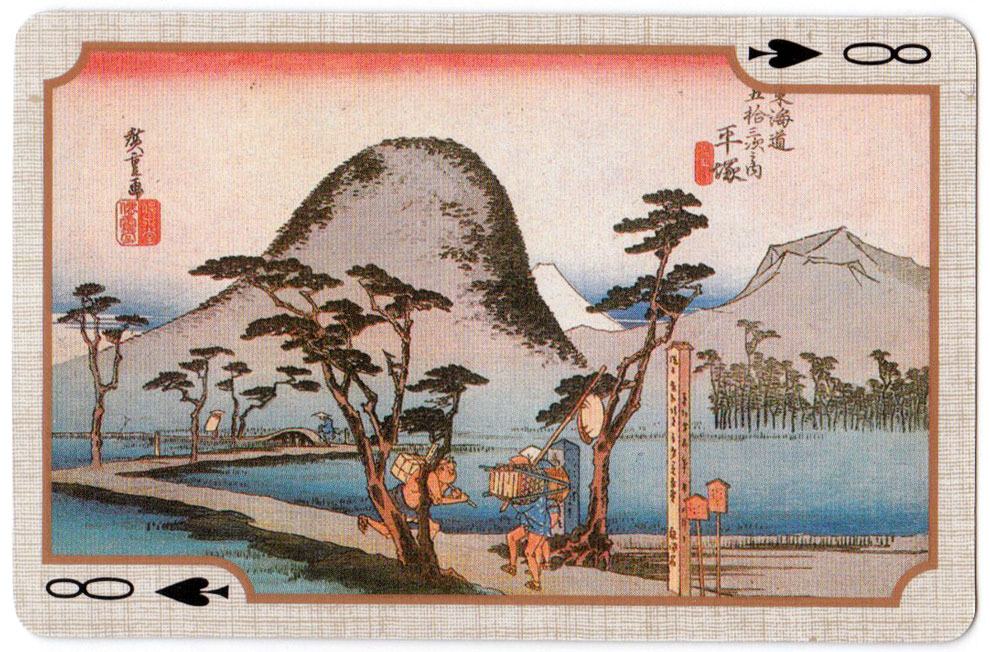
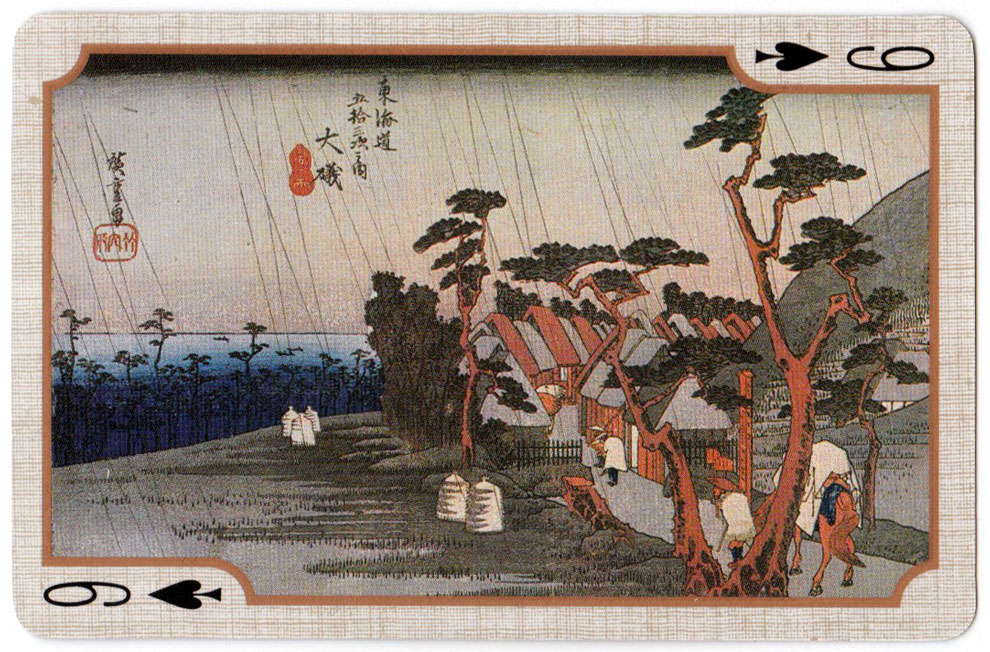
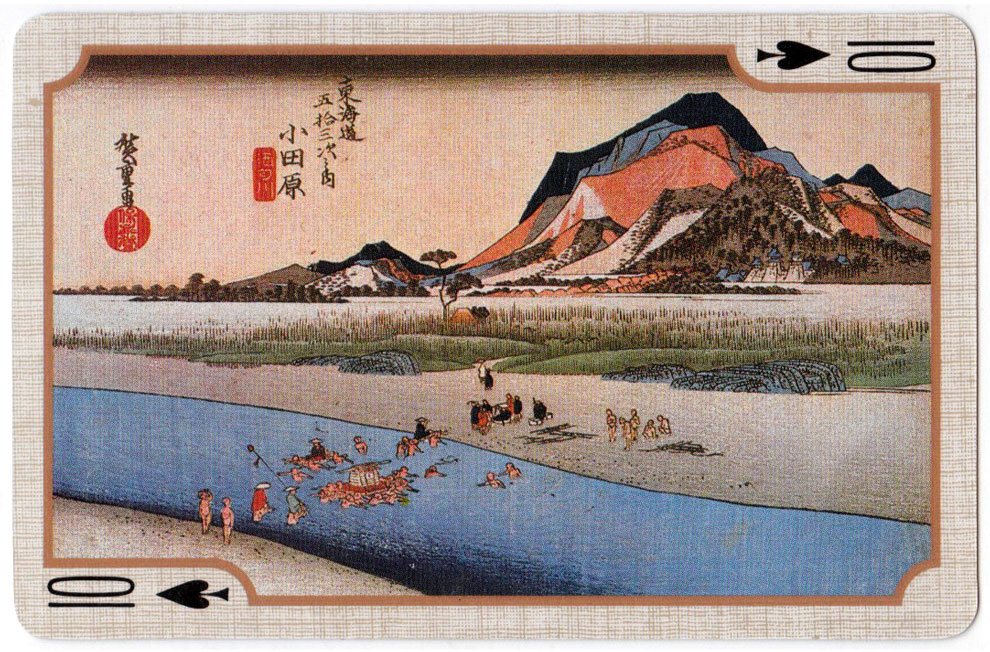
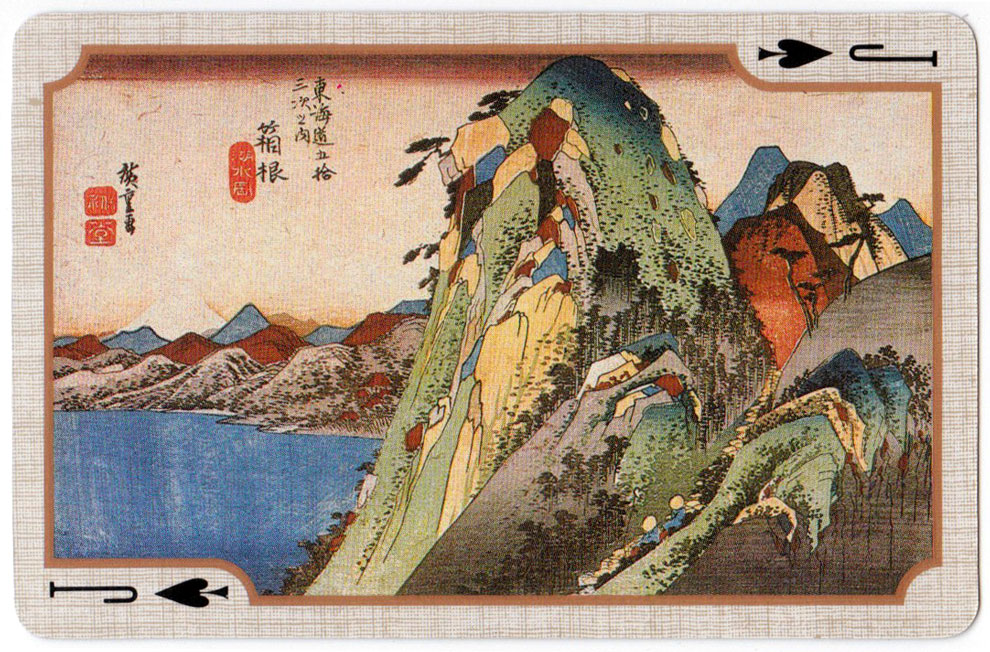
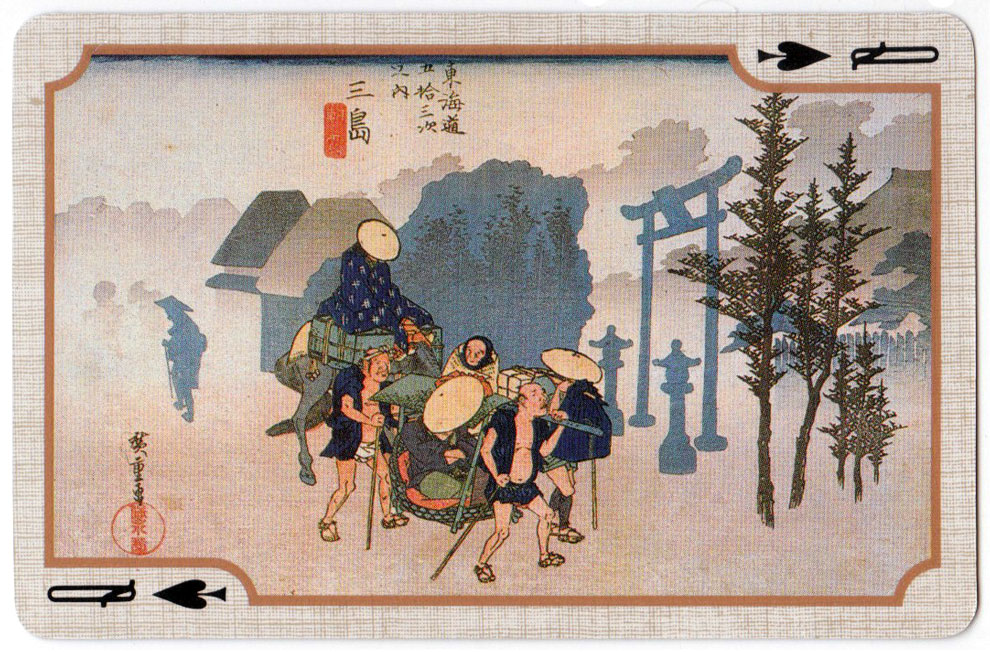
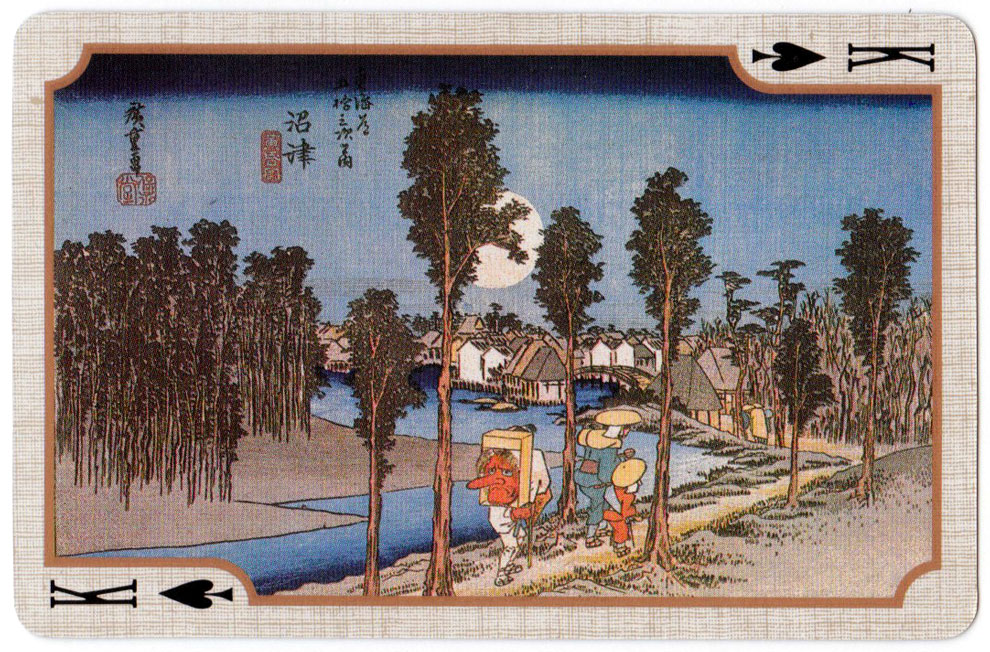
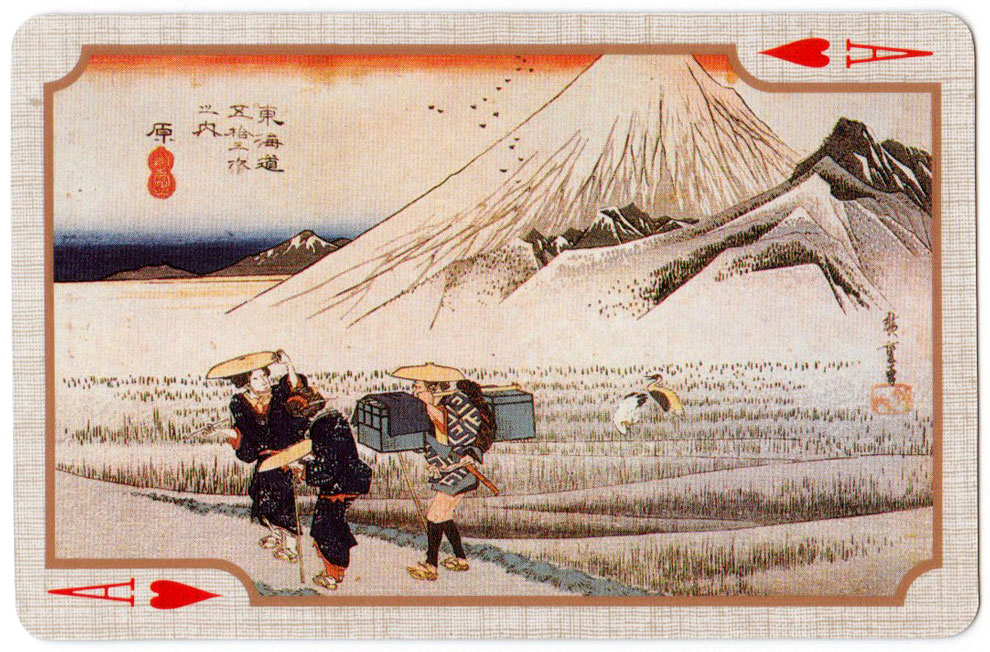
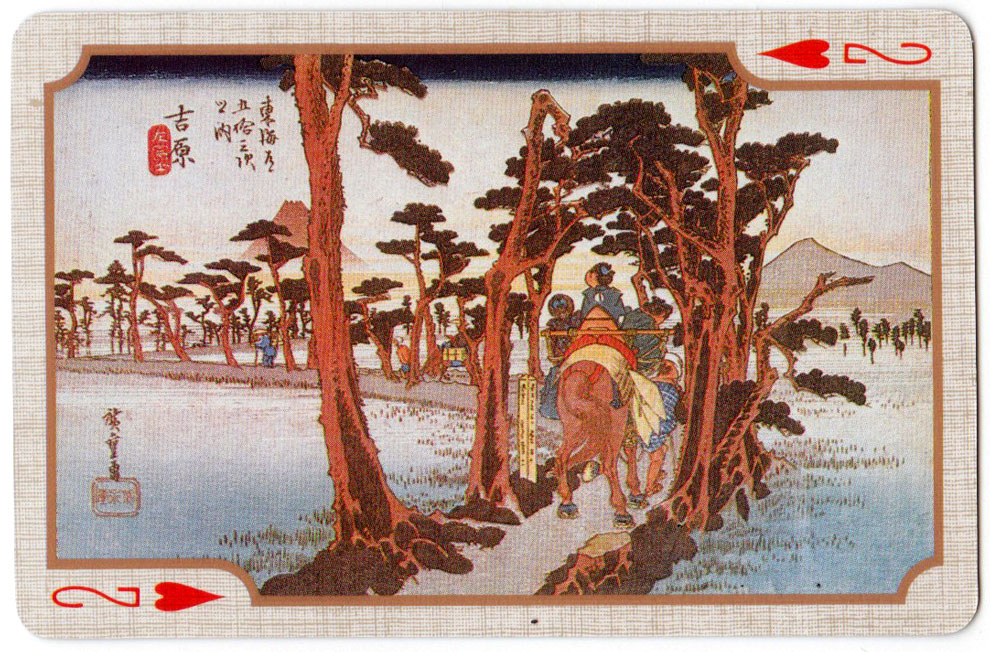
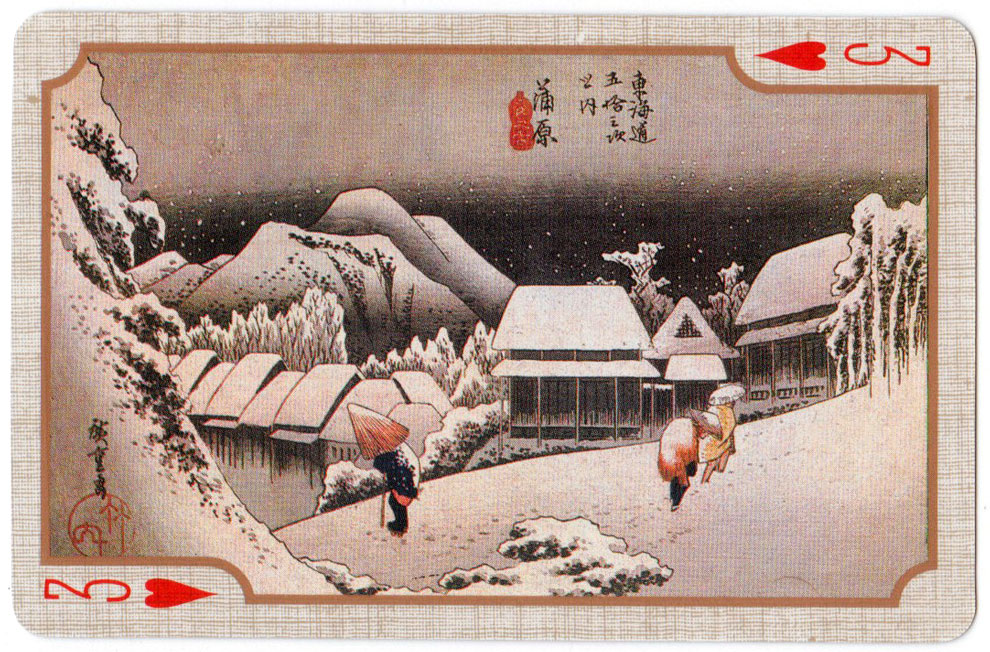
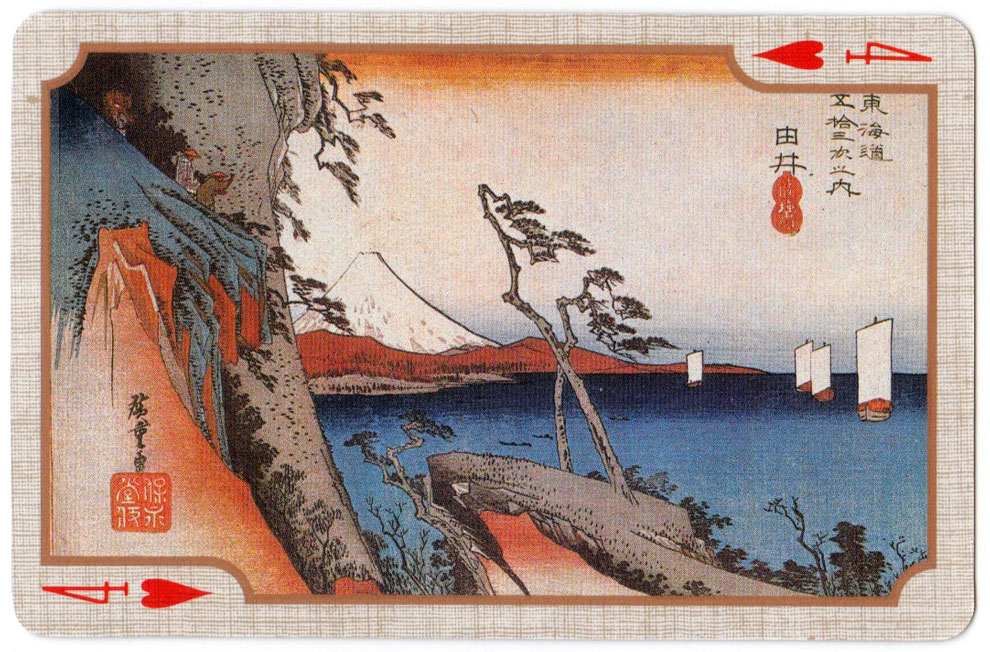
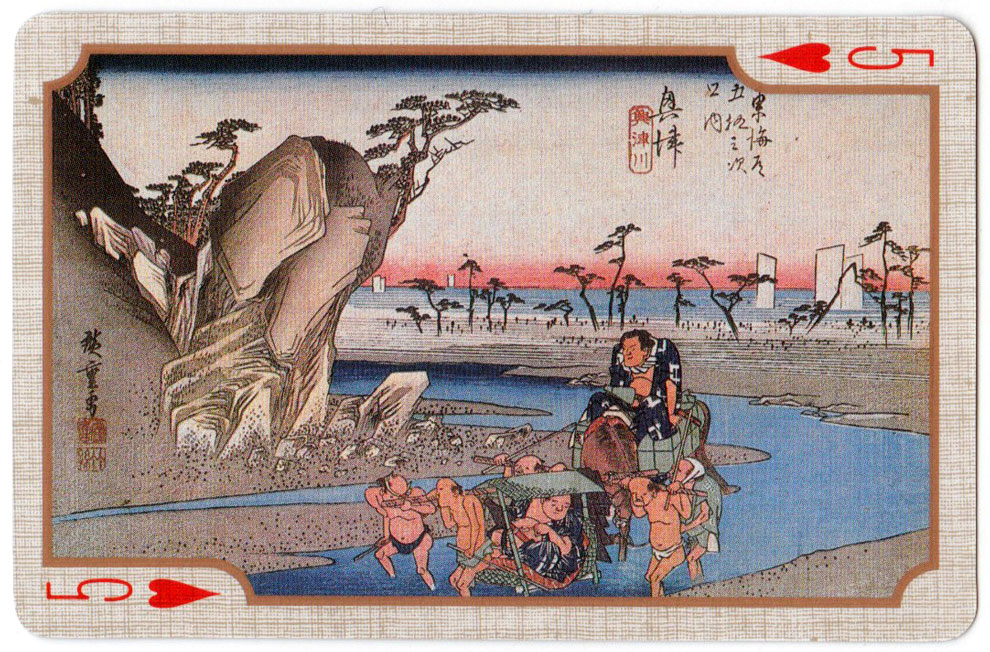
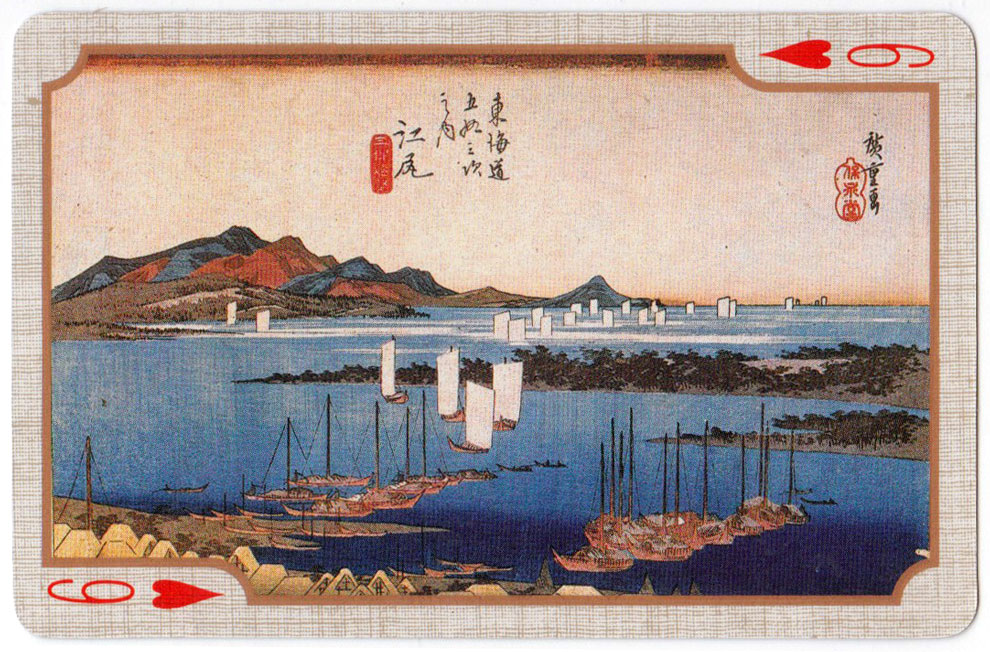
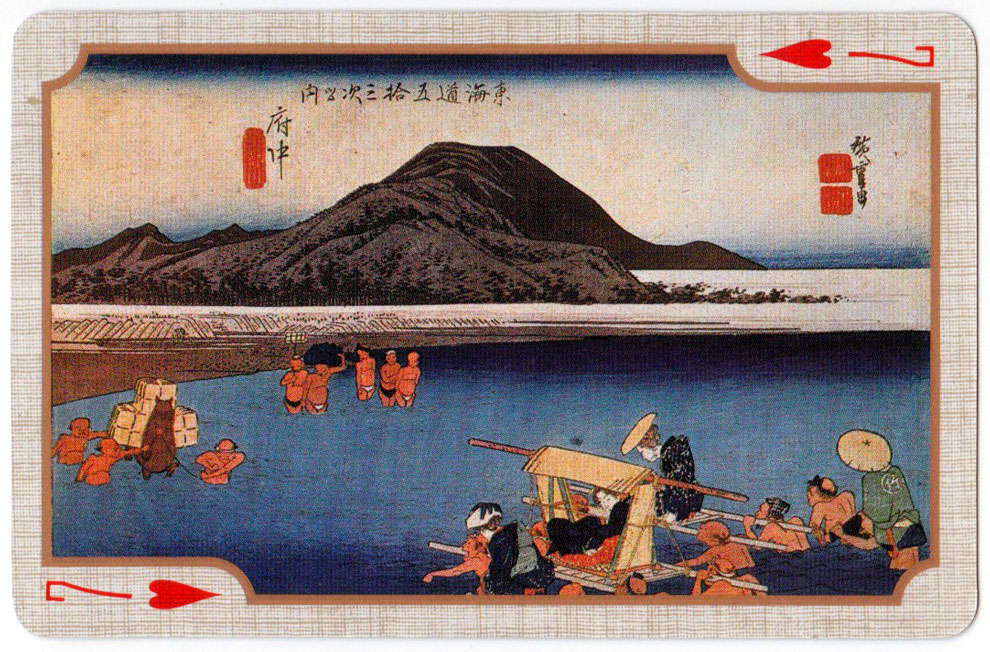
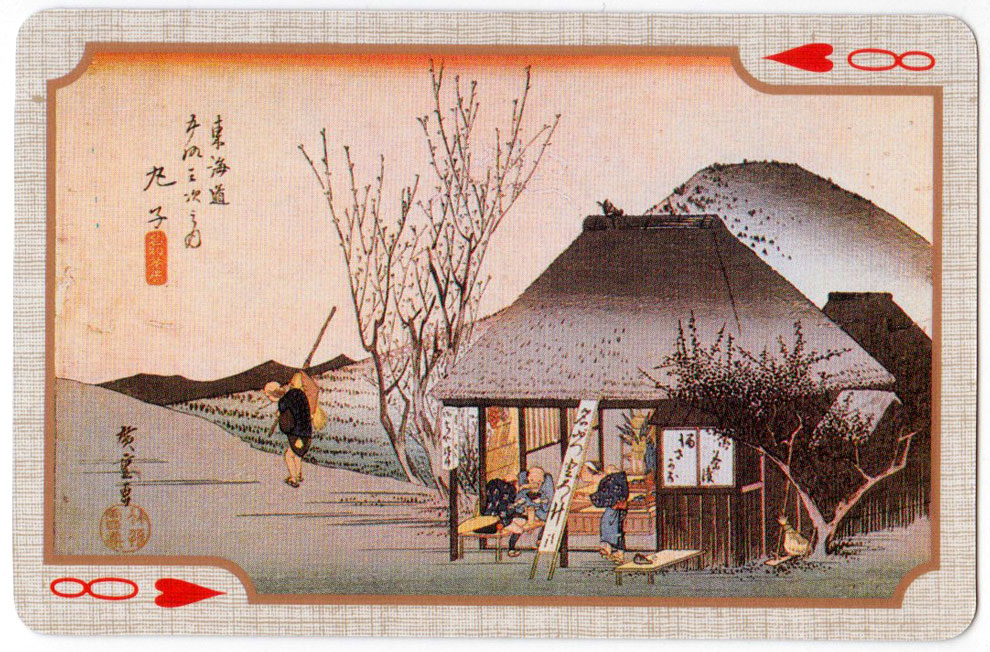
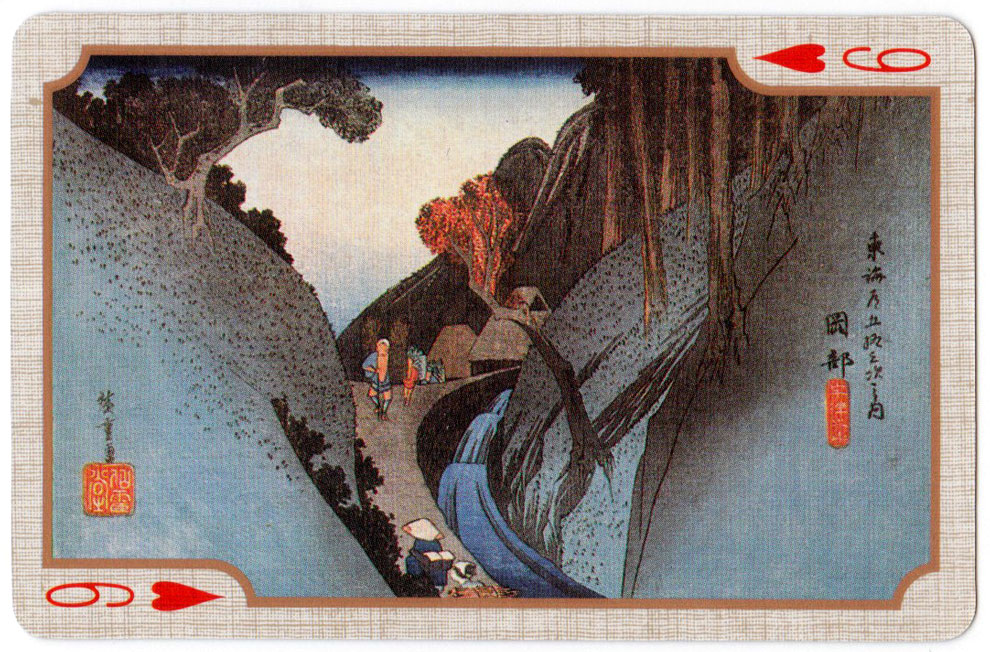
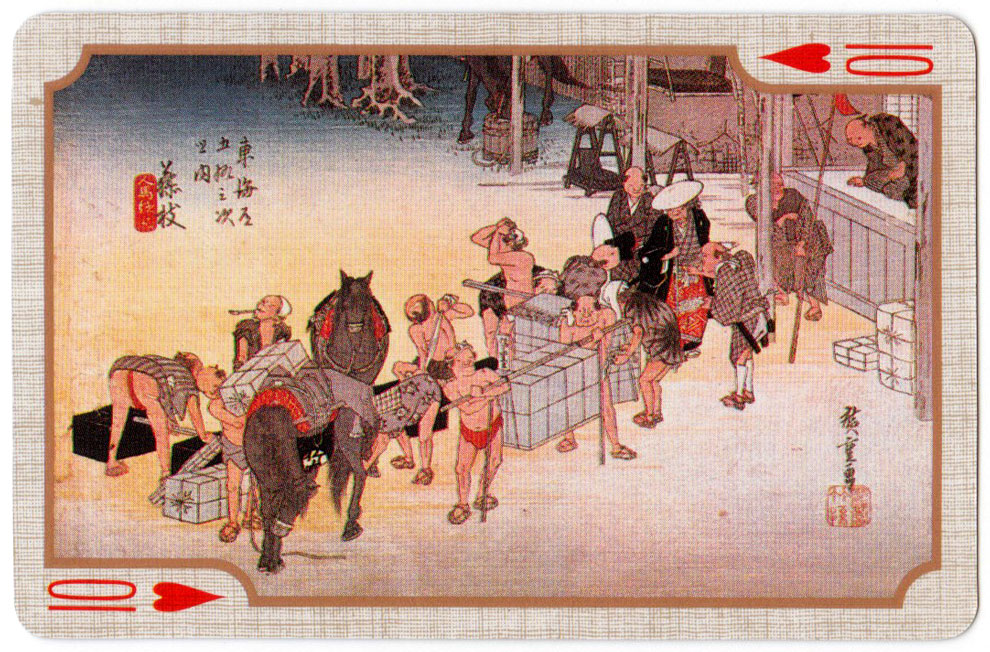
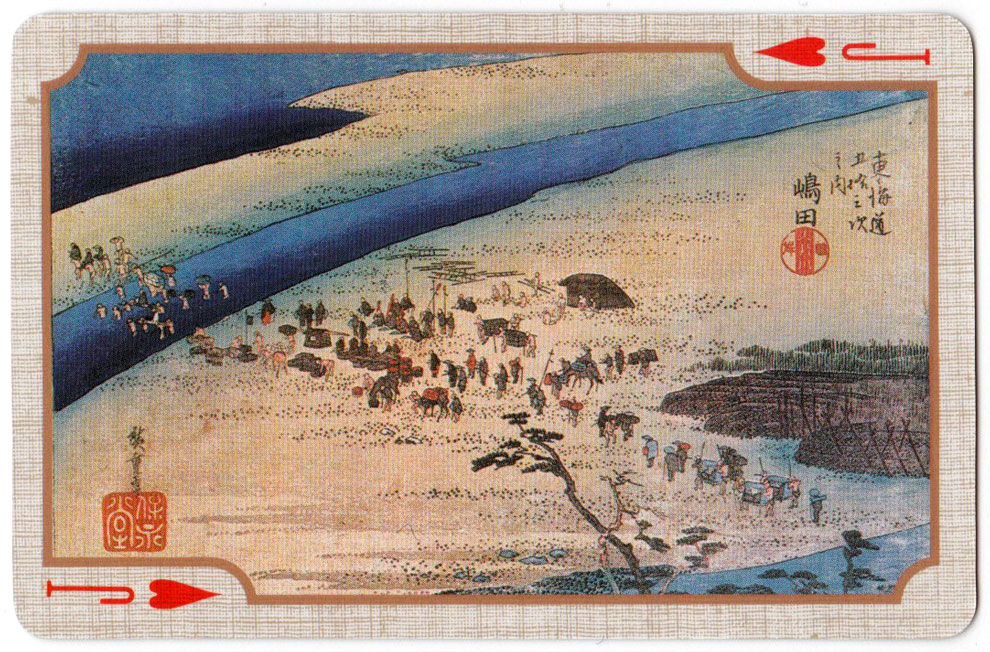
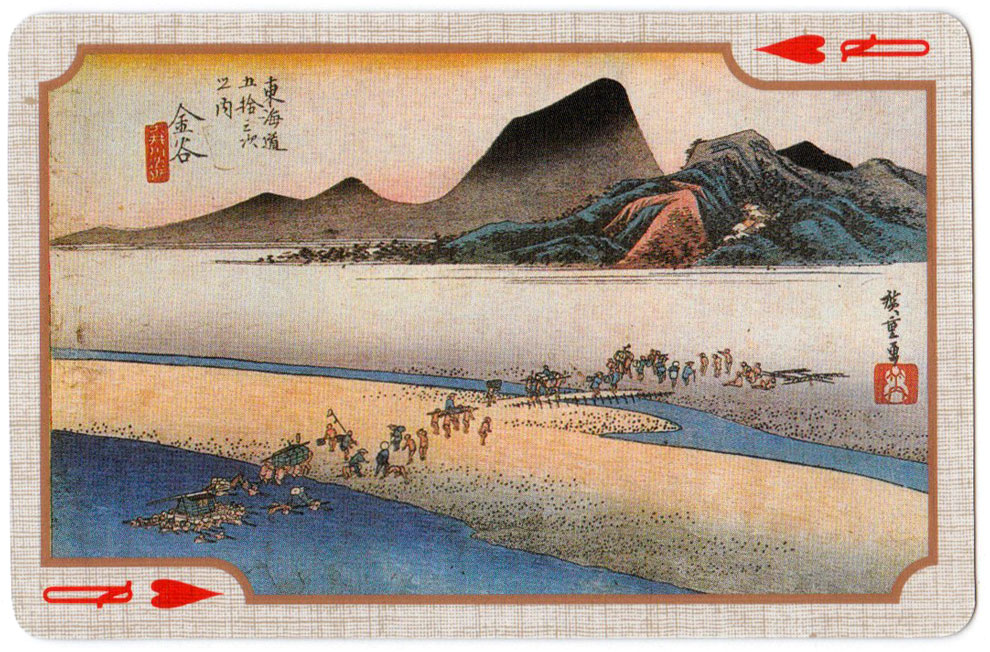
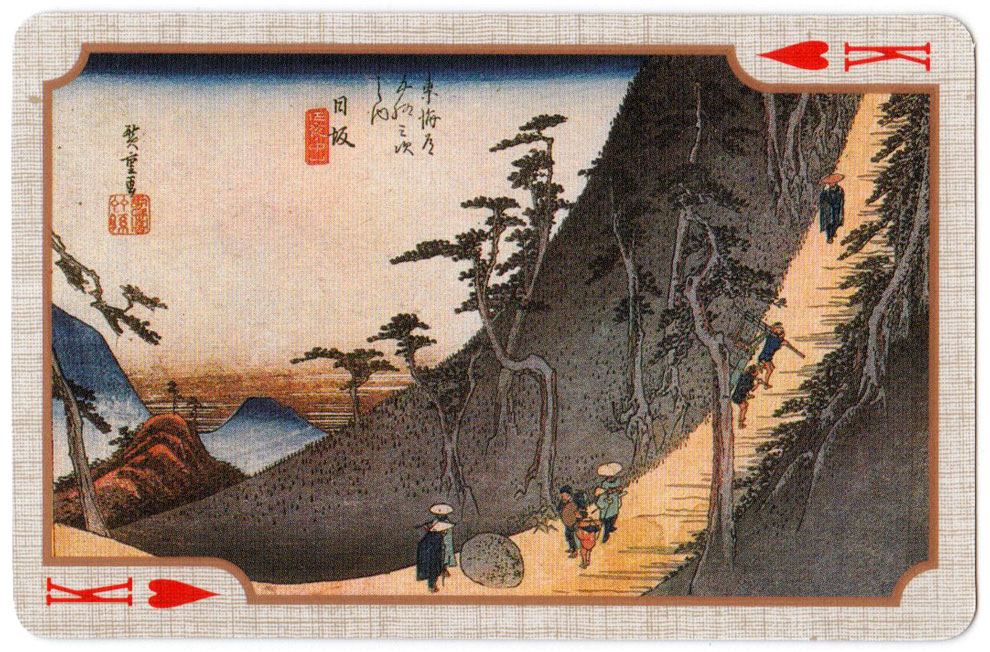
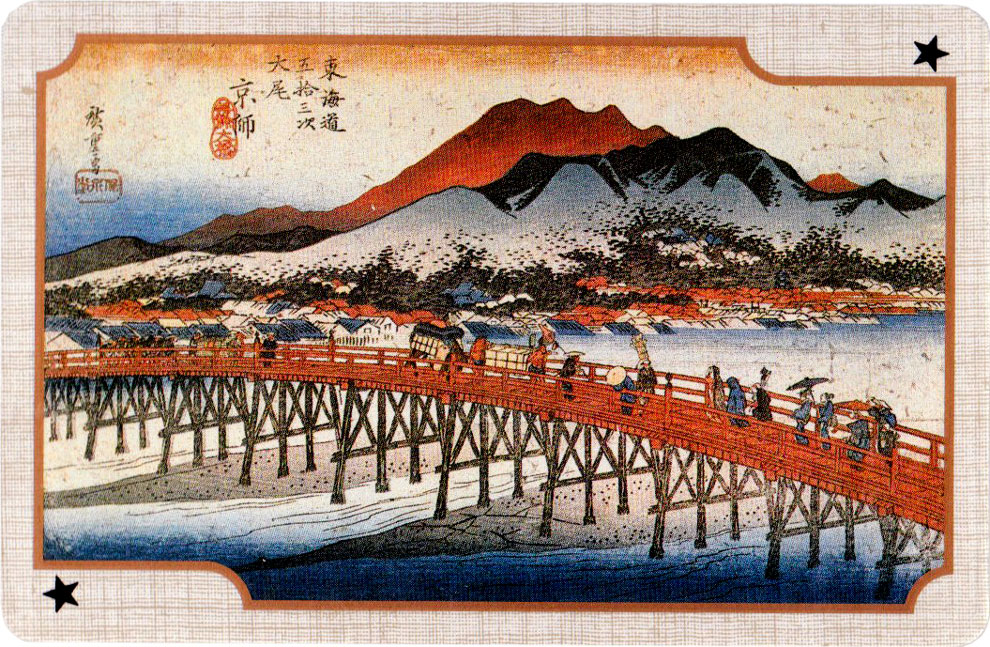
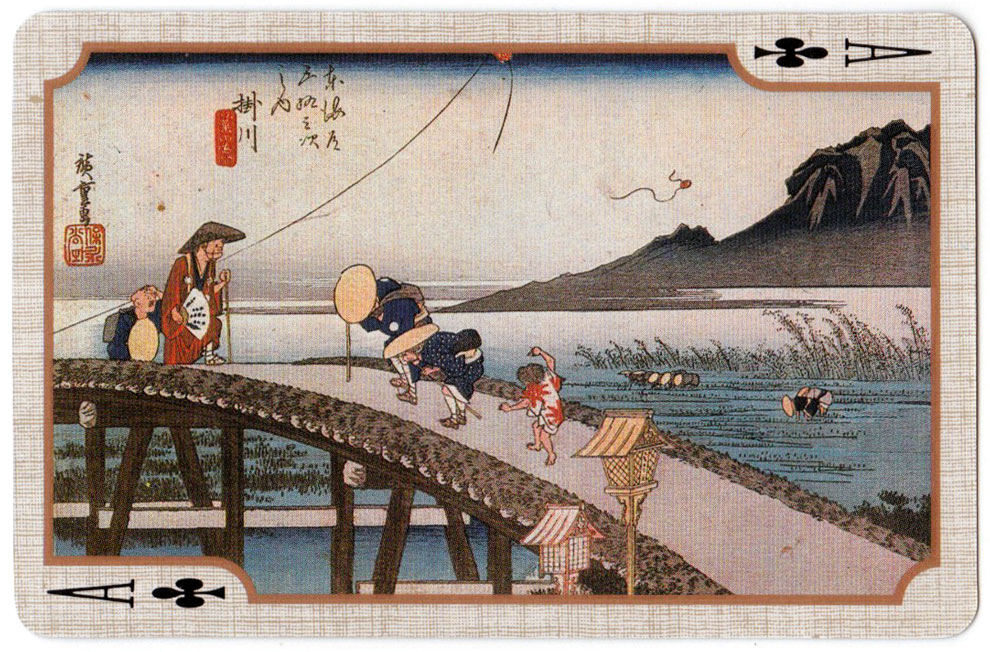
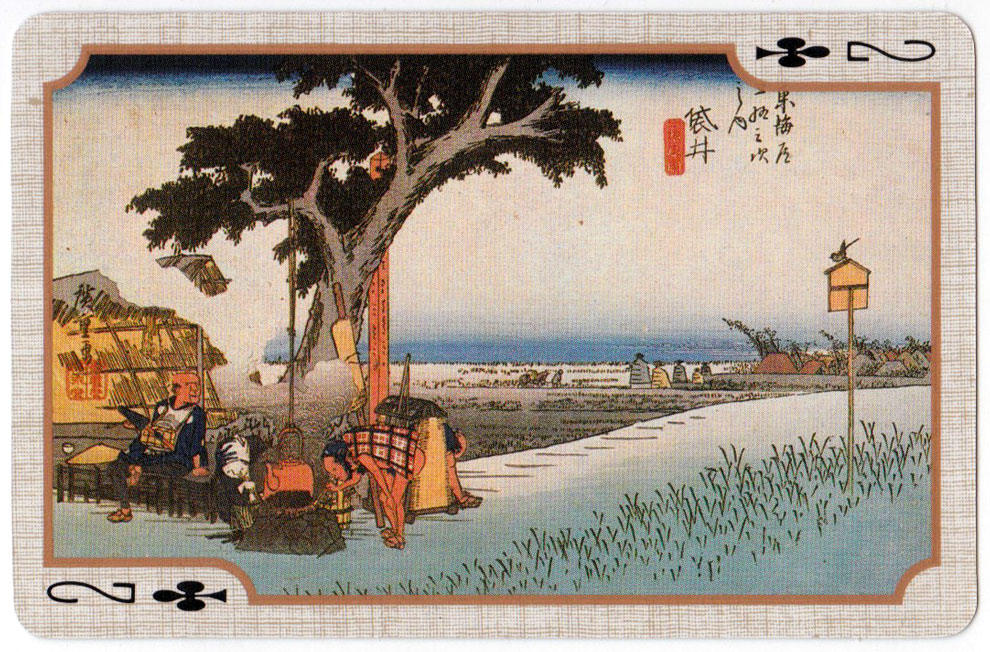
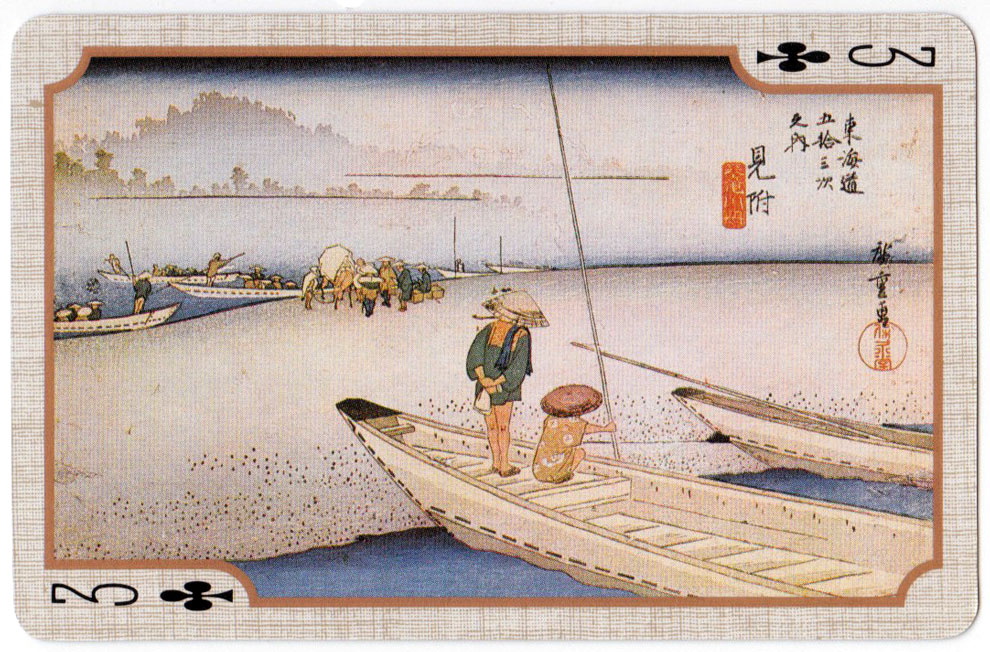
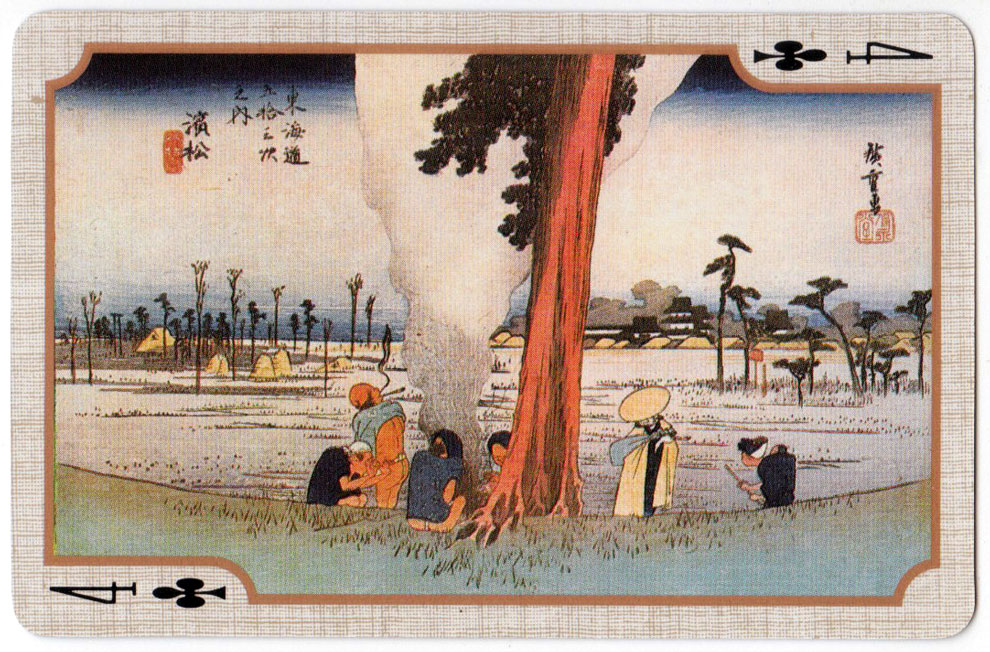
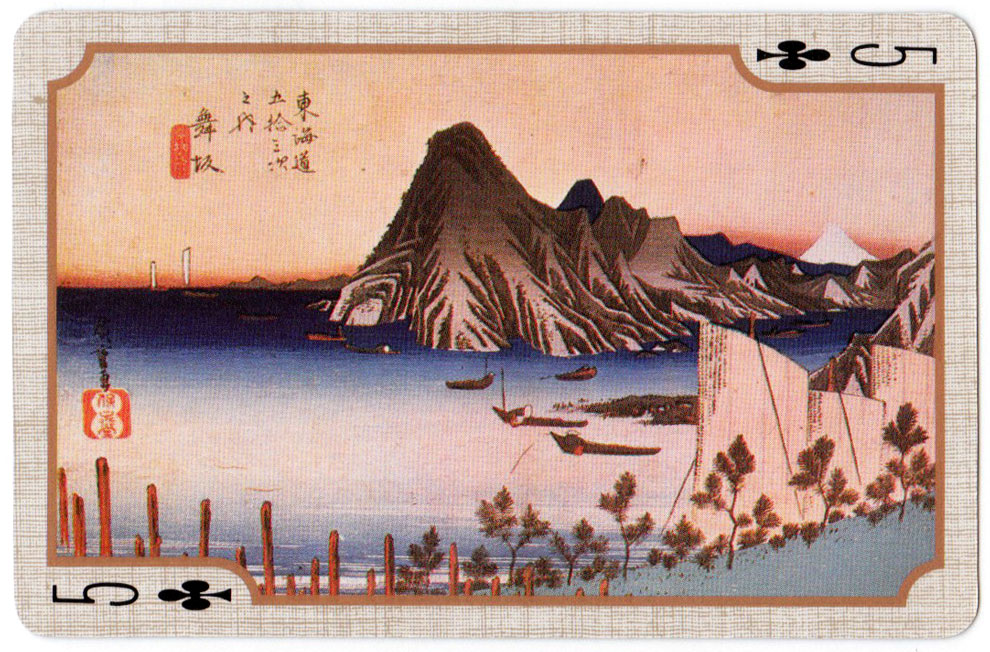
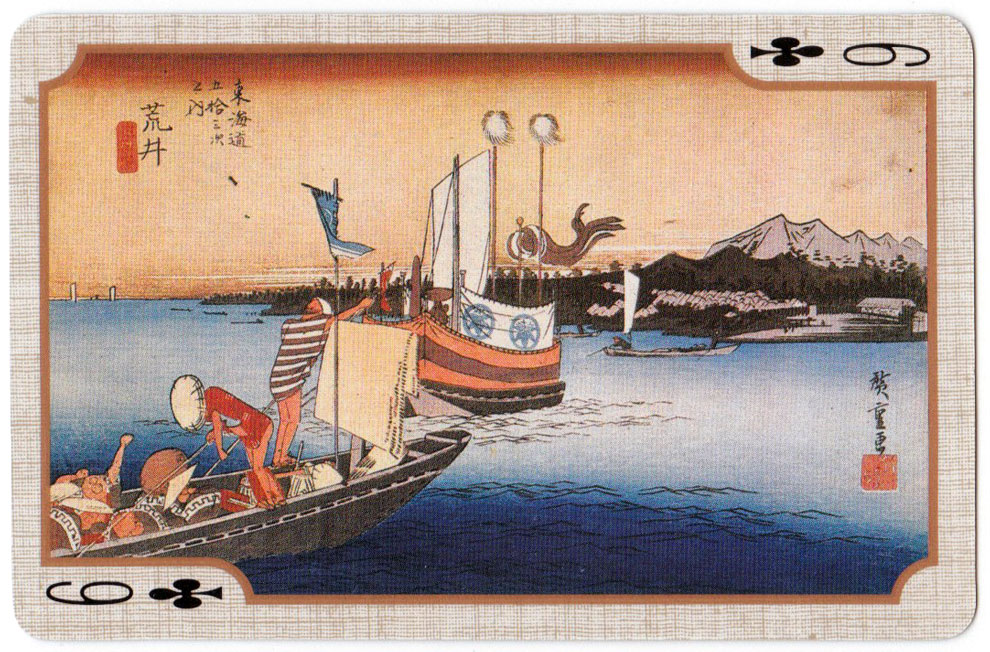
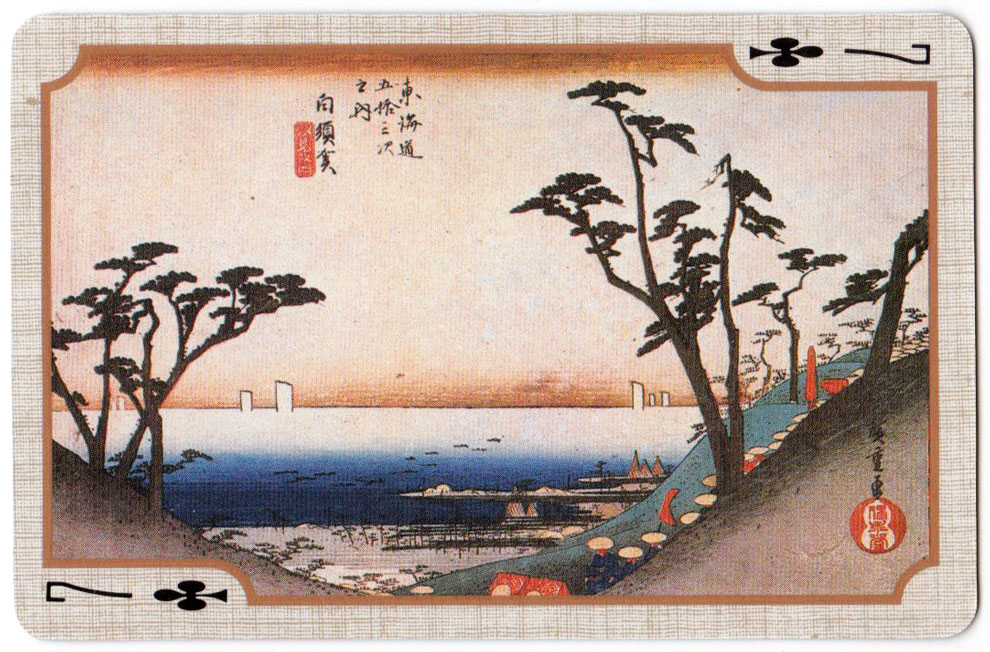
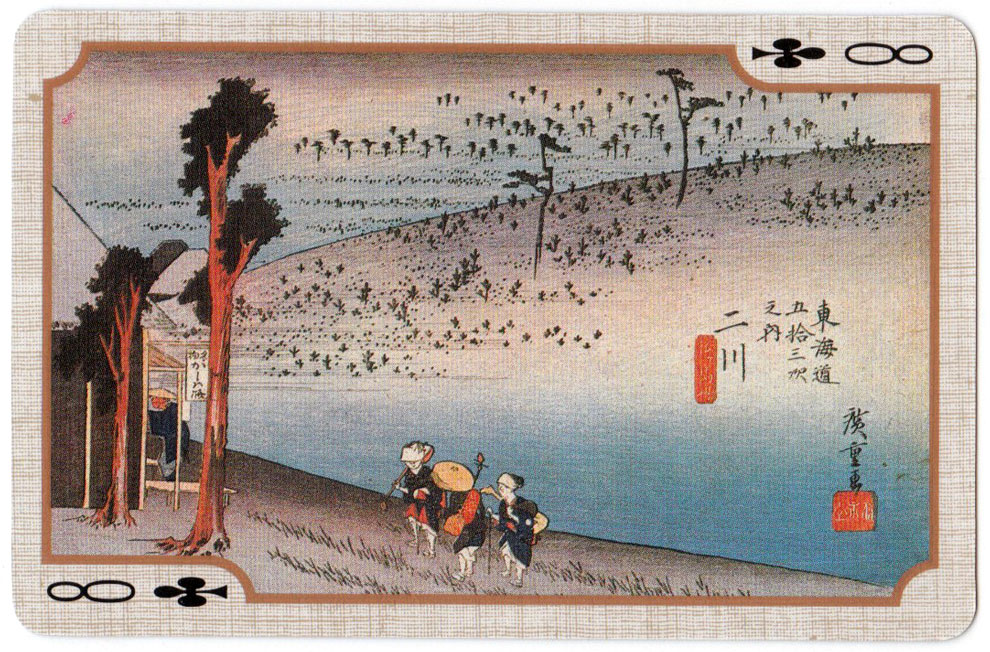
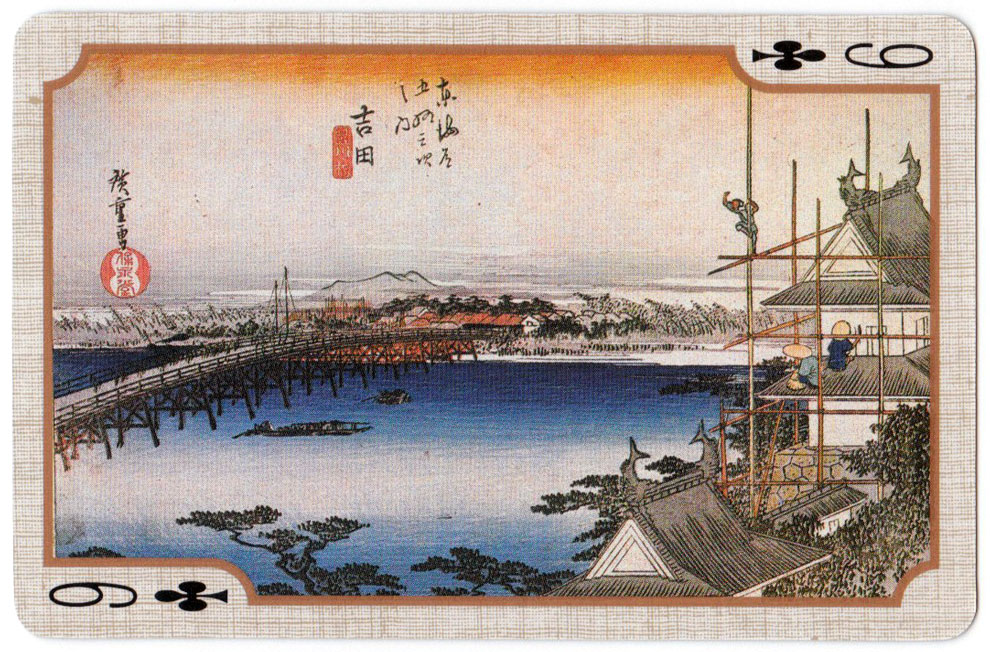
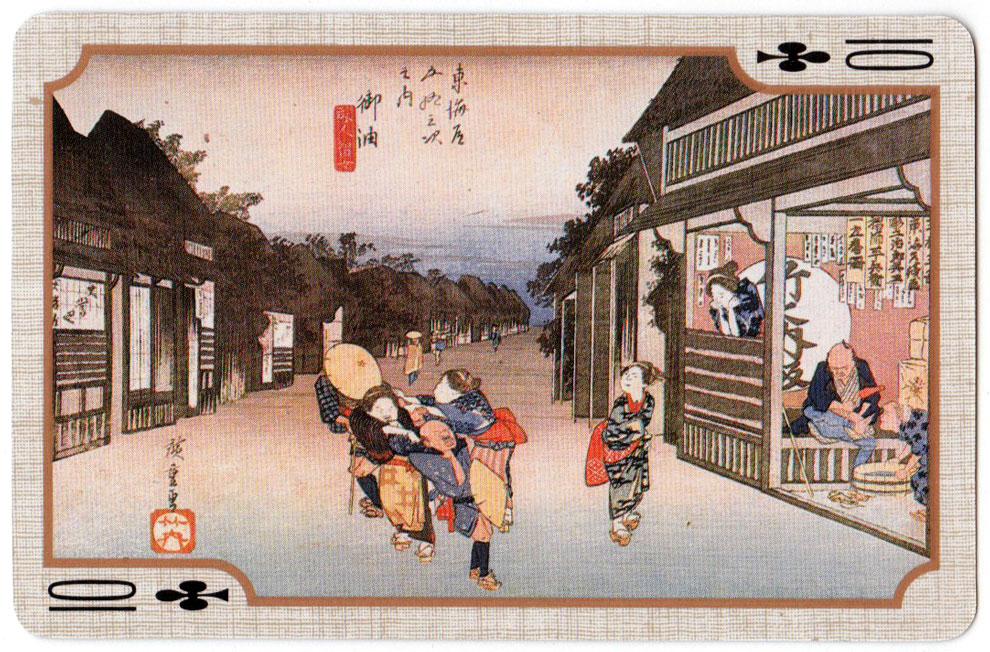
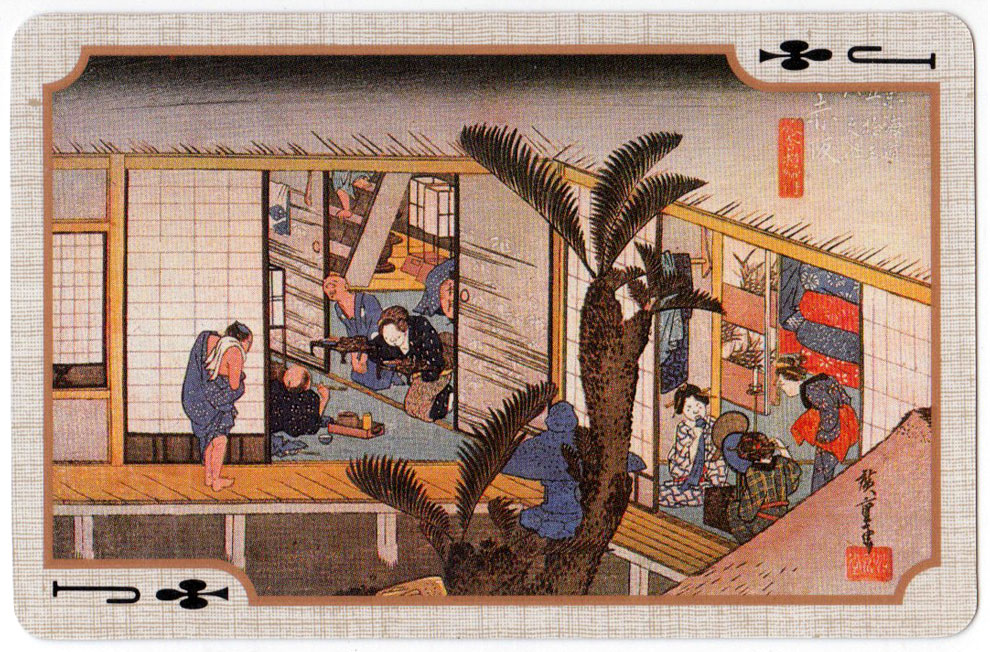
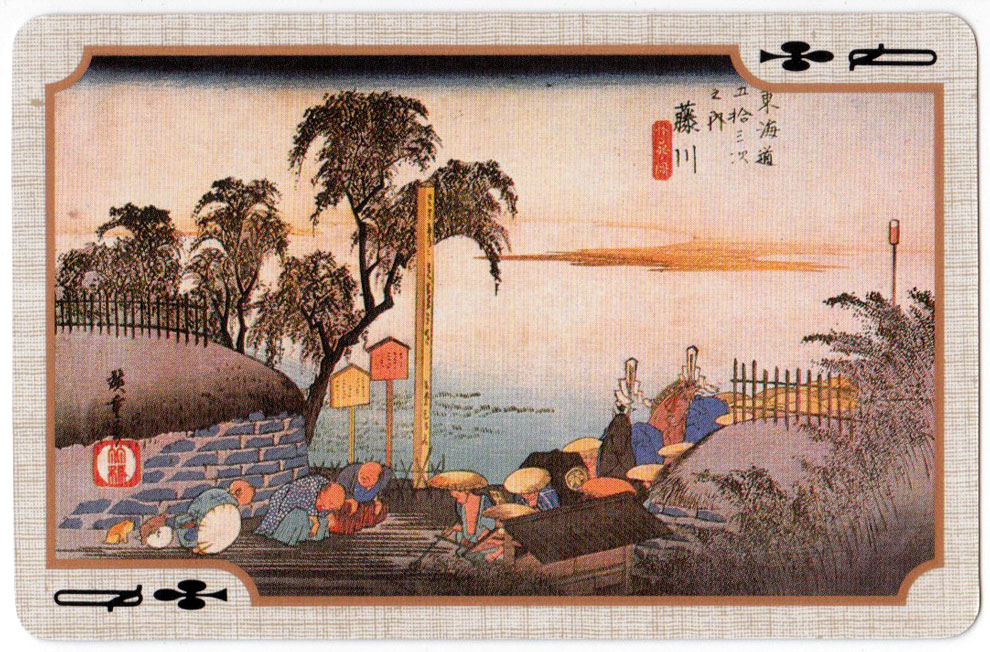
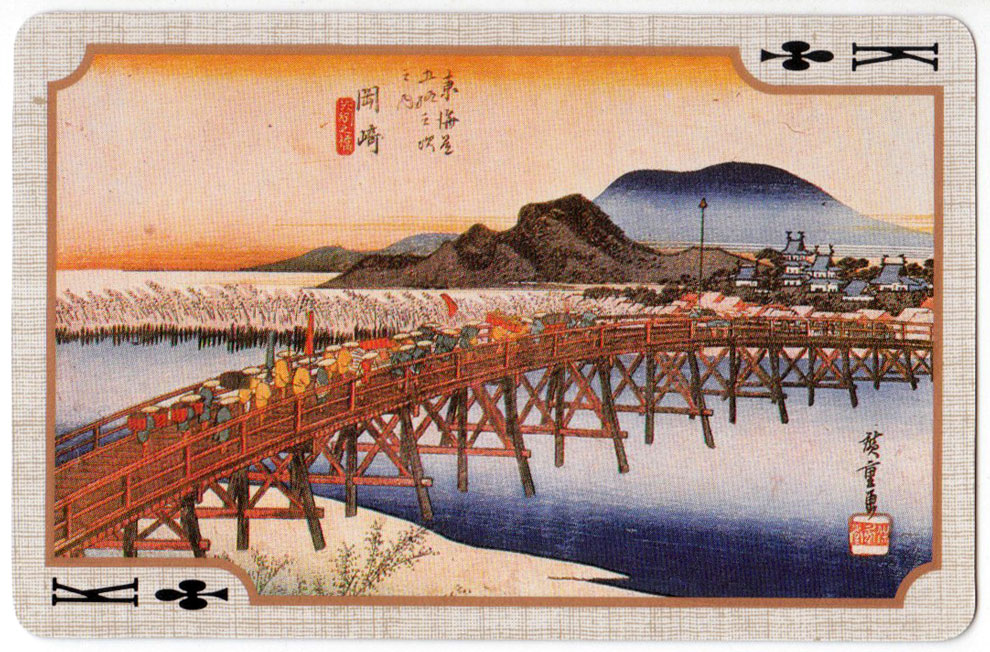
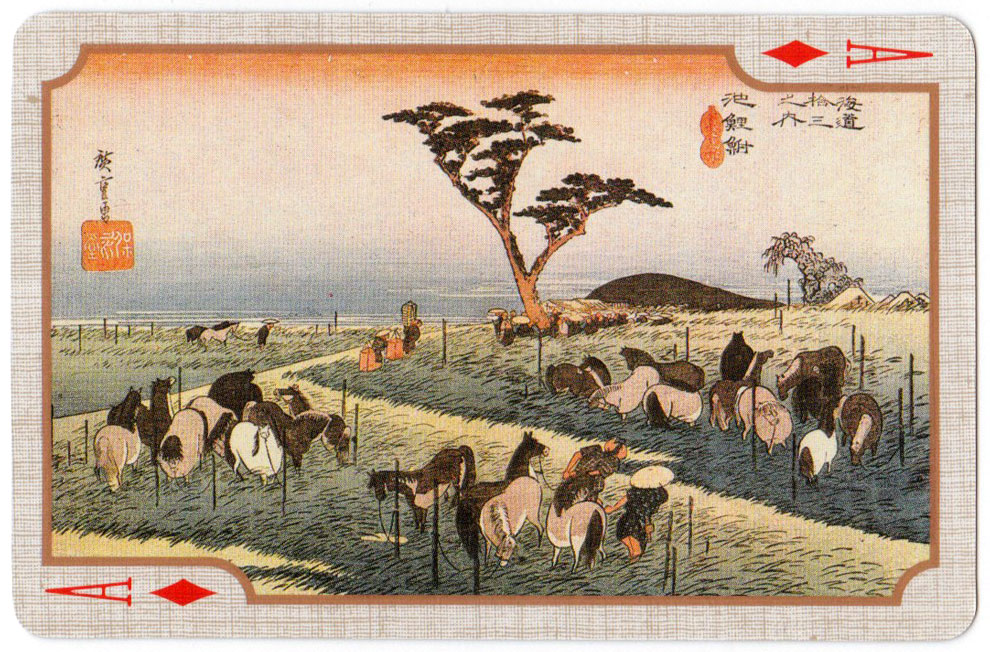
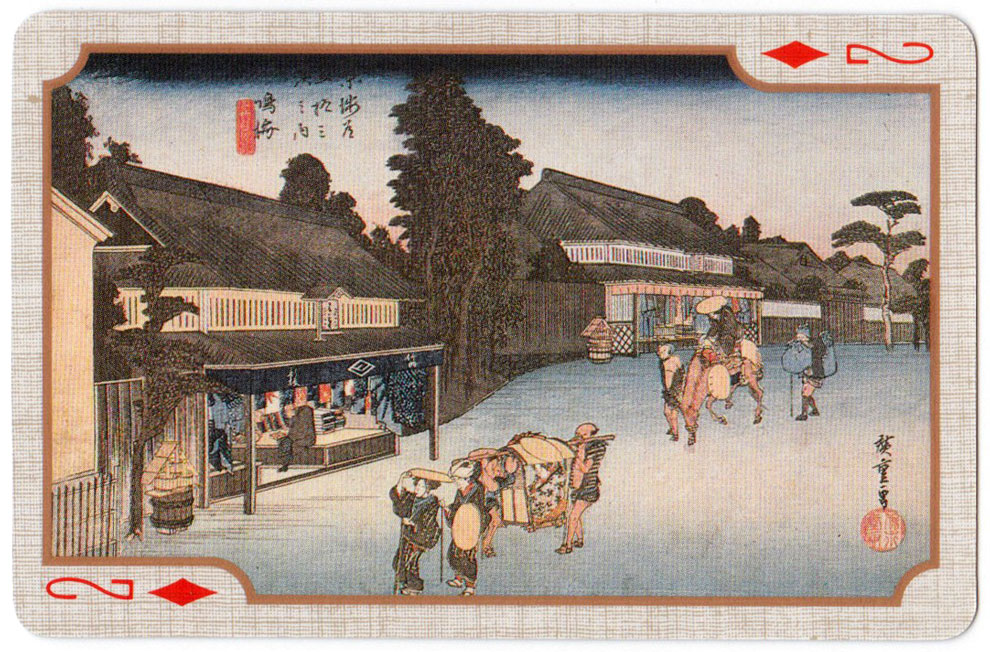
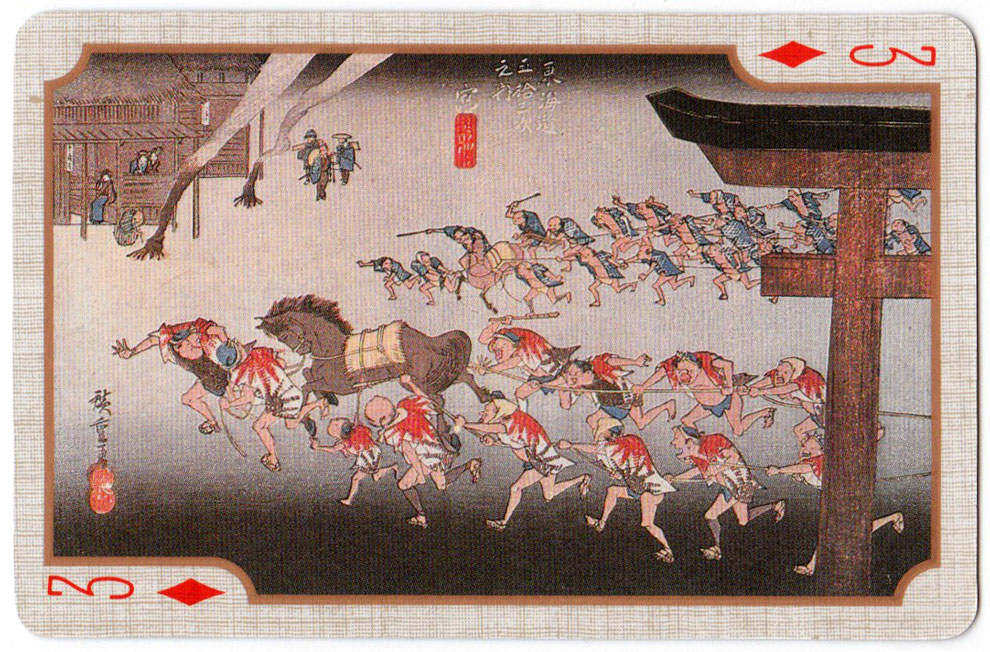
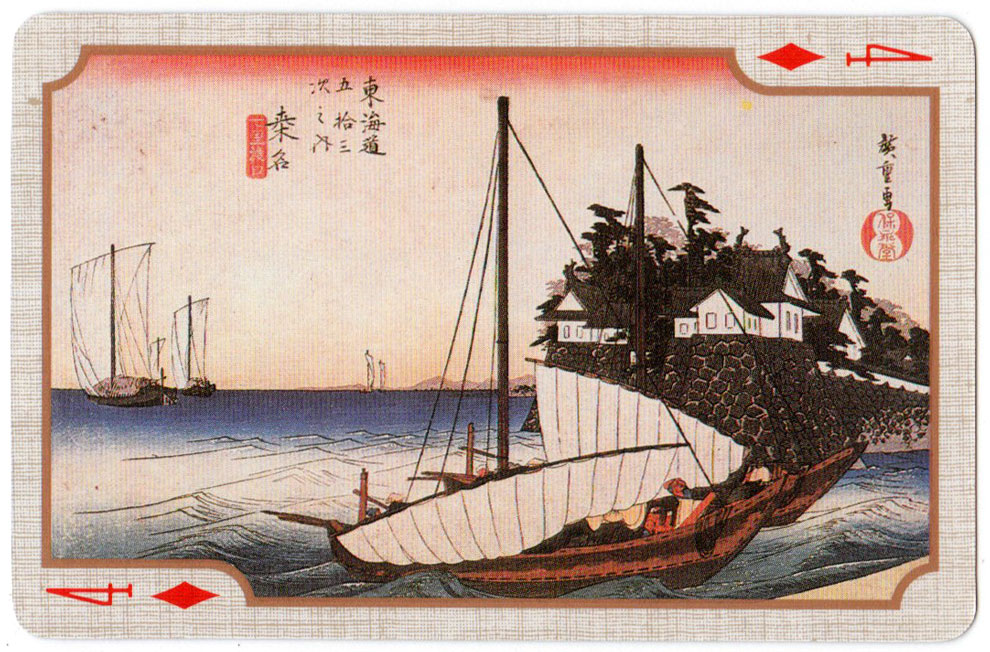
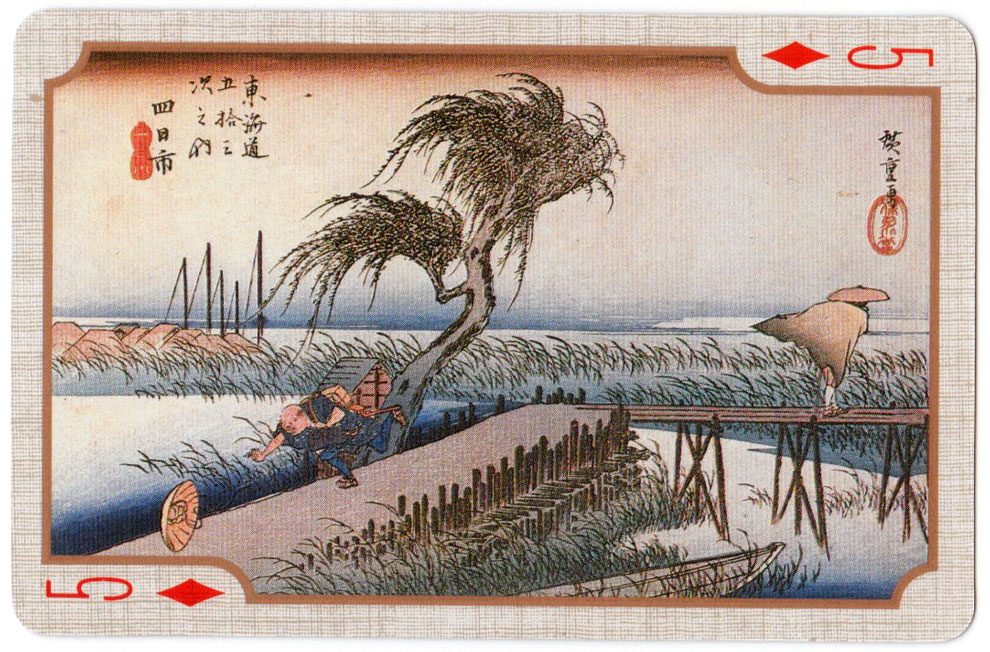
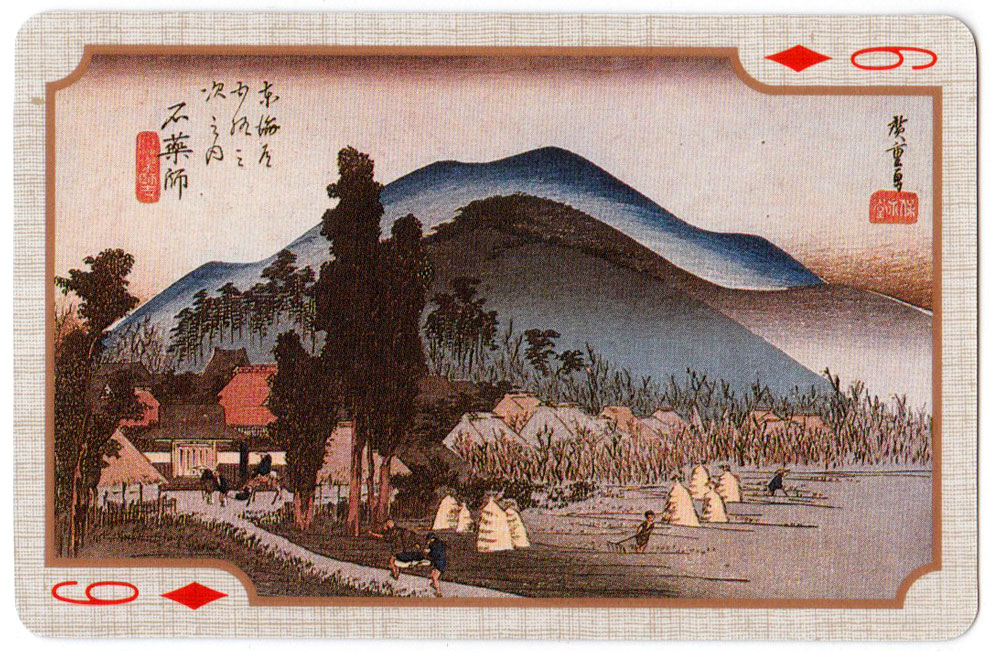
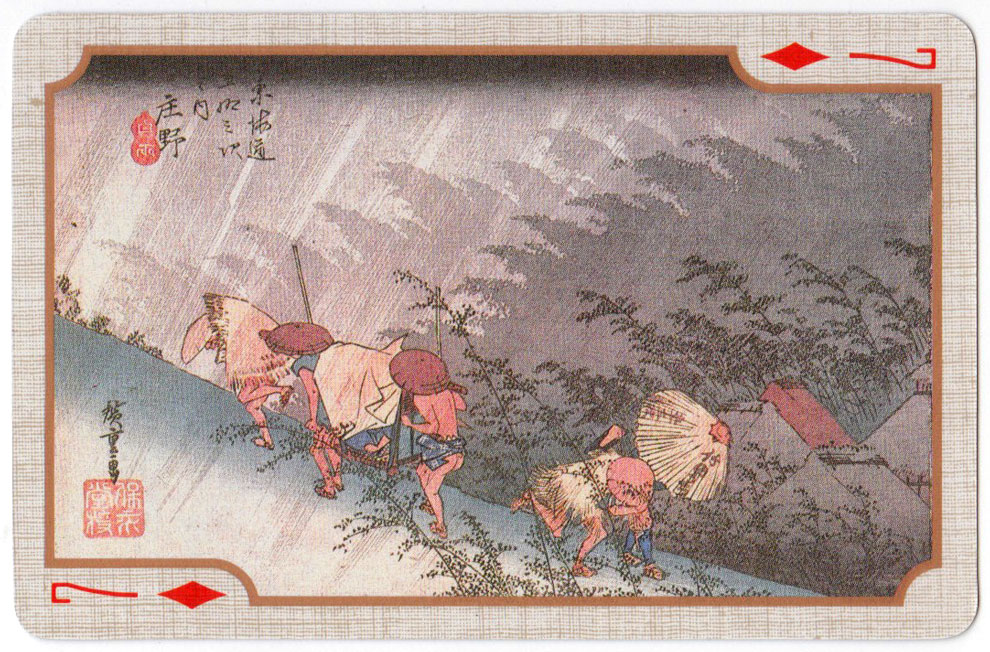
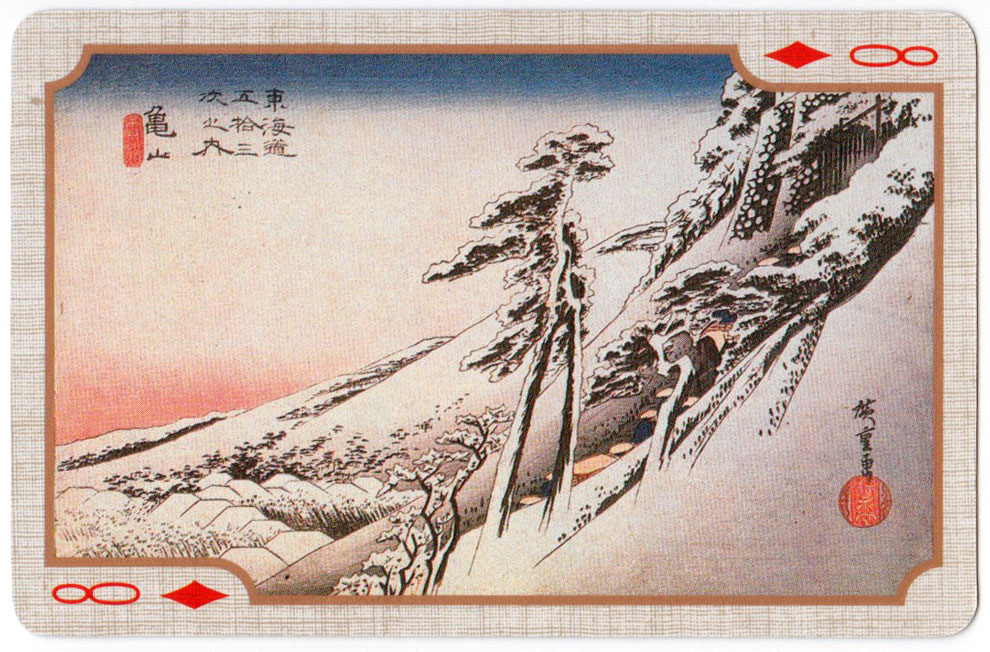
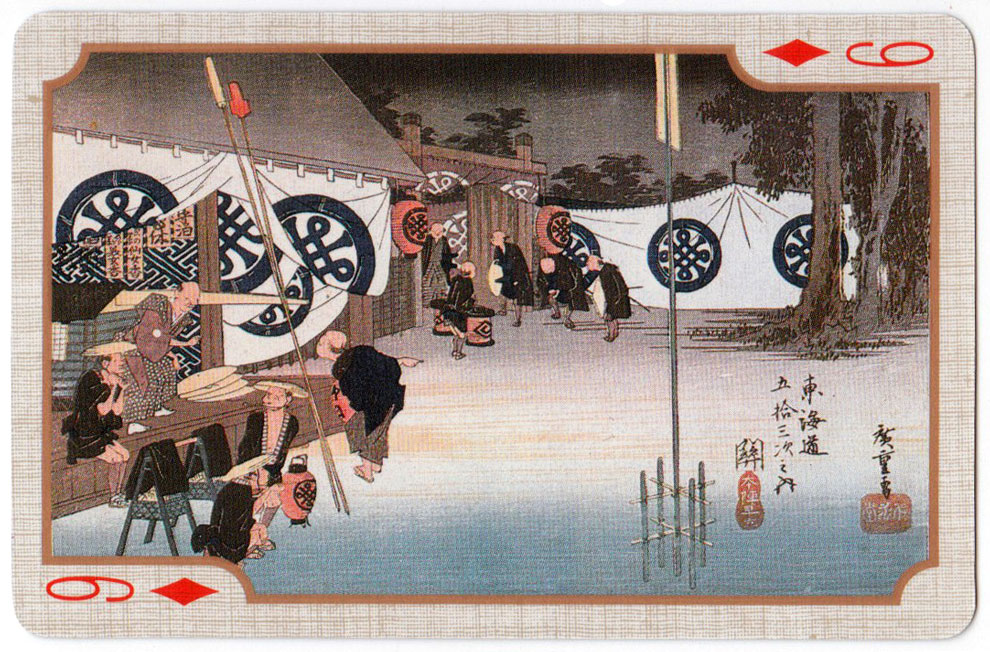
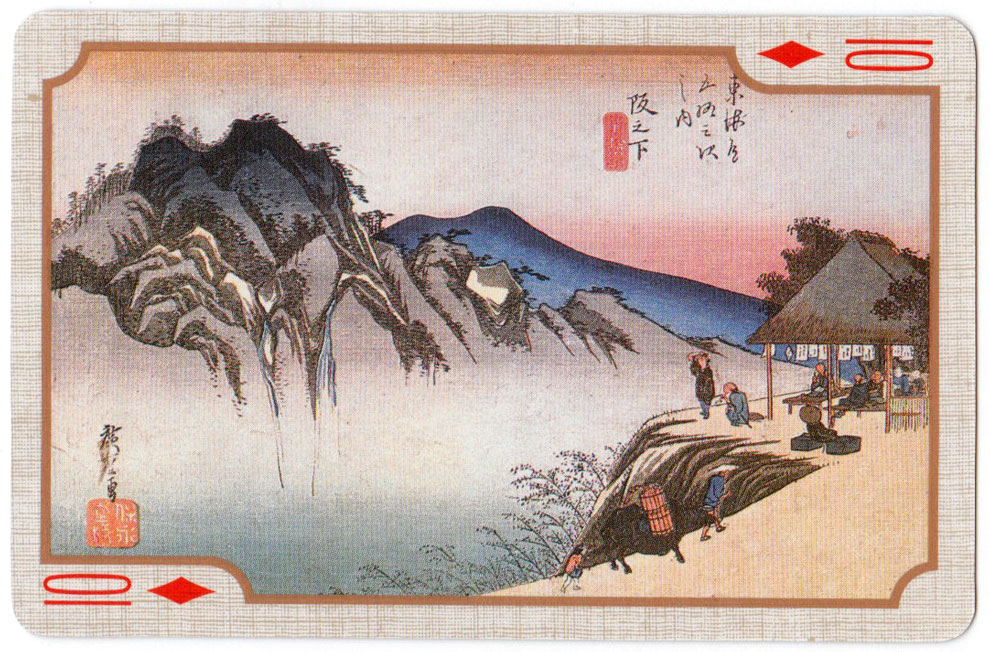
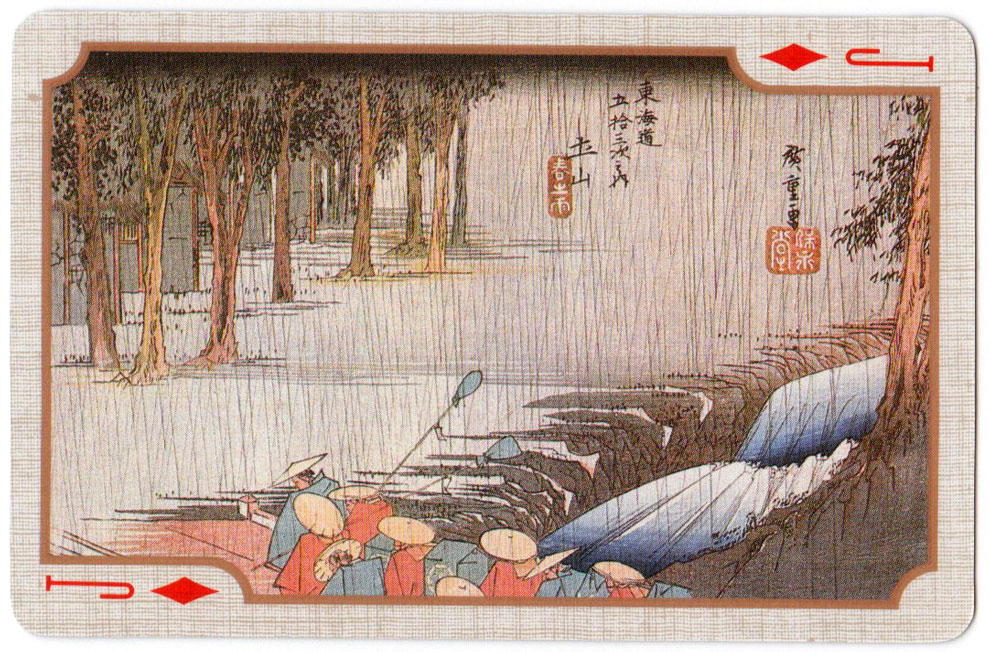
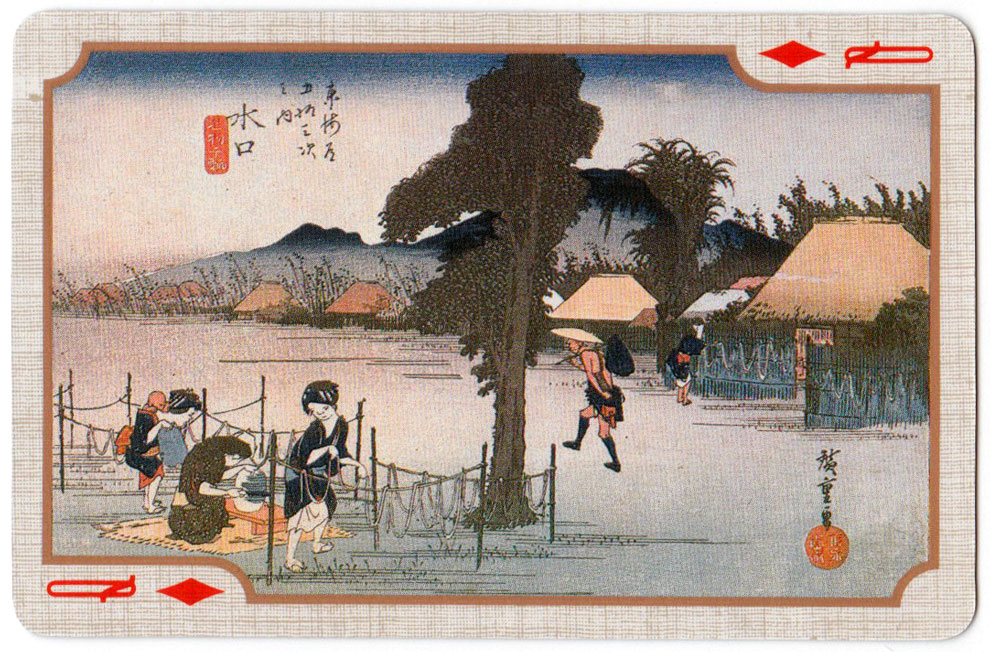
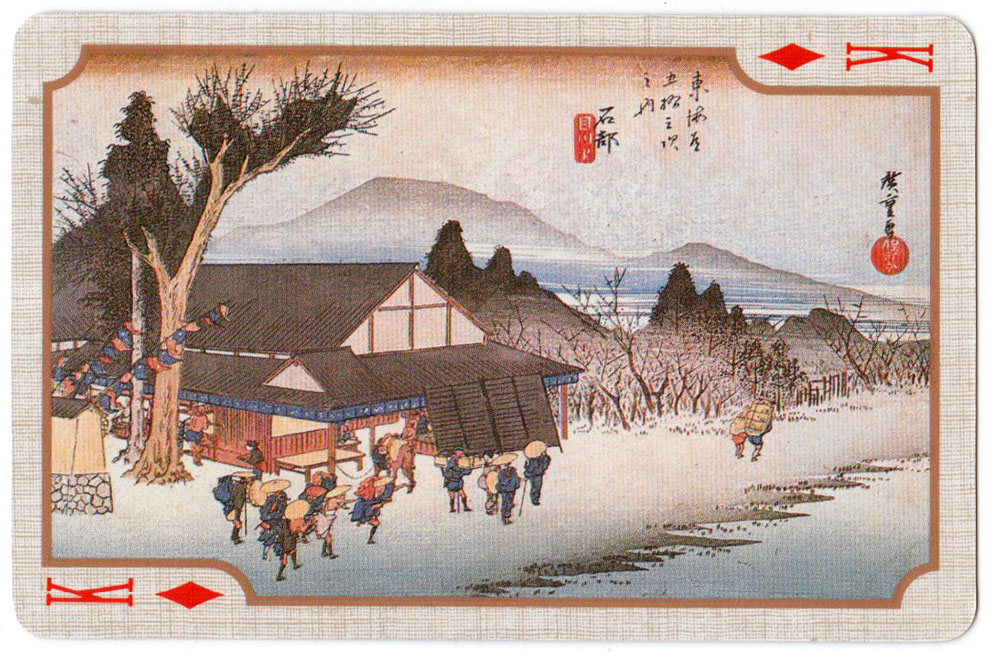
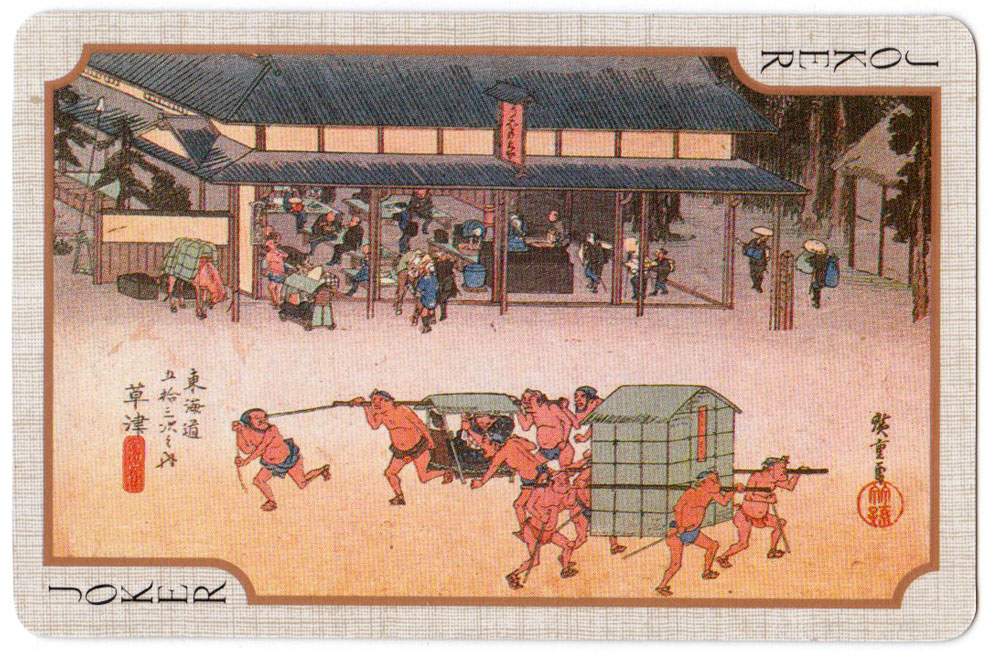
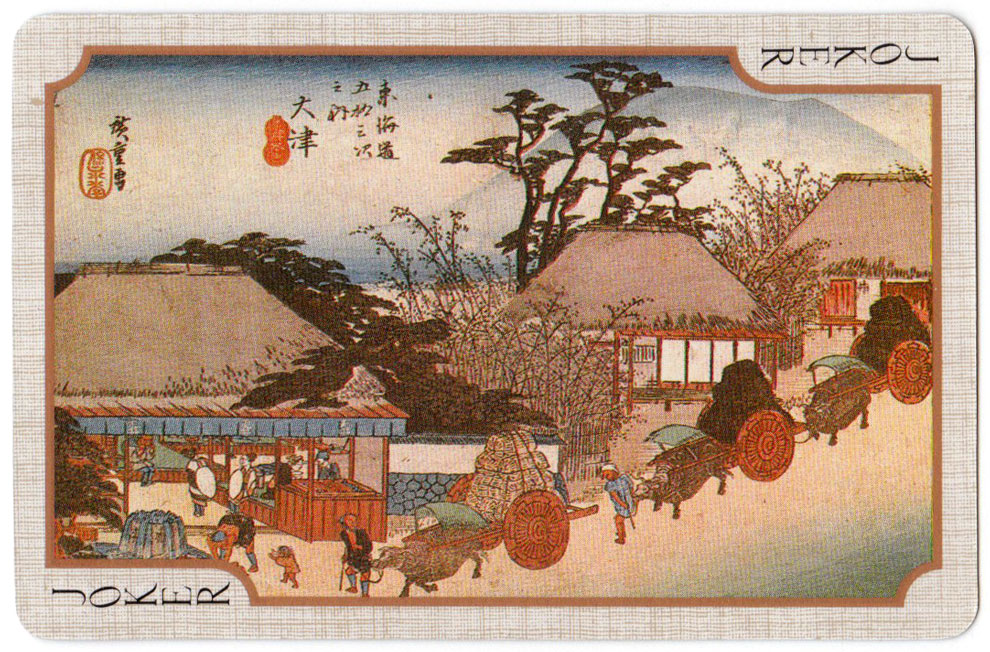
Below: “Hiroshige” playing cards drawn by Hiroshige Ando (1797-1858) at 53 stopoffs on the journey from Edo (Tokyo) to Kyoto, manufactured in Japan by Angel Playing Cards Co.
Considered to be the last of the great Ukiyo-e masters, Hiroshige Ando (1797-1858) was most famous for his 53 stations of the Tokaido (East Sea Road). Hiroshige started to learn to draw at the age of 15 with Ukiyo-e artist Toyohiro Utagawa. He avoided beautiful women and concentrated on the Kabuki actors and Geishas for his human subjects but he mainly produced landscapes. The Tokaido was the main highway in Japan going from Edo (now called Tokyo) to Kyoto a distance of 450 km on the island of Honshu. In the 17th century the government set up 53 stations along the route with stables and somewhere to sleep for travellers to rest during their journey. It is still the busiest highway in Japan today.
Ukiyo-e (浮世絵; Japanese pronunciation: [u.ki.jo.e]) was a Japanese genre of painting and woodblock printing with subjects typical of the decadent lifestyle of the middle classes from the 17th century to the 19th century. Their entertainment was the Geishas and the Sumo wrestling and often Courtesans. The Ukiyo-e, which means “pictures of the floating world”, depicted these interests with pictures of the Geishas and Courtesans as beautiful women and the Kabuki actors and Sumo wrestlers as heroes. The natural world was also depicted by some of the artists.
See also: Wikipedia article Ukiyo-e →
• Website: Angel Playing Cards Co Ltd →
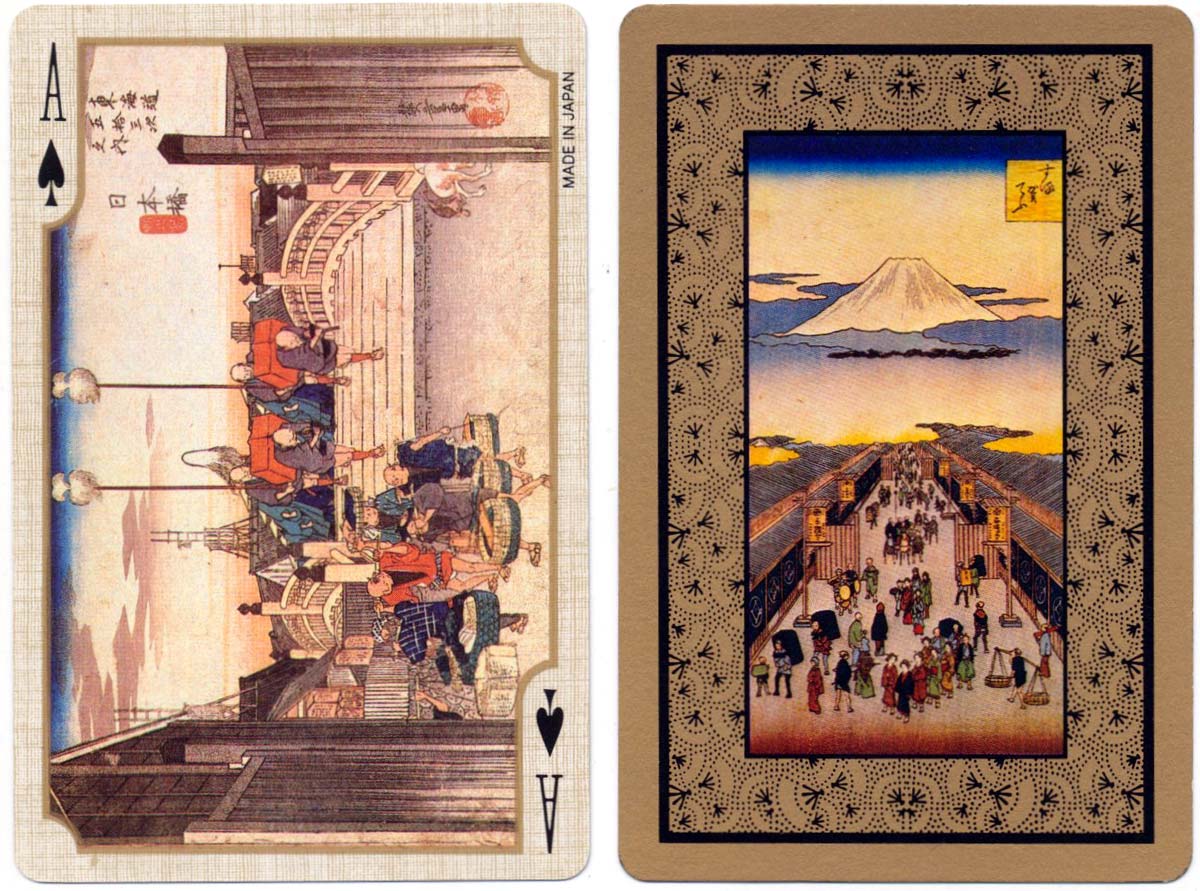
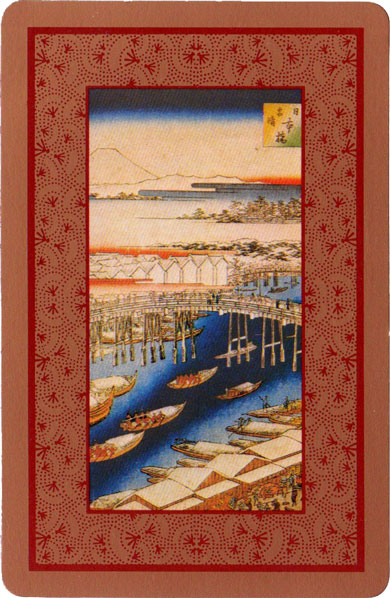
Above: an alternative back design. Courtesy Matt Probert.

By Simon Wintle
Spain • Member since February 01, 1996
I am the founder of The World of Playing Cards (est. 1996), a website dedicated to the history, artistry and cultural significance of playing cards and tarot. Over the years I have researched various areas of the subject, acquired and traded collections and contributed as a committee member of the IPCS and graphics editor of The Playing-Card journal. Having lived in Chile, England, Wales, and now Spain, these experiences have shaped my work and passion for playing cards. Amongst my achievements is producing a limited-edition replica of a 17th-century English pack using woodblocks and stencils—a labour of love. Today, the World of Playing Cards is a global collaborative project, with my son Adam serving as the technical driving force behind its development. His innovative efforts have helped shape the site into the thriving hub it is today. You are warmly invited to become a contributor and share your enthusiasm.

Activity for Hiroshige Ukiyo-e playing cards
Sign in to comment or save this article.

Related Articles
The ACA Liège Game
A curious art-game from the Royal Academy of Fine Arts of Liège, issued in 2000.
Mahjong-Trump playing cards
Mahjong tiles integrated with international playing cards.
Japanese Beauties
An elegant fusion of Western and Japanese traditions modelled after ukiyo-e.
Angel 52 Secrets
Vintage “52 Secret” art deco-inspired playing cards from Japan.
Iroha Karuta
Traditional Japanese matching game played mainly by children.
Flora playing cards
Flora playing cards made by the Angel Playing Card Co., Kyoto, 1982.
Le Jeu d’Issy
Bold designs by Jacques Auriac representing people and enterprises for which the town of Issy-les-Mo...
Ases de la pintura / Masters of painting
Ases de la pintura / Masters of painting playing cards made by Naipes Comas, Spain, c.1990.
Museum of Modern Art
Museum of Modern Art playing cards designed by Takenobu Igarashi.
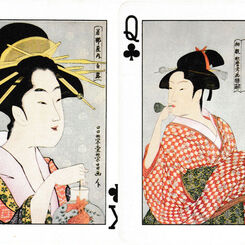
Ukiyo-E (Nintendo)
Classic examples of Ukiyo-E painting.
Tokyo Disneyland Playing Cards
Disney themed playing cards featuring Mickey Mouse and his friends; available at Tokyo Disneyland in...
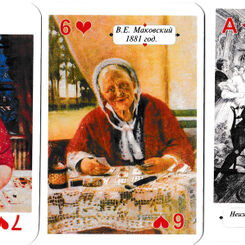
Playing cards in Russian life
Playing cards in Russian life - Karty v zhizni Rossii - published by Aleksandr Lutkovskii in 2004.
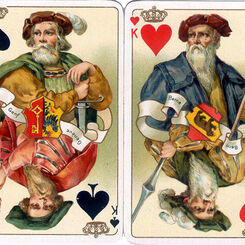
Schweizer Trachten
Schweizer Trachten No.174 (Costumes Suisses) by Dondorf.
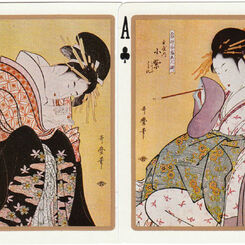
Sanyo Ukiyo-E
Ukiyo-E deck for Sanyo Enterprise Co.
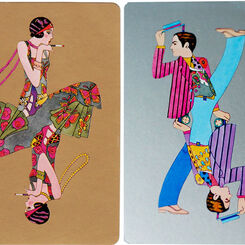
Roaring Twenties
Roaring Twenties playing cards by Angel Playing Cards Co Ltd, Japan. 1980.
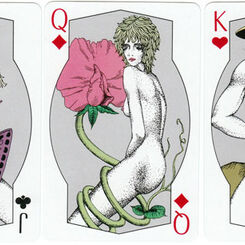
Shapely
“Shapely” non-standard adult playing cards manufactured by Angel Playing Cards Co., Japan, 1980
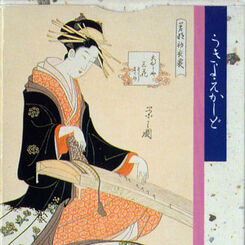
Utamaro “Ukiyo-e” playing cards
Utamaro Ukiyo-e playing cards showing woodblock prints of beautiful women.
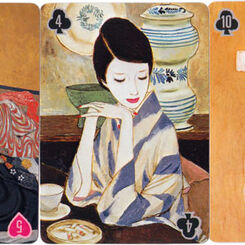
Japanese Women
Japanese Women playing cards in an idealised and erotic style by Keiichi Takasawa (1914-1984).
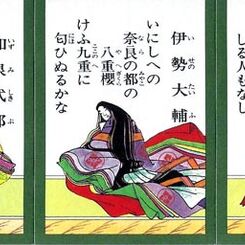
Japanese Playing Cards
Japanese playing cards include: 'Awase' or 'matching pairs' cards and Portuguese or Spanish-derived ...
The History of Playing Cards
Playing cards appear in European records in the late 14th century, but their earlier history lies fu...
Most Popular
Our top articles from the past 60 days


Mark Adams
15 October 2024, 17:53Thank you for this write-up!