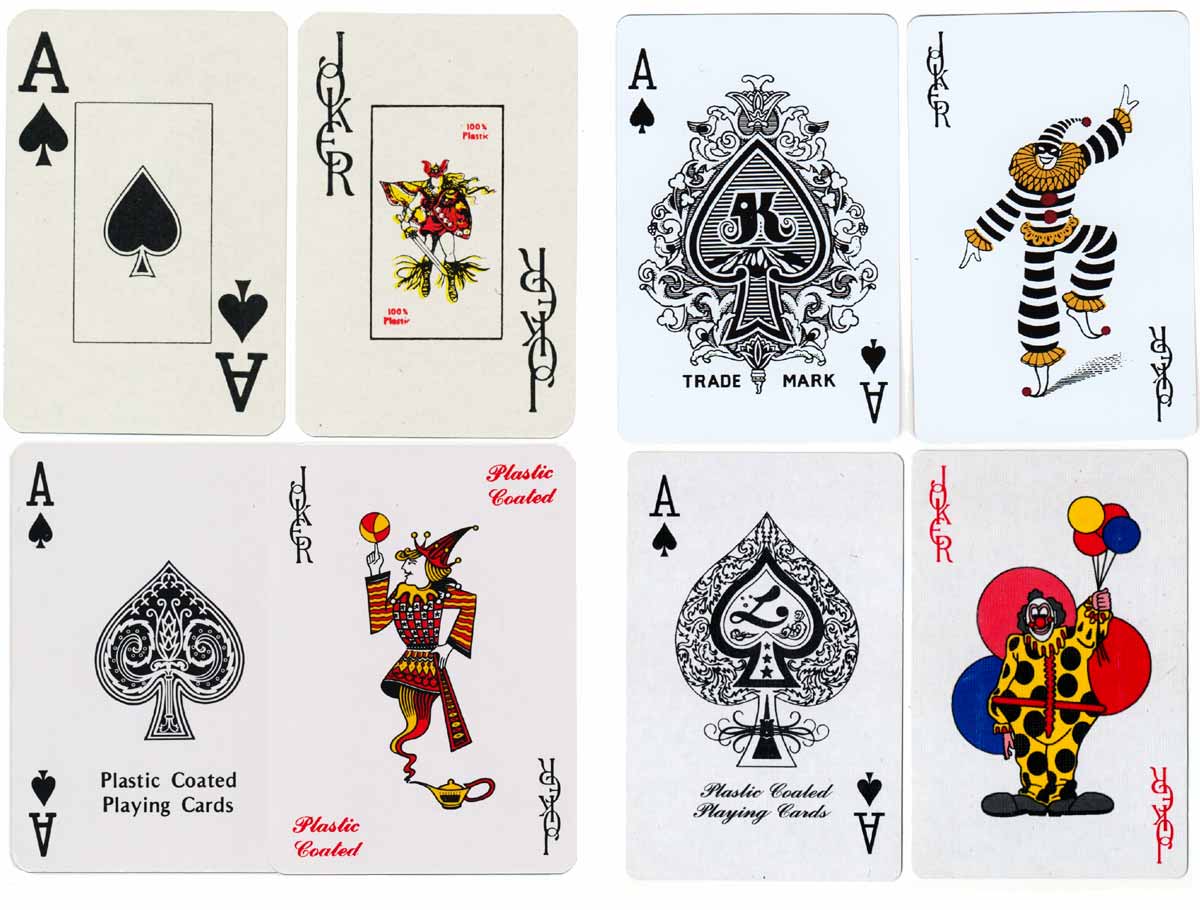
Baggy Clown Joker
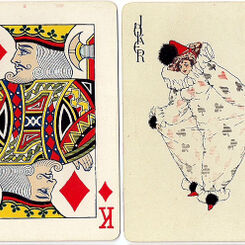
Evolution of American Bank Note Co's “Baggy Clown” Joker.
The “Baggy Clown” Joker, wearing a sort of Onesie costume with a ruff neck collar, was used by the American Bank Note Company (c.1908-1914) in their playing cards. In or around 1908, the Standard Playing Card Company used the same Joker and also used an Ace of Spades very similar to the one used by the American Bank Note Company. After the Russell Playing Card Company took over the American Bank Note Company in 1914, it produced its Aristocrat brand and the same Joker was yet again utilized. The Joker is still used to this day by USPC in many of its advertising and special order decks. Following take-overs or acquisitions the design keeps reappearing.
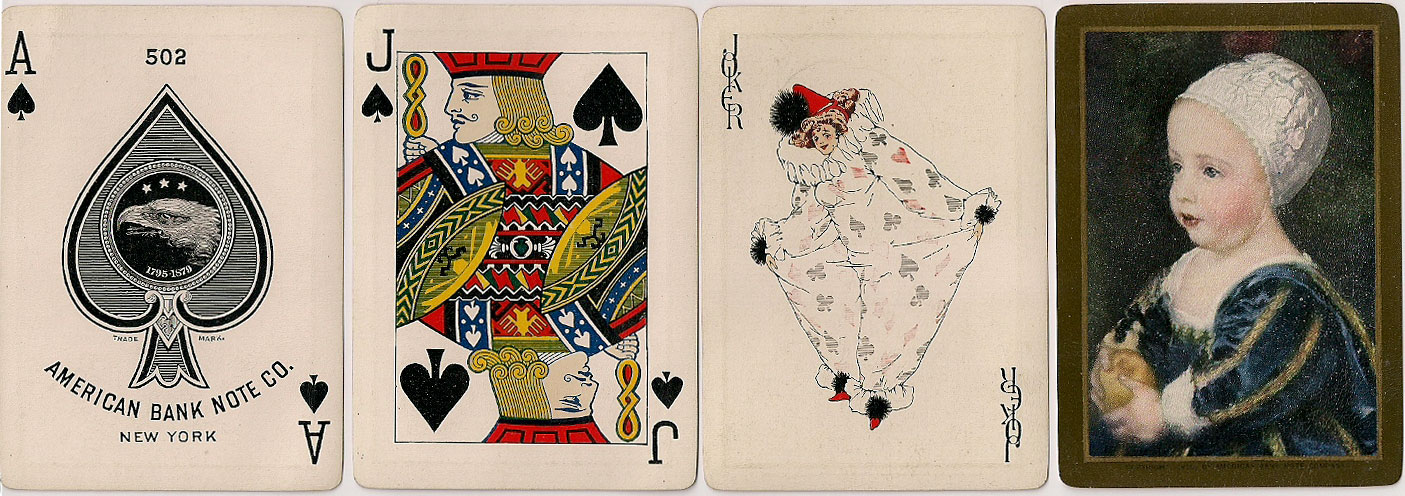
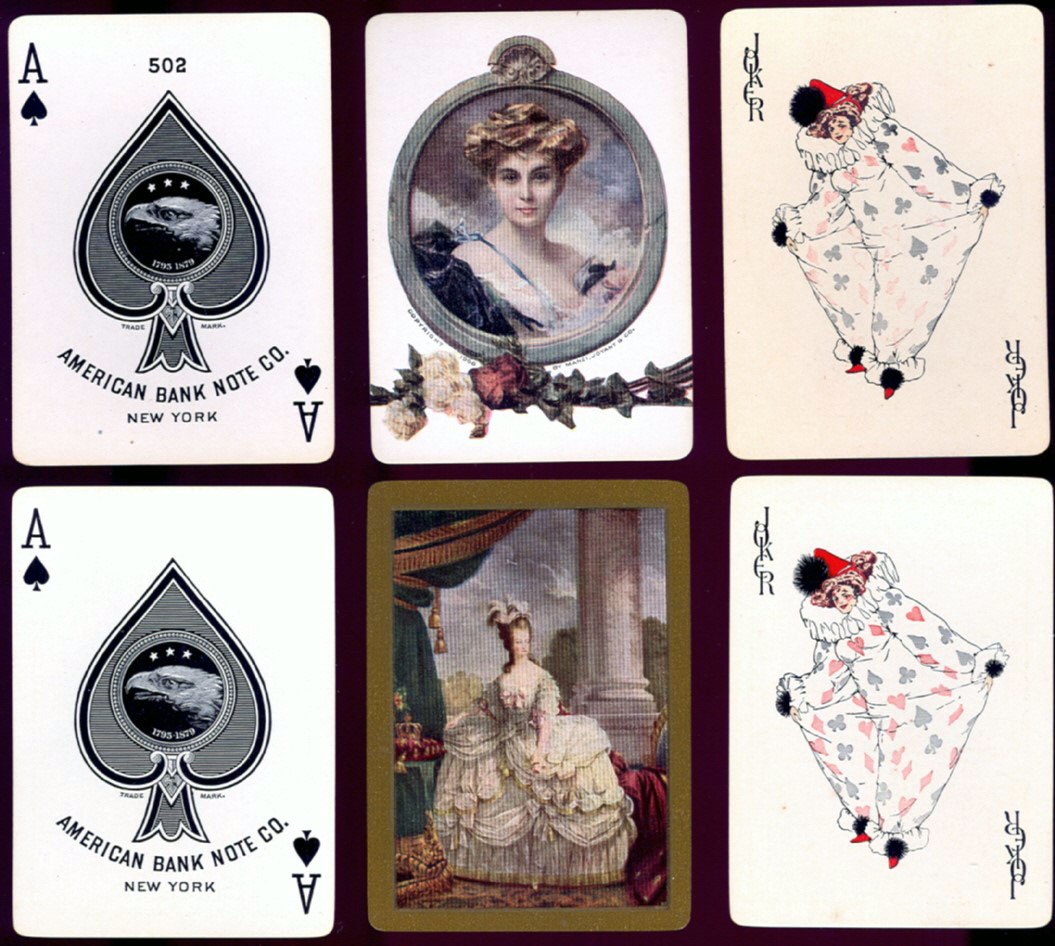
Above: American Bank Note Co. No.502 playing cards with pictorial back designs and “Baggy Clown” Joker, c.1910. Courtesy Rod Starling.
Standard Playing Card Co. commenced producing playing cards in c.1890 but was acquired by United States Playing Card Company in 1894. The Company continued operating independently, as shown on the Ace of Spades and packaging.
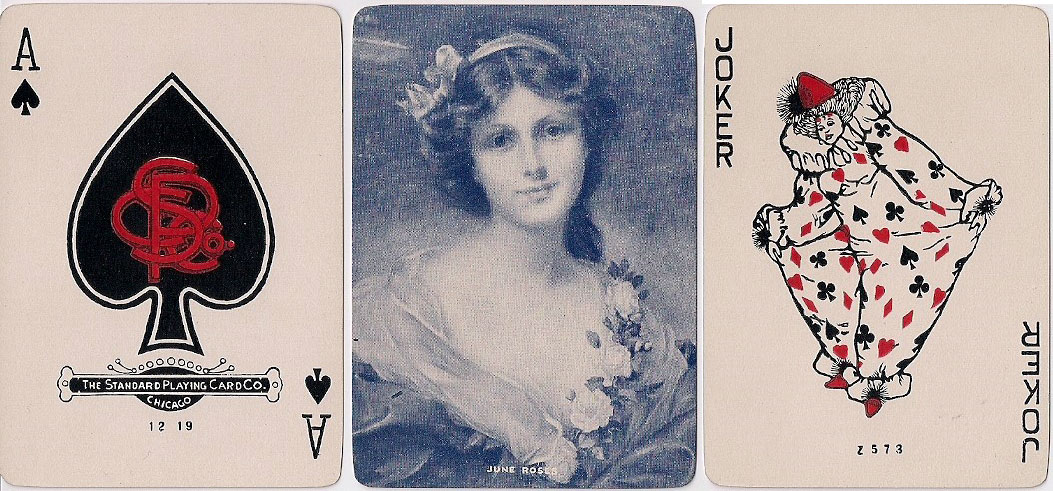
Above: Society Series playing cards by Standard Playing Card Co. with a redrawn version of the “Baggy Clown” Joker and new letterning, c.1919. Courtesy Rod Starling.
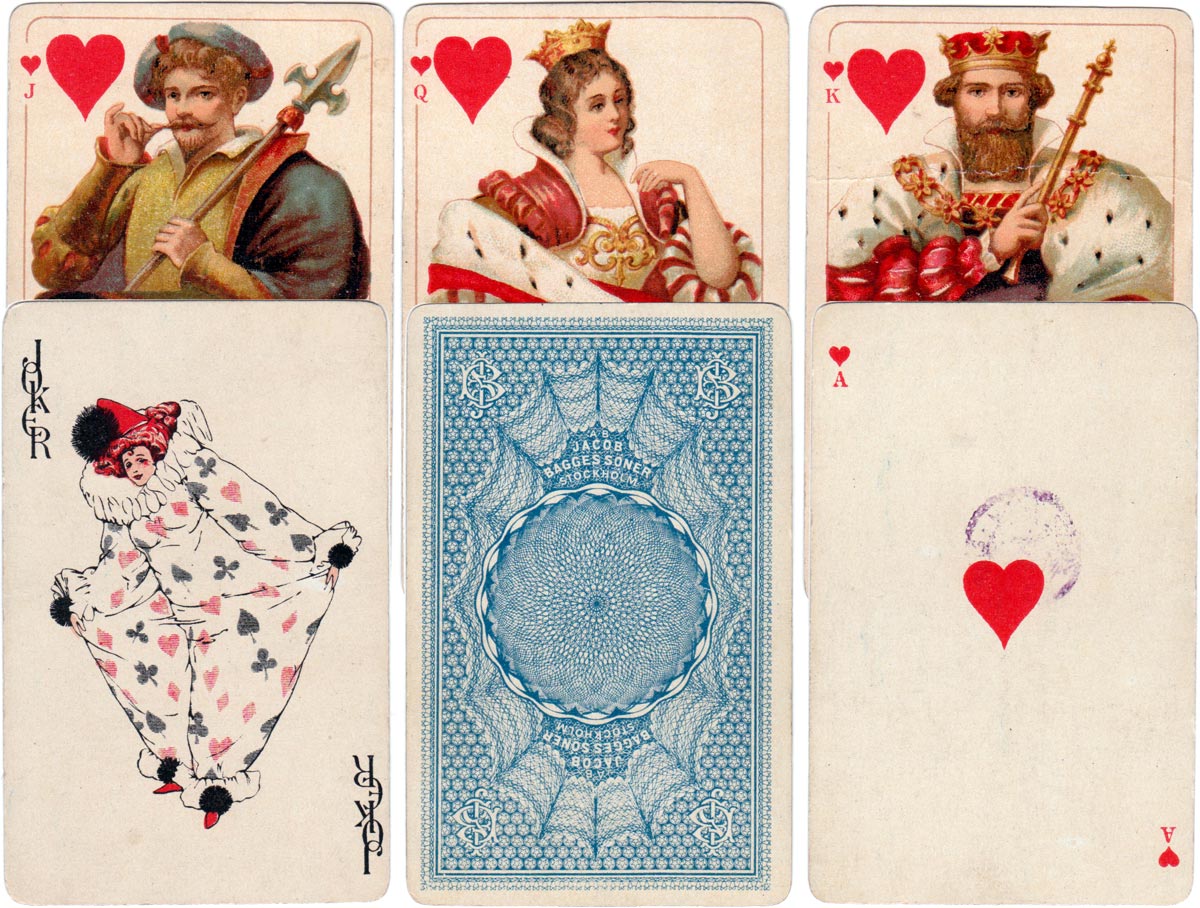
Above: playing cards published by Jacob Bagges AB Stockholm (which are similar to Dondorf’s Luxuskarte No.75) but with a “Baggy Clown” Joker and the original lettering, produced for the Danish firm Adolph Wulff of Copenhagen. Images courtesy Rex Pitts.
In 1914 the American Bank Note Company's playing card division merged into the Russell Playing Card Company. In 1929 Russell Playing Card Co became a division of the United States Playing Card Company and many brands continued to be produced. At the same time. the “Baggy Clown” Joker sometimes reappears.
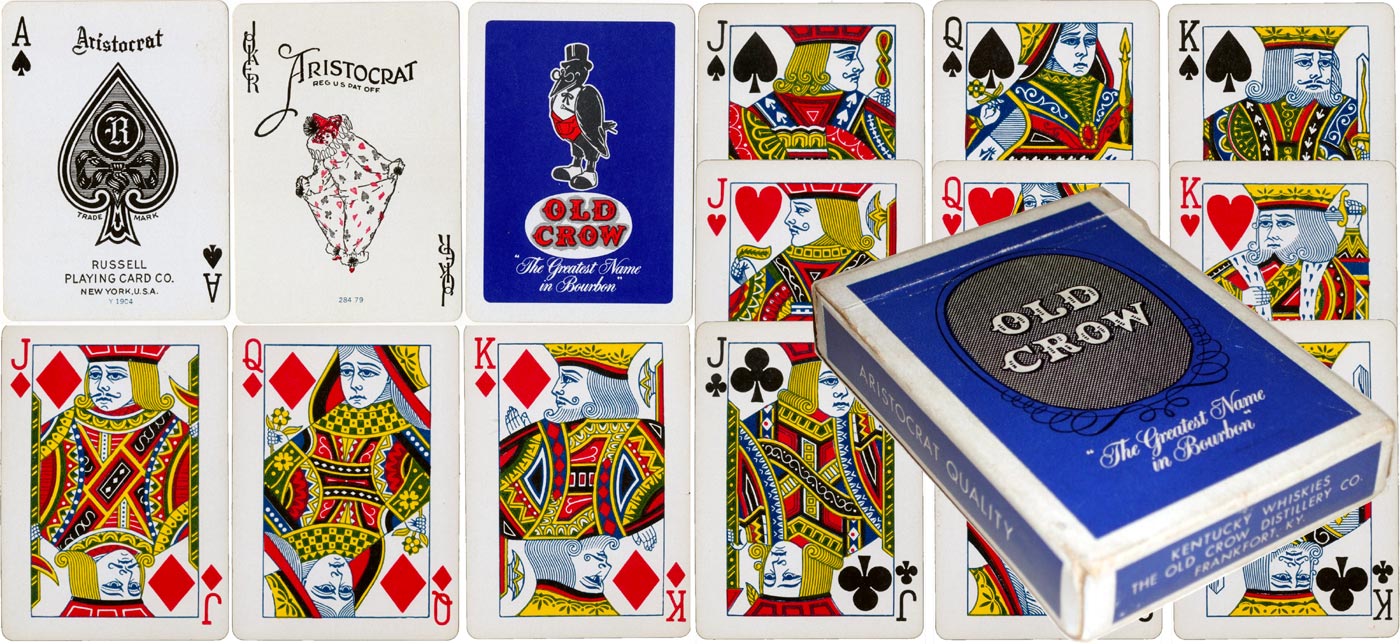
Above: “Aristocrat” brand with “Baggy Clown” Joker, printed by USPCC, c.1958. Image courtesy Matt Probert.
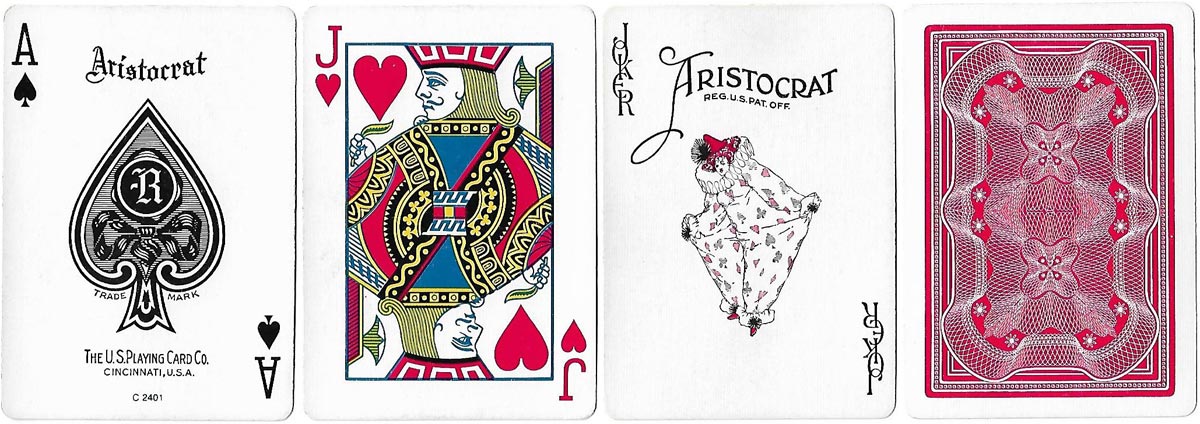
Above: “Aristocrat” brand with U.S.P.C.C ace of spades and former American Bank Note Company joker and back, c.1981. Courtesy Rod Starling.
The same joker has also been seen in cards made by the USPCC for various customers including WH Smith in the UK. The distinctive lettering on the original American Bank Note Co jokers is seen on packs produced in China, Hong Kong or Taiwan, but to date no copies of the “Baggy Clown” Joker itself have been noted. See example►
NOTES
Thanks to Rod Starling for initiating this investigation and for additional research.

By Rex Pitts (1940-2021)
United Kingdom • Member since January 30, 2009
Rex's main interest was in card games, because, he said, they were cheap and easy to get hold of in his early days of collecting. He is well known for his extensive knowledge of Pepys games and his book is on the bookshelves of many. His other interest was non-standard playing cards. He also had collections of sheet music, music CDs, models of London buses, London Transport timetables and maps and other objects that intrigued him.
Rex had a chequered career at school. He was expelled twice, on one occasion for smoking! Despite this he trained as a radio engineer and worked for the BBC in the World Service. Later he moved into sales and worked for a firm that made all kinds of packaging, a job he enjoyed until his retirement. He became an expert on boxes and would always investigate those that held his cards. He could always recognize a box made for Pepys, which were the same as those of Alf Cooke’s Universal Playing Card Company, who printed the card games. This interest changed into an ability to make and mend boxes, which he did with great dexterity. He loved this kind of handicraft work.
His dexterity of hand and eye soon led to his making card games of his own design. He spent hours and hours carefully cutting them out and colouring them by hand.

Activity for Baggy Clown Joker
Sign in to comment or save this article.

Related Articles
Junior Playing Cards
Child-friendly versions of standard English pattern cards designed by Louie Mantia, Jr.
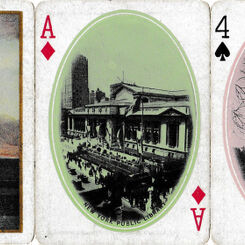
New York City souvenir
New York City souvenir playing cards with 53 different views of interest, USA, 1915.
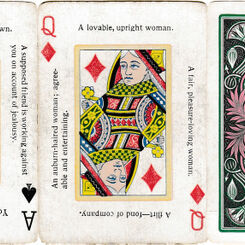
Nile Fortune cards
Nile Fortune cards no.68x published by the United States Playing Card Company, USA, 1904.
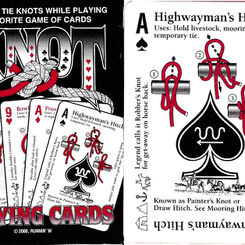
Knot playing cards
Knot playing cards intended to teach a variety of useful and interesting knots, USA, 2000.
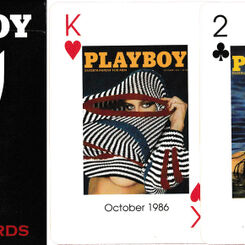
Playboy playing cards
52 different magazine covers from the first 50 years of Playboy.
Hawaiian Souvenir playing cards
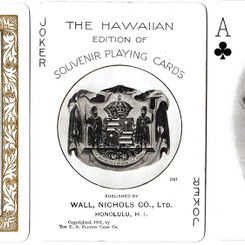
Hawaiian Souvenir playing cards, 1901.
Timothy Curtis Art
Timothy Curtis Art custom Bicycle playing cards, 2018.
Bicycle Heritage
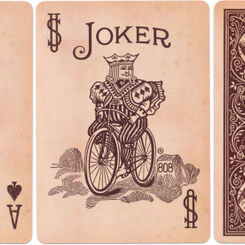
Bicycle Heritage playing cards by the United States Playing Card Company, 2012
35: More Design Copies
Here I want to take another widely copied design and see how individual variation by the copier can ...
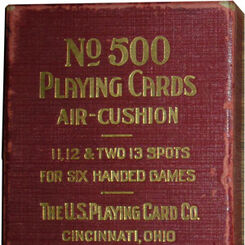
No.500 Playing Cards
No.500 Playing Cards published by U.S.P.C.C., c.1910
American Bank Note Company
The American Bank Note Company was a long-established firm producing national currency, finely engra...
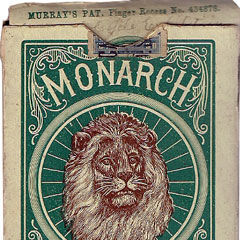
Monarch Bicycle
The company advertised themselves as “The Monarch King of all Cycles” with the lion's head motif ins...
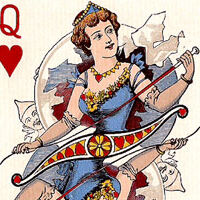
Circus No.47
“Circus No.47”, first issued in 1896. The staid old Kings, Queens and Jacks have given way to variou...
Stage Playing Cards, 1908
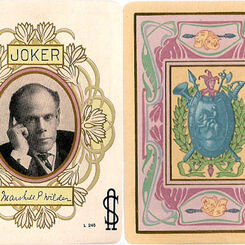
This beautiful deck features an oval half-tone photo of a theatre star on each card, many of them le...
Norwood #85, c.1909
The deck features a colourful Ace of Spades and Joker, decorated Aces, unique courts and two beautif...
Congress No.606
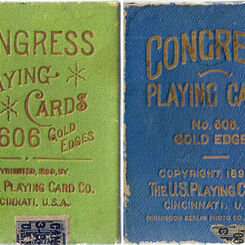
Congress Playing Cards were first produced by the Russell & Morgan Company in 1881 as the finest and...
Bicycle No.808
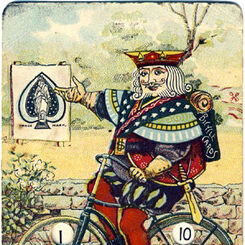
The famous Bicycle playing cards were first introduced by Russell & Morgan Printing Co in 1885. More...
The United States Playing Card Company
Over the years the pressures of competition and other market forces have led to many smaller manufac...
The Joker Card
The 'Joker' is believed to have been invented by American Euchre players who, when modifying the rul...
Naipes No. 71 Los Leones
Naipes No. 71 Los Leones by The United States Playing Card Co., c.1900.
Most Popular
Our top articles from the past 60 days