


Pippoglyph
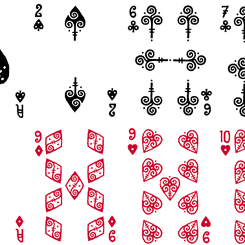
Pippoglyph Playing Cards by Ben Crenshaw © 2004
|
|||||||||||||

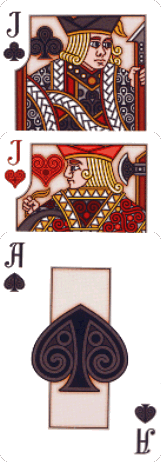
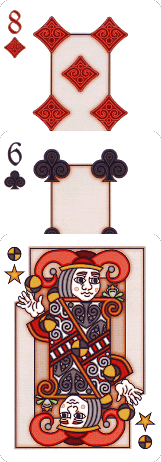
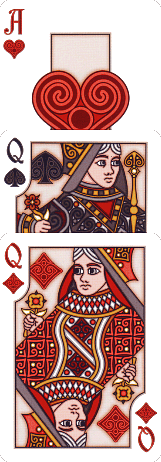
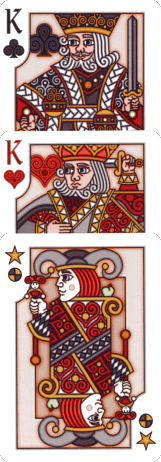

 it will have to wait for the second edition to see production.)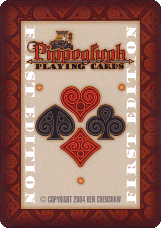
 For Ben it was important to maintain the traditional symbolism of the cards he grew up with. In his deck you will find all the familiar favorites, such as one-eyed jacks and the suicide king. In homage to Charles Goodall, father of the double headed court card, Ben chose to work closely with the abstract body shapes Charles introduced in 1860 as part of his innovative design.
By Simon Wintle
Spain • Member since February 01, 1996
I am the founder of The World of Playing Cards (est. 1996), a website dedicated to the history, artistry and cultural significance of playing cards and tarot. Over the years I have researched various areas of the subject, acquired and traded collections and contributed as a committee member of the IPCS and graphics editor of The Playing-Card journal. Having lived in Chile, England, Wales, and now Spain, these experiences have shaped my work and passion for playing cards. Amongst my achievements is producing a limited-edition replica of a 17th-century English pack using woodblocks and stencils—a labour of love. Today, the World of Playing Cards is a global collaborative project, with my son Adam serving as the technical driving force behind its development. His innovative efforts have helped shape the site into the thriving hub it is today. You are warmly invited to become a contributor and share your enthusiasm.

Activity for Pippoglyph
Sign in to comment or save this article.

Related Articles
Hallmark
A folksy take on playing card courts.
Grateful Dead playing cards no. 3
A pack celebrating the long strange trip it’s been.
Fact & Fancy : a Deck of Decks
A tour of the world of playing cards featuring the incomparable art of Dick Martin.
Mythological Zoo
An extraordinary collection of fabulous beasts.
Time Magazine
America’s classic periodical celebrates itself.
Keith Haring playing cards
Energetic graffiti images by the American artist Keith Haring.
Fredericks & Mae playing cards
A rainbow pack from the design team of Fredericks & Mae and Benjamin English.
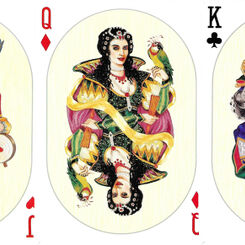
Crown Hill playing cards
Crown Hill playing cards with illustrations by Corrine Guiney, USA,
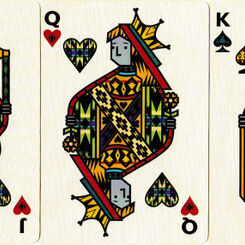
Pendleton playing cards
Pendleton playing cards inspired by indigenous American artwork, USA, 2019.
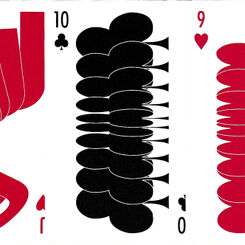
Museum of Modern Art
Museum of Modern Art playing cards designed by Takenobu Igarashi.
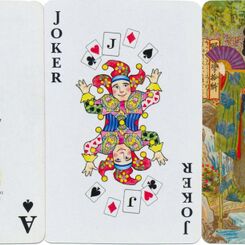
Punch Studio: ‘Geisha Girls’
‘Geisha Girls’ playing cards published by Punch Studio, Culver City, CA., 2013
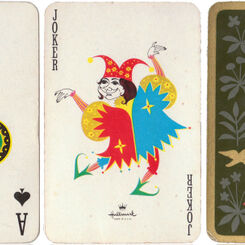
Trump 777
Trump 777 decorative playing cards by Hallmark.
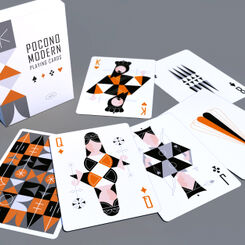
The Retro Deck- Pocono Modern Playing Cards
The Retro Deck, illustrated by Kraig Kalashian, was originally inspired by vintage matchbox art fro...
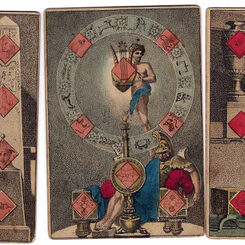
Bartlett Ackermann Transformation
Pictorial playing cards published by C. Bartlett, New York, 1833.
Hycrest Modern Royalty
Published by the Hycrest Playing Card Co., New York, c.1931. The large suit symbol behind each figur...
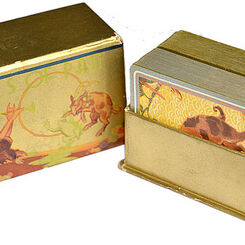
Past-L-Eze Playing Cards
On “Past-L-Eze” playing cards Kings, Queens and Jacks are no longer stodgy and conventional but plea...
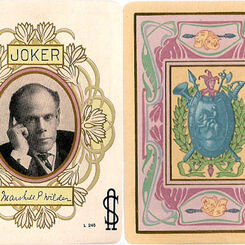
Tales from the Stage
"Tales from the Stage" - an article about theatrical playing cards by Rod Starling
Ian Roth’s Unique playing cards
Ian Roth’s Unique playing cards
The History of Playing Cards
Playing cards appear in European records in the late 14th century, but their earlier history lies fu...
About Emily Arkin
Emily Arkin is an artist from Somerville, MA.
Most Popular
Our top articles from the past 60 days


Peter Burnett
19 November 2025, 09:47SavedSaved this article to Peter's Collection
Athena McCarty
04 March 2026, 06:48SavedSaved this article to Nice Cards