


Frozen Court - The Aethiopic Rendering
A deck made specifically for Alpha Phi Alpha Fraternity, Inc., the first African-american college fraternity, for their 2000 convention.
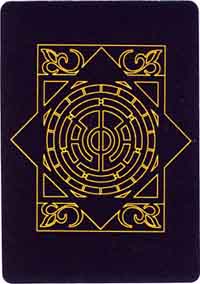
Frozen Court - The Aethiopic Rendering
One Machete Holdings, Ltd.
Designed by Richard Butler, Illustrated by Paul Hill.
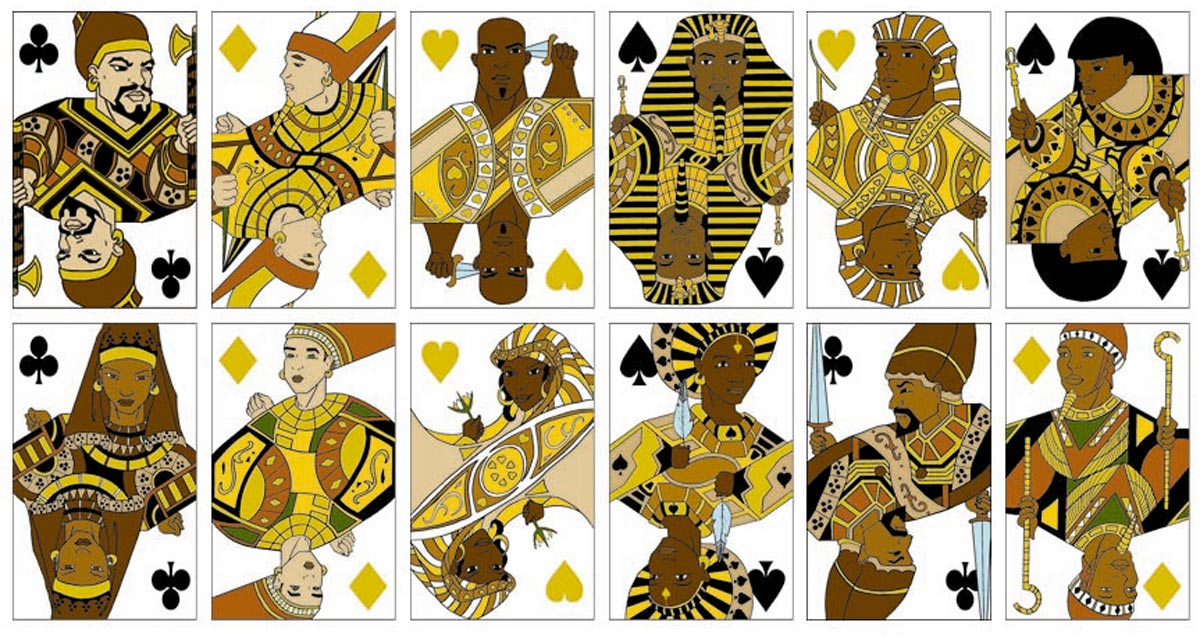
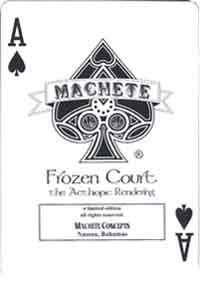
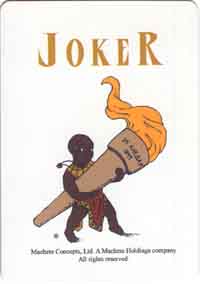
The deck was made specifically for Alpha Phi Alpha Fraternity, Inc., the first African-american college fraternity, for their 2000 convention. With the exception of nods to the two largest AA sororities, there exists no non-Alpha-related symbolism. The Ancient Egyptian theme of the deck directly relates to the rich significance of that period's symbolism within the fraternity. The deck has 52 cards + 2 jokers plus an explanatory booklet, and is poker-size. Featuring a custom court, custom jokers, and a special Ace, the heart and diamond pips are gold instead of red. Decks are numbered and registered.
 |
 |
The spades suit represents the classic "Black & Gold" family (2 parts of which are no longer in existence). The King represents the classic Alpha Pharaoh as it states in the booklet. What is not stated is that the Queen of Spades represents an Alpha Angel (fraternity "little sister"), which is why she has a halo design incorporated into the headgear. She has seven regular spades adorning her vestments and an eighth heart which is inverted to resemble a heart and golden ("Alpha Angels have hearts of gold"). The Jack of Spades represents an Alpha Aspirant (known by various names but mainly as Alpha Men of Tomorrow). He is regarding an ankh (Egyptian symbol of life and wisdom). His vestments bear a half-light half-dark triangle, representing his current stage. This theme of half-in-darkness, half-in-light tied in nicely with the one-eyed requirement. The Queen of Clubs is a nod to the Delta Sigma Theta Sorority. Her appearance is meant to suggest the "classic" delta appearance, and she has 13 clubs in her hood, as a nod to 1913, the founding date of the sorority. DST is normally linked with the Omega Psi Phi fraternity. An inside joke (for organization members) of making the Queen of Clubs represent DST is that clubs are also known as "puppy-feet", and the Omegas are widely known (and self-referenced) as Que-dogs).
Other African themed decks reviewed on this website include: "Pharaoh Palmier Poker".

By Simon Wintle
Spain • Member since February 01, 1996
I am the founder of The World of Playing Cards (est. 1996), a website dedicated to the history, artistry and cultural significance of playing cards and tarot. Over the years I have researched various areas of the subject, acquired and traded collections and contributed as a committee member of the IPCS and graphics editor of The Playing-Card journal. Having lived in Chile, England, Wales, and now Spain, these experiences have shaped my work and passion for playing cards. Amongst my achievements is producing a limited-edition replica of a 17th-century English pack using woodblocks and stencils—a labour of love. Today, the World of Playing Cards is a global collaborative project, with my son Adam serving as the technical driving force behind its development. His innovative efforts have helped shape the site into the thriving hub it is today. You are warmly invited to become a contributor and share your enthusiasm.

Activity for Frozen Court - The Aethiopic Rendering
Sign in to comment or save this article.

Related Articles
Fact & Fancy : a Deck of Decks
A tour of the world of playing cards featuring the incomparable art of Dick Martin.
Time Magazine
America’s classic periodical celebrates itself.
Pendleton playing cards
Pendleton playing cards inspired by indigenous American artwork, USA, 2019.
Race Card
‘Race Card’ playing cards published by the Concept Card Co., New Orleans, Louisiana, USA.
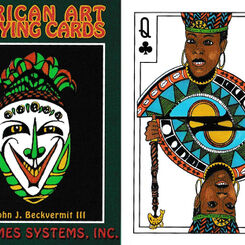
African art playing cards
African art and symbolism on playing cards designed by John J. Beckvermit III, USA, 1994.
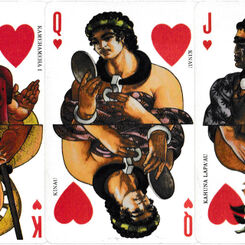
The Times of Kamehameha The Great
Figures from Hawaiian history and scenes of everyday life designed by Joseph Feher.
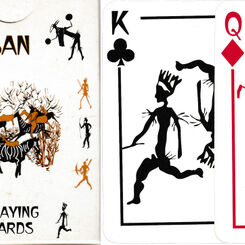
San Playing Cards
Rock paintings and engravings of the San people, better known as the “Bushmen”.
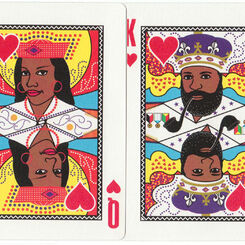
Trinidad Carnival Playing Cards
“Allfours Carnival Playing Cards” designed by Gabby Woodham, Trinidad, 1995
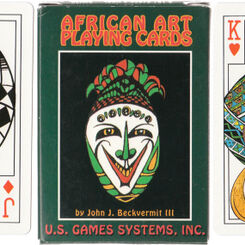
African Art
“African Art” playing cards by John J. Beckvermit III, 1994.
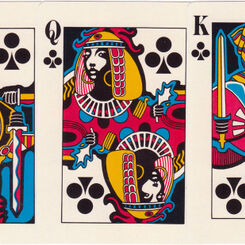
Sheba by Omega Concepts Ltd
Sheba playing cards illustrated by Brent Bailer and published by Omega Concepts Ltd.
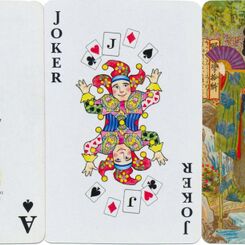
Punch Studio: ‘Geisha Girls’
‘Geisha Girls’ playing cards published by Punch Studio, Culver City, CA., 2013
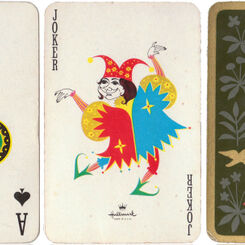
Trump 777
Trump 777 decorative playing cards by Hallmark.
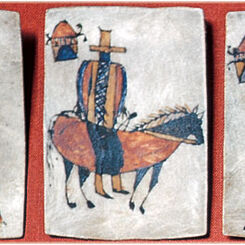
Apache cards by Tonto Naipero
Apache rawhide playing cards by ‘Tonto Naipero’, c.1871.
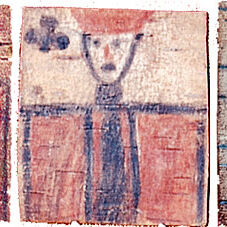
Ojibwa Native Indian Cards
Ojibwa Native Indian playing cards hand manufactured on birch bark in imitation of standard French /...
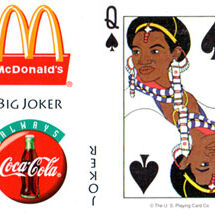
McDonald’s Playing Cards
McDonald’s playing cards by the United States Playing Card Co., Cincinnati, c.1997
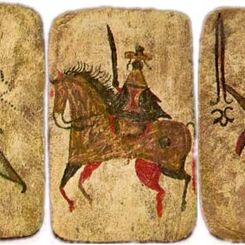
Apache Playing Cards
Apache Indian Playing Cards made on rawhide, first recorded 1875.
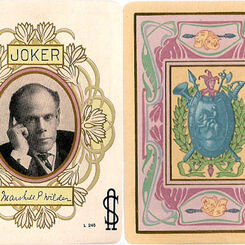
Tales from the Stage
"Tales from the Stage" - an article about theatrical playing cards by Rod Starling
Pippoglyph
Pippoglyph Playing Cards by Ben Crenshaw © 2004
Ian Roth’s Unique playing cards
Ian Roth’s Unique playing cards
The History of Playing Cards
Playing cards appear in European records in the late 14th century, but their earlier history lies fu...
Most Popular
Our top articles from the past 60 days


