Bartlett Ackermann Transformation
Pictorial playing cards published by C. Bartlett, New York, 1833.
Bartlett Ackermann Transformation, 1833
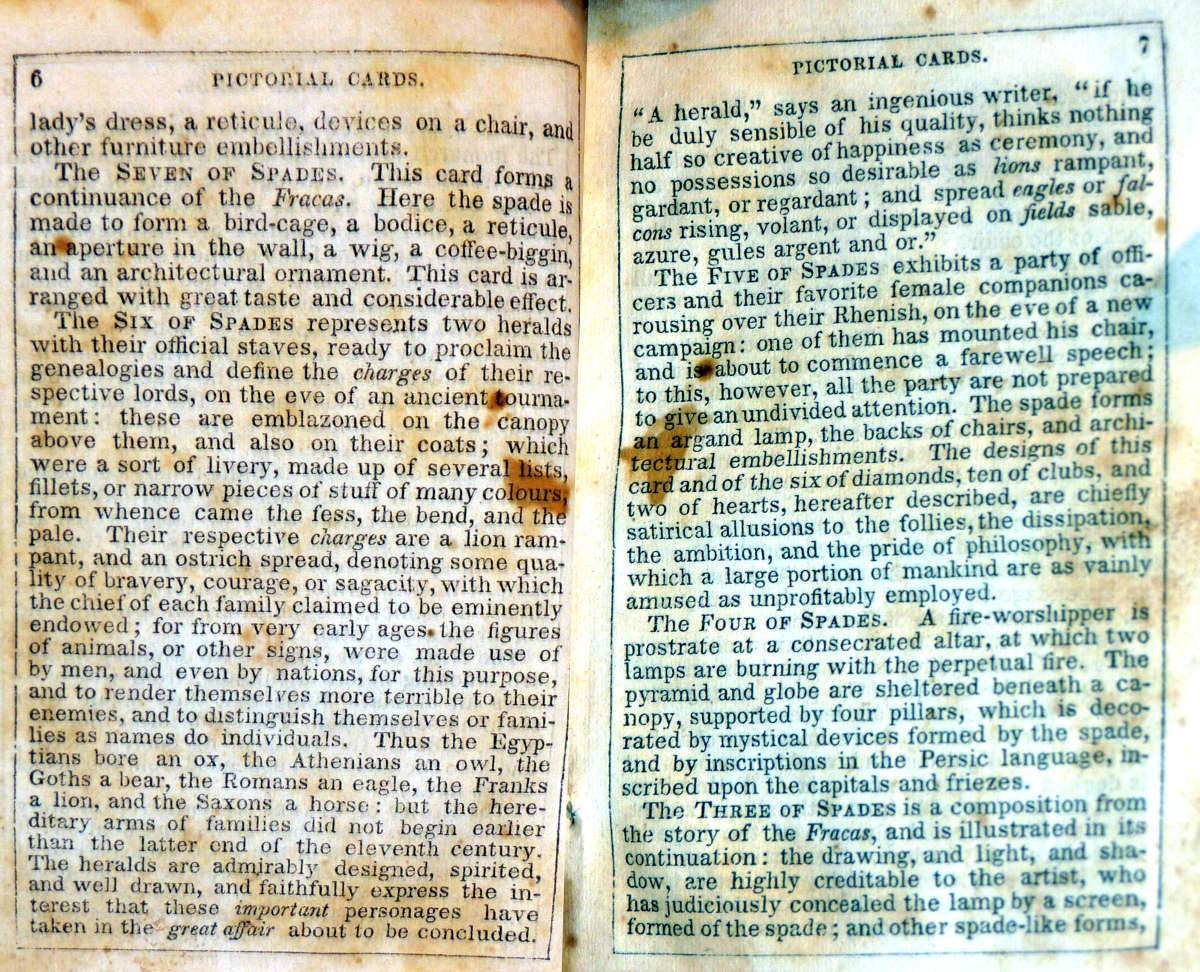
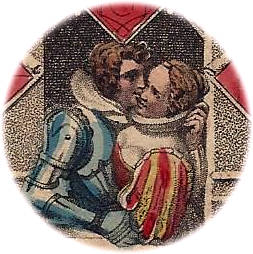
Pictorial ‘Transformation’ playing cards published by Caleb Bartlett, New York, 1833. The original designs are believed to be by Rudolph Ackermann and published in the Repository of Arts magazine, London, 1818-19. The American edition shown here is almost an exact copy of the Ackermann version, except that the colouring is much heavier and brighter than in the originals so that some details of the design are obscured. The deck is accompanied by a booklet in which each card is described in detail see excerpt →
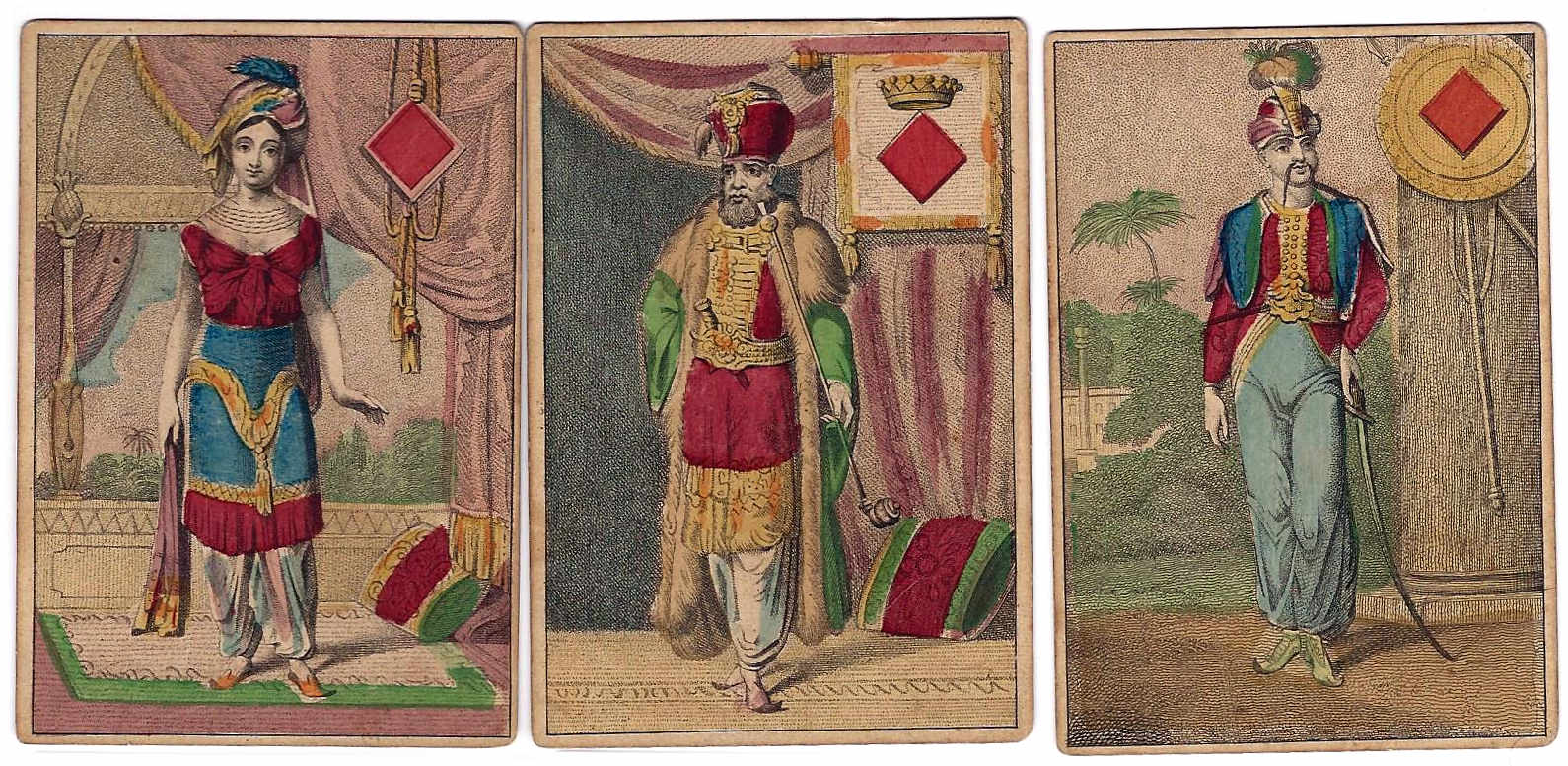
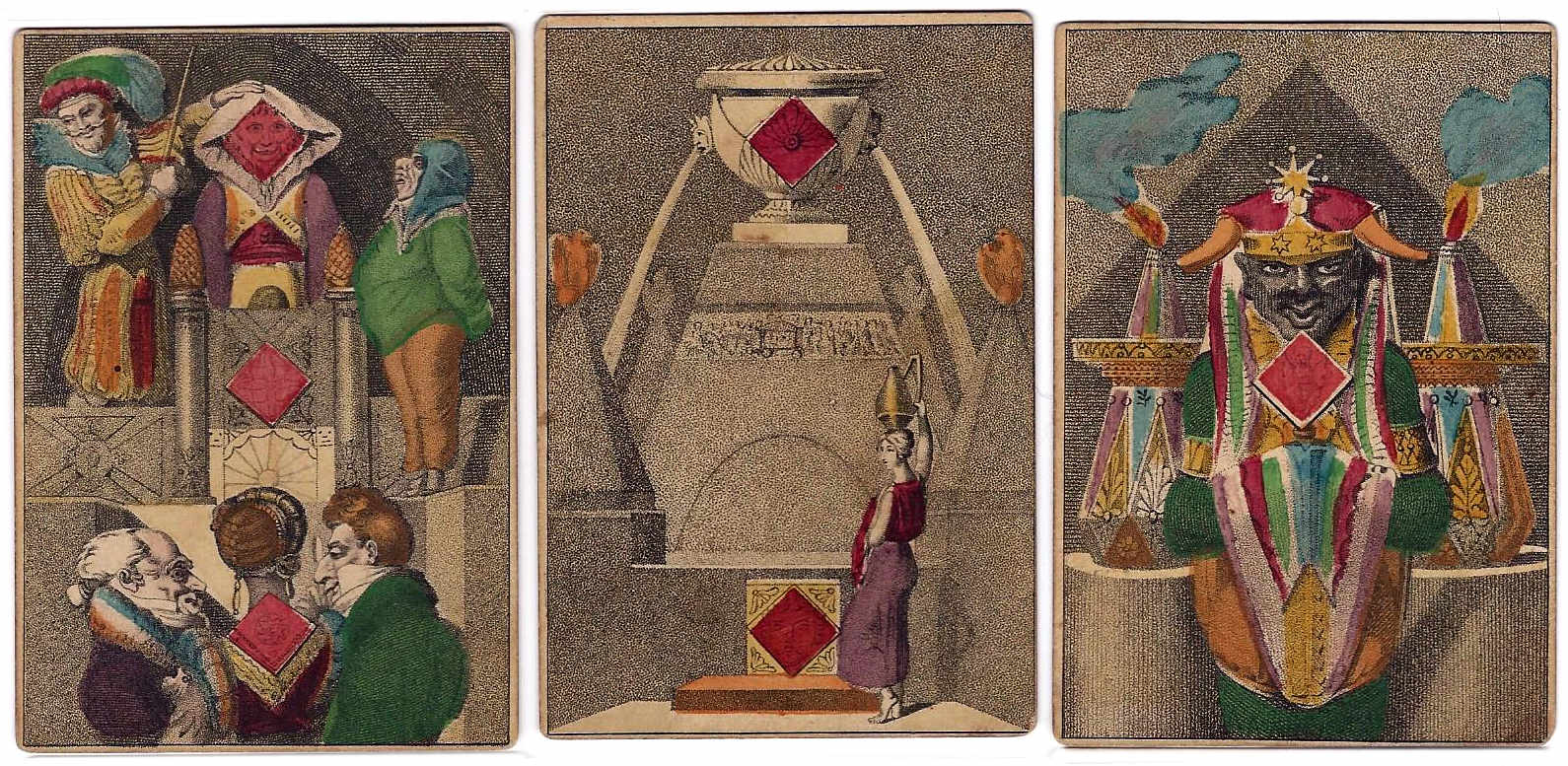
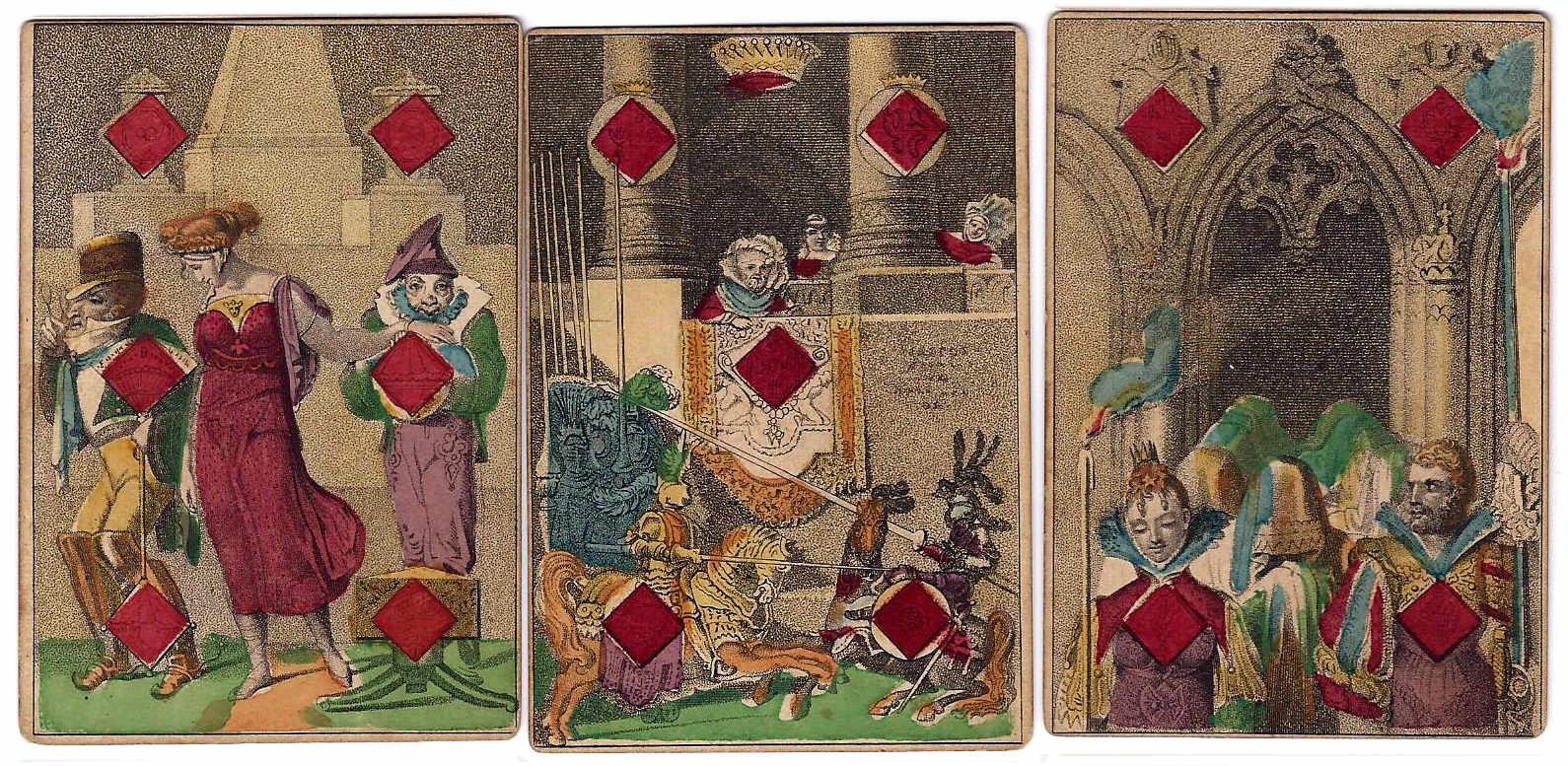
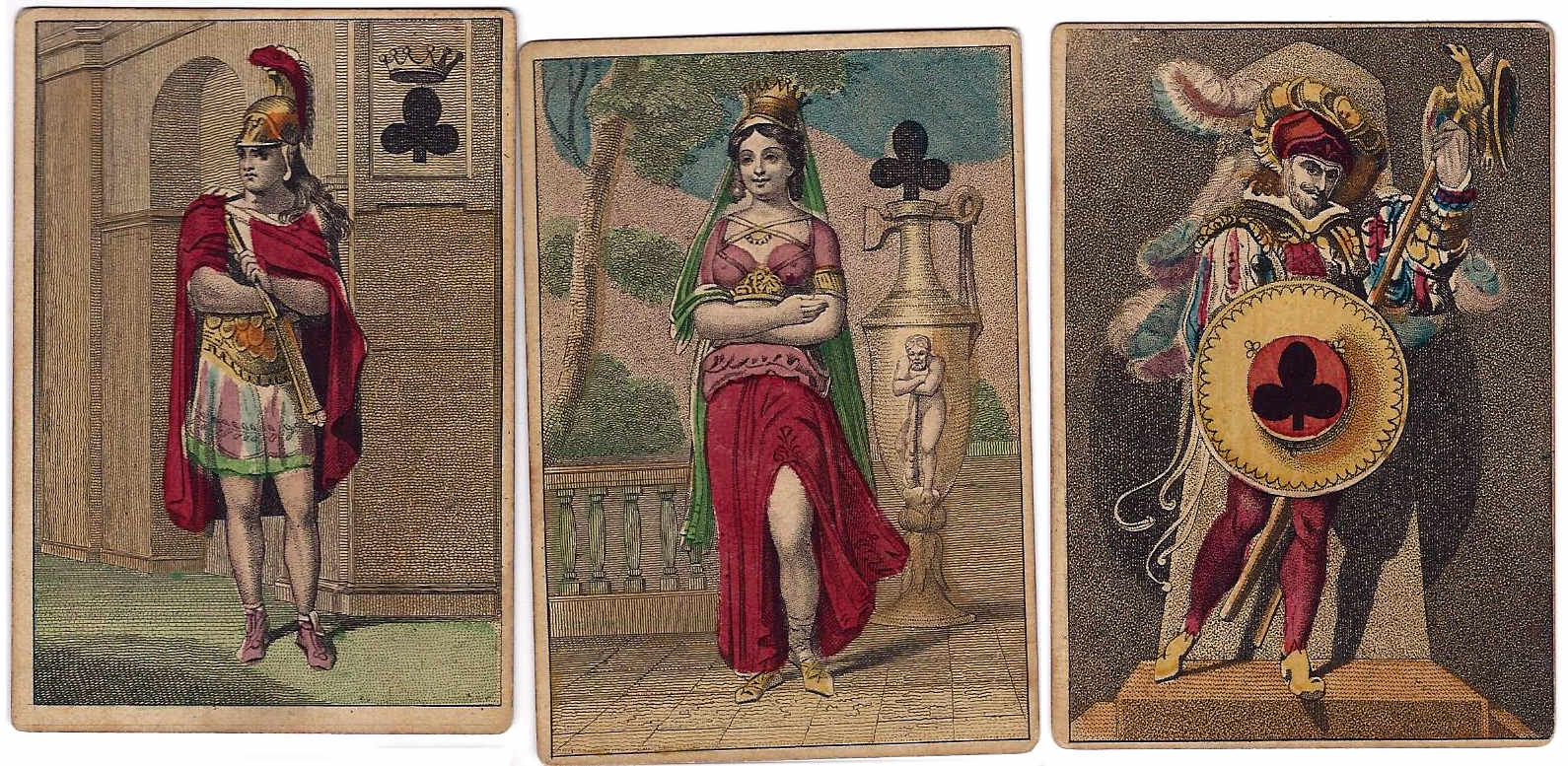
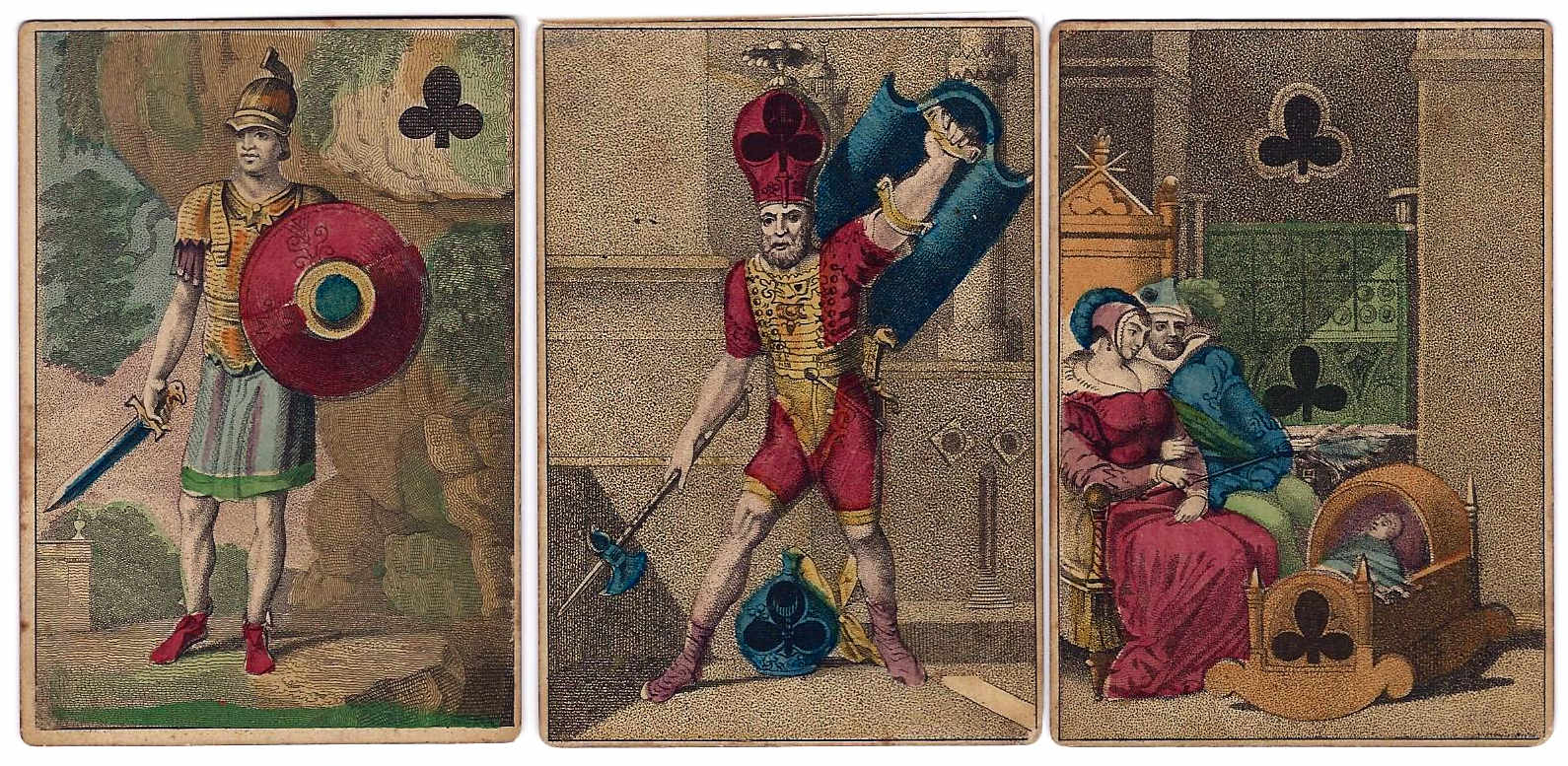
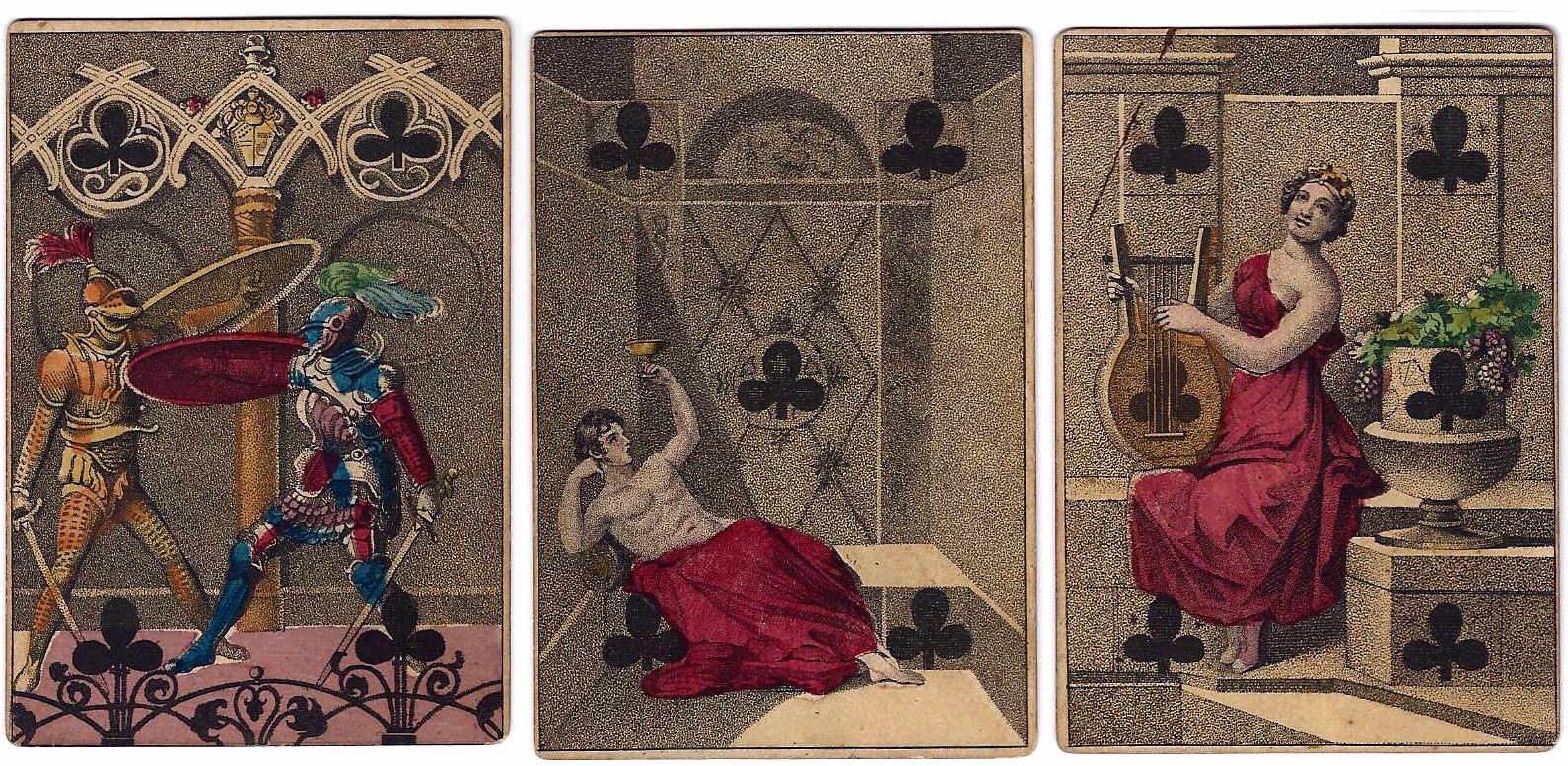
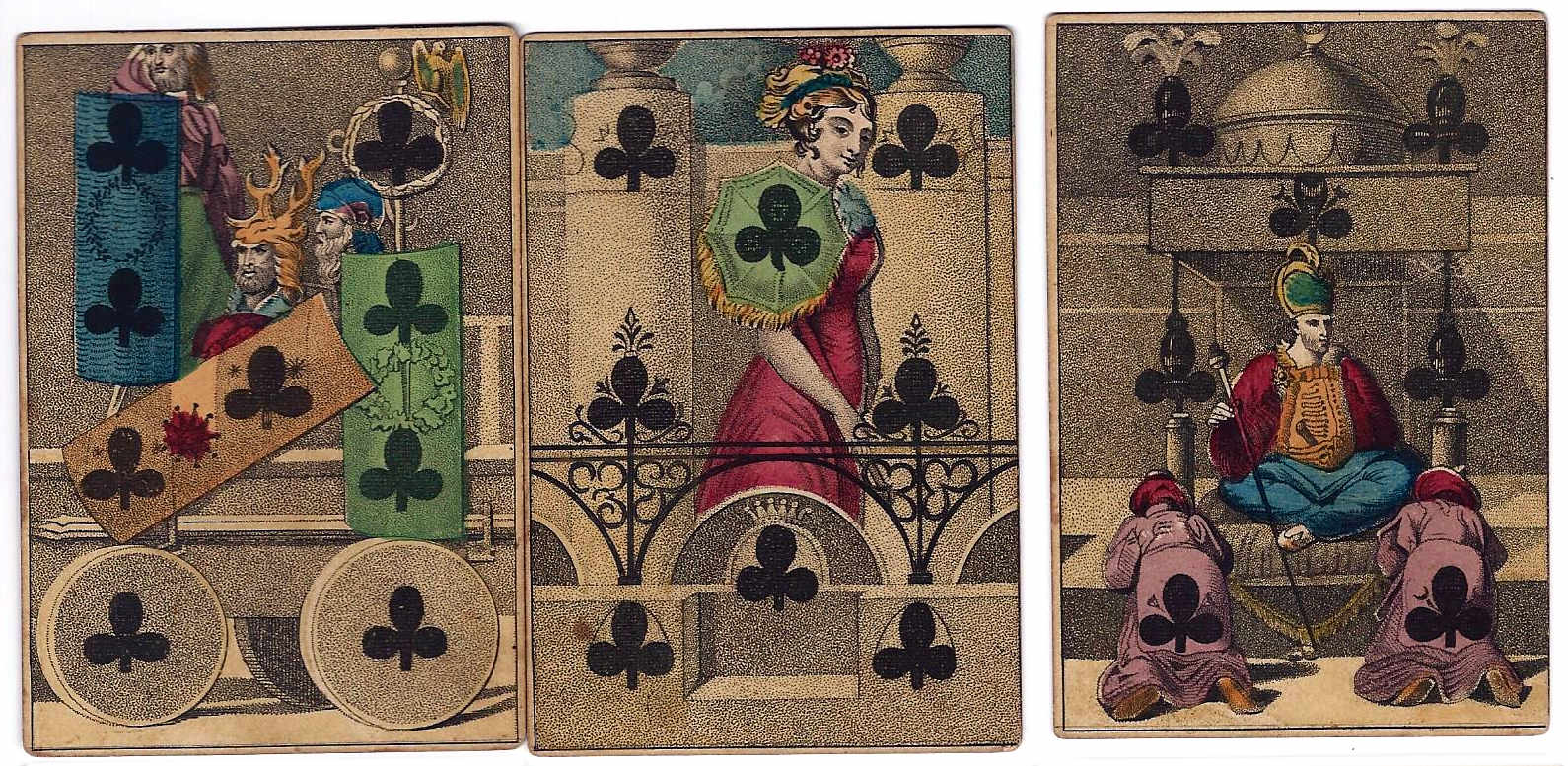
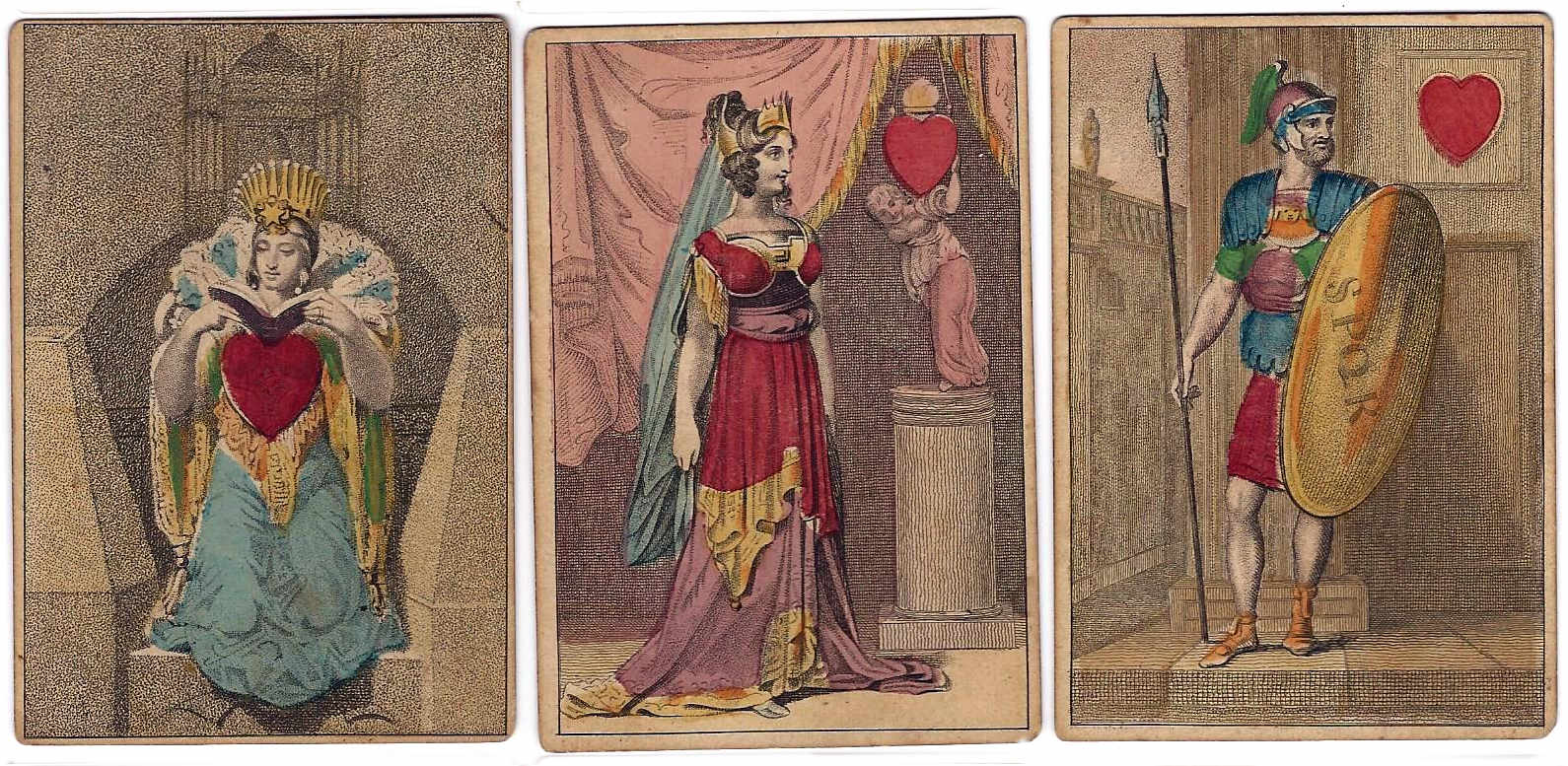
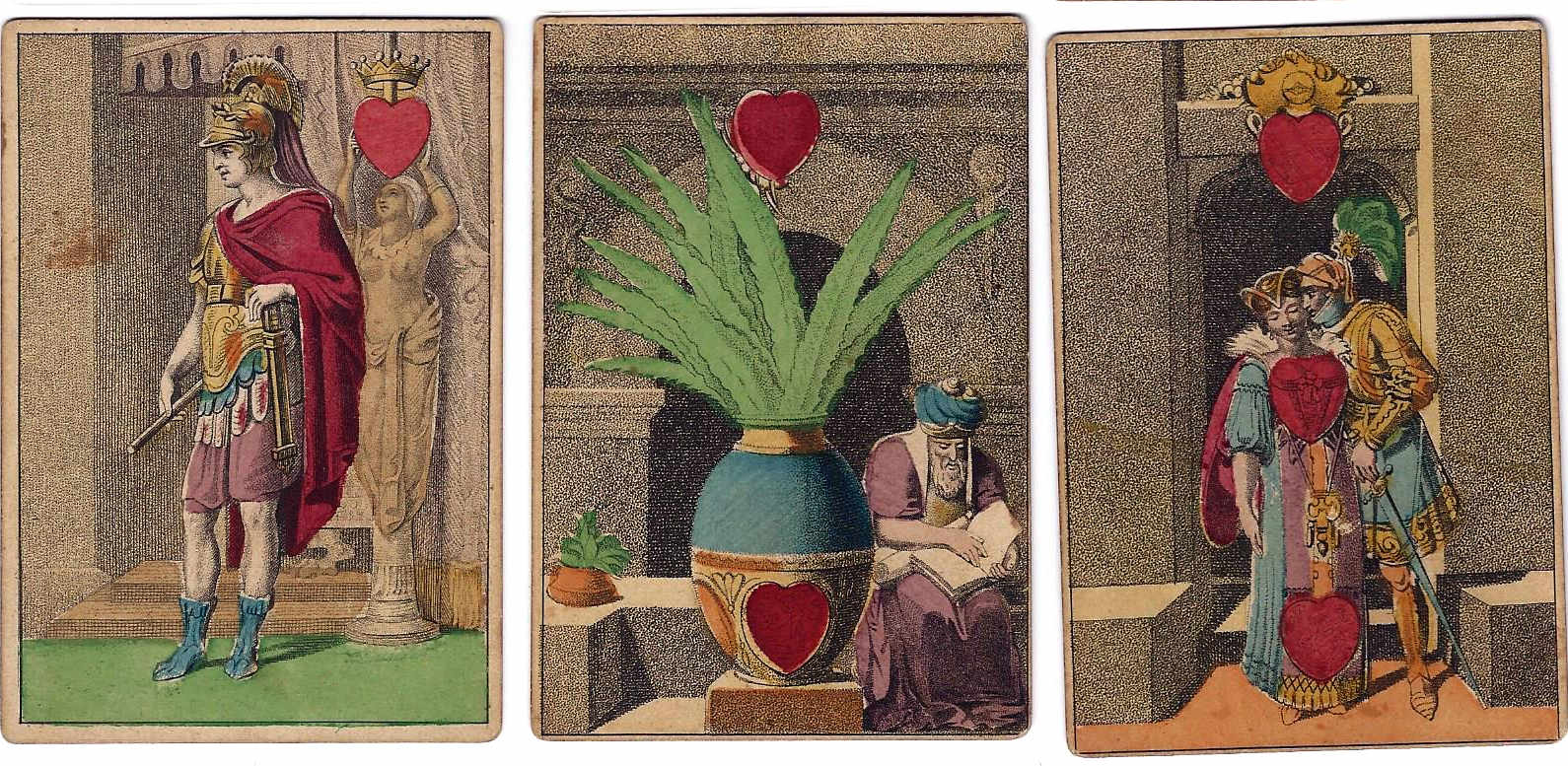
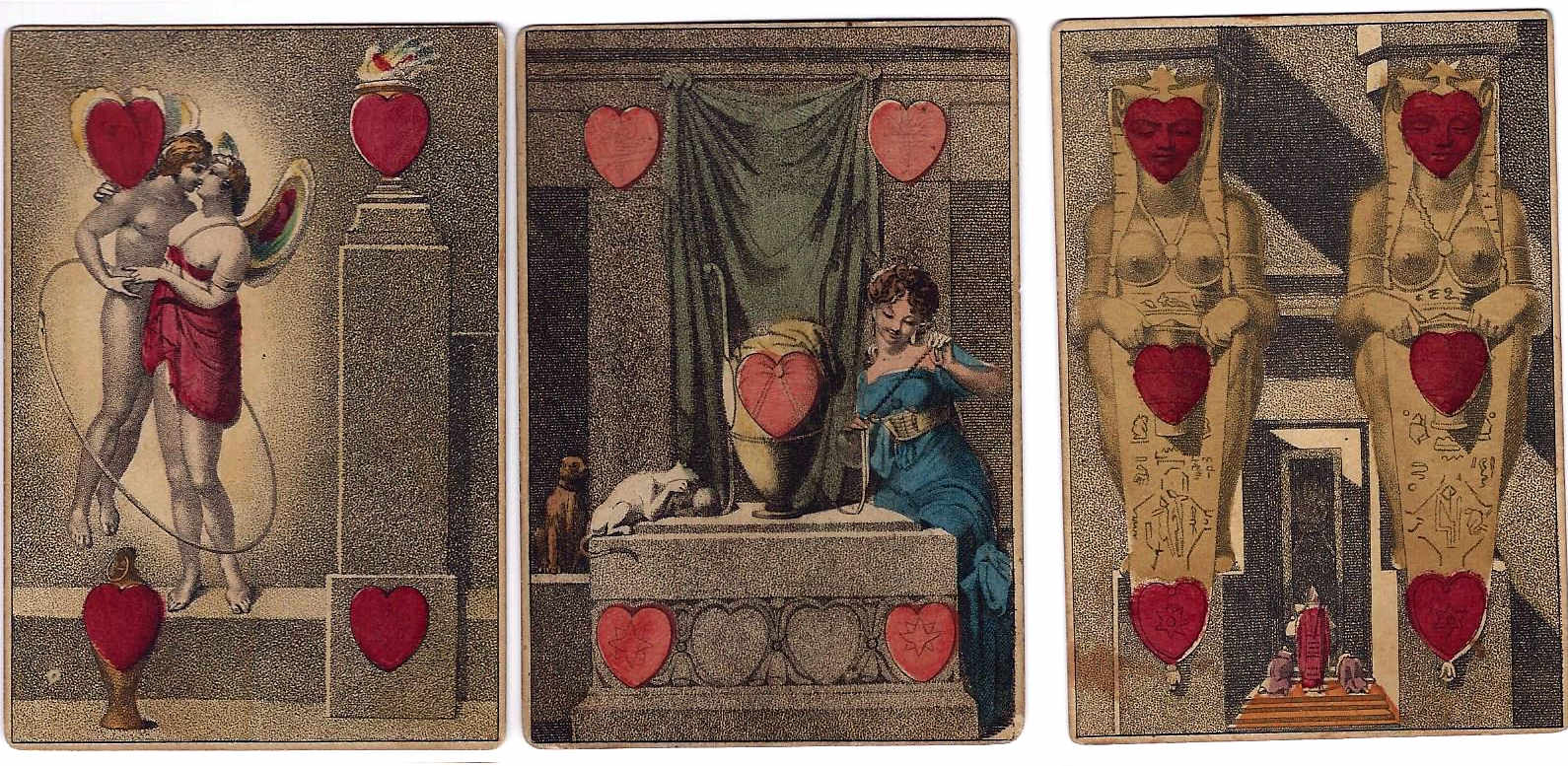
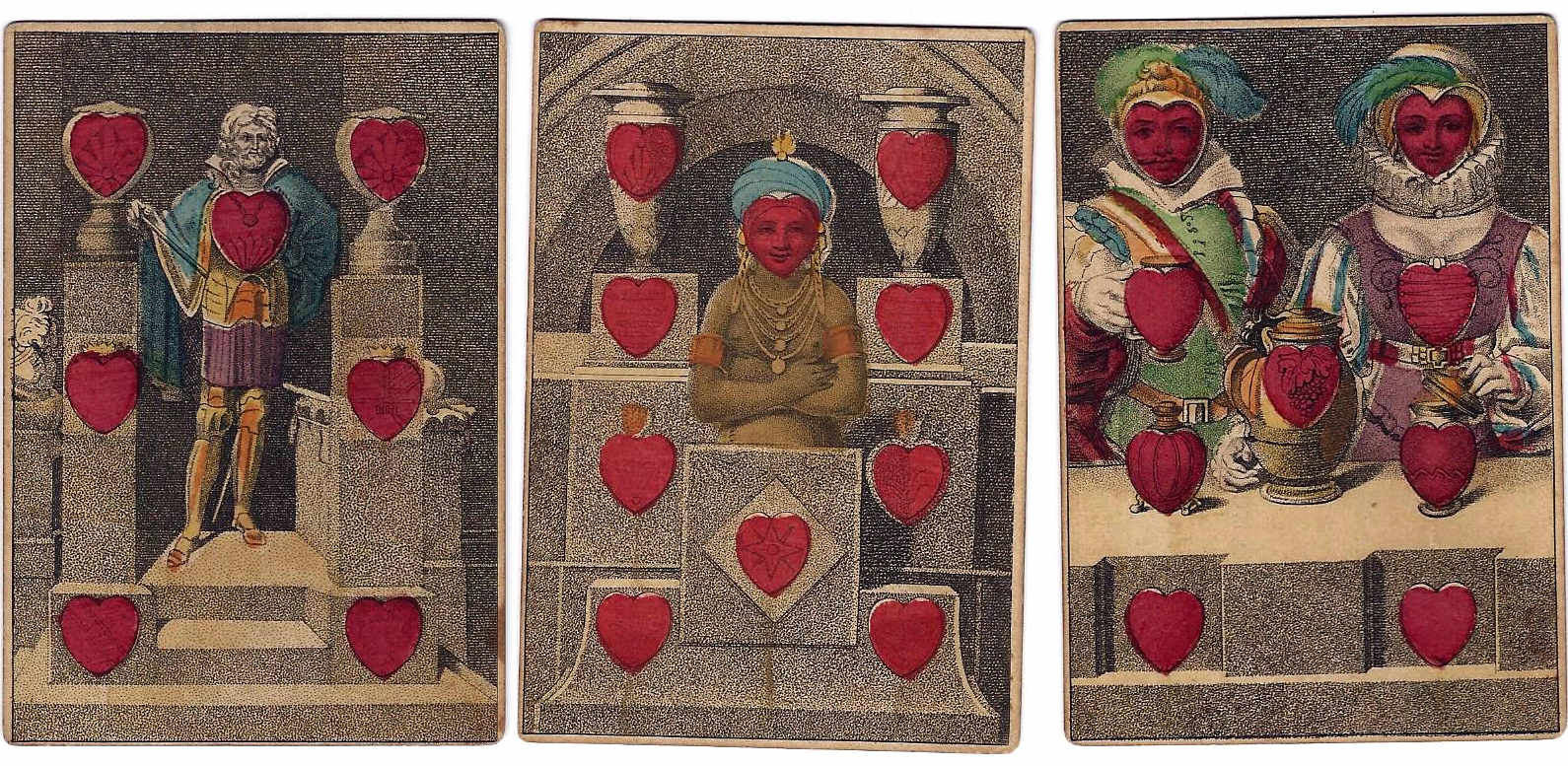
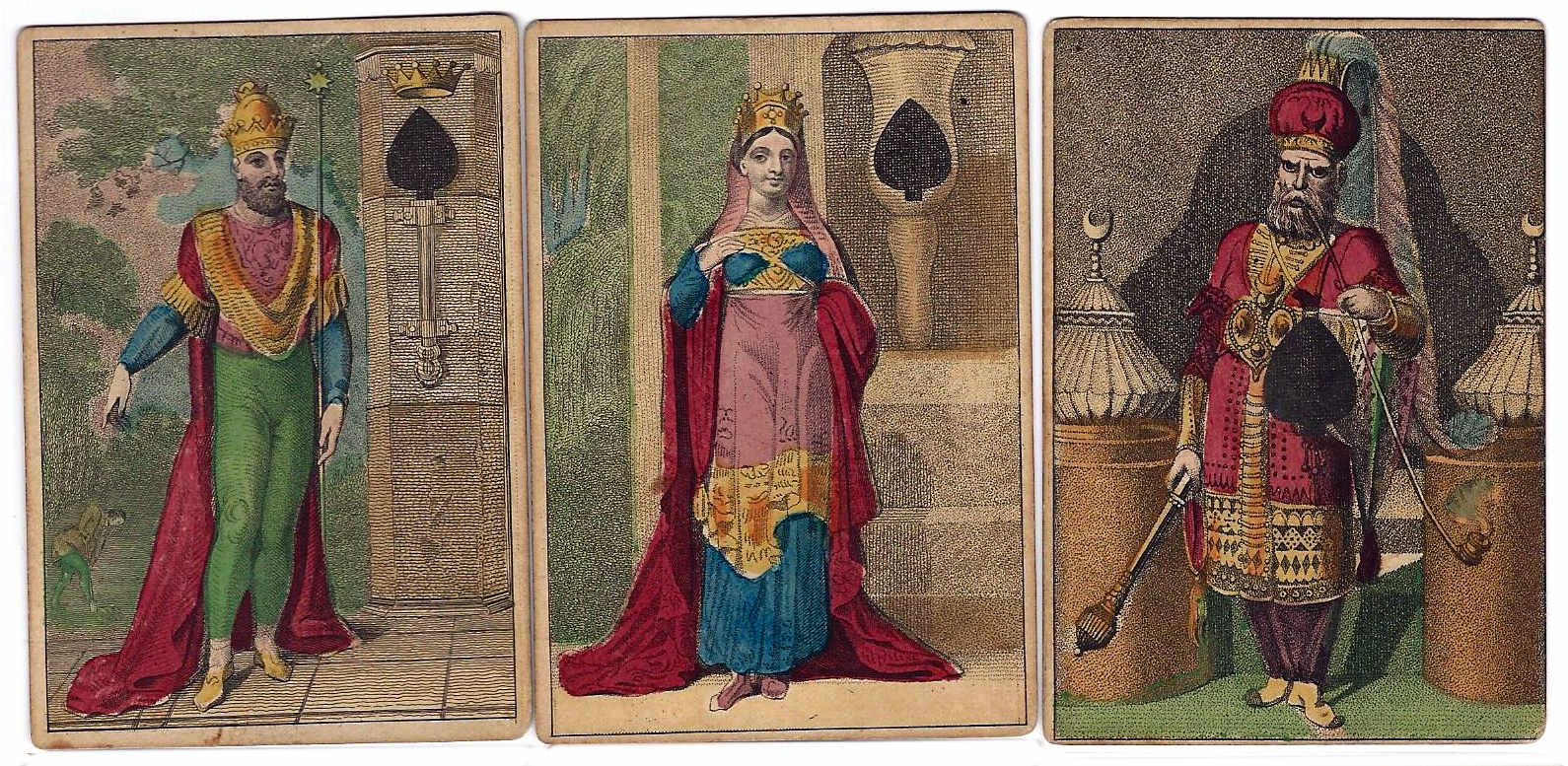
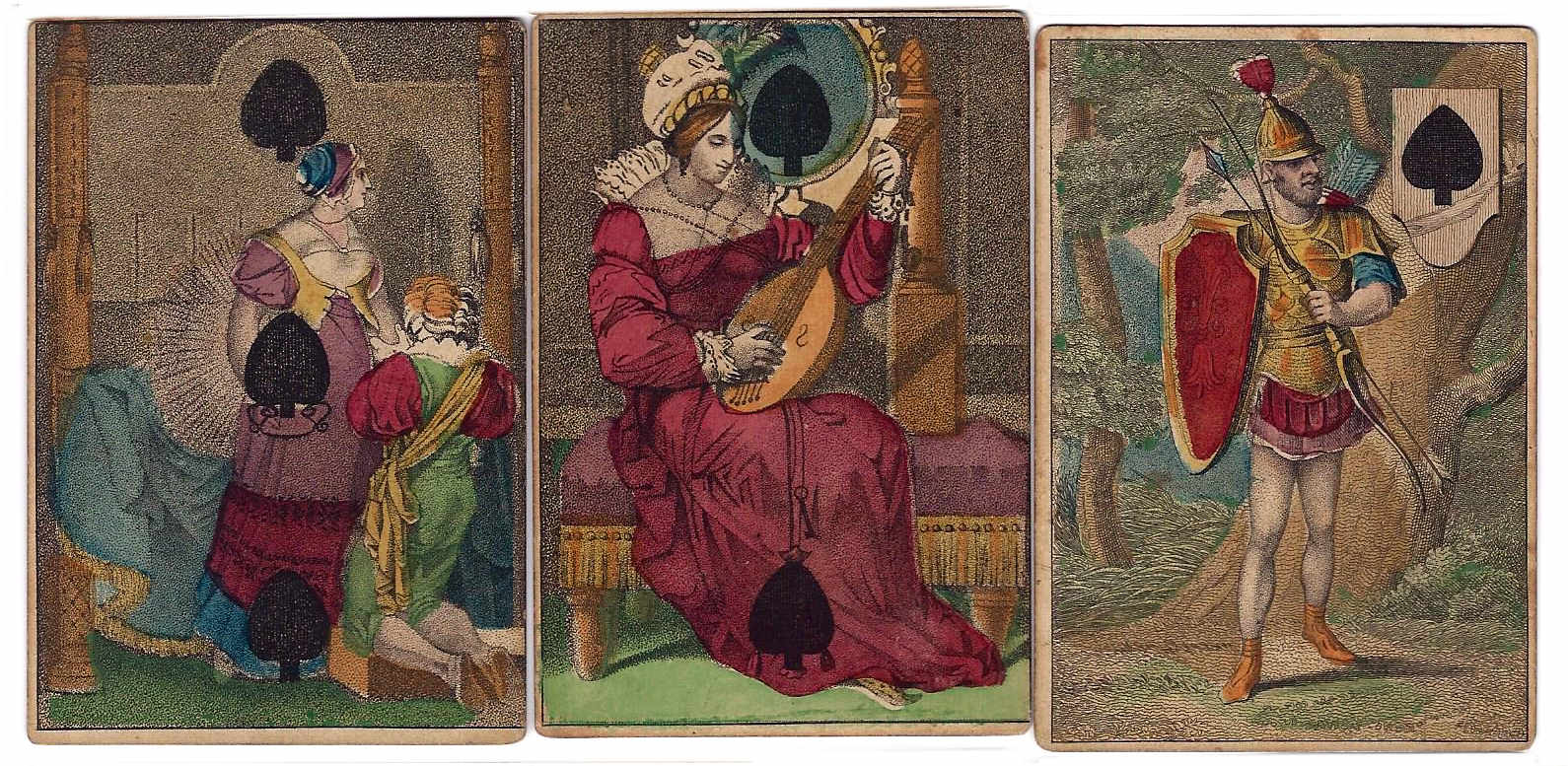
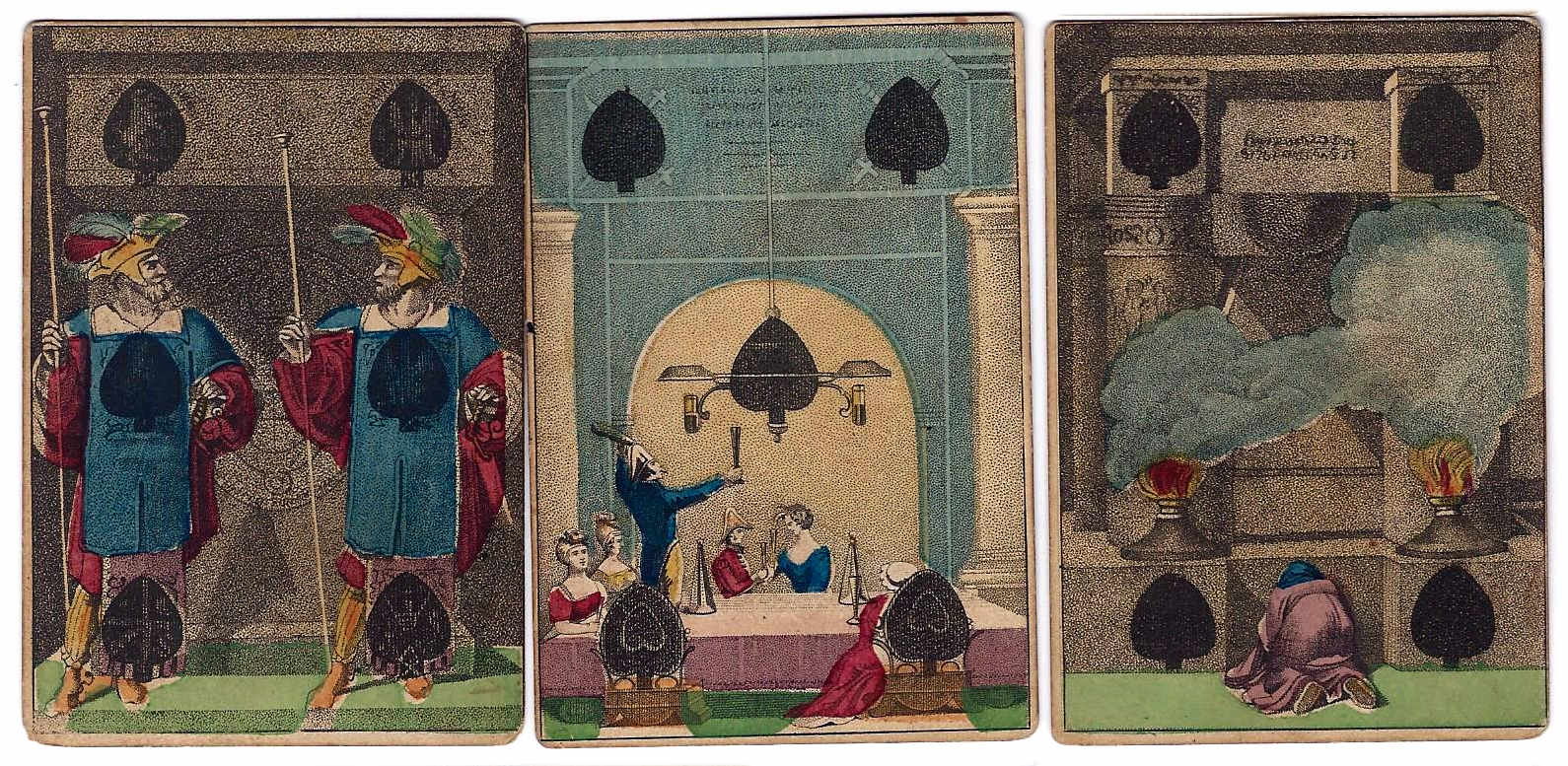
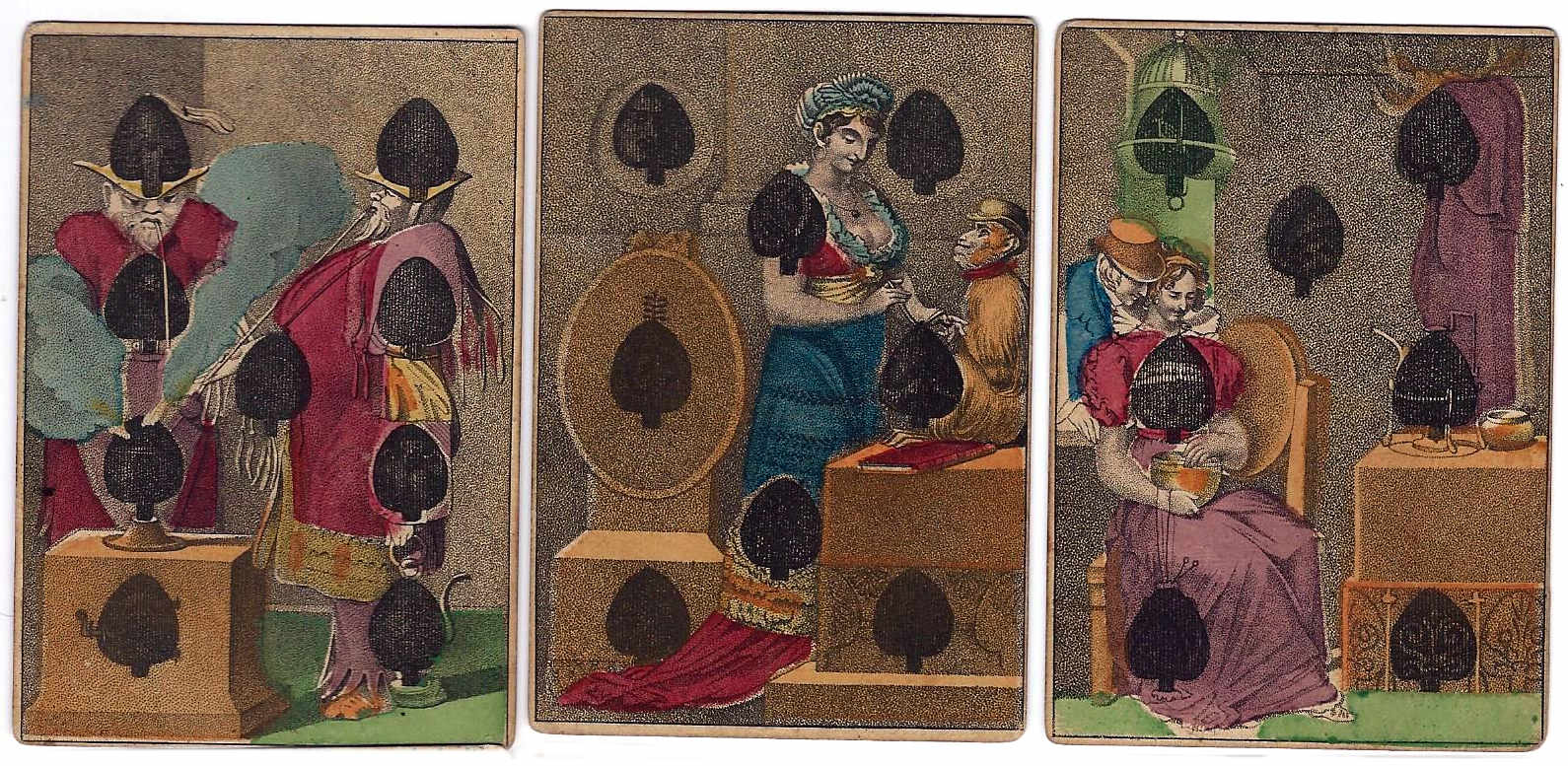
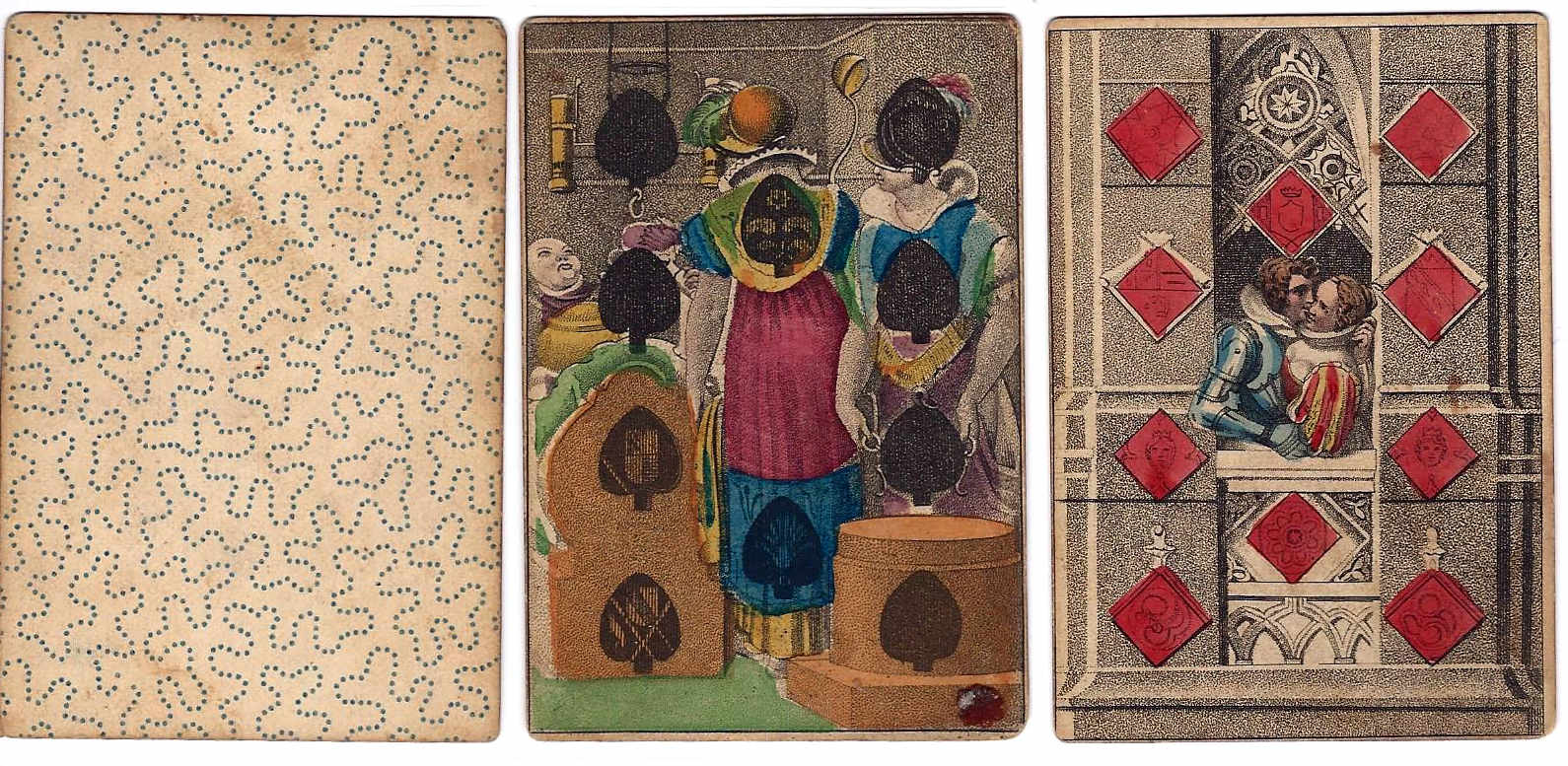
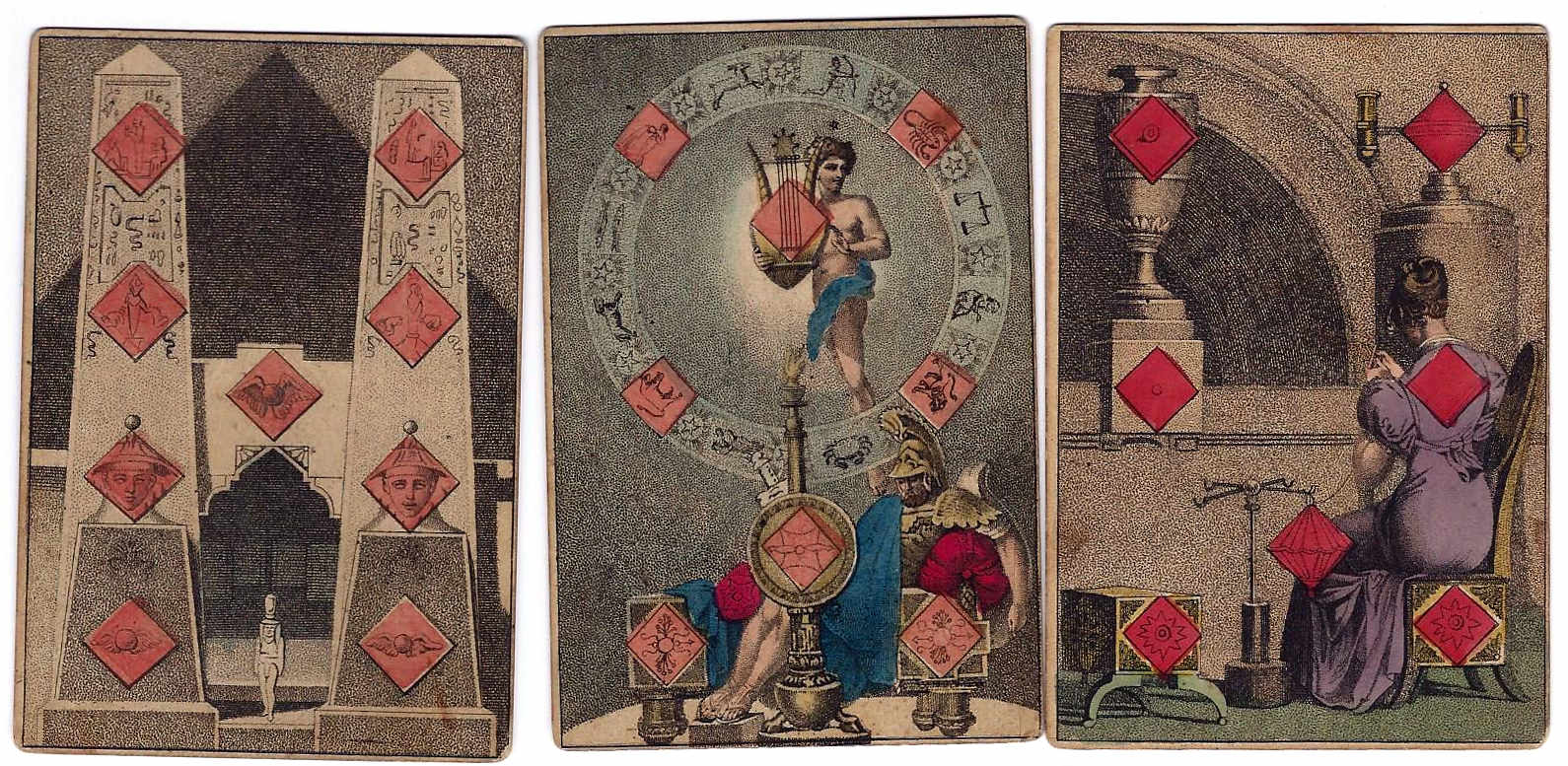
Above: Pictorial playing cards published by Caleb Bartlett, New York, 1833. The descrition of the Seven of Diamonds given in the accompanying booklet reads: “A young lady is busily employed in knitting, and by her side is suspended her work-bag, which is formed by the diamonds, as is the corner of her handkerchief. The diamond composes the argand lamp, and decorates the vase and other furniture.” Images courtesy Larry and Tammy Northup.
REFERENCES
Dawson, Tom & Judy: The Hochman Encyclopedia of American Playing Cards, U.S. Games Systems Inc., 2000
NOTE: As has been previously noted, two card manufactures with similar names produced cards in the mid 19th century. That similarity of names, Caleb Bartlett, who produced cards from 1830 to 1850 and Charles Bartlet, a pseudonym of Samuel Hart, who produced cards only in 1845, can be the cause of some confusion when trying to affix the correct attribution to certain decks by either maker. Our listing for the Ackerman deck is a case in point. It was initially and erroneously attributed to Charles Bartlett. Card collectors should take note of the fact that the name Charles Bartlet is spelled with only one letter “T” while the name Caleb Bartlett is spelled with two letter “T’s”. The names of either maker are sometimes found on the Ace of Spades but in the case of Caleb Bartlett, his initials, C.B., are cleverly hidden on each court card, a feature that can aid in identification (from Rod Starling).

By Simon Wintle
Spain • Member since February 01, 1996
I am the founder of The World of Playing Cards (est. 1996), a website dedicated to the history, artistry and cultural significance of playing cards and tarot. Over the years I have researched various areas of the subject, acquired and traded collections and contributed as a committee member of the IPCS and graphics editor of The Playing-Card journal. Having lived in Chile, England, Wales, and now Spain, these experiences have shaped my work and passion for playing cards. Amongst my achievements is producing a limited-edition replica of a 17th-century English pack using woodblocks and stencils—a labour of love. Today, the World of Playing Cards is a global collaborative project, with my son Adam serving as the technical driving force behind its development. His innovative efforts have helped shape the site into the thriving hub it is today. You are warmly invited to become a contributor and share your enthusiasm.

Activity for Bartlett Ackermann Transformation
Sign in to comment or save this article.

Related Articles
Fact & Fancy : a Deck of Decks
A tour of the world of playing cards featuring the incomparable art of Dick Martin.
Time Magazine
America’s classic periodical celebrates itself.
Early nineteenth-century Transformation cards
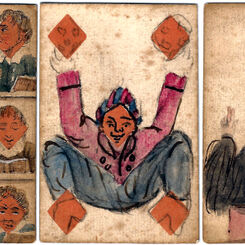
Vernacular hand-painted Transformation cards, probably early 19th century.
Fredericks & Mae playing cards
A rainbow pack from the design team of Fredericks & Mae and Benjamin English.
Pendleton playing cards
Pendleton playing cards inspired by indigenous American artwork, USA, 2019.
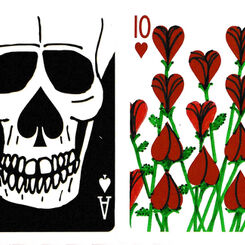
EclecDeck
EclecDeck transformation playing cards created by Dave Ufford, 2013.
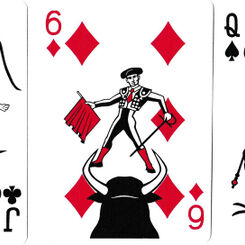
Curator
The Curator Deck with designs by Emmanuel José with suit symbols cleverly transformed into artistic ...
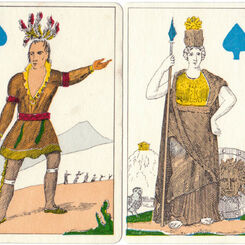
Caleb Bartlett
Caleb Bartlett patriotic deck (reproduction), around 1835-40.
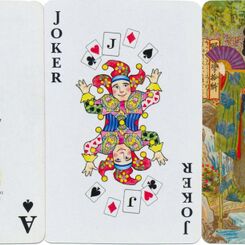
Punch Studio: ‘Geisha Girls’
‘Geisha Girls’ playing cards published by Punch Studio, Culver City, CA., 2013
Trump 777
Trump 777 decorative playing cards by Hallmark.
The Retro Deck- Pocono Modern Playing Cards
The Retro Deck, illustrated by Kraig Kalashian, was originally inspired by vintage matchbox art fro...
Carl Arnold Transformation
Transformation playing cards designed by Carl Johann Arnold (1829-1916), the court artist for King F...
Tales from the Stage
"Tales from the Stage" - an article about theatrical playing cards by Rod Starling
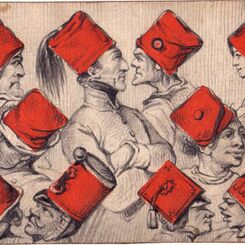
Transformation of Playing Cards
The best-known fantasy playing cards are Transformation cards, in which figurative scenes are drawn ...
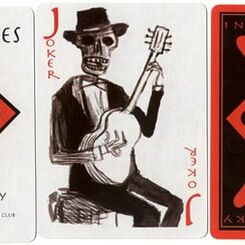
Inky-Dinky Playing Cards
A series of four decks designed by John Littleboy.
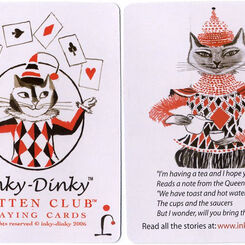
Kitten Club
From Empresses to King Cats and One-Eyed Jacks, every game is a pageant of unforgettable cats, each ...

Wild! by Peter Wood
Wild! by Peter Wood.
Pippoglyph
Pippoglyph Playing Cards by Ben Crenshaw © 2004
Ian Roth’s Unique playing cards
Ian Roth’s Unique playing cards
The History of Playing Cards
Playing cards appear in European records in the late 14th century, but their earlier history lies fu...
Most Popular
Our top articles from the past 60 days