


Korean Folk Painting Cards
Traditional Korean folk paintings called Minhwa, representing wishes for good fortune and longevity.
Minhwa refers to traditional Korean folk paintings produced mainly by unknown artists without formal training. The paintings represent wishes for wealth, happiness, success and longevity. Popular themes include cranes, rocks, water, clouds, dragons, phoenixes, the sun, moon, peonies, pine trees, carp, tortoises, insects, flowers, birds, and book decoration. All of these can be found in this beautiful pack, in either vertical or horizontal format. The paintings on the Jokers take the form of screens which served to display the majesty of the Joseon royal court. Most of the 54 different images are drawn from the collections in the National Museum of Korea and the National Folk Museum of Korea. Overall, the reproduction and print quality and the finish on these cards are all excellent • See the paper band • See the box
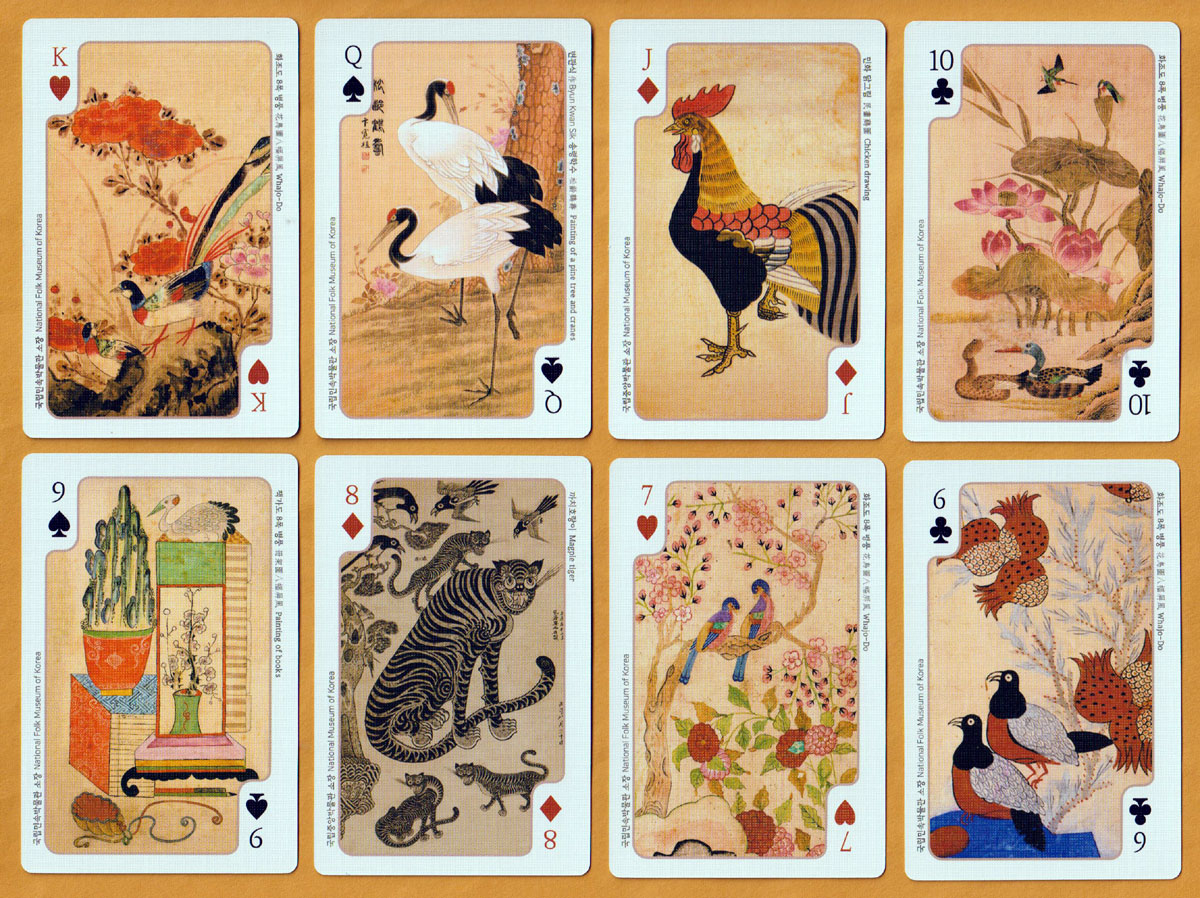
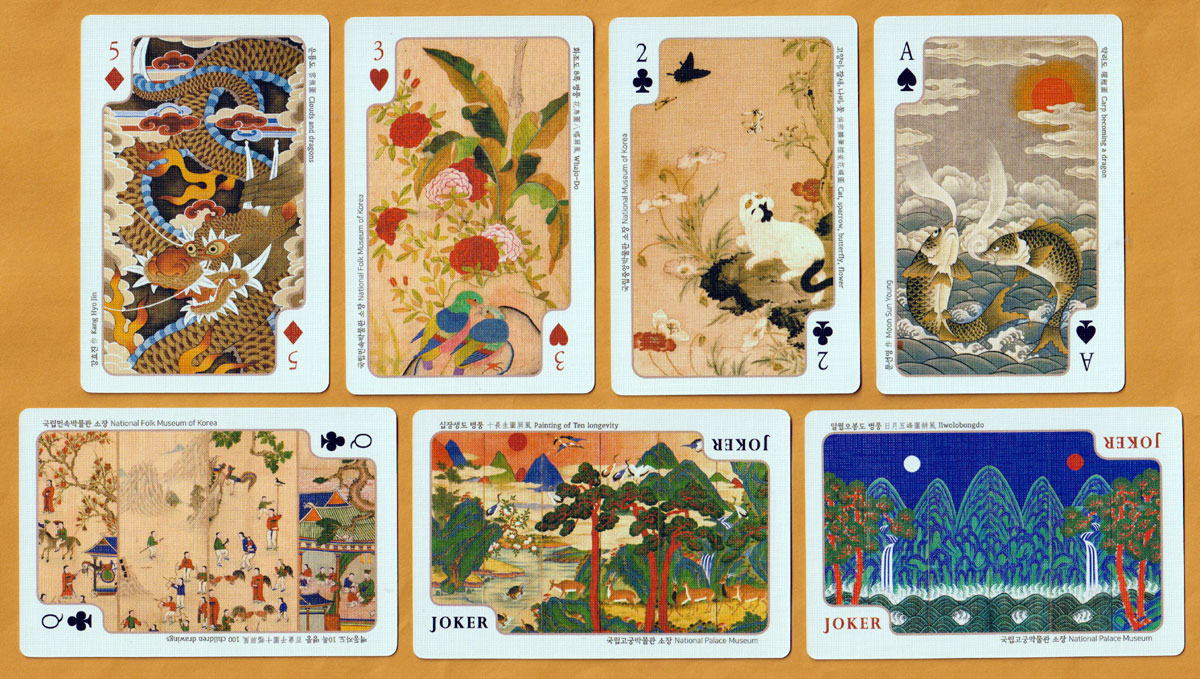
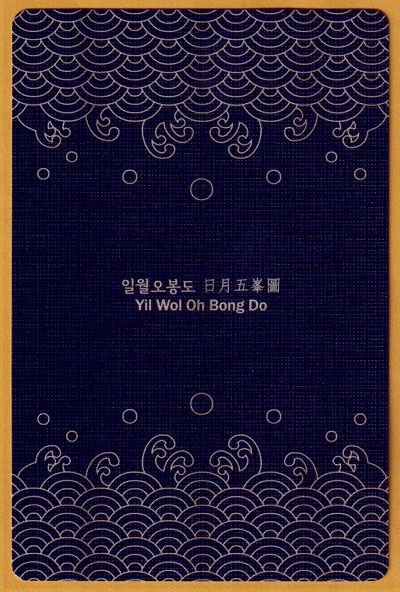
Above: Korean Folk Painting Cards published by Design Gaanche, Bucheon, Gyeonggi Province, South Korea. Made in Korea. 52 cards + 2 Jokers + 1 double-sided title card with text in Korean and English, in plastic box within a cardboard box with a paper band. Size: 58 x 88 mm. © Designgaanche
Acquired June 2025 • See the Extra Cards. Cards issued by this publisher are available here - https://gaanche.com►

By Roddy Somerville
France • Member since May 31, 2022
Roddy started collecting stamps on his 8th birthday. In 1977 he joined the newly formed playing-card department at Stanley Gibbons in London before setting up his own business in Edinburgh four years later. His collecting interests include playing cards, postcards, stamps (especially playing cards on stamps) and sugar wrappers. He is a Past President of the Scottish Philatelic Society, a former Chairman of the IPCS, a Past Master of the Worshipful Company of Makers of Playing Cards and Curator of the WCMPC’s collection of playing cards. He lives near Toulouse in France.

Activity for Korean Folk Painting Cards
Sign in to comment or save this article.

Related Articles
Czech Bohemian style playing cards
Czech Bohemian style playing cards with a charming aesthetic, reflecting the cultural and social lif...
Norfin® Trolls
Troll dolls with gaudy hairstyles in a multitude of different costumes.
Calon Arang • Калон Аранг - Бали
Calon Arang, a figure from 12th-century Javanese and Balinese folklore known as a witch skilled in b...
The Lovers playing cards
Reproductions of old postcards with romantic messages for Valentine’s Day.
Chinese Opera Masks Playing Cards 脸谱
Three different packs of cards featuring traditional Chinese face painting and Chinese opera masks.
IBUSZ folklore playing cards
Hungarian folklore pack produced by IBUSZ travel agency, c. 1965.
Matryoshka playing cards
The first nested doll set was carved in 1890.
Palekh and Kholui lacquer miniatures
Palekh and Kholui lacquer miniatures.
Rapalje
Promotional pack for a Dutch Celtic folk band which performs Irish, Scottish and Dutch folk music, c...
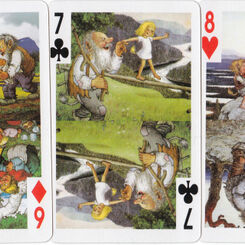
Norwegian Troll Cards
Norwegian Troll Cards published by Aune Forlag of Trondheim, c.2000.
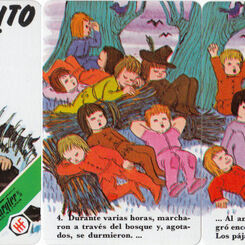
Pulgarcito
Pulgarcito (Tom Thumb) card game published by H Fournier, 1981.
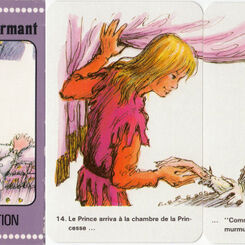
La Belle au bois dormant
Sleeping Beauty card game published in France, c.1980s.
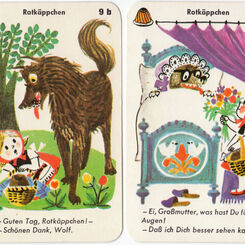
Märchen-Quartett
Fairy Tales quartet game by F.X. Schmid, Munich, 1960.
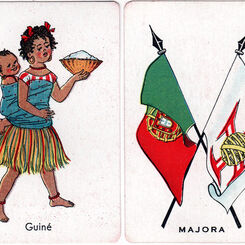
Casais Portugueses
Matching game by Majora, Lisbon, c.1970, featuring figures in national dress from Portuguese provinc...
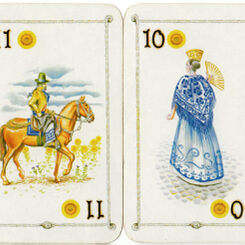
Naipes Cardón
Naipes Cardón designed by Mario Luis Rivero depicting traditional Argentine culture and identity, 20...
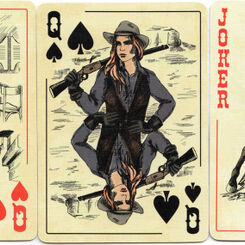
Gunfighters
Gunfighters playing cards from the Wild West Series by SPCC, 2018.
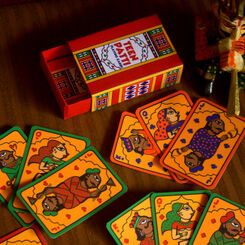
Teen Patti Playing Cards
Anjali DSouza, an illustrator from Chennai, India has designed a pack of cards using Indian truck ar...
Latvia Art
Playing cards designed by artist Larisa Kovalass-Kovalevska on the theme of the Latvian folk epic “L...
Recado de Bastos - Gaucho Scrapbook
Recado de Bastos (‘Gaucho Scrapbook’) Gaucho-themed deck from Argentina, 2006
Mayan Cards
Mayan Playing Cards from Guatemala / Baraja Maya / containing illustrations of archaeology, art, fol...
Most Popular
Our top articles from the past 60 days


