


58: Woolley & Co.
The firm of Thomas Woolley lasted for many years from 1836-1904 in several different guises.
WOOLLEY & SABINE
Thomas Sabine was a printer and is listed as early as 1799, but the first mention of an AS in the records is 31 December 1836 for an export ace (Old Frizzle period) for the partnership of Thomas Woolley & Henry Sabine. The partnership does not seem to have lasted long, as mid way through 1839 a separate export ace was issued for Woolley on his own. Unfortunately, the cards for the home market always seem to have used an anonymous Old Frizzle, so you have to rely on the known court blocks to identify their cards. They seem to have used Type III courts like those of Reynolds.
For a list of Woolley/Darling/Williams cards in my collection, click here►
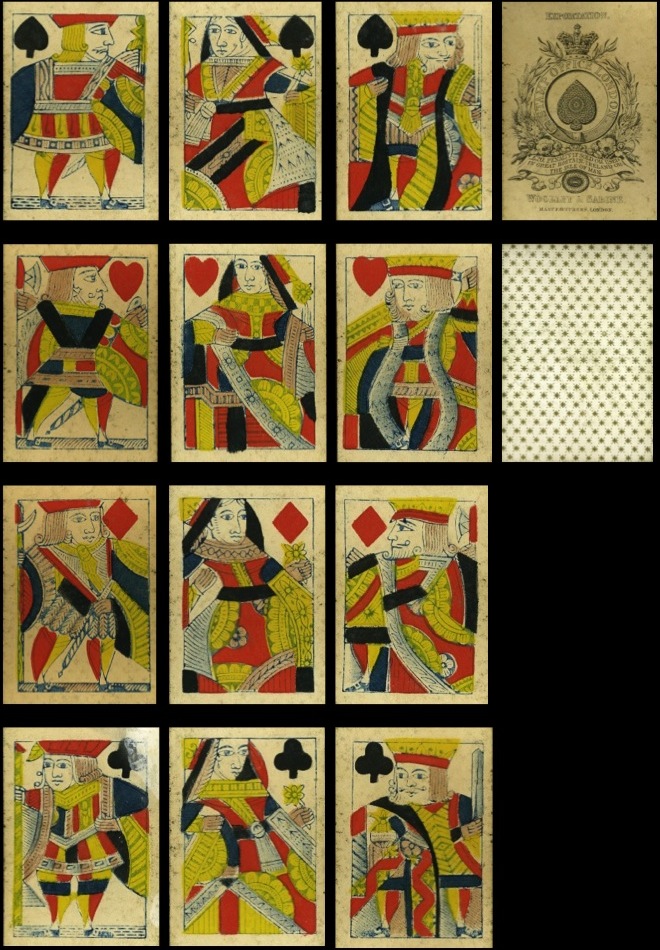 Above: Woolley & Sabine, c.1837
Sabine continued until 1852 and Woolley & Co carried on after Thomas Woolley's death in 1851, until the firm was regenerated after the Old Frizzle period. One of the two firms used the blocks shown above cut in half for a double-ended pack; the Old Frizzle is anonymous.
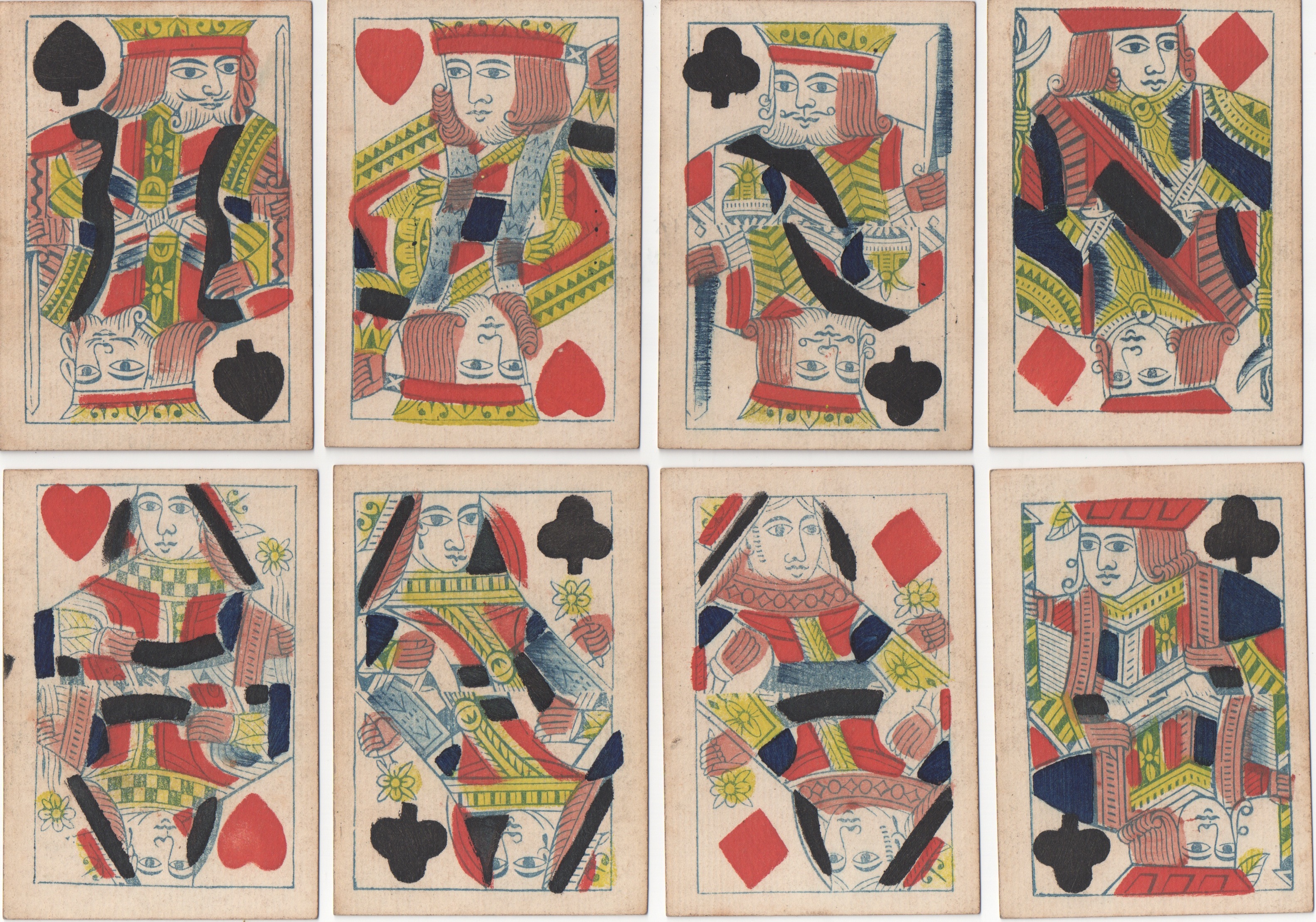 Above: Woolley or Sabine, c.1850
There are also two anonymous, tax-dodging packs made from the same blocks as the above single-figure pack. One is the usual wood-block and stencil production for the courts, but with printed pip cards and the other is poorly produced with the blue parts of the design printed with the outline, again with printed pip cards. They could be by either firm, but I suspect Woolley is the more likely.

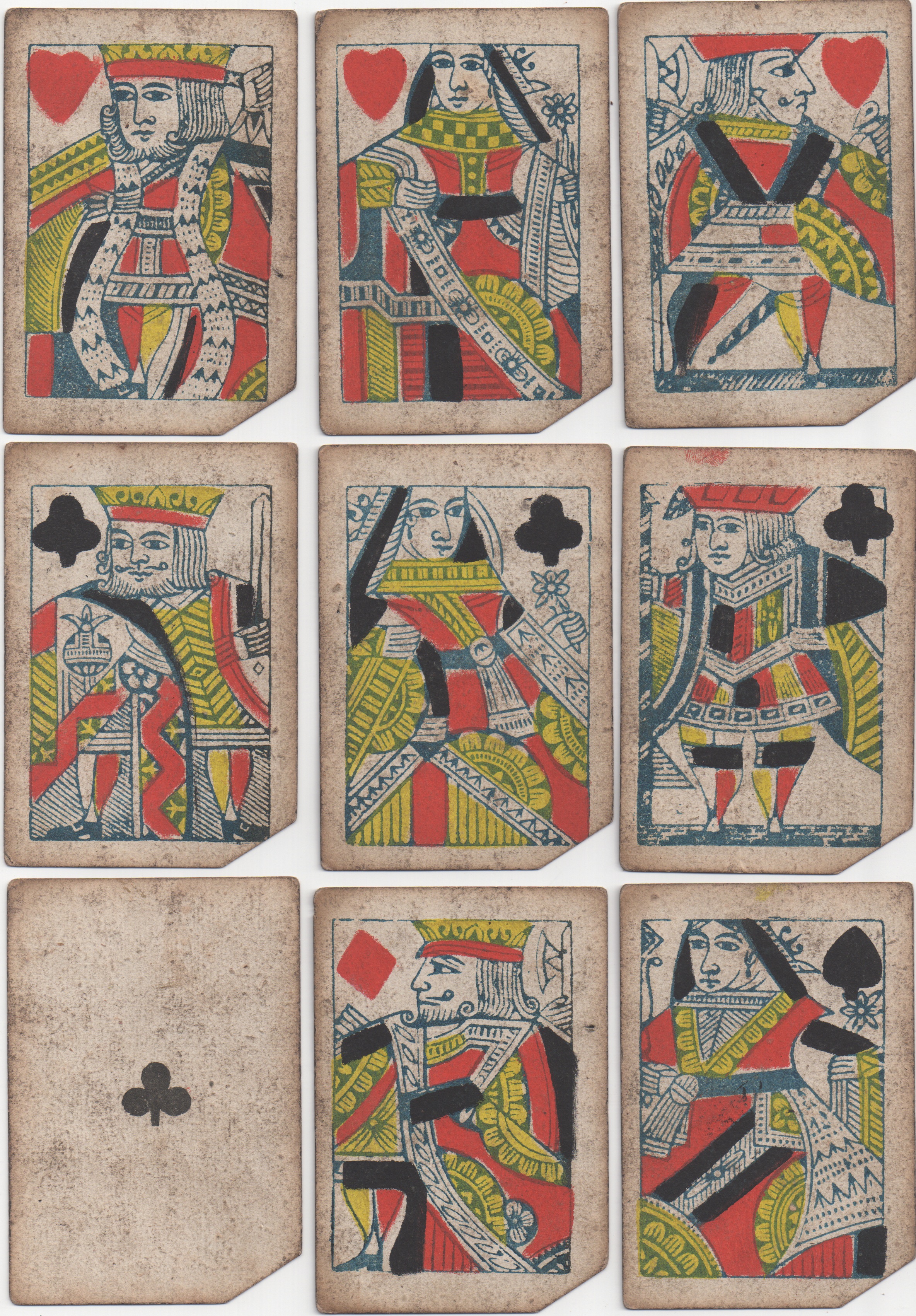
Later in the 1850s Woolley redesigned his courts, again on the model of Reynolds, and these were still in use in the early 1860s.
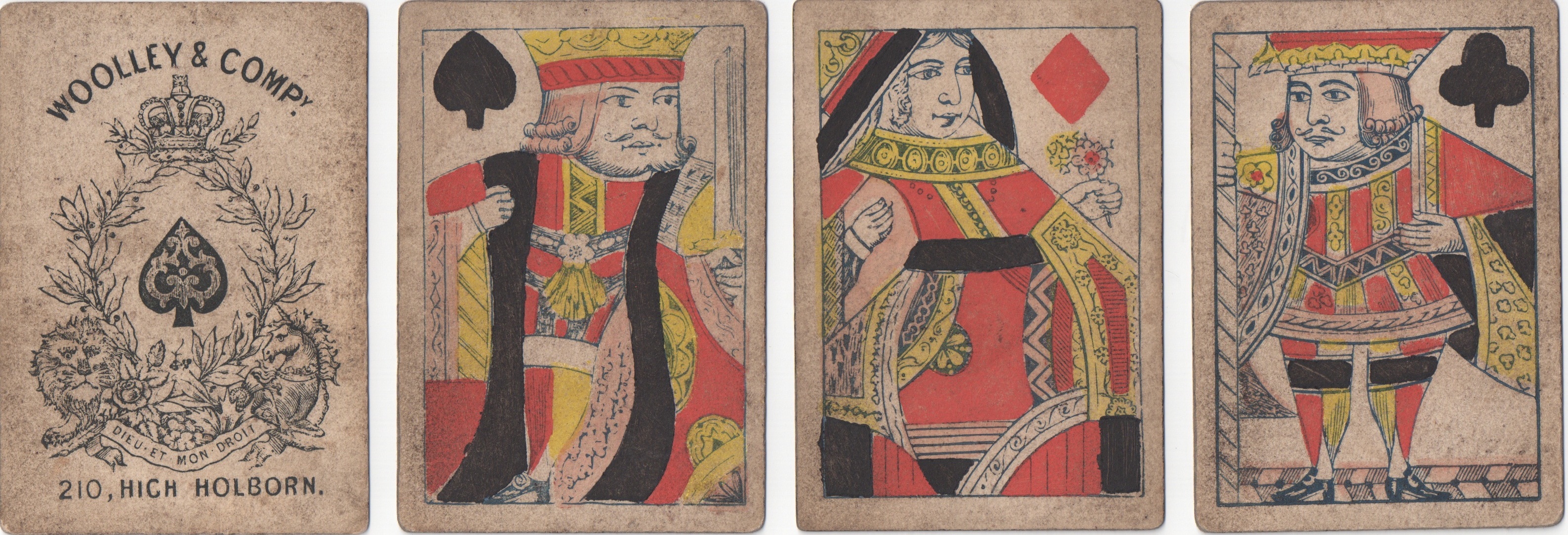 Above: Woolley, c.1863
His more common design is found in packs from c.1865-1900, with square or round corners, unturned then turned courts, with and without indices. His first indices of the early 1880s were similar to those of De La Rue but had the value of the card written in full in the pip; they were copyrighted as 'Eureka'.
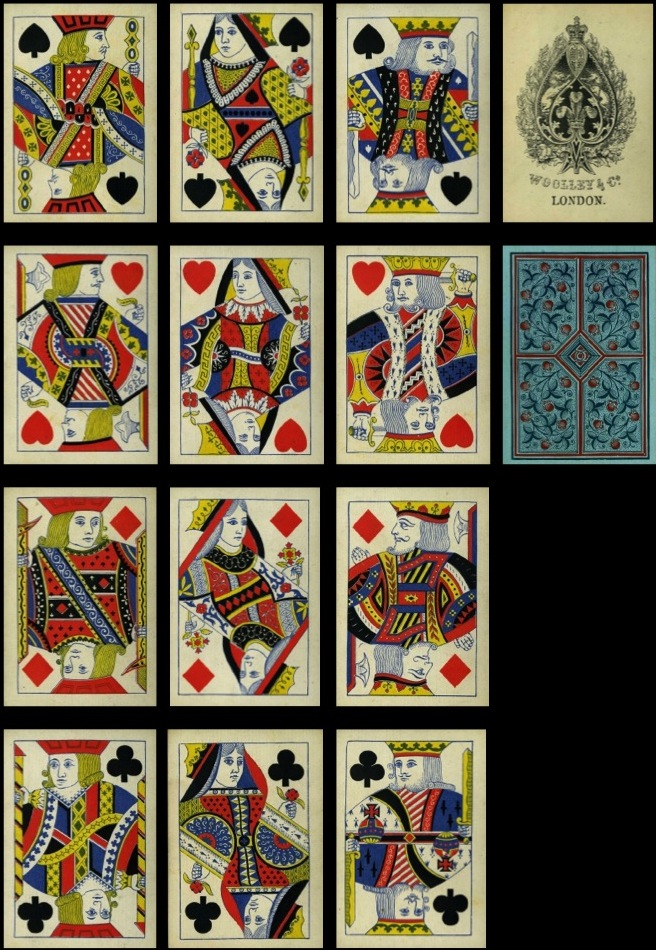 Above: his redrawn design, unturned, WY2, c.1870
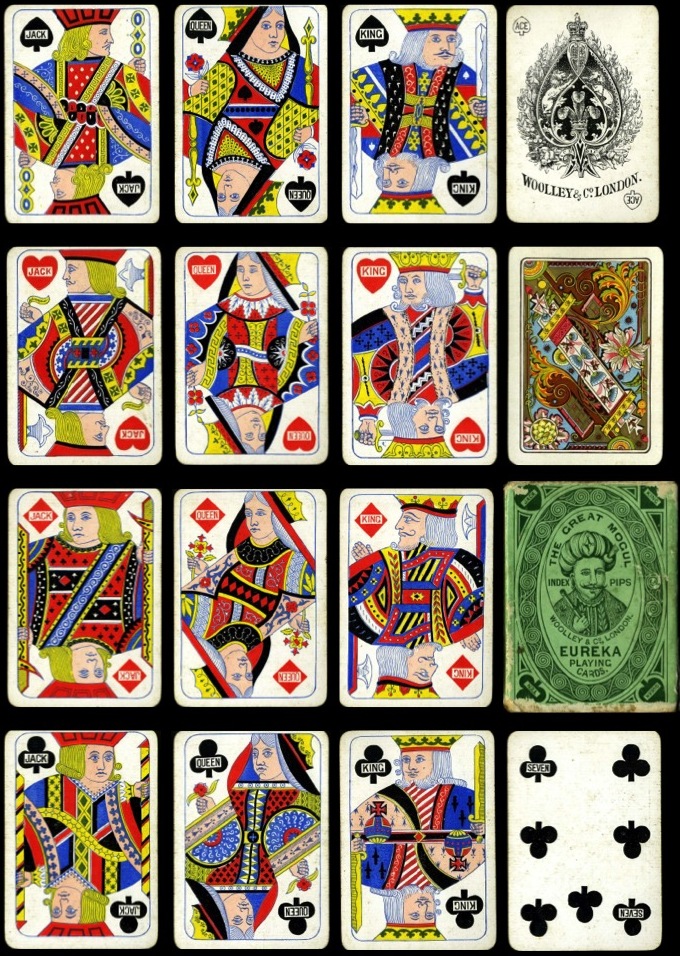 Above: Woolley WY3, six courts turned, with Eureka indices, c.1885. This pack has been reproduced to a very high standard for the IPCS Convention held in London in September, 2017.
He also made packs for the Isle of Man.
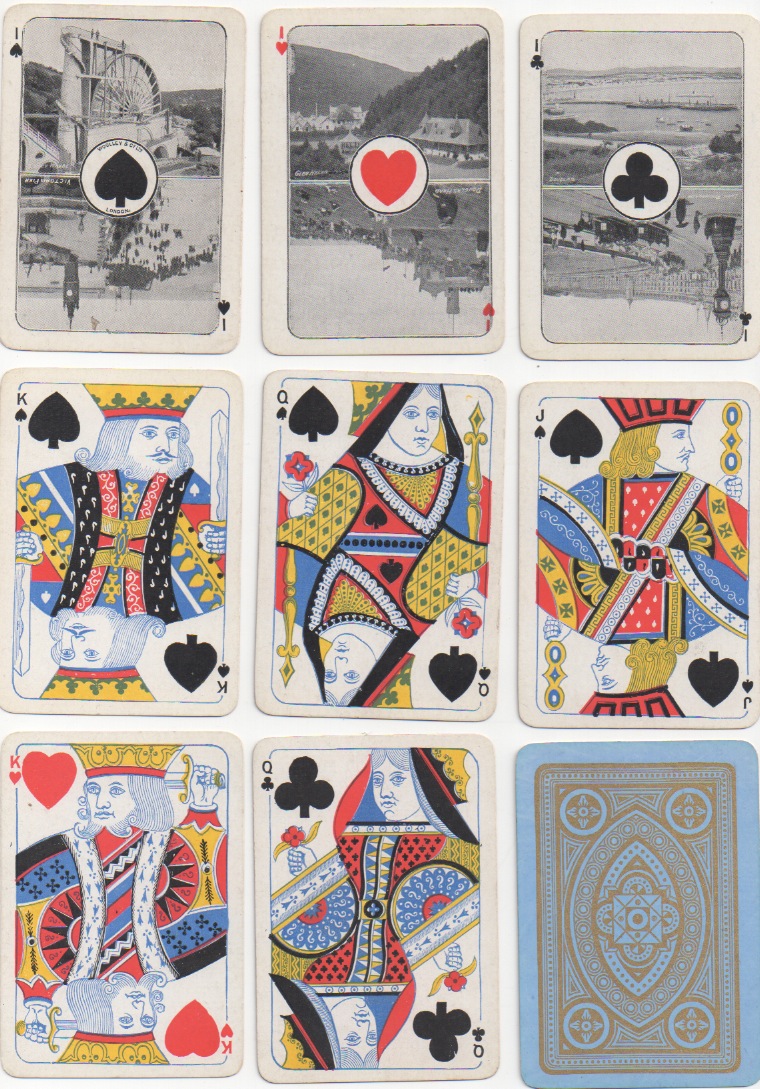 Above: For the Isle of Man as a limited company, after 1893
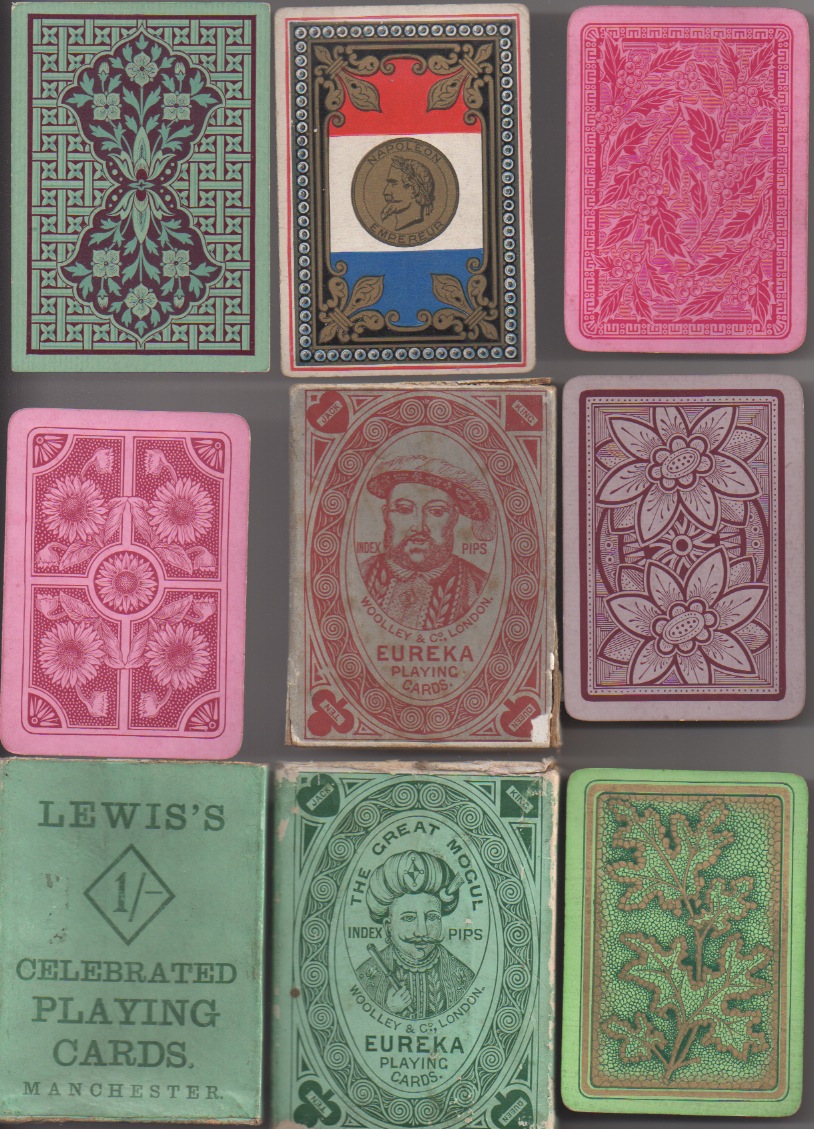
The later Woolley had a series of decorative backs; I illustrate a few below with a couple of boxes. They also produced cards for stores such as Lewis's of Manchester. The name 'Eureka' was retained for the more usual corner indices that they used from c.1887 onwards, just as De La Rue retained 'Dexter' for all their different types.
Woolley continued in business until c.1904, when the firm was bought out by Darling, which appears to have been owned by Grimaud, as many of their cards have Grimaud courts and "Made in France" on the AS. They were used to advertise shipping companies.
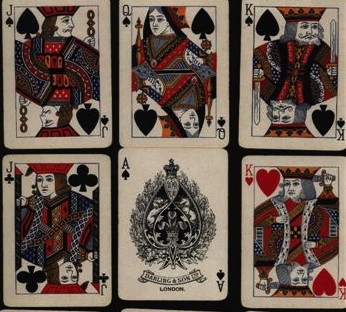 Above: Darling, c.1908
A slightly later version with W.E. Williams on the AS also advertised shipping lines; I have no information about the firm.

By Ken Lodge
United Kingdom • Member since May 14, 2012
I'm Ken Lodge and have been collecting playing cards since I was about eighteen months old (1945). I am also a trained academic, so I can observe and analyze reasonably well. I've applied these analytical techniques over a long period of time to the study of playing cards and have managed to assemble a large amount of information about them, especially those of the standard English pattern. About Ken Lodge →

Activity for 58: Woolley & Co.
Sign in to comment or save this article.

Related Articles
Heraldic playing cards
Reproduction of Richard Blome’s Heraldic playing cards, 1684, presented to lady guests at WCMPC Summ...
Corner Indices
Corner Indices were a major innovation in playing card production.
66: Adverts and related material 1862-1900
Some further material relating to cards from nineteenth and twentieth century periodicals.
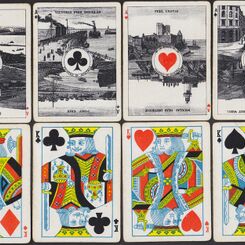
52: The Isle of Man
The Isle of Man has always been a tax haven within the British Isles and it has also had some intere...
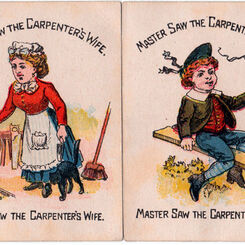
Funny Families
“Funny Families” card game manufactured by Woolley & Co, 1890s.
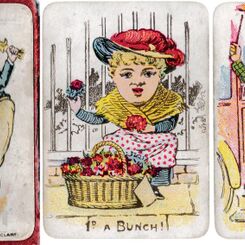
Snap by Woolley & Co
‘Cries of London Snap’ by Woolley & Co Ltd, c.1905 with cheerful figures of street vendors.
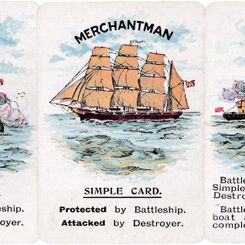
Sefite card game
“Sefite” card game, Woolley & Co,. Ltd, London, c.1905
Woolley & Co: “Second Harrys”
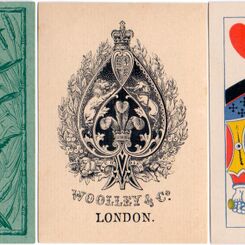
Woolley & Co produced a range of different quality playing cards, and these “Second Harrys” are towa...
Roberts Brothers Ltd, Gloucester
Roberts Brothers Ltd, Gloucester (Glevum Brand) ‘Old Maid’ card game, 1920s.
Woolley & Co: “Eurekas”
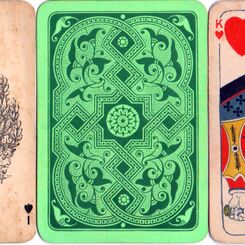
Woolley & Co: “Eureka” playing cards with rounded corners, small index pips and decorative back desi...
Crickette
“Crickette” card game manufactured by Woolley & Co., London, c.1890.
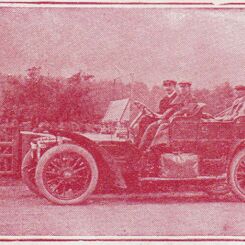
Tut=Tut
“Tut=Tut; or a Run in a Motor Car” published by Woolley & Co Ltd, early 1900s
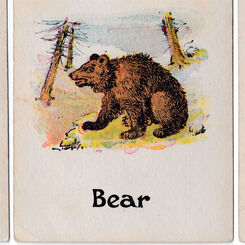
Oosehe
‘Oosehe’ animal card game published by Woolley & Co, c.1900.
Transformation c.1880
Hand-drawn transformation cards, c.1880
Most Popular
Our top articles from the past 60 days