


5: De La Rue
In December 1831 Thomas de la Rue was granted his patent for printing playing cards by letterpress.
Sadly, there is no book on De La Rue's playing card manufacture similar to those by Mike Goodall on many of their competitors. And yet there is a great deal of material available in their archives. True, the material is dispersed somewhat, mainly between the University of Reading and the Fournier collection. I understand that a lot of the background material sold at auction by De La Rue in 1970 is not available at the museum in Vitoria. If that is so, it's a great pity.
There are two further interesting sources of information: one is on the wopc website and the other is a book about the firm The house that Thomas built written by Lorna Houseman and published in 1968, just before the firm sold their playing card interests to Waddington. The book only relates the story up until 1941, when the Bunhill Row premises were destroyed in an air-raid and is not restricted to the production of playing cards, so there's no doubt enough for another book on their later development.
See page 28 for a discussion of plate differences in De La Rue cards and page 49 for the database of my cards with De La Rue courts.
In December 1831 Thomas de la Rue was granted his patent for printing playing cards by letterpress. In the submission for the patent the details of both his early designs is given. D1 is a break with some of the postures and clothing of the traditional figures and D2 is based on the contemporary Type III courts used by Reynolds, Hardy and several other smaller makers such as H. Wheeler and Stopforth.
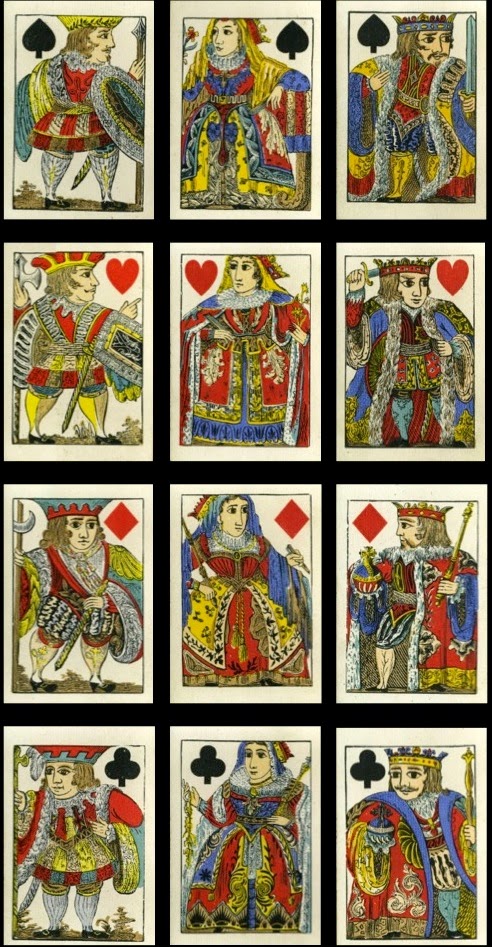
Above: D1
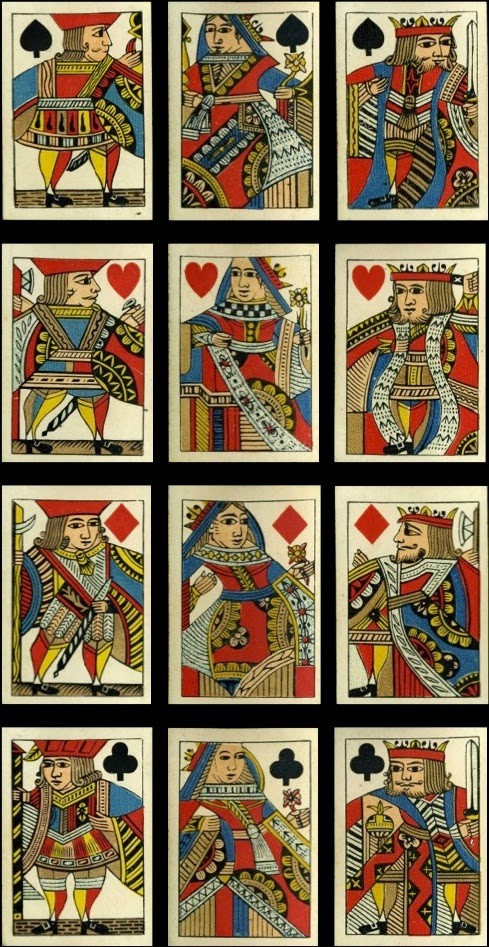
Above: D2
It is said D1 did not find favour with the card-playing public, because he had changed so many traditional features; D2, on the other hand, was in line with cards of other makers. De la Rue liked to experiment, even in the early days, so we find packs with a white line round every pip and packs with a lot of gold on them.
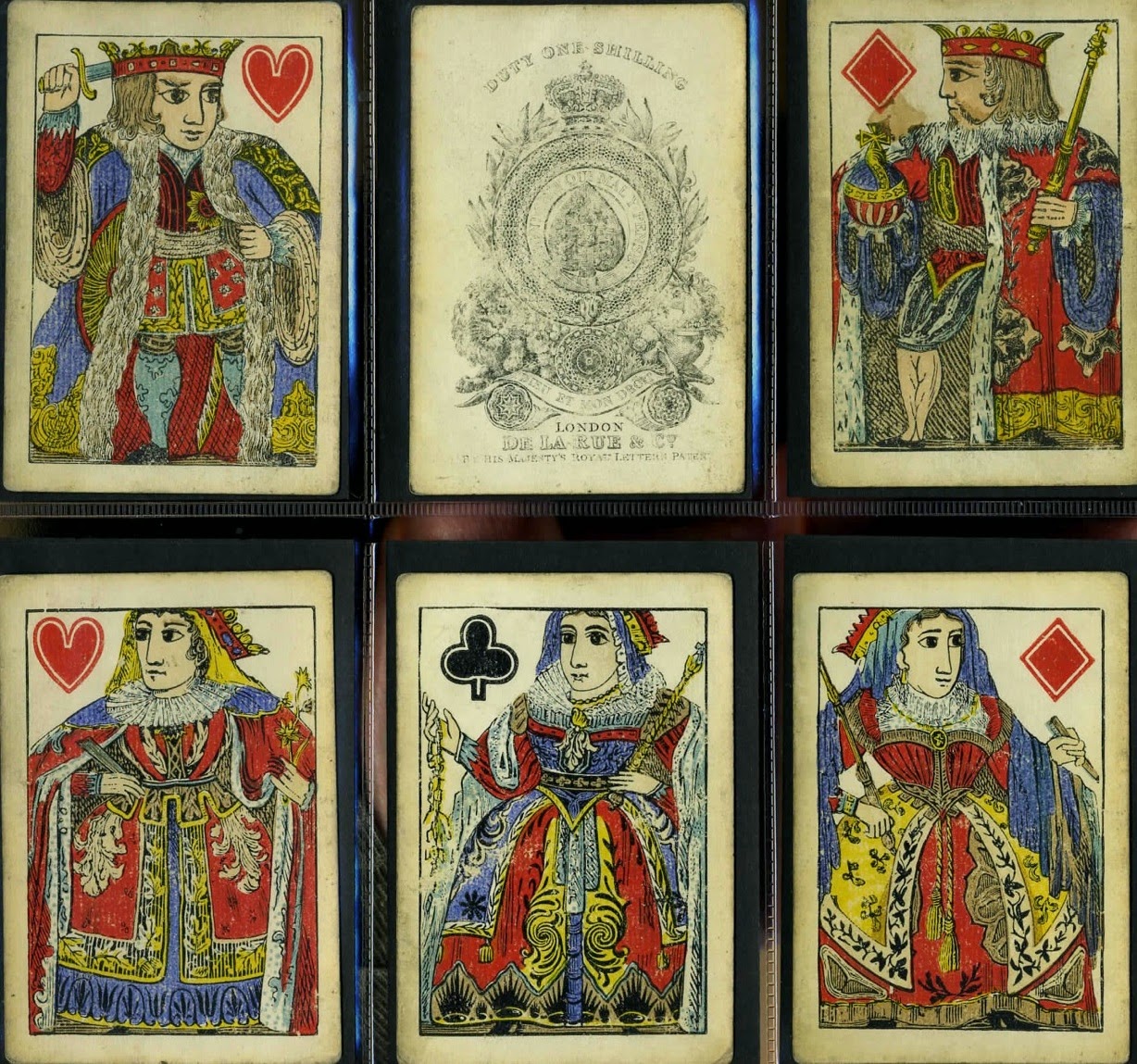
Above: D1 with overlay
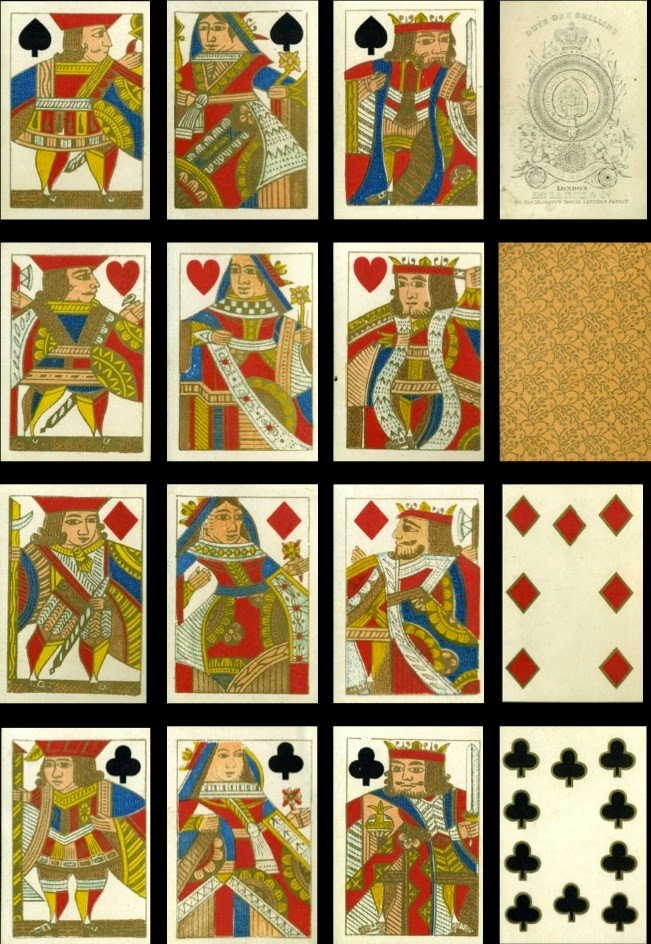
Above: D2 with gold, backs have gold design, too
There are also packs with green added to the traditional colours; sometimes the packs have mixed gold and green and gold courts with a consistent back design. (Don't forget, packs were put together by hand, so mixing of this kind occurred quite easily.)
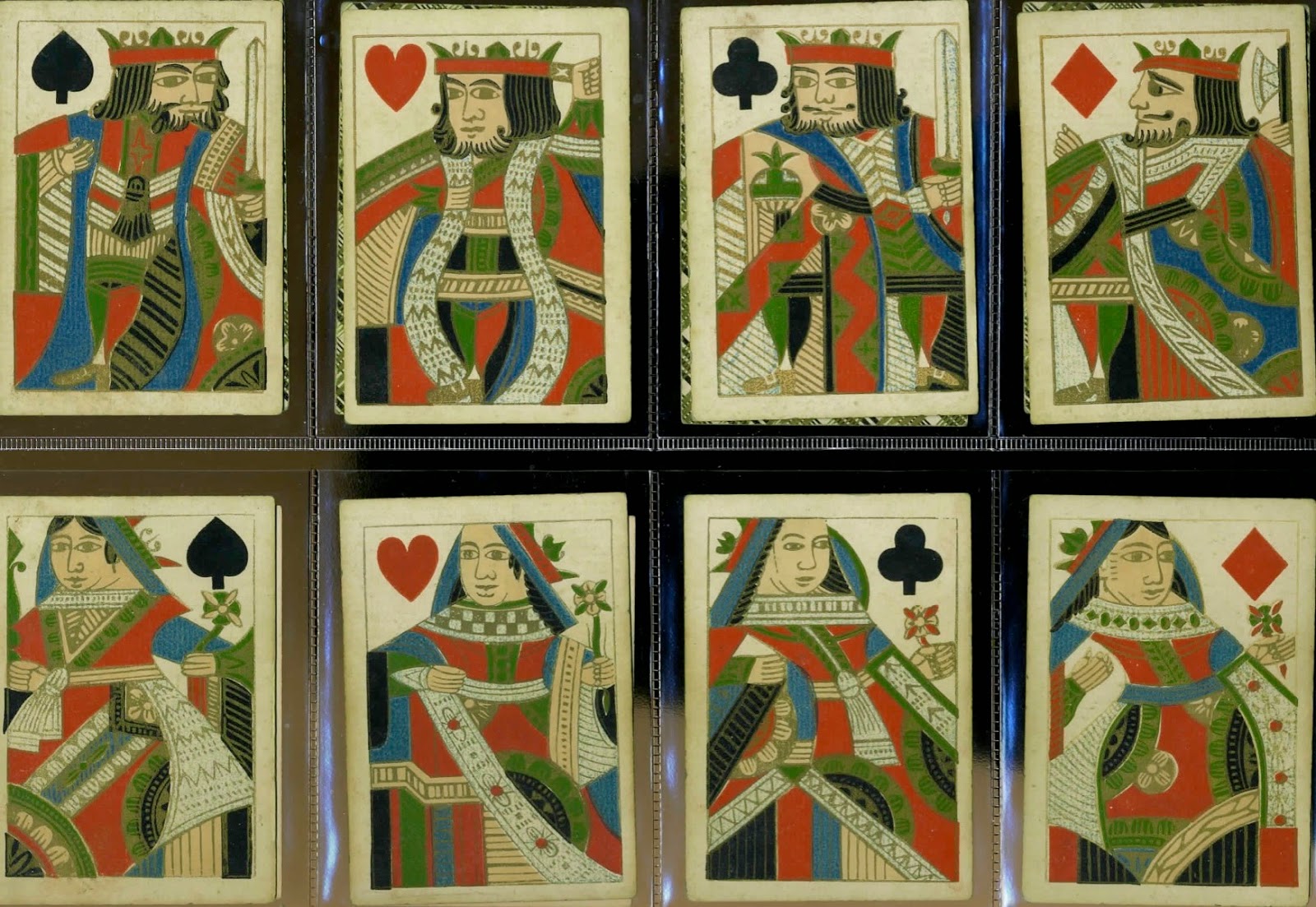
Above: D2 with green and gold
By 1840 he had redesigned his courts again, updating the design and adding a lot of extra decoration to the clothing. These were produced for quite a while and even survived into the post-Frizzle period.
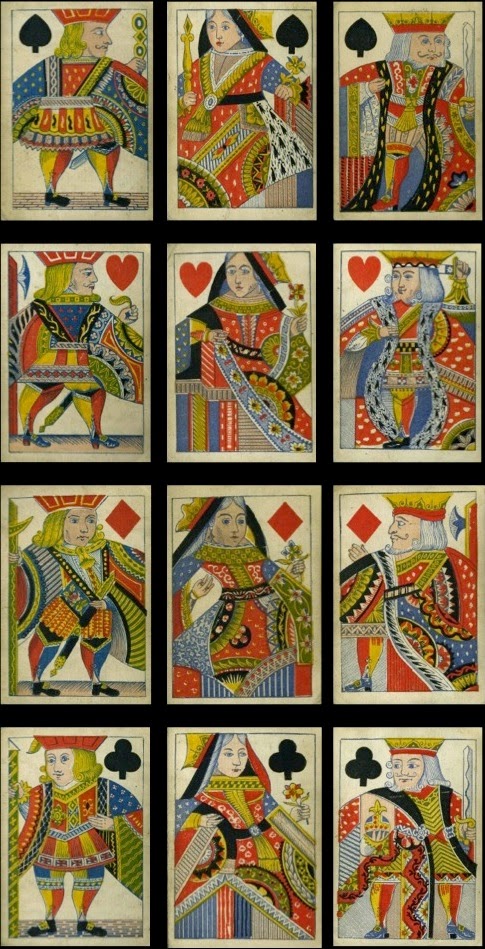
Above: D3, c.1840-65
At about the same time or slightly later the firm introduced a smaller-sized pack, possibly aimed at card-playing ladies, called The Victoria in adverts and price lists.
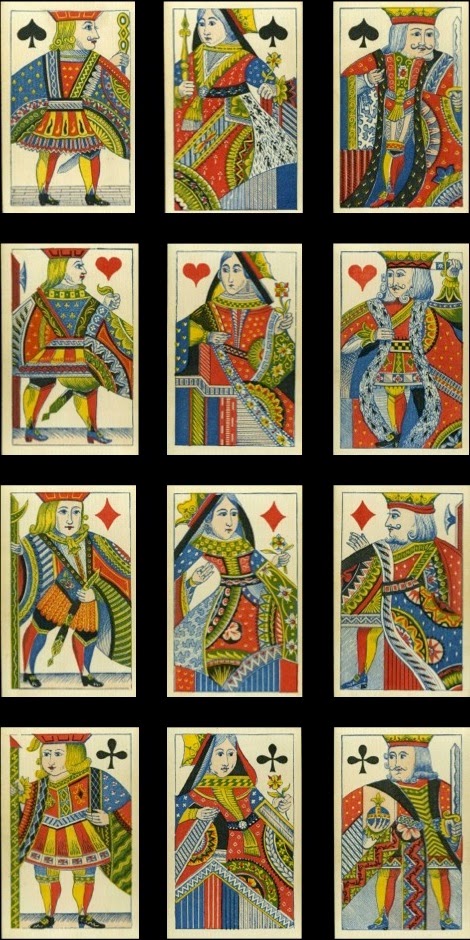
Above: D3.1, c.1840-60
There is even a double-ended version of the latter.
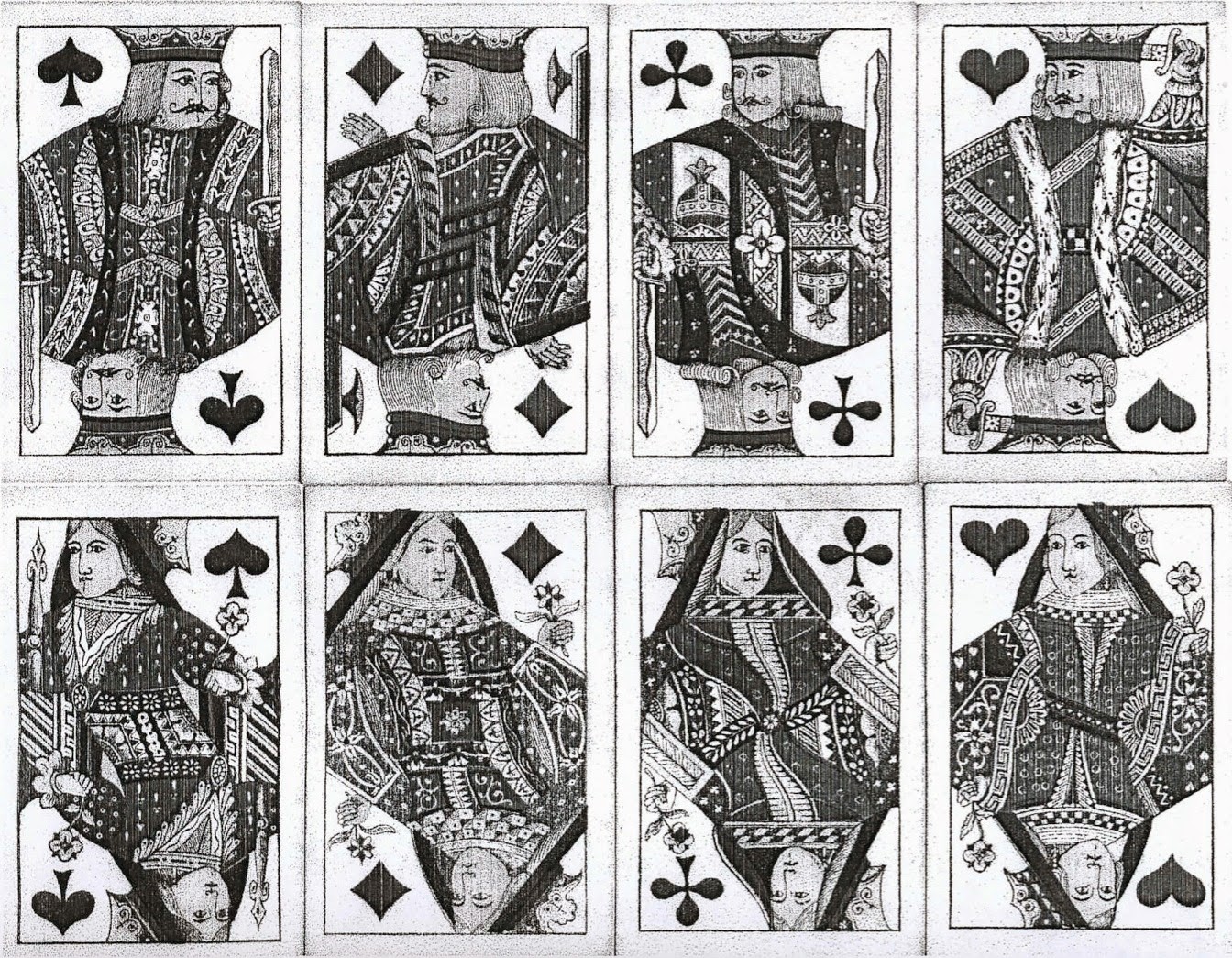
Above: D3.2, c.1850-55
After 1922, when Goodall and De La Rue had merged, both of their current designs were used for a few years, but by about 1930 the De La Rue design D9 had been discontinued. Eventually the Goodall design was taken over by Waddington, as they printed De La Rue and Goodall cards from 1942 onwards. De La Rue sold out their playing card interest to Waddington in 1969.
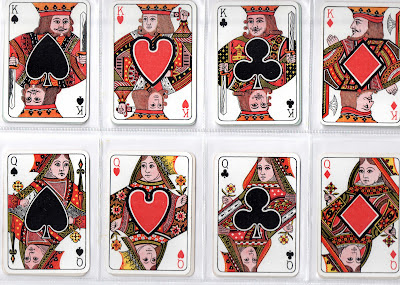
Here is an indication of the development of the JS design from c.1890-1930, also to be found on page 28.
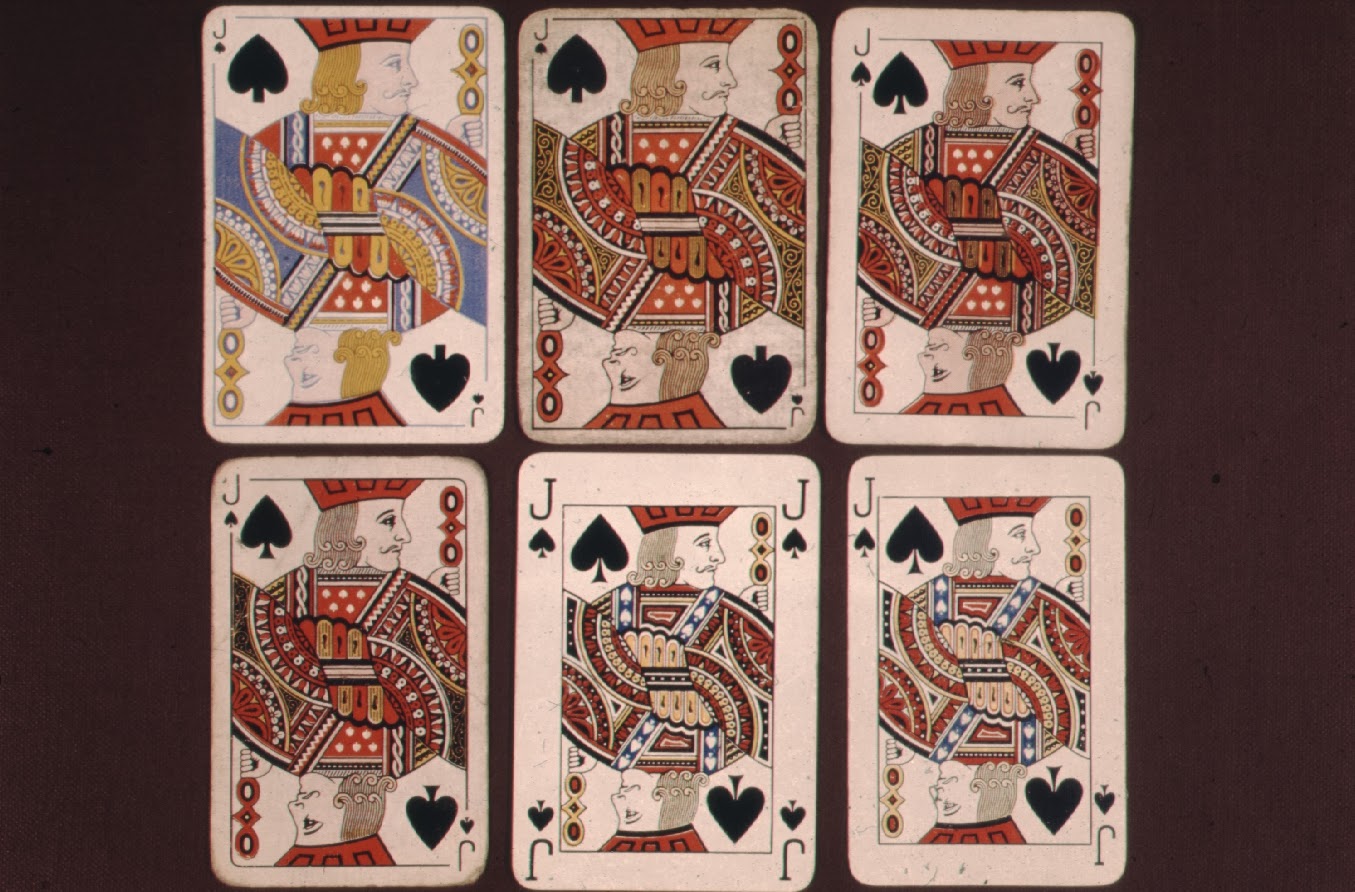
Above: The approximate dates for the different index types shown above from top left are: (i) 1890-1905; (ii) 1890-1905; (iii) 1905-20; (iv) 1910-20; (v)/(vi) 1922-28. There is also a larger type of index and different pip shape with the wide-size courts in (i) and (ii), used from c.1905-1915.
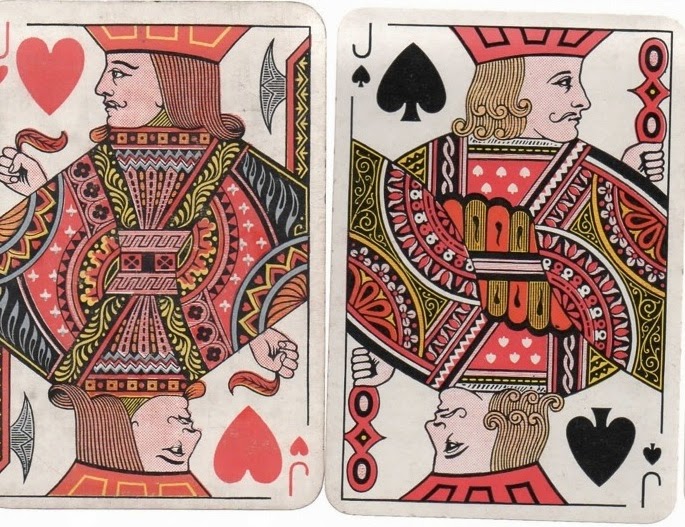
Above: Larger indices, c.1905-15
De La Rue also introduced a number of what were considered improvements to cards to enhance handling during play. The pneumatic finish appeared some time in the 1880s and continued into the 1960s, by which time it was referred to as herringbone. There was also a silk-watered finish, which give the impression of shot silk; it seems to have been used only on one-colour plain backs.
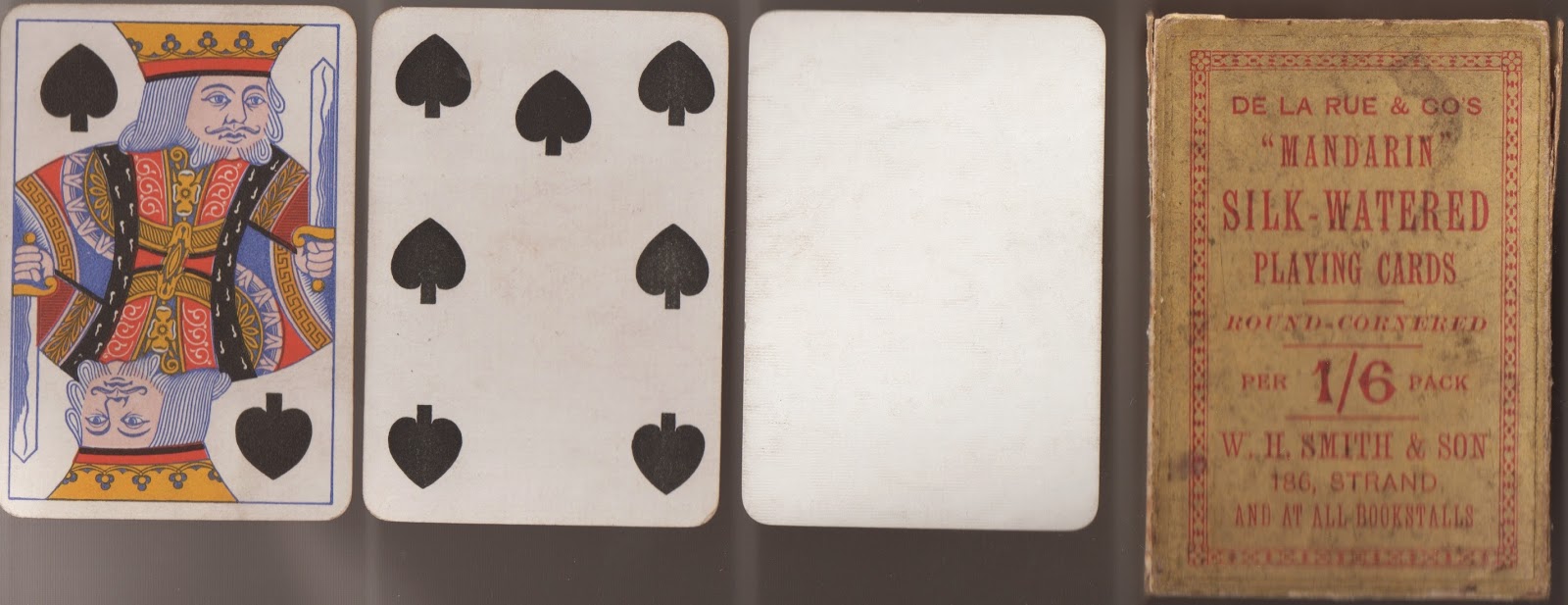
Above: Mandarins for W.H. Smith, c.1885 (the finish doesn't show up on the scan - sorry)
The firm also produced cards for those with poor sight. As far back as the 1851 Great Exhibition they were showing Optik cards. What they looked like I don't know, but later ones had different coloured suit-signs and the courts and AS had an extra blue-grey added.
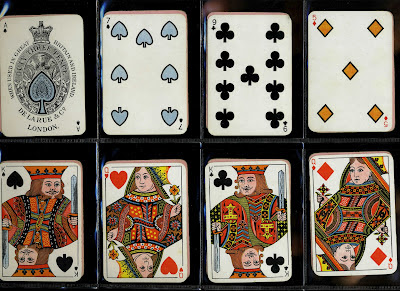
Above: Top row: Optik cards, c.1900. Bottom row: extra blue-grey added to courts from an ordinary pack, c.1900
They also produced a peculiar pack, which may have been for poor-sighted people, with large pip and Roman numerals in the centre and an added decorative frame line. It isn't clear to me how this helped with play.
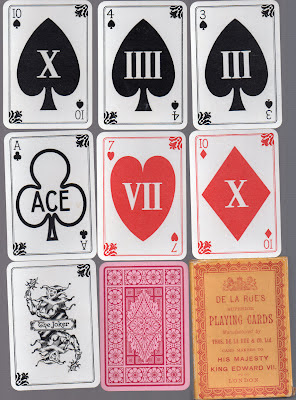
Above: Roman indices, c.1905, in a standard box
For a discussion of the plate analysis of De La Rue's courts, see page 28; a detailed set of illustrations from my collection is on page 49.
Back designs
From 1844 until 1874 the designer Owen Jones produced a series of colourful and highly decorative back designs for De La Rue. I have never seen a full list of the designs and it's not always possible to know for certain whether he was the designer in any particular case. It would also appear that other people designed backs for the firm as well. Here is a selection of obvious examples. The first two are from the set he designed for the Royal Family, which were on sale at the Great Exhibition of 1851.
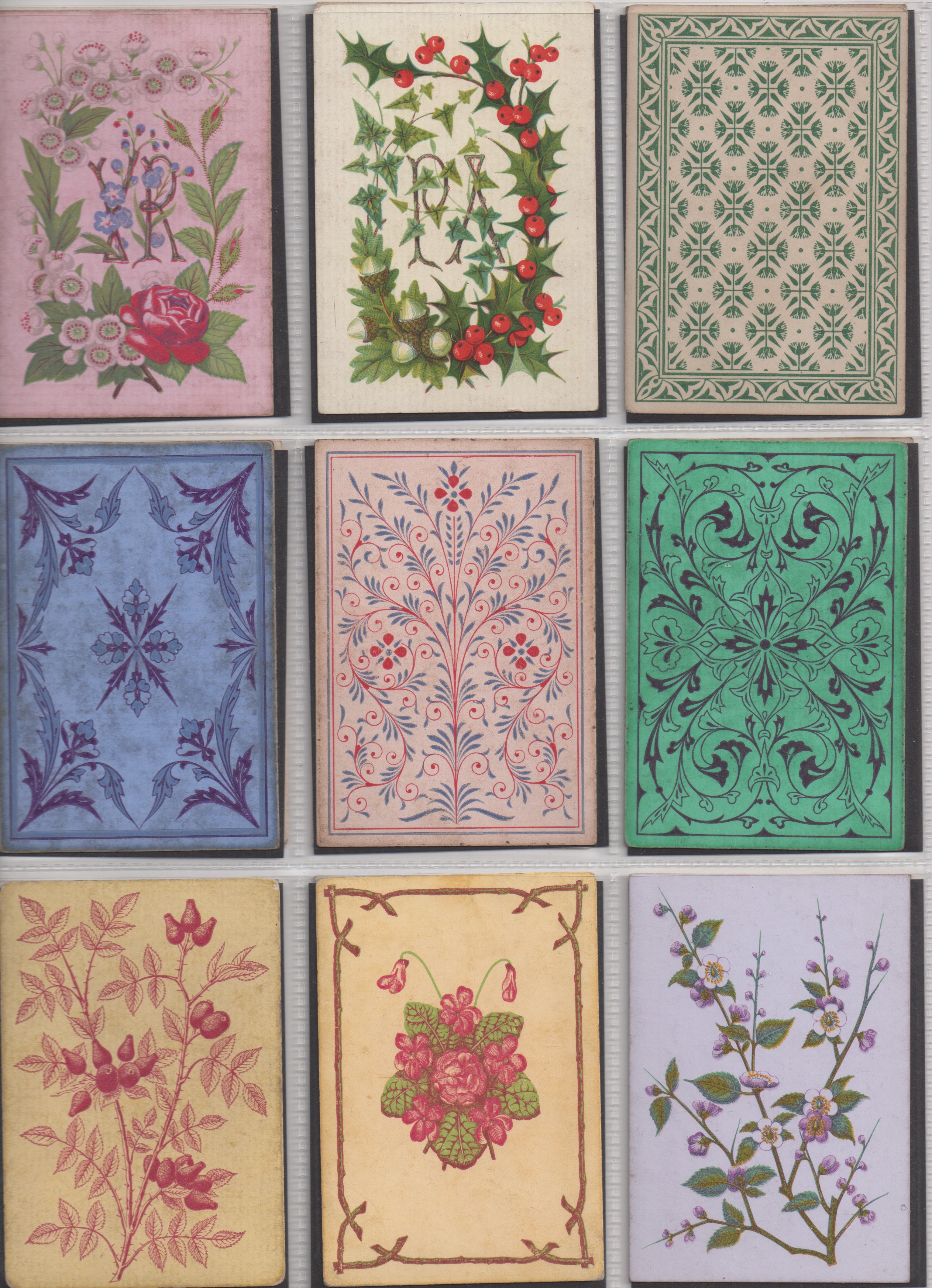
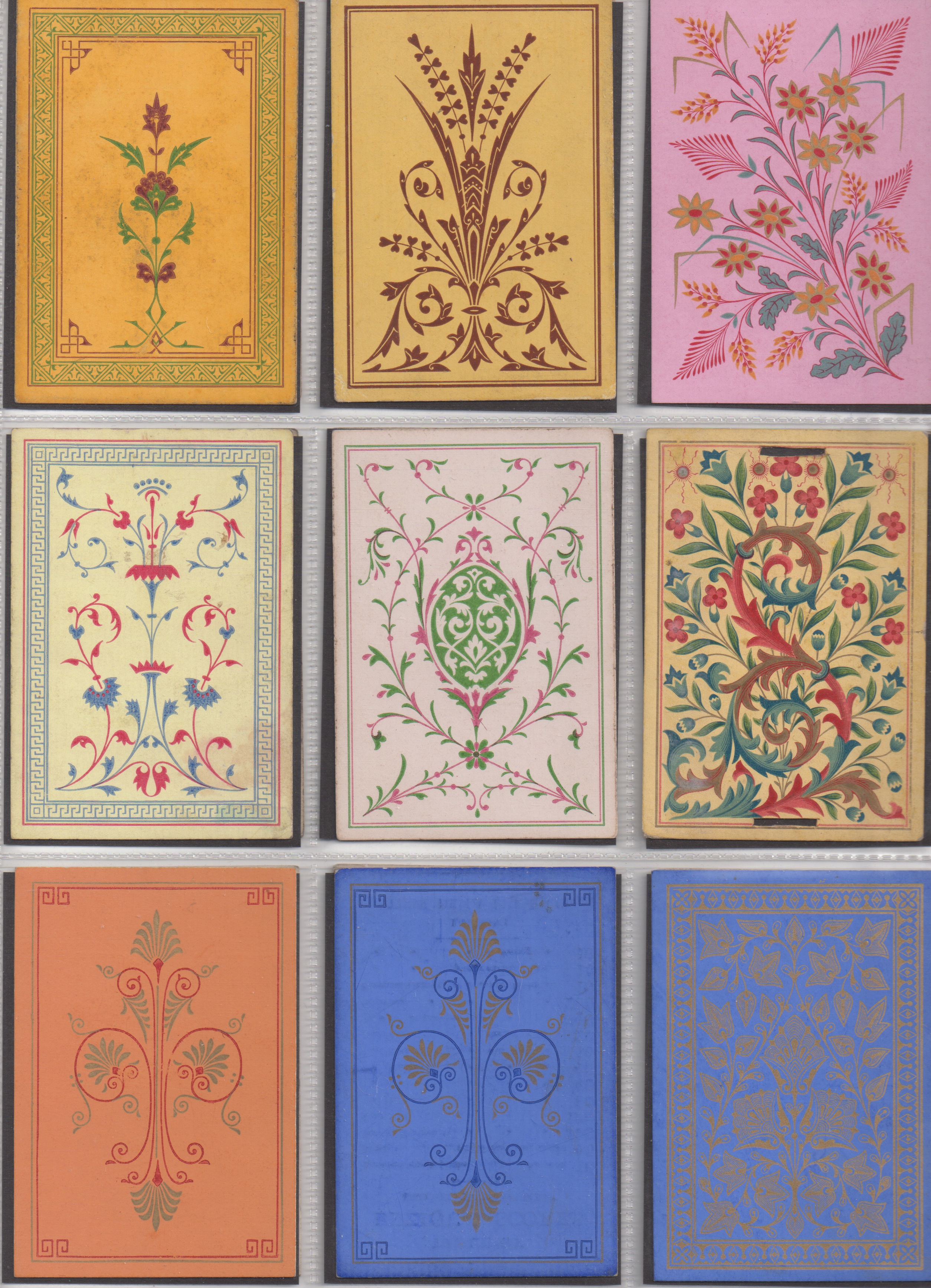
By the 1880s, a while after his death, others had taken over, but they clearly found inspiration in some of his ideas and themes.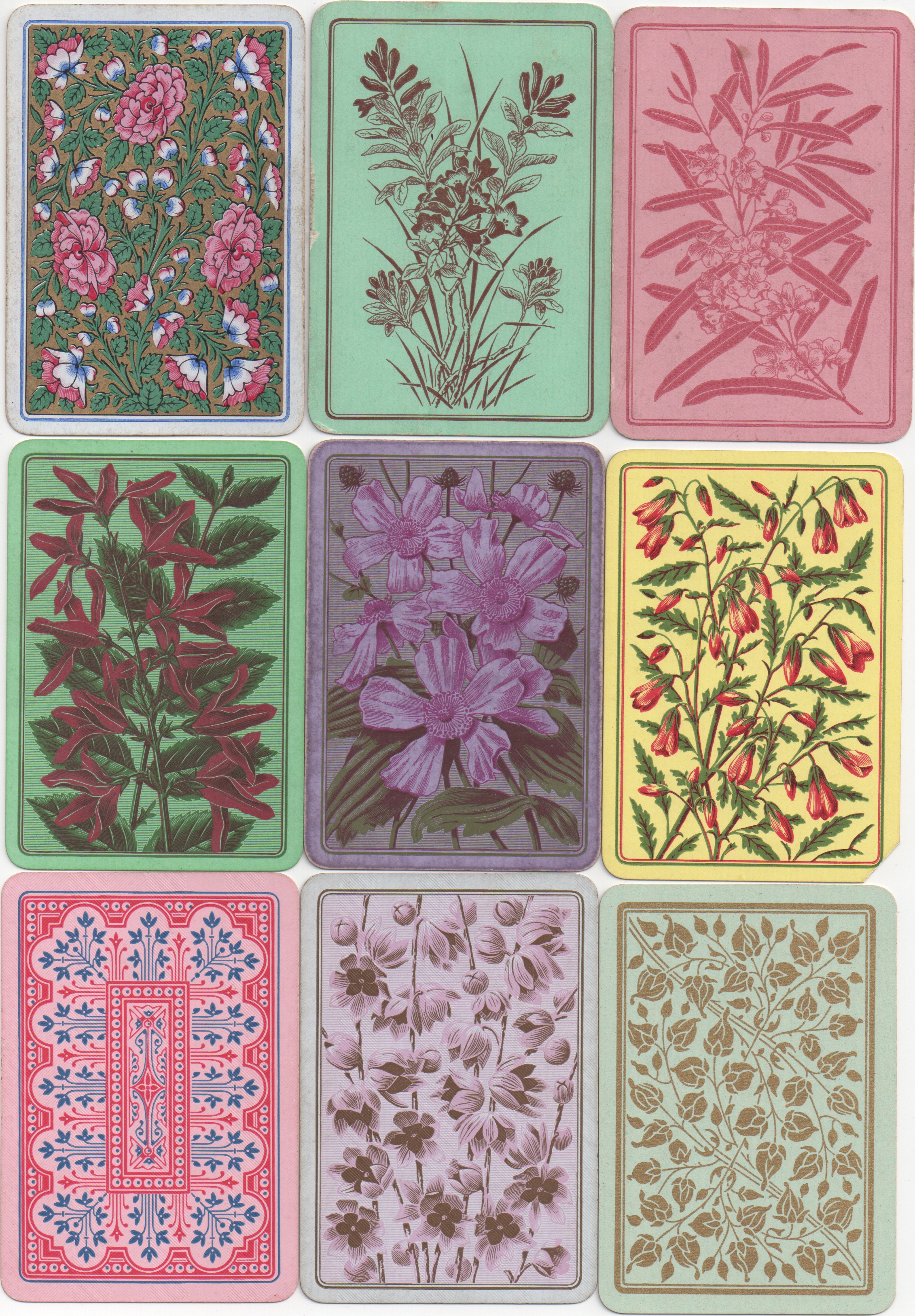
A selection of backs from c.1880-1910

By Ken Lodge
United Kingdom • Member since May 14, 2012
I'm Ken Lodge and have been collecting playing cards since I was about eighteen months old (1945). I am also a trained academic, so I can observe and analyze reasonably well. I've applied these analytical techniques over a long period of time to the study of playing cards and have managed to assemble a large amount of information about them, especially those of the standard English pattern. About Ken Lodge →

Activity for 5: De La Rue
Sign in to comment or save this article.

Related Articles
Simpson (Piccadilly) playing cards
Innovative advertising pack for Simpsons of Piccadilly designed by André François.
Hand-drawn transformation cards, c1875
A complete set of hand-drawn transformation cards from c1875, using a standard De La Rue pack.
Prophet Fortune Telling Cards
Prophet Fortune Telling Cards copyright and made by Thomas de la Rue & Co., 1933.
Kuhn Khan and Cooncan: an update
Kuhn Khan and Cooncan are pretty much exactly the same rummy-style game, but packaged and presented ...
67: Adverts and related material after 1900
The final page of material relating to playing cards from British periodicals.
59: Owen Jones (1809-74) and De La Rue
A selection of examples of Owen Jones's artwork printed by De La Rue.
Help Yourself Society
The “Help Yourself” Society was formed in 1927 to run fundraising activities for hospitals.
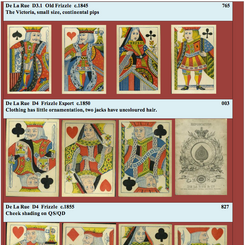
49: De La Rue in detail
A detailed presentation of the variants of De La Rue's standard cards.
Iddy Umpty
“Iddy Umpty” card game based around learning to read the Morse Code Alphabet. by Thomas de la Rue & ...
Golliwogg, c.1902
The stories about the Golliwogg and the Dutch dolls were written by Bertha Upton (1849-1912) and ill...
Pneumatic Series ‘F’
De la Rue Pneumatic Series ‘F’ playing cards, c.1925.
Pneumatic c.1960-1965
De la Rue were producing Pneumatic cards with the “special graining for ease of handling” as late as...
Rufford Playing Cards
Rufford playing cards is one of several brand names used by Boots for their stationery department, a...
Jack Horner Snap
“Little Jack Horner” Snap made by Thomas De la Rue & Co Ltd, c.1890.
Draughts League Medals
Arthur Charles Prince worked for De la Rue as a playing card cutter and later was promoted to superv...
Paramount Film Stars
Promotional playing cards for the Paramount film company with film stars on the court cards.

De La Rue Continental
During the latter part of the nineteenth century De La Rue produced two special packs of cards for t...
De La Rue
De La Rue introduced letter-press printing into playing card production and his patent was granted i...
Most Popular
Our top articles from the past 60 days


Marc Clements
20 May 2026, 05:42SavedSaved this article to Marc Clements's Collection