


Kriegs-Spiel by Peter Schencken, Amsterdam
Peter Schencken of Amsterdam copied the "Jeu de la Guerre" or "Das Kriegs-Spiel" (with German captions) originated by Gilles de La Boissière and published by Mariette in 1668 in Paris.
Das Kriegs-Spiel by Peter Schencken, Amsterdam, c.1670
Educational pack for the Art of War
Non-standard cards made in the Netherlands were notable principally for their educational, political, humorous and artistic characteristics. Peter Schencken of Amsterdam copied the "Jeu de la Guerre" or "Das Kriegs-Spiel" (with German captions) originated by Gilles de La Boissière (engraver) and first published by Mariette in 1668 in Paris. These games are usually found as uncut sheets suitable for some table game using dice, rather than a game of cards. Recorded as still being printed in the 18th century.
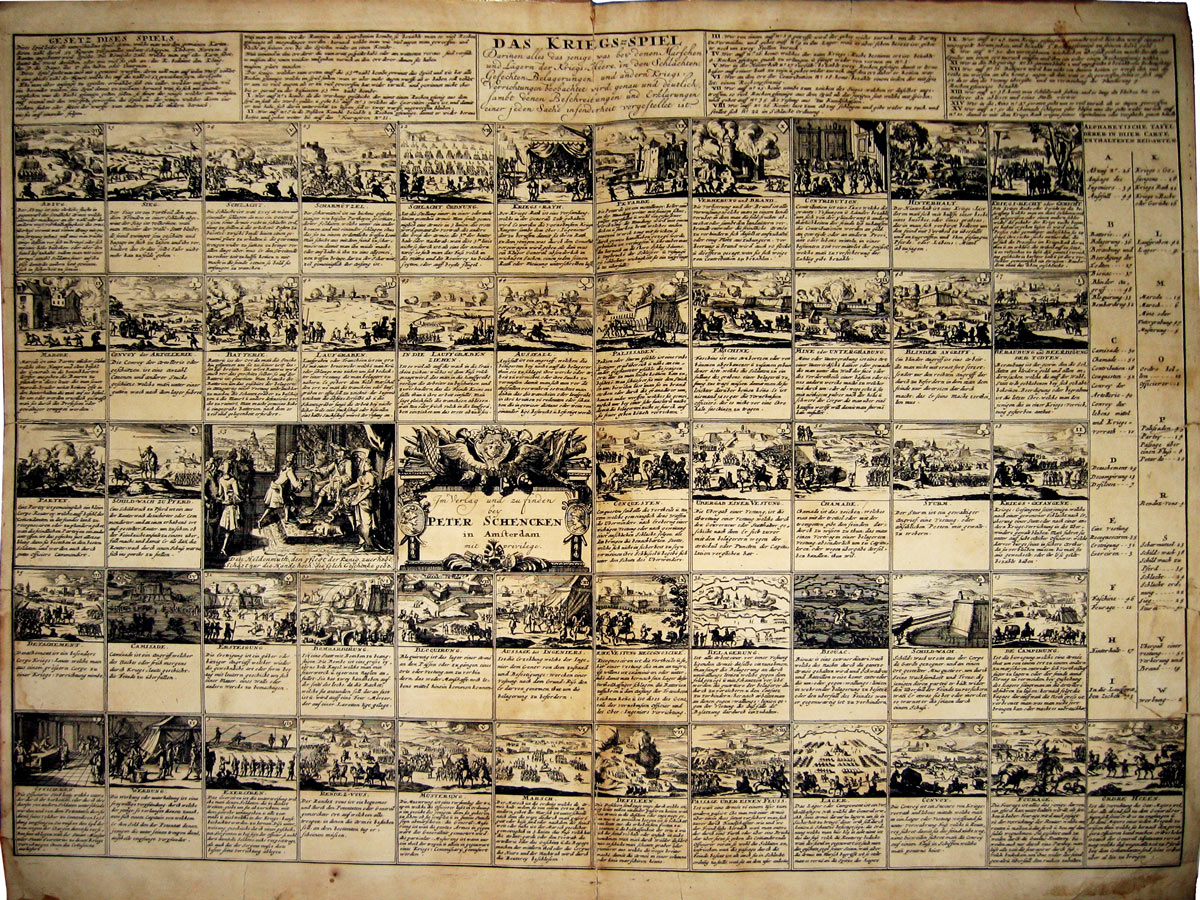
Above: uncut sheet printed from finely engraved copper plates by Peter Schencken, Amsterdam, c.1670.

By Simon Wintle
Spain • Member since February 01, 1996
I am the founder of The World of Playing Cards (est. 1996), a website dedicated to the history, artistry and cultural significance of playing cards and tarot. Over the years I have researched various areas of the subject, acquired and traded collections and contributed as a committee member of the IPCS and graphics editor of The Playing-Card journal. Having lived in Chile, England, Wales, and now Spain, these experiences have shaped my work and passion for playing cards. Amongst my achievements is producing a limited-edition replica of a 17th-century English pack using woodblocks and stencils—a labour of love. Today, the World of Playing Cards is a global collaborative project, with my son Adam serving as the technical driving force behind its development. His innovative efforts have helped shape the site into the thriving hub it is today. You are warmly invited to become a contributor and share your enthusiasm.

Activity for Kriegs-Spiel by Peter Schencken, Amsterdam
Sign in to comment or save this article.

Related Articles
US Army Aircraft Recognition Cards
Air defense combined with gameplay.
Les Chevaliers de la Toison d’Or
Medieval manuscript art at its finest.
Learning to play Cribbage
I learned to pay cribbage when I was very young, aged around six or seven.
History of Tarot and Playing Cards: Timeline & Origins
An alternative history of tarot and playing cards – from Mamluk Egypt to the invention of tarot in R...
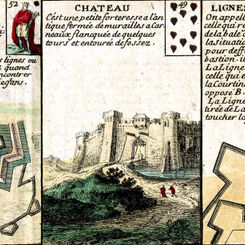
Le Jeu Des Fortifications
An innovation from the time of Louis XIV by Gilles de la Boissière.
Theatre of Pain / Teatr Boli
Theatre of Pain / Teatr boli playing cards depicting politicians and leaders in the Caucasus territo...
Anonymous pack of Dutch playing cards
produced just after the end of the Second World War.
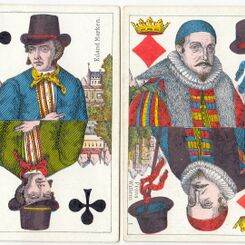
Dutch costume playing cards from an unknown maker
Another pack of Dutch costume playing cards c.1880.
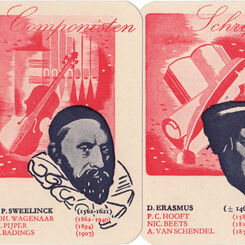
Neerlands Glorie
Neerlands Glorie Kwartetspel published by Hausemann & Hötte N.V, Amsterdam, 1945.
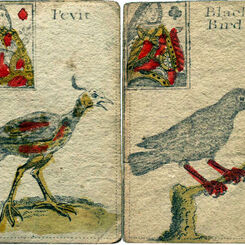
Forrest Cards, c.1750s
Hand-coloured Forrest Cards produced for “Young Gentlemen & Ladys who are Lovers of Ingenuity”, c.17...
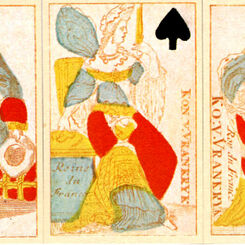
Carel de Wagenaer
Facsimile edition of cards first published by Carel de Wagenaer, Amsterdam in c.1698
Hidden meanings in painting by Jheronimus Bosch
Medieval View of Gambling in the ‘Garden of Earthly Delights’ by Jheronimus Bosch
Squadron Scramble
“Squadron Scramble” card games for identifying military planes, Whitman Publishing Co., Racine, Wisc...
Temple Press War Planes
“War Planes” aircraft recognition playing cards published by Temple Press Limited, c.1940.
Arms of English Peers
The Arms of English Peers playing cards were first published in 1686. Heraldry, or a knowledge of th...
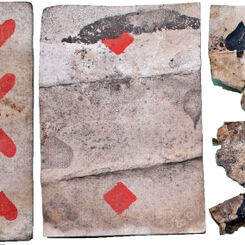
Archaeological find: old playing cards under the floorboards
The municipal archaeological service in Dordrecht (Netherlands) recently found some antique playing ...
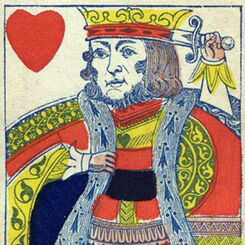
Suicide King
The King of Hearts, holding a sword behind his head, is sometimes nicknamed the “Suicide King”. He c...
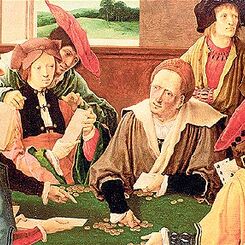
Netherlands
Playing cards have been known in the Low Countries since the 14th century
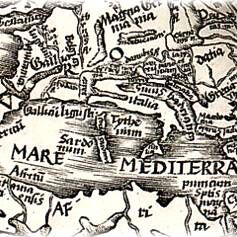
The History of Playing Cards
Playing cards appear in European records in the late 14th century, but their earlier history lies fu...
Early Spanish/Portuguese type
Fragment of a sheet of archaic Spanish-suited 'Dragon' playing cards found during restoration of a h...
Most Popular
Our top articles from the past 60 days


