


Tigers No.101
In 1881 Russell, Morgan & Company commenced playing card production by issuing six grades of cards with new, purely American names.
In 1891 Russell, Morgan and Company changed their name to The United States Printing Company.
Image courtesy Richard Sheaff ¦
sheaff-ephemera.com►
The evolution of a brand
In 1881 Russell, Morgan & Company commenced playing card production by issuing six grades of cards with new, purely American names which departed from the traditional English names (such as Harry's, Merry Andrews, etc.) which had been used until then:
- 101 Tigers
- 202 Sportsman's
- 303 Army and Navy
- 404 Congress
- 505 Army and Navy, gold edges
- 606 Congress, gold edges
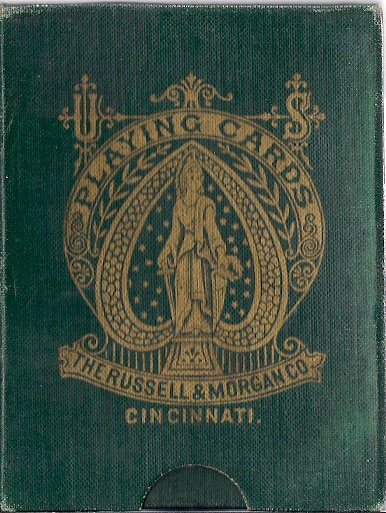
Tigers #101 was their first brand. It was the least expensive. Initially it was issued with a generic Russell & Morgan Ace of Spades without a brand name or tiger motif, even on the box. Later issues had a “Tigers No.101” branded Ace of Spades and box. In 1885 the Russell & Morgan Printing Company was formed to succeed Russell, Morgan & Co and in 1891 the company name was changed to The United States Printing Co.
In 1894 The United States Playing Card Company was incorporated to hold all the playing card manufacturing operations. This sequence of events can be followed in the inscriptions on the Aces of Spades below.
Over the years these brands evolved in their designs, styles of courts, Aces of Spades and Jokers, progressing from single-ended to double-ended court cards. “Tigers No.101” were produced until about 1930 and a total of five different Aces of Spades and three Jokers are known, with a variety of different court card styles.
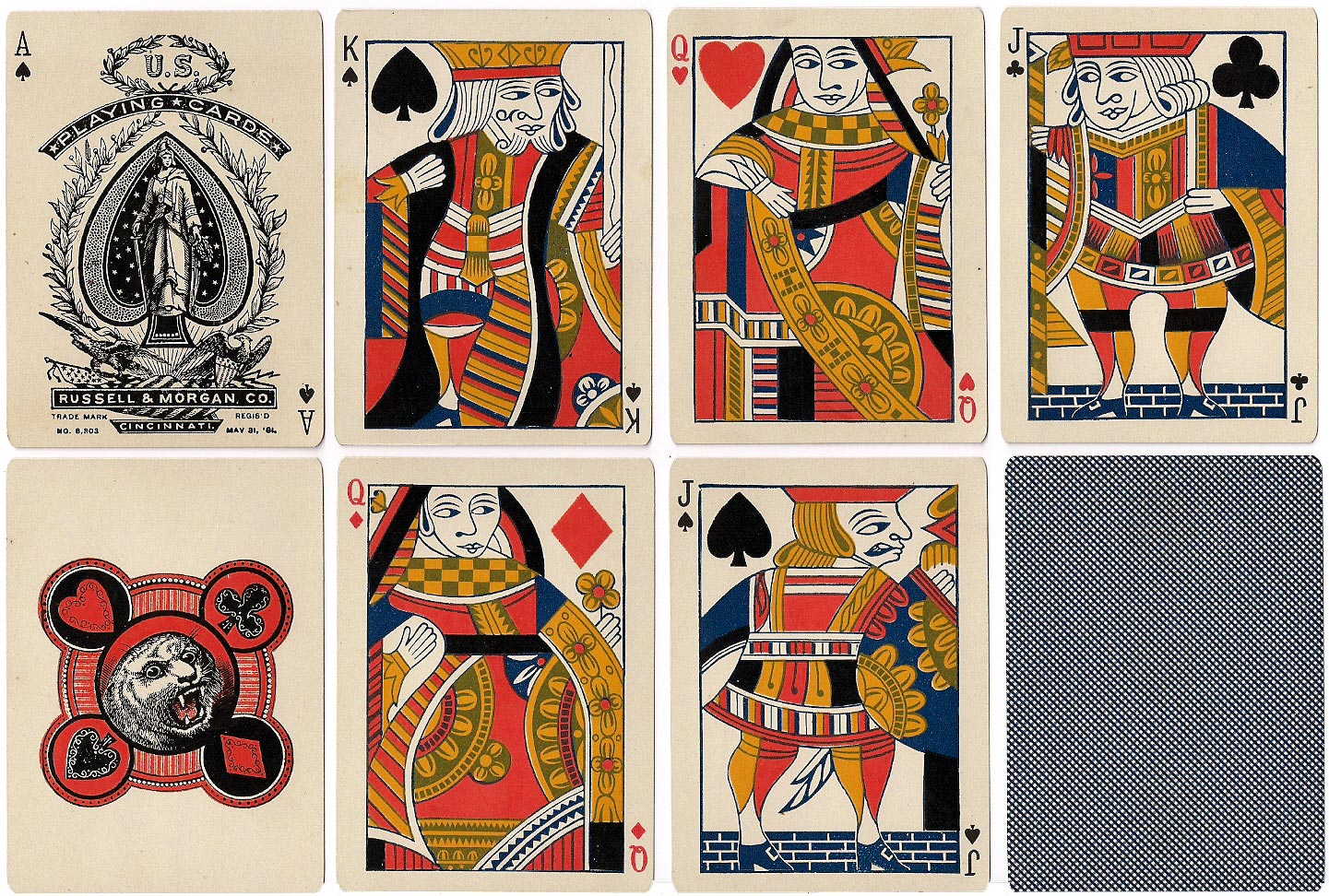
Above: “Tigers No.101” playing cards manufactured by Russell & Morgan Co., Cincinnati, c.1881. The cards have a generic R&M Ace of Spades (without any brand name or tiger image), full-length courts and corner indices. The Joker features a snarling tiger's head inside a design of circles and suit symbols. The back design is generic criss-cross pattern. The same Ace of Spades and court designs were also used in Russell & Morgan's Squared Faro No.366, but without corner indices, in c.1887
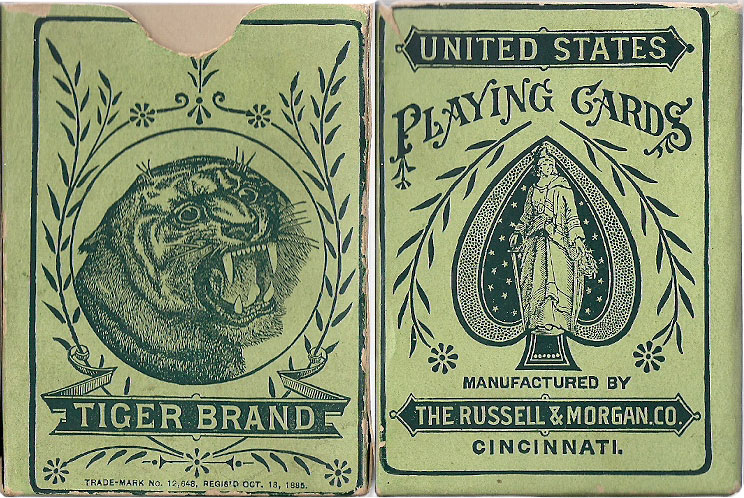
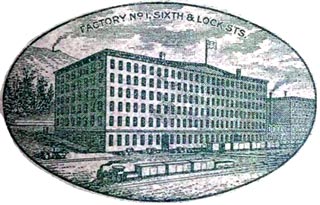
The Russell, Morgan and Company printing factory on Race Street had been extended to include machines for making playing cards. Two years later it was necessary to move to a larger factory in Lock Street. In 1891 the corporate name of the company was changed to the United States Printing Company, and in 1894 the United States Playing Card Company was incorporated.
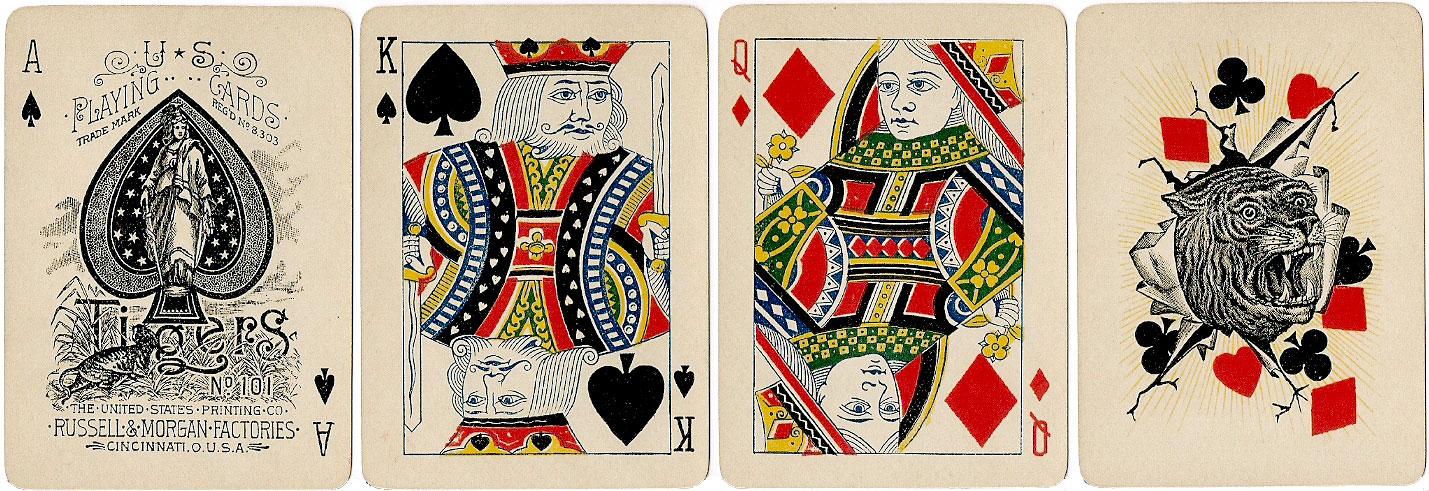
Above: “Tigers No.101” playing cards manufactured by the United States Printing Co., Russell & Morgan Factories, in c.1891. This issue carries the name of the brand and features a tiger on the picturesque Ace of Spades, as well as a splendid coloured Joker. This version has slender indices.
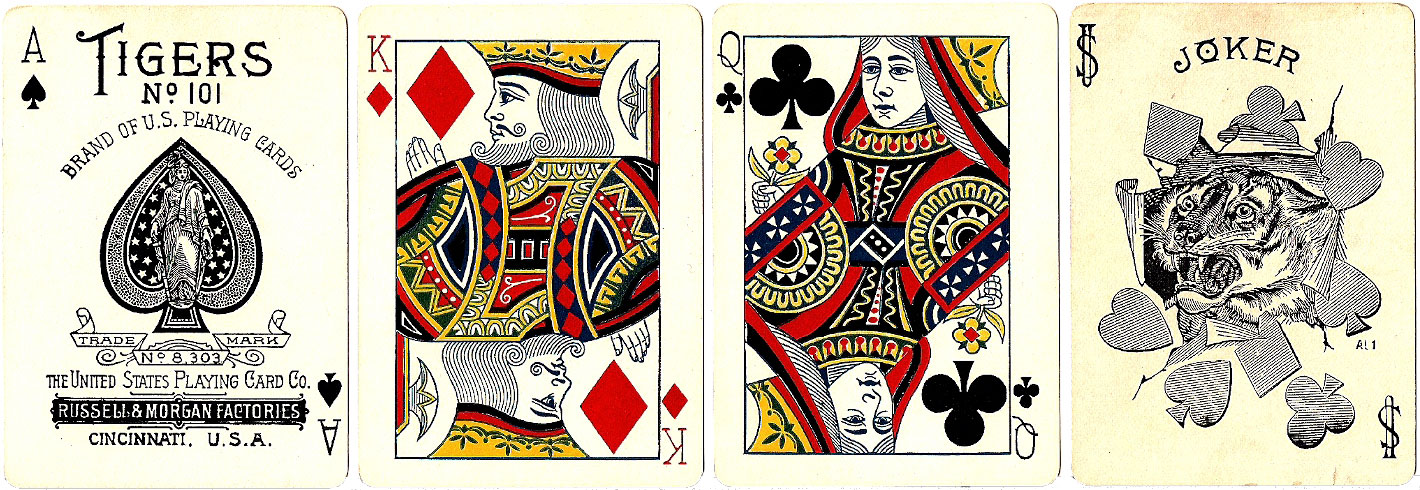
Above: Tigers No.101 playing cards manufactured by the United States Playing Card Co, Russell & Morgan Factories, c.1895. A new Ace of Spades was designed.
In later years “Tigers No.101” as well as other brands came with or without “Russell & Morgan Factories” printed on the Aces of Spades. Some of the later editions only mention U.S. Playing Card Co. on the Ace.
REFERENCES
Dawson, Tom & Judy: The Hochman Encyclopedia of American Playing Cards, U.S. Games Systems Inc., 2000
Hargrave, Catherine Perry: A History of Playing Cards and a Bibliography of Cards and Gaming, Dover Publications, New York, 1966
All images on this page are from the collection of Rod Starling, author of "The Art and Pleasures of Playing Cards".

By Rod Starling (1936-2023)
United States • Member since January 09, 2013
Rod Starling was one of the founding members of the 52 Plus Joker card collectors club. He authored many articles for the club's quarterly newsletter, Clear the Decks. His collection encompasses both foreign and American decks. Rod also authored a book titled The Art and Pleasures of Playing Cards.

Activity for Tigers No.101
Sign in to comment or save this article.

Related Articles
Are Playing Cards a Good Investment?
Playing cards can appreciate modestly, with historical annual gains of 2-3%. Rare cards offer higher...
Kings Wild Tigers Playing Cards
Kings Wild Tigers is Jackson Robinson’s 27th successful playing card Kickstarter campaign. A luxury ...
Squared Faro #366
Squared Faro #366 by Russell & Morgan Co. first issued in 1887.
Bicycle Playing Cards, 1st edition
1st edition of famous Bicycle Playing Cards printed by Russell & Morgan Printing Co., Cincinnati, 18...
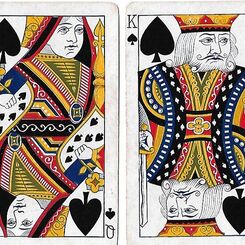
No.4 Special Whist
No.4 Special Whist (American Skat) playing cards made by the Russell & Morgan Printing Company, 1889...
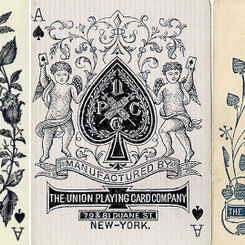
Union Playing Card Co.
Not much is known about this early manufacturer who is reckoned to have traded between c.1860s-1890s...
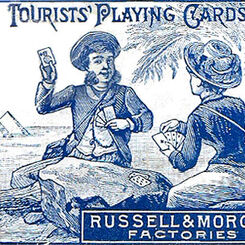
Tourists
Imagery of slightly eccentric tourists sightseeing in Egypt, or perhaps in the Alps, appears on the ...
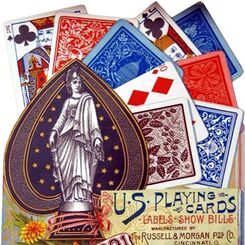
Russell, Morgan & Co
The distinctive Ace of Spades features the Statue of the Goddess of Freedom, based on the bronze sta...
Capitol No.188
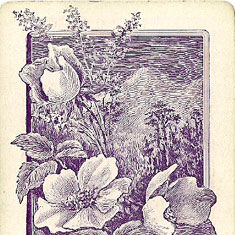
“Capitol No.188” was first introduced during the Russell & Morgan Printing Company era in c.1886 and...
Cabinet No.707
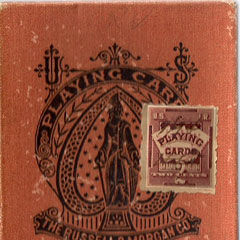
Russell & Morgan's “Cabinet No.707” brand was first introduced in 1888.
Navy No.303
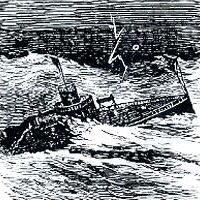
The second edition of 1883 has slightly larger indices and a more simplified Ace of Spades showing t...
Army & Navy No.303
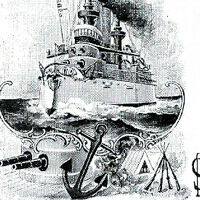
Over the years eight different Aces of Spades were used with this brand and the Joker was also modif...
Army No.303
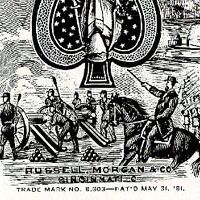
The Joker is particularly persuasive, whilst the Ace of Spades has a battle scene involving artiller...
Steamboat No.999
Owing to the romantic appeal of gambling on the Mississippi river many manufacturers added “Steamboa...
Bicycle No.808 - page 2
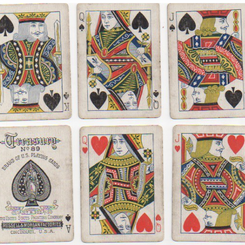
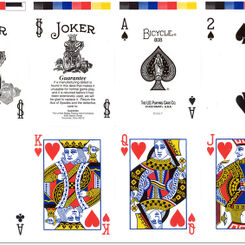
The famous 'Bicycle' playing cards were first introduced by Russell & Morgan Printing Co in 1885. Th...
Bicycle No.808
The famous Bicycle playing cards were first introduced by Russell & Morgan Printing Co in 1885. More...
Most Popular
Our top articles from the past 60 days


