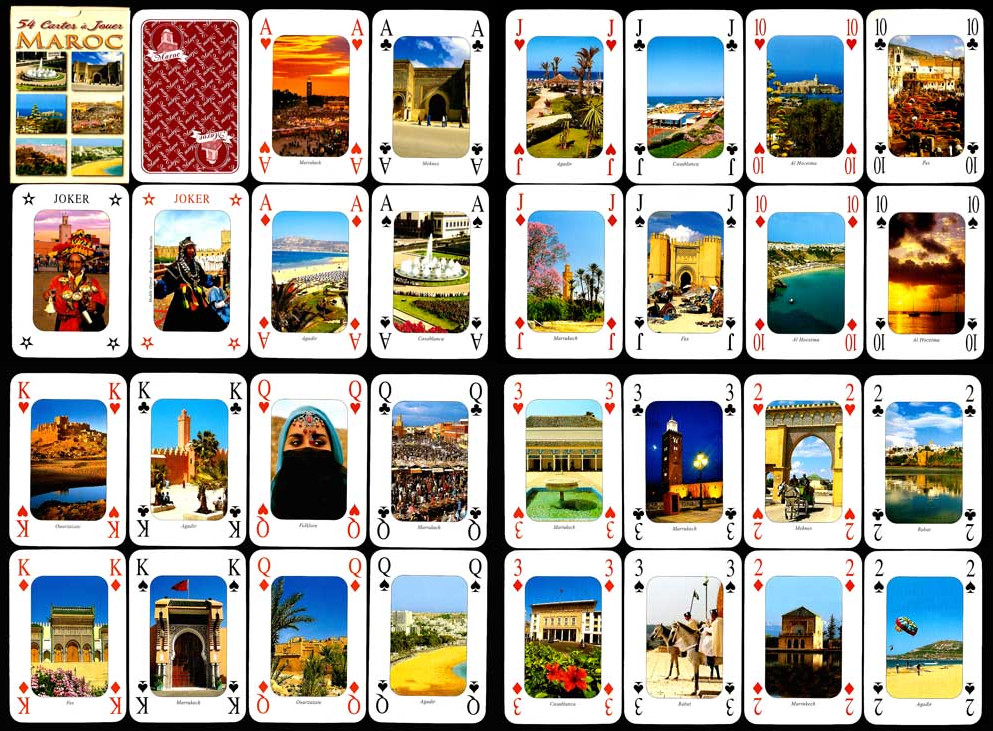
Playing cards in Morocco
The earliest literary references to playing cards in Europe refer to the game having been introduced by a 'Saracen', and also to Moorish and Damascene varieties of playing card.
MOROCCO & ALGERIA
The earliest literary references to playing cards in Europe refer to the game having been introduced by a 'Saracen', and also to Moorish and Damascene varieties of playing card. We do not know for sure what these fourteenth century cards looked like… but for an idea click here and here.
It might be logical to assume that North Africa has always been supplied with Spanish suited cards, and that these came primarily from France or Spain.

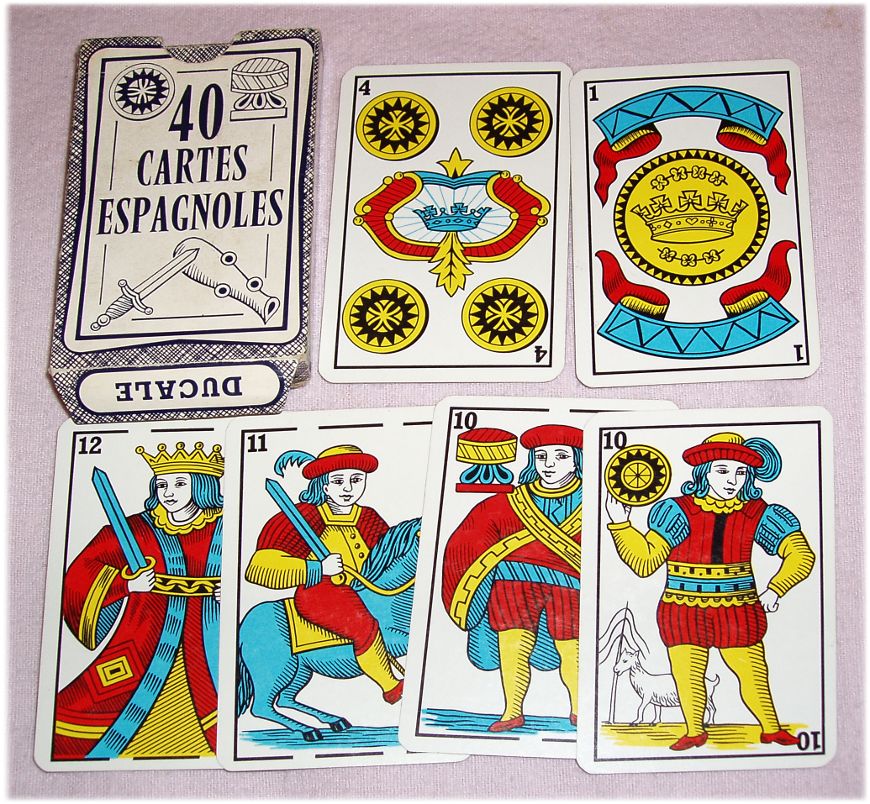
The cards found in Morocco today are faithful replicas of the old “Spanish National Pattern,” a style of playing cards which emanated from Barcelona during the 17th century and was also made in Marseille. In most other countries where Spanish-suited cards are used the more Modern Catalan or Castilian patterns are usually found.
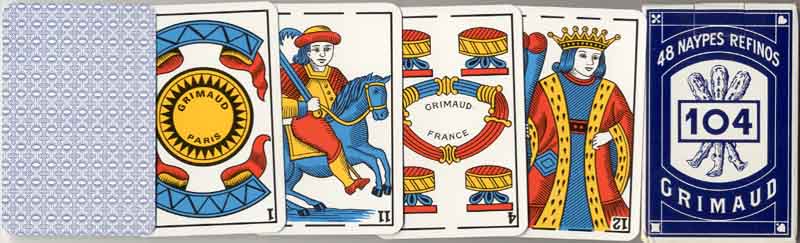
During the nineteenth and twentieth centuries playing cards were imported into Morocco and Algeria from Spain and France by manufacturers such as Camoin, La Ducale, B.P. Grimaud and others. These were of the Spanish National pattern, based on the Félix Solesio designs produced by the Real Fábrica de Madrid at Macharaviaya (1776-1815).

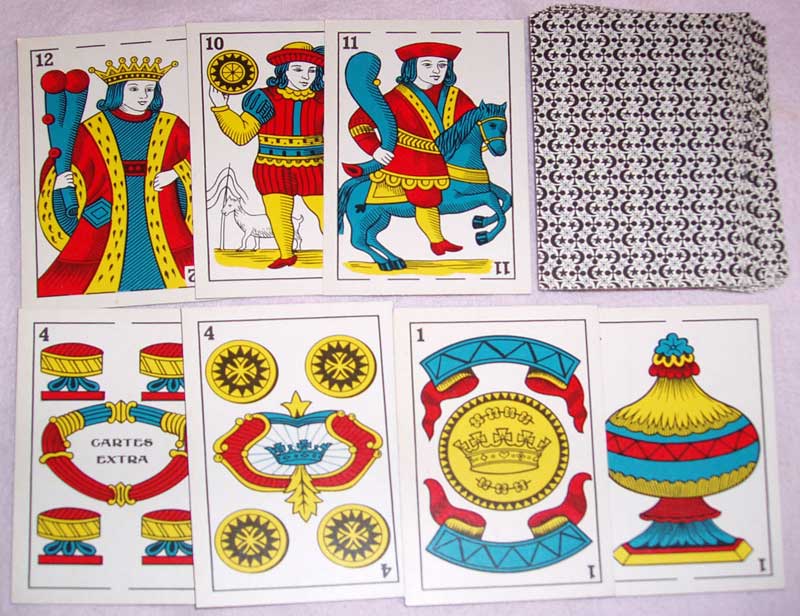
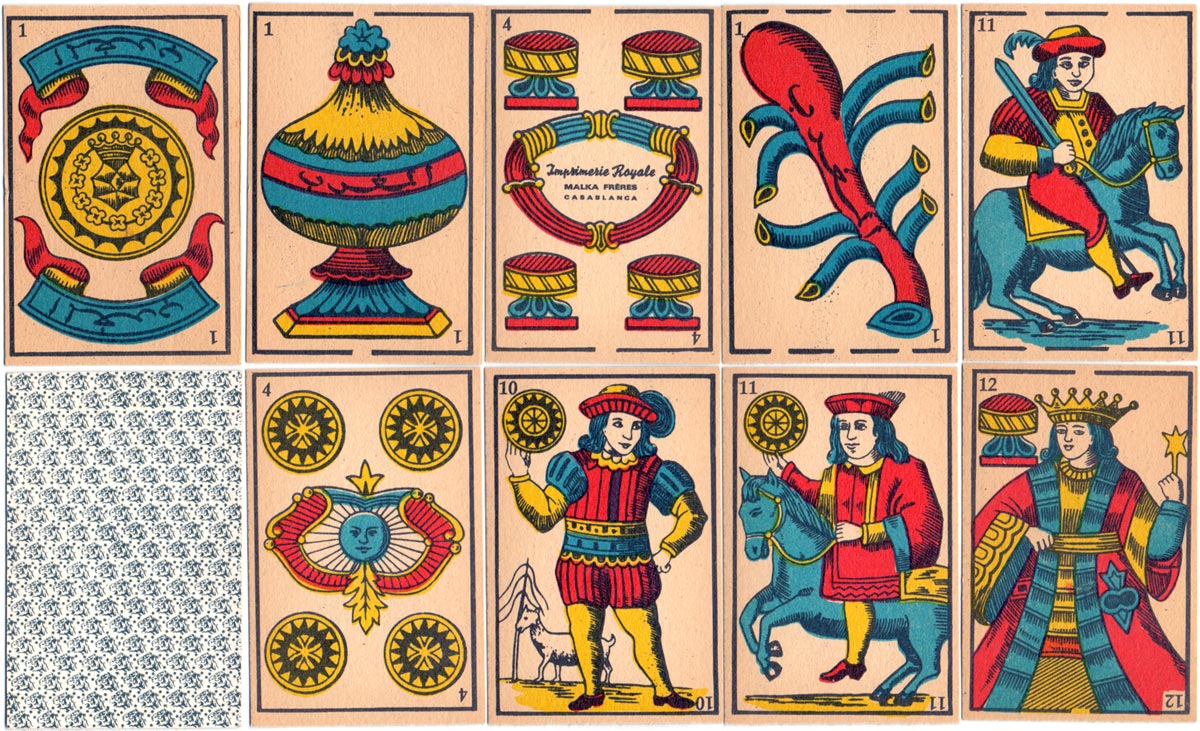
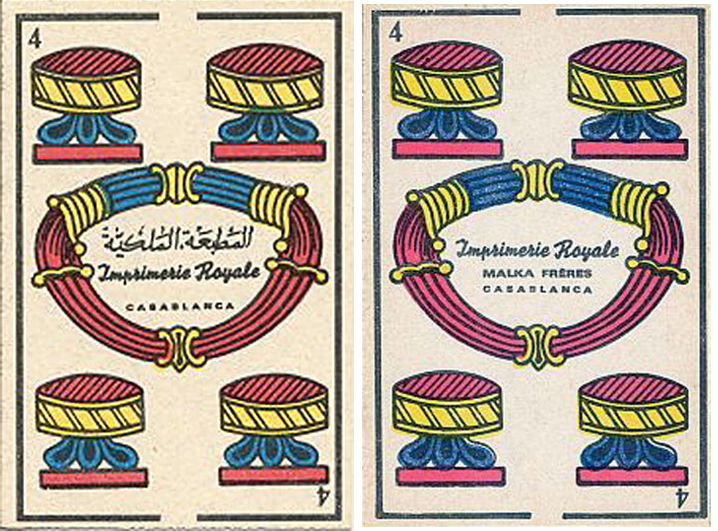
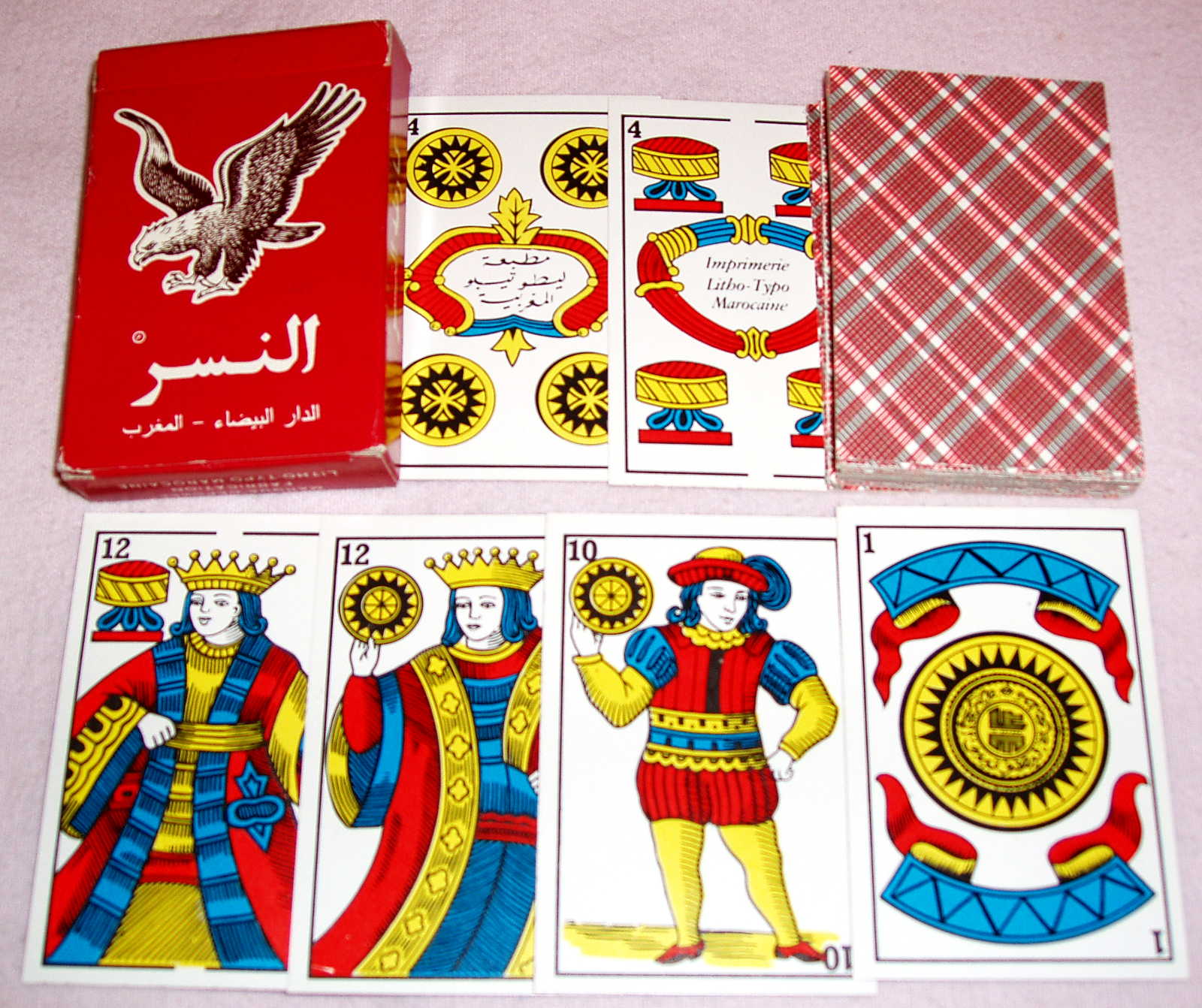
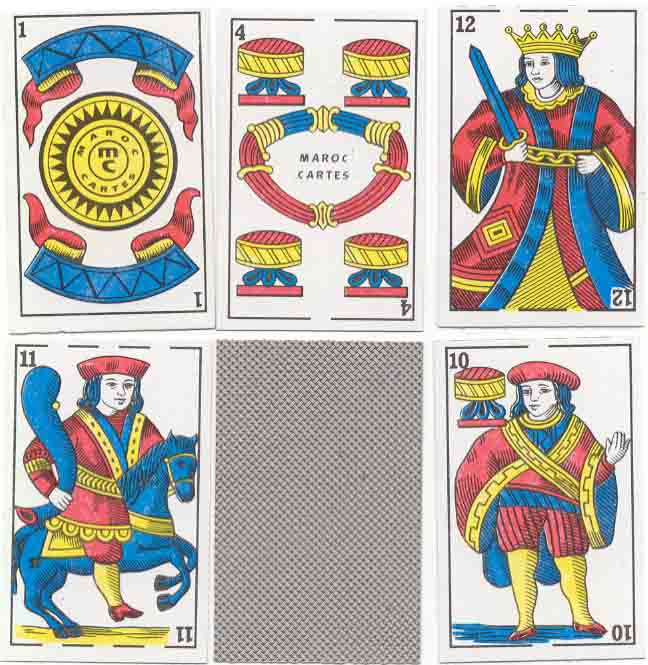
The Camoin firm closed down in 1971, but many clones of Camoin's cards have been, and still are being produced by a succession of Moroccan printers and cardboard manufacturers, usually from Casablanca. These include:
Malka Frères
Imprimerie Royale
Imprimerie de L'Entente
Imprimerie Litho-Type Marocaine
Maroc Cartes
Imprimerie Belles Impressions, S.A.
…and other anonymous manufacturers or brands such as Cartes Lion, L'Elephant, L'Aigle or Sindibad. Morocco is now one of the last remaining countries to use the old Spanish National pattern.
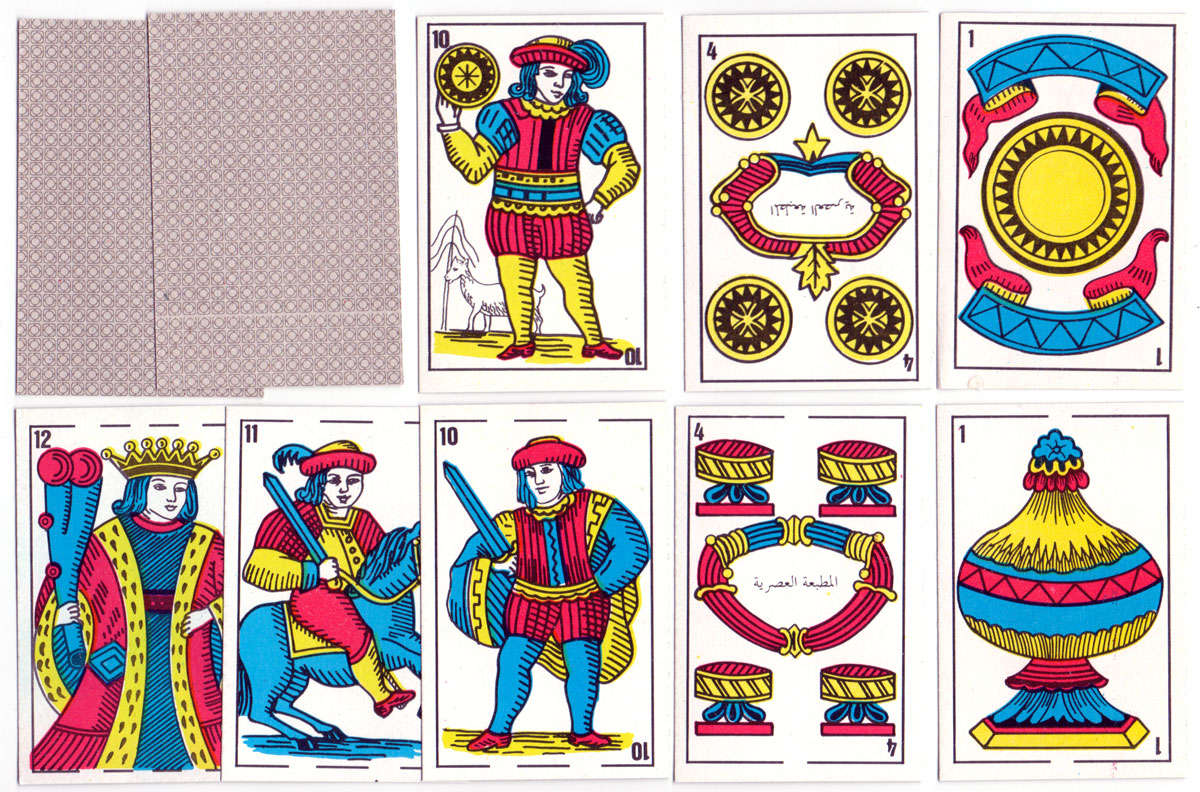
What is noticeable about all these imitations is that, with one or two exceptions, they are all virtually identical, showing a strong adherence to tradition. Apart from a gradual simplification in the outlines, the main change has been the disappearance of the tethered goat in the background of the Sota (Jack) of coins in some of the lowest grade examples. With the modernisation of Morocco, perhaps traditions will loosen further…
See also: Maroc Souvenir.


Moroccan card wrappers



By Simon Wintle
Spain • Member since February 01, 1996
I am the founder of The World of Playing Cards (est. 1996), a website dedicated to the history, artistry and cultural significance of playing cards and tarot. Over the years I have researched various areas of the subject, acquired and traded collections and contributed as a committee member of the IPCS and graphics editor of The Playing-Card journal. Having lived in Chile, England, Wales, and now Spain, these experiences have shaped my work and passion for playing cards. Amongst my achievements is producing a limited-edition replica of a 17th-century English pack using woodblocks and stencils—a labour of love. Today, the World of Playing Cards is a global collaborative project, with my son Adam serving as the technical driving force behind its development. His innovative efforts have helped shape the site into the thriving hub it is today. You are warmly invited to become a contributor and share your enthusiasm.

Activity for Playing cards in Morocco
Sign in to comment or save this article.

Related Articles

Arab No. 2141
Piatnik ventures into Orientalism.
Mamluk Cards and the Making of the European Deck
Mamluk “naib” cards — four suits with named courts — offer a persuasive clue to how playing c...
Âs Nas playing cards with box
Hand made cards from Persia

Tarot of the Thousand and One Nights (1001 Nights Tarot)
This tarot deck captures the idealised Eastern world's magic from the eighteenth and nineteenth cent...
Persian Miniatures
Persian Miniatures, made in Hungary c.1990.

Burj Al Arab Jumeirah
Gold plated souvenir playing cards from the Burj Al Arab Jumeirah hotel in Dubai.
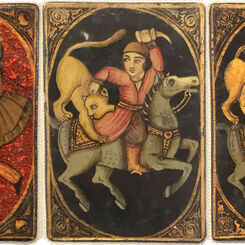
Qajar dynasty playing cards at the British Museum
Two small groups of Qajar-period playing cards from Iran (Persia), photographed in 2017 in the Briti...
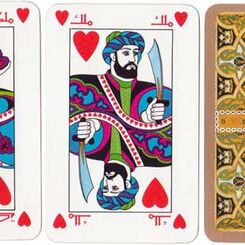
Boutros Arabic Playing Cards
Arabic playing cards designed by Evy Maros & Mourad Boutros.
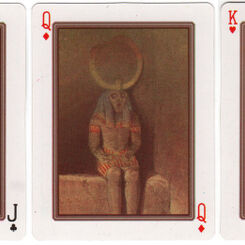
David Roberts
“David Robert” playing cards with artwork after Roberts’ Sketches in Egypt and Nubia.
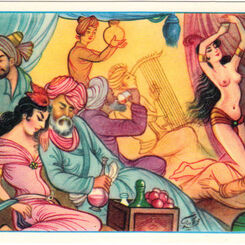
Hafez Fortune Telling Cards
Fortune Tellers use the Hafez Cards by interpreting the Hāfez poems printed on the card backs when c...
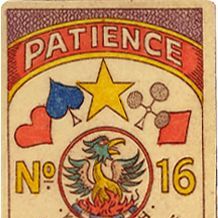
Karl Gerich No.16: “Patience Indien”
Karl Gerich's “Patience Indien No.16”, published in 1991, is adapted from Grimaud's “Whist Indienne”...
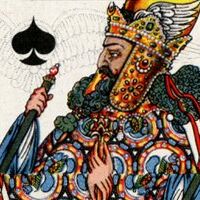
Iranian Popular Art
Representing Iranian culture and history and intended for a Persian market, these playing cards were...
Tunisia
Playing Cards in Tunisia. Chkobba is one of the most popular card games in Tunisia, mainly played by...

Anonymous
Anonymous Moroccan Playing Cards for Royal Air Maroc airlines and others...

Chaudsoleil Wine
Chaudsoleil Red Wine advertising playing cards from Morocco.
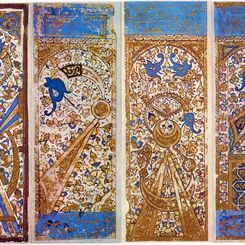
Mamluk Playing Cards
Nã'ib, the game of lieutenants... these cards are amongst the earliest Arabic playing cards ext...

Moroccan Bank of Commerce and Industry
Advertising pack for the Moroccan Bank of Commerce and Industry, 1986.
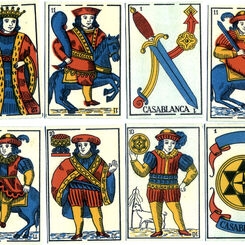
Casablanca playing cards from Morocco
Moroccan cards with the legend 'Casablanca'.

Cartes La Gazelle, Casablanca
Cartes La Gazelle, manufactured by Imprimerie de L’Entente, Casablanca
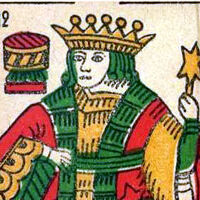
Algeria
Spanish suited playing cards produced by B. P. Grimaud (Paris) for Algeria.
Most Popular
Our top articles from the past 60 days